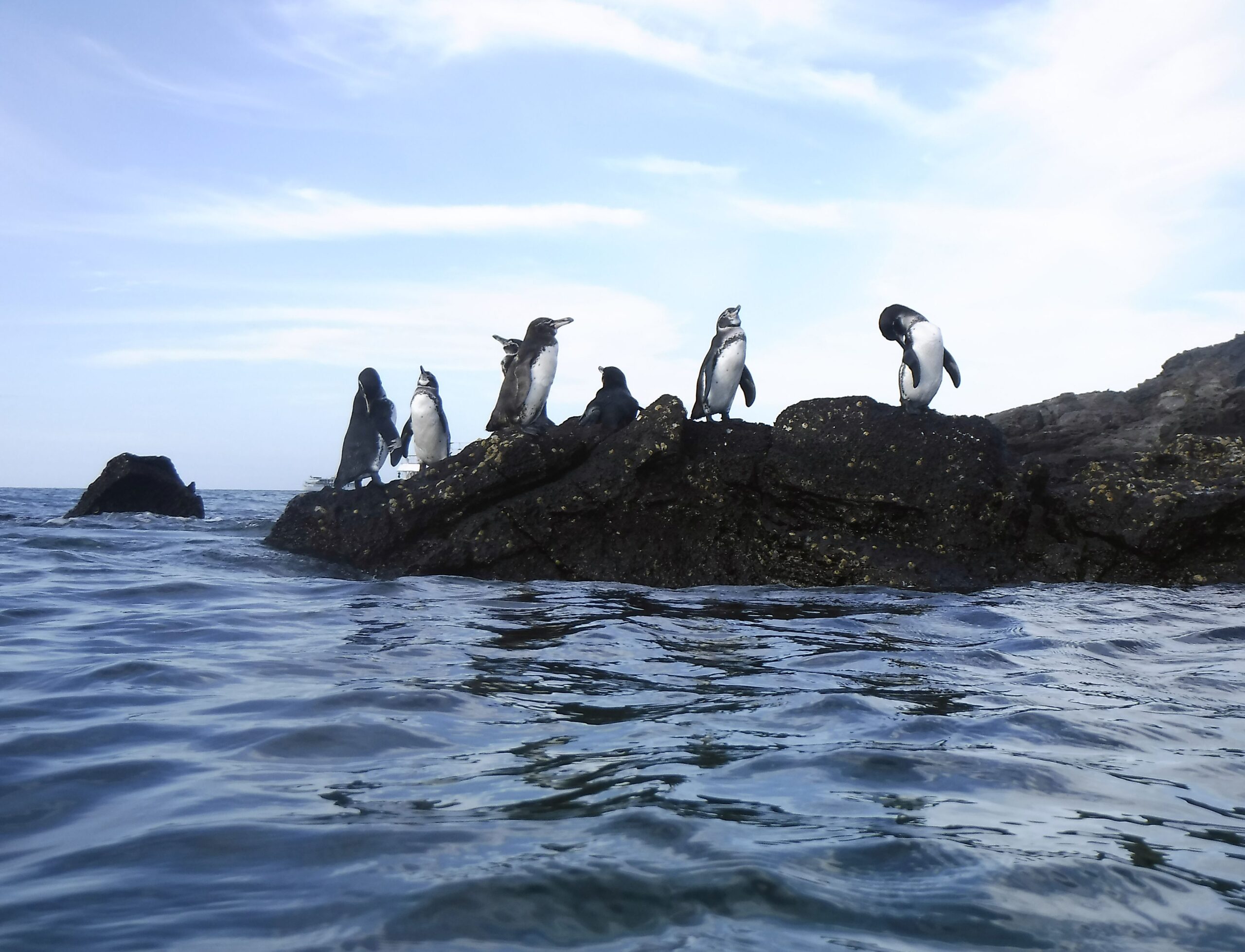
We will explain the characteristics, distribution, natural reproduction, ecology, and habitat of the Galapagos penguin, which appears in the encyclopedia. The Galapagos penguin is the only penguin that lives in the Galapagos Islands, Ecuador, South America. They live in the lowest latitudes of all penguins, just below the equator, making them a very special penguin.




- Basic information about Galapagos penguins
- What are the roots and origins of the Galapagos penguin?
- About the Galapagos Penguin Habitat
- feature is? What kind of creature is it?
- What will your personality look like?
- What is the ecology of Galapagos penguins?
- What are the natural enemies of Galapagos penguins?
- Molting in Galapagos Penguins
- Galapagos Penguin Diving
- Galapagos Penguin Calls
- Seasonal Activities of Galapagos Penguins
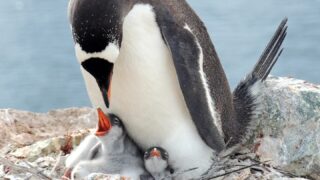
- Galapagos penguin chicks
- Are Galapagos penguins an endangered species?
- Is it possible to keep Galapagos penguins?
- Zoos where they are kept (Japan and around the world)
- Fellow members of the same group
Basic information about Galapagos penguins
Galapagos penguins are birds classified in the genus Cape Penguin in the order Penguinformes and the family Penguinidae. The total length is 53cm, and the weight is about 2kg. Galapagos penguins are extremely rare and are listed as an endangered species.
| Japanese(和名) | ガラパゴスペンギン |
| English(英名) | Galápagos penguin |
| scientific name(学名) | Spheniscus mendiculus |
| classification(分類) | Sphenisciformes, Spheniscidae, Aptenodytes ペンギン目ペンギン科ケープペンギン属 |
| IUCN Status(保全状況) | ENDANGERED |
| Height(身長) | 53cm |
| Weight(体重) | 2kg |
What are the roots and origins of the Galapagos penguin?
The Galapagos penguin is the only penguin species in the world that lives near the equator.
Roots and Origin
The ancestors of the Galapagos penguin are thought to have been banded penguins (genus Spheniscus) that inhabit the coasts of present-day South America.
Closely related species include:
Humboldt penguin
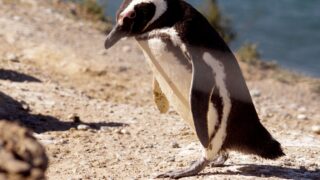
Magellanic penguin
African penguin
Genetic studies suggest that the Galapagos penguin is particularly closely related to the Humboldt penguin.
How did they get to the equator?
Millions of years ago, the ancestral penguins migrated northward from the west coast of South America.
This migration was aided by:
The Humboldt Current
The Cromwell Current
These cold ocean currents carried nutrient-rich seawater, creating an environment where penguins could survive even near the equator.
Why can they survive in hot places? Strategies to lower body temperature:
Rest in the shade
Spread your wings to dissipate heat
Release heat through the skin of your feet and face
Reduce activity during the hottest part of the day
What will happen to the classification?
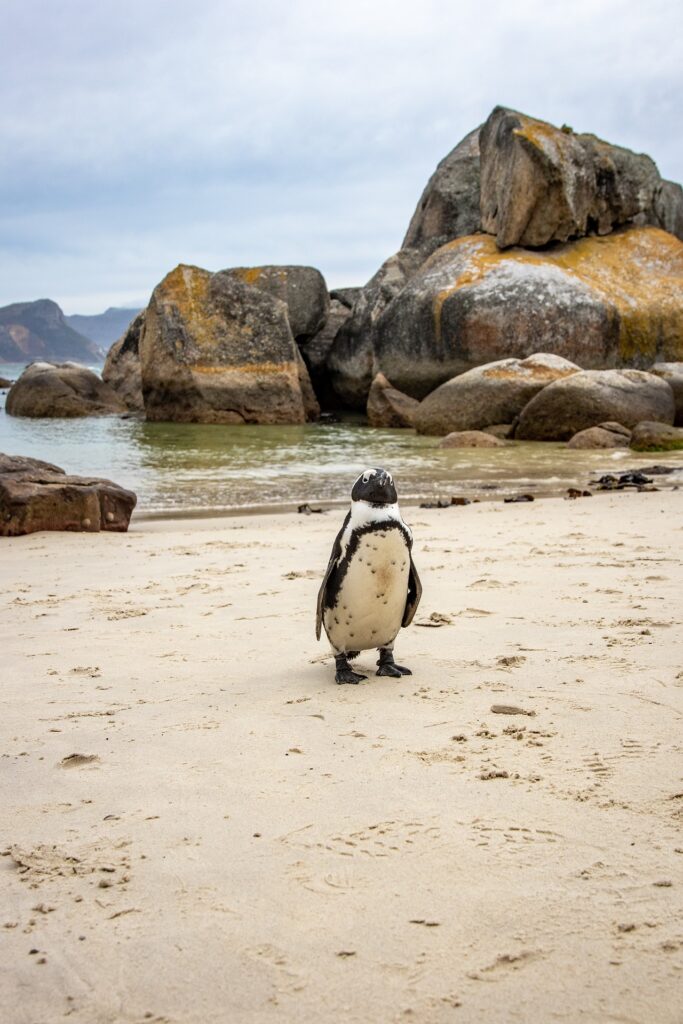
There are four species of Galapagos penguins in the Humboldt penguin genus (Cape penguin genus). It is said that Galapagos penguins originally lived in mainland South America. However, for some reason it was brought to the Galapagos Islands, where it is thought to have evolved into a different species. Therefore, they are somewhat unique compared to other races. This makes the Galapagos penguin one of the smallest penguin species.
| 名前:Name | 属名:Group | 生息地:habit |
| ガラパゴスペンギン(Galapagos Penguin) | Spheniscus フンボルトペンギン属 | ガラパゴス諸島 galapagos islands |
| ケープペンギン(African Penguin) | Spheniscus フンボルトペンギン属 | 南アフリカ South Africa |
| フンボルトペンギン(Humboldt Penguin) | Spheniscus フンボルトペンギン属 | チリ Chile |
| マゼランペンギン(Magellanic Penguin) | Spheniscus フンボルトペンギン属 | 南アメリカ太平洋岸 south america pacific coast |
classification
- 界 (Kingdom): Animalia(動物界)
- 門 (Phylum): Chordata(脊索動物門)
- 綱 (Class): Aves(鳥綱)
- 目 (Order): Sphenisciformes(ペンギン目)
- 科 (Family): Spheniscidae(ペンギン科)
- 属 (Genus): Spheniscus(フンボルトペンギン属)
- 種 (Species): Spheniscus mendiculus(ガラパゴスペンギン)
About the Galapagos Penguin Habitat
The only habitat for Galapagos penguins is the Galapagos Islands in Ecuador. These penguins only live on Fernandina and Isabela islands. They live in the tropical Galapagos, making them unique among wild penguins. It is said to have migrated here from the Humboldt Current and has a black appearance.
- Geographic Distribution
Location: Galapagos Islands, Ecuador
Major Islands:
Isabela Island (the largest population is concentrated here)
Fernandina Island
Some scattered populations on Santiago Island, etc.
Its range is extremely limited, making it an endemic species found nowhere else in the world.
- Environmental Conditions
Climate: Tropical climate near the equator
Seawater Temperature: Cold ocean currents (western waters influenced by the Humboldt Current) are important.
Warm water temperatures reduce food availability, affecting reproduction.
Habitat: Rocky coasts, caves, and small coves
They build nests in shade or under rocks to protect their eggs and chicks from predators.
- Ecological Characteristics
Because they live directly under the equator, they are the only tropical penguin whose breeding season varies depending on water temperature and food availability.
Their population is easily affected by ocean currents, and they experience significant declines during El Niño events.
feature is? What kind of creature is it?
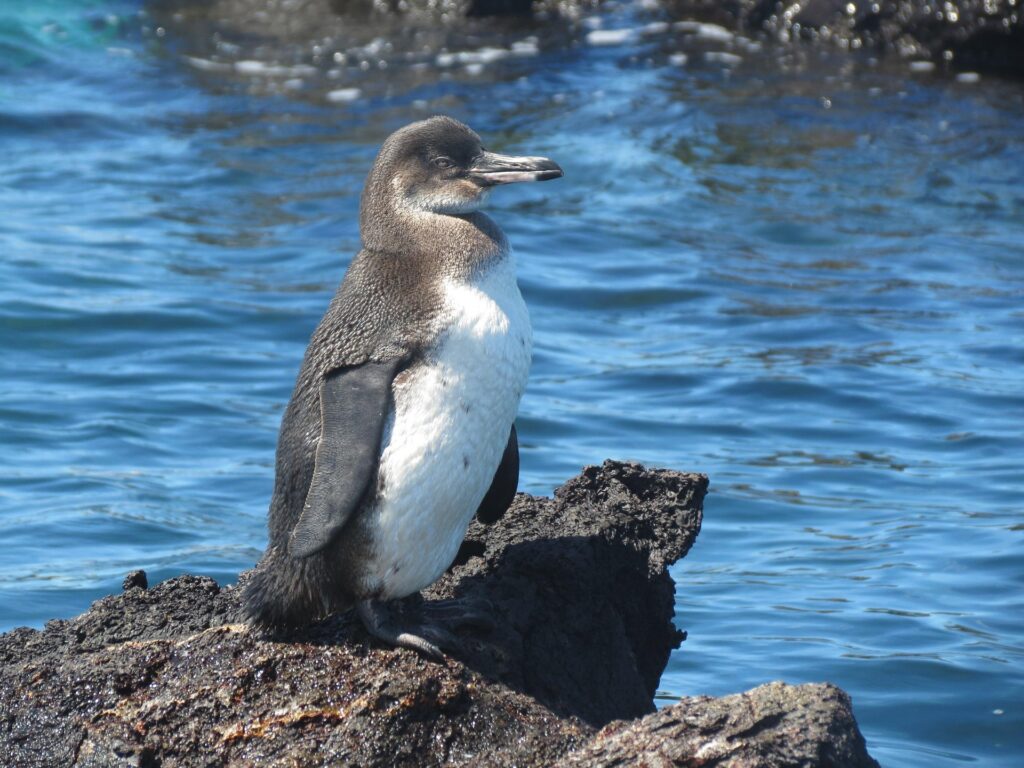
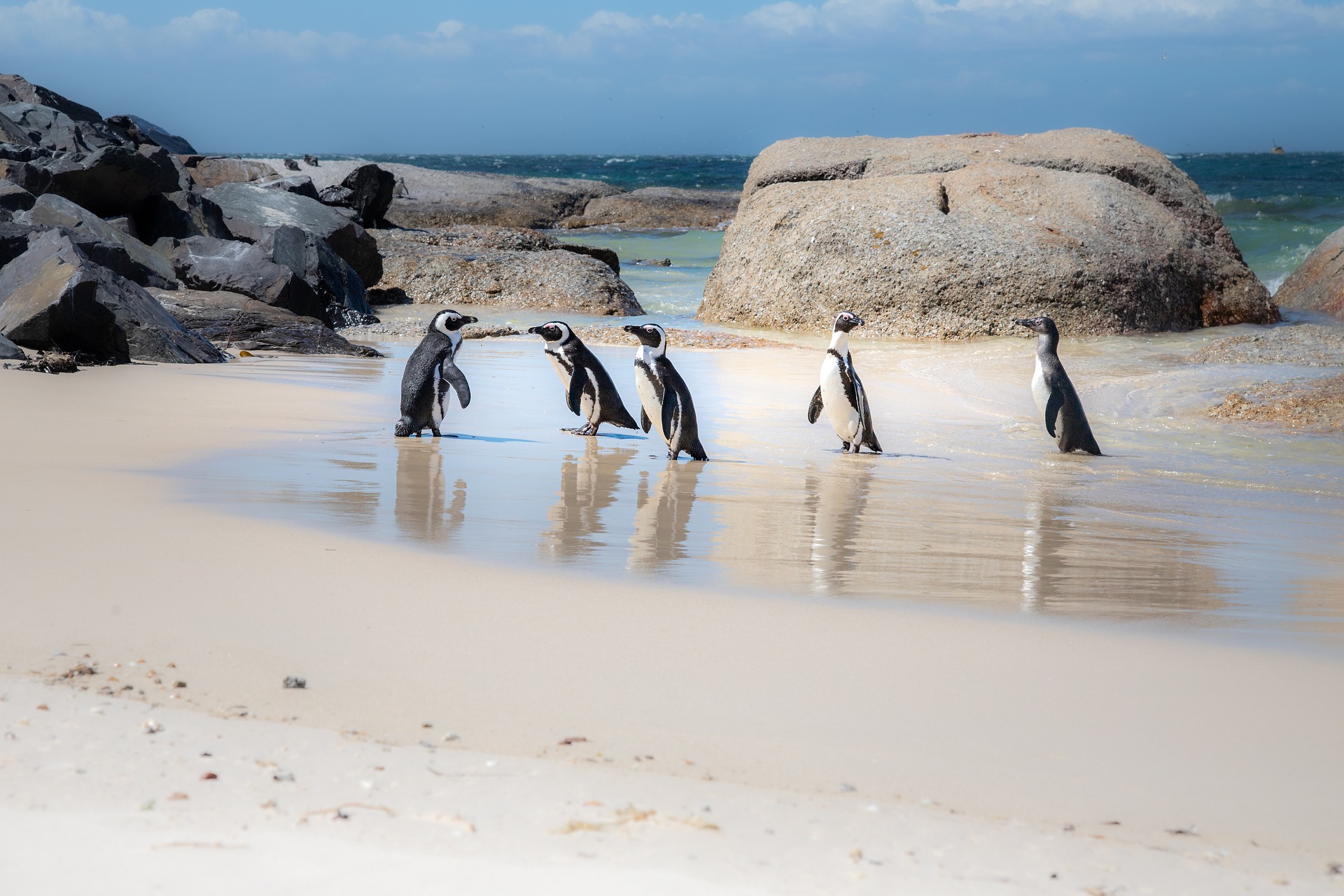
Galapagos penguins are the smallest of penguins. The whole body is covered with short feathers, and the plumage on the head and upper body is black. There is a white stripe down the throat. Males have a different body color on their upper and lower sides than females. The upper bill and tip of the bill are black. They are sensitive to heat, so when they go on land they tend to hide in the shade to beat the heat.
- Physical Characteristics
Body Length: Approximately 50 cm
Weight: Approximately 2.5-3 kg
Body Type: Small and stocky
Feathers:
Back: Black, belly: White (with a black stripe on the chest)
White stripe around the eyes
Beak: Short and sturdy, adapted for catching fish
- Movement/Behavior
Swim quickly in the water and can quickly change direction while hunting
On land, they waddle and are not as agile as they are when swimming
Highly social, swarming in groups during the breeding season
- Diet
Main Food: Small fish (anchovies, sardines, etc.), squid, and crustaceans
Hunting Method: A “diving predator” that dives and pursues fish
When food is plentiful, they gain weight in preparation for breeding
- Reproduction and Lifespan
Breeding is possible year-round, but it varies depending on water temperature and food availability.
They build nests in rocks or caves, usually laying one to two eggs.
Lifespan: Approximately 15 to 20 years in the wild.
- Personality and Behavioral Characteristics
They often work together in groups to catch food.
They tend not to be afraid of humans, but will flee on land.
They have adapted to high-temperature regions and are therefore heat-resistant.
What will your personality look like?
Galapagos penguins are small among penguins, and like little penguins, they are somewhat wary, and if you get too close to them, they may bite you with their beaks. Humboldt penguin species tend to have the same overall personality and are thoughtful.
- Sociality
They often live in groups and are seen cooperating with their peers.
During the breeding season, they build nests in pairs or small groups.
- Vigilance
They are somewhat wary on land, but tend not to be very afraid of humans.
They are very agile in the sea and can quickly escape predators.
- Activity
Small, agile, and excellent swimmers.
They are very active in the water, chasing fish and squid.
- Stubbornness and Independence
They may exhibit territoriality when necessary to protect food or their nests.
Otherwise, they are relatively cooperative.
- Impression from Humans
On land, they have a cute, waddling gait.
In the sea, they are agile and sometimes swim as if they are playing.
They are curious but cautious.
What is the ecology of Galapagos penguins?
Galapagos penguins forage during the day, subsisting on fish and crustaceans. They rarely form large groups and are often solitary. Breeding activity begins during the rainy season from April to May, and two eggs are laid at a time in cracks in coastal rocks, caves, etc. The incubation period is 38-40 days, and the chicks leave the nest 60-65 days after hatching. The lifespan is about 11 years.
- Ecology
(1) Habitat
Location: Along a limited number of rocky areas in the Galapagos Islands, Ecuador
Environmental Conditions:
Tropical climate just below the equator
Dependent on cold ocean currents (Humboldt Current)
Nests in rock shelters or caves
(2) Diet
Main Food: Small fish (anchovies, sardines, etc.), squid, and crustaceans
Hunting Method: Preys by diving underwater
Characteristics: Strongly affected by water temperature and ocean currents, individual weight and reproductive rate vary depending on the amount of food available
(3) Reproduction
Breeding is possible year-round, but depends on water temperature and food availability
Pairs build nests, usually laying one to two eggs in rock shelters or caves
Chicks are taken in turns by both parents and fledge within a few months
(4) Behavior
They often live in groups and cooperate to forage.
They waddle on land but swim nimbly in the water.
They are relatively unwary of humans.
- Lifespan
Wild: Approximately 15-20 years
Their habitat is limited, and populations can decline significantly due to factors such as El Niño.
What are the natural enemies of Galapagos penguins?
The natural enemies of Galapagos penguins are mainly non-native species. Dogs, cats, and even foxes have been introduced by humans and are preyed upon.
- Ecology
(1) Habitat
Location: Along a limited number of rocky areas in the Galapagos Islands, Ecuador
Environmental Conditions:
Tropical climate just below the equator
Dependent on cold ocean currents (Humboldt Current)
Nests in rock shelters or caves
(2) Diet
Main Food: Small fish (anchovies, sardines, etc.), squid, and crustaceans
Hunting Method: Preys by diving underwater
Characteristics: Strongly affected by water temperature and ocean currents, individual weight and reproductive rate vary depending on the amount of food available
(3) Reproduction
Breeding is possible year-round, but depends on water temperature and food availability
Pairs build nests, usually laying one to two eggs in rock shelters or caves
Chicks are taken in turns by both parents and fledge within a few months
(4) Behavior
They often live in groups and cooperate to forage.
They waddle on land but swim nimbly in the water.
They are relatively unwary of humans.
- Lifespan
Wild: Approximately 15-20 years
Their habitat is limited, and populations can decline significantly due to factors such as El Niño.
Molting in Galapagos Penguins
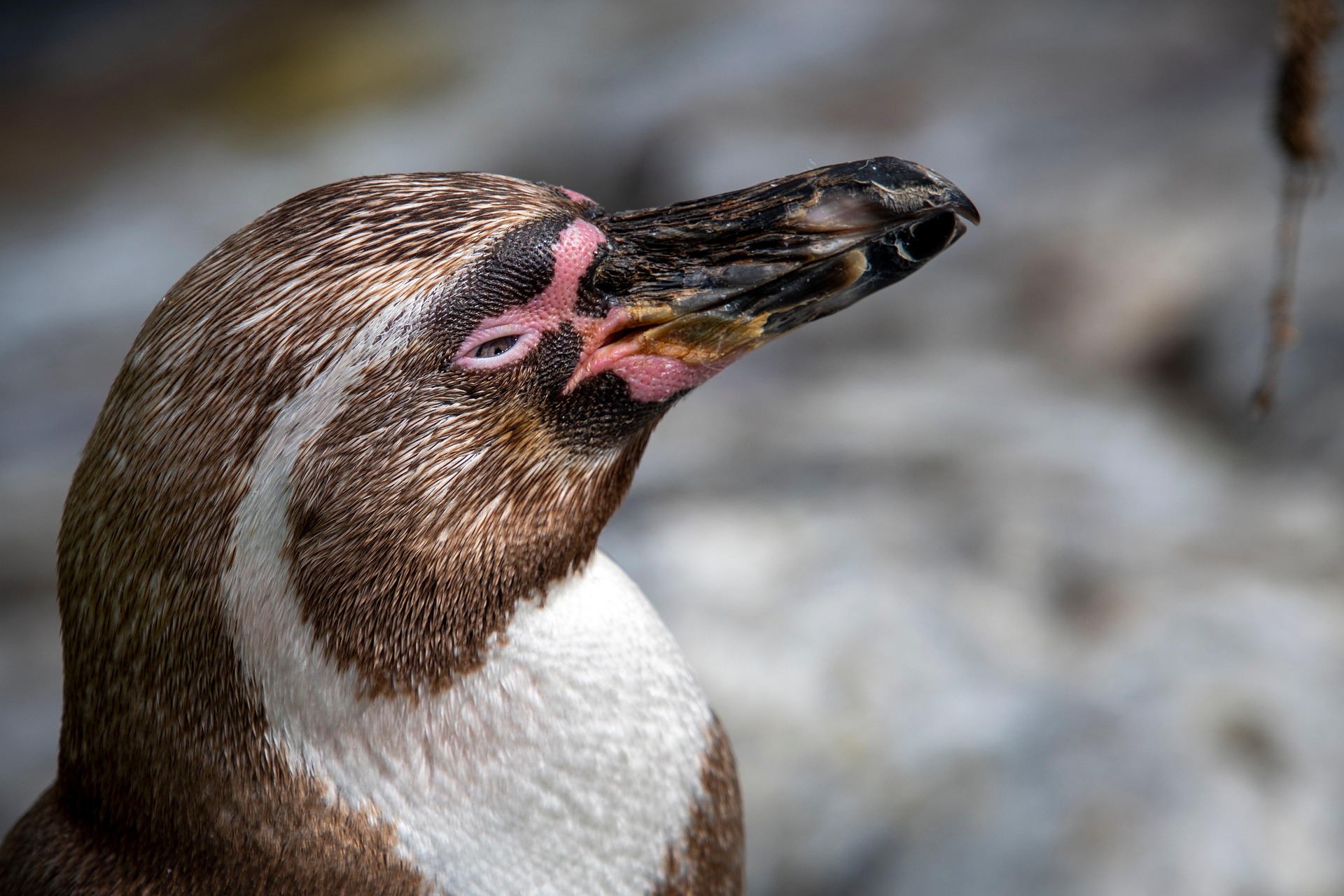
Molting is an important physiological process in which Galapagos penguins replace their old feathers with new ones.
Characteristics of Molting
Like other penguins, Galapagos penguins undergo a “complete molt,” replacing all their feathers in a short period of time.
During molting,
their water resistance decreases
They cannot enter the sea
They cannot catch food
Therefore, they spend their time on land, using the fat stored in their bodies to survive.
When do they molt?
Unlike penguins in the Antarctic and sub-Antarctic, Galapagos penguins live in a tropical environment without distinct seasons.
Therefore,
They often molt after breeding
during periods when food is relatively abundant
However, the entire population does not molt simultaneously at the same time.
Molting Period
Approximately 2-3 weeks
During this time, they are almost completely fasting.
Their weight decreases.
Since they cannot enter the sea, they need to store up sufficient nutrients before molting.
Galapagos Penguin Diving
Galapagos penguins are small compared to other penguins, but they are excellent divers.
How deep can they dive?
Galapagos penguins do not dive as deep as emperor penguins or king penguins.
Normal dives: 5-20m
Deep dives: Around 30m
Maximum recorded depth: Nearly 50m
Because their main food source is in relatively shallow waters, they don’t need to dive to the deep sea.
How long can they stay underwater?
Typical dives: 30 seconds to 1 minute
Long dives: Around 2 minutes
Although shorter than larger penguins, they are characterized by their agile and quick swimming.
Galapagos Penguin Calls
The calls of Galapagos penguins are similar to those of other penguins in the same genus, such as Humboldt penguins and Magellanic penguins.
What do they sound like?
In written form, they sound like:
“Hyaaa!”
“Gaaa!”
“Hon, hon, hon”
“Buoooo!”
These are somewhat rough and loud calls.
Despite their small size, they produce surprisingly resonant voices.
Why do they call?
① Communication with mates
During the breeding season, Galapagos penguins use calls for:
Courtship
Maintaining the bond between mates
Defense of the burrow
② Parent-offspring communication
Parents and chicks rely on calls to find each other.
Parents, especially those returning with food, will call while searching for their chicks.
③ Territorial Claims
When other penguins approach near their burrows,
they exhibit threatening behaviors such as:
making loud noises
raising their beaks
Their calls sound like a “donkey’s bray”
A characteristic of the banded penguin genus is:
raising their heads and making noises
their ecstatic displays (excitement displays)
Seasonal Activities of Galapagos Penguins
Unlike penguins of the Antarctic and sub-Antarctic regions, Galapagos penguins inhabit the Galapagos Islands, located near the equator.
January to May (Warm Season)
Seawater temperature is relatively high.
Rainfall increases.
Breeding behavior is observed.
However, breeding does not necessarily occur at the same time every year.
When food is abundant,
Courtship
Egg-laying
Incubation
Child-rearing
begins.
June to November (Cool Season)
During this period,
the influence of the Humboldt Current
Cromwell Current
becomes stronger.
As a result,
Seawater temperature decreases
Nutrient-rich seawater rises to the surface
Small fish increase
Foraging activity becomes more active.
Breeding Season
Galapagos penguins are not “seasonal breeders,”
they tend to breed on the occasion of years when food is abundant.
During breeding season
They utilize rock crevices and caves.
They lay 1-2 eggs.
The male and female take turns incubating the eggs.
Both parents raise the chicks.
Galapagos penguin chicks
This article summarizes the chicks of Galapagos penguins (Spheniscus mendiculus).
- From Egg to Hatching
Number of Eggs Laid: Usually 1-2
Nest: Built in the shade of rocks or caves
Incubation Period: Approximately 38-42 days
Both parents take turns incubating the eggs
- Chick Characteristics
Fur: Fluffy gray or light brown feathers immediately after hatching
Inconspicuous Coloring: For protection from predators
Weight: Approximately 80-100g at hatching
- Growth and Fledging
Time to Fledging: Approximately 8-10 weeks
Learn how to catch fish from their parents and practice swimming
After leaving the nest, they go out to sea with the flock and learn to hunt
- Survival Challenges
Susceptible to predators (crows, cats, rats, marine mammals)
When seawater temperatures rise due to El Niño, food becomes scarce, lowering chick survival rates
The chick stage is the most dangerous period
Are Galapagos penguins an endangered species?
Unfortunately, Galapagos penguins are listed as an endangered species. According to a survey conducted in 1999, the estimated population is only 1,200 birds, making them extremely rare. Their population continues to decline due to the following reasons. It is necessary to protect it.
- Current Status
International Union for Conservation of Nature (IUCN) Red List: Endangered
The global population is extremely small, at approximately 1,200-2,000 birds.
Due to their limited habitat, population size fluctuates greatly.
- Major Extinction Threat
Climate Change
El Niño phenomenon causes rising sea temperatures, leading to a decrease in prey (small fish), and a decline in reproductive rates.
Natural Predators and Invasive Species
Cats, rats, crows, and other birds attack chicks and eggs.
Human Activities
Food Decline Due to Fishing
Habitat Destruction Due to Tourism and Development
- Conservation Efforts
Habitat Protection in National Parks and Protected Areas in the Galapagos Islands
Invasive Species Management (Cat and Rat Control)
Marine Resource Management and Fisheries Regulations
Is it possible to keep Galapagos penguins?
Galapagos penguins are extremely rare and are listed as an endangered species, making them extremely difficult to obtain. The only option is to have the aquarium or zoo give it to you.
- Current Status of Captivity
Very few examples exist, even in zoos and aquariums around the world.
Catching them is extremely difficult due to their high dependency on the natural environment.
They are adapted to the unique climatic conditions (temperature, ocean currents, and food types) of the equatorial region.
Breeding and health management are difficult.
- Challenges in Captivity
Air and Water Temperature Management
They are adapted to cold seawater even in tropical climates.
Water and pool temperatures must be maintained at an appropriate level in artificial environments.
Food Management
Their staple diet is small fish (anchovies, sardines, etc.).
Nutrition balance must be maintained close to that of the natural environment.
Breeding Difficulties
Very few examples of captive breeding have been reported.
Water temperature, food supply, and nesting environment significantly affect breeding success.
They are an endangered species.
International regulations (such as CITES) restrict capture and transportation.
- Conclusion
Catching them in an ordinary home is impossible.
Even in specialized facilities, captivity and breeding require advanced management and environmental control.
Protection of wild individuals and habitat management are of utmost importance.
Zoos where they are kept (Japan and around the world)
The Galapagos penguin is one of the rarest penguin species in the world.
Due to its small wild population and high conservation importance, there are almost no examples of Galapagos penguins being kept in zoos or aquariums in Japan that are open to the public. Penguins kept in Japanese aquariums are mainly Humboldt penguins, King penguins, and Gentoo penguins.
Japan
Currently, no major zoos or aquariums in Japan have confirmed permanent exhibits or displays of Galapagos penguins. Many facilities keep the closely related Humboldt penguin.
If you want to see a Galapagos penguin, it is more realistic to visit the Galapagos Islands rather than in Japan.
Major facilities found worldwide
Galápagos National Park
A representative location for observing wild Galapagos penguins
Particularly famous are the areas around Isabela Island and Fernandina Island
Charles Darwin Research Station
A conservation research center for the Galapagos Islands
Conducts research and conservation activities for rare animals, including penguins.
Fellow members of the same group
コメント