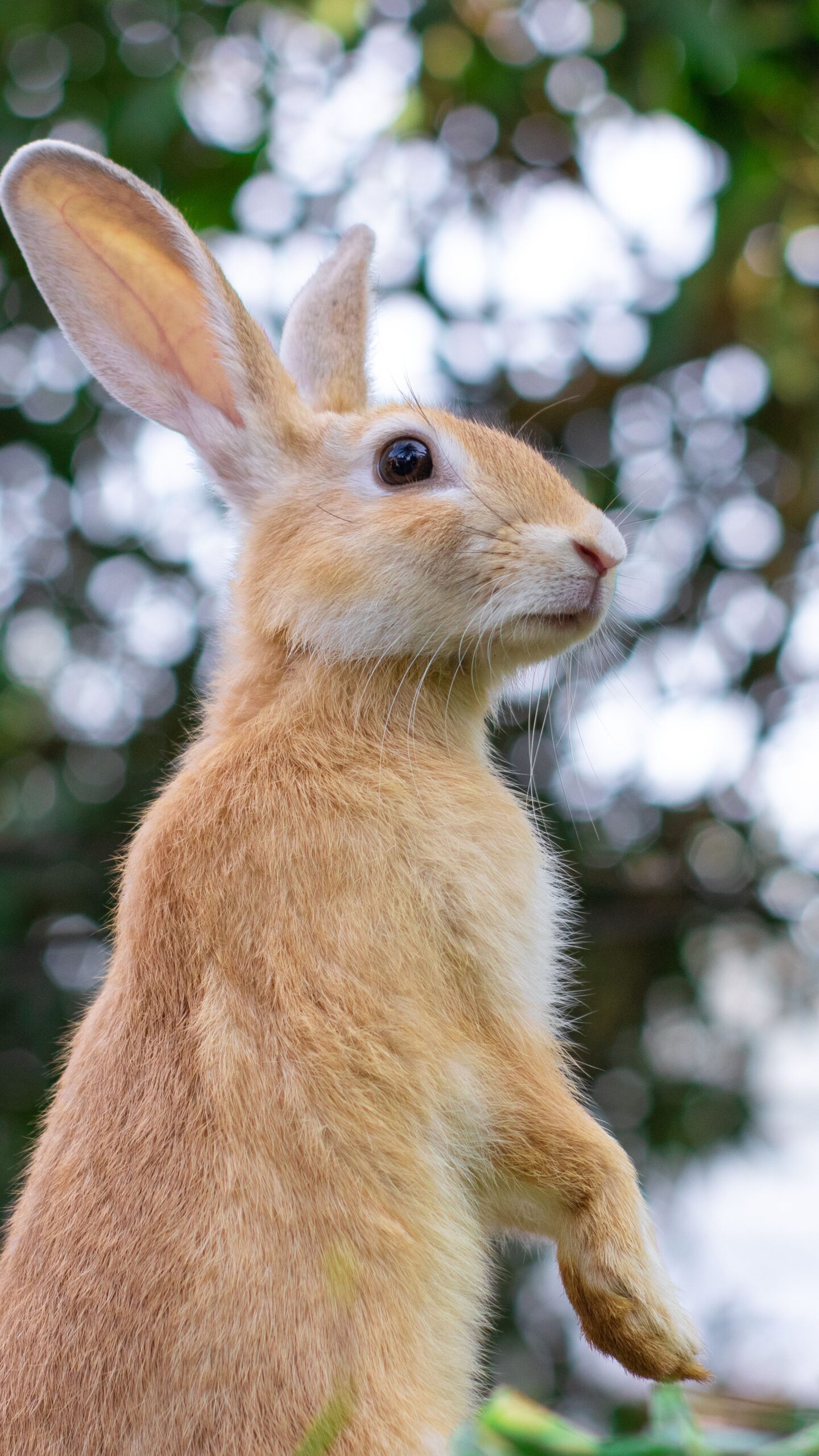
What kind of animal is a spring hare? We will explain its characteristics, ecology, and habitat. Spring hare is a rodent found in southern Africa from Kenya to Angola. It is a very cute rabbit and can be seen quite widely in sub-Saharan Africa.


- What is a Flying Rabbit? Basic Stats
- What are the roots and origins of the jerboa?
- Habitat
- What are the characteristics? What kind of creature is it?
- What is their ecology?
- About Molting (Fur Shedding)
- Vocalizations
- Seasonal Activities
- About Locomotion Speed
- About Baby Spring Hare
- Are spring hares an endangered species?
- Can spring hares be kept as pets?
- Zoos Housing Them (Japan & Worldwide)
- Introducing other animals
What is a Flying Rabbit? Basic Stats
Spring hares are rodents classified in the order Rodentia and family Leporidae. Their scientific name is Pedetes capensis, their English name is Spring hare, and their kanji is Jumping Rabbit. Their body length is 35-45cm, their tail length is 37-47cm, and their weight is 4kg. The list of information is as follows.
| Japanese(和名) | トビウサギ |
| English(英名) | Spring hare |
| scientific name(学名) | Pedetes capensis |
| classification(分類) | Mammalia、 Rodentia、 Pedetidae、Pedetes 哺乳綱、齧歯目、トビウサギ科、トビウサギ属 |
| IUCN Status(保全状況) | LEAST CONCERN |
| Length(体長) | 35~45cm |
| Weight(体重) | 4kg |
What are the roots and origins of the jerboa?
Although the name “jerboa” (or tobiusagi in Japanese, literally “jumping rabbit”) includes the word “rabbit,” they are not actually related to rabbits; instead, they belong to the rodent family.
Origin: Small rodents that evolved in the desert
The ancestors of the jerboa are believed to have originated from early rodents that appeared approximately 50 to 40 million years ago (during the Eocene to Oligocene epochs).
Evolutionary lineage:
Primitive rodents
↓
Small species that moved into deserts and arid regions
↓
Jerboas (rodents with developed hind legs)
↓
Modern jerboas (Dipodidae)
Why did they evolve bodies suited for jumping?
The jerboa’s most distinctive features are:
Very long hind legs
Short forelegs
A long tail
Large ears
These traits are adaptations to life in the desert.
① Long hind legs
In sandy terrain, moving by jumping is more efficient than walking normally.
Advantages:
Less likely to sink into the sand
Capable of high-speed movement
Easier to escape from predators
Depending on the species,
they can travel several meters or more in a single jump.
② Long tail
The tail is not merely for show.
Functions:
Balancing during jumps
Making sharp turns
Controlling landing posture
It acts as a “rudder,” especially during high-speed movement.
③ Large ears
Thermoregulation is crucial in the desert.
The ears contain many blood vessels,
dissipating heat
picking up ambient sounds
and detecting predators early.
About classification
There are two subspecies of spring hare: the Eastern spring hare (Pedetes capensis) and the Eastern spring hare (Pedetes surdaster).
| Pedetes capensis | It is found in a wide range of areas, including South Africa, Angola, Congo, Zambia, Namibia, Botswana, Zimbabwe, and Mozambique. |
| Pedetes surdaster | Distributed in Kenya, Tanzania and Uganda |
Habitat
Spring rabbits are widespread in sub-Saharan Africa.
- Geographic Distribution (Where are they found?)
Jerking hares are widely distributed throughout the arid regions of Eurasia.
Main Distribution Areas
North Africa (Egypt, Libya, etc.)
Middle East (Saudi Arabia, Iran, Iraq, etc.)
Central Asia (Kazakhstan, Uzbekistan, Mongolia)
East Asia (Northern China)
They are not naturally found in Japan.
- Habitat Characteristics (What kind of place is it?)
Basic Environment
Desert
Semi-desert
Dry grassland (steppe)
Wasteland/gravely land
Environmental Conditions
Low rainfall
Large temperature difference between day and night
Sparse vegetation
They are well adapted to environments with little water.
- Relationship with Ground/Soil
Ground characteristics are important when selecting a habitat for springhares.
Sandy to slightly hard soil
Burrow digging is essential
Avoid completely shifting sand (sand that moves too much)
- Burrow (Roost)
Dig complex underground burrows
Depth: 50cm to over 1m
May have burrows for specific functions
Resting
Escape
Raising young
To protect themselves from predators and heat/cold conditions, their habitat consists of both aboveground and underground habitats.
- Home Range and Population Density
Nocturnal
Home range per individual is relatively large
Rarely gather in high densities in the same place
What are the characteristics? What kind of creature is it?
As its name suggests, flying rabbits have the habit of jumping up. They have large hind legs, long hair on their tails, thick necks, and large round eyes. They are similar to kangaroos in that they hop on their hind legs. Flying rabbits are sometimes active during the day, but are nocturnal and often rest in holes they dig in the ground during the day. They can dig holes with the long claws on their front legs to protect themselves from predators. Flying rabbits have excellent senses of smell, hearing, and vision, and can detect the approach of predators in advance. Their backs are covered with reddish brown fur, and their bellies are covered with white fur.
- Appearance (Very Unique)
Body Shape
Body Length: 5-15cm (Depending on Species)
Tail: Longer than Body Length (For Balance)
Hin Legs: Abnormally Long (Specialized for Jumping)
Front Legs: Short, Only for Preying
When Standing, They Look Like Mini-Kangaroos.
Face
Round Face
Large Eyes (Nocturnal)
Large Ears (Heat Dissipation + Hearing)
- Movement (Significant Characteristic)
Jumping Movement
Basically Jumps on Two Legs
Can Jump 1-3m in a Single Jump
Good at Sudden Changes in Direction
To Escape Predators (Owls, Foxes) in the Desert
- Personality/Temperament (What’s It Like?)
Very Timid
Sensitive to Sounds and Vibrations
Generally Solitary
Almost Non-Aggressive
Their Best Defense is “Quick Escape”
- Life Rhythm
Completely nocturnal
Day: Rest in underground burrows
Night: Emerging above ground to feed and move
Due to the dangers of desert life during the day,
they are active only at night.
- Diet (What do they eat?)
Seeds
Grass shoots
Insects (small amounts)
Water
Do not drink water directly
Obtain water from food
Recycle water using highly efficient kidneys
- Intelligence/Senses
Hearing: Excellent hearing (can even detect the sound of wings)
Vision: Good at surviving in the dark
Memory: Accurately identifies the location of their burrows
What is their ecology?
Flying rabbits live by eating grass roots, bulbs, stems, seeds, etc. The gestation period is 80 days, and they can give birth to one baby at a time. They are said to live for about 10 years.
- Daily Life Rhythm (Behavioral Ecology)
Day
Rests in underground burrows
Protects from desert heat and predators
Temperature and humidity inside burrows are more stable than above ground
Night
Emerges after sunset
Feeding, migration, and breeding
Returns to burrows before dawn
Completely nocturnal. Almost never emerges above ground during the day.
- Feeding Ecology (What and How They Eat)
Diet
Seeds
Grass shoots and leaves
Small insects (supplementary)
Characteristics of Feeding
Deftly holds food with their front legs
Eats and moves quickly, without moving more than necessary
- Relationship with Water (Critical to Desert Adaptation)
Does not drink water directly
Survives solely on the moisture in food
Highly efficient kidneys
→ Extremely concentrated urine
→ Minimizes water loss
This is one of the best water-saving abilities among desert mammals.
- Locomotion and Home Range
Locomotion
Bipedal hopping is the norm
1-3m per hop
Zigzag hopping to avoid predators
Home Range
Relatively large per individual
Does not stay in the same place for long periods of time
- Burrow Habits (Survival Base)
Burrow Structure
Depth: 50cm-1m or more
May have multiple entrances and exits
Used for Different Purposes:
Rest
Escape
Breeding and Rearing
Burrows are a “home + fortress.”
- Sociality (Do they form groups?)
Generally solitary
Weak territorial awareness
Interactions increase only during breeding season
They do not form groups, but their habitats may overlap.
- Breeding Biology
Breeding Frequency: Once to several times per year (depending on the environment)
Gestation Period: Approximately 25 to 40 days
Birthing occurs deep inside the burrow
Baby offspring are born immature and grow within the burrow.
Breeding success is higher in years with abundant rainfall and food.
Do they have any natural enemies?
The natural enemies of flying rabbits are servals, caracals, and jackals.
About Molting (Fur Shedding)
For jerboas (rodents adapted for jumping), molting—the shedding and replacement of fur—is a crucial adaptation for coping with the harsh temperature fluctuations of desert and arid environments. Unlike birds, which undergo “molting” (feather replacement), mammals undergo “fur shedding,” though the term “molting” is often used for both.
🟤 Basic Molting Cycle
Most jerboa species molt approximately twice a year.
🌱 Spring Molt (Winter Coat → Summer Coat)
Timing: Around March to May
They shed the thick fur that protected them against the winter cold and transition to a coat suited for the hot season.
Characteristics:
Reduction in undercoat
Shorter fur
Easier dissipation of body heat
Body may appear slimmer
In the desert, the temperature difference between day and night is significant; retaining a winter coat could lead to a dangerous rise in body temperature.
🍂 Autumn Molt (Summer Coat → Winter Coat)
Timing: Around September to November
They increase their fur volume in preparation for cold nights.
Characteristics:
Denser fur
Improved heat retention
Enhanced thermal insulation
Winter coats are vital because, while desert days are hot, temperatures plummet at night.
Functions of Jerboa Fur
① Body Temperature Regulation
Deserts present extreme environments:
Daytime:
☀️ Can exceed 40°C
Nighttime:
🌙 Can drop to near 0°C in some regions
Their fur serves dual purposes:
Blocking daytime heat
Preventing heat loss at night
② Protection from Sand
Jerboas live in sandy habitats.
Their fur serves to:
Keep out sand and dust
Protect the skin
Shield against UV rays
③ Desert Camouflage
Fur colors are typically:
Yellowish-brown
Light brown
Grayish-brown
These colors blend with the sand and rocks, offering advantages such as:
Making them harder for predators to spot
Making them less likely to alert potential prey
Vocalizations
Springhares (a type of jumping rodent) are not animals that vocalize loudly like coyotes or wolves. As small rodents inhabiting desert environments, they primarily communicate using very faint sounds and vibrations.
① High-pitched “pi” or “chi” sounds (short calls)
Purpose: Communication with others
Characteristics:
Faint, high-pitched sounds
Short and intermittent
Sometimes heard at night
Common situations:
Locating or acknowledging others
Alerting to danger
Signals between parent and offspring
Because of their small size, there is no need for the sound to carry over long distances; these calls are used for close-range communication.
② Creaking or teeth sounds (clicking)
Springhares may produce sounds other than standard vocalizations, such as:
Teeth grinding
Soft clicking sounds
Nasal sounds
Purpose:
Alertness/Warning
Excitement
Signaling others
③ Alarm signals
When sensing danger, they use:
Short vocalizations
Stamping
Ground vibrations
For springhares, the behavior of striking the ground with their hind legs (foot-drumming) is particularly important—often more so than vocal sounds.
Seasonal Activities
The activity patterns of jerboas (rodents adapted to arid environments) shift seasonally in response to the extreme temperature fluctuations of deserts and grasslands. Key aspects include avoiding temperature extremes, hibernation, reproduction, and foraging.
🌱 Spring (March–May): A Season of Resumed Activity and Breeding
Key Activities
Waking from hibernation
Breeding
Foraging begins
During winter, jerboas in colder regions remain relatively inactive within their burrows.
As spring arrives:
Time spent above ground increases
Range of movement expands
Interactions between males and females increase
Diet
With the proliferation of plant life in spring, they feed on:
New shoots
Grass roots
Seeds
Insects
☀️ Summer (June–August): Peak Nocturnal Activity
Key Activities
Nighttime foraging
Raising young
Sourcing water
Because surface temperatures in the desert become extremely high during the day, they become almost exclusively nocturnal.
Activity times:
After sunset
Late at night
Before dawn
Behavioral Characteristics
Emerging from burrows
Moving rapidly using long hind legs
Foraging for seeds and insects
Escaping danger by jumping
Special Summer Ability: Minimal water intake
Jerboas are highly adapted to desert life, utilizing:
Moisture from plants
Metabolic water produced within their bodies
This allows them to survive even in areas with scarce water sources.
🍂 Autumn (September–November): Preparing for Winter
Key Activities
Foraging
Building up energy reserves
Burrow maintenance
Autumn is a critical period for species that hibernate or enter a state of dormancy.
Behavior:
Searching for edible seeds
Preparing underground burrows
Storing fat
Diet
Seeds
Roots
Bulbs
Insects
Plant seeds, in particular, serve as a vital energy source for surviving the winter.
❄️ Winter (December–February): Dormancy/Hibernation Period
Key Activities
Life underground
Energy conservation
Pikas in cold regions significantly reduce their activity levels during winter.
Inside their burrows, they survive the winter by:
Lowering body temperature
Reducing heart rate
Minimizing food consumption
*Note: Some species undergo true hibernation, while others do not hibernate but instead remain inactive within their burrows.
About Locomotion Speed
The movement of the jerboa (a type of hopping rodent) is not the “walking” gait seen in typical mice or rats; instead, it relies primarily on hopping—using powerful hind legs to propel itself.
🚶 Normal Movement (Slow Gait)
Speed: Approximately 2–5 km/h
Used when exploring the area around the burrow or foraging for food.
Characteristics:
Forelegs serve a mostly auxiliary role
Small, short steps with hind legs
Moves while checking for scents
Moves slowly while remaining alert
However, jerboas spend little time walking normally on the ground; they generally move by hopping.
🦘 Hopping (Standard Movement)
Speed: Approximately 10–20 km/h
This is the jerboa’s most characteristic mode of movement.
Characteristics:
Pushes off the ground simultaneously with both hind legs
Uses the tail for balance
Does not sink easily into sandy terrain
Allows for long-distance travel with minimal energy expenditure
In desert environments, this hopping method is more efficient than walking.
⚡ Top Speed When Fleeing
Approximately 30–40 km/h or faster
They accelerate rapidly when attacked by a predator.
Predators they flee from:
Foxes
Snakes
Birds of prey
Wild felines
Etc.
Using powerful jumps driven by their long hind legs, they perform:
Sudden acceleration
Sharp changes in direction
Continuous hopping
About Baby Spring Hare
This article focuses on baby spring hare (Jerboa), focusing on their appearance, behavior, and survival strategies from birth to development.
- Characteristics at Birth
Birth Size: Approximately 2-6 pups (varies by species and environment)
Immediately after birth
Eyes are closed
Almost no body hair
Hin legs are still short
Completely helpless (immature)
They are so weak at first that it’s hard to imagine they could survive in the desert.
- Location of Birth and Rearing
Birth in an underground breeding burrow
The burrow is deeper than others, providing protection from predators and heat.
The mother forages outside and periodically returns to nurse.
Baby never emerges above ground.
- Developmental Steps
Around 1 week old
Exclusively breastfed
Depends on mother for body temperature regulation
Crys to call mother
2-3 weeks old
Fur begins to grow
Eyes open
Rapid growth of hind legs
Around 1 month old
Practices walking and jumping within the den
Begins nibbling on solid food (seeds, etc.)
5-7 weeks old
Ventures outside the den for short periods
Capable of short-distance jumps
Around 2 months old
Fully weaned
Spends with mother at night
Becoming independent
- Behavioral Characteristics of Young Animals
Highly sensitive to sound and vibration
Sleep together in the back of the den
Jumping play using hind legs (practice)
Play = survival skill training.
- Mother-infant relationship
Mother alone cares for young
Father not involved
Rapid distance increases after weaning
No long-term family relationships are formed.
- Risks in Pups
Den collapse
Death of mother
Food shortages due to extreme dryness
Predators (especially snakes)
Pup mortality is relatively high.
Are spring hares an endangered species?
Spring hares are often considered pests that damage agricultural crops such as potatoes, corn, and wheat, and are therefore exterminated. In their habitat, they are sometimes eaten for meat. However, they are not an endangered species.
- Springhare is Not Just One Species
“Springhare” is not a single animal, but a collective term for many species in the family Dipodidae.
Two-legged Springhare
Three-toed Springhare
Pygmy Springhare, etc.
→ Dozens of species exist.
As a result, endangered status is assessed on a species-by-species basis.
- International Assessment (IUCN Red List)
Many Springhare Species
LC (Least Concern)
Wide distribution and relatively stable populations
Because they are adapted to desert and semi-desert environments with little human impact.
Some Species Require Caution ⚠️
The following species are also classified as:
VU (Vulnerable)
EN (Endangered).
Main Reasons for the Increased Danger
Very Narrow Distribution
Limited to Certain Deserts and Regions
Habitat Destruction Due to Agricultural Land Development and Irrigation
Burrow Destruction Due to Livestock Grazing
- Why Haven’t Many Species Remained Extinct?
Jerking rabbits are surprisingly resilient to environmental changes.
Body Types Specialized for Dry Lands
Physiological Functions that Do Not Require Water
Nocturnal and Underground Living
Relatively High Reproductive Capacity
→ The More Inhospitable Places They Are, the Easier They Are to Survive
This is why so many species have survived.
Can spring hares be kept as pets?
Spring hares are sometimes kept as pets, and it is possible to keep them as pets. You can keep them as long as you have the same equipment as a normal rabbit.
Selling price
The selling price seems to be around 200,000 to 400,000 yen. There is a fair amount of circulation.
Breeding environment
Because flying rabbits have a habit of jumping, their cages need to be quite large. It is difficult to raise them without a fairly large garden. It is a little difficult to keep them in an ordinary house.
Feeding
Flying rabbits are omnivorous, eating plant roots and stems, fruits, insects, arthropods, etc. They can also eat rice, potatoes, and corn.
Zoos Housing Them (Japan & Worldwide)
The jerboa (family Dipodidae) is a rare animal kept in very few zoos. This is because they are small, nocturnal, desert-dwelling creatures that are difficult to manage in terms of environmental conditions and are not well-suited for public display. Jerboas (Dipodidae) are desert-dwelling rodents distributed across a range extending from North Africa to Central Asia.
🇯🇵 Facilities in Japan
Ueno Zoological Gardens
In Japan, there are instances of the Greater Egyptian jerboa (Jaculus orientalis) being kept in captivity.
Characteristics:
Nocturnal animal exhibit
Enclosure designed to replicate a desert environment
Often rests in burrows during the day
Active primarily at night
Since jerboas often sleep during the day, the best times to observe them are in the evening or within nocturnal animal exhibit areas.
🌍 Facilities Worldwide
🇬🇧 United Kingdom
Axe Valley Wildlife Park
Has records of keeping the Greater Egyptian jerboa.
Characteristics:
Small desert animal exhibit
Presented as a nocturnal rodent
🇨🇿 Czech Republic
Zoo Plzeň
Has instances of keeping the Greater Egyptian jerboa.
In zoos across Europe—including the Czech Republic—jerboas are often featured as part of exhibits showcasing desert or arid-zone ecosystems.
Introducing other animals

コメント