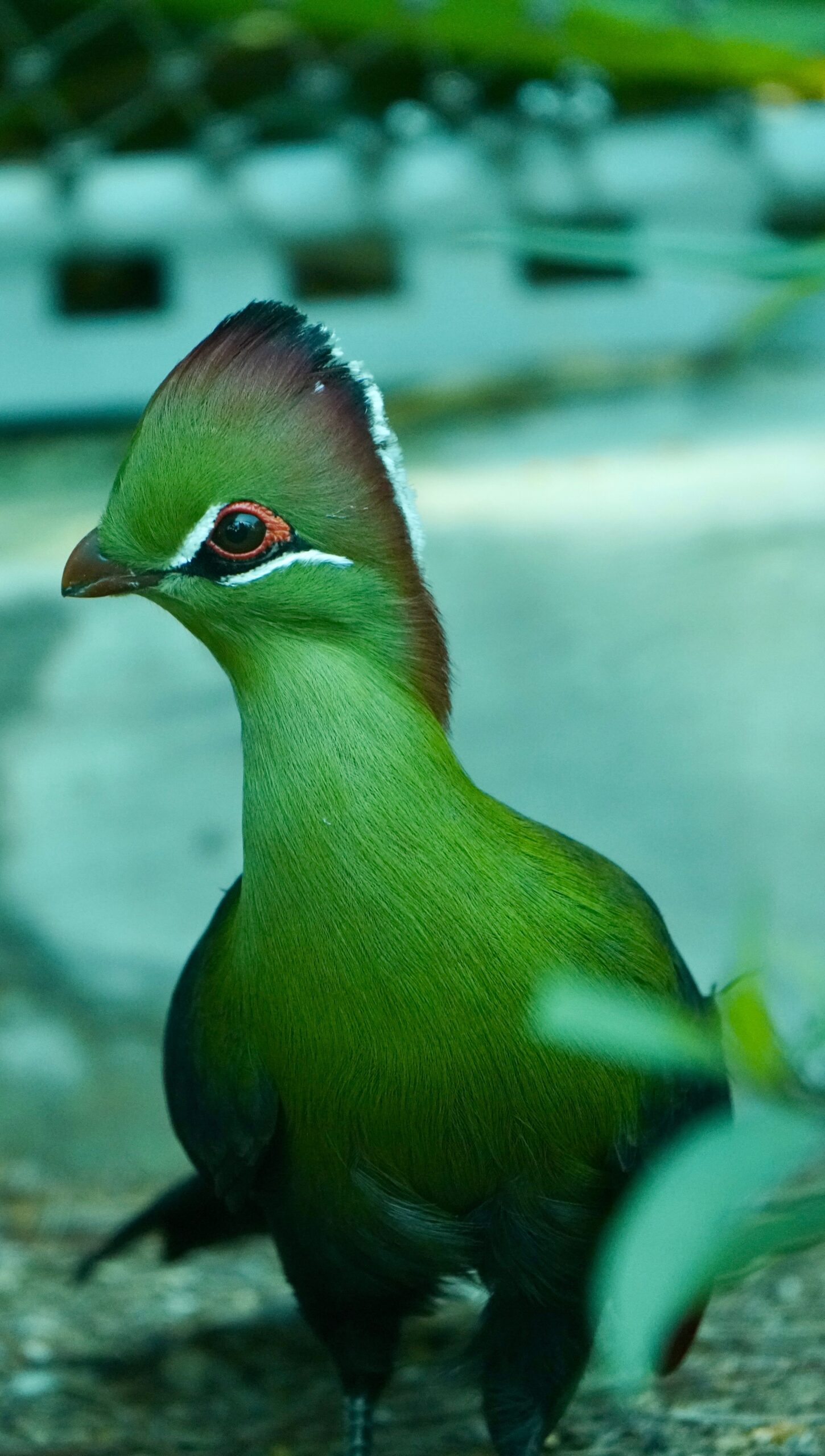
What kind of bird is the Humpback Curassow? We will explain its characteristics, ecology, and habitat. The Humpback Curassow is a bird belonging to the order Phasianidae, and is found only in Colombia, so many people may not know about it. Furthermore, it is designated as an endangered species.



- What is the Blue-capped Curassow? Basic Stats
- What are the roots and origins of the Blue-knobbed Curassow?
- Habitat
- What are its characteristics? What does it look like?
- What is its ecology?
- About Molting
- About Their Calls
- Seasonal Activities
- Regarding Flight Speed
- About Knobby Curassow Chicks
- Is the Knobbed Curassowicz an endangered species?
- Can the Knobbed Curassowicz be kept as a pet?
- Zoos Housing the Species (Japan & Worldwide)
- Introducing other animals
What is the Blue-capped Curassow? Basic Stats
The Blue-billed Curassow is a bird in the Crax genus, Crax family, and Crax order. Its scientific name is Crax alberti, and its English name is Albert’s curassow or Blue-billed curassow. Its kanji is 青む帆刊鳥. Its total length is 82.5-92.5cm. Its wingspan is 37.5-42.4cm for males and 36.2-38.2cm for females. The complete list of information is as follows:
| Japanese(和名) | アオコブホウカンチョウ |
| English(英名) | Albert’s curassow Blue-billed curassow Blue-knobbed Curassow |
| scientific name(学名) | Crax alberti |
| classification(分類) | Aves、 Gruiformes、 Cracidae、Crax 鳥綱、キジ目、ホウカンチョウ科、ホウカンチョウ属 |
| IUCN Status(保全状況) | CRITICALLY ENDANGERED |
| Length(体長) | 82.5-92.5cm |
| Weight(体重) | 3.2~3.6kg |
What are the roots and origins of the Blue-knobbed Curassow?
The “roots” (origins) of the Blue-knobbed Curassow (scientific name: Crax alberti) can be broadly categorized into two aspects: its evolutionary origins and the origin of its name.
Evolutionary Origins
The Blue-knobbed Curassow is a bird belonging to the order Galliformes and the family Cracidae (curassows and guans). It is a member of the curassow group, which evolved independently in the Americas approximately 60 million years ago or later. While the Cracidae family is closely related to chickens and pheasants, these birds underwent unique evolution to adapt to rainforest environments.
The Blue-knobbed Curassow is known today as:
An endemic species found only in northern Colombia
An inhabitant of rainforests
A large, forest-dwelling bird that feeds primarily on fruit
Origin of the Name
Ao (Blue): Derived from the vivid blue, fleshy “knob” (wattle) at the base of the male’s beak.
Kobu (Knob): Refers to the protuberance at the base of the beak.
Hōkanchō (Crowned Curassow): A collective name given because the feathers on the head resemble a crown.
Origin of the Scientific Name Crax alberti
The specific epithet alberti is believed to honor Karl (Carlos) Theodor Albert, a 19th-century German naturalist and explorer. In other words, it means “the curassow named after Albert.”
Biological classification (taxonomy)
| 階級 | 分類 |
|---|---|
| 界 | 動物界 Animalia |
| 門 | 脊索動物門 Chordata |
| 綱 | 鳥綱 Aves |
| 目 | ヒクイドリ目 Casuariiformes |
| 科 | ヒクイドリ科 Casuariidae |
| 属 | ヒクイドリ属 Casuarius |
| 種 | アオコブホウカンチョウ Casuarius casuarius |
Habitat
The blue-and-white curassow is endemic to Colombia.
- Overview of Habitat
The Knobbed Curassow is a large tropical rainforest bird found in northern Australia and around New Guinea.
Its most distinctive feature is its strong dependence on remote, dense tropical rainforests.
- Geographic Distribution
Main Distribution Areas
Northeastern Australia
Northern Queensland (e.g., around Cairns)
New Guinea
Small surrounding islands (e.g., Papua, Indonesia)
In Australia, it is found only in a limited area of northeastern Queensland.
- Main Habitat
Preferred Environment
Tropical rainforests
Dense lowland forests
Areas with high rainfall
Forests with moist forest floors
Frequently Visited Areas
Animal trails in the forest
Riverside
Areas rich in fruit
It rarely visits open or dry areas.
- Habitat Conditions (Important)
The survival conditions for the Blue-and-White Curassow are extremely difficult.
Fruit is available year-round.
Many tall trees.
Low human disturbance.
Large, continuous forest.
Fragmentation of the forest makes survival extremely difficult.
What are its characteristics? What does it look like?
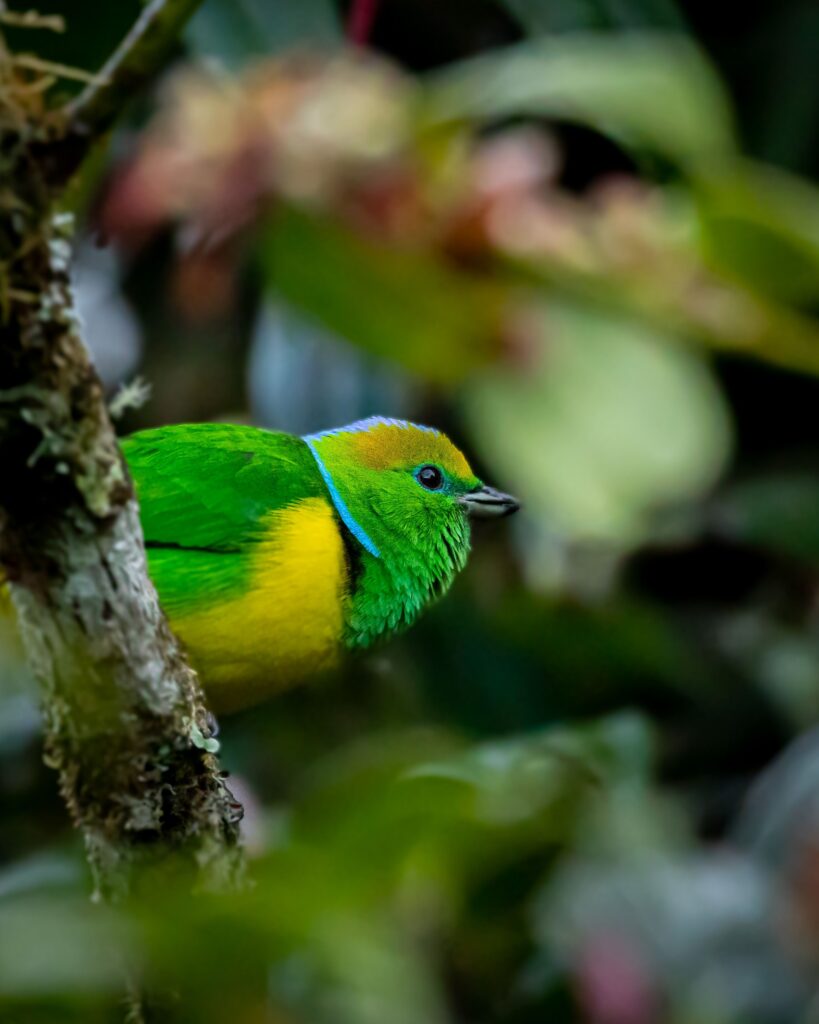
The bill of the Humpback Curassowski has a yellowish color. The male’s abdomen and the underside of the tail feathers are covered with white feathers, while the female’s upper side has white horizontal stripes and the abdomen and lower tail feathers are covered with reddish-brown feathers. The tip of the tail feathers is white, and the male has a blue hump at the base of the bill. The Humpback Curassowski lives in forests, wetlands, and tropical rainforests in lowlands and low mountains below 1,200 meters above sea level.
- Appearance (First Impression)
“Strange” and “Dinosaur-like”
Height: 1.5-1.8m
Weight: 40-60kg or more
Black, hard-looking feathers (similar to hair)
Flightless bird
At first glance,
It tends to give the impression of being more of a primitive dinosaur than a bird.
- Head casque
Hard, helmet-like casque on top of head
Blue to brown
Its exact purpose is unknown, but
It is thought to have been used as protection for moving through the forest,
Sound resonance,
A sign of maturity
Symbolic appearance.
- Face and neck color
Face and neck: Bright blue
Red wattles on throat
Color varies from individual to individual
Highly conspicuous, even in the rainforest.
- Legs and Weapon Ability
One of their most significant features
Very thick and strong legs
Sharp spurs over 10cm long on the inner toes
Kicks can be fatal
Considered one of the most dangerous birds in the world
- Movement and Physical Abilities
Extremely fast
→ Around 50km/h
Move through dense jungles
High jumping and turning ability
Surprisingly agile despite their large size.
- Personality and Demeanor
Basic Personality
Highly cautious
Avoids people
Solitary
When cornered
Aggressive
Kicks without hesitation
Males raising young are particularly dangerous
“Gentle, but dangerous if distance is misjudged.”
- Behavioral Style
Specialized in terrestrial dwelling
Walks low through the forest
May appear silently
Encounters are often surprising.
- Their Status as Biological Species
Flightless Birds (Ratites)
Primitive Bird Lineage
Living Fossils
Extremely important for understanding bird evolution.
What is its ecology?
The Humpback Curassowski feeds on the ground, eating fallen fruit, nuts, and insects. It breeds monogamously from December to April of the following year. Females usually lay two eggs. It is said that it lives for about 20 to 25 years.
- Lifestyle (Daily Rhythm)
Diurnal
Rests quietly in the forest at night
Walks almost entirely on the ground during the day
Their greatest characteristic is that they are large birds that live on foot, without flying.
- Behavior
Generally solitary
Adult birds are almost always alone
Strongly territorial
Keeps distance from other individuals
Exceptions
Males and chicks interact only during breeding season
Male and chick during rearing
- Diet (What they eat)
Main food: Fruit
Fruits fallen in the forest
Swallows large fruits whole
Consumes more than a dozen types of plants
Supplementary foods
Mushrooms
Insects
Small animals (frogs, lizards, etc.)
Fallen leaves and plant buds
One of the largest seed dispersers in the rainforest
= “Forest gardeners”
- Characteristics of foraging behavior
Lowers head to explore the ground
Developed sense of smell and vision
Uses the same route repeatedly
Sometimes, the Knobby Curassow creates a path through the forest.
- Breeding Habits (Very Unique)
Gender Role Reversal
Female: Leaves immediately after breeding
Male:
Incubates eggs
Raises parentage
This is a very rare species among birds.
Breeding Process
Female lays eggs (3-5)
Male incubates eggs for approximately 50 days
After hatching, the male continues to raise the eggs alone
Chicks spend approximately 9 months with the male
- Life with Chicks
Chicks have stripes (camouflage)
Male
Protects them from danger
Teaches them about food
Males are particularly aggressive and dangerous during parenting.
- Movement and Home Range
Home Range: Several km² to over 10 km²
Seasonal Migration
Moves forests in response to fruit ripening
While not a migratory bird, they frequently move locally.
Does it have any natural enemies?
The Humpback Curassowski has no significant natural enemies.
About Molting
While there is limited detailed research on molting in the wild for the Blue-knobbed Curassow (Crax alberti), the following information is known based on closely related curassow species.
Molting Characteristics
They are believed to undergo a complete molt approximately once a year.
They do not lose all their feathers at once; instead, they undergo a gradual molt where feathers are replaced little by little.
Consequently, there is no period during which they are unable to fly.
Timing
The timing is not fixed to a specific season, though molting often occurs after the breeding season has ended.
Due to the tropical climate of northern Colombia, the timing may not be as clearly demarcated by season as it is for birds in temperate regions.
Molting in Young Birds
Chicks hatch covered in brownish down.
As they grow, this is replaced by juvenile plumage, which eventually transitions to adult plumage through several partial molts.
In males, the characteristic blue knob on the beak develops as they mature.
Observations in Captivity
In settings such as zoos, the following signs are observed during molting:
Loss of feathers on the chest and wings
Sequential replacement of tail feathers
A temporary loss of feather sheen
However, provided the bird is healthy, the new plumage will fully grow in over a period of several weeks to months.
About Their Calls
The Blue-knobbed Curassow (Crax alberti) is characterized by its deep, resonant, low-frequency calls. Because these sounds carry over long distances in the rainforest, they are used to establish territory and attract mates.
① Territorial and Courtship Calls (Male)
“Boon… Boon…”
“Uun… Uun…”
They repeat a low, chest-resonating sound—reminiscent of a drumbeat—at intervals of a few seconds.
These calls are most frequently heard in the early morning and evening.
② Alarm Calls
“Kut! Kut!”
“Kot, kot, kot”
They emit short, sharp calls when sensing predators or unusual disturbances.
③ Communication Between Family Members and Pairs
They confirm each other’s locations using soft, subtle sounds like “put” or “pyut.”
Call Characteristics
The calls are very low-pitched rather than high-pitched.
In the jungle, the sound can travel hundreds of meters.
The rhythm is slower than that of pheasants or domestic chickens.
Males call more frequently than females.
Why the Low-Pitched Voice?
In the dense vegetation of a rainforest, low-frequency sounds have the advantage of traveling further than high-frequency sounds, which are more easily obstructed by obstacles. Consequently, it is believed that curassows—including the Blue-knobbed Curassow—evolved these low-pitched calls as an adaptation to their forest environment.
Seasonal Activities
Because there are very few observational records of wild Blue-knobbed Curassows (Crax alberti), their precise annual cycle has not been fully elucidated. However, based on the ecology of closely related curassow species and the characteristics of their habitat—the tropical forests of northern Colombia, which experience distinct dry and rainy seasons—the following trends are inferred:
Spring (Late dry season to onset of rainy season)
Preparation for breeding
Males mark their territory with low-pitched “booming” calls.
They engage in display behaviors, such as spreading their tail feathers and puffing up their bodies to appear larger.
This is considered the period when pair formation takes place.
Summer (Rainy season)
Breeding and rearing
Nest building occurs.
They construct simple nests using tree branches and leaves.
Females typically lay a small clutch of eggs (often around two).
Chicks are precocial—capable of walking shortly after hatching—and follow their parents as they move across the forest floor.
Autumn (Latter half of rainy season)
Foraging-focused activity
They walk along the forest floor in search of fruits, seeds, insects, and small animals.
Young birds prepare to separate from their parents as they grow.
Some individuals are believed to begin molting during this time.
Winter (Dry season)
Movement and territorial activity
They range widely within the forest in search of food.
Male vocalization tends to increase.
Territories are maintained in preparation for the upcoming breeding season.
Regarding Flight Speed
There is very little detailed data on the flight speed of the Blue-knobbed Curassow (Crax alberti) obtained by tracking wild individuals. However, estimates can be made based on their physique, wing shape, and records of closely related curassow species.
Flight Speed (Estimated Values)
| Situation | Estimated Speed |
|---|---|
| Normal flight | Approx. 30–40 km/h |
| Short-distance escape flight | Approx. 50–60 km/h |
| Maximum instantaneous speed | Estimated around 60 km/h |
① Short-distance flight
The Blue-knobbed Curassow is not a bird that flies for extended periods, unlike falcons or pigeons.
Characteristics:
Spends a long time walking on the forest floor
Takes flight suddenly when sensing danger
Primarily flies distances of a few tens of meters to 100 meters
Escapes into nearby shrubs or up into trees
② High initial speed
The takeoff is surprisingly powerful:
Kicks off the ground with strong legs
Flaps large wings vigorously a few times
Followed by a short glide
This characterizes their flight style.
③ Reasons for reduced flight capability
Throughout their evolution, curassows have adapted to:
A lifestyle of foraging for fruit on the ground
Moving within the forest
Short-distance escape from predators
About Knobby Curassow Chicks
This article provides a detailed explanation of Knobby Curassow chicks, from birth to growth, appearance, and parenting characteristics.
- Chick Birth
Egg Number: 3-5
Incubation Period: Approximately 50 days
The father (male) incubates the eggs alone.
The mother disappears immediately after laying the eggs,
and the chicks are raised solely by the father from the beginning.
- Chick Appearance (Very Distinctive)
Immediately After Hatching
Small and fluffy body
Brown to tan vertical stripes
Camouflage coloring allows them to blend perfectly into fallen forest leaves
These stripes are unique to chicks and are not found in adult birds.
- Developmental Changes
Juvenile (up to a few months)
Walks closely behind father
Always guarded and protected from predators
Begins pecking for food on its own
Young Bird (a few months to a year)
Stripes gradually disappear
Feathers darken
Rapid growth
Within a year, they can reach waist-to-chest height.
- Parenting (Father’s Role)
Father’s Behavior
Always positions itself around the chicks
When danger approaches
Uses its body to intimidate
Attacks if necessary
Males are considered the most dangerous at this stage.
- Chick Behavior and Personality
Highly curious
Actively active
Learns by imitating the father’s behavior
Learns how to walk, which fruit to eat, and how to avoid danger through observation.
- Time to Independence
Period of Traveling with Father: Approximately 9 Months
Full Independence: Around 9-12 Months
After independence, they transition to living independently.
- Poor Survival Rate
Natural Predators
Floods
Deforestation
Car Collisions
Since few chicks reach adulthood,
each chick is extremely important.
Is the Knobbed Curassowicz an endangered species?
The Knobbed Curassowicz is designated as an endangered species (Red List). It is also listed in Appendix III of the Convention on International Trade in Endangered Species of Wild Fauna and Flora (CITES), and international trade is strictly restricted. The population has drastically decreased due to habitat destruction caused by development and overhunting. Attempts are being made to breed the species in protected areas and at some zoos. It has been pointed out that the species will become extinct within 100 years if things continue as they are, and the situation is critical.
International Assessment (IUCN Red List)
According to the IUCN (International Union for Conservation of Nature) Red List assessment, the species is currently listed as Least Concern (LC).
This means that the species is not considered “Threatened” when considering the global population.
This assessment covers the entire range, including New Guinea and Indonesia.
Australian Assessment
However, the situation is serious for populations within Australia (particularly in Queensland).
The species is listed as “Endangered” under the Environment Protection and Biodiversity Conservation Act (EPBC).
This is due to concerns about the decline in populations due to the decline in tropical rainforests in Australia.
Population Trends
Although the IUCN has listed the species as “LC,” the population is said to be declining.
Severe declines have been reported in some areas within its range.
In northeastern Australia, the population has declined significantly over the past few decades, primarily due to road collisions, dog attacks and deforestation.
Can the Knobbed Curassowicz be kept as a pet?
As mentioned above, it is designated as an endangered species and is listed in the Convention on International Trade in Endangered Species of Wild Fauna and Flora (CITES), so it is extremely difficult for the general public to obtain one. You can view them at zoos, etc.
- Can I legally keep them?
International Regulations
Listed under Appendix II of the Convention on International Trade in Endangered Species of Wild Fauna and Flora (CITES)
International trade is strictly controlled
Commercial trade is virtually impossible
Range Countries (Australia, etc.)
Highly Protected Species
Special government permission required for capture, breeding, and transport
Not available for private individuals
In Japan
Zoos, research facilities, etc.
Only permitted by national or local government
It is virtually impossible for individuals to keep them as pets
This is not a species that can be kept in a country where it’s legal.
- Too Dangerous to Keep
One of the World’s Most Dangerous Birds
Sharp spurs over 10cm long on the inner toes
Kicks can severe arteries
Fatal
There have been actual cases of human deaths.
Even keepers are at risk.
At zoos,
direct contact
control behind fences
Basic practice is to avoid direct contact.
Even experts are at risk.
- Reasons why captivity is unsuitable
- Extremely wild nature
Not sociable
Very low stress tolerance
Prone to aggressiveness in artificial environments
- Captivity is unrealistic
Required conditions:
Vast tropical rainforest environment
High humidity and high temperatures
Near-natural fruit supply
Long walking distances
Impossible to replicate in private or general facilities.
- Highly solitary
Does not form groups
Dislikes people and other animals
Pet-like relationships are not possible.
Zoos Housing the Species (Japan & Worldwide)
The Blue-knobbed Curassow (Crax alberti) is a rare bird with very few instances of captivity worldwide. There are currently no confirmed examples of the species on public display in Japanese zoos; conservation breeding efforts are primarily centered in North American zoos.
Zoos in Japan
There are virtually no confirmed examples of permanent exhibits.
While there are records of a small number having been imported to Japan in the past, publicly available information regarding their current status is extremely limited. Conservation records from the United States document that a small number of individuals were previously housed in Japanese facilities.
Major Facilities Worldwide
🇺🇸 Houston Zoo
A key facility for Blue-knobbed Curassow conservation.
Has participated in breeding programs since the 1970s.
Has successfully bred over 50 individuals to date.
Features:
Breeding aimed at species conservation
Support for conservation activities in Colombia
Maintenance of the captive population
🇺🇸 Smithsonian’s National Zoo
A leading U.S. facility for the conservation of rare birds.
Conducts breeding research on the Blue-knobbed Curassow.
Successfully bred a chick in 2022.
Features:
Management of breeding pairs
Training for health management
Educational exhibits
🇺🇸 Los Angeles Zoo
One of the facilities housing the Blue-knobbed Curassow.
Participates in endangered species conservation programs.
🇺🇸 Riverbanks Zoo and Garden
Announced successful breeding of the Blue-knobbed Curassow in 2023.
Operates as part of a North American species conservation network.
Introducing other animals
コメント