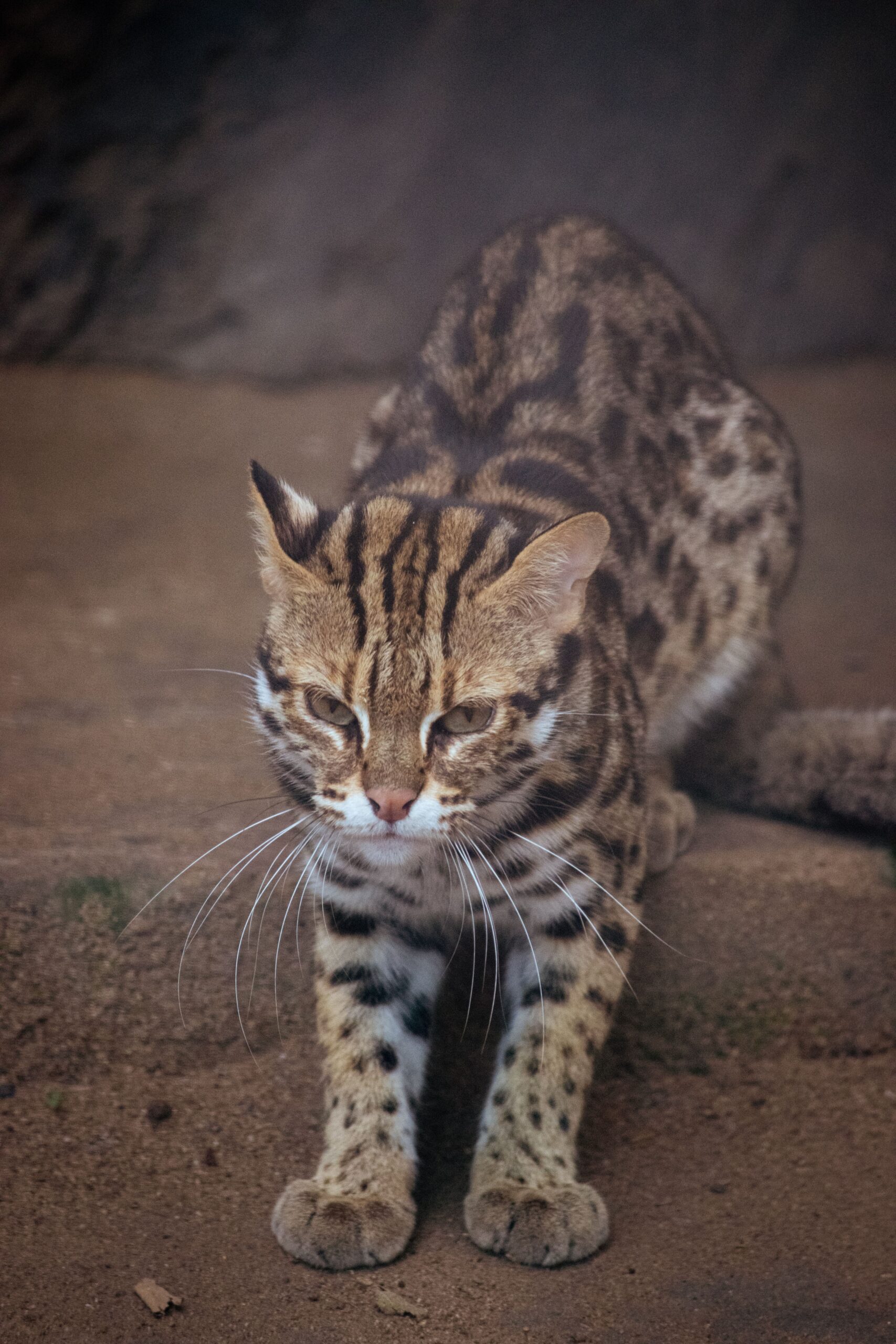
We will explain the characteristics, ecology, and habitat of the Bengal wildcat. There are many subspecies of the Bengal wildcat, such as the Tsushima wildcat and the Iriomote wildcat, so we will introduce these at the same time. A large number of them live in the eastern part of Asia, so I will introduce them to you.





- What is a Bengal wildcat? About basic status
- What are the roots and origins of the leopard cat?
- About the habitat of the Bengal wildcat
- feature is? What kind of creature is it?
- What will your personality look like?
- What is the ecology of the Bengal wildcat?
- Vocalizations of the Leopard Cat
- Seasonal Activity of the Leopard Cat
- Walking Speed
- About young Bengal leopard cats
- Is the Bengal wildcat an endangered species?
- Is it possible to keep Bengal wildcats?
- Zoos Housing the Species (Japan and Worldwide)
- Introducing other animals
What is a Bengal wildcat? About basic status
The Bengal wildcat belongs to the mammalian class Carnivora and the family Felidae. The scientific name is Prionailurus. The body length is 50-80cm and the weight is 3-5kg. They tend to live mostly in the eastern and southeastern regions of Asia.
| Japanese(和名) | ベンガルヤマネコ |
| English(英名) | Mainland leopard cat |
| scientific name(学名) | Prionailurus |
| classification(分類) | Mammalia、 Carnivora、Felidae、Prionailurus 哺乳綱、食肉目、ネコ科、ベンガルヤマネコ属 |
| IUCN Status(保全状況) | LEAST CONCERN |
| Length(体長) | 50-80cm |
| Weight(体重) | 3-5kg |
What are the roots and origins of the leopard cat?
The leopard cat is a small wild cat widely distributed across Asia and belongs to a relatively ancient lineage among extant felids. Its roots are believed to date back millions of years.
Origins
The ancestors of the leopard cat are thought to have diverged from a common ancestor shared with other felids approximately 5 to 7 million years ago.
Subsequently, between 2 and 3 million years ago, a lineage closely resembling the modern leopard cat spread across various parts of Asia, adapting to diverse environments.
Where did they spread from?
Current research suggests that their ancestors evolved in a region spanning East Asia to Southeast Asia before expanding their range.
They currently have a very wide distribution, covering areas such as:
Russia (Far East)
China
Mongolia
Taiwan
Japan (Tsushima and Iriomote Islands)
India
Nepal
Thailand
Vietnam
Malaysia
Indonesia
They are one of the most widely distributed wild cats in Asia.
Relationship with the Ice Age
During the Pleistocene epoch (the Ice Age), sea levels were lower than they are today, bringing islands closer to the mainland and creating land bridges. This allowed ancestral leopard cats to expand their range, while populations stranded on islands underwent their own unique evolution.
Prominent examples include:
The Iriomote cat
The Tsushima cat
Both are currently classified as subspecies of the leopard cat.
What will be the classification?
In terms of the lineage of extant species of the cat family, it is the genus Bengal cat. The following subspecies exist in the Bengal wildcat genus: The Tsushima leopard cat and the Iriomote leopard cat are designated as endangered species.
| Name:名前 | academic name (学名) | Habit (生息地) |
| Tsushima leopard cat ツシマヤマネコ | Prionailurus bengalensis euptilurus | Tsushima, Japan 対馬 |
| Iriomote wild cat イリオモテヤマネコ | Prionailurus bengalensis iriomotensis | Iriomote, Japan 西表島 |
| Sunda leopard cat スンダヒョウネコ | Prionailurus javanensis | Java, Bali, Borneo, Sumatra、Indonesia ジャワ島、バリ島、ボルネオ島、スマトラ島 |
| Flat-headed cat マレーヤマネコ | Prionailurus planiceps | Indonesia, Thailand, Brunei, Malaysia インドネシア、タイ、ブルネイ、マレーシア |
| Rusty-spotted Cat サビイロネコ | Prionailurus rubiginosus | India インド |
| Fishing cat スナドリネコ | Prionailurus viverrinus | Indonesia, China, Thailand インドネシア、中国、タイ |
What is Tsushima leopard cat?
The Tsushima leopard cat is a member of the wildcat family that lives only in Tsushima, Japan. It is designated as an endangered species because its population is extremely small.
What is Iriomote wild cat?
The Iriomote wildcat is an endangered cat that lives only on Iriomote Island. The population here is also very small.
What is the Sunda leopard cat?
The Sunda leopard cat is a small and very cute Bengal cat. A popular cat that is distributed throughout Indonesia.
What is a Malayan wildcat?
Malayan wildcats have small, rounded ears and webs between their toes. Speaking of cats, they don’t like water, but Malayan wildcats are very good at catching and eating fish.
What is a rusty cat?
The rusty cat is a very cute cat that is said to be the smallest cat in the world. Since it can only be found around India, its population is small and it is designated as a near-threatened species.
What is a fishing cat?
The fishing cat is a cat that prefers tropical habitats. They live in areas from the Indochina Peninsula to southern China and India, and are unique in that they have retractable claws.
About the habitat of the Bengal wildcat
The Bengal wildcat is found in Afghanistan, India, Indonesia, Cambodia, Singapore, the Kingdom of Thailand, the Republic of Korea, the People’s Republic of China, Taiwan, the Democratic People’s Republic of Korea, Japan, Nepal, Pakistan, Bangladesh, the Philippines, Bhutan, Vietnam, Malaysia, and Myanmar. , distributed in Laos and other countries.
- Geographic Distribution
Widely distributed throughout South and Southeast Asia
India, Nepal, Sri Lanka
Bangladesh, Bhutan
Myanmar, Thailand, Laos, Cambodia, Vietnam
Also found in southern China, Taiwan, and some Indonesian islands
- Habitat
Forest:
Tropical rainforests, evergreen forests, deciduous broadleaf forests, and mixed forests
Prefers thickets and bamboo forests
Adapted to farmland and grasslands:
Found around farmland, bamboo forests, and grasslands
Relatively well adapted to areas affected by human activity
Prefers water sources: Often hunts near streams and wetlands
- Elevation and Topography
Elevation: Widely distributed, from flatlands to mountains (approximately 200-2,000m)
Terrain Adaptation: Excellent at climbing trees, it has adapted to a variety of terrain, including forests and rocky areas
- Behavior and Adaptations
Nocturnal: Rests in bushes or trees during the day
Soliloquy: Has a territory and is mostly solitary except during breeding season
Relationship with diet: Their habitat is in forests and around farmland, where small animals such as mice, birds, insects, and frogs are abundant.
feature is? What kind of creature is it?
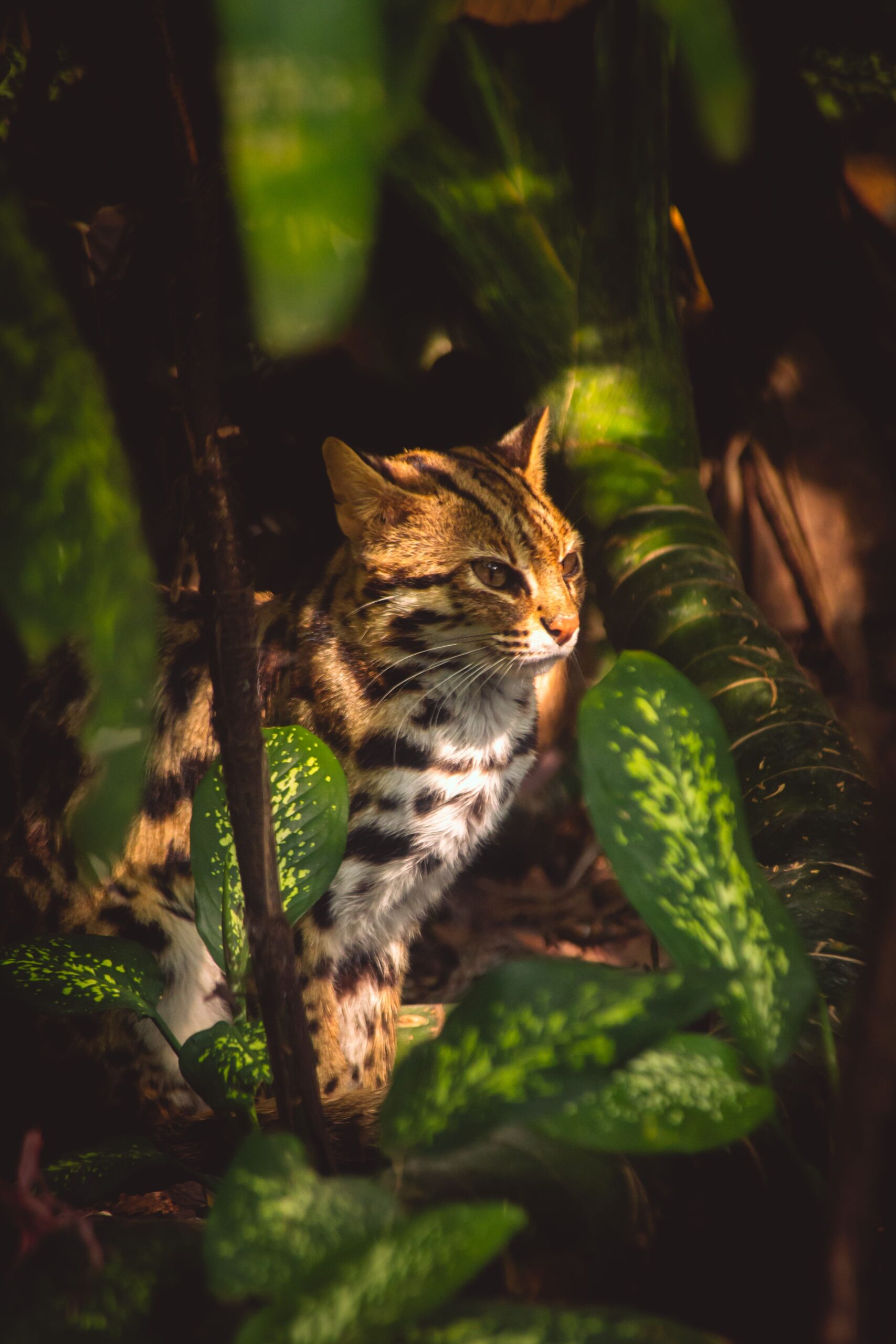
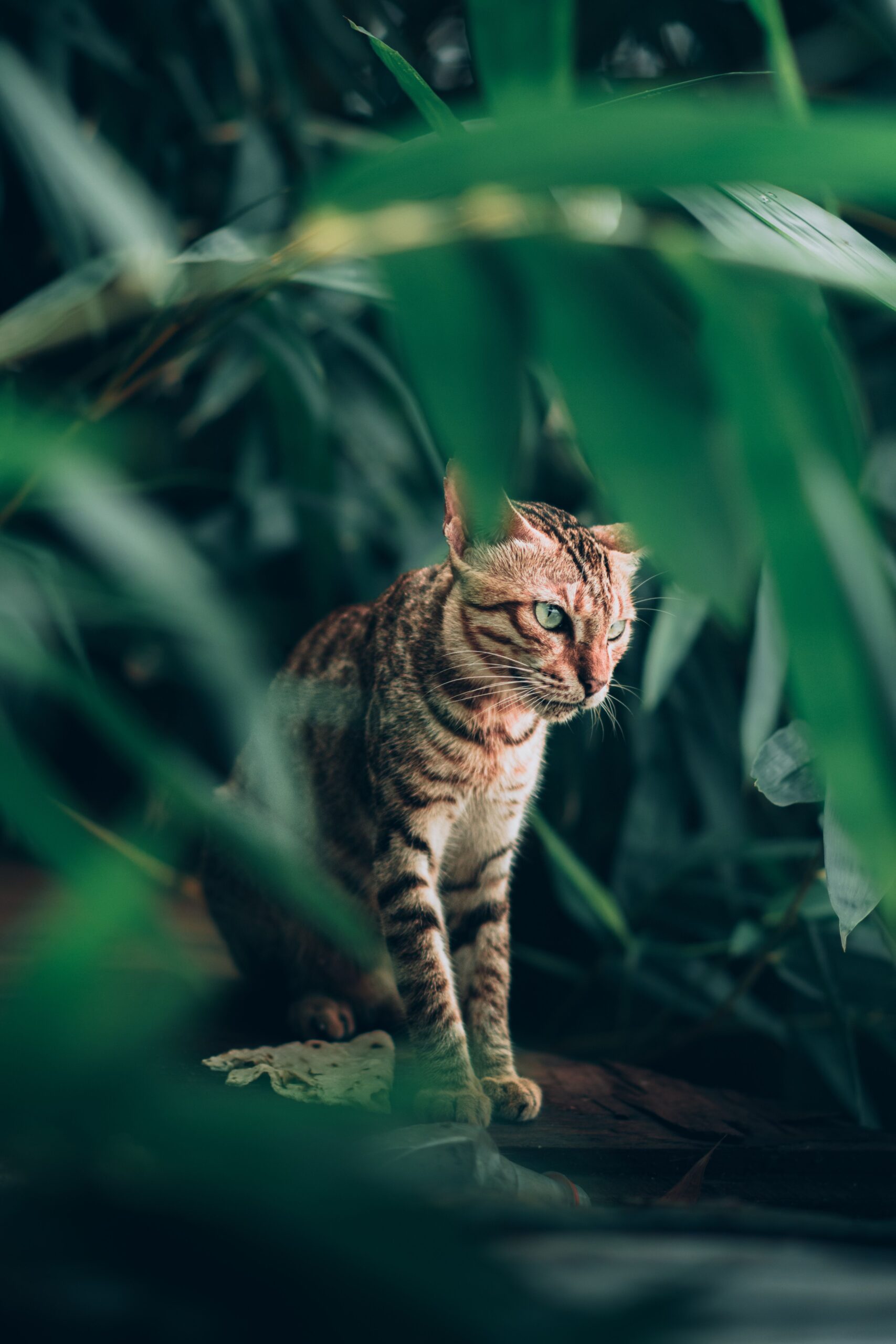
The Bengal wildcat is characterized by four to five dark stripes running from the forehead to the shoulders. The legs are rather long, and the tail is about half the length of the body. The coat color is yellowish brown or silvery white on the back, and whitish on the abdomen. Bengal wildcats live in forest areas such as tropical forests, temperate forests, and coniferous forests from lowlands to mountains.
- Physical Characteristics
Body Type: Small and slim, body length 50-70cm, tail length 20-30cm, weight approximately 2.5-4.5kg
Coat Color:
Yellow-brown to gray-brown coat with black spots distributed throughout the body
Tail has a ring-shaped pattern
Ears: Small and round, with black spots behind the ears
Eyes: Excellent night vision, adapted to nocturnal behavior
- Behavior and Personality
Nocturnal: Hunts and moves at night
Soliloquy: Territorial and mostly solitary except during breeding season
Highly Alert: Sensitive to predators and humans, quickly flees when sensing danger
Athletic Ability: Excellent at jumping and climbing trees, which are used for hunting and escape behavior
- Diet
Small carnivorous:
Preys on mice, birds, insects, frogs, lizards, etc.
Hunting method:
Sneaks up and captures alone
Uses athletic ability to corner prey
- Ecological characteristics
Territorial: Each individual has a territory and marks it to let others know.
Reproduction:
Breeding season varies depending on the region and climate, but is usually spring to summer.
Gestation period is approximately 60-70 days, and 1-3 pups are born.
Adaptability:
Adapts to a variety of environments, including forests, farmlands, and bamboo forests.
Can survive even under human influence.
What will your personality look like?
Bengal wildcats are very cautious and tend to be active from dusk to midnight and early morning. They are also similar to domestic cats in that they are capricious and selfish. I live a relaxing life in an area with a lot of nature. During the day, they often hide in tree cavities or rock holes.
- Highly cautious
Timid and cautious: Extremely sensitive to the approach of humans and predators
Good at hiding: Rest in bushes or trees during the day and become active at night
- Highly solitary
Territorial: Each individual has its own territory and rarely comes into contact with others except during breeding season
Independent: They hunt and live independently
- Hunting instinct and agility
High athletic ability: They capture prey by jumping and climbing trees
Learning ability: They adapt their hunting methods to suit the prey and the environment
- Gentle and defensive
Basically gentle: They are not aggressive unless threatened
Powerful in defense: They fight back with claws and fangs when faced with predators or danger
What is the ecology of the Bengal wildcat?
In addition to eating small animals, Bengal wildcats also eat amphibians and insects. They are polygamous and breed throughout the year. The average gestation period is about 2 months, and it is possible to give birth to 2-3 puppies at a time. Kittens reach full sexual maturity in about a year and a half. The lifespan is about 15 years.
- Habitat
Region: South Asia (India, Nepal, Sri Lanka, Bangladesh, etc.) to Southeast Asia (Thailand, Laos, Vietnam, Myanmar)
Environment:
Tropical rainforests, evergreen forests, deciduous broadleaf forests, and mixed forests
Also adapted to bamboo forests and areas around agricultural fields
Activity: Nocturnal, resting in bushes or trees during the day
- Diet
Small carnivorous:
Preys on mice, birds, frogs, insects, and lizards
Hunting method:
Sneaks up alone and captures prey with agile jumps and tree climbing
- Behavior and Lifestyle
Solo: Almost entirely isolated except during breeding season
Territory maintenance:
Marks territory with urine and feces to prevent other individuals from entering
Breeding season:
Mates in spring and summer
Gestation period: approximately 60-70 days, giving birth to 1-3 pups
- Adaptability
Athletics: They use jumping and tree climbing to capture and escape prey.
Environmental Adaptation:
They can survive in environments with human activity, such as farmland and bamboo forests.
They are nocturnal, protecting themselves from predators and humans.
What are the natural enemies of the Bengal wildcat?
Currently, the natural enemy of the Bengal wildcat is humans. Although there are some large predators, there are many risks such as being hit by a car or having their habitat narrowed due to land development.
Vocalizations of the Leopard Cat
While the vocalizations of the leopard cat resemble those of domestic cats, they are characterized by a tendency to produce lower-pitched, more “wild-sounding” calls.
Common Vocalizations
“Meow”
A call very similar to that of a domestic cat.
It is often heard during communication between parent and offspring or at close range.
“Growl” / “Low, rumbling sound”
A low-pitched growl.
Produced when defending territory or when wary of or threatening another animal.
“Hiss!”
A sharp, threatening sound made with the mouth open, directed at enemies or potential threats.
It closely resembles the hissing sound made by domestic cats when threatened.
Vocalizations During Mating Season
Both males and females may produce louder calls that carry over greater distances than usual.
These calls serve to signal their presence to potential mates.
Generally Quiet
As leopard cats lead solitary lives, they do not vocalize as frequently as domestic cats.
For communication, they rely on methods other than vocalization, such as:
Marking with urine or secretions
Rubbing scents onto trees or rocks
Leaving visual and olfactory signals through claw-sharpening (scratching)
Seasonal Activity of the Leopard Cat
Because the leopard cat has a wide distribution range, its seasonal activity patterns vary by region. However, a common trait is that they remain active year-round and do not hibernate.
Spring (March–May)
A season of active breeding and hunting
Breeding season begins in many regions
Males expand their home ranges in search of females
Prey such as rodents and small birds becomes more abundant, making hunting easier
Primarily active at night, though they may also appear in the early morning or evening
Main prey
Rodents
Small birds
Lizards
Frogs
Summer (June–August)
A season of raising young and abundant food resources
Many individuals are raising kittens
They also prey on frogs, fish, and crabs near water
They limit activity during hot days, moving mostly at night or at dawn
Main prey
Rodents
Frogs
Fish
Insects
Small birds
Autumn (September–November)
A season when young individuals become independent
Young born in spring or summer leave their parents
They travel longer distances in search of new territories
Hunting intensifies as they build up fat reserves for winter
Main prey
Rodents
Small birds
Lizards
Snakes
Winter (December–February)
Staying active while adapting to the cold
They do not hibernate and continue hunting throughout the year
Activity periods may shorten in cold regions, but they remain nocturnal
In some regions, breeding may still occur during this period
Main prey
Rodents
Small mammals such as rabbits (depending on the region)
Small birds
Daily Activity Rhythm
Leopard cats tend to be crepuscular (active at dawn and dusk) to nocturnal
Evening: Activity begins
Night: Most active hunting period
Dawn: A second peak in activity occurs
Daytime: Resting in tree hollows, thickets, or rocky crevices
However, in areas with little human presence, they may also be active during the day.
Walking Speed
There is very little detailed data from the wild regarding the walking speed of the leopard cat (Prionailurus bengalensis). However, based on behavioral observations and studies of closely related species, their approximate speed is estimated as follows.
Walking Characteristics
The leopard cat is an ambush predator.
Walks quietly to avoid making noise
Keeps the body low to the ground
Approaches prey using the cover of thickets or rocks
Pounces suddenly after closing the distance to within a few meters
Movement Across Terrain
Due to their wide range of habitats, they adapt their movement methods to the terrain.
Forests: Walk quietly over fallen leaves
Wetlands and riverbanks: Capable of walking through shallow water or swimming
Trees: Skilled climbers; they also move along branches
Grasslands: Move low to the ground, utilizing the cover of the grass
Jumping Ability
In addition to walking, they possess excellent jumping capabilities.
Vertical: Approx. 1.5–2 m
Horizontal: Approx. 2–3 m
This allows them to quickly capture small birds and mammals and to clear obstacles.
About young Bengal leopard cats
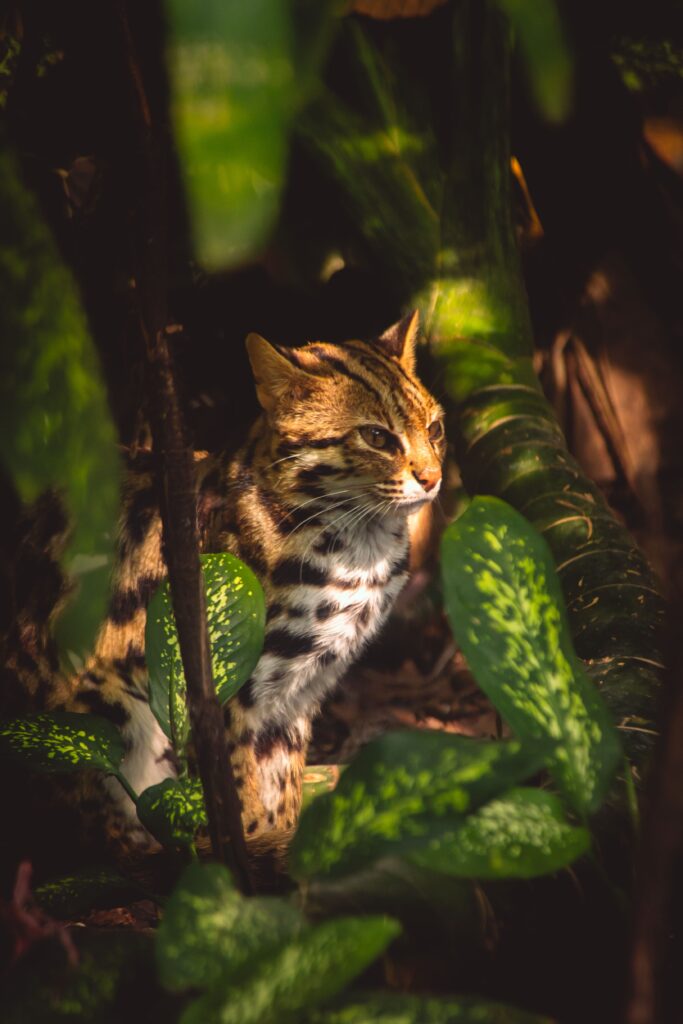
This article provides information about young Bengal leopard cats (Prionailurus bengalensis bengalensis).
- Birth and Size
Birthing Season: Varies by region, but typically spring to early summer
Number of Pups: 1-4 per litter
Birth Weight: Approximately 70-120g
Body Length: Approximately 10-15cm
Coat Color: Light-colored immediately after birth, developing the same spotted pattern as adults as they mature
- Rearing and Protection
Maternal Care: Nursing, maintaining body temperature, and protection in dens
Growing in a Safe Place: Protected from predators in bushes, rock shelters, dens, etc.
Pack Cooperation: Primarily solitary, with little protection from anyone other than their mother
- Developmental Process
Nursing Period: Approximately 2-3 months after birth
First Outing: Follows mother near den, practicing hunting and movement
Importance of Play:
Playing with other cubs and their mothers helps them develop muscle strength, hunting instincts, and alertness
Develops athletic skills such as climbing and jumping
- Learning and Survival Skills
Learned from their mother:
How to capture prey, detect danger, and use burrows
Gaining Independence: Gradually gaining independence between 6 months and 1 year of age, they will eventually have their own territory.
- Maturity
Sexual Maturity: Reproductive potential between 1 and 2 years of age
Behavioral Patterns: They act independently and utilize the survival skills they learned from their mother.
Is the Bengal wildcat an endangered species?
The conservation status of the Bengal wildcat is stable. Therefore, although it is stable overall, the variants are very dangerous. Japan’s Iriomote wildcat and Tsushima wildcat are at risk of extinction. There is also a possibility that rusty cats in India may become extinct, so conservation efforts are being carried out in various locations.
Is it possible to keep Bengal wildcats?
Bengal wildcats can be kept like regular cats, but they have a wary personality, so they require more care than regular cats. In Japan, Bengal wildcats are designated as “specified animals,” and permission may be required in some areas. It is difficult to obtain it through international trade because the Washington Convention governs international trade.
- Legal Restrictions
Sometimes designated as designated animals: In Japan, under the Wildlife Protection Act and Animal Welfare Act, a permit may be required for keeping.
Permit Required: Keeping is prohibited without special permission from the prefectural governor.
Private ownership is generally prohibited: Illegal keeping is subject to penalties.
- Difficulties in Keeping
Wild populations are limited: Capture and import are prohibited.
Solitary and territorial: They are timid and cautious, and cramped environments can cause stress.
Exercise and Environmental Requirements:
Nocturnal and adapted to forest environments.
A large enclosure is required to allow for tree climbing and jumping.
Diet: An environment that replicates their natural hunting behavior, including provision of food such as mice, small birds, and insects, is required.
- Realistic Keeping
Only Possible in Zoos and Conservation Facilities:
Expert management, breeding plans, and environmental reproduction are required.
Purpose:
Protection and breeding of endangered species.
Research and Education.
Private ownership is unrealistic and dangerous.
Zoos Housing the Species (Japan and Worldwide)
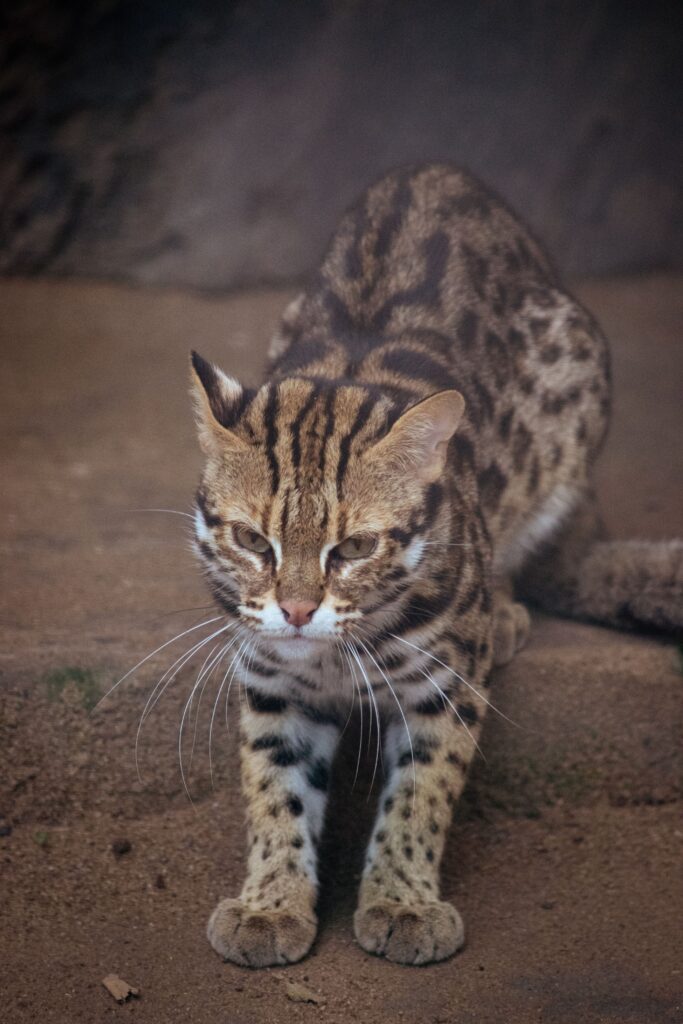
Unlike the Iriomote cat, the leopard cat is kept and exhibited at various zoos both in Japan and overseas.
Major Zoos in Japan
While exhibition status is subject to change, facilities where leopard cats (or closely related subspecies) can be seen include the following:
Yokohama Zoological Gardens “Zoorasia”
Exhibits Asian wildlife.
Has a history of keeping leopard cats.
Ueno Zoological Gardens (Tokyo)
Has a track record of exhibiting and breeding small felids; leopard cats are occasionally exhibited depending on the season.
Kobe Animal Kingdom
Has a history of exhibiting wild cat species.
Nasu Animal Kingdom
Exhibits small felids depending on the season.
*Please check the official website of each facility before visiting, as the animals on display may change due to breeding, transfers, facility renovations, or other factors.
Major Zoos Worldwide
Leopard cats are relatively commonly kept in zoos across Asia, as well as in Europe and North America.
Singapore Zoo
Taipei Zoo
Chiang Mai Zoo
Beijing Zoo
Seoul Grand Park Zoo
They are also kept in zoos across Europe and North America as part of conservation and educational exhibits for rare small felids.
Why can leopard cats be exhibited?
Unlike the Iriomote cat, the leopard cat is widely distributed across Asia and has a relatively large population; consequently, they are kept in various countries for conservation, educational, and breeding purposes.
In contrast, the Iriomote cat is an extremely rare subspecies found only on Iriomote Island. Because its protection is the top priority, it is not exhibited to the general public.
Introducing other animals
コメント