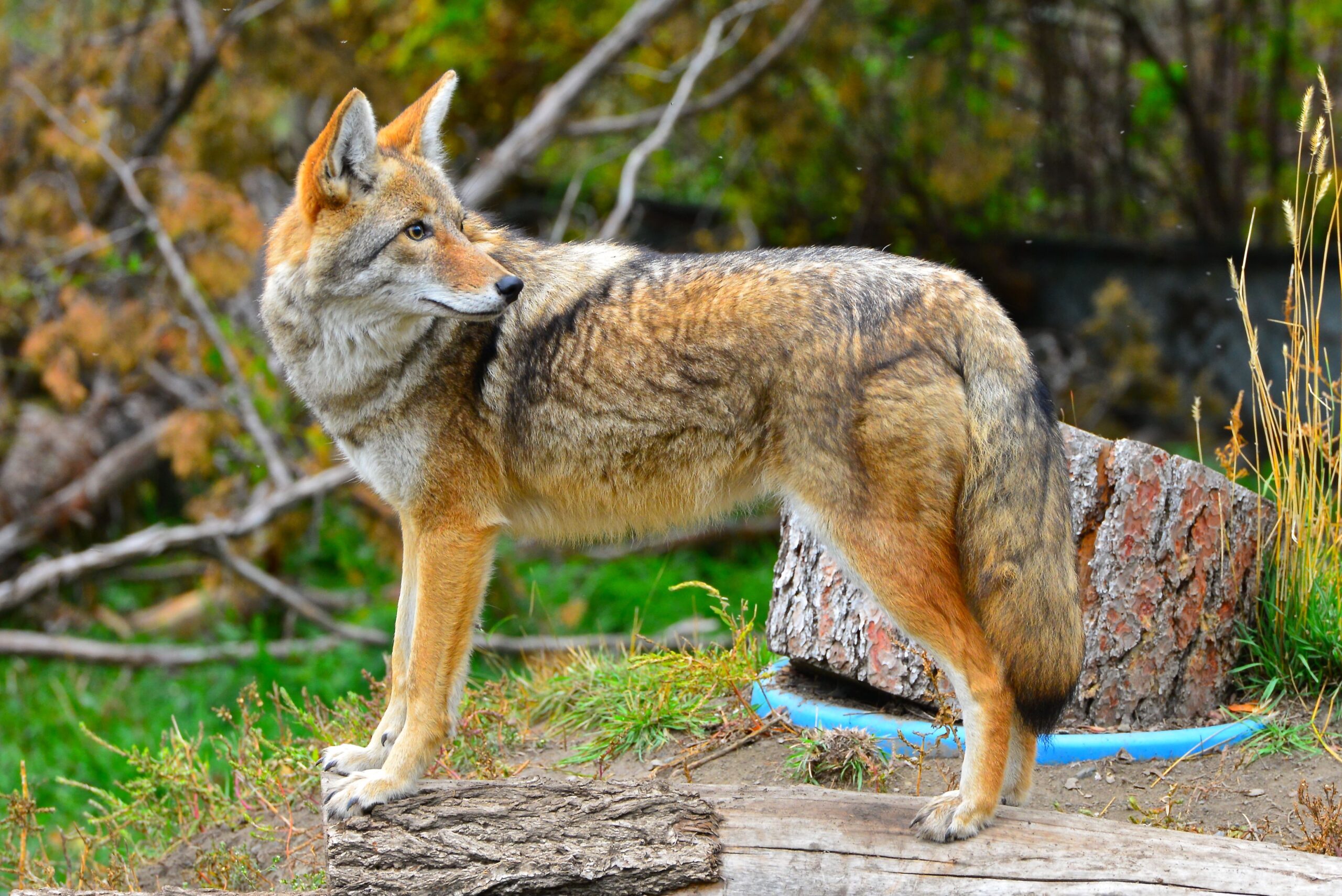
What kind of animal is a coyote? We will explain its characteristics, ecology, and habitat. Coyotes are widely distributed from the North American continent to the western part of Panama and are known as carnivores. Coyotes have adapted to a variety of environments and often appear in residential areas where humans live.







- What is Coyote? Basic Stats
- What are the roots and origins of the coyote?
- Habitat
- What are their characteristics? What kind of creature are they?
- What is their personality like?
- What is their ecology?
- About Coyote Molting
- Vocalizations
- Seasonal Activities
- On Walking Speed
- About Coyote Pups
- Are coyotes an endangered species?
- Can coyotes be kept as pets?
- Zoos Housing Coyotes (Japan & Worldwide)
- Introducing other animals
What is Coyote? Basic Stats
Coyotes are carnivores classified in the family Canidae, family Canis. Their scientific name is Canis latrans, and their English name is Coyote. They are 70-100cm long, 30-40cm long, and weigh 10-20kg. The list of information is as follows:
| Japanese(和名) | コヨーテ |
| English(英名) | Coyote Prairie Wolf |
| scientific name(学名) | Canis latrans |
| classification(分類) | Mammalia、 Carnivora、 Canidae、Canis 哺乳綱、食肉目、イヌ科、イヌ属 |
| IUCN Status(保全状況) | LEAST CONCERN |
| Length(体長) | 70-100cm |
| Weight(体重) | 10-20kg |
What are the roots and origins of the coyote?
The coyote (Canis latrans) is a member of the dog family (Canidae) that evolved in North America. While often mistaken for a smaller version of the wolf, it actually possesses a distinct evolutionary lineage that dates back quite far.
Origin: A hunter born in North America
Coyote ancestors are believed to have existed in North America over a million years ago.
Canis lepophagus, an ancient member of the genus Canis, is cited as a likely ancestor.
The modern coyote (Canis latrans) emerged during the Pleistocene epoch (approximately 2.58 million to 10,000 years ago) and flourished across the North American continent.
Phylogenetically, the lineage follows this path:
Ancient Canids
↓
Primitive Canis species (such as Canis lepophagus)
↓
Ancient coyote lineage
↓
Modern coyote (Canis latrans)
Relationship with wolves
Although coyotes and wolves are closely related, they do not share a direct parent-offspring relationship.
Wolves (Canis lupus) originated primarily in Eurasia.
Coyotes originated in North America.
However, because they are closely related, interbreeding can occur.
Example:
Eastern Coyote
A population exists that carries some wolf-derived genes.
They tend to be larger in build than typical coyotes.
Why are they found across the United States today?
Historically, coyotes primarily inhabited:
The American West
Grasslands
Arid regions
However, since the 1900s, they have rapidly expanded their range due to:
The decline of large predators like wolves
Environmental changes caused by forest development
Their adaptability regarding food sources
Today, they are found across almost all of North America.
Origin of the name
The name “coyote” derives from coyōtl, a word in Nahuatl, the language of the indigenous people of Mexico.
It generally translates to:
“Wild dog”
Biological classification (taxonomy)
| 階級 | 分類 |
|---|---|
| 界 | 動物界(Animalia) |
| 門 | 脊索動物門(Chordata) |
| 綱 | 哺乳綱(Mammalia) |
| 目 | 食肉目(Carnivora) |
| 科 | イヌ科(Canidae) |
| 属 | イヌ属(Canis) |
| 種 | コヨーテ(Canis latrans) |
Habitat
Coyotes live in North America, Central America, and some parts of South America.
- Geographic Distribution (Where Can They Be Found?)
Coyotes are a mammal whose distribution is currently expanding, primarily in North America.
Original Distribution
Central North America (around the Great Plains)
Current Distribution
Southern Canada
All over the United States (southern Alaska to urban areas)
Mexico
Northern Central America (as far as Panama)
They are one of the medium-sized carnivores with the widest distribution in North America.
- Wide Range of Habitats (Their Most Distinctive Feature)
Coyotes are known for their exceptional adaptability to their environments.
Main Habitats
Grasslands and Prairie
Deserts and Semi-Deserts
Forests (Coniferous and Deciduous Forests)
Mountains and Hills
Rural Areas
Urban and Suburban Areas (Parks, Golf Courses, Riverbanks)
The common belief that “wild animals = remote places” doesn’t apply.
- Characteristics of Urban Habitats
Urban Examples
Los Angeles
Chicago
Toronto
New York Suburbs
Reasons for Surviving in Cities
Omnivorous (rats, rabbits, fruit, garbage)
Nocturnal Behavior to Avoid Humans
High Learning Ability
➡ Taking Advantage of Urban Environments Where Large Predators Have Disappeared
- Habitat and Home Range
Home Range per Individual/Family
Grasslands: Dozens of km²
Urban Areas: Shrinking to a Few km²
Flexible Adaptation to the Environment
- Nests and Resting Sites
Ground Holes (Self-Dug or Using the Nests of Other Animals)
In the Bush
Under Fallen Trees
In Cities
Vacant Lots
Around Drainage Pipes
Riverbanks
They Seem More Like a Temporary Hiding Place Than a “Nest.”
What are their characteristics? What kind of creature are they?
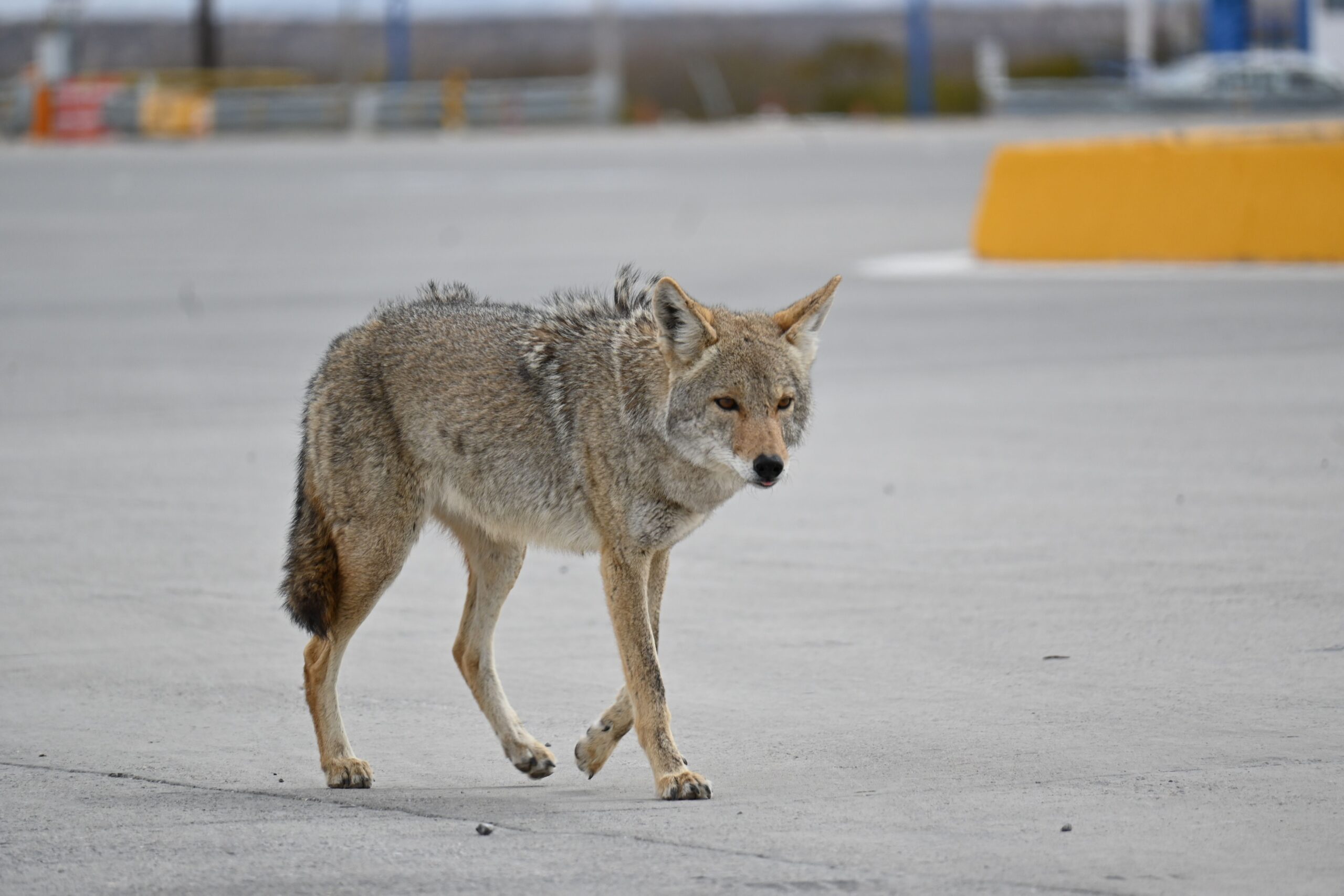
Coyotes have pale yellowish brown fur mixed with white fur, yellowish limbs, gray-brown tails and the back of the body, and gray-white undersides. Coyotes can be found in forests, open grasslands, and bushes. Coyotes are often seen as wolves, but they are smaller than wolves. They are mainly nocturnal, but sometimes active during the day. They are territorial and claim their territory in their habitat by urinating. They are fast runners, able to run at up to 65km per hour, and can jump up to 4m.
- Physical Characteristics
Body Length: 1.0–1.3 m (including tail)
Weight: 7–20 kg (varies by region)
Body Type: Slender with long legs
Coat Color: Grayish-brown to tan (varies by region)
Face: Narrow nose and large ears
Smaller than a wolf, but larger than a fox, they appear somewhere between these two.
- Personality/Temperament (What’s it like?)
Very intelligent
High learning ability
Easily learns traps and dangers
Understands human behavior patterns
Basically timid
Keeps distance when seeing people
Avoids unnecessary conflict
However, bold depending on the situation
Some individuals become accustomed to people in urban areas
May approach when food is involved
- Behavior
Activity
Mainly nocturnal/crepuscular
Turns into nocturnal behavior in crowded areas
Movement
Walks and runs long distances
Good swimmers
- Diet (What do they eat?)
Omnivorous
Rats, rabbits
Deer cubs
Insects
Fruit
Human garbage, pet food
Almost anything they can eat.
- Sociality
Primarily solitary
During breeding and rearing seasons, they form pair/family units
Forms small groups when prey is large
They are characterized by their flexibility to change their social structure depending on the situation.
- Calls (Very Famous)
Howling
High-pitched calls to each other
A series of short barks
Even a few individuals can create the illusion of a large flock.
- Relationships with Humans
Positive
Controlling rat and rabbit populations
Maintaining ecosystem balance
Negative
Damage to pets
Damage to livestock
Trouble in cities
Although viewed with hostility, they are important to the ecosystem.
What is their personality like?
Coyotes are not very social, and often live alone, in pairs, or in family groups, so they do not form large groups. This is because there are few predators. The range of activity is 20 to 40 km2 for males and about 10 km2 for females.
- Basic Temperament: Very Cautious
Naturally timid and wary
Keeps distance from humans and large animals
Avoids unnecessary conflict
Rather than being “bold predators,” they excel at risk management.
- High Intelligence (Biggest Characteristic)
Highly intelligent
Memorizes traps, dangers, and human behavior
Doesn’t repeat the same mistakes
Quickly adapts to new environments
The main reason for their widespread distribution in North America.
- Situational Adaptability
Coyotes are characterized by their inconsistent personality.
Wild areas: Extremely wary
Urban areas: Avoids humans while utilizing them
Feeding areas: Becomes bold (problem)
Environments change their personality.
- Sociality: Flexible
Generally solitary
Strong sense of family during breeding and rearing seasons
Will also cooperate in small groups if necessary
They are not as dependent on packs as wolves, but are not solitary.
- Aggression
Low aggression toward humans
However, this varies in the following situations:
When fed
Rearing their young
When cornered
Many accidents are caused by human behavior.
- Balance of curiosity and caution
Shows interest in new objects
Does not approach immediately
Observe repeatedly to ensure safety
Has the sense of distance typical of “intelligent wild animals.”
- Emotional Expression
Expresses intentions through calls, posture, and facial expressions
Howling
Territorial marking
Family communication
Information sharing
They are not emotionally devoid; in fact, they are expressive.
What is their ecology?
Coyotes feed mainly on small animals, birds, and reptiles, but also on carrion and plant matter such as fruit. They are monogamous and breed from January to March. They have a gestation period of 50 to 65 days and can give birth to 1 to 7 pups at a time. Their eyes open after 10 days to 2 weeks, and they nurse for 5 to 7 weeks. They live for 10 to 20 years.
- Daily Life Rhythm (Behavioral Ecology)
Activity Hours
Crepuscular to Nocturnal
More nocturnal in more populated areas
May be active during the day in remote areas
Can change their life rhythm to avoid humans.
- Feeding Ecology (What They Eat and How They Eat)
Diet: Super-Omnivorous
Small mammals (mice, rabbits)
Deer juveniles and weak individuals
Insects
Fruits and nuts
Human garbage, pet food
Although they are “predators,” they also have strong scavenging (carrion-eating) characteristics.
Hunting Methods
Solo hunting is the norm
Small-scale cooperative hunting for large prey
Adapt tactics depending on terrain and prey
- Movement and Home Range
Home Range:
Natural areas: Dozens of km²
Urban areas: Several km²
High long-distance migration ability
Young individuals have been known to travel hundreds of kilometers during dispersal periods
Driving force behind range expansion
- Social Structure (Padding?)
Basic Structure
Solo or pair + offspring family unit
Do not form large packs like wolves
Flexible Sociality
Solo when prey is abundant
Cooperative when large prey is needed
Change social structure depending on the situation
- Breeding Biology
Breeding Season: Once a Year
Pairs are relatively monogamous
Gestation Period: Approximately 63 Days
Litter Size: Approximately 4-7 Pups
Raising Children
Mothers are the Primary Caregiver
Fathers also actively feed the young
Older siblings may also help
Family-Based Parenting.
- Nest/Resting Sites
Ground Holes (Self-Dug or Other Animals’ Nests)
Under Bushes and Fallen Trees
In Urban Areas
Riverbanks
Vacant Lots
Around Drainage Pipes
Not Strongly Dependent on Permanent Nests.
Do they have any natural enemies?
Coyotes have no known natural enemies. Rather, they sometimes compete with cougars and wolves for food.
About Coyote Molting
Coyote molting (the shedding and replacement of fur) is a crucial adaptation for coping with seasonal changes. Wild coyotes typically undergo two major molting periods each year.
Spring Molt (Winter Coat to Summer Coat)
Timing: Around March to May (varies by region)
They shed the thick winter coat grown to withstand the cold and transition to a lighter coat suited for summer.
Characteristics:
Heavy shedding
Significant loss of undercoat
Body may appear slimmer
Tail fur becomes thinner
Winter fur is:
High-density
Highly insulating
Fluffy
…making it unnecessary during the warmer seasons.
Autumn Molt (Summer Coat to Winter Coat)
Timing: Around September to November
They grow a new, thick coat in preparation for winter.
Characteristics:
Undercoat develops
Body fur becomes longer and denser
Increased fur volume around the neck and back
Body appears larger
Winter fur becomes especially thick in coyotes living in northern or cold regions.
Coyote Fur Structure
Coyotes have two types of fur:
① Guard Hair (Outer Coat)
Long outer hairs
Repels rain and snow
Protects skin from dirt
Determines color patterns
② Underfur (Undercoat)
Short, fine hairs
Creates an air layer
Prevents heat loss
An increase in this underfur during winter allows them to remain active even in extreme cold.
Vocalizations
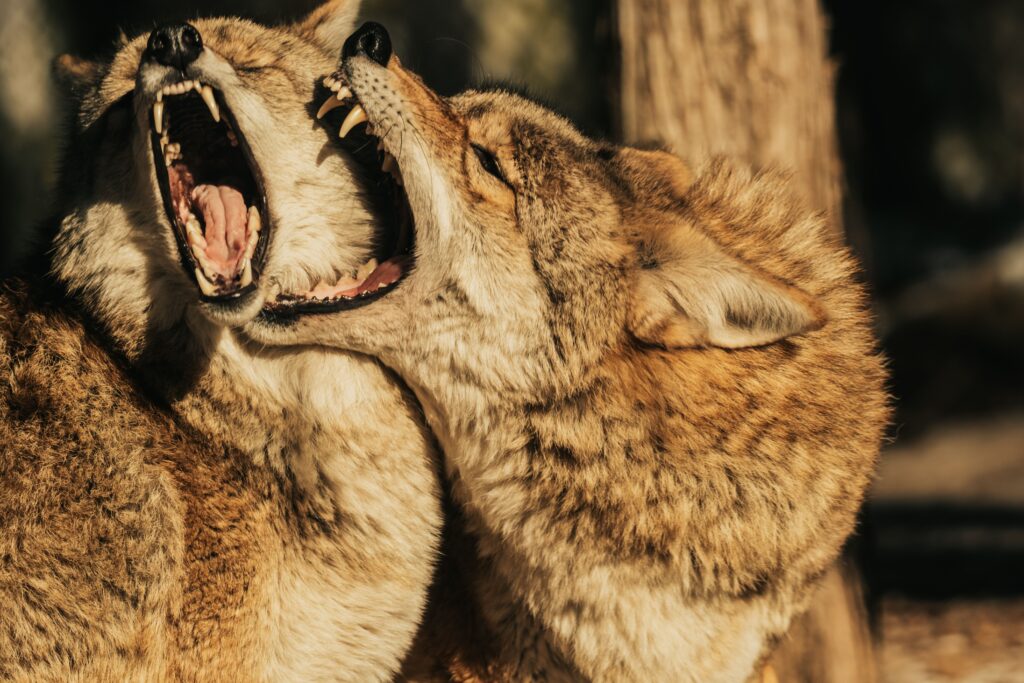
Coyotes are known for having a particularly diverse range of vocal communication skills among canids. While their long-distance “howl” is the most famous, they are actually believed to use more than ten different types of vocalizations.
Howl
A long, drawn-out vocalization (often described as “Awoooo”).
Primary purposes:
Locating other coyotes
Maintaining pack cohesion
Asserting territory
Locating a mate during breeding season
Coyote howls carry over great distances; in open grasslands, they can communicate with others several kilometers away.
Bark
A short vocalization similar to a domestic dog’s bark (“woof-woof”).
Uses:
Alerting/Warning
Signaling danger
Intimidating humans or large animals
Parents raising pups, in particular, may emit warning barks near the den.
Yelp
A high-pitched sound (resembling “yip-yip” or a sharp whine).
Uses:
Pups seeking attention or affection
Signaling submission to others
Social interaction among pack members
Commonly used by young coyotes.
Whine / Whimper
A soft, faint vocalization.
Uses:
Anxiety or distress
Making requests of others
Parent-offspring communication
Seasonal Activities
Coyote activity varies significantly by season. Behavioral patterns shift in response to breeding, pup-rearing, changes in food availability, and temperature fluctuations.
🌱 Spring (March–May): Breeding and Pup-Rearing Season
Key Activities
Mating
Den searching
Start of pup-rearing
Territory defense
The breeding season begins in late winter, and females give birth in the spring.
Behavioral Characteristics
Increased pairing activity
Males bringing food
Heightened vigilance around the den
Increased vocalization
Diet
Small mammals
Rabbits
Rodents
Birds
Insects
During the pup-rearing period, parents hunt frequently and bring food back to the pups.
☀️ Summer (June–August): Pup Growth and Hunting Practice
Key Activities
Teaching pups
Hunting training
Expanding home range
Pups born in the spring emerge from the den in summer and begin following their parents.
Behavioral Characteristics
Learning to hunt through play
Practicing chasing small animals
Often moving as a family unit
However, to avoid the heat, they tend to be active during:
Early morning
Evening
Nighttime
Diet
Food variety increases in summer.
Insects
Fruit
Berries
Reptiles
Small mammals
Coyotes are omnivores with a preference for meat, so they adjust their diet according to the season.
🍂 Autumn (September–November): Independence and Preparation for Winter
Key Activities
Pup independence
Searching for new territory
Molting into winter coat
Young coyotes that lived with their parents through the summer disperse around autumn.
Behavioral Characteristics
Increased solitary behavior
Some individuals travel long distances
Prioritizing food acquisition
Young individuals may travel tens to hundreds of kilometers in search of their own territory.
Diet
Storing nutrients in preparation for winter. Mice
Rabbits
Birds
Fruit
Carrion
❄️ Winter (December–February): Preparing for breeding and conserving energy
Key Activities
Searching for mates
Marking territory
Efficient hunting
Winter is a harsh season for coyotes due to the scarcity of food.
Behavioral Characteristics
Extended activity periods in some regions
Hunting for prey on the snow
Minimizing energy expenditure
In areas with heavy snow, they utilize their long legs and large paws to move around.
Diet
The proportion of animal-based food increases in winter.
Rabbits
Mice
Deer carcasses
Small mammals
On Walking Speed
A coyote’s speed varies significantly depending on whether it is moving, exploring, hunting, or fleeing. While they typically employ an energy-efficient gait, they are capable of running very fast when necessary.
🚶 Normal Walk (Patrolling/Exploring)
Speed: Approx. 5–8 km/h
This is the speed coyotes use most frequently for movement.
Characteristics:
Keeps the head low to sniff the ground
Investigates tracks and urine markings
An energy-efficient gait suitable for long-distance travel
May cover distances ranging from several kilometers to over ten kilometers when patrolling their territory.
🏃 Trot
Speed: Approx. 8–15 km/h
A gait commonly used for long-distance travel.
Characteristics:
Efficient movement of front and hind legs
Resistant to fatigue
Can be maintained for several hours
Like wolves, coyotes excel in endurance rather than raw speed.
🏃♂️ Running (Pursuit/Hunting)
Speed: Approx. 40–50 km/h
Used when chasing prey or fleeing from danger.
Target Prey:
Rabbits
Rodents
Birds
Small mammals
Capable of rapid acceleration over short distances and skilled at changing direction.
⚡ Top Speed
Approx. 60–65 km/h
A coyote’s top speed is estimated to be over 60 km/h.
About Coyote Pups
- Birth
Birth: Spring (March-May)
Birth Location: Ground burrow (self-digged or from another animal’s nest)
Litter Size: Approximately 4-7 pups (can reach 10 in favorable conditions)
Immediately after birth
Eyes are closed
Ears are not erect
Weight: Approximately 200-300g
Fur is dark gray
Completely dependent on parents
- Growth Stages (Development)
2 weeks old
Eyes open
Begins moving around the nest
3-4 weeks old
Begins toddling
Plays with siblings (biting and chasing)
Establishes basic social skills
5-6 weeks old
Begins going outside the nest
Eats food regurgitated by parents
2-3 months old
Acclimatizes to meat and solid foods
Begins imitating simple hunting techniques
- Appearance (Puppy-like)
Face rounder than adult
Ears appear relatively larger
Fluffy fur
Clumsy movements
Appearance is very similar to a “wild puppy.”
- Behavior and Personality (Pup)
Highly curious
Playful (= learning)
Learns bite force control
Chasing behavior
Hierarchy
Play is training for hunting and social skills.
- Relationship with Parents (Key Points)
Parenting is cooperative.
Mother: Nursing and protection.
Father: Food carrier and guardian.
Older siblings: Lookout and playmates.
While not as strict as wolves, they have a strong sense of family.
Are coyotes an endangered species?
Coyotes are not an endangered species. Rather, their habitat and distribution are expanding, with some of them even extending their territories to South America. They are prolific and have a high survival rate for their young, so there is no risk of extinction.
Current Conservation Status
IUCN Assessment: Least Concern
→ Not classified as vulnerable, endangered, or critically endangered.
Regional populations are stable, and the species has a wide distribution.
Population and Distribution Background
Distributed widely, primarily in North America, with some species extending into northern South America.
Having adapted to human agricultural and urban environments, the species is resilient to environmental changes.
Important Notes
While there are localized declines and hunting pressure in some areas, the species as a whole is considered stable.
Can coyotes be kept as pets?
Coyotes are carnivores, so they are not suitable for ordinary people to keep as pets, and there is a possibility that they may be a nuisance to neighbors, so it is not recommended to keep them as pets. There have been cases of coyotes carrying the rabies virus, so care should be taken when coming into contact with them.
- Can I legally keep them?
In Japan
Keeping them is virtually impossible.
Coyotes are not domestic animals, but wild animals (exotic wild mammals), not pets.
Personal ownership is prohibited except in facilities with special permits, such as zoos and research institutions.
They cannot be kept as pets.
In North America (Reference)
Laws vary by state and county.
In many states, private ownership is prohibited.
Or requires a special permit.
Illegal ownership may result in confiscation and euthanasia.
The rumor that “some states allow pet ownership” is partially a misunderstanding.
- Even if the law allowed it, keeping them as pets would be unrealistic.
- Extremely strong wild instincts.
Even if they look like dogs, they are completely wild animals.
Sudden attacks, escape attempts, and destructive behavior.
Incurable biting habits.
- High intelligence.
Opening fences and locks.
Learning escape routes.
Testing people.
“Intelligent” does not necessarily mean “easy to keep.”
- Excessive exercise and range.
Natural range: several kilometers to tens of kilometers.
In a domestic environment, stress, abnormal behavior, and aggression are almost certain to occur.
- Diet and management are difficult.
Not strictly carnivorous, but primarily raw meat.
Nutrition management is extremely difficult.
Prone to health problems due to improper feeding.
Zoos Housing Coyotes (Japan & Worldwide)
While coyotes (Canis latrans) are kept in zoos around the world, there are currently almost no facilities in Japan where they are on public display. In contrast, they are exhibited at numerous zoos and wildlife facilities, particularly in their native North America.
🇯🇵 Zoos in Japan
Currently, there are no confirmed zoos in Japan that maintain a permanent exhibit of coyotes.
🌎 Major Facilities Worldwide
🇺🇸 United States
Minnesota Zoo
One of the prominent facilities exhibiting coyotes in North America.
The exhibit highlights:
Activity patterns that lean toward being nocturnal
Their role in the North American ecosystem
Their feeding habits (preying on animals such as mice and rabbits)
Phoenix Zoo
Exhibits coyotes as animals adapted to desert environments.
Arizona-Sonora Desert Museum
Renowned for its desert ecosystem exhibit that closely replicates the coyote’s natural habitat.
Queens Zoo
Has a history of exhibiting coyotes as a facility dedicated to North American wildlife.
Introducing other animals



コメント