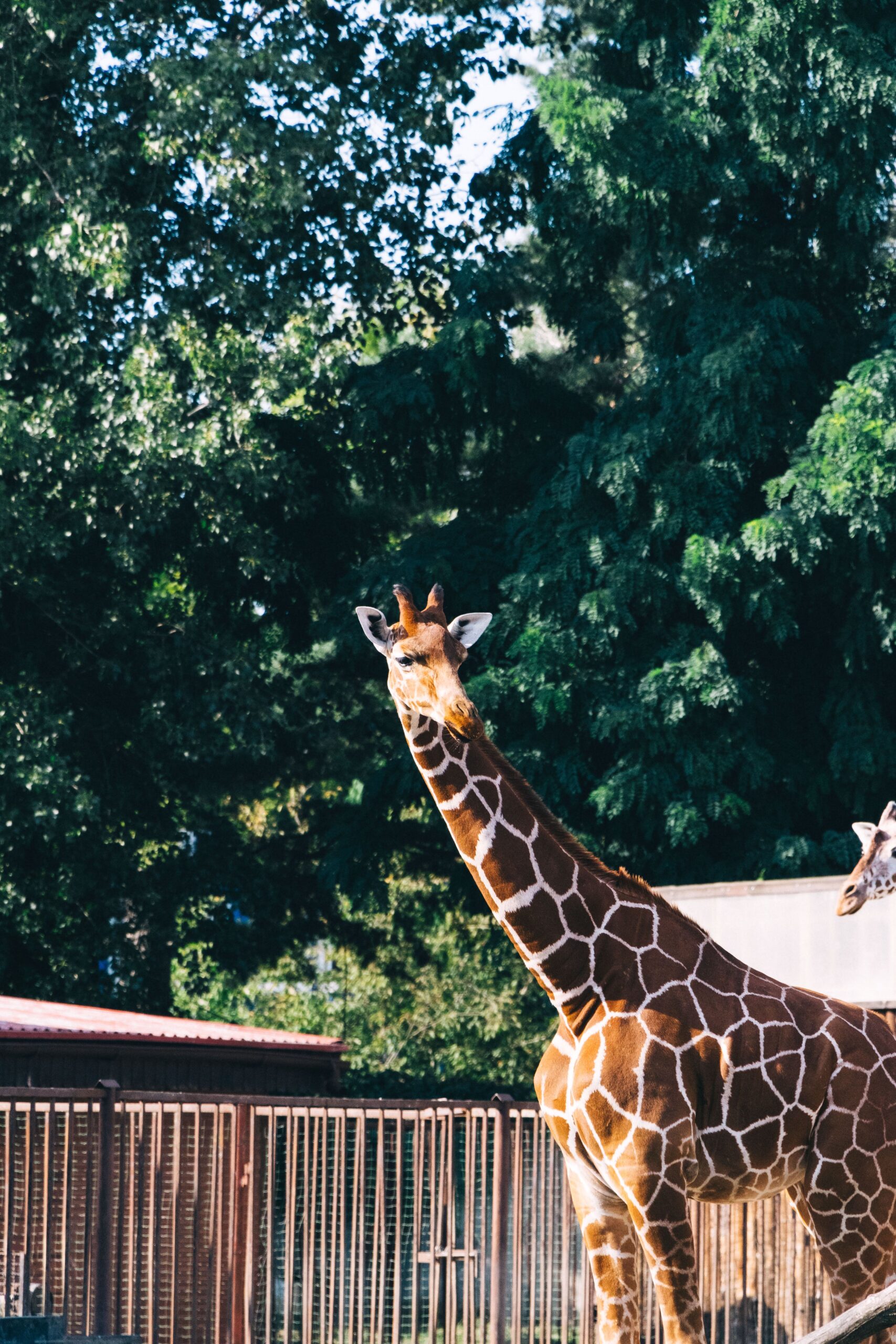
What kind of animal is a giraffe? We will explain its characteristics, ecology, and habitat. Giraffes, one of the most famous and well-known animals, live mainly in Africa. However, it is true that some species are on the verge of extinction and are in a dangerous state, so I would like to introduce them to you.



- What is a giraffe? About basic status
- What are the roots and origins of the giraffe?
- About giraffe habitat
- feature is? What kind of creature is it?
- What will your personality look like?
- What is the ecology of giraffes?
- Vocalizations
- Seasonal Activities
- Walking Speed
- About Giraffe Babies
- Why are giraffes an endangered species? What is the cause?
- Can giraffes be bred?
- Zoos Housing Giraffes (Japan & Worldwide)
- Introducing other animals
What is a giraffe? About basic status
Giraffes are artiodactyls that are classified in the order Mammalia, order Artiodactyla, family Giraffeidae, genus Giraffe. The scientific name is Giraffa camelopardalis. It is a very large animal, with a body length of 4.7 – 5.3 m and a weight of 800 – 1,930 kg. It is the most famous of all herbivores and is often used in illustrations. It often appears in the news.
| Japanese(和名) | キリン(漢字:麒麟) |
| English(英名) | Giraffe |
| scientific name(学名) | Giraffa camelopardalis |
| classification(分類) | Mammalia、 Artiodactyla/Cetartiodactyla、Giraffidae 哺乳綱、偶蹄目、キリン科 |
| IUCN Status(保全状況) | ENDANGERED |
| Length(体長) | 4.7 – 5.3m |
| Weight(体重) | 800 – 1,930kg |
What are the roots and origins of the giraffe?
The roots of the giraffe (Giraffa camelopardalis) trace back to a group of ancient ruminants that appeared approximately 20 million years ago (during the Miocene epoch).
About 20 million years ago
Ancestors of the Giraffidae family appeared
They spread across what is now Africa and Eurasia
Early giraffids did not have necks as long as modern giraffes
Their body shapes resembled those of deer or antelopes
Representative early species:
Prolibytherium
→ An ancient member of the Giraffidae family; it possessed large, horn-like projections on its head
About 14 to 7 million years ago
Evolution of the long-necked lineage
Due to environmental changes—
Transition from forest to savanna
Individuals that could utilize leaves from tall trees held an advantage
Long necks and long legs developed
However, this evolution was not driven solely by the need to “eat leaves from high places”;
It is believed there were multiple reasons, such as:
Spotting distant predators more quickly
Making it easier to find other members of the herd
Gaining an advantage in competition between males
About 1 million years ago to present
Taking on a form close to the modern giraffe
Long neck
Long legs
A heart capable of maintaining high blood pressure
A long tongue (approx. 45–50 cm)
These and other modern characteristics were fully established.
Giraffe ancestors had “short necks”
It was once thought that giraffes evolved by stretching their necks, but we now know that:
They have seven neck bones (cervical vertebrae), just like other mammals
Each individual bone became extremely long
In other words, the evolution involved:
❌ An increase in the number of neck bones
⭕ An enlargement of each individual neck bone
About classification
Giraffes are related to cows and are said to have diverged from a common ancestor with okapis 11.5 million years ago. There is actually more than one species of giraffe. There are many subspecies. The following variants exist: Each has a long history on Earth, and each location is different. Unfortunately, many of them are listed as endangered species.
| Name (名前) | Academic Name (学名) |
| Nubian giraffe ヌビアキリン | Giraffa camelopardalis camelopardalis |
| Angolan giraffe アンゴラキリン | Giraffa camelopardalis angolensis |
| Kordofan giraffe コルドファンキリン | Giraffa camelopardalis antiquorum |
| South African giraffe ケープキリン | Giraffa camelopardalis giraffa |
| West African giraffe ナイジェリアキリン | Giraffa camelopardalis peralta |
| Reticulated giraffe アミメキリン | Giraffa reticulata |
| Rothschild’s giraffe ウガンダキリン | Giraffa camelopardalis rothschildi |
| Thornicroft’s giraffe キタローデシアキリン | Giraffa camelopardalis thornicrofti |
| Masai giraffe マサイキリン | Giraffa tippelskirchi |
What is a Nubian giraffe?
The Nubian giraffe is a subspecies that lives in Ethiopia and South Sudan. The Nubian giraffe subspecies, once widespread in northeast Africa, has declined by 95% over the past 30 years and is now listed as endangered. Animals in urgent need of protection.
What is an Angora giraffe?
The Angora giraffe, also known as the Namibian giraffe or the smoky giraffe, is found in Namibia, Zambia, Botswana, Zimbabwe, and Angola. The population of this giraffe is relatively stable.
What is Kordofan giraffe?
The Kordofan giraffe is a giraffe found in Cameroon, Chad, Central Africa, and Sudan. Approximately 2,300 individuals live in the wild, but their numbers have declined dramatically and they are designated as an endangered species.
What is Cape Giraffe?
Cape giraffes are found in South Africa, Namibia, Botswana, Zimbabwe, Eswatini, and Mozambique. The wild population was announced to change to endangered species in 2016 at 31,500 individuals. It is said that without long-term conservation efforts, it will become extinct.
What is a Nigerian giraffe?
The Nigerian giraffe is also known as the Niger giraffe. Currently, there are only 400 individuals, so they are in urgent need of protection. Of course, this giraffe is also designated as an endangered species.
What is a reticulated giraffe?
The reticulated giraffe is a giraffe found in areas of Somalia and Ethiopia. This giraffe is also designated as an endangered species, but conservation efforts have begun and it is now strictly managed in national parks and zoos around the world.
What is a Ugandan giraffe?
The Ugandan giraffe is also known as the Rothschild giraffe. They are one of the most endangered giraffe populations, with only 1,399 adult giraffes remaining in the wild in 2018.
What is the Northern Rhodesia giraffe?
The Northern Rhodesia giraffe is called the Luangwa giraffe. Their numbers are small as they only live in the southern Luangwa Valley of Zambia. It is said that there are only 550 giraffes left, and this giraffe is also designated as an endangered species.
What is Masai Giraffe?
The Masai giraffe is also called the Kilimanja giraffe. It lives in south-central Kenya and Tanzania, and is characterized by jagged, irregular leaf-like spots. This giraffe is Tanzania’s national animal, but it is also listed as an endangered species.
About giraffe habitat
Giraffes can only be found in the central part of the African continent. They are extinct in Mali, Eritrea, Guinea, Senegal, Nigeria, and Mauritania. For a mammal, they have long legs, are large, and have a pattern, so they stand out on land. They are often observed.
- Geographical Distribution
Giraffes are endemic to Africa, living primarily in sub-Saharan Africa.
Examples of distribution by country or region:
East Africa: Kenya, Tanzania, Uganda
Southern Africa: Namibia, Botswana, Zimbabwe
Parts of West Africa: Niger, Chad (very small areas)
- Environmental Characteristics
Prefers savanna, dry grasslands, and open woodlands.
They feed on the leaves of tall trees (such as acacia), so they require an environment with a moderate amount of trees.
Although they are often found near water sources, giraffes can go long periods without water.
- Habitat Conditions
Food Supply: Abundant leaves from acacia and other tall trees.
Wide Range: They move around in search of food and water, so they require large spaces.
Low Human Activity: Avoids the impacts of poaching and agricultural development.
- Habitat Status
In some areas, populations are declining due to deforestation, development, and poaching.
The International Union for Conservation of Nature (IUCN) classifies giraffes as vulnerable.
Conservation efforts are underway in protected areas and national parks.
feature is? What kind of creature is it?
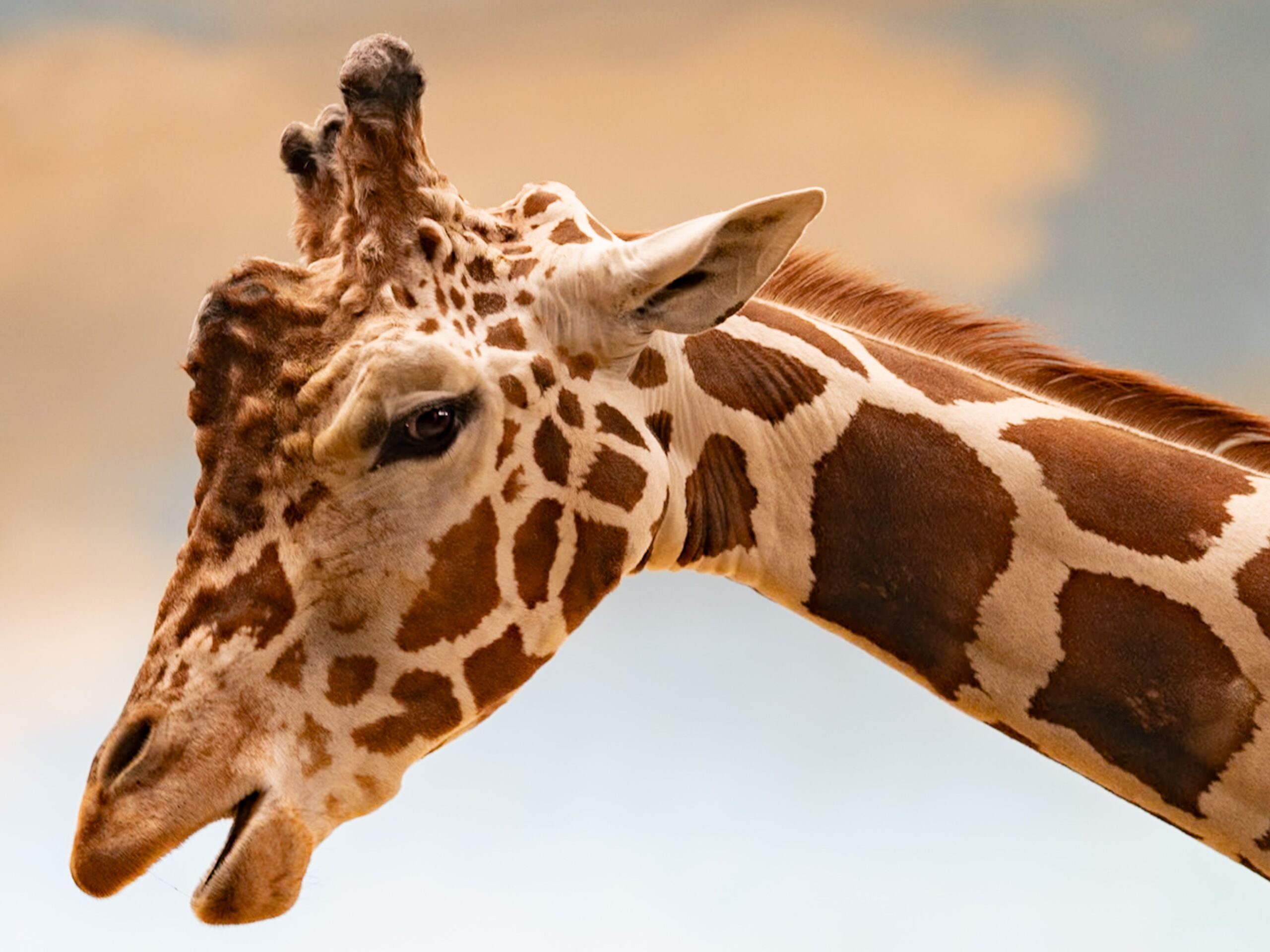
The giraffe’s most distinctive feature is its long neck. They can and will eat leaves that are at a height that other animals cannot reach. This has the advantage of being able to quickly find and escape from natural enemies even if they are far away. Male giraffes of the same species cause “necking,” in which male giraffes fight by bumping their necks against each other. They are highly social and live in groups of about 10 to 20 individuals.
- Physical Characteristics
Body Size: Approximately 4.5-6m in length, 4-5.5m in height, and approximately 800-1,200kg in weight (males are larger)
Neck Length: Approximately 2m in length, adapted for eating leaves overhead
Coat Color/Pattern: Brown to orange spotted (patterns vary by individual and subspecies)
Legs: Both front and back legs are long, allowing them to run at speeds of over 50km/h
Horns (Oscicones): 2-5 small horns on top of head (hairy skin)
- Diet
Herbivore: Mainly eats leaves and young branches of acacia and tall trees
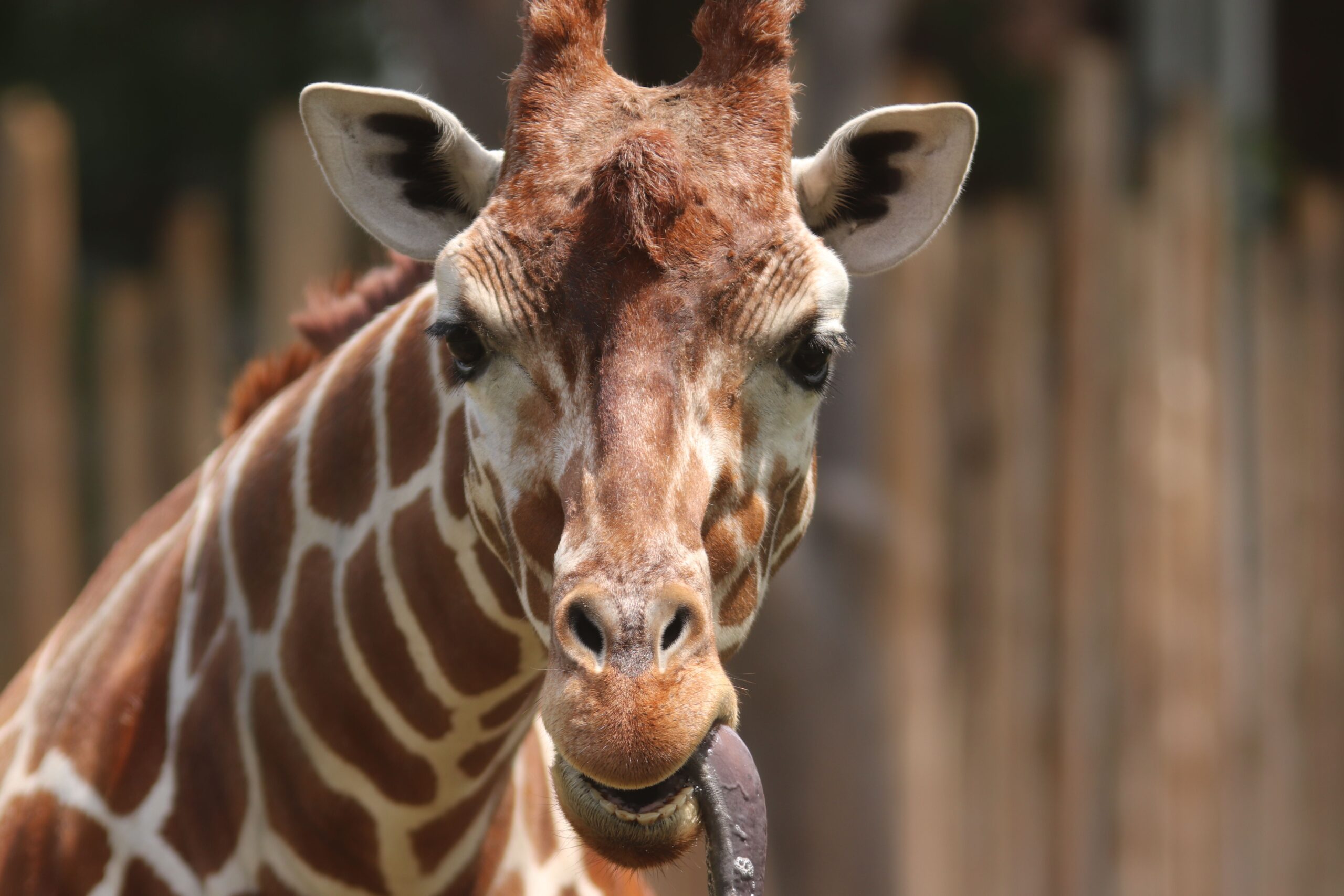
Feeding Method: Skillfully picks leaves using its long tongue (approximately 45cm)
Water: Most water is obtained from leaves; it rarely drinks water
- Behavior/Lifestyle
They are diurnal, active during the day, eating and moving around.
Distance Traveled: Travels over a wide area in search of food and water.
Rest: They often rest standing up, lying down for short periods.
- Sociality
They often live in groups (groups of 10-20 individuals are common).
Male-Male Fighting: They compete for rank by using their necks in a technique known as “necking.”
Breeding Season: The dominant male in the group mates with the female.
- Personality/Characteristics
They are timid but highly alert.
Their excellent eyesight and long necks allow them to quickly detect enemies from a distance.
They appear laid-back, but they will run quickly if they sense danger.
What will your personality look like?
Giraffes are very cautious. This is because they have natural enemies in Africa. Despite its large size, it has a very timid personality.
- Basic Personality
Timid and cautious
Excellent eyesight allows them to detect danger from afar
They will flee immediately if approached by humans or predators
Gentle and gentle
They live in groups and are usually calm and composed
- Sociality
Group Life
Live in small groups of 10-20 individuals
Males within the group compete for rank, but are generally cooperative
Male-Male Fighting
They compete for rank and breeding rights through “necking”
Mother-Child Relationship
Females are very attentive to and protect their young
- Relationships with Humans
Highly cautious but not aggressive
They will often flee when they sense danger
They can be observed calmly at zoos if approached slowly
What is the ecology of giraffes?
In the wild, giraffes eat leaves, twigs, and acacia trees, spending most of the day eating to maintain their large bodies. They usually rest and sleep while standing upright. For breeding, males neck each other to determine dominance and compete for females. The gestation period is 453-464 days, and the lactation period is 10 months. They are said to live for 25 years.
- Living Environment
Habitat: Savanna, dry grasslands, and open woodlands of the African continent
Tree abundance: Prefers areas with many tall trees (such as acacias)
Range: Travels widely in search of food and water
- Diet
Herbivory
Eats mainly leaves, branches, and fruit from tall trees
Eats dexterously with its long neck and tongue (approximately 45 cm) to pick leaves
Water Intake
Since it obtains moisture from leaves, it rarely drinks water
- Behavior
Activity Period: Diurnal (active during the day)
Rest: Often rests standing up, with brief periods of lying down
Migration: May travel several kilometers in search of food and water
- Sociality
Popular Group Life
Popular groups of 10-20 individuals are common
Most groups are centered around females and young, while males tend to live alone or in small groups
Dominance Competition
Males fight with each other using their necks to “neck”
Reproduction
Dominant males mate with females
- Breeding and Rearing
Gestation Period: Approximately 15 months
Birth: Gives birth to a single calf
Rearing: The mother protects and raises the calf for approximately one year
- Defense and Senses
Excellent eyesight, hearing, and sense of smell
Detects predators from a distance
Running Ability
When sensing danger, they can run short distances at speeds of over 50 km/h
Do giraffes have natural enemies?
The giraffe’s predator will be the lion. Children are also preyed upon by leopards, leopards, hyenas, and cheetahs.
Vocalizations
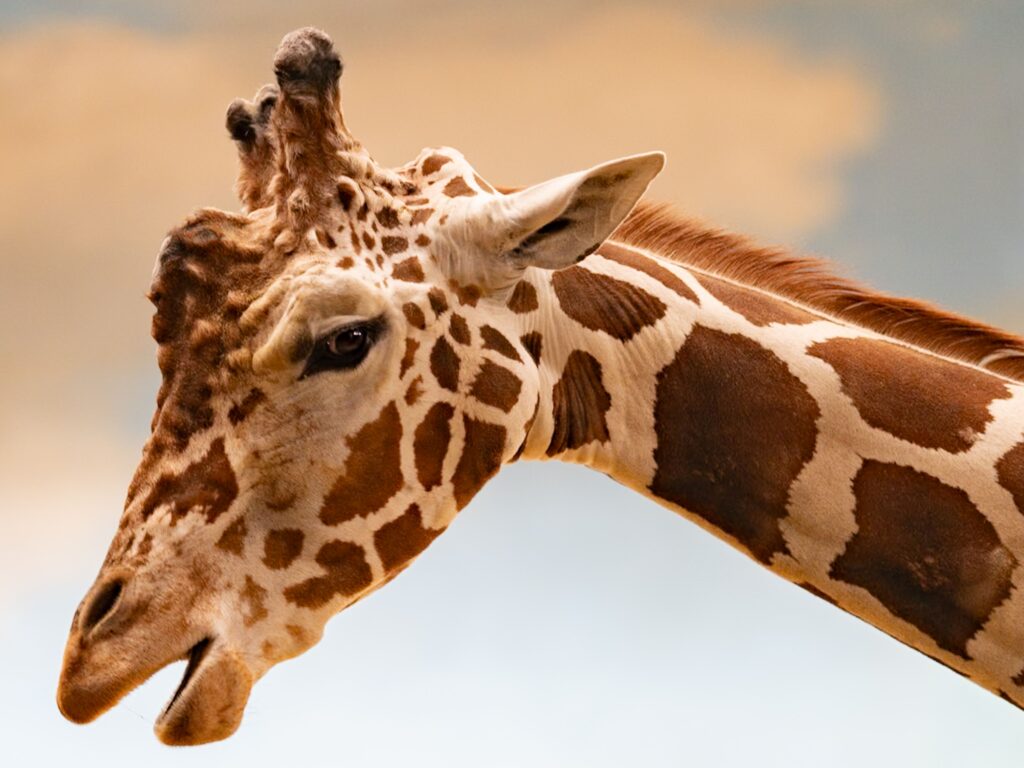
For a long time, giraffes (Giraffa camelopardalis) were considered animals that rarely made any sound. However, we now know that they do communicate with one another using low-pitched sounds and specialized vocalizations.
🌙 Low-pitched grunts (humming)
Low, droning, or rumbling sounds
Observed primarily at night
Believed to be used for communication and for keeping track of other giraffes’ locations
Includes frequencies so low that they are difficult for humans to hear.
🐣 Sounds made by calves
Young giraffes (calves) vocalize relatively frequently.
Sounds resembling a “baa” or bleat
Whistling or wheezing calls
Used to call for their mothers or when feeling anxious.
⚠️ Sounds of alarm
When sensing danger, they may:
Snort loudly
Make a short “huff” or snort
Emit a low grunt.
Why do giraffes rarely vocalize?
Possible reasons include:
Their long necks and the unique structure of their vocal apparatus
The wide spacing within herds, making visual contact the primary method of monitoring others
The need to remain quiet to avoid detection by predators.
Seasonal Activities
Since giraffes (Giraffa camelopardalis) inhabit the African savanna, their activities are governed more by the alternation between the rainy and dry seasons than by the four seasons. They do not hibernate and remain active year-round.
🌱 Rainy Season (roughly November to May, depending on the region)
A time when food is abundant and their range of movement expands
New leaves and foliage appear
They consume large amounts of leaves from trees such as acacia
Herds travel shorter distances
A favorable time for raising young
Key behaviors
🌿 Increased time spent foraging
🚶 Less travel to water sources
🦒 Rapid growth of calves
With abundant vegetation, the rainy season is a relatively comfortable time for giraffes.
☀️ Dry Season (roughly June to October, depending on the region)
A time of increased movement in search of food and water
Grass withers, so they rely primarily on tree leaves
They travel long distances to find water
Herds tend to congregate near water sources
Activity patterns are adjusted
Key behaviors
🌳 Feeding on leaves from tall trees
💧 Moving toward water sources
👀 Keeping a lookout for predators from a distance
Thanks to their long necks, giraffes can access leaves from tall trees even after other herbivores have depleted the lower vegetation.
Walking Speed
Although the giraffe (Giraffa camelopardalis) is a massive animal, it can move surprisingly fast by utilizing its long legs.
🚶 Normal Walking
Approx. 3–5 km/h
They move while walking slowly and searching for leaves.
They employ a unique gait known as “lateral sequence walking” (or pacing), where the front and hind legs on the same side move together.
🚶♂️ Brisk Walking
Approx. 8–15 km/h
They increase their speed when moving in a herd or sensing danger.
🏃 Running Speed
Top speed: Approx. 50–60 km/h
For a large herbivore, they are extremely fast over short distances.
However, they lack high endurance and are not built for running at high speeds for extended periods.
“Galloping Gait”
Unlike their normal walking style, when running, giraffes:
Extend their front legs far forward
Swing their necks back and forth to maintain balance
Cover ground rapidly with the long stride of their legs
About Giraffe Babies
- Birth
Gestation Period: Approximately 15 months
Size at Birth: Approximately 1.8m in height, approximately 50-70kg in weight
Appearance: Spotted from birth, with small, soft horns (ossicones)
- Growth
Walking Begins: Baby begins walking after its mother within a few hours of birth
Nursing Period: Breastfeeds for approximately 6-12 months
Post-Weaning: Baby gradually becomes independent while learning to eat leaves and young twigs
Height Growth: Grows to approximately half its height within the first year of life, and approaches adulthood over the course of several years
- Relationship with Mother
Living in a herd with its mother and protected from danger
Learns how to move and forage from its mother
Females in the herd sometimes watch over the baby
- Personality and Characteristics
Timid and cautious
Highly dependent on its mother, it will hide nearby if it senses danger
Curious, but still clumsy at running and using its neck
Why are giraffes an endangered species? What is the cause?
As explained above, most giraffe subspecies are designated as endangered species. Furthermore, it is listed in the Washington Convention, and international trade is strictly restricted. Giraffe populations have been halved and urgent conservation efforts are needed. Their population is decreasing due to the following reasons:
illegal hunting
Although giraffes are internationally protected, illegal hunting for their meat continues in Africa. As a result, the population has not recovered at all. Giraffe bones can be used for ornaments, so illegal poaching continues unabated.
habitat destruction
Habitat destruction is also a problem. In Africa in particular, rapid land development is progressing, creating a very harsh environment. They are now protected on a limited basis in zoos and national parks. Conservation events are also being held around the world.
Can giraffes be bred?
Giraffes are not very suitable for breeding because they are huge animals and are designated as an endangered species, so there are many restrictions. These animals require more protection than other animals, and urgent action is needed. It is safe to observe the actual rhinos on site.
- Legal and Management Restrictions
Giraffes are protected wildlife, and international trade is restricted by the Convention on International Trade in Endangered Species of Wild Fauna and Flora (CITES).
Even in Japan, private captivity is not permitted by law.
Only organizations with special permission, such as zoos, conservation facilities, and research institutions, are permitted to keep them.
- Ecology and Difficulty of Raising
Large and Powerful
Adults can grow to 4-5 meters in height and weigh 800-1,200 kg, so sturdy fencing and safety measures are essential.
Requires a large living space.
As herbivores with a wide range of movement, they require large areas, tall trees, and an environment where they can live in groups.
Unique Diet
They feed in large quantities, primarily on the leaves of tall trees such as acacia, so an adequate food supply is essential.
Vulnerable to stress
Captivity and changes in environment can cause loss of appetite and illness.
- Examples of captivity
They are kept in zoos around the world, often with extensive grounds, trees, and water areas.
In Japan, they are kept in many zoos, including Ueno Zoo and Higashiyama Zoo and Botanical Gardens.
In captivity, they live in groups and are thoroughly monitored for their diet and health.
Zoos Housing Giraffes (Japan & Worldwide)
The giraffe (Giraffa camelopardalis) is a popular large herbivore found in zoos around the world. Many facilities in Japan keep them and have successfully bred them.
🇯🇵 Major Zoos in Japan Where You Can See Giraffes
Ueno Zoological Gardens
A premier zoo in Japan
Long history of exhibiting giraffes
Viewable as part of the African animal exhibits
Tama Zoological Park
Keeps giraffes in a vast enclosure
Features an exhibit that recreates a savanna environment
Visitors can observe them living in a herd
Yokohama Zoological Gardens “Zoorasia”
Exhibited in the African Grassland area
Features mixed-species exhibits with other African animals alongside giraffes
Higashiyama Zoo and Botanical Gardens
Has kept giraffes for many years
Popular for its large animal exhibits
Tennoji Zoo
Exhibited in the African Savanna Zone
A prime example of an urban zoo where giraffes can be viewed
Asahiyama Zoo
Large herbivore exhibits adapted to the Hokkaido climate
Visitors can observe behavioral changes across the seasons
Other facilities in Japan that keep giraffes
Fuji Safari Park
Gunma Safari Park
Tobu Zoo
Kobe Municipal Oji Zoo
Fukuoka City Zoological Garden
🌍 Famous Giraffe-Keeping Facilities Worldwide
🇺🇸 San Diego Zoo
A world-famous zoo
Keeps giraffes in a spacious savanna-style enclosure
Known for breeding and research activities
🇺🇸 Bronx Zoo
Famous for large animal exhibits
Extensive exhibits of African animals, including giraffes
🇿🇦 National Zoological Gardens of South Africa
A large zoo in South Africa, close to the giraffe’s natural habitat
Conducts conservation research on animals native to Africa
🇬🇧 Chester Zoo
One of Europe’s largest zoos
Known for its conservation work with endangered species
🇩🇪 Berlin Zoological Garden
A zoo with a long history
Extensive experience keeping large mammals, including giraffes
Introducing other animals
コメント