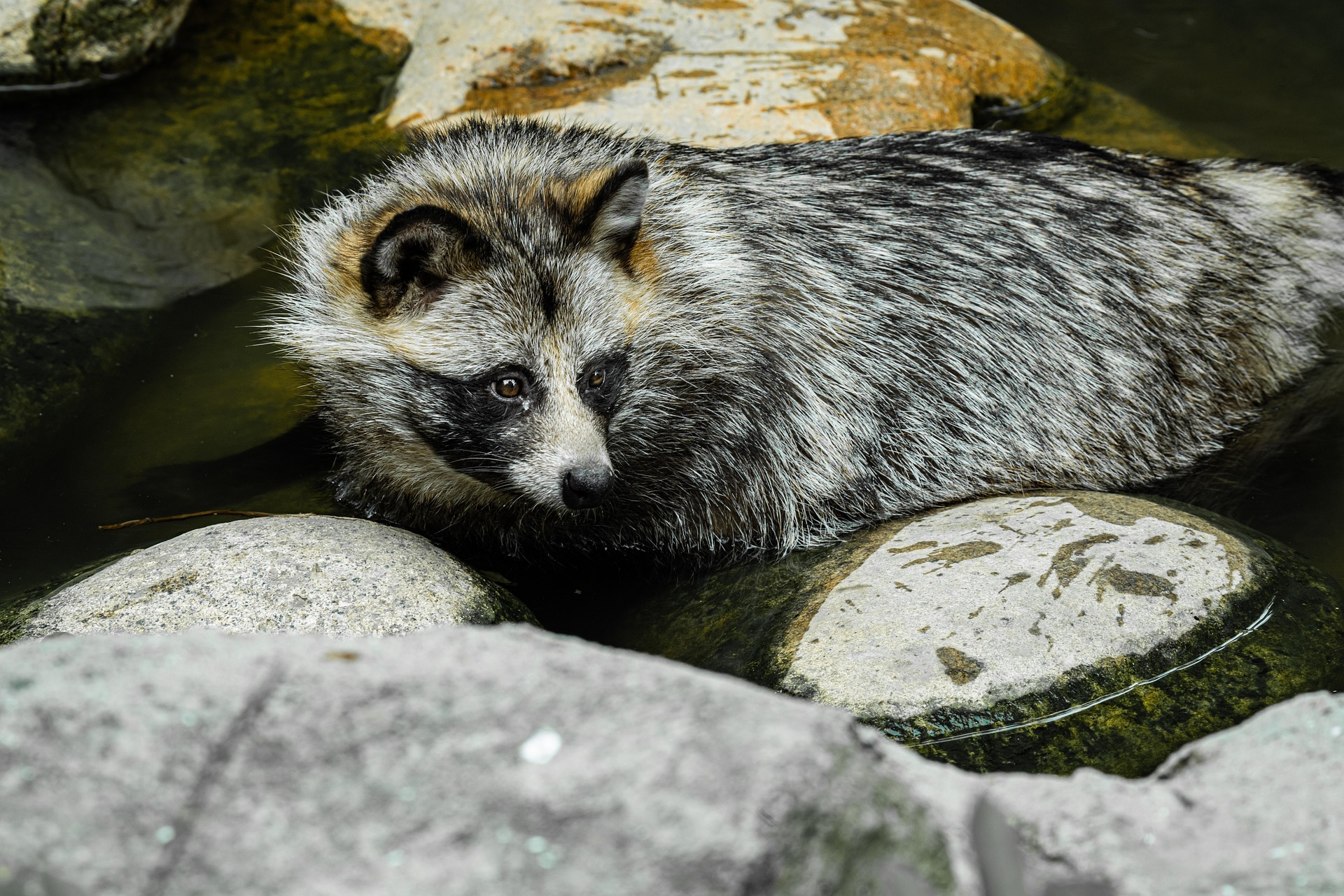
What kind of animal is a Japanese raccoon dog? We will explain its characteristics, ecology, and habitat. The raccoon dog is an animal that is distributed in East Asia and is endemic to Japan. It is mainly found in Honshu, Shikoku, and Kyushu, and although it is not designated as an endangered species, it is in danger due to habitat destruction.






- What is a Japanese raccoon dog? About basic status
- What are the roots and origins of the Japanese raccoon dog (Hondo-tanuki)?
- About habitat
- feature is? What kind of creature is it?
- What is your personality like?
- What is the ecology like?
- Vocalizations of the Japanese Raccoon Dog
- Seasonal Activities
- Walking Speed
- About Japanese Raccoon Dog Cubs
- Is the Japanese raccoon dog an endangered species?
- Can you keep a Japanese raccoon dog?
- Zoos Housing the Species (Japan and Worldwide)
- Introducing other animals
What is a Japanese raccoon dog? About basic status
The Japanese raccoon dog is a mammal that belongs to the Carnivora order, the Canidae family, and the Raccoon genus. The kanji character is mainland raccoon dog, and the scientific name is Nyctereutes viverrinus viverrinus. The body length is 40-50 cm, the tail length is 15 cm, and the weight is 3-4 kg. These animals are often kept in zoos and are often exhibited or introduced in information about events within the zoo. Below is a list of basic information. The location of the zoo’s facilities is easy to access, so give it a try.
| Japanese(和名) | ホンドタヌキ |
| English(英名) | Japanese raccoon dog |
| scientific name(学名) | Nyctereutes viverrinus viverrinus |
| classification(分類) | Mammalia、 Carnivora、 Canidae、Nyctereutes 哺乳綱、食肉目、イヌ科、タヌキ属 |
| IUCN Status(保全状況) | ENDANGERED |
| Length(体長) | 40 – 50cm |
| Weight(体重) | 3-4kg |
What are the roots and origins of the Japanese raccoon dog (Hondo-tanuki)?
The Japanese raccoon dog (Nyctereutes procyonoides viverrinus) is a subspecies of the raccoon dog found on the Japanese islands of Honshu, Shikoku, Kyushu, and Sado. Its roots lie not in Japan, but on the East Asian mainland.
Origins
Raccoon dogs belong to the Canidae family (the same family as wolves and foxes).
The genus Nyctereutes is believed to have evolved in East Asia approximately 3 to 5 million years ago.
Their ancestors inhabited regions such as northern China, the Korean Peninsula, and the Russian Far East.
How they arrived in Japan
The ancestors of the modern Japanese raccoon dog are believed to have arrived during the Ice Age, when sea levels dropped and the Japanese archipelago was either connected to the mainland by land or separated by only a very narrow gap.
Approximately 200,000 to 100,000 years ago: Migration from the mainland to Japan
The Japanese archipelago was subsequently separated by the sea once more.
Long-term isolation led to their divergence into a unique Japanese subspecies: the Hondo-tanuki.
Insights from DNA analysis
Genetic analysis reveals that the Japanese raccoon dog possesses characteristics distinct from those of raccoon dogs in China or the Korean Peninsula, indicating that it has evolved independently in Japan over a long period. Consequently, it is currently classified as a subspecies endemic to Japan.
Evolutionary characteristics
They are omnivorous—a rarity among the Canidae family.
They consume a wide variety of foods, including nuts, insects, frogs, fish, small animals, and fruits; this adaptability allows them to thrive in diverse environments and inhabit regions across Japan.
In recent times, they have expanded beyond rural landscapes (satoyama) into urban areas, with their presence confirmed even in places like the vicinity of the Imperial Palace in Tokyo.
About classification
It is classified as a raccoon dog. In the same family is the Ezo raccoon dog, which also lives in Hokkaido, Japan. Until now, it has been considered a subspecies of procyonoides.
Taxonomy of the Japanese raccoon dog
- 界(Kingdom):動物界 (Animalia)
- 門(Phylum):脊索動物門 (Chordata)
- 綱(Class):哺乳綱 (Mammalia)
- 目(Order):食肉目 (Carnivora)
- 科(Family):イヌ科 (Canidae)
- 属(Genus):タヌキ属 (Nyctereutes)
- 種(Species):アナグマタヌキ (Nyctereutes procyonoides)
- 亜種(日本産):ホンドタヌキ (Nyctereutes procyonoides viverrinus)
About habitat
The Japanese raccoon dog is distributed in forests in various regions of Japan, from Honshu to Shikoku to Kyushu. This species’ habitat is mainly satoyama, and it is active even in the middle of winter, so it does not live in winter.
- Distribution in Japan
Widely distributed across Honshu, Shikoku, and Kyushu
Not found in Hokkaido (a separate subspecies, the Siberian raccoon dog, is found in Hokkaido).
- Habitat
Forests: Natural forests such as deciduous and mixed forests
Satoyama and farmland: Can live near human settlements
Riversides and wetlands: Prefers forest edges and wetlands near water
Urban peripheries: May adapt to human activity areas
- Habitat Characteristics
Prefers environments with abundant food and hiding places
Nocturnal, resting in bushes or holes during the day and active at night
Environments with safe burrows and underground burrows are important for breeding and raising young.
feature is? What kind of creature is it?
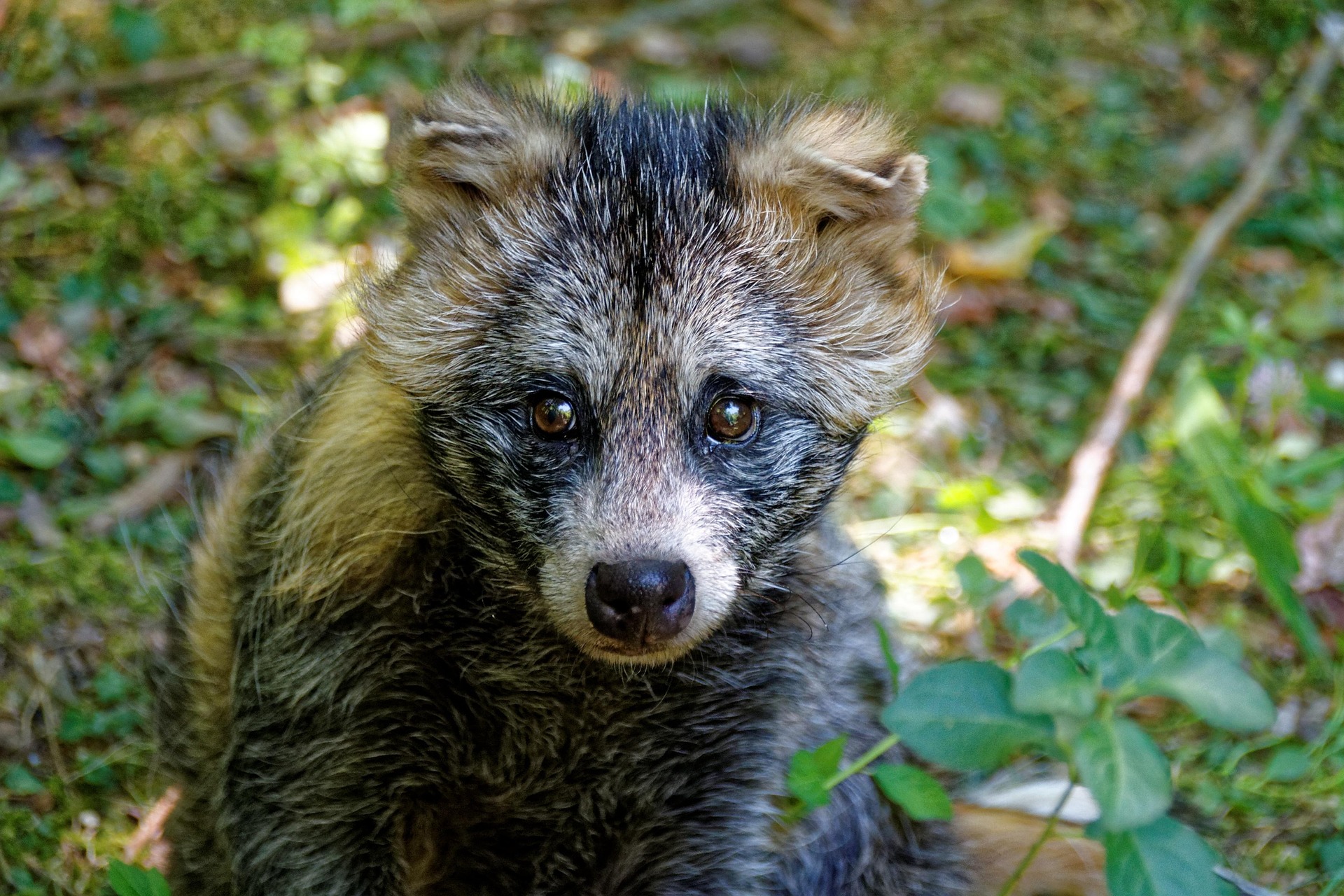
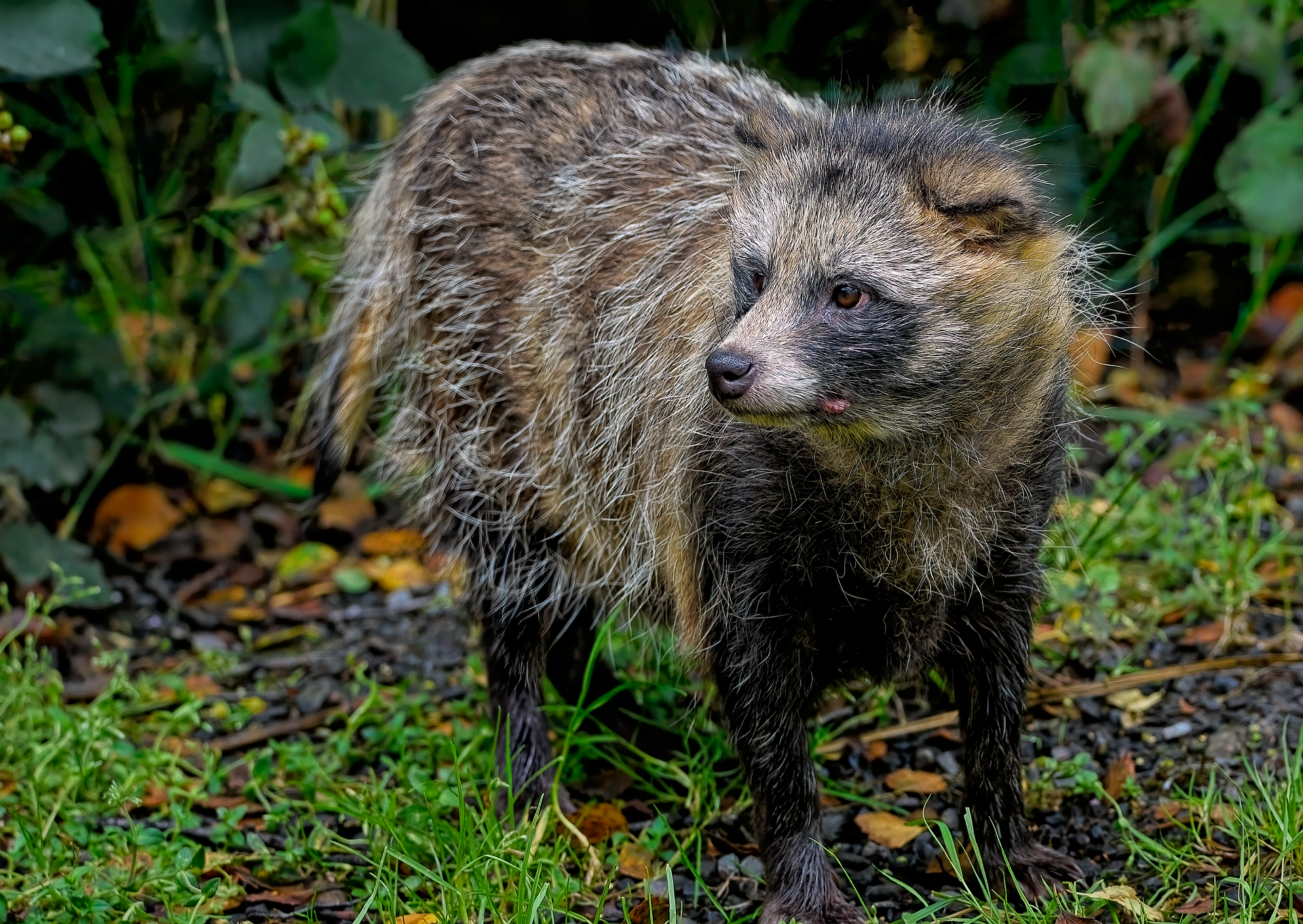
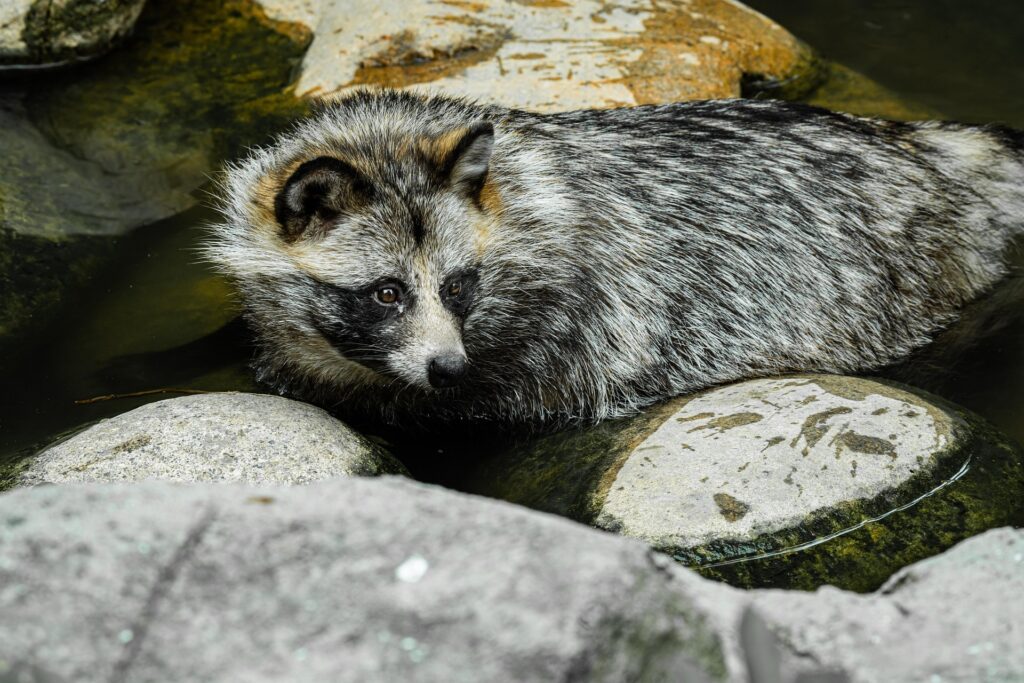
The raccoon dog has five fingers on its front legs and four fingers on its hind legs. Body hair changes in summer and winter. Their home range varies depending on region, season, etc. They are good swimmers and have the ability to dexterously swim underwater. They are mainly active at night and are quiet during the day. They are not very territorial animals. They usually travel alone or in groups or groups. They dig their own burrows and live in them.
- Body Size and Appearance
Body Length: Males approximately 55-80cm, females slightly smaller
Tail Length: 15-25cm
Weight: Approximately 5-9kg
Fur Color:
Back is brown to gray, belly is slightly lighter
Face has a distinctive black “mask” pattern
Densely furry, giving it a plump appearance in winter
Eyes and Ears:
Black eyes with developed nighttime vision
Ears are small and round
- Behavior and Personality
Primarily nocturnal, active at night foraging for food
Shy, but adaptable to human habitation depending on the environment
Becomes more territorial during the breeding season
- Diet
Omnivorous: Eats a wide variety of foods, including insects, earthworms, small mammals, fish, fruits, and vegetables
Able to flexibly change diet depending on the season and habitat
- Ecological Characteristics
They often dig holes in the ground to create burrows or hideouts.
They do not hibernate in winter, but may stay still in their burrows on cold days.
They can be found in rural areas and farmlands, and can live in close proximity to humans.
What is your personality like?
Raccoon dogs are very cautious and fearful. Individuals of this species are also nocturnal and go into raccoon sleep.'' The raccoon dog is in a state ofdying death” as it is stimulated by gunshots, meaning it pretends to be dead or asleep.
Personality and Behavior of the Japanese Raccoon Dog
Timid and cautious
Sensitive to predators and humans, they will flee immediately if they sense danger
They often spend the daytime hunkered down in bushes or holes
Nocturnal and quiet
They search for food at night, so they are rarely seen during the day
Their movements and feeding are quiet and discreet
Highly adaptable
They can live not only in forests, but also in rural areas, farmlands, and urban areas
They adapt to human presence and flexibly use food and hiding places
They are primarily solitary
They generally live alone outside of the breeding season
They are territorial and keep their distance from other raccoons
What is the ecology like?
The raccoon dog is an omnivorous animal, so it can eat mice, nuts, fruits, crops, grass, and even small reptiles and insects. Raccoons usually give birth to 3 to 5 babies in their burrows in mid-March. Basically, it is said that more males are born than females, and they live with their parents until they grow up. The lifespan is said to be about 10-15 years.
- Life Rhythm
Nocturnal: Active mainly at night, searching for food.
Rests in bushes or holes during the day.
Does not hibernate in winter, but stays still in burrows to avoid the cold.
- Diet
Omnivorous: Insects, earthworms, small mammals, fish, bird eggs, fruit, vegetables, etc.
Flexibly changes diet depending on the season and habitat.
In areas where humans live, they may feed from fields or garbage.
- Breeding
Breeding Season: March to May
Nesting: Digged burrows in the ground, in the shade of rocks, under fallen trees, etc.
Litter Size: Usually 4-6 baby raccoons
Brooding:
Mother holds and feeds the chicks.
Begins to become independent at about 2 months of age.
- Sociality and Behavior
Primarily solitary.
Strongly territorial, interacting with other individuals only during the breeding season.
Has multiple burrows and rests in safe places during the day.
Travels a distance of several hundred meters to several kilometers per day.
- Habitat Relationship
Adapted to a wide range of environments, including forests, satoyama, farmland, and urban suburbs
Prefers environments with abundant food and hiding places
Local population declines due to environmental destruction
Vocalizations of the Japanese Raccoon Dog
The Japanese raccoon dog (Nyctereutes procyonoides viverrinus) rarely makes loud, sustained calls like a fox; instead, it utilizes a variety of short vocalizations and growls.
“Koon” / “Kyoon”
When young call out to parents
Communication between mates
When acting affectionately or feeling anxious
A soft, high-pitched sound similar to the whimper of a puppy.
“Kyan” / “Gyan”
When startled
During a fight
When showing strong alertness
A short, sharp sound, often uttered only for an instant.
“Oo” / “Gururu…”
Intimidation
Territorial disputes
Warning against predators
Resembles the low growl of a dog.
“Kukuku”
Signals between companions at close range
Between parent and offspring during rearing
A relatively quiet vocalization.
“Hyan” / “Hiin”
Intense fear
When injured
When captured
A very high-pitched, scream-like sound.
Japanese Raccoon Dogs Rarely Bark
Although they belong to the dog family (Canidae), they almost never bark repeatedly like domestic dogs do.
Instead, they often communicate through methods such as:
Snorting
Growling
Making soft vocalizations
Conveying information via scent (using scent glands)
They rely more on olfactory communication than on vocalizations.
Seasonal Activities
The Japanese raccoon dog (Nyctereutes procyonoides viverrinus) is active year-round, but its behavior patterns, diet, and activity levels shift significantly with the seasons. While they do not undergo true hibernation like bears, during cold periods they may enter a state resembling “winter dormancy,” where they limit their activity.
🌸 Spring (March–May)
Spring is the most important breeding season of the year.
The breeding season occurs around February to April.
The gestation period is approximately two months.
Typically, a litter of four to six pups is born between April and May.
Unusually for the canine family, males actively participate in raising the young, bringing food and keeping watch over the pups.
As temperatures rise, their active hours increase.
☀️ Summer (June–August)
Summer is their most active season.
Pups begin foraging alongside their parents.
They roam over wide areas at night.
Food sources such as insects, frogs, crayfish, and fruits are abundant.
They may also forage near bodies of water.
🍂 Autumn (September–November)
Autumn is a time to prepare for winter.
They consume large quantities of nuts and fruits.
They accumulate body fat and gain weight.
Young individuals leave their parents and begin searching for their own territories.
Their nocturnal activity range tends to expand.
❄️ Winter (December–February)
Activity levels are at their lowest in winter.
They spend more time in their dens on days of severe cold.
They may go several days without venturing outside, though they do not truly hibernate.
They will go out to forage on warmer days.
Their winter coat becomes dense, adapting them to the cold.
Daily Activity Schedule
Japanese raccoon dogs are nocturnal, though they may occasionally be spotted during the day in areas with little human presence.
Evening to Night: Activity begins
Nighttime: Peak time for foraging and movement
Dawn: Return to the den
Daytime: Resting in dens or thickets
Walking Speed
The Japanese raccoon dog (Nyctereutes procyonoides viverrinus) typically moves at a slow walk, but it is capable of sprinting short distances when it senses danger.
Walking Speed (Normal)
Approx. 2–4 km/h
They often walk slowly while foraging; the pace is comparable to that of a dog on a casual walk.
Brisk Pace (During Travel)
Approx. 4–7 km/h
This pace is observed when patrolling their territory or heading toward feeding grounds.
Top Speed (Short Distance)
Approx. 30–40 km/h
They reach this speed only briefly when fleeing predators or when startled.
They cannot maintain this speed over long distances.
Distance Traveled per Night
As they are nocturnal, they cover the following distances while active at night:
Normal: 2–5 km
Times of food scarcity: They may travel 5–10 km or more.
Characteristics of Movement
They walk quietly with short, quick steps.
They often move with their heads held slightly low, sniffing the ground as they go.
Although members of the dog family (Canidae), they are not as agile as foxes; their bodies are built for steadily navigating through forests and thickets.
About Japanese Raccoon Dog Cubs
By summarizing the behavior of Japanese raccoon dog (Nyctereutes procyonoides viverrinus) cubs, we can understand their developmental stages and behavior from birth to independence.
- Birth and Nest
Breeding Season: March–May
Nest Building:
They build dens in safe locations such as holes in the ground, under fallen trees, or in the shade of rocks.
Litter Size: Usually 4–6 pups per litter.
Birth Weight: Approximately 80–120g
- Cubs Characteristics
They are born with downy fur and their eyes are closed.
They are small and completely dependent on their parents.
Their noses, ears, and feet are underdeveloped, making them unable to move from the den.
- Growth Stages
Week Growth and Behavior: From 0–2 weeks, they remain in their dens closed. The mother provides food and maintains their body temperature. From 2–4 weeks, they open up. Their fur begins to grow in. They play with their siblings in the den. By 4-6 weeks, they are able to walk and make small movements. They learn while being fed by their parents. By 6-8 weeks, they show interest in the outside world and explore the area around the den. They jump around and play. At around 2 months, they are preparing to become independent. They begin to move independently with the help of their parents.
- Survival Considerations
There is a risk of predation from natural enemies (large birds of prey, weasels, foxes, etc.)
Poor food and den security can increase mortality rates.
Is the Japanese raccoon dog an endangered species?
Is the Japanese raccoon dog an endangered species? In conclusion, it is classified as a low concern and is in a very safe condition. However, in recent years, due to the following reasons, the population of this species has decreased dramatically in some areas, making it a dangerous situation.
habitat destruction
The Japanese raccoon dog mainly prefers living in bushes, but its territory has been destroyed by humans, making it dangerous. Their habitat is becoming fragmented, and there are many incidents of them showing up in human residential areas and being run over by cars.
canine distemper
Raccoons are susceptible to canine distemper and mange. If the condition becomes severe, it can lead to secondary infection, which can infect the entire herd, which is a matter of great concern. It becomes difficult to maintain body temperature, and in some cases, death can occur.
hunting and revenge
The Japanese raccoon dog is also said to be a pest. They are killed by the farmers because they eat the farmers’ crops without permission. Therefore, in some areas, they have been thoroughly eradicated.
Can you keep a Japanese raccoon dog?
You can keep a Japanese raccoon dog. Some families actually keep them, but the following precautions need to be taken.
There are few means of obtaining
The Japanese raccoon dog is basically a wild animal and is not sold as a pet, so you will never be able to get one at a pet store. For this reason, the most common method is to have the animal surrendered from a zoo.
A cage and a house are required.
Raccoon dogs tend to move around a lot, so it is very dangerous to let them roam freely like cats. They cause a nuisance by eating the crops of neighbors. Be sure to prepare a cage or house. Get something large enough to relax in.
What kind of food is good?
Raccoons can eat dog food. Raccoon dogs are omnivorous and will eat just about anything, but pet food is ideal from a nutritional standpoint. You can also eat fruits, potatoes, and vegetables as snacks.
Is it possible to keep multiple animals?
Since Japanese raccoon dogs live in families or pairs, we recommend breeding more than one if they are compatible. They are timid and cautious wild animals, so it takes a long time to become tame.
Zoos Housing the Species (Japan and Worldwide)
As the Japanese raccoon dog (Nyctereutes procyonoides viverrinus) is a subspecies endemic to Japan, it is kept in relatively many zoos within the country. Conversely, very few facilities overseas house the Japanese subspecies itself; most exhibit the raccoon dog (Nyctereutes procyonoides) found on the Eurasian mainland.
Major Zoos in Japan Housing Japanese Raccoon Dogs
Inokashira Park Zoo
Kyoto City Zoo
Tobu Zoo
Komoro City Zoo
Tokushima Zoo
Higashiyama Zoo and Botanical Gardens
Toyama City Family Park
Shunan City Tokuyama Zoo
In addition to these, there are other zoos where exhibition status may vary depending on factors such as the presence of rescued individuals or breeding programs.
Raccoon Dogs Seen Overseas
Overseas, the animals exhibited are almost invariably the raccoon dogs found on the Eurasian mainland, rather than the Japanese subspecies.
Representative regions include:
Zoos in China
Zoos in South Korea
Zoos in Finland
Zoos in Germany
Zoos in Poland
Zoos in the Czech Republic
Some zoos in the UK
In Europe, there are regions where raccoon dogs have established wild populations, and a relatively large number of facilities exhibit them. However, instances of keeping the Japanese subspecies (N. p. viverrinus) are extremely rare.
Introducing other animals

コメント