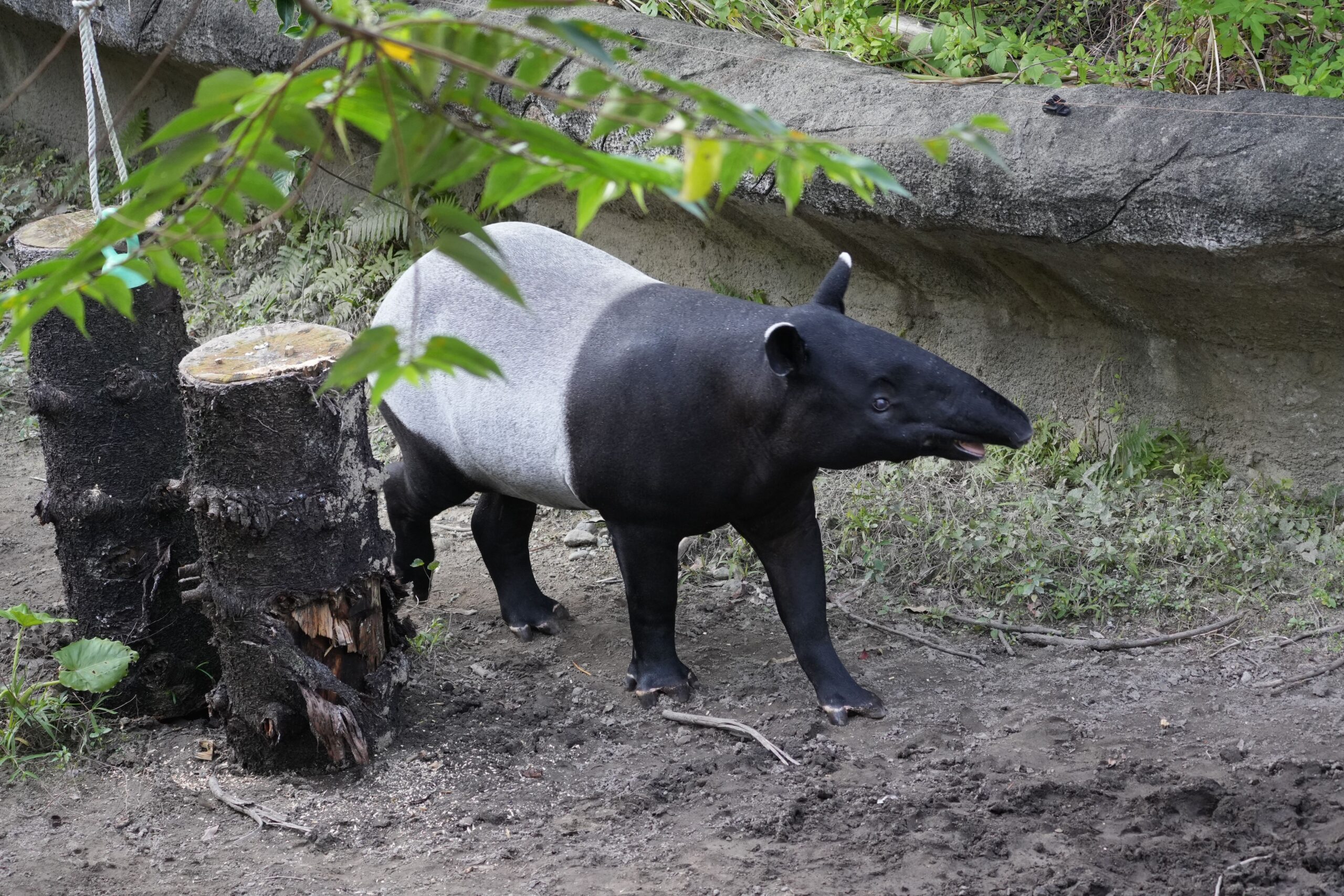
What kind of animals are the tapirs that appear on the pages of illustrated books? We will introduce and explain its characteristics, ecology, and habitat. It is said to have the most primitive characteristics among the existing ungulates, and its appearance is also very primitive. Many of them are kept in zoos and we will explain them to you.





- What is Tapirs ? About basic status
- What are the roots and origins of the tapir?
- About tapir habitat
- feature is? What kind of creature is it?
- What will your personality look like?
- What is the ecology of tapirs?
- Vocalizations
- Seasonal Activities
- Walking Speed
- About Tapir Baby
- Are tapirs an endangered species?
- Can tapirs be bred?
- Zoos Housing Tapirs (Japan & Worldwide)
- Introducing other animals
What is Tapirs ? About basic status
Tapirs are animals belonging to the family Tapir, which is included in the mammalian order Perissodactyla. The body length is 130 to 250 cm and the weight is 110 to 300 kg. The scientific name is Taipiridae. These animals have primitive traits and are kept and exhibited in many zoos. Because of its popularity, images can often be found on web pages. The English word is Tapir, and the Kanji is “Baku.” Tapir is said to be an animal that eats dreams.
| Japanese(和名) | バク |
| English(英名) | Tapir |
| scientific name(学名) | Taipiridae |
| classification(分類) | Mammalia、 Perissodactyla、Tapiridae 哺乳綱、奇蹄目、バク科 |
| IUCN Status(保全状況) | ENDANGERED |
| Length(体長) | 130~250cm |
| Weight(体重) | 110~300kg |
What are the roots and origins of the tapir?
The roots of the tapir trace back to primitive odd-toed ungulates (perissodactyls) that appeared during the Eocene epoch, approximately 50 million years ago.
Origins and Evolutionary Timeline
Approximately 50 million years ago
Ancestors of modern tapirs appeared in the Northern Hemisphere (particularly around North America and Europe).
These early ancestors were smaller than modern tapirs and inhabited forests.
Approximately 30 to 20 million years ago
Members of the odd-toed ungulate group spread across the globe.
The tapir lineage adapted to forest environments and evolved a physiology suited for a plant-based diet.
From approximately 10 million years ago onwards
Tapirs that had evolved in North America migrated to South America.
They became the ancestors of the modern South American tapir and Central American tapir.
Why do they have a “long nose”?
The tapir’s distinctive feature—a shape formed by the extension of the nose and upper lip—is an adaptation to life in the forest.
To grasp tree leaves
To eat aquatic plants
To detect scents
…they evolved a flexible, mobile “small nose” (proboscis).
Modern Tapir Species
Currently, four to five species are recognized.
Malayan tapir (Tapirus indicus)
→ Inhabits Southeast Asia; characterized by a black-and-white pattern.
South American tapir (Tapirus terrestris)
→ Inhabits the forests of South America.
Baird’s tapir (Tapirus bairdii)
→ Inhabits Central America.
Mountain tapir (Tapirus pinchaque)
→ Inhabits the Andes Mountains.
About classification
There is actually more than one species of Tapiridae. There are many subspecies. The following subspecies of Tapir exist. Each has a long history on Earth. Below is a list of the main wild species, including the Malayan tapir. Be careful, as some species are aggressive. They are nocturnal and have differences in their front and back legs.
| Name (名前) | Academic Name (学名) |
| Baird’s tapir ベアードバク | Tapirus bairdii |
| Malayan tapir マレーバク | Tapirus indicus |
| Mountain tapir ヤマバク | Tapirus pinchaque |
| South American tapir アメリカバク | Tapirus terrestris |
What is Baird Tapir?
Baird’s tapir lives in Central and South America. They have been drastically reduced due to habitat destruction due to development and hunting, and are listed on CITES Appendix I, making them an endangered species.
What is Malayan tapir?
The Malayan tapir inhabits Sumatra Island in Indonesia, Malaysia, Thailand, etc., and has been drastically reduced due to habitat destruction due to development and hunting, and is listed in Appendix I of the CITES and is designated as an endangered species. I am.
What is mountain tapir?
The mountain tapir is a subspecies that lives in Ecuador and Colombia. They have been drastically reduced due to habitat destruction due to development and hunting, and are listed on CITES Appendix I, making them an endangered species. Already extinct in Venezuela.
What is the American tapir?
The American tapir lives in South America, including Argentina, Chile, and Brazil. Due to habitat destruction due to deforestation and competition with livestock, this species is in sharp decline and is listed in Appendix II of the Washington Convention and is designated as an endangered species.
About tapir habitat
Tapirs are found in the forests of Central and South America, China, and Southeast Asia. Although they are widely distributed, they are endangered species in each region. They are rarely seen because they live at night, from young to adults.
- Geographic Distribution
Each species of tapir has a different habitat. Here are four common species:
① Malayan Tapir (Tapirus indicus)
Region: Malay Peninsula, Sumatra, Southern Thailand, Southern Myanmar
Characteristics: The only species living in tropical rainforests
② South American Tapir (South American Tapir)
Brazilian Tapir / Central American Tapir (Tapirus terrestris)
Region: South American tropical rainforests, including Brazil, Venezuela, and Peru
Environment: Tropical rainforests and wetlands
③ Venezuelan Tapir / Andean Tapir (Tapirus pinchaque)
Region: The Andes Mountains of Colombia, Ecuador, and Venezuela
Environment: Mountain forests at altitudes of 1,000-3,500 meters
④ Baby Tapir / Honduran Tapir (Tapirus bairdii)
Region: Central America (southern Mexico, Honduras, Costa Rica, etc.)
Environment: Tropical rainforests and humid forests
- Environmental Characteristics
Mainly tropical rainforests and humid forests
Prefers habitats near rivers and wetlands, where it bathes in water and mud.
Eats grass and fruit in areas densely populated by trees and shrubs.
- Habitat Conditions
Near water sources: To regulate body temperature, protect the skin, and prevent parasites.
Areas with little human activity: Avoid the impacts of deforestation and agricultural development.
Large habitat: Needs a wide range of movement to find food.
- Habitat Status
Due to deforestation and poaching, many species are listed as endangered.
The International Union for Conservation of Nature (IUCN) lists most tapirs as vulnerable to endangered.
feature is? What kind of creature is it?
Tapirs have a stocky body, hard skin, short limbs, and a short tail. The tip of its snout is sensitive, and its body is densely covered with short, soft hairs that are dark brown or grey-brown in color. Tapirs often live in forested areas, but can also be found in rivers and lakes. When a natural enemy approaches, they flee into the water. They are very good swimmers and can walk across water. They usually live alone or with friends in forests or waterside areas.
- Physical Characteristics
Size: Approximately 1.8-2.5m in length, approximately 90-120cm in height, approximately 150-400kg in weight (depending on species)
Body Type: Stocky body, short legs, rounded head
Nose/Mouth: The tip of the nose is elongated, forming a short, elephant-like snout (proboscis)
Convenient for picking food and gathering grass and fruit
Skin/Hair: The hair is short and can be black, brown, white, or spotted depending on the species
Ears/Eyes: Small ears, eyes located on the sides of the head for alertness
- Diet
Herbivore
Eats branches, leaves, grass, fruit, aquatic plants, etc.
Feeding Method: Dexterously grasps food with its long snout
Hydration: Drinks water frequently near water
- Behavior/Lifestyle
Nocturnal or crepuscular, active in the evening or at night
Enjoys bathing in water and mud, which they use to regulate body temperature and prevent parasites
Movement: Travels over wide areas in search of food
- Sociality
Generally solitary or parent-child units
Males may fight over territory
Multiple individuals may gather around water or safe areas
What will your personality look like?
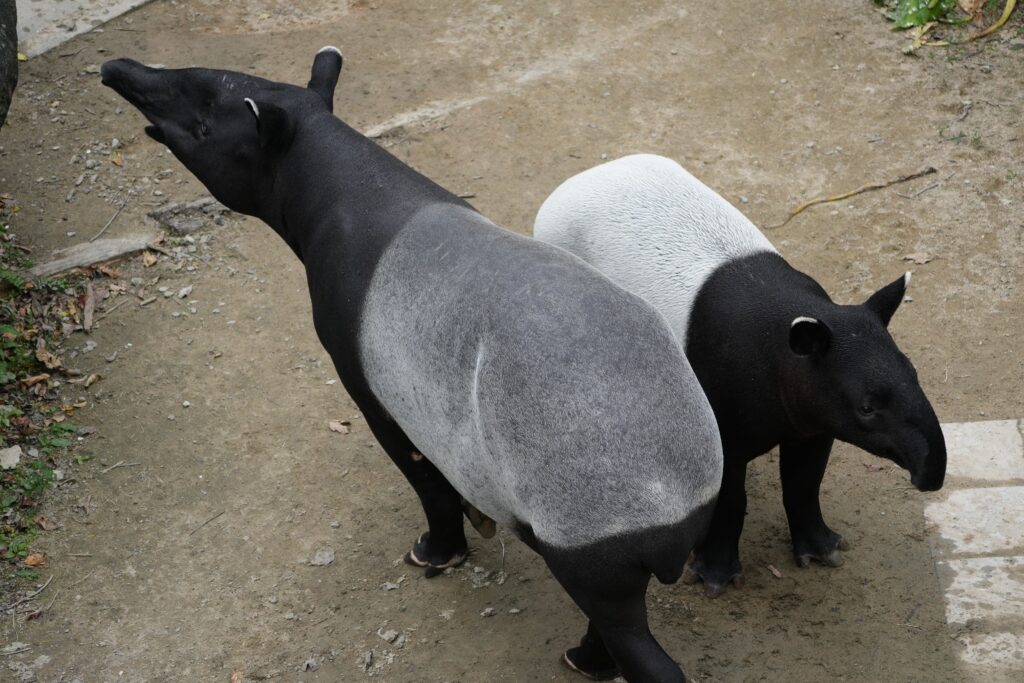
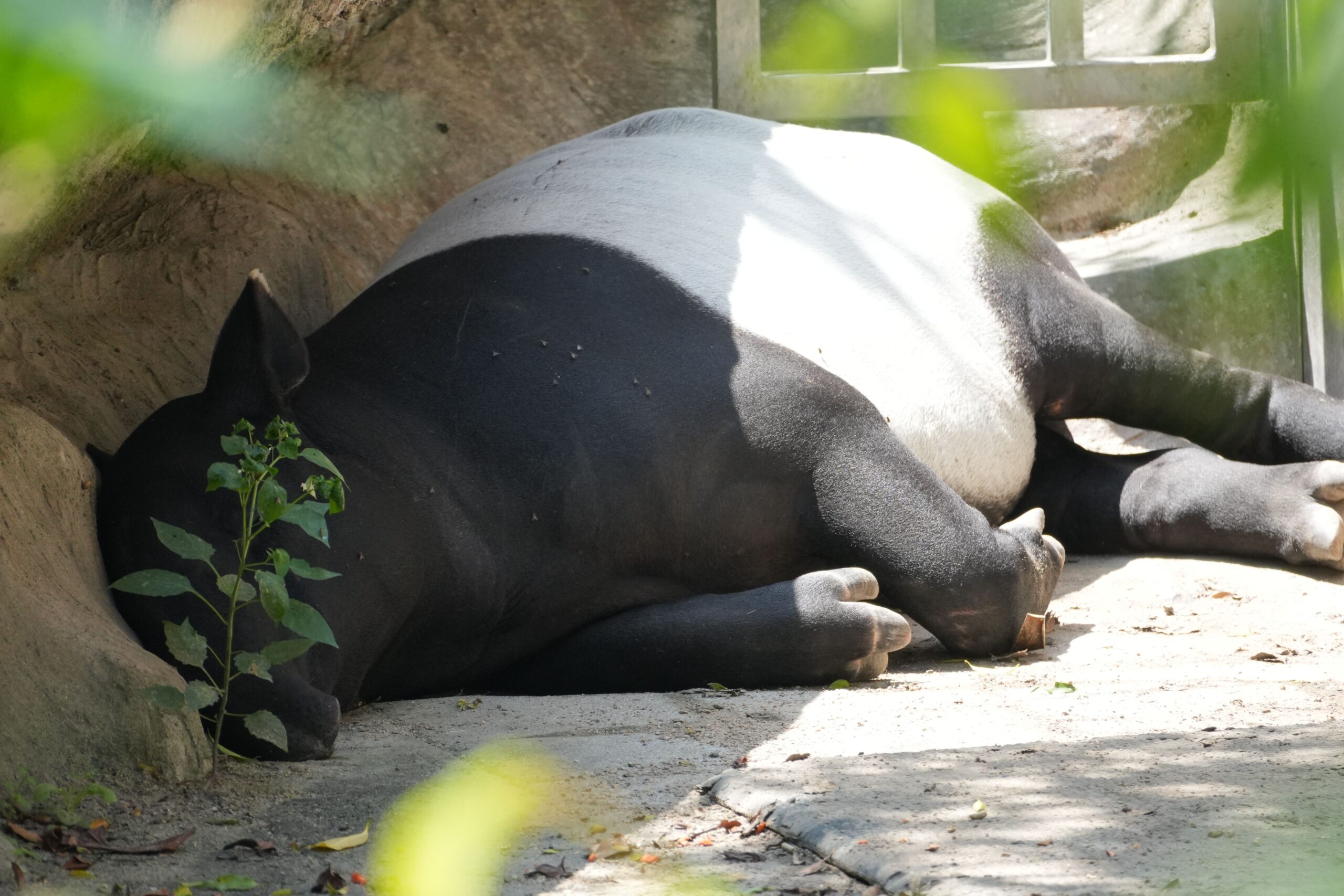
Tapirs have a very docile and laid-back personality. They also love to take naps, and as you can see when you go to the zoo, they often sleep peacefully. They often lie down and sleep, defenseless, and are sometimes targeted by natural enemies.
- Basic Personality
Timid and cautious
Although their eyesight is not particularly good, their hearing and sense of smell are well-developed, allowing them to quickly flee when they sense danger.
Gentle and gentle
They generally only attack when necessary and are generally laid-back.
- Sociality
They are primarily solitary creatures.
Males, in particular, have territories and rarely come into contact with other males.
Living in mother-child units.
Females stay with their young and protect them from danger.
They may form small groups near water or in safe places.
- Relationships with Humans
Timid and not aggressive, but may charge if cornered.
At zoos, they tend to be calm once they become accustomed to their environment.
What is the ecology of tapirs?
Tapirs are herbivorous, eating grasses, fruits, leaves and buds of trees, but also aquatic plants. The breeding season is year-round, and the gestation period is about one year. Females can give birth to one cub at a time. Children reach sexual maturity in 2 to 4 years. Lifespan is 25 to 30 years.
- Living Environment
Habitat: Tropical rainforests and humid forests in Central and South America (Brazil, Colombia, Ecuador, etc.) and Southeast Asia (Malay Peninsula, Sumatra, etc.)
Prefers to be near water: Bathing in water and mud helps regulate body temperature and protect against parasites
Requires a wide range of movement: Moves to find food
- Diet
Herbivore
Eats leaves, grass, fruit, and aquatic plants.
Feeding Method: Uses a short, elephant-like trunk to skillfully pick leaves and fruit.
Hydration: Drinks water near water
- Behavior
Nocturnal or crepuscular, active in the evening or at night
Movement: Travels over a wide area in search of food and water
Rest: Rests in dense jungles and bushes during the day
Bathing in water and mud: Important for regulating body temperature and protecting against parasites
- Sociality
Generally solitary
Male-female unit life: Offspring stay with their mothers
Male territorial disputes may occur
Multiple individuals may gather near water or other safe areas
- Breeding and Rearing
Breeding Season: Varies by season, but breeding is possible year-round in tropical areas
Gestation Period: Approximately 13 months
Birth: Gives birth to a single offspring
Rearing: The mother nurses and protects the offspring for about a year
- Lifespan
Wild: Approximately 25-30 years
Captive: May live for more than 30 years
Do tapirs have natural enemies?
The tapir’s natural enemies are animals such as crocodiles, jaguars, and tigers. When approached by an enemy, they often flee into the water.
Vocalizations
Common vocalizations include the following:
“Piiiii” / “Kiii”
A high-pitched, sharp, whistle-like sound.
They often make this sound when startled, when calling to others, or to signal danger.
“Kurururu” / “Buu-buu”
Used for communication between parents and offspring or among members of the group.
Low growl
Produced when the animal is on alert or acting aggressively.
They are particularly well-known for a high-frequency, whistle-like call. It is so high-pitched that humans might mistake it for a bird’s call, and in the forest, the sound can seem to come from unexpected directions.
Seasonal Activities
While tapir activity patterns vary slightly by region (South America, Central America, and Southeast Asia), they are fundamentally animals that remain active year-round in tropical forests and wetlands. They do not hibernate.
Spring (March–May)
A period of increased activity
Increased rainfall leads to abundant vegetation, resulting in higher food intake
They frequently feed on new shoots, tender leaves, and aquatic plants
Breeding activity is observed in some regions
Activity increases during the night and at dawn
Especially in forests, they may expand their range as new plant growth emerges after the rain.
Summer (June–August)
A period of increased time spent near water
They enter rivers, ponds, and swamps to escape the heat
They are skilled swimmers and regulate their body temperature in the water
They take mud baths to ward off parasites and stay cool
Nocturnal and crepuscular (active at dawn and dusk) behaviors become more pronounced
Because tapirs have large bodies and sparse fur, water sources serve as vital places to cool off.
Autumn (September–November)
A period of heavy feeding
In regions where fruit ripens, they consume large quantities of fruit
They utilize a wide variety of food sources, including tree leaves, twigs, and aquatic plants
While they do not face the severe food shortages seen in winter, they adjust their range in preparation for environmental changes
By eating fruit and dispersing seeds, they also influence the distribution of forest plants.
Winter (December–February)
Varies by region
Tapirs in South America and Central America
Remain active as usual in tropical regions
Utilize warm areas and water sources
Activity centers around the night
Malayan tapirs in Southeast Asia
Experience minimal seasonal change
Move in response to fluctuations in vegetation caused by the wet and dry seasons
*As tapirs are not adapted to cold climates, they do not hibernate or undergo significant changes to their coat for winter.
Daily Activity Rhythm
Tapirs generally follow this routine:
🌙 Night to dawn: Active
↓
☀️ Daytime: Resting, bathing, and spending time quietly in the forest Key behaviors:
🌿 Foraging
💧 Bathing
👃 Scent-based territorial marking
🚶 Moving through the forest
🐾 Solitary behavior (generally living alone)
Known as “forest cleaners,” tapirs play a vital role in seed dispersal as they feed on fruits and plants throughout the seasons.
Walking Speed
While tapirs (Tapirus) usually move at a leisurely pace, they are capable of running quite fast when necessary.
Normal Walking Speed
Approximately 2–5 km/h
They move slowly through the forest while foraging for plants.
They are adept at moving silently through dense jungle.
Brisk Walking / Travel Speed
Approximately 6–10 km/h
They increase their speed when sensing danger or traveling long distances.
Running Speed
Up to approximately 30–40 km/h
Although they are large animals weighing 200–300 kg, they are quite agile over short distances.
In the forest, rather than running in a straight line, they flee by charging forward while dodging obstacles.
Skilled Swimmers
Tapirs possess impressive aquatic abilities in addition to their land-based skills;
They can swim across rivers,
Walk underwater,
And escape into the water when in danger.
About Tapir Baby
Let’s take a look at tapir baby details.
- Birth
Gestation Period: Approximately 13 months
Size at Birth: Approximately 5-15 kg (depending on species), approximately 70-100 cm in length
Appearance: Spotted or striped fur serves as camouflage
Early Characteristics: Short snout, horns and fangs not yet developed
- Growth
Starts Walking: Stands up immediately after birth and follows its mother
Lactation Period: Raised on breast milk for approximately 6-12 months
Post-Weaning: Learns to eat leaves and grass while becoming independent
Maturity: Depending on species, males reach sexual maturity at 3-4 years of age, and females at 2-3 years of age
- Relationship with Mother
Grows under the mother’s protection and is protected from danger and predators
Learns how to move and forage from their mother
They have little contact with individuals other than their mother and calf, but may temporarily gather at watering holes
- Personality/Characteristics
Timid and cautious
Dependent on their mother and quick to hide when they sense danger
Curious, but lacking in physical strength and athletic ability
Are tapirs an endangered species?
As explained above, most tapirs are endangered species. It is also listed in the Washington Convention, and transactions are classified and strictly restricted. The reasons for this are as follows. We are in a critical situation.
illegal hunting
Although tapirs are internationally protected, illegal hunting for their meat continues in many parts of the world. As a result, the population has not recovered at all. Tapir meat seems to be selling well, but it seems like they are not getting enough control.
habitat destruction
Habitat destruction is also a problem. In Asia in particular, rapid land development is progressing, creating a very harsh environment. They are now protected on a limited basis in zoos and national parks. Conservation events are also being held around the world.
Can tapirs be bred?
Tapirs are not very suitable for breeding because they are huge animals and are designated as an endangered species, so there are many restrictions. These animals require more protection than other animals, and urgent action is needed. It is safe to see the actual tapirs on site.
- Legal and Management Restrictions
Tapirs are designated as an endangered species, and international trade is restricted by the Convention on International Trade in Endangered Species of Wild Fauna and Flora (CITES).
Even in Japan, private ownership is not permitted by law.
Only organizations with special permission, such as zoos, conservation facilities, and research institutions, are permitted to keep them.
- Ecology and Difficulty of Raising
Large and Powerful
Weighting between 150 and 400 kg, they require sturdy fencing and safety management.
They require a large living space.
They must navigate and search for food in forests and near water.
Their diet is unique.
They must have a diverse diet, including branches, leaves, fruits, and aquatic plants.
They are timid and sensitive to stress.
Captivity and changes in environment can lead to illness and loss of appetite.
- Examples of Captivity
They are kept in zoos around the world, with spacious grounds, water areas, and mud baths.
They are kept in many zoos in Japan (including Ueno Zoo and Higashiyama Zoo and Botanical Gardens).
In captivity, they undergo strict nursing, dietary management, health management, and safety measures.
Zoos Housing Tapirs (Japan & Worldwide)
Tapirs (Tapirus) are kept in zoos around the world; however, as they are endangered species, many facilities house them for breeding and conservation purposes. In Japan, the Malayan tapir (Tapirus indicus) is the most commonly kept species.
🇯🇵 Major Zoos in Japan Where Tapirs Can Be Seen
Tama Zoological Park
Houses Malayan tapirs
One of the facilities with a strong track record of successful breeding in Japan
A new individual was introduced from Indonesia in 2025
Yokohama Zoological Gardens “Zoorasia”
Exhibits Malayan tapirs
Visitors can observe them in an environment that recreates a tropical rainforest
Higashiyama Zoo and Botanical Gardens
Houses Malayan tapirs
Participates in breeding programs
Fukuoka City Zoological Garden
Houses Malayan tapirs
A facility that also introduces visitors to their vocalizations
Nagasaki Bio Park
Houses Brazilian tapirs (Tapirus terrestris)
Offers a chance to see South American tapirs, which are rare in Japan
Other facilities include:
Chiba Zoological Park
Tobu Zoo
Gunma Safari Park
Ehime Prefectural Tobe Zoo
🌎 Famous Tapir-Housing Facilities Worldwide
🇺🇸 ZooTampa at Lowry Park
Has a track record of breeding Malayan tapirs
Participates in conservation activities
🇺🇸 Houston Zoo
Houses Baird’s tapirs (Tapirus bairdii)
Known for exhibits recreating Central and South American wetlands
🇬🇧 Chester Zoo
Participates in conservation and breeding programs for rare species
🇸🇬 Singapore Zoo
Exhibits Malayan tapirs
Housed in a tropical environment that closely mimics their natural habitat
🇩🇪 Berlin Zoological Garden
A zoo with a long history of keeping tapirs
Introducing other animals


コメント