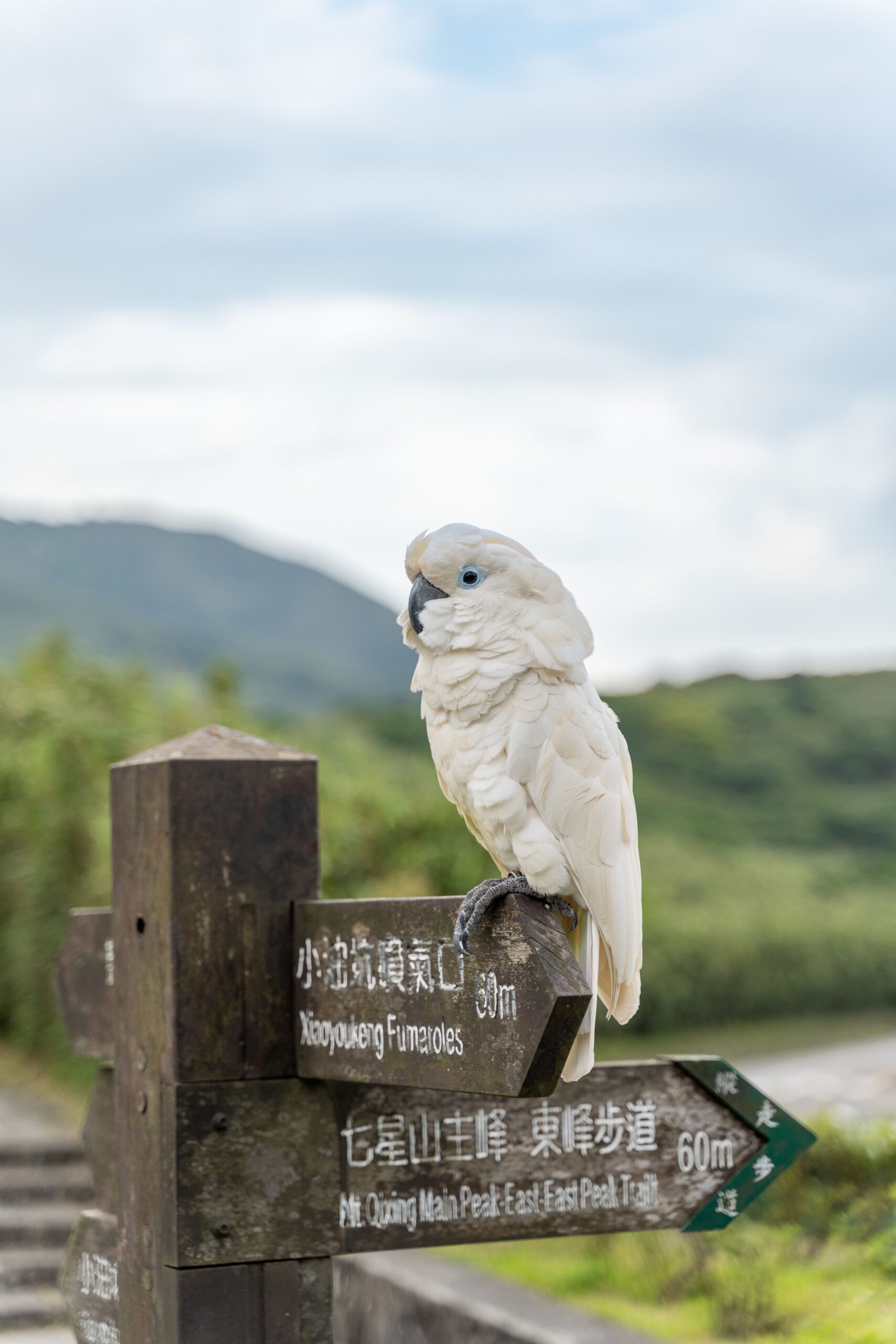
What kind of bird is a white cockatoo? We will explain its characteristics, ecology, and habitat. It is a large white parrot native to Indonesia. Even after it becomes an adult, it is easy to get used to people, and it is a very friendly parrot that some people even keep as a pet, so it is very well known.




- What is a White Cockatoo? Basic Stats
- What are the roots and origins of the White Cockatoo?
- Habitat
- What are its characteristics? What kind of creature is it?
- What is its personality like?
- What is the ecology of the white cockatoo?
- About Molting
- About Vocalizations
- Seasonal Activity Patterns
- Flight Speed
- About White Cockatoo Chicks
- Is the White Cockatoo an endangered species?
- Can the White Cockatoo be kept as a pet?
- Zoos and Facilities Housing the Species (Japan & Worldwide)
- Introducing other animals
What is a White Cockatoo? Basic Stats
The White Cockatoo is a bird classified in the Psittacidae family of the Parrot family. It is also known as the White Cockatoo and its English name is Cacatua alba. Its body length is 50cm and its weight is only 500g. The list of information is as follows.
| Japanese(和名) | タイハクオウム ムジオウム |
| English(英名) | White cockatoo |
| scientific name(学名) | Cacatua alba |
| classification(分類) | Ave、 Psittaciformes、Cacatuidae、Cacatua 鳥綱、オウム目、オウム科、オウム属 |
| IUCN Status(保全状況) | ENDANGERED |
| Length(全長) | 46cm |
| Weight(体重) | 500g |
What are the roots and origins of the White Cockatoo?
The White Cockatoo (scientific name: Cacatua alba) originated in the northern Maluku Islands (Moluccas) of Indonesia. It is an endemic species found naturally only in this region, inhabiting the following islands:
Halmahera
Bacan
Ternate
Tidore
Obi, among others
Evolutionary Roots
The White Cockatoo belongs to the family Cacatuidae, a group of cockatoos distributed across Australia and New Guinea. It is believed that the species emerged after ancestral cockatoos spread to these islands millions of years ago and evolved in isolation on each island.
Origin of the Name
In Japanese, the name is written as “Taihaku-ōmu” (太白鸚鵡).
The term “Taihaku” means “extremely white” and refers to the bird’s pure white plumage. Its English names are “White-crested Cockatoo” (referring to its white crest) or “Umbrella Cockatoo” (referring to its crest, which spreads wide like an umbrella).
Taxonomy of White Cockatoos
- 界(Kingdom): 動物界 (Animalia)
- 門(Phylum): 脊索動物門 (Chordata)
- 綱(Class): 鳥綱 (Aves)
- 目(Order): オウム目 (Psittaciformes)
- 科(Family): インコ科 / オウム科 (Cacatuidae)
- 属(Genus): カカトゥア属 (Cacatua)
- 種(Species): タイハクオウム (Cacatua galerita)
Habitat
It is native to Indonesia and is found mainly in the northern Maluku Islands on the islands of Birchaang, Halmahera, Kasiruta, Mandioli, Ternate and Tidore.
- Main Habitat
Northern and Northeastern Australia
Tropical rainforests and coastal forests in northern Queensland
New Guinea, Indonesia
Distribution of some subspecies
Natural Environment: Woodlands, mangroves, open forests, and near agricultural land
- Environmental Characteristics
Living in burrows and tree branches, with many trees
Preferring areas with abundant water and food (fruit and seeds)
Adapted to areas near agricultural land and cities, and sometimes foraging in orchards
- Behavior and Habitat Characteristics
Living in flocks on tree branches and in the canopy
Flocks are small, ranging from a few dozen birds
Resting at night in the safety of trees
What are its characteristics? What kind of creature is it?
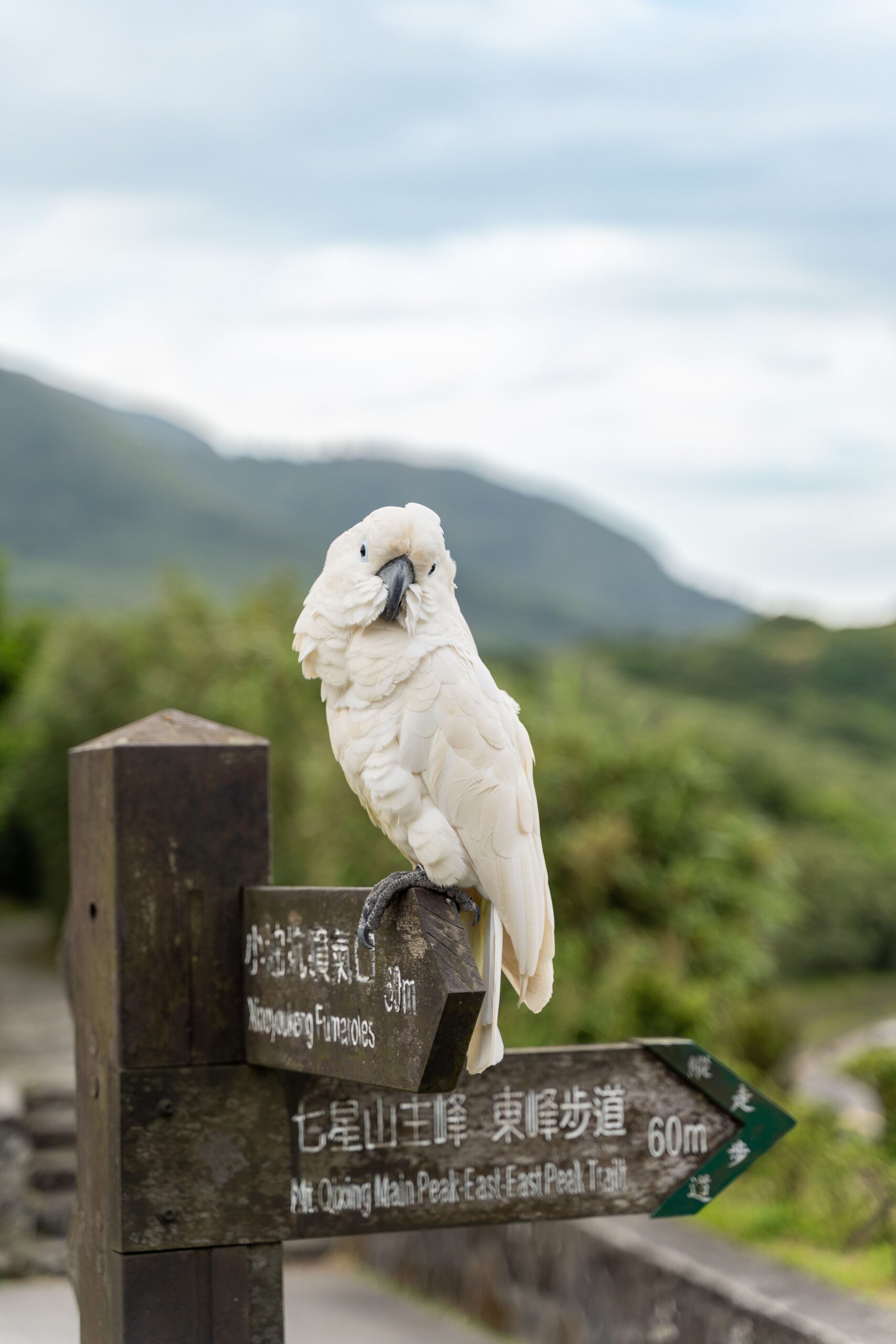
The white cockatoo is white all over, with yellow tail feathers and undersides of wings. Chicks are covered with yellow down feathers and have dark gray beaks and hind legs. Its habitat is swamps and mango lobe forests. It prefers altitudes of 300-900m. It is active during the day and often rests in trees at night.
- Physical Characteristics
Body Color: White, with a yellow crest
Body Length: Approximately 45-50 cm
Weight: Approximately 600-900 g
Tail Feathers: Long and flared at the tip
Beak: Strong and curved, adapted for gnawing at wood and crushing food
Legs and Claws: Strong and adapted for grasping branches
- Behavior and Personality
Social and Group-Living
In the wild, they live in small to medium-sized groups
Communicate with others through vocalizations
High Intelligence
In captivity, they can imitate speech and learn tricks
Highly inquisitive and have excellent problem-solving abilities
Active and playful
They chew on wood and move around by spreading their crest
- Biological Characteristics
Diet: Omnivorous, eating fruits, seeds, nuts, and insects
Reproduction: Lays eggs (2-3 at a time) in tree cavities or burrows
Lifespan: 40 years in the wild, can live for over 60 years in captivity
What is its personality like?
White cockatoos often live in pairs or groups, making them very social birds. They are also very intelligent for birds. They are quite smart, as they can bring toys and play with them on their own. Their love of communication and physical contact makes them popular as pets.
- Sociable and Caring
In the wild, they live in groups, so communication with fellow birds is extremely important.
They communicate through vocalizations and crest movements.
Even in captivity, they enjoy interacting with their owners and other birds.
- Curious and Playful
They are interested in new things and often chew and tinker with them.
In captivity, they enjoy playing with toys and educational items.
They learn and relieve stress through play.
- Highly Intelligent
They can imitate calls and learn simple tricks.
They have excellent problem-solving skills and will come up with their own solutions when their curiosity is stimulated.
They can build deep, trusting relationships with humans over long periods of captivity.
- They can also be moody.
They tolerate stress and loneliness well, and can become nervous when kept alone or in a new environment.
They are loud and may scream when angry or frustrated.
What is the ecology of the white cockatoo?
White cockatoos mainly eat fruits and seeds. They are oviparous. They breed from January. They have a one-month incubation period and can lay two eggs at a time. The chicks are able to become independent within a few months after hatching. White cockatoos have a very long lifespan of 40 to 50 years.
- Habitat
Region: Northeastern Australia, New Guinea, parts of Indonesia
Environment: Tropical rainforests, mangroves, open forests, near agricultural fields, etc.
Flock Life: Moves in small to medium-sized flocks
Resting Sites: Rest in safe treetops at night
- Diet
Omnivorous: Eats fruits, seeds, nuts, buds, insects, etc.
They also eat nuts and agricultural crops, so they are sometimes found in orchards.
- Breeding
Nests: Nest in tree cavities or tree holes
Egg Laying: 2-3 eggs per clutch
Rearing: Both parents incubate and raise the eggs
Development: Young birds learn to fly and forage under the care of their parents
- Behavior and Sociality
Highly Sociable: Interacts with others in flocks and communicates through calls and crest feathers
Playful and Curious: Chews on branches and plays with their crest feathers
High Intelligence: Highly skilled in object play and problem-solving
- Adaptability
They can adapt to not only forests but also farmlands and urban areas.
They may migrate depending on changes in food resources and the seasons.
What are the natural predators of white cockatoos?
White cockatoos are threatened by not only dogs and cats, but also eagles and eagles.
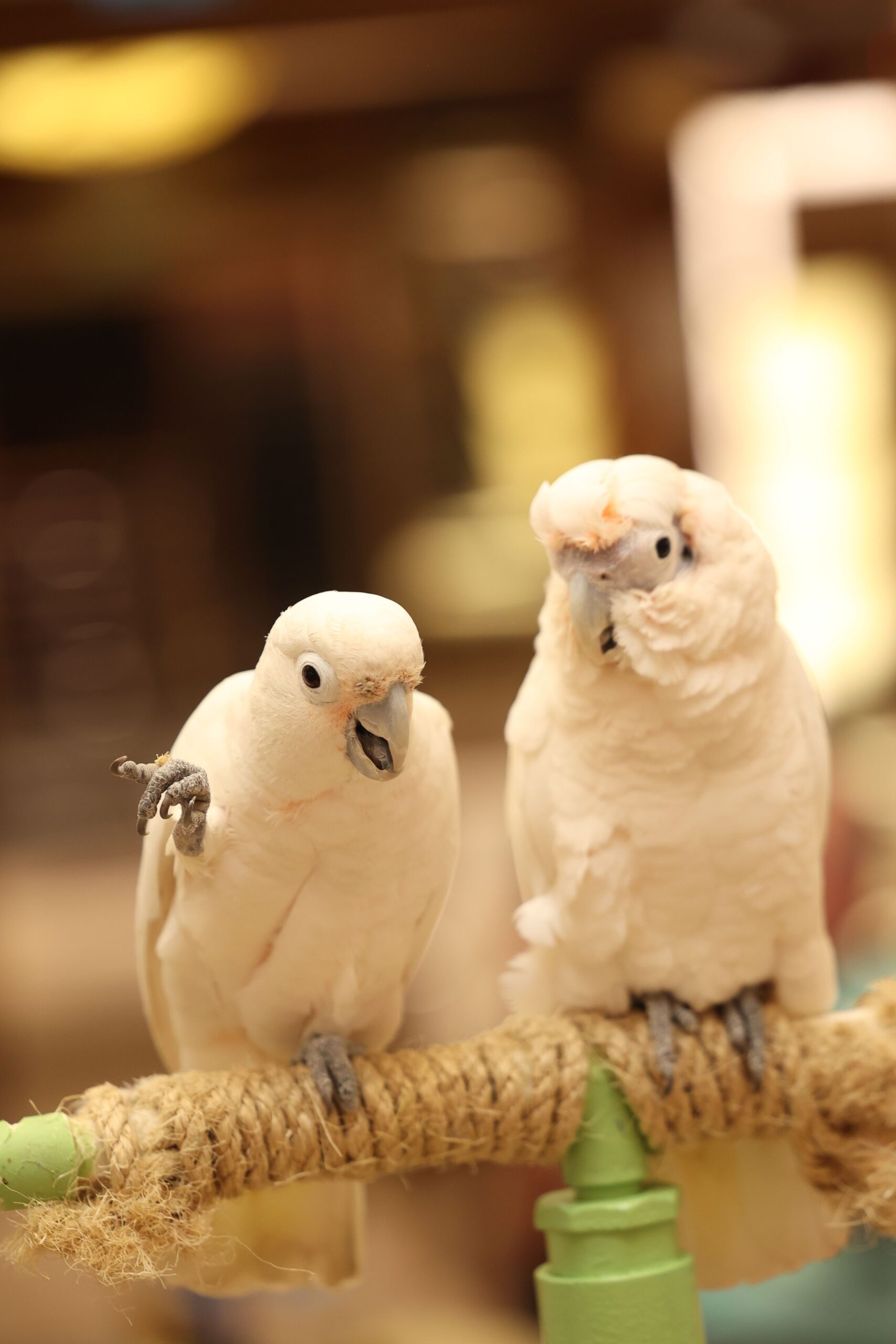
About Molting
Molting in Umbrella Cockatoos is a natural physiological process where old feathers are replaced by new ones. Large parrots take longer to complete this process than smaller birds, with feathers across the entire body being replaced gradually.
Timing of Molting
While it typically occurs once or twice a year, there is no fixed schedule.
For birds kept indoors, the timing may shift because the process is influenced more by daylight hours and temperature than by the changing seasons.
It is not uncommon for large parrots to take several months to complete a molt.
Common Changes During Molting
Significant feather loss
Increase in “pin feathers” (new feathers still encased in a sheath)
Increased frequency of preening
Appearing slightly sleepy or showing reduced activity levels
Increased irritability or, conversely, becoming more affectionate/clingy
Temporary difficulty flying
Care During Molting
Ensure adequate protein intake (focusing on high-quality pellets)
Pay attention to nutritional balance, including Vitamin A and calcium
Keep feathers clean through bathing or misting
Ensure sufficient sleep (approximately 10–12 hours)
Do not force-touch or pull out pin feathers
Symptoms Requiring Attention
If you observe any of the following, it may not be a normal molt; consulting a veterinarian who treats birds is recommended.
Asymmetrical or excessive feather loss
Feather loss severe enough to expose the skin
Many bleeding pin feathers
Loss of appetite or weight loss
Self-plucking of feathers (feather plucking/picking)
About Vocalizations
Umbrella Cockatoos are known for having particularly loud voices among cockatoo species. They are highly expressive, and you can often gauge their mood based on the type of vocalization they use.
① Loud Screams (e.g., “Gya!” or “Kii!”)
Vocalizing like a “roll call” in the morning or evening
Calling out to their owner
Startled or on alert
Boredom or a desire for attention
While brief episodes are natural behavior, prolonged screaming can sometimes stem from a lack of stimulation or anxiety.
② Quiet Chattering
Sounds like “piyo,” “kururu,” or mumbling
Relaxed
Playing alone
Sometimes talking to their owner
③ Affectionate Sounds
Soft, slightly nasal-sounding vocalizations
Wanting to be petted
Feeling safe and secure nearby
④ Alert/Threat Signals
Low growling
Hissing sounds
Flaring their crest widely to make themselves look larger
It is best not to approach them forcibly; instead, observe them from a distance until they calm down.
Volume
An Umbrella Cockatoo’s vocalizations can reach around 100 decibels—a volume comparable to a passing train or a motorcycle. Consequently, if living in an apartment complex or shared housing, soundproofing measures and consideration regarding the time of day they vocalize are essential.
Are They Good at Mimicking Speech?
Umbrella Cockatoos have the ability to learn human words and household sounds. However, keep in mind the following characteristics:
Individual differences vary greatly
They are better at mimicking sounds than engaging in actual “conversation”
Some individuals learn to mimic specific tones of voice, whistling, or laughter
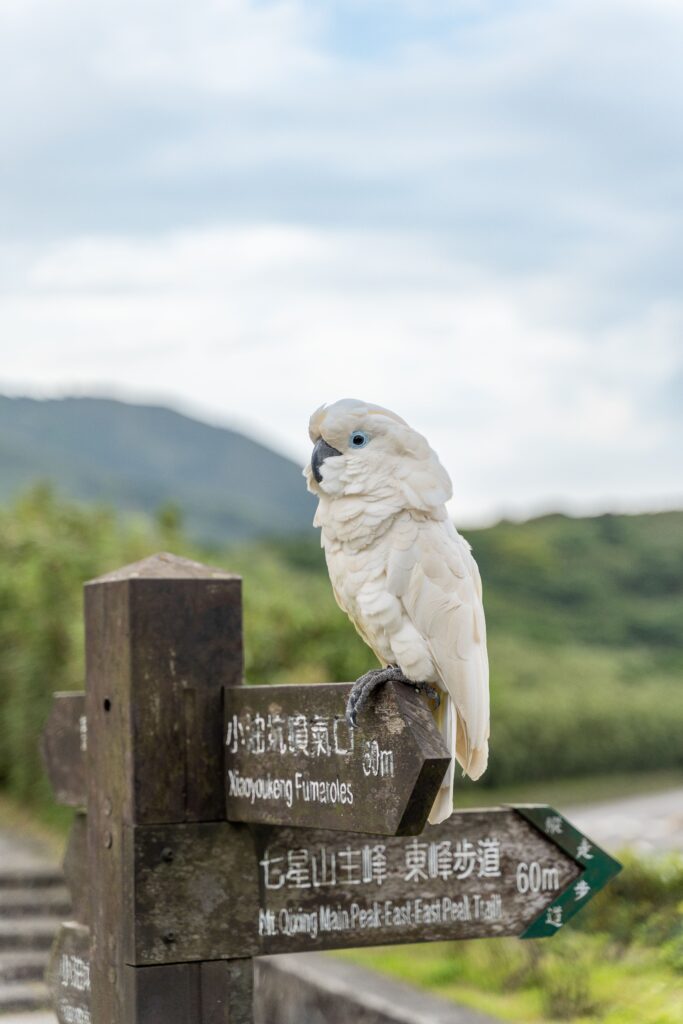
Seasonal Activity Patterns
As tropical birds, Umbrella Cockatoos naturally inhabit environments with little temperature fluctuation throughout the year, unlike the distinct four seasons found in Japan. Consequently, seasonal changes in behavior are more noticeable when they are kept in Japan.
🌸 Spring (March–May)
Increased activity levels
More inclined to play and fly
Molting begins for some individuals
May become more affectionate or excitable due to the breeding season
Care Tips
Ensure plenty of time for out-of-cage exercise
Provide a nutritionally balanced diet
☀️ Summer (June–August)
Relatively heat-tolerant
Many enjoy bathing
Rapid cooling with air conditioning can cause health issues
Care Tips
Aim for a room temperature of around 24–30°C
Ensure fresh water is always available
Avoid direct sunlight and ensure good ventilation
🍂 Autumn (September–November)
Comfortable weather; birds remain active
Molting begins for some individuals
Appetite may increase
Care Tips
Monitor weight changes
Provide ample nutrition to support feather regrowth
❄️ Winter (December–February)
Sensitive to cold
Movements may slow down in the mornings and evenings
Prefer warm areas
Care Tips
Maintain a room temperature of around 20–25°C
Avoid cold drafts and sudden temperature fluctuations
Regulate their biological rhythm with sunbathing or UV lights
Flight Speed
The flight speed of the Umbrella Cockatoo is generally estimated to be around 30–50 km/h.
Speed varies significantly depending on the situation:
Slow flight: 15–30 km/h
Normal cruising flight: 30–50 km/h
Startled takeoff: Can reach around 50–60 km/h
Flight Characteristics
Unlike the high-speed flight of hawks or falcons, the Umbrella Cockatoo engages in a rhythmic flight pattern:
Several powerful wingbeats
A brief glide
Wingbeats again
As they inhabit forest environments, they prioritize maneuverability—such as the ability to change direction quickly among trees—over top speed.
Comparison with Other Birds
Bird Flight Speed (Approximate): Umbrella Cockatoo: ~30–50 km/h; Pigeon: ~60–80 km/h; Crow: ~40–60 km/h; Peregrine Falcon (diving): Over 300 km/h; Budgerigar: ~20–40 km/h.
About White Cockatoo Chicks
White cockatoo (Cacatua galerita) chicks (young birds) differ in appearance and behavior from adult birds and grow up highly dependent on their parents and the flock.
- Physical Characteristics
Body Color: Pale gray immediately after hatching, turning white as they mature and developing crest feathers.
Body Length: Approximately 5-7 cm at hatching, reaching adult size (45-50 cm) as they mature.
Beak and Legs: Small and soft, but gradually strengthen and gain the ability to grasp food.
- Behavior and Personality
Dependent on Parents
For the first few weeks to months of life, they are fed by their parents.
They learn social skills through physical contact with their parents and siblings.
Play and Learning
They chew on things like twigs and toys and practice spreading their crest feathers.
They learn flight, foraging techniques, and vocalizations from their parents and flock.
- Biological Features
Diet: Immediately after hatching, their parents feed them digested fruit and seeds via mouth-to-mouth feeding.
Growth: They begin practicing flight at 2-3 months and become able to feed themselves independently at 4-6 months.
Social Learning: They learn through play, interacting with members of their flock, vocalizations, and play.
Is the White Cockatoo an endangered species?
Recently, the White Cockatoo has been in demand as a pet, but it is designated as an endangered species. Not only has its habitat been destroyed by deforestation, farmland development, and mining, but it has also been overhunted for pets, and the habitat of wild individuals has been fragmented. This parrot is listed in Appendix II of the Convention on International Trade in Endangered Species of Wild Fauna and Flora (CITES), and international trade has been restricted.
- International Union for Conservation of Nature (IUCN) Assessment
The IUCN Red List classifies this species as “Least Concern (LC).”
The population is relatively stable, and it inhabits a wide range of tropical and subtropical regions.
- Why it’s not endangered
Its habitat is widespread, mainly in northern Australia.
It lives in groups and has a stable reproductive rate.
It has limited natural predators, and direct capture by humans is restricted.
- Caution
Deforestation and land development: This may result in partial habitat loss.
Pet trade: Illegal trade has occurred in the past, but is now restricted.
There is a risk of local population decline.
Can the White Cockatoo be kept as a pet?
Currently, the White Cockatoo can be kept as a pet, but it is listed in Appendix II of the Convention on International Trade in Endangered Species of Wild Fauna and Flora (CITES), and there are restrictions on it. Although it is large, it is easy to get used to people and is very friendly among other parrots, so it is not that difficult to raise it. We will explain the details.
How much does it cost to keep one?
It seems that you can buy one at a pet shop for about 500,000 to 1,000,000 yen in Japanese yen. Since they have a lifespan of 50 to 60 years, you should also consider whether you can properly manage them.
Special pellets
We recommend special pellets for food. They are mainly fed mixed food with seasonal vegetables and fruits as side dishes.
They make a loud noise
Their cries are also loud, so they may be a nuisance to neighbors in apartment buildings. It is reassuring to have soundproofing measures in apartment buildings.
Sturdy cages
Their beaks are very powerful and destructive, so make sure to have a sturdy cage that will not be broken. The temperature needs to be kept comfortable for humans, so be sure to have air conditioning or heating.
Zoos and Facilities Housing the Species (Japan & Worldwide)
The Umbrella Cockatoo (Cacatua alba) is kept in a relatively large number of zoos and bird parks, both in Japan and around the world. They are popular as exhibit animals due to their high intelligence and ability to communicate with humans.
🇯🇵 Major Facilities in Japan
Fukuoka City Zoo
Houses Umbrella Cockatoos
Individual name: “Haku”
Introduced as an individual that is very accustomed to humans and capable of speech
A long-lived individual estimated to be over 30 years old
Yagiyama Zoological Park (Fujisaki no Mori)
Exhibits Umbrella Cockatoos
Scientific name: Cacatua alba
Introduced as a bird native to the northern Maluku Islands of Indonesia
Nagasaki Bio Park
Has a history of keeping Umbrella Cockatoos
Some individuals are known for interacting with their keepers
Note: While they are kept in zoos and bird facilities handling large parrots and cockatoos in Japan, they are not always on public display.
🌍 Major Facilities Worldwide
🇩🇪 Berlin Zoo
Has a history of keeping Umbrella Cockatoos.
🇨🇿 Prague Zoo
Listed as a facility housing the species in global zoo databases.
🇪🇸 Barcelona Zoo
Has records of keeping Umbrella Cockatoos.
🇷🇺 Moscow Zoo
Confirmed as a facility housing the species.
🇮🇱 Zoos in Israel
Tel Aviv Zoo (Ramat Gan Zoological Center)
Haifa Educational Zoo
Also has examples of the species being kept.
Introducing other animals
コメント