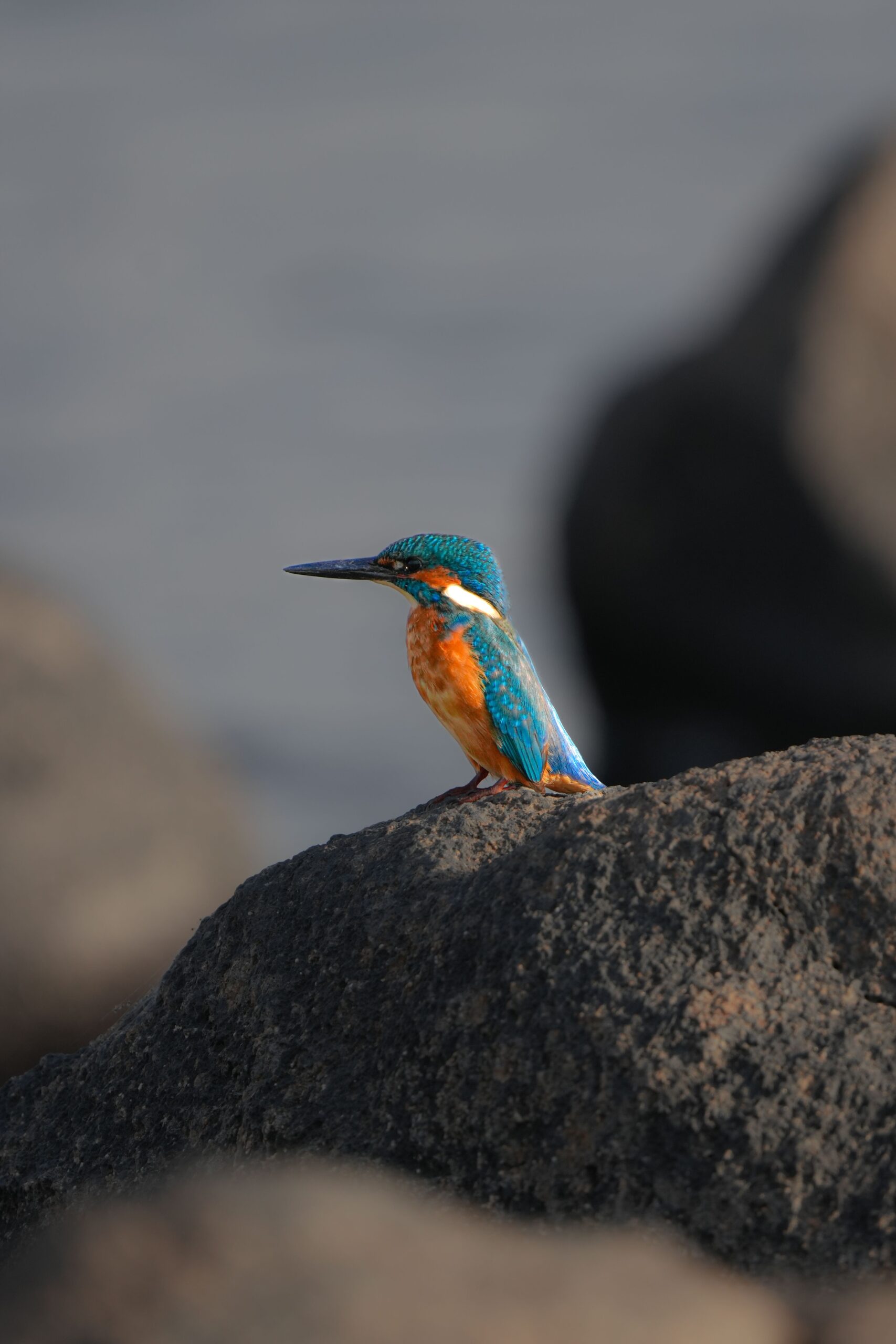
What kind of bird is a kingfisher? We will introduce and explain the beautiful physical characteristics, ecology, and habitats found in the great outdoors. It is a famous bird that lives all over Japan. It has a blue back and an orange belly, and some species migrate to southern regions in the winter. Although it is a resident bird, its habits differ in some areas.






- What is a kingfisher? About basic status
- What are the roots and origins of the kingfisher?
- About habitat
- feature is? What kind of creature is it?
- What does the ecology look like?
- About Molting
- About Their Calls
- Seasonal Activities
- Flight Speed
- About Kingfisher Chicks
- Is the kingfisher an endangered species?
- Can kingfishers be kept as pets?
- Facilities Housing Them (Japan & Worldwide)
- Introducing other animals
What is a kingfisher? About basic status
The kingfisher is a bird that belongs to the genus Kingfisher, in the order Carpenteridae and family Alcenidae. The scientific name is Alcedo atthis. In kanji, it is also called jade, jade, and kawaban. The total length is only 17cm, and the wingspan is about 25cm. We will introduce the information in a list. They catch fish on the surface of rivers.
| Japanese(和名) | カワセミ |
| English(英名) | Common Kingfisher European Kingfisher |
| scientific name(学名) | Alcedo atthis |
| classification(分類) | Ave、 Coraciiformes、Alcedinidae、Alcedo 鳥綱、ブッポウソウ目、カワセミ科、カワセミ属 |
| IUCN Status(保全状況) | LEAST CONCERN |
| Length(全長) | 17cm |
| Weight(体重) | 0.5kg |
What are the roots and origins of the kingfisher?
The kingfisher (specifically Alcedo atthis, the species commonly known as the kingfisher in Japan) evolved from the family Alcedinidae, which first appeared around 30 million years ago (prior to the Miocene epoch). Tracing their ancestry, it is considered highly likely that the modern kingfisher family originated in the region spanning South Asia to Indonesia (the Indomalayan realm).
Ancestors were not “specialized fish hunters”
Modern kingfishers are strongly associated with the image of:
Waiting by the water’s edge
Diving rapidly toward the water’s surface
Snatching fish in their beaks
However, ancestral kingfishers did not necessarily specialize in catching fish.
Early kingfishers are believed to have been “ambush hunters” that preyed on a wide variety of creatures, such as:
Insects
Small reptiles
Frogs
Small fish
In fact, even among modern kingfishers, there are forest-dwelling species that rarely eat fish.
Origins date back 30 to 40 million years
Fossil records show that fossils of birds closely related to kingfishers have been discovered in:
Wyoming, North America (dating back about 40 million years to the Eocene epoch)
Europe (dating back about 30 to 40 million years)
However, genetic analysis estimates that the lineage leading to modern kingfishers diversified in the Indomalayan region approximately 27 million years ago.
Kingfishers diverged into three major groups
The modern kingfisher family is broadly divided into three lineages:
① Alcedininae (River kingfishers)
The Japanese kingfisher belongs to this group
Small in size
Live near water
Skilled at catching fish
② Halcyoninae (Tree kingfishers)
Many are forest-dwelling
Eat things other than fish
Includes large species
③ Cerylinae (Water kingfishers)
Common in North, Central, and South America
Highly capable of diving into water
Why did they develop brilliantly blue feathers? The kingfisher’s blue color is not actually due to a blue pigment.
Instead, the microscopic structure within its feathers scatters light,
making it appear
blue,
blue-green,
or turquoise.
This phenomenon is known as structural color.
In contrast, the orange color on its belly comes from carotenoid pigments.
(Common Kingfisher / Alcedo atthis)
| 分類階層 | 名称 |
|---|---|
| 界 (Kingdom) | Animalia(動物界) |
| 門 (Phylum) | Chordata(脊索動物門) |
| 綱 (Class) | Aves(鳥綱) |
| 目 (Order) | Coraciiformes(ブッポウソウ目) |
| 科 (Family) | Alcedinidae(カワセミ科) |
| 属 (Genus) | Alcedo(カワセミ属) |
| 種 (Species) | Alcedo atthis(カワセミ) |
About habitat
Kingfishers are distributed throughout Japan. Some individuals migrate.
- Global Distribution
Widely distributed throughout Europe, Asia, and North Africa
In East Asia, it is found in Japan, Korea, China, Taiwan, and Southeast Asia.
Northern populations sometimes migrate southward during the winter.
- Distribution in Japan
Can be observed almost nationwide
Distributed throughout Honshu, Shikoku, Kyushu, and the Ryukyu Islands.
Mainly found near water, such as rivers, small streams, ponds, lakes, and wetlands.
Can also be found in urban areas, if there is a waterside area, such as a park or waterway.
- Habitat Characteristics
Waterside Lifestyle
Banks of rivers and streams, edges of ponds and lakes, etc.
Often perches on tree branches or stakes along the riverbank to hunt for fish.
Influence of Water Quality and Water Quantity
Prefers clear streams and areas with abundant fish.
Habitat reductions can occur due to water quality deterioration and bank construction.
Nesting
Dug holes in riverbanks and sandy slopes to build nests.
- Seasonal Habitat
Breeding Season (Spring-Summer): Pairs have territories and are active near water.
Winter: Individuals from colder climates may migrate south for winter.
Resident Birds: Individuals from warmer climates settle near water.
feature is? What kind of creature is it?
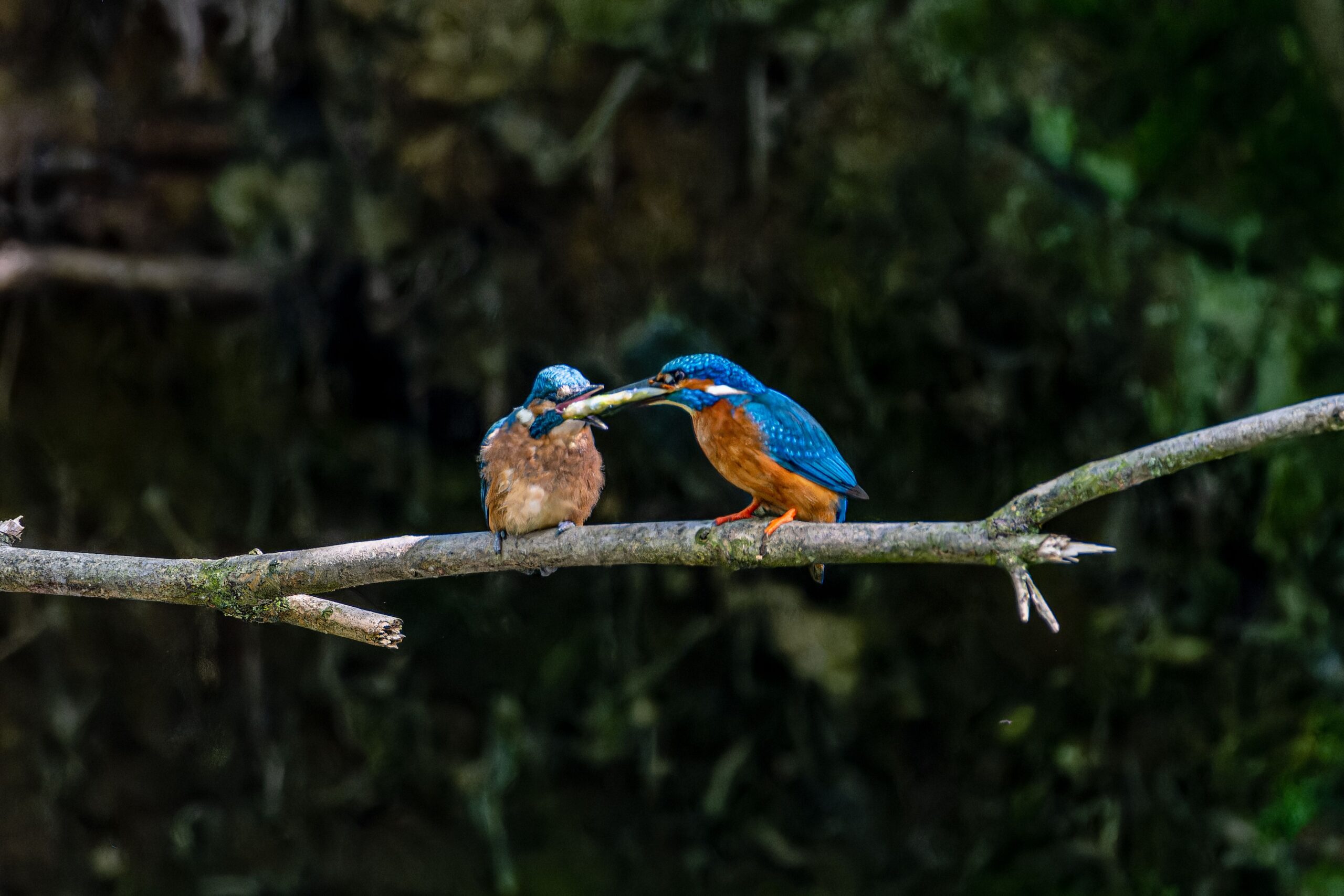
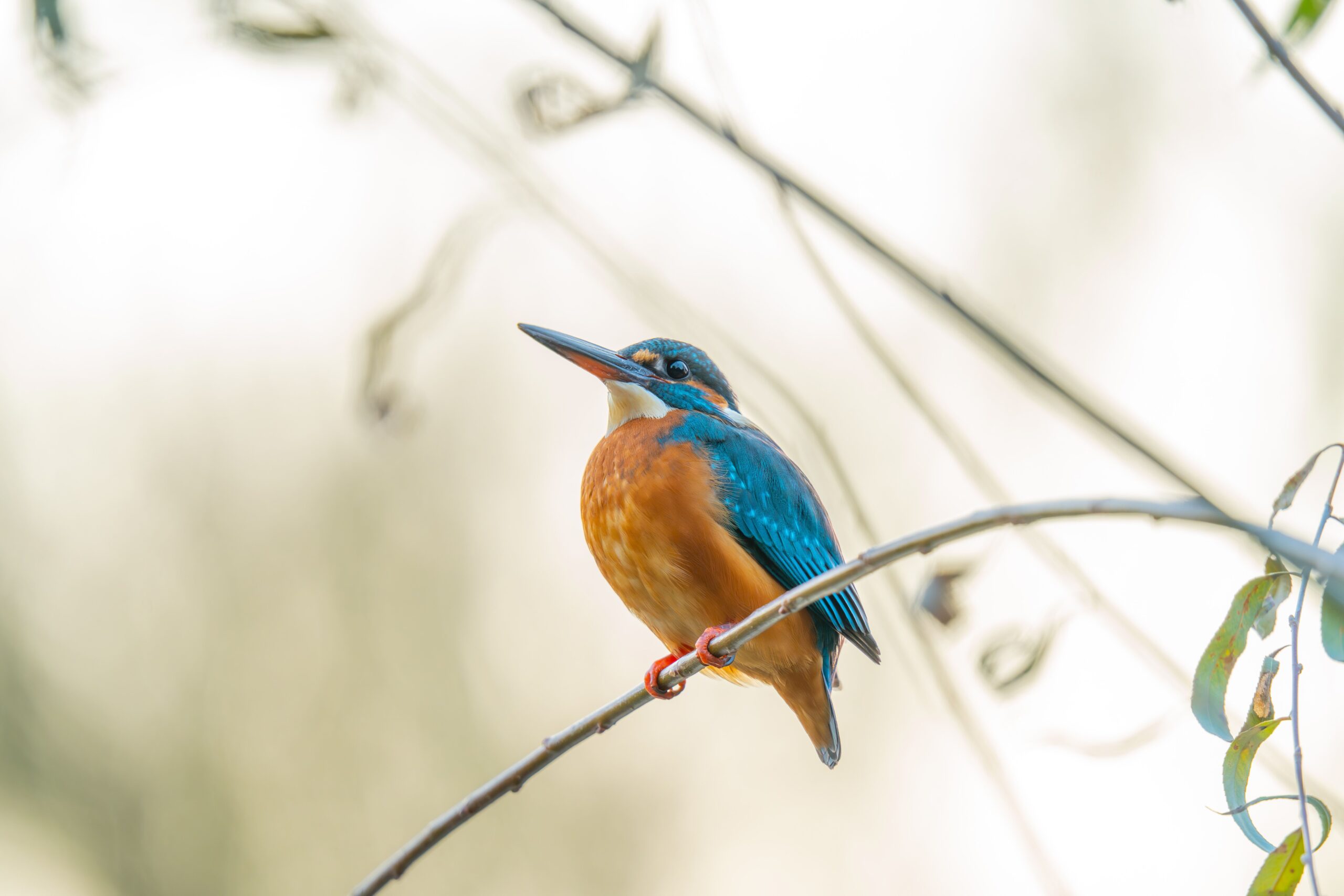
Kingfishers are characterized by their blue backs and orange bellies. Their beaks are long compared to their body size, and they use this long beak to catch prey by diving into rivers. The nest is built by digging a hole in the cliff. They live near freshwater bodies such as clear streams, ponds, and rivers. They are basically resident birds, but individuals living in northern Japan tend to migrate south to spend the winter.
- Appearance
Body Shape/Size
Body Length: Approximately 16-17cm (Small Bird)
Body Type: Sturdy, small, and compact, adapted for flight
Feather Color
Back/Wings: Bright blue to green
Belly: Bright orange
Head: White spots above the eyes give the face a sharp, defined look
Tail: Short and rounded
Beak/Eyes
Beak: Long, black, specialized for catching fish
Eyes: Black, with sharp eyesight
- Diet/Foraging
Mainly piscivorous
Preys on small fish, shrimp, frog larvae, etc.
Foraging Method
Aims at fish from riverbanks or stakes
Can also hover (aim while stationary in the air)
Highly developed vision allows for accurate identification of underwater prey
- Behavior and Habits
Strongly territorial
Pairs form territories and chase away any other individuals that enter.
Solitary behavior
Often solitary outside of breeding season.
Flight Ability
Fly at high speeds in a straight line.
Often glide near the water’s surface.
Calls
Makes a short, sharp “chiri-chiri” sound, used to mark territory and intimidate others.
- Breeding
Digs a hole in a riverbank or embankment to build a nest.
Lays about 5-7 eggs at a time.
Chicks are raised by the parents, who provide them with fish.
Once mature, they begin to travel alone near water, just like their parents.
What does the ecology look like?
Kingfishers live by capturing and eating small fish, fish, and insects in the water. During the breeding season, “courtship feeding” can be observed, where the male presents prey to the female. Parent birds make holes in vertical banks and lay their eggs. They will lay 3-4 eggs here. The lifespan is said to be up to 20 years.
- Diet and Foraging Behavior
Primarily Piscivorous
Preys on small fish, shrimp, and frog larvae
Foraging Method
Perches on riverbanks, posts, or branches to hunt for underwater prey
Also performs hovering (moving in the air to hunt for fish)
Area of Activity
Mostly moves along clear streams of rivers, ponds, and lakes
Maintains territories around waterside areas where prey is abundant
- Breeding
Breeding Season: Spring to Summer (April to July)
Nest Building
Dugs nest holes in the soil of riverbanks or banks
Safely protects chicks in vertical holes or tunnels
Eggs and Incubation
Approximately 5-7 eggs at a time
Females incubate eggs, while males bring food
Chick Rearing
Parents feed them with fish and raise them
Chicks leave the nest approximately 3-4 weeks after hatching
- Sociality
Solo or pair-based behavior
Usually solitary even outside of the breeding season
Strongly territorial, they will chase away other individuals.
- Migration/Migration
Resident or partial migratory
Almost resident in warm climates
Individuals in northern and cold climates may migrate south in winter
Do not migrate long distances
- Habitat Adaptation
Aquatic life
Rivers, streams, ponds, lakes, and wetlands
Catch fish from branches and stakes on riverbanks
Sensitive to water quality and quantity
Prefers clear streams and areas with abundant fish
Habitat loss can occur due to water quality deterioration and bank construction
Are there any natural enemies?
The kingfisher’s natural enemies include weasels, foxes, and crows.
About Molting
Kingfishers undergo a molting process to periodically replace old feathers. Since feathers are not living tissue, they cannot repair themselves naturally; thus, the birds replace them with new ones to maintain their ability to fly, as well as their insulation and waterproofing capabilities.
When Kingfishers Molt
In Japan, kingfishers primarily molt during:
Summer to autumn after the breeding season (around July–October)
Late winter to spring (partial molt)
The post-breeding molt is particularly important.
During the breeding season (spring–summer), feathers become worn due to:
Digging nesting burrows
Courtship displays
Incubation
Feeding chicks
Defending territory
Consequently, they replace their feathers all at once after the breeding season ends.
The Order of Molting
Kingfishers do not replace their feathers haphazardly.
Generally, the replacement follows this sequence:
Body feathers (chest, belly, and back feathers)
Tail feathers
Wing feathers (remiges)
Wing feathers, in particular, are crucial for flight, so they are not lost in large numbers at once.
The bird replaces them gradually while maintaining balance between the left and right wings.
Can They Fly While Molting?
Yes, they can.
To avoid the risk of becoming unable to fly, birds have evolved mechanisms such as:
Not losing feathers from the same position on both wings simultaneously
Replacing important feathers sequentially
However, while molting, a kingfisher may experience:
Shorter flight distances
Reduced explosive power (agility/burst speed)
A lower hunting success rate
About Their Calls
In contrast to their beautiful appearance, the kingfisher’s call is characterized by a high-pitched, sharp, and metallic sound—often described as “chee” or “tsee.” You will frequently notice their presence by sound before actually spotting them along the riverbank.
Typical Calls
“Chee” or “Tsee”
This is the call heard most often.
Characteristics:
High-pitched
Short
Sharp
Clear, piercing tone
They often call while in flight,
producing a rapid series of sounds like
“Chee, chee, chee.”
These calls serve primarily to:
Announce their presence
Check the location of other kingfishers
Assert territorial claims
Calls During Flight
Kingfishers call more frequently while flying than when perched.
Flying in a straight line along the river
while calling “chi, chi, chi”
is a classic behavior.
This serves to:
Confirm their flight path
Patrol their territory
Warn other individuals
Calls During Courtship
Vocal activity increases during the breeding season (spring to summer).
Males interact with females by:
Calling out in a high-pitched voice
Calling before passing a fish to the female
Displaying near the nesting burrow
Kingfishers are not “songbirds” in the traditional sense; rather, they communicate their intentions through a combination of calls and physical actions.
Calls Between Parent Birds and Chicks
Unlike the adults, the chicks are quite noisy.
Chicks around the time of fledging
produce rapid, repetitive sounds like
“chi-chi-chi-chi-chi”
or “pi-pi-pi-pi.”
When a parent bird arrives with a fish,
multiple chicks call out in unison,
begging for food.
Seasonal Activities
Although the common kingfisher is a resident bird found in Japan year-round, its behavior changes significantly depending on the season. Major changes occur particularly during breeding, rearing, molting, and winter survival.
🌸 Spring (March–May)
Breeding and Territory Establishment
Kingfishers are most active in the spring.
Key Activities
Male courtship of the female
Territorial disputes
Nest burrow construction
Mating
Egg-laying
Male Characteristics
As part of courtship, the male performs
“courtship feeding.”
He catches a fish and passes it to the female,
demonstrating that he is a
skilled hunter.
Nest Building
Kingfishers do not build nests on tree branches.
They dig into the soil walls of riverbanks or cliffs,
creating a hole about 5 cm in diameter
and a tunnel 50–100 cm deep.
☀️ Summer (June–August)
Peak Rearing and Breeding Season
Summer is the busiest time for kingfishers.
Parent Bird Activities
Feeding the chicks
Nest maintenance
Preparing for the next brood
Under favorable conditions,
kingfishers may breed two or three times a year.
Chick Development
Inside the nest,
parents bring small fish
and chicks grow rapidly;
after fledging, they learn
hunting skills from their parents.
Fledged juveniles are characterized by
darkish breasts,
slightly duller plumage,
and clumsy movements.
🍂 Autumn (September–November)
Molting and Independence
Autumn is a time of major change.
Key Activities
End of breeding season
Molting
Juvenile independence
Establishing winter territories
They replace feathers worn during breeding,
regaining their
blue backs,
orange breasts,
and strong flight capabilities.
Challenges for Young Birds
For young kingfishers that have left the nest,
this is a time to
search for their own territory,
hone hunting skills,
and compete with adult birds.
Many young birds face the struggle for survival before winter arrives.
❄️ Winter (December–February)
A Season for Survival and Hunting
There is no breeding activity during winter, and the birds generally live solitary lives.
Behaviors
Waiting at a fixed perch
Targeting fish
Maintaining a territory
They remain active even during the cold season.
Characteristics of Winter
In winter, hunting becomes difficult due to:
Lower water temperatures
Reduced fish activity
Shorter daylight hours
Consequently, the following become crucial:
Securing efficient hunting grounds
Minimizing energy consumption
Defending a stable territory
Flight Speed
Although the kingfisher is a small bird, it possesses exceptional flight capabilities; it excels particularly at high-speed, straight-line flight at low altitudes and at rapid dives into the water.
Normal Flight Speed
The flight speed of a kingfisher is generally considered to be:
Approximately 30–40 km/h
Characteristics:
Flies just above the water’s surface
Flies in a straight line
Alternates between flapping and gliding
Moves while calling out with a sharp “chee” sound
The sight of a blue flash darting across the river is due to this high-speed, low-altitude flight.
Diving Speed During Hunting
When targeting fish, it dives instantly from its perch.
During a dive, speeds can reach:
Over 50 km/h
The sequence of movements is highly precise:
Waits for prey on a branch or stake
Bobs head up and down to pinpoint the target’s location
Folds wings against the body
Plunges vertically into the water
Seizes the fish underwater
Surfaces and returns to the original spot
Body Structure Enabling Underwater Entry
Kingfishers do not suffer significant impact shock when entering the water at high speeds.
Reasons:
Beak
Long, slender, spear-like shape
Designed to reduce water resistance
Head
Rounded shape disperses impact
Eyes
Closes the nictitating membrane (transparent eyelid) underwater
Allows it to spot prey even while submerged
Feathers
Temporarily pressed tight against the body
These features allow it to withstand the impact of hitting the water’s surface.
Flight Characteristics
Kingfisher flight is not merely about speed.
Low-altitude flight
Flies at a height ranging from a few tens of centimeters to a few meters above the water.
Advantages:
Reduces air resistance
Allows use of obstacles along the riverbank for cover
Makes it easier to escape from predators
About Kingfisher Chicks
This article summarizes the characteristics and ecology of kingfisher (Alcedo atthis) chicks (young birds).
- Birth and Nest
Hatching Period: Spring to Summer (Breeding Season, April to July)
Number of Eggs: Approximately 5-7 per clutch
Incubation Period: Approximately 19-21 days (Females incubate)
Nests: Built in holes dug in the soil of riverbanks or embankments
- Appearance (Chick Feathers)
Newly hatched chicks have fluffy, grayish-brown down feathers.
Their beaks are shorter than those of their parents, and their eyes appear young.
They grow up receiving food from their parents.
- Behavior and Development
Parental Care
The female incubates the eggs, and after hatching, both males and females bring them fish.
Foraging Practice
They practice pecking for food with their beaks at 2-3 weeks of age.
Fleeding
They leave the nest at 3-4 weeks of age.
They start flying low, gradually improving their flight ability.
After Fledging
They practice fishing with their parents.
They begin to fly independently after about one month.
- Developmental Stages
0-2 weeks after birth: They are protected by their parents in the nest and receive food. 2-3 weeks after birth: They begin foraging practice and begin peeking out of the nest. 3-4 weeks after birth: They leave the nest and practice catching fish by flying low. 1 month after birth: They become independent and live independently, away from their parents.
- Ecological Characteristics
They are safely protected from predators in the nest.
Their parents feed them and they learn fishing techniques.
The chick period is short, and they leave the nest relatively early.
Is the kingfisher an endangered species?
Kingfishers are designated as endangered, endangered, and near-threatened.
- International Status (IUCN)
IUCN Red List: Least Concern (LC)
Reason:
Wide distribution range, and relatively stable populations
Although there have been local declines, there is no significant overall decline trend
- Status in Japan
Not designated as an endangered species in Japan
Widely distributed in rivers, ponds, lakes, and other aquatic habitats throughout the country
Localized habitat declines may occur due to river improvements and poor water quality, but overall populations remain stable
- Conservation Precautions
Capturing and destruction of burrows are prohibited (Wildlife Protection Act)
Protecting burrows and aquatic habitats is important for maintaining future populations
Can kingfishers be kept as pets?
Kingfishers cannot be kept as pets; keeping them is prohibited by law in Japan. They are often seen perched along with other sparrows on branches in nature, so they are photographed and posted on the internet.
- Can Kingfishers Be Kept as Pets?
Kingfishers are wild birds and are not sold as pets.
In Japan, capturing wild birds is prohibited (under the Wildlife Protection Act), so as a general rule, they cannot be kept as pets.
Keeping is limited to individuals born in breeding facilities or those with special permission.
- Difficulties of Keeping
Very Unusual Diet
They primarily eat fish, requiring a constant supply of live aquatic life such as fish and shrimp.
Food is difficult to obtain, and care is extremely difficult.
High exercise requirements and excellent flying ability.
Stress occurs in small cages.
Waterside and hovering spaces must be recreated.
Timidity and nervousness.
Sensitive to people and changes in the environment, and stress shortens their lifespan.
- Overall Evaluation
Kingfishers are wild birds that are not suitable as pets.
Keeping them requires specialized knowledge, equipment, and food, making it impractical for an average household.
Enjoying observation, photography, and audio recording is safer and more appropriate.
Facilities Housing Them (Japan & Worldwide)
Although the Common Kingfisher (Alcedo atthis) is a beautiful bird, it is rarely kept in typical large-scale zoos. This is because, while they possess exceptional fish-hunting abilities, it is difficult to recreate the specific environment required for their care in captivity.
🇯🇵 Facilities in Japan
Aquamarine Inawashiro Kingfisher Aquarium
This is one of the facilities in Japan most closely associated with the Common Kingfisher.
Features:
A freshwater-focused facility with “Kingfisher” (Kawasemi) in its name
Recreates the waterside environments of Fukushima Prefecture
Has a history of showcasing river wildlife, including kingfishers
However, exhibition status changes; the permanent exhibit page currently states, “We are not currently exhibiting kingfishers.”
Ueno Zoological Gardens
There are past records of Common Kingfishers being exhibited here.
However, it is necessary to check in advance regarding the current status of permanent exhibits.
🌍 Examples Worldwide
Europe
As Common Kingfishers are widely distributed across Europe, they are sometimes housed in wildlife rescue centers or specialized bird parks.
In particular, in countries such as:
the UK
Germany
the Netherlands
Belgium
…there are opportunities to see individual birds that have been rescued and cared for at wildlife rehabilitation facilities.
Introducing other animals
コメント