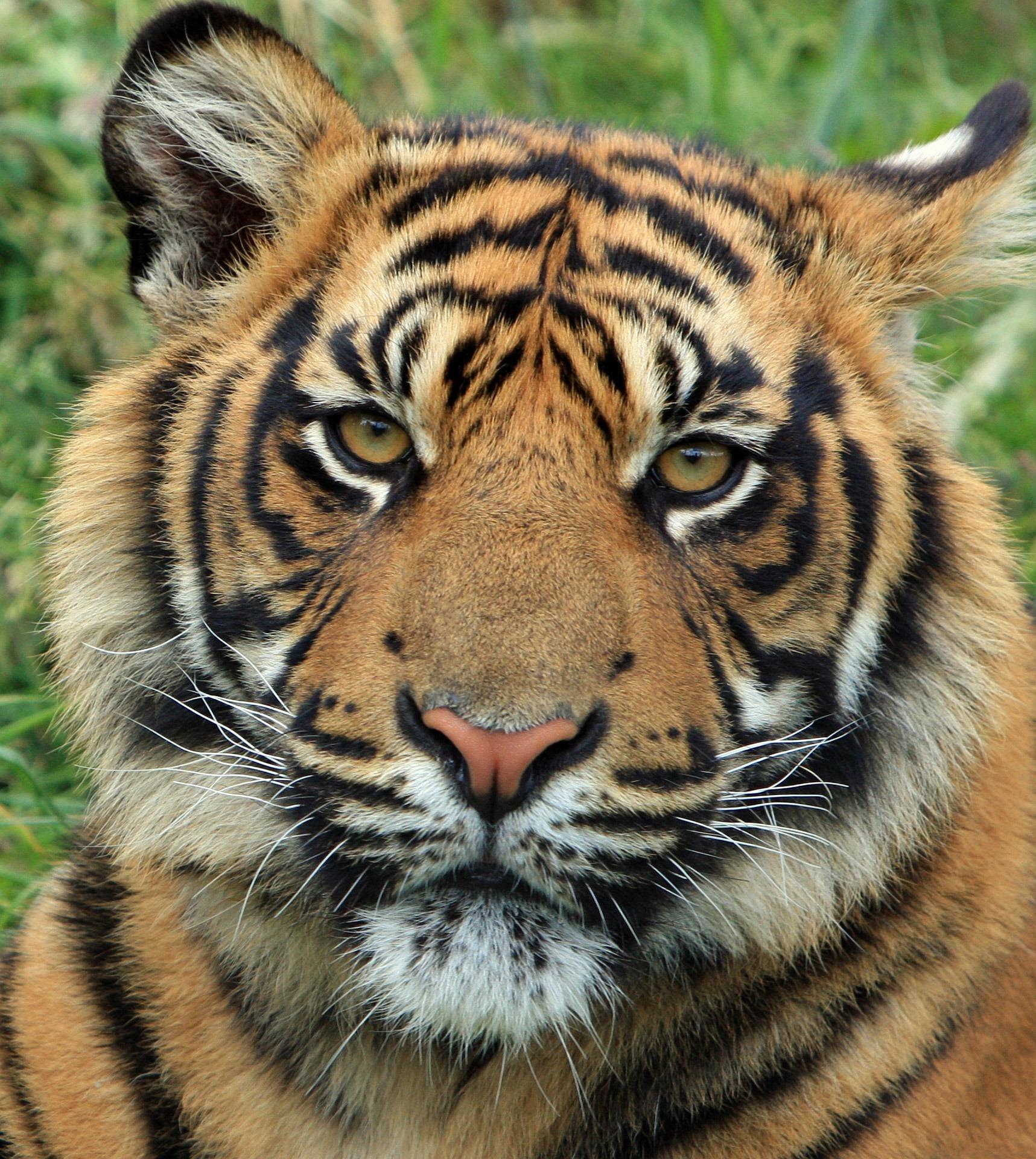
What kind of animal is a tiger? We will explain its characteristics, ecology, and habitat. It can be said to be the king of carnivores, feared even by humans. Unfortunately, tigers are hunted and are at risk of extinction all over the world. Most tiger populations have decreased dramatically and are now listed as endangered species.










- What is a tiger? About basic status
- What are the roots and origins of the tiger?
- About habitat
- feature is? What kind of creature is it?
- What is your personality like?
- What is the ecology like?
- About Tiger Molting
- About Tiger Vocalizations
- Seasonal Activities
- Regarding Walking Speed
- About Tiger Cubs
- Are tigers an endangered species?
- Can you keep a tiger as a pet?
- Zoos Housing Tigers (Japan & Worldwide)
- Introducing other animals
What is a tiger? About basic status
A tiger is a carnivorous animal classified in the class Mammalia, order Carnivora, family Felidae, genus Leopard. The scientific name is Panthera tigris, which means “tiger” in kanji. The body length is 140-220cm and the weight is 90-300kg. The list of information is as follows. It has sharp eyes and lives in forests.
| Japanese(和名) | トラ |
| English(英名) | Tiger |
| scientific name(学名) | Panthera tigris |
| classification(分類) | Mammalia、Carnivora、 Felidae 、Panthera 哺乳綱、食肉目、ネコ科、ヒョウ属 |
| IUCN Status(保全状況) | ENDANGERED |
| Length(体長) | 140-220cm |
| Weight(体重) | 90 – 300kg |
What are the roots and origins of the tiger?
The roots of the tiger (scientific name: Panthera tigris) lie in a lineage of large felids that emerged in Asia approximately 2 to 3 million years ago. While modern tigers share a common ancestor with lions and leopards, they are animals that evolved uniquely by adapting to the forest environments of Asia.
Tiger Ancestors: The Large Felid Subfamily “Pantherinae”
Broadly speaking, the evolutionary lineage looks like this:
Approx. 10 million years ago
Primitive felids
│
├── Small felids
│ └── Domestic cats, etc.
│
└── Pantherinae (Pantherine subfamily)
│
├── Lion
├── Leopard
├── Jaguar
├── Snow leopard
└── Tiger
Tigers belong to the same subfamily (Pantherinae) as lions and leopards.
Where did the tiger’s direct ancestors come from?
Current research suggests that tiger ancestors
likely evolved in the region spanning
Northern China to East Asia.
One of the oldest known fossils related to the tiger is
Panthera zdanskyi (Zdansky’s tiger).
Discovered in the vicinity of Gansu Province, China, and dating back about 2.5 million years,
it was smaller than the modern tiger,
yet its skull and teeth shared characteristics closely resembling those of the tiger.
When did tigers diverge from lions and leopards?
Genetic studies suggest that
the tiger lineage
and the lineage comprising lions, leopards, and jaguars
diverged approximately 3 million years ago.
In other words,
tigers did not evolve from lions.
To be precise,
they are “sister lineages” that followed separate paths
from a common ancestor.
Spread across the world
Ancestral tigers gradually expanded their range outward from within Asia. Evolution and dispersal route:
Northern China
↓
East Asia
↓
Southeast Asia
↓
Indian subcontinent
↓
Siberia region
As a result, subspecies emerged in adaptation to the environment.
About classification
There are many subspecies of tigers. We will introduce each species, including species that have become extinct.
| 名前 | English Name | Scientific Name(学名) |
| ベンガルトラ | Bengal tiger | Panthera tigris tigris |
| アムールトラ | Siberian tiger | Panthera tigris altaica |
| アモイトラ | South China tiger | Panthera tigris amoyensis |
| バリトラ | Balinese Tiger | Panthera tigris balica |
| インドシナトラ | Indochinese tiger | Panthera tigris corbetti |
| ジャワトラ | Javan Tiger | Panthera tigris ssp. sondaica |
| スマトラトラ | Sumatran Tiger | Panthera tigris sumatrae |
| カスピトラ | Caspian tiger | Panthera tigris virgata |
Panthera tigris tigris
The Bengal tiger is a subspecies of the tiger, which is a type of cat and is distributed in India. Males have a total length of 270 – 310cm, females 240 – 265cm, body color is orange or reddish brown, and the belly is black. They live mainly in forests, but also in wetland grasslands and riverside bushes, but their numbers have been drastically reduced due to hunting. It is listed on Appendix I of the Washington Convention and is designated as an endangered species.
Panthera tigris altaica
The Amur tiger is 2.5 meters long and lives in Russia. As they are the largest living cat species and live in cold regions, their winter coat is more than three times longer than their summer coat. There have been incidents of attacks on people and livestock, resulting in a sharp decline in retaliation. It is listed on Appendix I of the Washington Convention and is designated as an endangered species.
Panthera tigris amoyensis
The Amoy tiger used to live in China, but is now extinct. Males have a total length of 230-265 cm, females 220-240 cm, and their stripes are thick, short, and few in number.
Panthera tigris balica
The Bali tiger is a tiger that can only be seen on the Indonesian island of Bali. They were hunted for their fur and for entertainment, and became extinct around 1940. With a total length of 211 cm, it was the smallest subspecies of tigers.
Panthera tigris corbetti
The Indochinese tiger is a tiger that lives in Southeast Asia. The body length is 2.25-2.85m and the weight is 150-180kg. The fur on the back is reddish brown and the stripes are thin and short. In 2017, there were only 250 individuals left, and it is listed as an endangered species.
Panthera tigris ssp. sondaica
The Javan tiger is a tiger that can only be seen on the island of Java, Indonesia. Already extinct. The cause was deforestation and hunting. It was a small tiger, measuring 248 cm in length and weighing between 100 and 141 kg.
Panthera tigris sumatrae
The Sumatran tiger is a tiger that lives only on the Indonesian island of Sumatra. The body color is dull, yellowish-reddish brown, and there are only 300 to 500 individuals left in the wild. It is designated as an endangered species.
Panthera tigris virgata
Caspian tigers live around the Caspian Sea. Also known as Persian tiger. It is medium-sized and has a dark orange-tinged body with a dark coat on its back and a white underside. Extinct due to hunting.
About habitat
Tigers are distributed mainly in Asia. They also live in frigid regions such as Siberia and tropical regions such as Nepal and Japan.
- Geographic Distribution
Tigers once ranged widely across Eurasia, but their range has now drastically shrunk due to extinction and habitat destruction.
Current habitat:
India: The largest habitat of the Bengal tiger (over 70% of the population is found throughout the country)
Russian Far East: The habitat of the Amur tiger (Siberian tiger)
Southeast Asia: Thailand, Indonesia (Sumatra), Malaysia, etc.
China, Nepal, Bhutan: The high mountain regions surrounding the Himalayas
Where they became extinct:
West Asia, including Central Asia, Turkey, and Iraq
Tigers are extinct in the Caucasus and Syria
- Habitat Characteristics
Forests: Tropical rainforests, dry forests, deciduous broadleaf forests
Grasslands/Savannas: Found in areas with abundant prey and little dense forest
Wetlands/Mangroves: Bengal tigers have adapted to the wetlands of the Sundarbans
Altitude:
Flatlands to mountains (Amur tigers can live at altitudes of 1,000-2,000 meters)
- Habitat Requirements
Large territory required
Males: Approximately 100-400 km²
Females: 20-60 Approximately 1,000 km²
Water Source: Prefers to be near lakes, rivers, and wetlands
Prey: Areas with an abundance of medium- to large-sized mammals such as deer, wild boar, and monkeys
- Population and Conservation Status
Worldwide wild tiger population: Approximately 3,000-3,900 (IUCN, 2022)
Due to habitat loss and poaching, most subspecies are classified as Endangered
Sumatran tigers and Amur tigers, in particular, have very small populations.
feature is? What kind of creature is it?
Male tigers are larger than females. The snout is thick and short, and the jaws are strong. The muscles in the forelimbs are well developed and the hind limbs are suitable for jumping. The striped pattern blends in with the surroundings in bushes and obscures the outline, making it suitable for sneaking up on prey without being noticed. Tigers prefer tropical rainforests and are nocturnal and solitary. The home range is longer for Russian tigers and narrower for Asian tigers.
- Appearance and Physical Characteristics
Body Length:
Male: 2.5-3.9m (including tail)
Female: 2.3-2.7m
Tail Length: Approximately 90-110cm
Weight:
Male: 180-300kg (Siberian tigers can weigh over 300kg)
Female: 100-160kg
Coat Color:
Basically orange to reddish-brown, with a white belly
Their body is patterned with black or dark brown stripes, with patterns that vary from individual to individual
Face and Ears:
Their heads are rounded, and their ears are small and round.
They have well-developed noses and whiskers, which are useful for nocturnal hunting.
- Personality and Behavior
Solitary:
Both males and females are generally solitary creatures with their own territories.
The size of their territories varies depending on the amount of prey and the habitat.
Aggression and Hunting Instinct:
Very aggressive and powerful predators.
Hunts nocturnally or crepuscularly (dawn and dusk).
Intelligence and Learning Ability:
Highly skilled hunting strategies and an understanding of their surroundings.
Memorizes the behavioral patterns of prey and uses them to hunt.
- Ecological Characteristics
Diet:
Carnivore
Medium to large mammals such as deer, wild boar, monkeys, and occasionally buffalo and livestock
Athletic Ability:
Strong leg strength and excellent short-distance explosive power
Excellent swimmers, capable of swimming in water
Reproduction:
Sexual maturity: Males reach 3-4 years of age, females around 3 years of age
Gestation period: Approximately 3.5 months (104-106 days)
Give birth to 2-4 pups per litter
Lifespan:
Wild: Approximately 10-15 years
Captive: Approximately 20 years or more
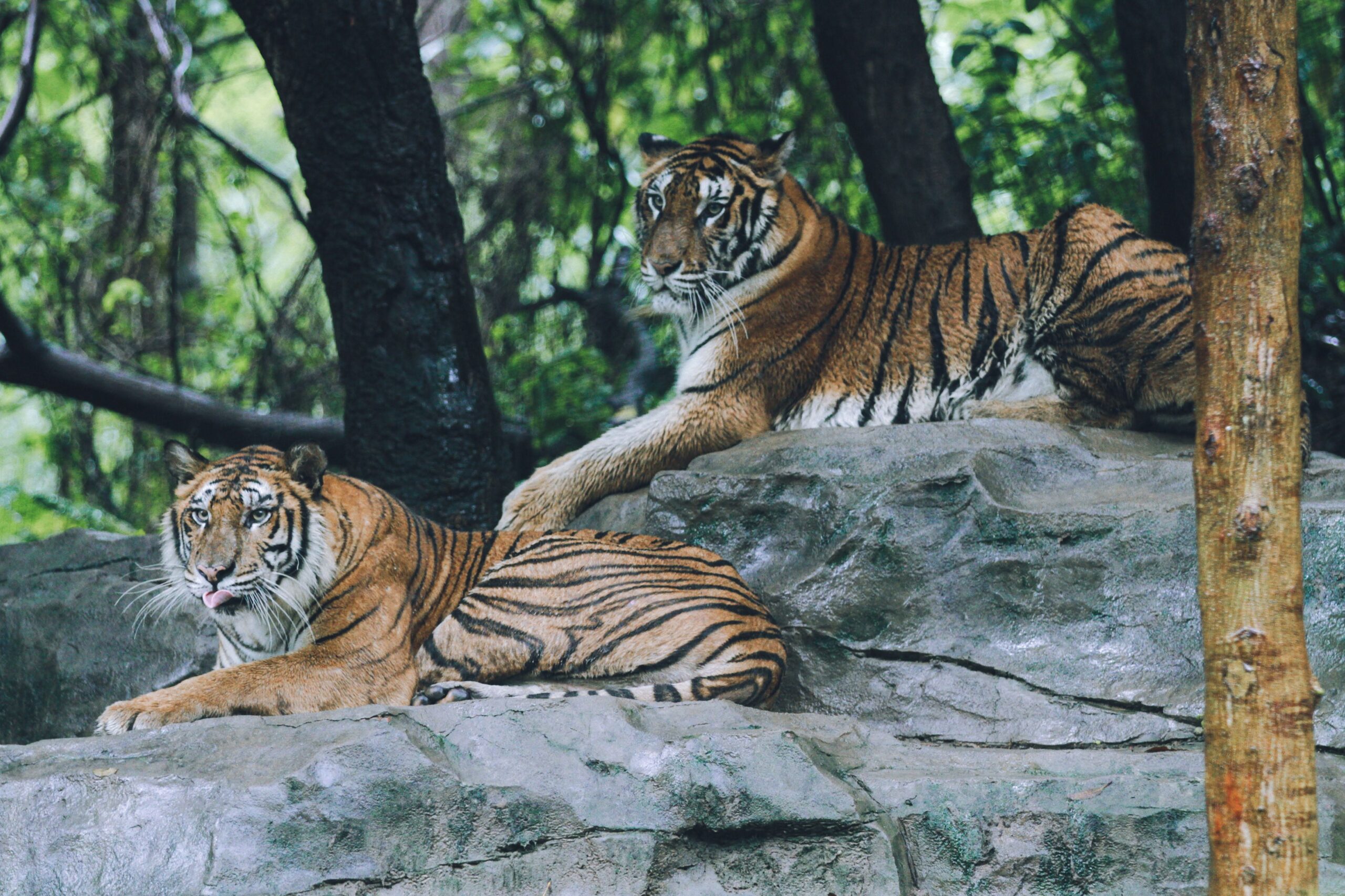
What is your personality like?
Tigers have a big heart and a kind personality full of humanity. If humans raise them from an early age, they may become attached to humans. He is insightful and stays calm in any situation.
- Solitary Behavior
Tigers generally live alone.
Both males and females have territories and generally do not invade the territory of others.
Territory size depends on the amount of prey:
Males: 100-400 km²
Females: 20-60 km²
- Predatory Instinct and Aggression
Highly Predatory Ability:
Active at night and during crepuscular periods (morning and evening)
May hunt in trees, on land, or in water.
Aggression:
Very aggressive toward other tigers and predators within their territory.
When threatened, they will roar, growl, and display threatening behavior.
- Vigilance and Cautiousness
Tigers are highly cautious and cautious.
They sneak around to avoid being noticed by their prey.
They generally avoid humans and other predators, but this is particularly dangerous in areas with food shortages.
- Intelligence and Learning Ability
Highly intelligent and with excellent learning abilities.
They memorize the behavioral patterns of their prey and hunt strategically.
They adapt well to captivity, but require ample space and stimulation.
- Sociality
They are primarily solitary, but social interaction occurs during mating season and between mother and cub.
Mothers teach their cubs hunting and behavior, helping them learn social skills.
What is the ecology like?
Tigers are carnivorous animals, mainly hunting deer, fish, insects and other living creatures anywhere, and eating mammals. They have a very low success rate, but will try anything. They reproduce by viviparity. The breeding season varies by region, but in India they tend to breed mainly from February to May. The gestation period is about four months. They give birth to 1-6 young at a time. Half of the young die within the first two years of life, and males may sometimes kill them. They live for about 20 years.
- Habitat
Region: All over Asia (India, the Russian Far East, China, Southeast Asia, Sumatra, etc.)
Environment:
Tropical rainforests, dry forests, deciduous broadleaf forests
Grasslands, mangrove forests (Bengal tigers have also adapted to the wetlands of the Sundarbans)
Altitude:
Plain to approximately 2,000m
Conditions:
Prefers areas with abundant prey and close water sources
- Diet
Exclusively carnivorous
Main prey:
Deer, wild boar, monkeys, medium- to large-sized mammals
Occasionally preys on livestock and small animals
Hunting method:
Solo, sneaking ambush hunter
Often hunts at night or during the twilight hours
Prey range:
Catches the necessary amount of prey within its territory
Males patrol large territories, while females have a relatively small hunting range
- Behavior Pattern
Generally solitary (both males and females)
Activity Period:
Nocturnal/crepuscular
Rests in the shade of trees or rocks during the day
Athletic Ability:
Excellent explosive power, able to catch prey over short distances
Excellent swimmers, extending their range to rivers and wetlands
- Social Structure
Solitary, do not form groups
Territory:
Male: 100-400 km²
Female: 20-60 km²
Little social contact outside of mother and offspring
Urine and claw marks are used to mark territory
- Reproduction
Sexual Maturity:
Males: 3-4 years old
Females: Around 3 years old
Gestation Period: Approximately 3.5 months (104-106 days)
Birth:
2-4 cubs at a time
Cubs are dependent on their mothers and begin learning to walk and hunt at approximately 2 months old
Mothers teach them hunting and survival skills
- Lifespan
Wild: Approximately 10-15 years
Captive: Approximately 20 years or more
Do tigers have natural enemies?
Tigers have no natural enemies. Only humans. They have been known throughout the country for a long time, and poaching for their manes and brown fur is on the rise. Tigers are useful in daily life, so overhunting is also noticeable along with cheetahs.
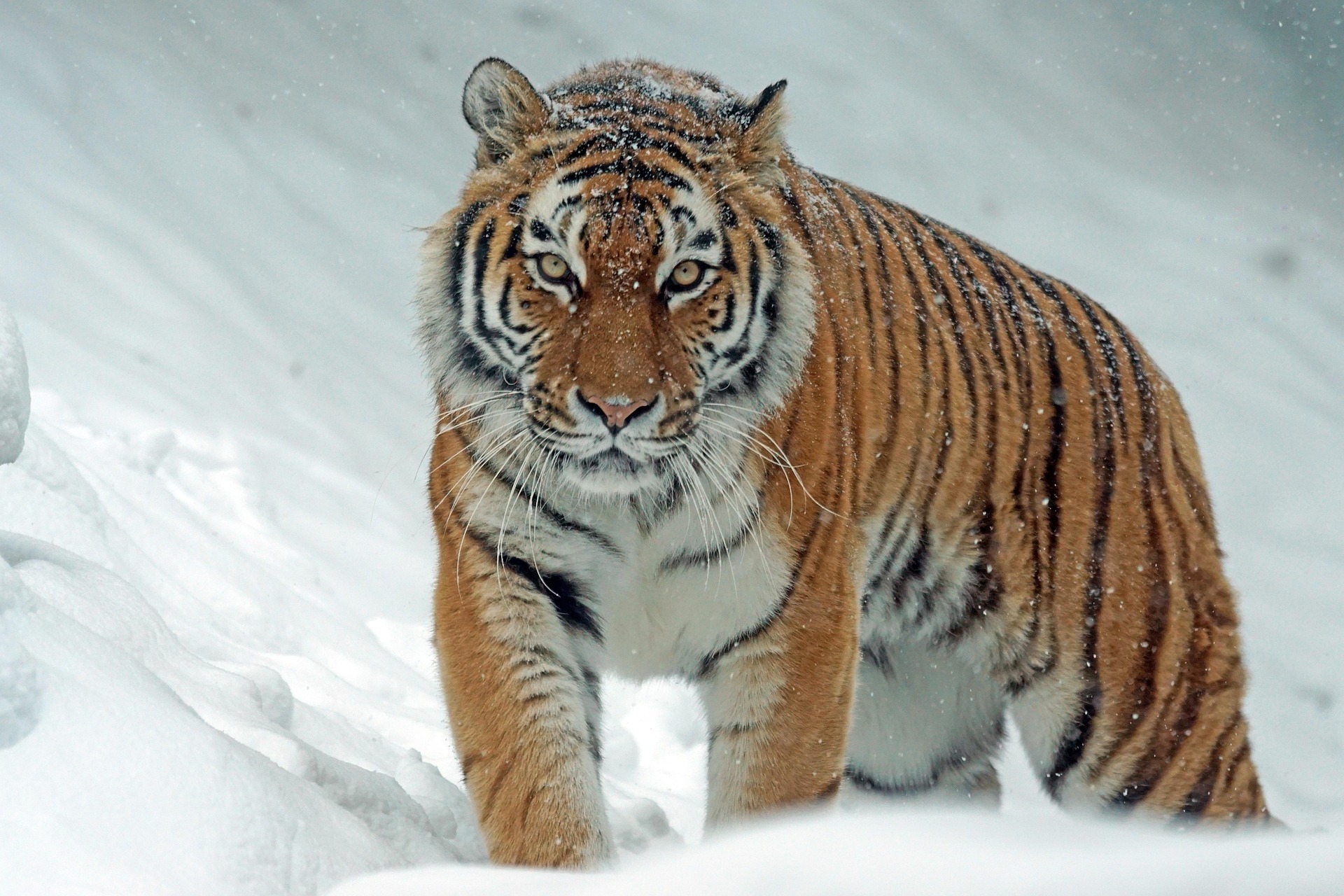
About Tiger Molting
The way tigers molt (shed and regrow their fur) varies significantly depending on their habitat. Individuals living in cold regions, such as Amur (Siberian) tigers, undergo dramatic changes in fur quality according to the season. In contrast, tigers living in tropical regions, like Bengal tigers, experience minimal changes.
The Purpose of Molting
Tiger molting serves three main functions:
① Body Temperature Regulation
In cold regions, the fur changes:
Winter → Long, dense fur
Summer → Short, light fur
Amur tigers, in particular, develop very thick winter coats that allow them to remain active in sub-zero temperatures.
② Maintaining Hunting Ability
Tigers are ambush predators.
Changes in fur help to:
Retain body heat
Reduce fatigue
Enable them to wait for prey for long periods
③ Maintaining Skin and Fur Health
It also serves to shed old fur and remove:
Ticks
Dirt
Damaged fur
Seasonal Molting
Spring (Winter Coat → Summer Coat)
Timing
Around March–May (varies by region)
Changes
Thick winter fur is shed
Coat becomes shorter
Easier to dissipate body heat
Amur tigers, in particular, shed large amounts of fur.
Appearance:
Looks slightly slimmer
Fur color becomes more vibrant
Summer (Summer Coat)
Characteristics
Shorter fur
Lower density
Allows for ease of movement
Tigers in hot regions maintain a coat similar to this year-round.
Autumn (Summer Coat → Winter Coat)
Timing
Around September–November
Changes
Fur grows longer
Undercoat increases
Heat retention improves
Amur tigers, in particular, see increased fur volume around the:
Neck
Belly
Tail
Winter (Winter Coat)
This is the most distinctive period for Amur tigers.
Characteristics:
Long fur
High density
Face appears fuller
Tail looks thicker
Enables hunting even in environments where the perceived temperature drops below freezing.
About Tiger Vocalizations
Tiger vocalizations are exceptionally powerful among the Felidae family; they are renowned for deep roars that can carry for several kilometers. Tigers use their voices to convey a wealth of information—regarding territory, mating, and parent-offspring bonds—rather than merely for intimidation.
Roar
This is the signature vocalization of the tiger.
Sound characteristics:
A deep, booming sound (like “Woooo” or “Aaaaa”).
Contains low-frequency components.
A sound that resonates in the chest and vibrates the ground.
Range:
Can be heard from several kilometers away.
Purpose:
Asserting territory.
Announcing presence to others.
Searching for a mate.
Gauging the distance to other individuals.
Chuff (or Prusten)
A friendly vocalization unique to tigers.
Sound:
“Huff, huff, huff”
“Purrr-rr-rr”
Soft sounds produced through the nose.
Situations:
Greeting other tigers.
Interaction between mother and cubs.
Signaling to a trusted individual.
Tigers use this sound frequently—a rarity among large cats.
*Note: While lions and leopards may produce similar sounds, it serves as a particularly important form of communication for tigers.
Growl
A low sound,
“Grrr-rr-rr…”
Purpose:
Intimidation.
Warning before an attack.
Territorial disputes.
In conflicts between tigers, vocal posturing often takes place before actual physical fighting begins.
Non-roar “Growling Shouts”
During hunting or moments of excitement, tigers emit
short shouts such as:
“Au!”
“Waa!”
“Ohn!”
Purpose:
Reaction to prey.
Surprise.
States of tension.
Seasonal Activities
A tiger’s seasonal activities vary significantly depending on its habitat. Amur (Siberian) tigers are strongly influenced by the four seasons, whereas Bengal tigers and Southeast Asian tigers adjust their behavior according to the dry and rainy seasons.
🌸 Spring (Snowmelt and active breeding)
Amur Tigers
(Russian Far East / Northeast China)
Activities
Molting from winter coat to summer coat
Expanding range after snowmelt
Increased territorial marking
While movement is restricted by snow and cold during winter, spring brings:
Deer
Wild boars
Small mammals
…and increased activity among these animals, leading to more hunting opportunities.
Breeding
Spring is also a time for breeding behavior.
Males:
Search for female scents
Announce presence via roaring
Patrol territory
Females:
Look for birthing sites
Prepare for cub rearing
☀️ Summer (Period of high activity)
Common Characteristics
Summer is a crucial season for tigers due to the abundance of prey.
Activities:
Nighttime hunting
Increased use of water sources
Long-distance travel
…all increase during this time.
Tigers in Hot Regions
In places like India:
Daytime:
Rest in the shade of trees
Rest near water
Rest in thickets
Unlike most felids, tigers are:
Excellent swimmers
On hot days, they cool their bodies in:
Rivers
Ponds
Swamps
🍂 Autumn (Preparing for winter)
Amur Tigers
Autumn is a vital time for winter preparation.
Activities:
Tracking prey
Patrolling territory
Building up physical reserves
Since large prey becomes harder to catch in winter, they ensure they get sufficient nutrition during autumn.
Tigers in Tropical Regions
In regions entering the dry season:
Ambush prey near water sources
Utilize prey migration routes
The dry season can make hunting easier, as animals congregate in search of water. ❄️ Winter (the harshest season in cold regions)
Amur Tiger
Winter is the season that truly tests a tiger’s capabilities.
Characteristics:
Thick winter coat
Large paws for moving across snow
Patrolling a vast territory
Snow makes it easier to track prey by following their footprints.
Target prey:
Red deer
Wild boar
Roe deer
And others.
Winter Hunting
Tigers do not engage in long-distance chases.
Hunting method:
Tracking footprints
Approaching from downwind
Closing the distance to within a few dozen meters
Launching a sudden, explosive pounce
It is an ambush-style approach.
Regarding Walking Speed
A tiger’s walking speed is not geared toward “high-speed running” like that of a cheetah; instead, it is specialized for stealthy movement—or stalking—to approach prey quietly.
Normal Walking Speed
A tiger’s normal walking speed is estimated to be:
Approximately 3–5 km/h
This is similar to the average walking speed of a human (about 4 km/h), but tigers walk very quietly, moving their muscular bodies with minimal swaying.
Characteristics:
Paw pads absorb sound
Claws are retracted to reduce noise upon contact with the ground
Head is kept low while observing surroundings
Tail is used for balance
Speed When Approaching Prey (Stalking)
This is the mode of movement at which tigers excel.
Speed:
Can be a very slow walk of approximately 1–2 km/h
Purpose:
To approach prey—such as deer, wild boar, water buffalo, or sambar (large deer)—without being detected.
Rather than chasing at high speed, tigers employ the following tactics:
Check wind direction
Hide in tall grass or the shade of trees
Slowly close the distance
Launch a sudden attack from within a few dozen meters
Short-Distance Sprinting Speed
Tigers are capable of moving very quickly in short bursts.
Estimated top speed:
Approximately 50–60 km/h
(Short distances/lasting a few seconds)
However, they lack high endurance.
Reasons:
Large body weight (150–300 kg class)
High muscle mass
Muscle composition suited for explosive power rather than sustained effort
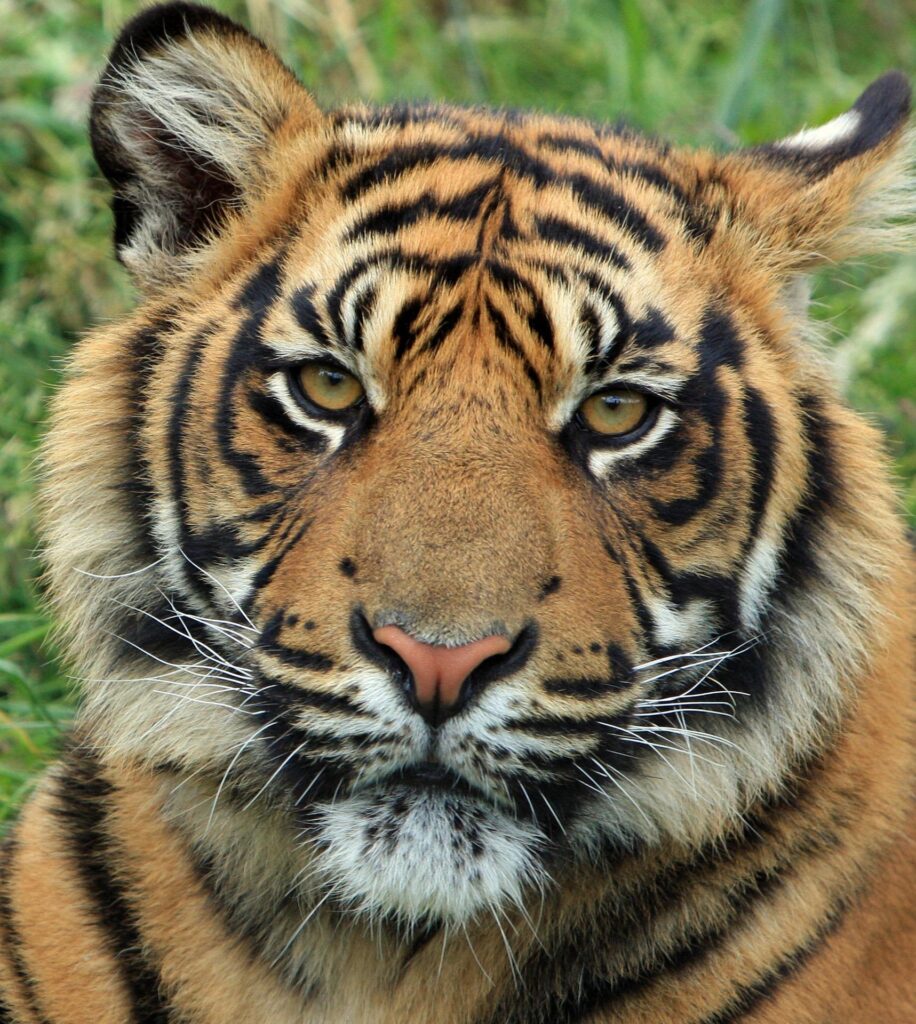
About Tiger Cubs
This article provides detailed information about tiger (Panthera tigris) cubs.
- Name
Young tigers are called “cubs.”
The juvenile stage is from 0 to 1 year of age.
- Birth
Gestation Period: Approximately 3.5 months (104-106 days)
Litter Size: Usually 2-4 cubs per litter
Birth Weight: Approximately 1-1.5 kg
Birthing Location: Mothers give birth in safe places such as rock shelters, bushes, or caves.
- Growth and Development
Eye Opening: Eyes open 6-14 days after birth.
Walking Begins: Babies gradually begin walking around 2 weeks after birth.
Lactation Period: Mainly breastfeeding at 2-3 months.
Weaning: Babies begin to be fed meat hunted by their mothers at 3-6 months.
Fur Development:
Immediately after birth, they are light brown with noticeable black stripes.
As they grow, they develop the same deep orange and black stripes as their parents.
- Behavior/Personality
Highly Dependent on Mother:
For the first few months after birth, they are held by their mother and follow her when moving around.
Playful and Curious:
They learn their hunting instincts through playing with their mother and siblings, chasing each other, and playing with each other.
Learning Behavior:
They learn hunting skills by watching their mother hunt.
They practice climbing trees and stalking prey.
- Sociality
Their relationship with their mother is primarily centered.
They learn survival skills and territoriality through play with their siblings and observing their mother’s behavior.
Are tigers an endangered species?
As mentioned above, tigers are all endangered species. The reason is simple: they attack and kill humans too. As a result of retaliation, the number of cases has continued to decline sharply and is expected to continue to decline. Furthermore, their population is decreasing due to habitat destruction. Conservation efforts have begun for wild boars, elephants and lions.
- IUCN Assessment
Classification: Endangered (Critically Endangered)
Reasons:
Habitat destruction (deforestation, agricultural land development)
Poaching and illegal trade (for skins, bones, and medicinal purposes)
Food shortages due to declining prey
- Global Population
Wild tigers: Approximately 3,000-3,900 (IUCN 2022)
Population by subspecies:
Subspecies Current Population Status
Bengal tiger: Approximately 2,500 Largest population
Siberian tiger: Approximately 500 Lives in cold regions, small population
Sumatran tiger: Approximately 400 or less Declined due to deforestation
Indochinese tiger: Approximately 350-400 Largely affected by deforestation and poaching
Malaysian tiger: Approximately 250 Declined due to deforestation
Caspian tiger: Extinct Extinct since the first half of the 20th century
- Major Threats
Habitat Loss and Fragmentation:
Deforestation, agricultural development, road construction
Population fragmentation and reduced genetic diversity
Poaching and Illegal Trade:
Hunting for fur, bones, and medicinal purposes
Prey Decline:
Due to deforestation and hunting, prey such as deer and wild boar are declining
- Conservation Activities
All subspecies are listed as endangered under the international treaty CITES and trade restrictions are in place
Habitat Protection in Protected Areas and National Parks
Anti-poaching Patrols and Ecological Monitoring
Captive Breeding and Translocation Programs
Can you keep a tiger as a pet?
Tigers are large and cannot be kept as pets in daily life. There have been cases of tigers killing zookeepers in zoos, so they are very dangerous. We recommend that you watch tigers at large events for children. Check the news for more information.
- Legal Restrictions
Tigers are endangered species, and international trade is strictly regulated by the Convention on International Trade in Endangered Species of Wild Fauna and Flora (CITES).
In Japan:
Under the Wildlife Protection Act, private ownership is generally prohibited.
Special permission from the prefectural governor is required to keep them.
Even in the United States and the EU, private ownership requires special licenses and facility standards.
- Difficulty of Keeping Tigers
Very Large and Dangerous:
Males can grow to over 300 kg.
They have strong bite and claw attacks, easily injuring humans and small animals.
Large Exercise Space Required:
They have a strong territorial instinct, and will become aggressive due to stress if they are not provided with ample space or play equipment.
Dietary Management is Complex:
As carnivores, they require approximately 10 kg of meat per day.
Improper nutritional management can cause health problems.
- Personality and Behavioral Issues
Due to their solitary and territorial nature, coexistence with other animals and humans is difficult.
They are highly cautious and prone to unexpected aggressive behavior.
They have a long lifespan (10-15 years in the wild, 20+ years in captivity), requiring long-term care and management.
Zoos Housing Tigers (Japan & Worldwide)
Compared to species like the clouded leopard, tigers (Panthera tigris) are kept in relatively large numbers in zoos around the world. However, as an endangered species, they are subject to international breeding programs (involving pedigree management) and are kept for conservation purposes rather than merely for display.
🇯🇵 Major Zoos in Japan Where You Can See Tigers
Ueno Zoological Gardens
One of Japan’s premier zoos with a long history of exhibiting tigers.
Features:
Exhibits featuring large Asian animals
Extensive experience in keeping felids (members of the cat family)
A facility where large animals can be observed within an urban area
Tama Zoological Park
A zoo famous for its exhibits of large felids.
Features:
Spacious enclosures
Exhibits designed to allow observation of natural animal behaviors
Houses other species such as lions and snow leopards in addition to tigers
Asahiyama Zoo
Known for animal exhibits suited to cold climates.
Features:
Exhibits that utilize the Hokkaido environment
Examples of cold-climate animal exhibits, such as Amur tigers
Maruyama Zoo
A leading zoo in Hokkaido.
Features:
An environment suitable for keeping cold-climate animals
A history of involvement in the care and breeding of Amur tigers
🌏 Major Tiger-Housing Facilities Worldwide
🇺🇸 United States
Smithsonian’s National Zoo
Features:
Research on endangered species conservation
Participation in tiger breeding programs
Educational activities
San Diego Zoo
Features:
Large-scale animal exhibits
Wildlife conservation research
Track record of keeping large felids
Bronx Zoo
Features:
One of the world’s largest urban zoos
Engaged in the conservation of rare animals, including tigers
🇬🇧 United Kingdom
ZSL London Zoo
Features:
A zoo with a long history
Operated by a wildlife conservation organization
Long history of exhibiting large felids
🇩🇪 Germany
Zoo Berlin
Features:
One of Europe’s leading zoos
Houses large carnivores, including tigers
Tierpark Berlin
Features:
Vast grounds
Exhibits designed for large animals
Examples of keeping cold-climate species, such as Amur tigers
Introducing other animals


コメント