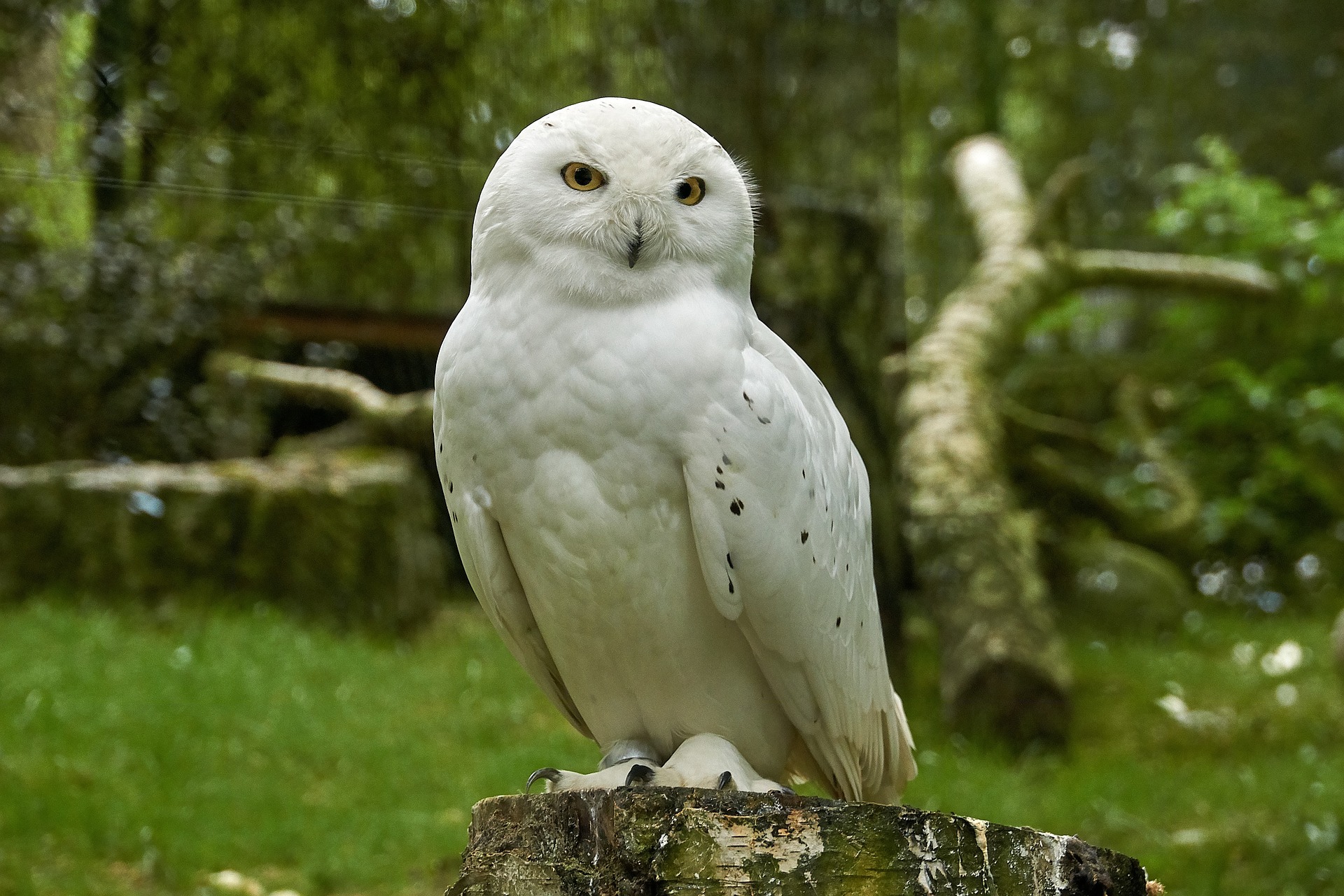
What kind of bird is a snowy owl? We will explain its characteristics, ecology, and habitat. Many snowy owls live in the northern part of the world, and they are very well known because they have appeared in movies such as Harry Potter. Therefore, we will introduce what kind of characteristics it has.






- What is a snowy owl? About basic status
- What are the roots and origins of the Snowy Owl?
- About habitat
- feature is? What kind of creature is it?
- What is your personality like?
- What is the ecology like?
- Snowy Owl Molting
- Vocalizations
- Seasonal Activities
- Flight Speed
- About Snowy Owl Chicks
- Is the snowy owl an endangered species?
- Can snowy owls be kept?
- Zoos Housing Snowy Owls (Japan & Worldwide)
- Introducing other animals
What is a snowy owl? About basic status
The Snowy Owl is a bird classified in the Owlidae family. The scientific name is Bubo scandiacus. The body length is 50cm-60cm, and the wingspan is 140cm-165cm. Weight is 1-3kg. In kanji, it is written as white owl. It is a large type. The list of information is as follows.
| Japanese(和名) | シロフクロウ |
| English(英名) | Snowy Owl |
| scientific name(学名) | Bubo scandiacus |
| classification(分類) | Ave、 Strigiformes、 Strigidae、Buho 鳥綱、フクロウ目、フクロウ科、ワシミミズク属 |
| IUCN Status(保全状況) | VULNERABLE |
| Length(体長) | 50cm-60cm |
| Weight(体重) | 1-3kg |
What are the roots and origins of the Snowy Owl?
The Snowy Owl (Bubo scandiacus) traces its roots to a lineage of owls that evolved in the cold regions of the Arctic. It is a large owl that currently inhabits the Arctic tundra.
Origins: An owl adapted to the Arctic
The Snowy Owl belongs to the family Strigidae (typical owls) and is classified within the group of large owls.
Its close relatives include:
Eurasian Eagle-Owl
Great Horned Owl
Genetic studies suggest that the Snowy Owl diverged from the ancestors of large eagle-owls several million years ago and evolved as a lineage specialized for the Arctic environment.
The stage of evolution: The Northern Hemisphere during the Ice Age
Past ice ages played a significant role in the evolution of the Snowy Owl.
Several hundred thousand to several million years ago:
Ancient large owls
↓
Expansion into cold regions
↓
Adaptation to snowy plains and tundra environments
↓
Acquisition of white plumage and thick feathers
↓
Modern Snowy Owl
In the Arctic, the environment was characterized by:
A scarcity of trees
Expanses of snow and ice
Extreme temperature differences between summer and winter
These conditions drove a unique evolutionary process.
Why did they develop white feathers?
As its name suggests, the Snowy Owl’s most distinctive feature is its white plumage.
This is an adaptation for survival on snowy plains.
Camouflage
Against the snow, this offers advantages such as:
Being less noticeable to prey
Being harder for predators to spot
However, they are not completely white.
Young birds and females retain:
Black spots
Brown markings
These markings are believed to play a role related to the breeding season or environmental factors.
Physical evolution to withstand extreme cold
Among all bird species, the Snowy Owl possesses a body that is exceptionally well-adapted to cold climates. Characteristics:
Thick plumage
Feathers covering even the toes
Extremely dense plumage
Large body
Body length: Approx. 55–70 cm
Wingspan: Approx. 140–165 cm
Their large size helps retain body heat.
Small ears
They lack the prominent “ear tufts” found on typical eagle-owls.
Reasons:
To minimize protruding features
To prevent heat loss
These are believed to be the reasons.
Unchanged hunting prowess since ancient times
The snowy owl possesses hunting abilities as a nocturnal predator inherited from its ancestors.
Main prey:
Lemmings (small Arctic rodents)
Mice and rats
Small birds
Rabbits and hares
Characteristics:
Detects prey beneath the snow using sound
Approaches with silent wingbeats
Captures prey with powerful talons
About classification
Snowy owls are classified in the genus Eagle Owl. The snowy owl is often treated as a separate genus called the genus Nyctea, which is very controversial.
Snowy Owl Taxonomy
| 階級 | 分類 |
|---|---|
| 界 | 動物界 (Animalia) |
| 門 | 脊索動物門 (Chordata) |
| 綱 | 鳥綱 (Aves) |
| 目 | フクロウ目 (Strigiformes) |
| 科 | フクロウ科 (Strigidae) |
| 属 | フクロウ属 (Bubo) |
| 種 | シロフクロウ (Bubo scandiacus) |
About habitat
Its habitat is in northern Europe and North America.
Snowy Owl Habitat
Main Distribution Areas
Arctic and Subarctic Tundra
Northern North America (Northern Canada, Alaska)
Northern Europe (Northern Norway, Sweden, Finland)
Northern Russia and Siberia
Habitat
Prefers open plains and tundra
Rarely found in forested areas, preferring environments with wide visibility and easy prey hunting
In winter, they migrate south, sometimes appearing on farmland, grasslands, and along coastlines (individuals that migrate outside the Arctic are called “erebrations”).
Seasonal Migration
Summer: Spend time in the Arctic tundra where they breed
Winter: Migrate south to find food (appears in open areas of North America and Northern Europe)
Migration distances vary greatly depending on the individual and the year
feature is? What kind of creature is it?
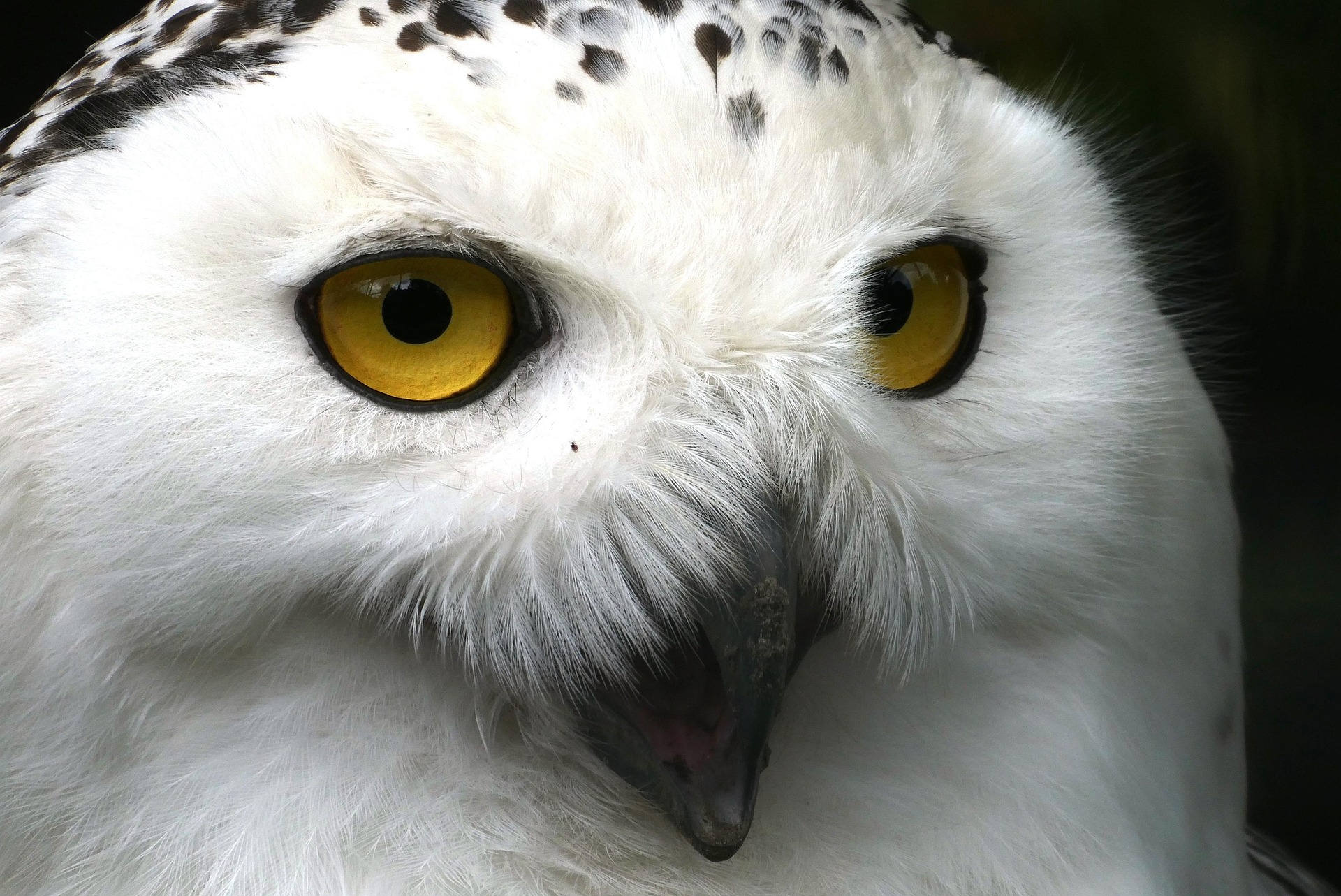
Snowy owls prefer to live in tundra, grasslands, wetlands, and rocky areas. During the breeding season, they are widely distributed in the Arctic Circle, and in winter they migrate south to North America, Eurasia, and as far as Hokkaido in Japan. Its feathers are white, with feathers extending all the way to its toes, and its most distinctive feature is its short beak. Additionally, the female is larger than the male, making it a rare type of owl. They do not perch in trees, preferring to live alone on ice blocks, rocks, and stumps on the plains. They are often active during the day.
Characteristics of the Snowy Owl
Body Size/Body Shape
Body Length: Approximately 52-71cm
Wingspan: Approximately 125-150cm
Weight: Approximately 1.6-3kg
A large owl, characterized by a stocky body and round face
Feathers/Color
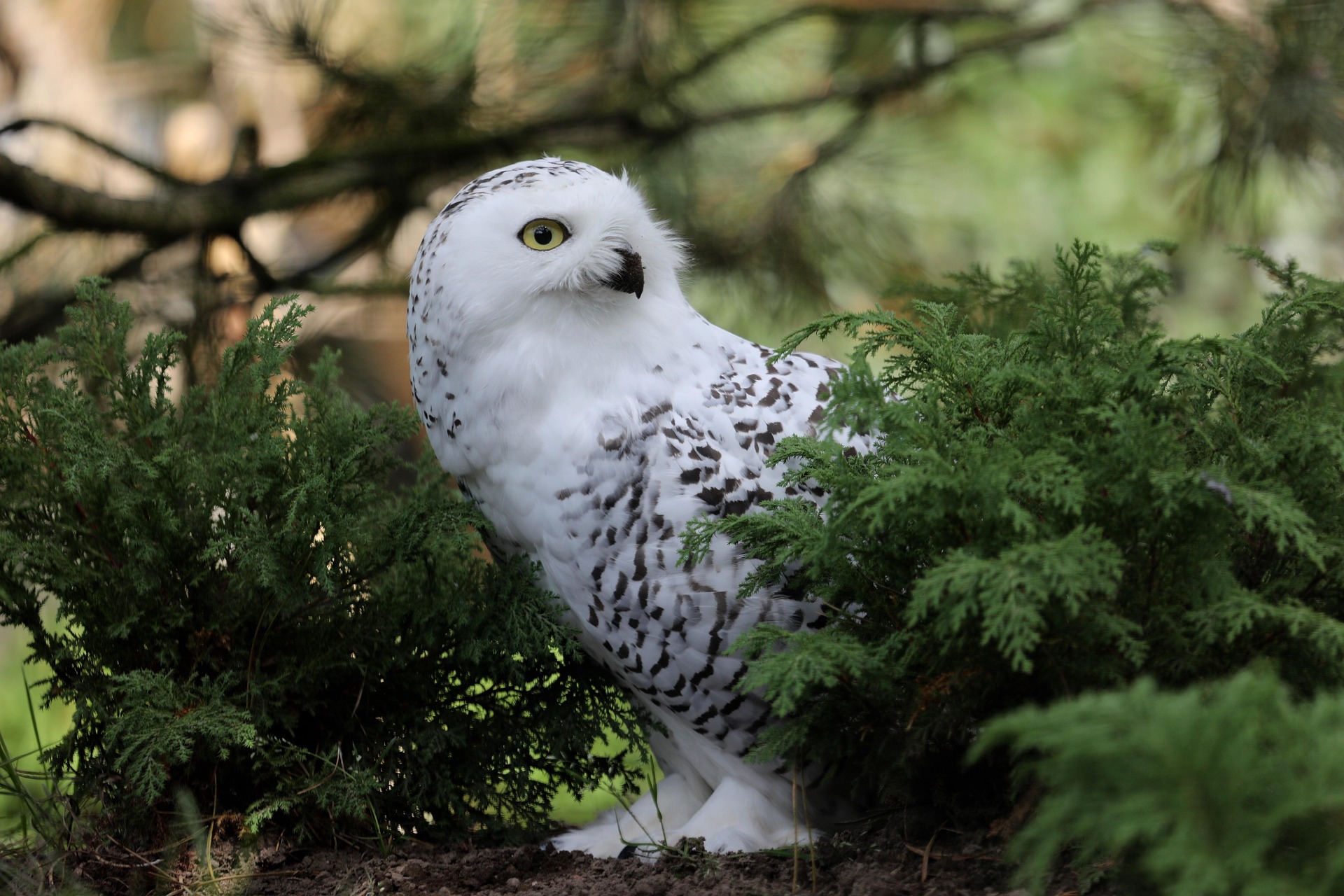
Almost white feathers mimic the snow as a protective coloration
Females and young birds have black or brown spots
In winter, they often appear whiter overall
Head/Face
Round face and large yellow eyes
Ear feathers (feathers that look like ears) are not prominent.
Calls
A low, resonant “whoosh” sound.
Often heard during breeding season or during territorial calls.
Behavior/Personality
Mostly diurnal (unusual for an owl).
As a bird of prey, it watches its prey intently and captures it in flight.
During the breeding season, it is highly vigilant and protects its nest.
Diet
Preys primarily on small mammals (such as lemmings and mice).
May also eat birds and fish when necessary.
What is your personality like?
If you’ve ever kept an owl, you’ll know that owls aren’t the kind of animals you’d want to tame and play with. This is an animal that likes to do things at its own pace and wants a relationship that doesn’t interfere with each other.
Snowy Owl Personality and Behavior
Highly cautious
In the wild, they are always aware of predators.
They will quickly flee or threaten humans or other large animals when approached.
Mostly diurnal
While most other owls are nocturnal, snowy owls are active during the day.
Since their prey, such as lemmings, is diurnal, they adapt their hunting activities to the daytime.
Highly independent
They have individual territories, and males in particular closely guard their nests during the breeding season.
They generally act alone outside of the breeding season.
Curious but cautious
They may show curiosity about new environments and sounds.
However, they will quickly fly away if they perceive danger.
Aggression
Males become very aggressive during the breeding season, protecting their nests and females.
Territorial disputes can sometimes be seen even at feeding areas.
What is the ecology like?
The snowy owl’s diet consists of eating small mammals such as mice and rats, as well as insects. They nest on high ground in the tundra and incubate their eggs. Lifespan is 15 to 20 years.
Snowy Owl Ecology
Habitat
Mainly Arctic and Subarctic tundra regions
Prefers open plains and grasslands, living in areas with good visibility and easy prey hunting
May migrate south to farmland or coastal areas in winter
Activity Period
More diurnal than other owls
Actively hunts during the day
Due to food scarcity in winter, they may be active both day and night
Diet
Preys primarily on small mammals (lemmings, rodents)
May also prey on birds and fish depending on the situation
Due to the scarcity of prey in winter, they travel a wide area to hunt
Breeding
Breeding Season: Spring to early summer (adjusted to the short summer in the Arctic)
Nests are built on the ground and lightly covered with stones and grass.
Egg size per clutch: Usually 3-11 eggs
Both parents raise the nest, with chicks leaving the nest in about a month and a half.
Migration/Winter Behavior
Breeding in the Arctic in summer
Some individuals migrate south in winter in search of food (there is also a mass migration known as “erebulation”).
Sociality
They generally live solitary lives outside of the breeding season.
During the breeding season, males and females work together to build nests and raise chicks.
Lifespan
Approximately 9-10 years in the wild, up to 20 years in captivity.
Are there any natural enemies?
Snowy owls’ natural enemies include arctic foxes and wolves. Larger eagles may also become natural enemies.
Snowy Owl Molting
Molting in the Snowy Owl (Bubo scandiacus) is a crucial process for renewing feathers—adapting to seasons and growth stages while maintaining their functionality—to survive in the frigid Arctic environment.
Timing of Snowy Owl Molting
Snowy Owls generally undergo a complete molt once a year.
Primary timing:
Summer to autumn (after the breeding season ends)
In the Arctic, feather renewal proceeds after the chicks have fledged.
They avoid extensive molting during the breeding season (spring to summer) because flight capability and heat retention are essential during that time.
Changes in Plumage from Juvenile to Adult
A particularly distinctive feature of Snowy Owl molting is the change in plumage color as they mature.
Newly hatched chicks
Fluffy white-to-gray down
Purpose: Body heat retention
↓
Juveniles
Heavily marked with dark brown patterns
Not yet fully white against the snowy landscape
↓
Adults
Males
Become whiter with age
Older individuals may appear almost pure white
Females
Retain relatively prominent black spotting throughout their lives
This is an example of sexual dimorphism (differences between the sexes).
Sequence of Feather Replacement
Like most birds, Snowy Owls molt in a specific, set order.
Primary areas of renewal:
① Body feathers
Chest
Abdomen
Back
Molting often begins in these areas.
② Wing flight feathers
Crucial feathers for flight
Replaced gradually
③ Tail feathers
Important for maintaining balance
Wing and tail feathers do not all fall out at once; they are replaced in a way that maintains flight capability.
Why is Molting Important?
For the Snowy Owl, feathers are not merely “clothing,” but a survival mechanism.
① Protection against extreme cold
In the Arctic winter, conditions include:
Temperatures dropping tens of degrees below zero
Strong winds
Snow
New plumage is:
Rich in trapped air
Highly insulating
…making it vital for maintaining body heat.
② Maintaining hunting ability
Owl feathers are unique.
The edges of the feathers are serrated,
which reduces air resistance,
enabling the owl to
“fly silently.”
When old feathers become damaged,
flight noise increases
and hunting efficiency drops,
making molting necessary.
Vocalizations
Contrary to the impression of a “quiet bird of the snow” suggested by their appearance, Snowy Owls are characterized by low, powerful vocalizations. They employ a variety of calls, ranging from sounds similar to the typical owl “hoo-hoo” to alarm calls and the cries of chicks.
Typical Adult Call: “Hoo”
The signature calls of the Snowy Owl are
“Hoo, hoo”
“Hoo, hoo” (or “whoo, whoo”)
—low, monotonous sounds.
Males, in particular, vocalize frequently; these calls serve to:
Assert territory
Attract females
Warn off other males
These low-pitched calls carry over long distances, helping the owls locate one another across the vast tundra.
Differences Between Male and Female Calls
Male
Characteristics:
Low-pitched
Powerful
Repetitive
Main purposes:
Courtship during breeding season
Territorial defense
Example:
“Hoo… hoo… hoo…”
Female
Females have higher-pitched voices than males and use a wider variety of calls.
Calls used:
“Kururu” (rolling/trilling sound)
Screams
Alarm calls
They produce particularly intense vocalizations when defending their nests or chicks.
Chick Vocalizations
The calls of Snowy Owl chicks change as they grow.
“Pee-pee”
“Chee-chee”
—small, high-pitched sounds.
Purposes:
Begging parents for food
Communicating with siblings
Seasonal Activities
Snowy Owl activity shifts in response to the extreme seasonal changes characteristic of the Arctic (midnight sun, polar night, snow cover, and prey availability).
🌱 Spring (March–May) | Breeding Preparation & Territory Establishment
Key Activities
Migration to breeding grounds
Males secure territory
Courtship behavior
Pair formation
Individuals that migrated south for the winter return to the Arctic tundra in the spring.
Males woo females through:
Low “hoo-hoo” calls
Aerial display flights
Presenting prey to the female
Diet
Spring is a time to build up physical strength in preparation for breeding.
Main prey:
Lemmings
Voles
Small birds
Rabbits/Hares
Breeding success rates are particularly high in years when lemming populations are abundant.
☀️ Summer (June–August) | Breeding & Chick-rearing Season
The Arctic summer is a time of “midnight sun,” with some areas experiencing 24-hour daylight.
Key Activities
Egg-laying
Females build nests in locations such as:
Shallow depressions in the ground
Areas near rocks
Clutch size varies depending on prey availability,
ranging from a few eggs to over ten.
Incubation & Chick-rearing
Roles are divided as follows:
Female: Primarily incubates eggs
Male: Brings food
Once the chicks hatch:
Parents bring prey
Chicks grow rapidly
Chicks begin wandering around the nest area
Summer Characteristics
Snowy Owls are unusual in that they are
owls that hunt during the day.
Reason:
The sun does not set in the Arctic
There is no need to be nocturnal
🍂 Autumn (September–November) | Fledging & Migration Preparation
Key Activities
Chicks become independent
Family groups disband
Migration south begins
Young birds separate from their parents to:
Practice hunting
Improve flying skills
Prepare for independent life Molting Period
From the end of the summer breeding season through autumn,
body feathers,
wing feathers,
and tail feathers
are replaced.
The new plumage
restores insulation against the cold,
flight capability,
and camouflage for snowy landscapes.
❄️ Winter (December–February) | Overwintering and Hunting Season
When winter arrives, many individuals migrate south.
Destinations include:
Southern Canada,
Northern USA,
Northern Europe,
Northern Russia,
and so on.
However, some individuals remain in the Arctic Circle if food is plentiful.
Winter Hunting
On snowy plains, they:
observe prey from a high vantage point,
pinpoint the prey’s location by sound,
approach in silent flight,
and capture the prey with powerful legs.
Main prey:
Rodents,
rabbits,
waterfowl,
etc.
Flight Speed
Although there are few opportunities to accurately measure their top speed, snowy owls possess powerful flight capabilities suited for hunting—impressive for such large owls.
Normal Flight
Approximately 30–50 km/h
They employ an energy-efficient flight style for long-distance travel.
A characteristic of the snowy owl is its flight pattern, involving slow, deep wingbeats.
Hunting Flight
When targeting prey,
speeds of approximately 40–60 km/h
and even higher speeds during a dive
are believed to be reached.
Their hunting strategy combines speed with
silent wingbeats,
excellent eyesight,
and precise diving.
Long-Distance Migration
Some individuals migrate south for the winter.
Migration distance:
Can range from several hundred to several thousand kilometers.
During migration,
they fly by combining
powerful wingbeats,
gliding,
and utilizing the wind.
About Snowy Owl Chicks
Snowy owl chicks have unique characteristics in appearance, behavior, and development.
Characteristics of Snowy Owl Chicks
Hatching and Early Appearance
Body length immediately after hatching: Approximately 10-15cm
Weight: Approximately 50-70g
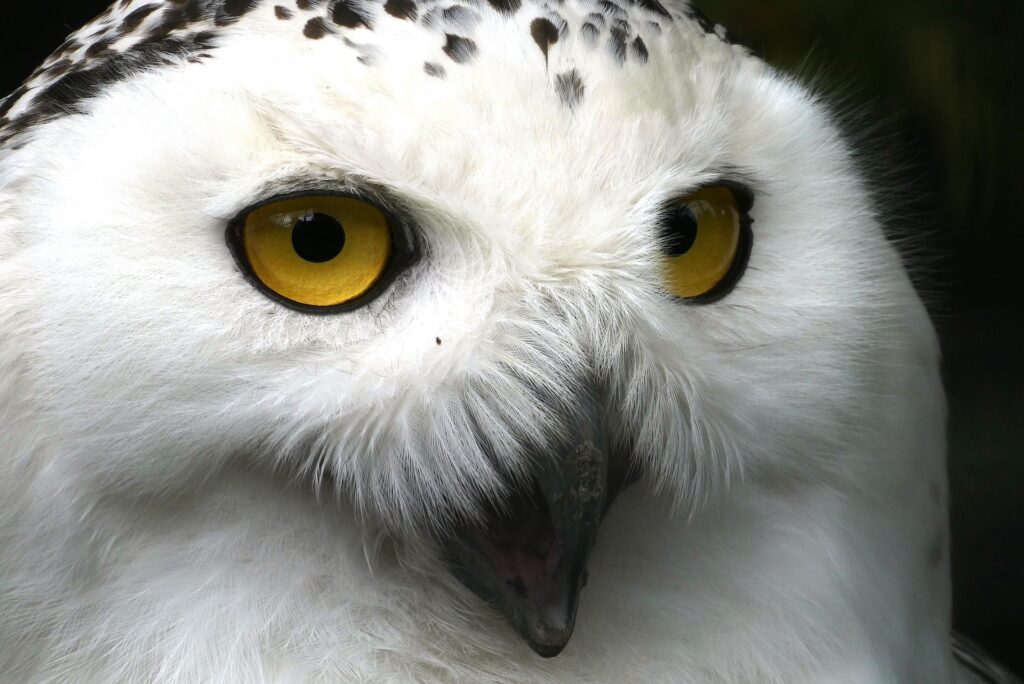
Their entire bodies are covered in fluffy white down, and they have a round head shape like their parents.
Their eyes develop into yellow, but their vision is not fully developed immediately after hatching.
Life in the Nest
Nests are built on the ground and are simply surrounded by stones and grass.
Parents stay near the nest to feed and protect them.
When threatened, parents defend their chicks by threatening or attacking.
Diet
Initially, they are fed by their parents. (small mammals and birds)
As they grow, they begin to practice catching small prey on their own.
Growth Process
Feathers gradually change from down to adult feathers.
They leave the nest at about 1.5 months of age.
They continue to accompany their parents for several weeks after leaving the nest, learning hunting and survival skills.
Personality and Behavior
They are cautious immediately after hatching and move carefully outside the nest.
Chicks acquire basic athletic and hunting skills by playing with other chicks and flapping their wings.
After Flinging
They become independent at about 1.5 to 2 months of age.
They leave their parents and begin to establish their own territories.
Is the snowy owl an endangered species?
The snowy owl is an endangered species. Currently, it is said that there are only about 14,000 to 28,000 mature breeding pairs of snowy owls in the world. The number of lemmings that can be eaten is decreasing, and it is suggested that there may be as few as 1,700 lemmings worldwide, and the possibility of extinction has been pointed out. The estimated population in North America is estimated to decline by a further 52%.
Details of Conservation Status
International Assessment (IUCN)
Classification: Least Concern (LC)
Reason: Widely distributed, mainly in the Arctic, with relatively stable populations
Regional Status
Populations fluctuate in North America and Europe.
Local declines may be observed due to winter food shortages and climate change.
Threats
Habitat changes due to climate change (tundra shrinkage, lemming population fluctuations)
Habitat impacts due to human activity (southward migration to tourist destinations and agricultural land)
Predation pressure is not a major issue, as it depends on the natural environment.
Protection
While not subject to special international protection, habitat protection is in place in the Arctic and some national parks.
Can snowy owls be kept?
Can snowy owls be kept as pets? Unfortunately, it is also listed in the Washington Convention and its international trade is severely restricted. Therefore, the only option is to have the animal surrendered to a zoo. It is recommended that you enter the zoo and see the information about events.
Why Snowy Owls Can’t Be Kept as Pets
They are wild animals.
Snowy owls have adapted to vast natural environments, including the Arctic. In Japan, their capture and captivity are prohibited under the Wildlife Protection Act and the Species Conservation Act.
Keeping them without permission is illegal.
Large and Unique Biology
They are large birds of prey, measuring 50-70 cm in length and with a wingspan of approximately 125-150 cm.
They require a large hunting range, and a home environment does not provide them with sufficient exercise and flight space.
Special Diet
They primarily prey on small mammals (lemmings, mice, etc.).
Food is difficult to obtain, and artificial feed is extremely difficult to substitute.
Personality and Vigilance
In the wild, they hunt during the day, but they are highly cautious and do not get used to people.
If captured, they are prone to becoming ill due to stress.
Health management is difficult.
Even veterinarians have difficulty examining them, and there is a high risk of illness and injury.
Their lifespan and breeding in captivity are also very limited.
Zoos Housing Snowy Owls (Japan & Worldwide)
Although the Snowy Owl (Bubo scandiacus) is native to the Arctic, it is kept in zoos around the world due to its striking white appearance and its unusual habit of being active during the day. In Japan, they can be seen at several zoos.
🇯🇵 Zoos in Japan where you can see Snowy Owls
🦉 Ueno Zoological Gardens
One of the premier facilities in Japan for viewing Snowy Owls.
Features:
Showcases the ecology of the Arctic region
Allows observation of the differences in plumage color between males and females
Offers views of the owls active during the day
Things to look for:
The white male
The female with black spots
Head-turning movements
Preening behavior
🦉 Tama Zoological Park
A facility known for its research into the husbandry and breeding of Snowy Owls.
Features:
Housed in the owl enclosure
Records of observations during the breeding season
Exhibits that mimic natural environments within the spacious park grounds
Tama Zoological Park also shares information regarding the pair-housing and breeding of Snowy Owls.
🦉 Asahikawa City Asahiyama Zoo
Hokkaido is a region where wild Snowy Owls sometimes visit, and there is a strong interest in animals from northern climates.
Features:
Exhibits animals suited to cold climates
Husbandry environment that utilizes Hokkaido’s climate
*Exhibit status varies by season.
🌍 Zoos worldwide where you can see Snowy Owls
🇺🇸 USA
Oregon Zoo
A prominent North American zoo that exhibits Snowy Owls.
Features:
Explains the ecology of Snowy Owls
Introduces their habit of hunting during the day
Exhibits information on their adaptation to the Arctic
🇨🇦 Canada
Edmonton Valley Zoo
Exhibits Snowy Owls, taking advantage of an environment close to northern regions.
Features:
Exhibits Arctic animals
Introduces bird species from cold climates
🇳🇱 Netherlands
Eindhoven Zoo
Keeps Snowy Owls.
Features:
Highlights the plumage color differences between males and females
Explains their diet of lemmings and rodents
Exhibits information on their adaptation to the Arctic
Introducing other animals
コメント