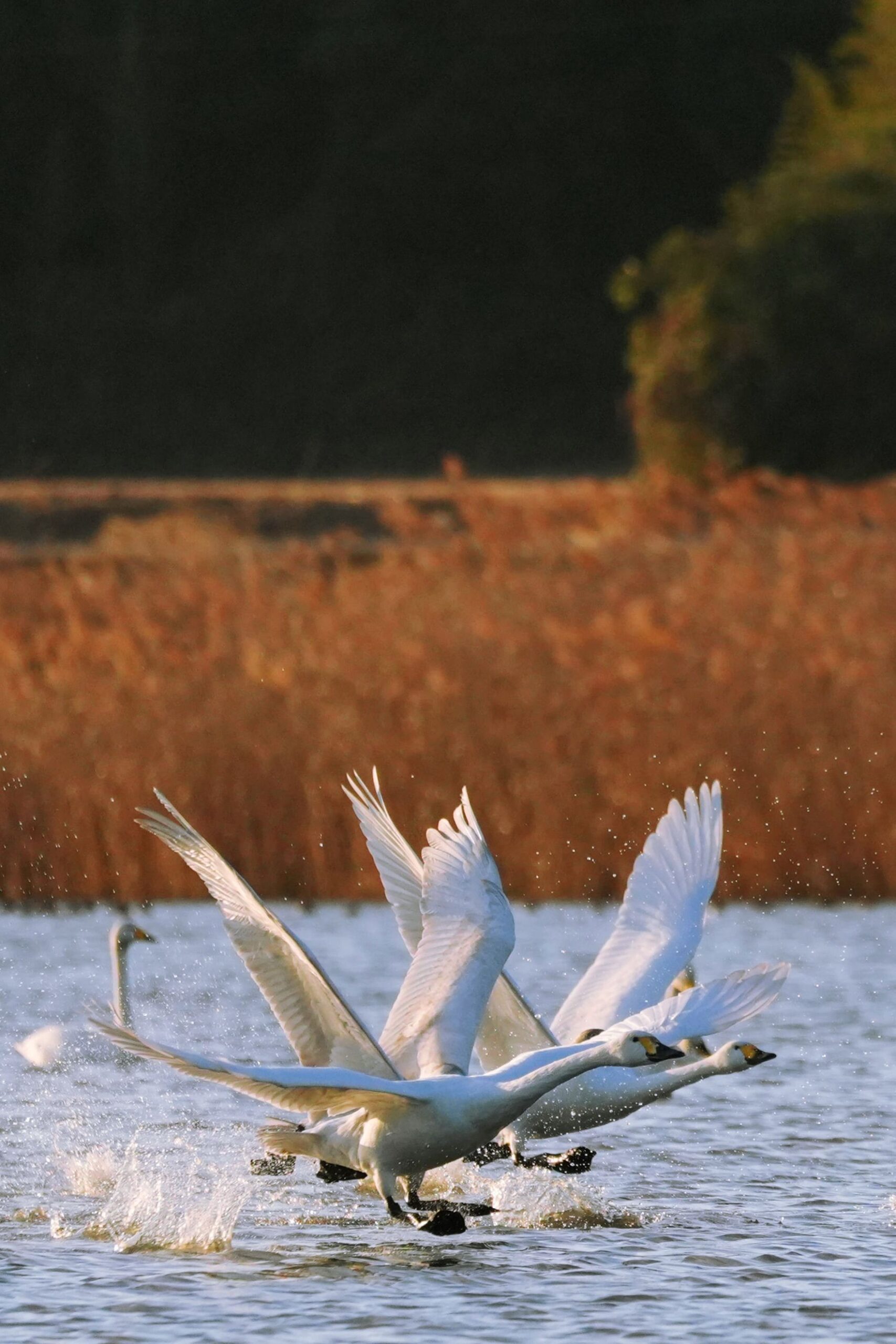
What kind of bird is a black swan? We will explain its characteristics, ecology, and habitat. This bird can only be seen in Australia, so it is said that many people around the world do not know about it. However, despite being such an endemic species, it has been found that its population is surprisingly stable.


- What is a black swan? About basic status
- What are the roots and origins of the black swan?
- About habitat
- feature is? What kind of creature is it?
- What is the ecology like?
- Are there any natural enemies?
- About Molting
- Vocalizations
- Seasonal Activities
- Flight Speed
- About Black Swan Chicks
- Is the black swan an endangered species?
- Can black swans be kept as pets?
- Zoos where they are kept (Japan & Worldwide)
- Introducing other animals
What is a black swan? About basic status
The white swan is a bird classified in the Anseriformes order, Anseriformes family, and the genus Swan. The scientific name is Cygnus atratus, and the kanji is black swan. The total length is 110cm to 140cm, the weight is 5kg to 6kg, and the wingspan is 2m. The list of information is as follows. It is an unknown bird in Japan, and its distinctive feature is its black appearance, which is the opposite of a swan. It’s called Black Swan.
| Japanese(和名) | コクチョウ |
| English(英名) | Black Swan |
| scientific name(学名) | Cygnus atratus |
| classification(分類) | Ave、 Anseriformes、Anatidae、Cygnus 鳥綱、カモ目、カモ科、ハクチョウ属 |
| IUCN Status(保全状況) | LEAST CONCERN |
| Length(全長) | 110-140cm |
| Weight(体重) | 5-6kg |
What are the roots and origins of the black swan?
The black swan (Cygnus atratus) originated in Australia.
Origins
It is believed to have diverged from the ancestors of the Cygnus genus approximately 7 to 10 million years ago and evolved independently in the Southern Hemisphere.
Its current natural range covers southeastern and southwestern Australia as well as Tasmania, where it inhabits lakes, wetlands, and rivers.
Global Spread
Since the 19th century, the species has been introduced to various parts of the world, including Europe and Asia, for ornamental purposes.
In New Zealand, introduced birds have established feral populations and are breeding in large numbers.
In Japan, they are commonly kept in zoos and parks, and feral individuals can occasionally be found in the wild.
Origin of the Name
The name “black swan” (literally kokuchō in Japanese) was given because the bird is a swan with plumage that is black all over. Only a portion of its flight feathers (visible during flight) is white, and its beak is a vivid red.
About classification
There are two subspecies of black swans.
C. a. atratus
This subspecies is distributed throughout Australia.
C. a. sumnerensis
This subspecies was previously distributed in New Zealand. However, it became extinct due to Maori hunting.
Taxonomy
- 界 (Kingdom): Animalia(動物界)
- 門 (Phylum): Chordata(脊索動物門)
- 綱 (Class): Aves(鳥綱)
- 目 (Order): Anseriformes(カモ目)
- 科 (Family): Anatidae(カモ科)
- 属 (Genus): Cygnus(ハクチョウ属)
- 種 (Species): Cygnus atratus(コクチョウ)
About habitat
The black swan is distributed only in Australia.
- Natural Distribution (Origin)
Widely distributed throughout Australia
Especially common in freshwater lakes, rivers, and wetlands in the eastern and southeastern parts of the country
New Zealand
Introduced from Australia in the 19th century and feralized there
Tasmania
Confirmed natural habitat
- Habitat
Mainly lives in freshwater
Lakes, ponds, rivers, and wetlands
Prefers shallow waters with abundant aquatic plants
Can also be found in coastal brackish waters
Can adapt to artificial ponds in urban areas
- Seasonal Migration
Principally a sedentary, not migratory, bird
May migrate locally depending on water and food conditions
Migrates to larger bodies of water during droughts
feature is? What kind of creature is it?
The black swan has a black body and a red beak. The iris is pink or reddish. The flight feathers are white. It is a wandering bird that lives in areas such as lakes, rivers, and wetlands, and moves depending on the seasons and changes in the environment. They form flocks and do not migrate at all. It is Australia’s only endemic swan genus.
- Appearance and Physical Characteristics
Body Color: Completely black (sometimes with white feathers at the wing tips)
Beak: Bright red with a white spot at the tip
Body Size:
Body Length: Approximately 110-140 cm
Wingspan: Approximately 2 m
Weight: Approximately 3.7-9 kg
Legs and Feet: Black with firm webbed feet
Appearance: It’s easy to understand if you think of it as a “black version of a swan.” It’s majestic and graceful, but its all-black body gives it a somewhat mysterious air.
- Flight and Behavior
Flight Ability: Powerful and capable of long-distance flight
Flight Appearance: They fly gracefully, stretching their long necks in an S-shape.
Swimming: Gliding across the water’s surface
Flocking: Usually in small flocks, but in areas with abundant food, they gather in numbers of several dozen birds.
- Call
High-pitched, sharp “hoot-hoot”-like call
Slightly lower in pitch than a swan’s call, giving it a dignified feel.
- Diet
Mainly herbivorous (aquatic plants, grasses, and algae)
Occasionally, they may also eat small aquatic insects.
- Breeding
Nest: Built from grasses and twigs found near water
Eggs: 4-8
Parent Role: Both parents raise the young
Breeding Season: Spring to Summer (September to January) in Australia
- Personality/Characteristics
Usually gentle and graceful
Strongly territorial, they can become aggressive when defending their nests
They are wary of humans and other birds, but can approach them once they become accustomed to them.
What is the ecology like?
Black swans are herbivorous and feed mainly on aquatic plants. The breeding season takes place from April to September. Pairs remain monogamous for life. White swans build nests with a diameter of about 1.5 m made of piled grass and lay their eggs. Usually, they lay 4-6 eggs and take care of the young birds until they are ready to fly. The lifespan is 30 to 40 years.
- Habitat
Mainly freshwater habitats: lakes, ponds, rivers, and wetlands
Prefers shallow waters and feeds in areas with abundant aquatic vegetation
Can also adapt to artificial ponds in coastal and urban areas
- Diet
Mainly herbivorous
Aquatic plants, algae, grasses, and seeds
Eats almost no animal matter
They are often seen stretching their necks to eat underwater plants
- Sociality/Swarming
Primarily social in groups
Usually small family groups
At feeding areas, they can form flocks of dozens to hundreds of birds
Strongly territorial, they defend their nests and family groups
- Breeding Behavior
Nest Building: Builds large nests out of grass and twigs near water
Breeding Season: Spring to summer (September to January) in Australia
Eggs: 4 to 8
Parent Role: Both parents raise the chicks and protect them near water
Chick Development: They are able to fly within a few months of hatching
- Migration/Migration
Sedentary birds
Non-migrating, only localized movements
Migrate during droughts or when water sources dry up
Primarily live in the same area
Are there any natural enemies?
The white swan has no natural enemies. Australia doesn’t have many natural enemies.
About Molting
Molting in black swans is the process of shedding old feathers and growing new ones. It is a vital physiological process for maintaining health and flight capability.
Characteristics of Black Swan Molting
Once a year, the flight feathers (the feathers used for flying) are shed and replaced all at once.
During this period, the birds are unable to fly for approximately 3 to 6 weeks (the flightless period).
While unable to fly, they often spend their time in lakes or wetlands where food is abundant and natural predators are few.
Once the new feathers have fully grown in, they regain the ability to fly.
The Feather Replacement Process
The molting process proceeds in the following order:
Old flight feathers are shed
New feathers (pin feathers) begin to grow
Feathers fully unfurl and harden
Flight capability is restored
Tail feathers and body feathers are also gradually replaced, but it is the simultaneous molting of the flight feathers that causes the temporary loss of flight.
Black Swans Kept in Japan
In zoos and parks, black swans often molt between early summer and summer (around May to August), though the timing may vary depending on the individual bird and its living environment.
Vocalizations
Black Swans are known to be more vocal than other swan species. They frequently use vocalizations to communicate with their mates and other members of the flock.
Key Vocalizations
“Honk, honk”: A low, resonant, trumpet-like sound; this is their most characteristic call.
“Kururu” or “Gururu”: Soft sounds exchanged between mates or within a family group.
“Shu” or “Fuu”: Hissing or puffing sounds made when acting aggressively or issuing a warning.
Chicks call out to their parents with high-pitched “pee-pee” or “piyo-piyo” sounds.
Situations for Vocalizing
Communication between mates
Asserting territory or alerting others to intruders
Before takeoff, during flight, or upon landing
Communication between parents and offspring
Confirming locations with flock members
Relationship to Behavior
Black Swans often maintain the same mate for life, and pairs are frequently observed calling back and forth to one another. Vocal activity increases during the breeding season, often accompanied by displays—such as spreading their wings or stretching their necks high—to signal their intentions (whether for courtship or threat).
Seasonal Activities
As black swans are native to Australia, they generally do not undertake the long-distance migrations typical of the swans found in Japan. While they may move in response to rainfall or changes in water levels, they tend to inhabit the same general area throughout the year.
Spring (March–May)
Often move in pairs
Some individuals begin nesting and breeding activities
Courtship displays and mutual calling become frequent
Actively feed on aquatic plants
Summer (June–August)
Molting (shedding and replacing feathers) often occurs
Flight feathers are shed simultaneously, rendering them flightless for about 3–6 weeks
Spend more time on lakes and ponds
Rest during the hottest parts of the day; most active in the morning and evening
Autumn (September–November)
New feathers grow in, and flight capability is restored
More individuals begin moving in flocks
Feed heavily to regain physical strength
Young birds begin to become independent of their parents
Winter (December–February)
In Japan, they continue their normal lives on ponds and lakes
In Australia, this can be a breeding season, depending on the region
Alternate between foraging and resting in flocks
Rarely migrate; remain in areas with mild climates
Flight Speed
Although the black swan is a large bird, it is capable of powerful, long-distance flight.
Flight Speed
Normal cruising speed: Approximately 50–65 km/h
Under favorable conditions (such as a tailwind): Can reach speeds of around 70–80 km/h.
Flight Characteristics
They take off by running across the water’s surface to build up momentum.
They fly with their necks extended straight forward, using slow, powerful wingbeats.
With a wingspan of approximately 1.6 to 2.0 meters, they fly efficiently, often interspersing their flapping with periods of gliding.
Flight Distance
While black swans are not migratory birds, they may travel hundreds of kilometers or more in search of new feeding or breeding grounds when rainfall creates new wetlands. In Australia, there have even been recorded instances of them traveling over 1,000 km in response to environmental changes.
Did You Know?
When a black swan is in flight, the sound of air rushing over its large wings—a distinct “whooshing” noise—can often be heard with every stroke. This sound is powerful enough to be audible from a distance, giving the birds a commanding presence when flying in a flock.
About Black Swan Chicks
Here’s a detailed look at black swan (Cygnus atratus) chicks. More than just being “cute and black,” chicks have an important period of time where they spend time living near water with their parents.
- Birth and Hatching
Number of Eggs: 4-8 are common
Incubation Period: Approximately 35 days
Characteristics Immediately After Hatching:
Feathers are gray to light brown and not yet flight-capable
Beak is pinkish gray
Swim along the water’s edge, clinging to their parents
- Developmental Stage
Early Stage (1-2 weeks after hatching)
Swim primarily under the protection of their parents
Do not dive, but move in shallow areas
Middle Stage (2-6 weeks)
Feathers gradually molt, and their bodies become stronger
Begin practicing feeding while accompanying their parents
Late Stage (6-12 weeks)
Begin preparation for flight, and begin feeding on aquatic plants on their own
Interact with other chicks in the flock
- Flight and Independence
Age of Flight: Around 3-4 months of age
Independence from Parents:
Once they are able to fly, they gradually move away from their parents
However, they may stay close to their parents for the first year
- Characteristics/Behavior
Their feathers are fluffy and gray or pale, compared to the black of adults.
They are able to swim on water immediately after birth, but their physical strength is weak.
Their parents act as guardians for the chicks.
They feed primarily on aquatic plants and soft vegetation, guided by their parents.
Is the black swan an endangered species?
The black swan is not an endangered species. However, it has become extinct in New Zealand and is now protected under the National Parks and Wildlife Act 1974 in New South Wales, Australia. As a side note, the black swan was featured on postage stamps in Western Australia from 1854 to 1902.
Details
Distribution and Population
Widely distributed throughout Australia and New Zealand
Relatively large and stable population
As long as there are sufficient bodies of water, such as lakes and wetlands, their habitat is stable
Conservation Status
Low risk of extinction
In some areas, they may be affected by habitat changes due to agriculture and urbanization
Introduced as an invasive species in New Zealand, they have occasionally overpopulated
Ecological Robustness
Sedentary and only migrating locally, they are adaptable to environmental changes
Can survive in artificial ponds and urban parks
Can black swans be kept as pets?
As mentioned above, black swans are protected under the Wildlife Act, so it is difficult to keep them as pets. Check out the posts posted at the park on our online page.
- Difficulty of Raising
Large Body Size
Adult birds reach a body length of 110-140cm and a wingspan of approximately 2m
Requires a large pond or space to fly
A waterside area is essential
A constant swimming area is required
Water management and maintenance of water quality are important
Loud calls
Their high-pitched, shrill calls can be noisy in residential areas
- Personality and Behavior
Can be aggressive
Especially during breeding season and have a strong territorial instinct
They will even threaten humans when defending their chicks or nest
They are gregarious animals
Keeping them alone can be stressful
- Laws and Permits
In Japan, black swans are not designated as invasive species
However, keeping wild animals may require a local government license or notification
Breeding and selling are subject to additional regulations
- Actual Breeding Examples
They are commonly kept in artificial ponds at zoos and parks.
For private breeding,
A large outdoor pond or a garden with a water feature is required.
Food management (mainly aquatic plants and grains)
Health management (veterinary support) is essential.
Zoos where they are kept (Japan & Worldwide)
The black swan is a bird widely kept in zoos, bird parks, and waterfowl parks around the world. They are popular due to their beautiful appearance, hardiness, and ease of breeding.
Major facilities in Japan
Kakegawa Kachoen
Kobe Animal Kingdom
Fuji Kachoen
Tobu Zoo
Nasu Animal Kingdom
Yagiyama Zoological Park (Fujisaki no Mori)
Miyazaki City Phoenix Zoo
Matsue Vogel Park
Okinawa Zoo & Museum (Okinawa Kodomo no Kuni)
Tennoji Zoo (has a history of keeping them)
Major facilities worldwide
Taronga Zoo (Australia)
Melbourne Zoo (Australia)
Willowbank Wildlife Reserve (New Zealand)
Berlin Zoological Garden (Germany)
Zoo Barcelona (Spain)
Birmingham Zoo (USA)
Moscow Zoo (Russia)
Introducing other animals
コメント