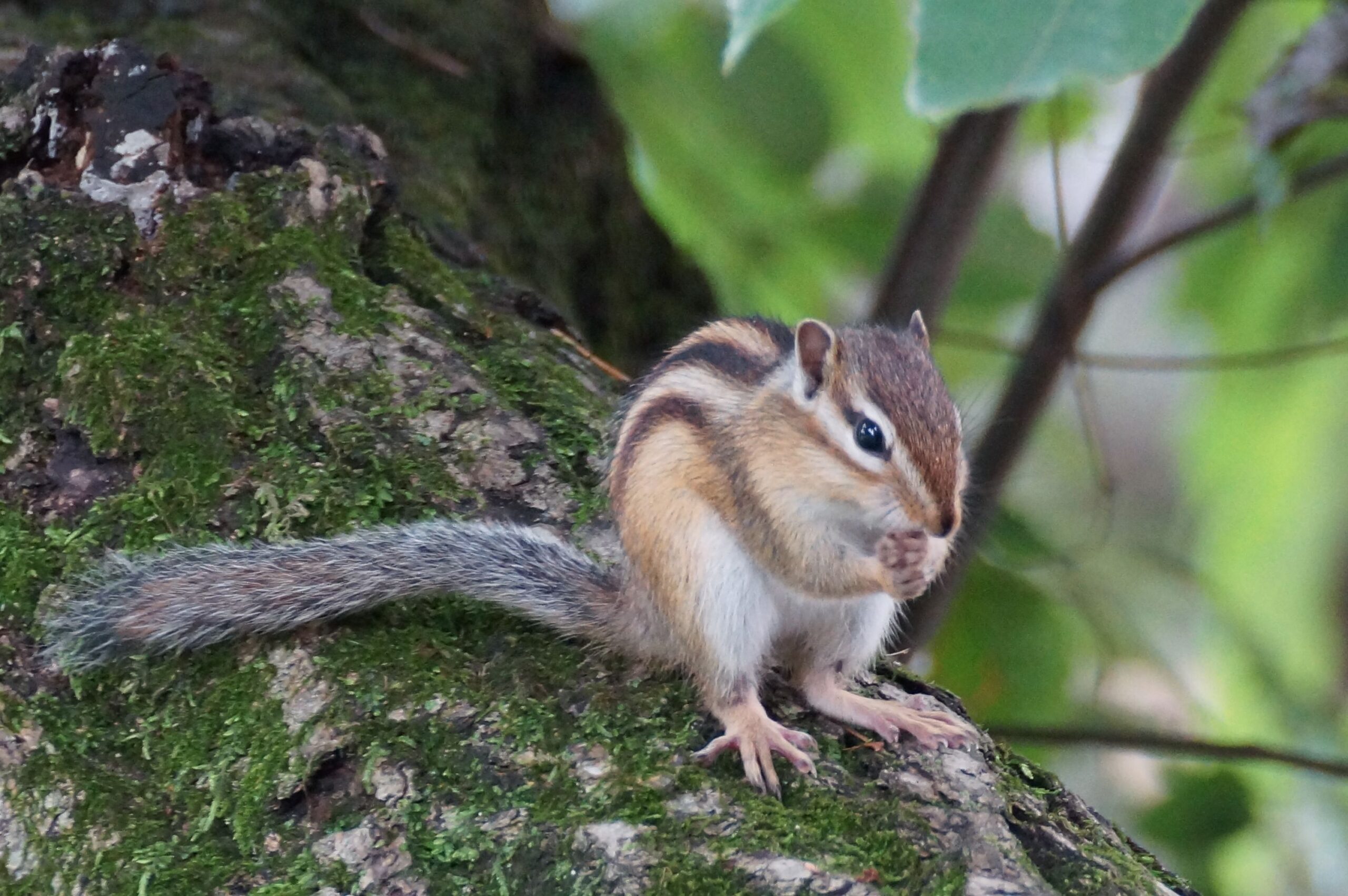
What kind of animal is a chipmunk? We will explain its characteristics, ecology, and habitat. Chipmunks, which are basically pets like dogs and cats, are small mammals, and many people start keeping them. I will explain the whole story, including what kind of personality a chipmunk has and what kind of ecology it is.



- What is a chipmunk? About basic status
- What are the roots and origins of the chipmunk?
- About habitat
- feature is? What kind of creature is it?
- What is your personality like?
- What is the ecology like?
- About Molting
- About Vocalizations
- Seasonal Activities
- Walking Speed
- About Baby Chipmunks
- Are chipmunks an endangered species?
- Can chipmunks be kept as pets?
- Zoos Housing Chipmunks (Japan & Worldwide)
- Introducing other animals
What is a chipmunk? About basic status
Chipmunks are mammals classified in the genus Chipmunk, in the order Mammalia, order Rodentia, family Squirrel. The scientific name is Tamias and the kanji is striped chestnut rat. The body length is 12-19cm and the weight is 70-120g. Tail length 8-11.5cm. A list of basic information is below.
| Japanese(和名) | シマリス |
| English(英名) | Chipmunk |
| scientific name(学名) | Tamias |
| classification(分類) | Mammalia、Rodent、 Sciuridae、Tamias 哺乳綱、ネズミ目、リス科、シマリス属 |
| IUCN Status(保全状況) | LEAST CONCERN |
| Length(体長) | 12-19cm |
| Weight(体重) | 70-120g |
What are the roots and origins of the chipmunk?
Chipmunks are a group of small squirrels within the Sciuridae family that have adapted to life on the ground. The chipmunk most familiar in Japan is primarily the Siberian chipmunk (Tamias sibiricus), which is widely distributed across northern Eurasia.
The Origins of Squirrels
The ancestors of the squirrel family (Sciuridae) are believed to have appeared approximately 40 million years ago (during the late Eocene epoch).
Early squirrels were characterized by:
Small size
High climbing ability
A diet of nuts and insects
A primarily arboreal (tree-dwelling) lifestyle
These ancestral squirrels evolved from a common ancestor that also gave rise to modern flying squirrels and tree squirrels.
The Emergence of the Chipmunk Lineage
The chipmunk group (genus Tamias) is thought to have appeared around 8 to 10 million years ago (during the Miocene epoch).
During this period:
Forests gave way to expanding grasslands
Small, ground-dwelling mammals increased in number
Animals that utilized seeds and underground burrows flourished
Consequently, some squirrels adapted by shifting from:
Tree-dwelling to ground-dwelling lifestyles
Solitary behavior to the use of burrows
Leaping movement to running along the ground
The Evolution of the Chipmunk’s Defining Feature: Stripes on the Back
The stripes on the back—the chipmunk’s trademark—play an important evolutionary role.
Roles:
① Camouflage
Blending in with:
Dappled sunlight filtering through trees
Fallen leaves
Shadows cast by grass
② Protection from Predators
Making it harder for natural enemies—such as:
Foxes
Hawks
Snakes
Weasels
—to spot them.
③ Recognition of Conspecifics
Potentially aiding in identification among closely related species.
The Global Spread of Chipmunks
The ancestors of the chipmunk are believed to have developed in North America. Evolutionary Timeline:
Approx. 40 million years ago
Origin of primitive squirrels
↓
Approx. 10 million years ago
Divergence into ground-dwelling squirrels
↓
Approx. 8 million years ago
Appearance of the genus Tamias (chipmunks)
↓
Diversification in North America
↓
Expansion into Eurasia via the Bering Land Bridge
↓
Present day
Distribution across North America and Asia
About classification
There are several subspecies of chipmunks, including: The following is a quote from Wikipedia.
- シマリス(シベリアシマリス)Tamias sibiricus
- チョウセンシマリス Tamias sibiricus barberi
- エゾシマリス Tamias sibiricus lineatus
- トウブシマリス Tamias striatus
- タカネシマリス Tamias alpinus
- キマツシマリス Tamias amoenus
- ブラーシマリス Tamias bulleri
- ハイアシシマリス Tamias canipes
- クビワシマリス Tamias cinereicollis
- デュランゴシマリス Tamias durangae
- ガケシマリス Tamias dorsalis
- メリアムシマリス Tamias merriami
- チビシマリス Tamias minimus
- ススイロシマリス Tamias obscures
- レッドウッドシマリス Tamias ochrogenys
- パルマーシマリス Tamias palmeri
- パナミントシマリス Tamias panamintinus
- ミミナガシマリス Tamias quadrimaculatus
- コロラドシマリス Tamias quadrivittatus
- アカオシマリス Tamias ruficaudus
- アカシマリス Tamias rufus
- シエラネバダシマリス Tamias senex
- クレーターレークシマリス Tamias siskiyou
- ソノマシマリス Tamias sonomae
- サンバーナディーノシマリス Tamias speciosus
- タウンゼンドシマリス Tamias townsendii
- ユインタシマリス Tamias umbrinus
About habitat
Most chipmunks live in North America, but many also live in Eurasia.
① Asian Chipmunk (Representative)
Habitat:
Japan (Hokkaido)
Russia (Siberia)
Northern China
Korean Peninsula
Environment:
Deciduous broadleaf forests and coniferous forests
Wild chipmunks found in Japan are only found in Hokkaido
② North American chipmunks
*Strictly speaking, this is a closely related species called a “chipmunk”
Habitat:
United States, Canada
Environment:
Forests, grasslands, mountains, suburban parks
A very large number of species
Habitat characteristics
Chipmunks prefer the following types of habitats:
Forests with many trees
Ground with a thick layer of fallen leaves
Environments with many hiding places
Soil that allows for burrowing
A highly terrestrial squirrel, it is more likely to be active on the ground than in the trees.
Nest Location
Dig complex burrows in the ground
Build sleeping areas
Food storage
Hibernate (or semi-hibernate)
feature is? What kind of creature is it?
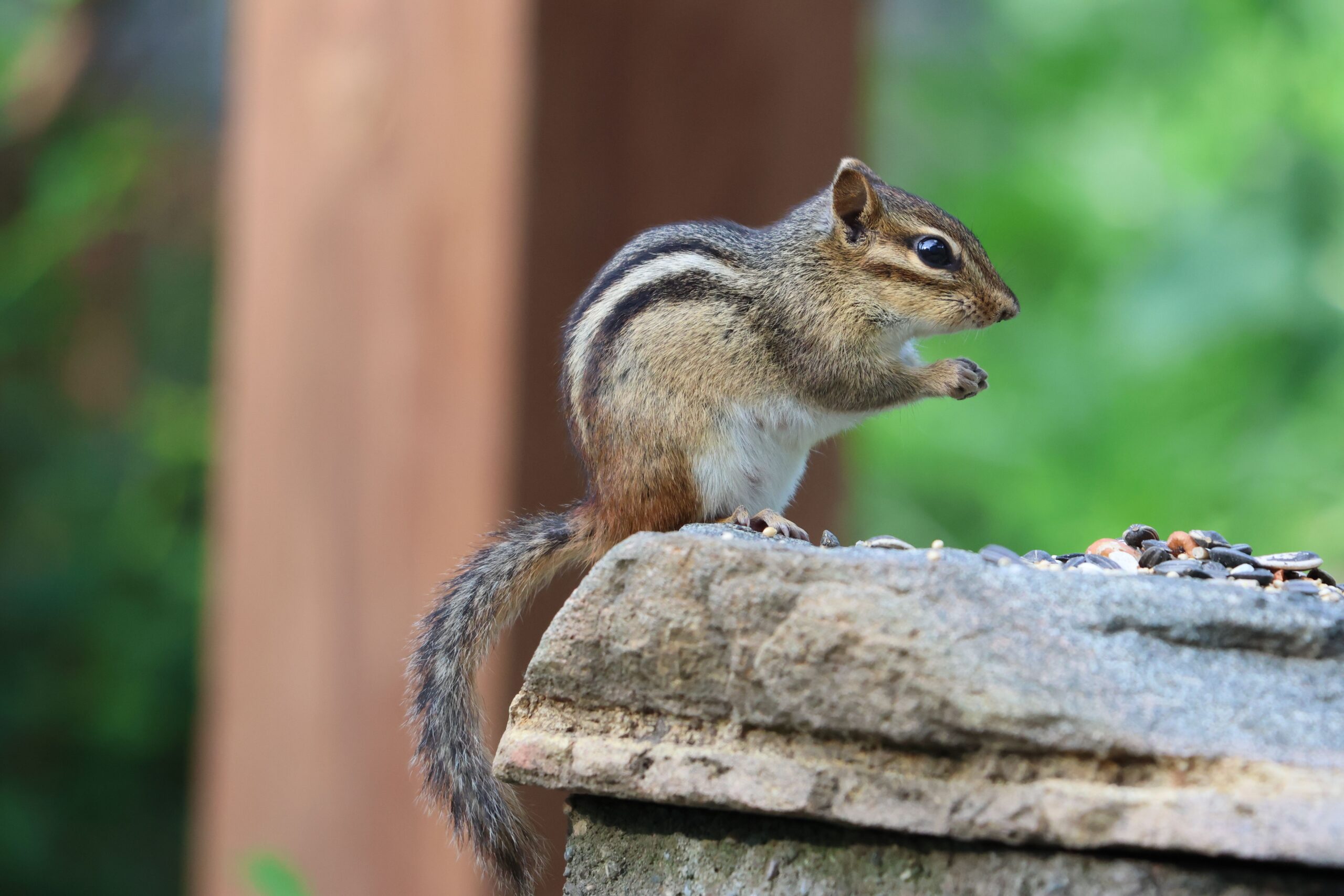
The chipmunk is a small squirrel with stripes on the back of its body and face, and has cheek pouches. They have cheek pouches on the inside of their cheeks, and are known to pack a lot of food, such as nuts, and carry them to their burrows. This squirrel is diurnal and prefers to live alone. They often build nests in tree cavities or underground, where they live. It is said that people sleep an average of 15 hours a day.
① Appearance
Body Length: Approximately 15cm
Tail: Approximately the same length as the body
Five distinct vertical stripes on the back
Large eyes and cheek pouches
The stripes are their most distinctive trademark.
② Movement/Behavior
Extremely agile
Jumping around on the ground
Often seen standing up and alert
Restless and always on guard.
③ Personality
Timid and cautious
Generally solitary
Territorial
Once accustomed to them, they will take food from a human’s hand,
but they “get used” to them rather than becoming tame.
More wild-like than hamsters.
④ Diet (Omnivorous)
Nuts, seeds, acorns
Fruit, mushrooms
Eats insects and earthworms
Surprisingly carnivorous despite their appearance.
⑤ Cheek Pouches and Food Storage
They stuff large amounts of food into their cheek pouches.
They carry it to their burrows and store it.
They have a strong instinct to prepare for winter.
They’re good at hoarding.
⑥ Lifestyle
Diurnal
Predominantly terrestrial, but also climbs trees.
In winter, they hibernate.
They semi-hibernate (depending on the species and region).
⑦ Distance from Humans
They avoid people in the wild.
Even pets often dislike being held.
They may bite if handled forcefully.
What is your personality like?
Chipmunks are very curious. Therefore, I try my hand at things that interest me. However, on the other hand, it is an animal with many external enemies, so it has a rough temper. They may bite, so be careful when handling them.
① They are very cautious.
They react quickly to noises and movements.
They don’t like unfamiliar people or environments.
They’re always standing and watching their surroundings.
They always seem to be thinking of an escape route.
② They generally act alone.
They don’t form groups.
They have a strong sense of territory.
They may fight with other chipmunks.
They prefer to be alone.
③ They are very curious.
They are curious about new things.
They sniff and nibble to check things out.
They often have a tendency to explore.
They’re timid, but they’re also curious.
④ Relationships with people.
They get used to people more than they do to become attached.
They often only manage to take food from your hand.
They don’t like being held or petted.
They tend to be more distant than hamsters.
⑤ Moody
Approach when in a good mood
Hide and bite when displeased
May become aggressive during the breeding season
⑥ Individual differences are significant
Gentle type
Nervous type
Fully curious type
Even chipmunks can be quite different.
What is the ecology like?
Chipmunks are omnivorous, eating mostly seeds, nuts, fruits, and buds. They often climb trees to get the nuts, and they also eat plants in farmlands and gardens, making them easy to become pests. Chipmunks breed twice a year, in early spring and early summer. They can give birth to one baby at a time. Lifespan is 5 to 10 years.
① Habitat/Range
Live primarily on the forest floor
They can climb trees, but their main activity is on the ground
Live within a small range centered around their burrow
“Ground squirrels.”
② Burrow Life
Dig complex burrows underground
The burrow contains separate sleeping areas, food storage areas, and toilets
Multiple entrances and exits
Very meticulous.
③ Daily Rhythm
Diurnal
Especially active in the morning and evening
Forage and watch during the day
Rest in their burrows at night
④ Food and Food Storage
Omnivorous
Nuts, seeds, acorns
Fruit, mushrooms
Insects, small animals
Stuff food in their cheek pouches and carry it to their burrow
They have a strong habit of storing large amounts of food
Preparing for winter is crucial.
⑤ Seasonal Changes
Autumn:
Focus on food storage
Winter:
Hibernation or semi-hibernation
(Not completely asleep)
Spring-Summer:
Active activity and breeding
⑥ Breeding
Breeding season: Spring (twice a year in some areas)
Birthing: 4-6 pups per litter
Only the mother raises them
They become independent at about 2 months
Are there any natural enemies?
Natural enemies include birds of prey, mustelids, foxes, and snakes.
About Molting
Chipmunks molt (shed and regrow their fur) about twice a year in response to seasonal changes. Siberian chipmunks, in particular—which inhabit cold regions—undergo significant changes in their coat to survive the winter.
🌸 Spring Molt (Winter Coat → Summer Coat)
Timing:
Around March to May
This coincides with the time they wake up from hibernation.
Changes:
Thick, dense winter fur is shed
Replaced by short, lightweight summer fur
Facilitates heat dissipation
As activity levels increase in the spring, the animal needs to be able to cope with the heat.
🍂 Autumn Molt (Summer Coat → Winter Coat)
Timing:
Around September to November
This occurs before hibernation.
Changes:
Fur grows longer
Undercoat increases
Heat retention improves
Winter coat density becomes particularly high in individuals living in cold regions like Hokkaido and Siberia.
Differences Between Summer and Winter Coats
| Feature | Summer Coat | Winter Coat |
|---|---|---|
| Fur Volume | Low | High |
| Length | Shorter | Longer |
| Density | Low | High |
| Role | Heat dissipation | Heat retention |
| Color | Somewhat vivid | Grayish / Paler tones |
About Vocalizations
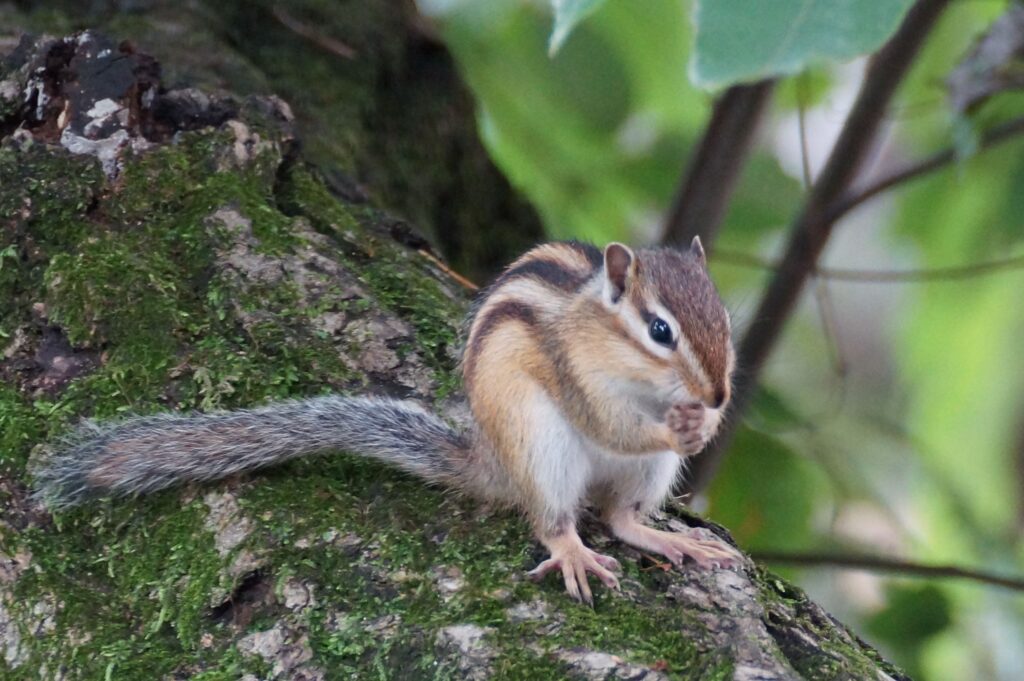
Chipmunks communicate with one another using a surprisingly wide variety of vocalizations, considering their small size.
However, like many other members of the squirrel family, they do not vocalize as frequently as dogs or birds. They primarily use their voices in situations such as:
Alerting others to danger
Signaling to companions
Interacting with potential mates
Communicating with their young
Common Vocalizations
“Chit-chit” or “Chit-chit-chit” (Alarm call)
This is the most frequently heard vocalization.
Characteristics:
High-pitched, short sounds
Rapid repetition
Vocalizing while remaining alert to the surroundings
Meaning:
“Danger is near”
“Something looks suspicious”
“I’ve spotted a predator”
It serves as a warning.
Alarm Calls for Predators
As small animals, chipmunks have many natural predators.
Main predators:
Birds of prey (hawks, eagles, etc.)
Foxes
Weasels
Snakes
Felines (cats)
When they sense danger, they:
Stand up
Scan their surroundings
Flick their tails
Emit high-pitched calls
“Chat” or “Kaka-kaka” Sounds
These sounds are made when the animal is excited or highly alert.
Uses:
Alerting nearby companions
Warning predators
Asserting territorial claims
These sounds are frequently heard around their burrows.
Courtship Vocalizations
They vocalize more frequently during the breeding season.
Males:
Use soft chirps
Call out while chasing
Make specific sounds when approaching
…to approach females.
These vocalizations tend to increase after they become active in the spring.
Vocalizations of Young Chipmunks
Young chipmunks produce:
High-pitched sounds
Soft chirps
Quivering or trembling sounds
Seasonal Activities
Chipmunks are animals whose lifestyles change significantly with the seasons. Their seasonal cycle centers primarily on hibernation, food hoarding, molting, and breeding.
🌸 Spring (Season of Activity Onset and Breeding)
Timing
Around March to May
This is the time when they wake up from hibernation.
Key Activities
① Waking from Hibernation
Emerging from underground burrows
Body temperature and metabolism returning to normal levels
Basking in the sun
Since their physical strength is depleted immediately after hibernation, they search for easily digestible foods such as:
Tree buds
New shoots
Seeds
Insects
② Breeding Activities
Spring is the breeding season.
Males:
Search for females
Vocalize (call out)
Pursue females
…engage in increased activity.
Females raise their young in the burrow.
③ Start of Molting
Transitioning from winter coat to summer coat.
Shedding fur
Body becomes lighter
Activity levels increase
☀️ Summer (Season of Peak Activity)
Timing
Around June to August
This is the most active period for chipmunks.
Key Activities
① Foraging
Food sources:
Nuts
Seeds
Fruits
Insects
Mushrooms
…and more.
They are most active in the morning and evening.
② Raising Young
The young born in spring grow up.
Young chipmunks:
Emerge from the burrow
Learn to forage
Begin living independently
③ Territorial Behavior
Chipmunks are essentially solitary animals.
Therefore, they:
Secure feeding grounds
Defend the area around their burrow
Maintain distance from other individuals
🍂 Autumn (Season of Preparation for Hibernation)
Timing
Around September to November
This is the most critical season for chipmunks.
① Food Hoarding
Their primary task is preparing for hibernation.
Items collected:
Acorns
Nuts
Seeds
Grains
…and more.
They stuff these into their cheek pouches and carry them to their burrows.
A single chipmunk hoards a large amount of food.
② Autumn Molting
Transitioning from summer coat to winter coat. Changes:
Increased fur density
Improved heat retention
Tail becomes bushy
③ Preparing the hibernation burrow
Inside the burrow:
Lining the floor with dead leaves
Arranging food supplies
Creating a sleeping area
…and so on.
❄️ Winter (Hibernation season)
Timing
From November to around March of the following year
Activity ceases for an extended period in cold regions.
State during hibernation
Changes:
Drop in body temperature
Lower heart rate
Reduced breathing
Decreased energy consumption
However, unlike the “light” hibernation seen in bears, chipmunks undergo true hibernation (deep dormancy).
Behavior during hibernation
They do not remain asleep continuously.
Occasionally:
They wake up
Eat stored food
Defecate
Walking Speed
Although chipmunks are small mammals, they are capable of moving quickly across the ground and possess excellent explosive speed over short distances.
However, unlike cheetahs or large mammals that can maintain high speeds for extended periods, chipmunks are built for short-distance movement—such as avoiding danger, foraging for food, or moving between their burrows.
🚶 Normal Walking
Approximately 1–3 km/h
During routine movement, they:
Walk along the ground
Check their surroundings
Forage for nuts and seeds
Move around the area near their burrow
…and generally move at a leisurely pace.
Because chipmunks are naturally wary, they frequently stop while walking to scan their surroundings.
🐾 Active Movement
Approximately 4–8 km/h
This speed is observed when they are foraging or traveling back and forth between their burrow and feeding grounds.
Characteristics:
Scampering with quick, short steps
Making rapid changes in direction
Coming to a sudden stop
…displaying the typical movements of a small animal.
🏃 Maximum Short-Distance Speed
Approximately 15–25 km/h
*Note: Exact top speeds vary depending on the species and measurement conditions.
Chipmunks are able to move very quickly over short distances thanks to:
Long legs
A flexible spine
Strong hind legs
Jumping Ability
In addition to running, chipmunks are adept at jumping.
Capabilities:
Jumping distances ranging from several tens of centimeters to over a meter
Quickly navigating over rocks and fallen logs
Instantly climbing trees
When sensing danger, they:
Move rapidly across the ground
Flee into trees or burrows
Freeze in the cover of shadows or objects
About Baby Chipmunks
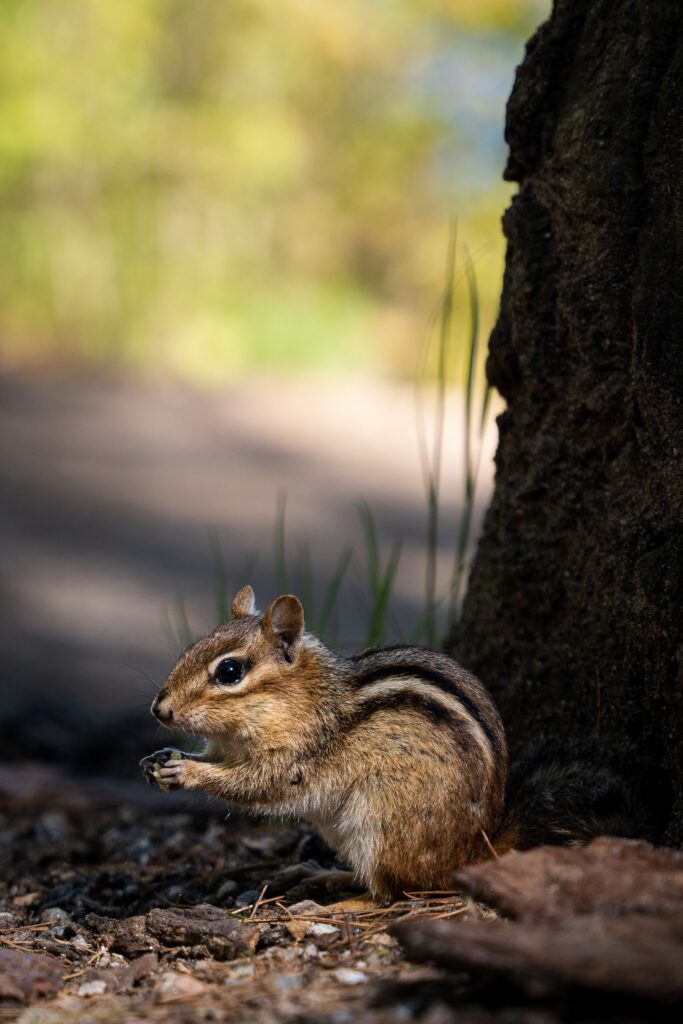
Baby chipmunks are very small, immature, and wild babies that grow rapidly in a short space of time.
Contrary to their cute appearance, they grow very quickly.
① Immediately after birth
Body length: Approximately 5 cm
Weight: A few grams
Hairless, eyes closed
Ears not yet open
Completely dependent on their mother
They are born very fragile.
② 2-3 weeks after birth
Hair begins to grow
Eyes and ears open
Movement gradually becomes more active
This is when they start to lose their “baby” look.
③ Around 1 month after birth
Stripes appear on their backs
Walking around in their burrow
Beginning to nibble on solid foods
They begin to look like chipmunks.
④ 5-6 weeks old
Begins to leave the burrow
Increased activity through running and climbing
Still under mother’s supervision
⑤ 7-8 weeks old (approximately 2 months old)
Almost independent
Leaves mother and begins to act independently
Searches for and digs burrows
Very early independence.
⑥ Relationship with mother
Mother alone cares for the young
Father not involved
Once independent, mother and young keep their distance
Wild and reserved.
⑦ Risk and survival rate
High mortality rate during the juvenile stage
Risks include predators, cold, and food shortages
This is why they grow so quickly
Are chipmunks an endangered species?
Are chipmunks an endangered species? That being said, that is not currently the case. The population is stable and distributed all over the world.
① Chipmunks Well Known in Japan and Asia
(Siberian Chipmunk, etc.)
IUCN Classification:
LC (Least Concern)
Currently, there is little risk of extinction.
Relatively stable in Hokkaido and the continent.
This is the “chipmunk” that most people associate with.
② North American Chipmunks
Many species are LC (Least Concern).
However, some species with limited habitats, including island and mountain species, have reported population declines.
③ Examples of High Risk of Extinction (Few).
Some locally distributed species are strongly affected by deforestation, urbanization, and climate change.
Some species are listed as Vulnerable (VU) and Endangered (EN).
Chipmunks do not necessarily mean safe.
Why are most not extinct?
Relatively high reproductive rate
Wide range of diet (omnivorous)
Highly adaptable to the environment
Many species can live near human settlements
Can chipmunks be kept as pets?
Can chipmunks be kept as pets? Chipmunks are available through common pet stores.
What is the selling price?
The market price is 7,000 yen to 10,000 yen. If the item is rare, the price can be several times higher. Some shops have different prices for males and females.
cage required
Chipmunks are semi-arboreal and require a lot of exercise, so they need a spacious cage. They will also escape from the house if there is no cage. Please also prepare flooring materials. We recommend using natural materials such as wood chips and grass.
Toilet/Toilet sand
Toilets and litter are also required. Deodorant sand made specifically for small animals is preferable.
birdhouse
A hive is a must. Chipmunks tend to live in nests. I need a safe haven. Chipmunks hibernate when it gets cold, so make sure you have warm gear as well.
pet food
Feed your squirrel or hamster food specifically for squirrels and hamsters. You will also need a water bottle. It is easy to use one that can be fixed to the cage.
perch
You will also need a perch. Chipmunks have a habit of chewing on wood to sharpen their ever-growing teeth. Commercially available gnawing wood is recommended.
Zoos Housing Chipmunks (Japan & Worldwide)
Chipmunks are small and relatively easy to care for, making them popular choices for educational exhibits in many zoos and animal facilities. Most chipmunks seen in Japan are Siberian chipmunks (Tamias sibiricus).
🇯🇵 Major Facilities in Japan Where You Can See Chipmunks
Hokkaido
Maruyama Zoo
A premier zoo in Hokkaido
Features extensive exhibits of animals from northern regions
Displays small animals—including chipmunks—in settings that reflect Hokkaido’s natural environment
In Hokkaido, wild chipmunks are a familiar sight and are often used in local nature education programs.
Kanto
Inokashira Park Zoo
Famous for its small animal exhibits
Features excellent facilities for observing squirrels
Allows visitors to observe their behavior up close
Particularly popular as a place to watch squirrel activity.
Ueno Zoo
One of Japan’s largest zoos
Has a long history of exhibiting small mammals
Houses a diverse range of animals, including squirrels
Tokai Region
Higashiyama Zoo and Botanical Gardens
Offers a wide variety of small animal exhibits
Well-suited for observing forest-dwelling animals
Kansai
Kyoto City Zoo
A zoo with a rich history
Features exhibits of small mammals
Chugoku & Shikoku
Tobe Zoo
Exhibits a diverse range of mammals
Includes facilities for observing small animals
🌍 Facilities Housing Chipmunks Worldwide
As chipmunks are widely distributed across the Northern Hemisphere, they are exhibited in zoos around the world.
🇺🇸 United States
San Diego Zoo
One of the world’s largest zoos
Features extensive exhibits of North American small mammals
Bronx Zoo
One of the largest zoos in North America
Renowned for wildlife conservation and educational exhibits
🇬🇧 United Kingdom
London Zoo
One of the oldest zoos in the world
Has a history of exhibiting small mammals
🇩🇪 Germany
Berlin Zoo
One of the world’s most historic zoos
Houses a diverse range of mammals
Introducing other animals
コメント