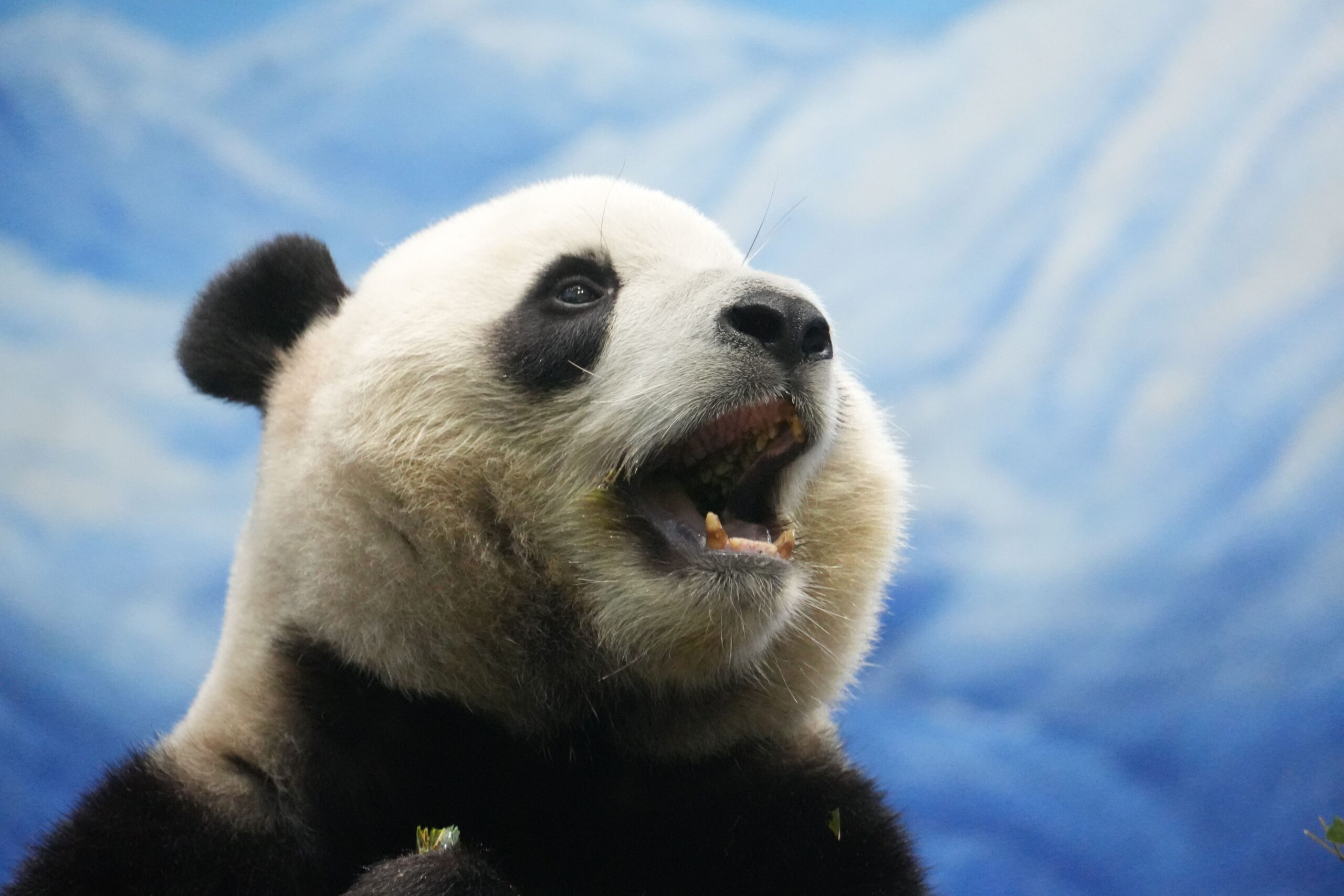
What kind of animal are giant pandas, which can be seen in various places in mountains and forests around the world? We will introduce and explain information about their characteristics, ecology, habitat, and individual protection. Pandas have been used as a diplomatic tool by China, but they are actually an endangered species and are in a very dangerous situation. We will summarize and explain what kind of pandas there are in this article.




- What is a panda (giant panda)? About basic status
- What are the roots and origins of the panda?
- About the giant panda’s habitat
- feature is? What kind of creature is it?
- What is your personality like?
- What is the ecology of giant pandas?
- Giant Panda Vocalizations
- Seasonal Activities
- Walking Speed
- About Giant Panda Cubs
- Are giant pandas an endangered species?
- Can giant pandas be bred?
- Zoos Housing Giant Pandas (Japan and Worldwide)
- Introducing other animals
What is a panda (giant panda)? About basic status
Pandas are animals that belong to the mammalian order Felina (carnivora). Pandas consist of red pandas and giant pandas. The scientific name is Ailuropoda melanoleuca. The body length is 120-150cm and the weight is 100kg. For red pandas, please refer to the article below.
| Japanese(和名) | ジャイアントパンダ、シロクログマ |
| English(英名) | Rhinoceros |
| scientific name(学名) | Ailuropoda melanoleuca |
| classification(分類) | Mammalia、 Carnivora、Ursidae、Ailuropoda 哺乳綱、ネコ目、クマ科、ジャイアントパンダ属 |
| IUCN Status(保全状況) | VULNERABLE |
| Length(体長) | 120 – 150cm |
| Weight(体重) | 100kg |
What are the roots and origins of the panda?
The giant panda belongs to the bear family (Ursidae). Although its appearance and diet are unique—leading to past debates regarding its classification—DNA analysis has confirmed that it is indeed a type of bear.
Origins
The panda’s ancestry traces back to early members of the bear family that lived approximately 20 to 25 million years ago.
Subsequently:
About 8 to 7 million years ago
It is believed that the panda lineage branched off from other bears.
About 7 to 8 million years ago
Ailurarctos, considered one of the earliest known pandas, appeared in southern China.
Although smaller than modern pandas, it already exhibited characteristics suited for eating bamboo.
Evolution as revealed by fossils
Key ancestors include the following:
Miomaci (approx. 20 million years ago)
Considered a very ancient ancestor leading to the panda lineage.
Ailurarctos (approx. 7–8 million years ago)
One of the earliest giant pandas.
Ailuropoda microta
Smaller than modern pandas.
Ailuropoda baconi
Lived during the Pleistocene epoch.
Its physique closely resembled that of the modern giant panda.
Modern Giant Panda (Ailuropoda melanoleuca)
It is believed to have evolved into its current form between 200,000 and 300,000 years ago.
Why did they start eating bamboo?
Their ancestors were omnivorous, much like other bears.
However, because bamboo was abundant in southwestern China, they evolved features such as:
A “pseudo-thumb” (a structure formed by an enlarged wrist bone) for efficiently grasping bamboo
Powerful jaws and molars
Large chewing muscles
On the other hand, their digestive system largely retains the structure typical of bears (which are adapted for a meat-based diet), so their efficiency in digesting bamboo is low. Consequently, they must consume over 10 to 20 kg of bamboo per day.
About classification
The Giant Panda genus consists of only one species, and there are no others. There used to be a Panda family, but it was abolished in recent years. It is an animal that always attracts attention, and there is a lot of new news about it. It is popular because it has unique white and black parts, and is good at climbing trees.
Giant Panda
- 界:動物界 (Animalia)
- 門:脊索動物門 (Chordata)
- 綱:哺乳綱 (Mammalia)
- 目:食肉目 (Carnivora)
- 科:クマ科 (Ursidae)
- 属:ジャイアントパンダ属 (Ailuropoda)
- 種:ジャイアントパンダ (Ailuropoda melanoleuca)
About the giant panda’s habitat
Giant pandas have no natural enemies. For that reason, they tend to live at their own pace. Humans are their biggest threat, and even in history, they are used as a diplomatic tool by the Beijing government. Their adorable black and white appearance is being used for political purposes.
- Geographical Distribution
Endemic Species: Giant pandas are endemic to China.
Main Habitat: Mountainous regions of Sichuan, Shaanxi, and Gansu provinces.
- Environmental Characteristics
Elevation: Mountainous areas between approximately 1,200 and 3,400 meters.
Climate: Humid temperate climate with cold winters and cool summers.
Vegetation: Areas with abundant bamboo forests.
Dense bamboo forests are necessary to ensure the availability of bamboo, their staple food.
Water Source: Prefers locations near rivers and springs.
- Habitat Conditions
Bamboo forest presence: The type and age of bamboo determines the type of food they eat.
Forest Protection: Areas less susceptible to logging and human activity.
Wide Range: They move within mountain forests in search of food.
- Habitat Status
Although their habitat has declined significantly in the past, their population is on the rise due to conservation efforts.
Currently classified as “Vulnerable” by the International Union for Conservation of Nature (IUCN).
feature is? What kind of creature is it?
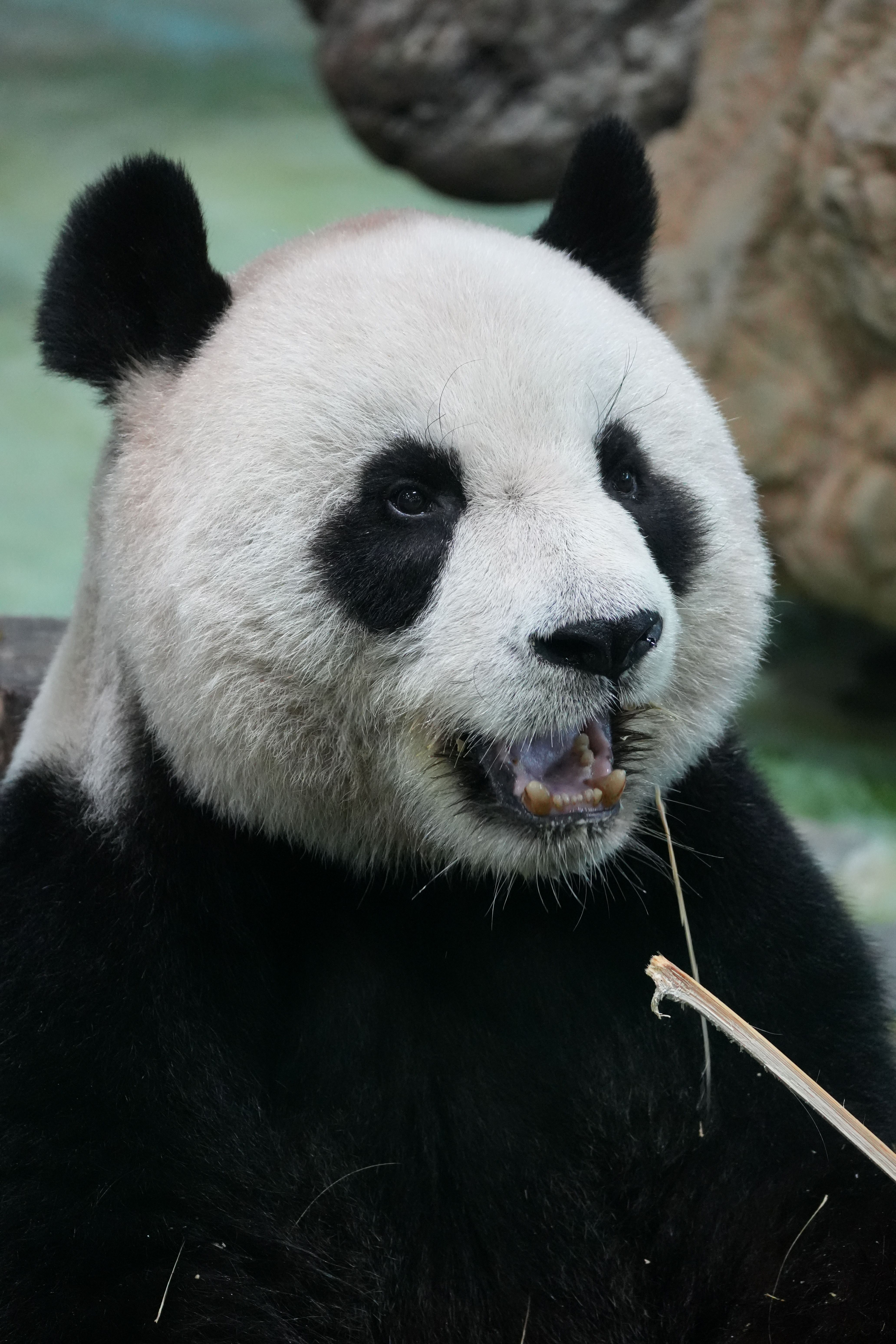
Giant pandas have a distinct black and white body color, short limbs with five fingers each, and longer claws on their front limbs than their hind limbs. Their fur is thick and bushy, and the fur also grows on the soles of their feet, which helps protect them from the cold. Pandas tend to be active both day and night, but they live in mountainous areas with bamboo forests. They generally live alone and do not form groups or families. Unlike other bears, they do not hibernate. Male pandas are stocky and have large hands, making them look stronger than their peers.
- Physical Characteristics
Size: Approximately 1.2-1.9m in length, 70-160kg in weight (males are larger)
Body Color: Characteristic black and white fur
White body, black ears, eye area, forelegs, and hind legs
Head: Round, with large eyes and a black eye mask-like pattern
Limbs: Thick and powerful, adapted for climbing trees and grasping bamboo
Special digits: “pseudothumbs” on the front paws, used to grasp bamboo
- Diet
Herbivore (bamboo-eating)
Mainly eats bamboo, but occasionally eats fruit and small animals
Eating Method: Grabs bamboo with the pseudothumbs and deftly munches it
Diet: Eats approximately 12-38kg of bamboo per day
- Behavior/Lifestyle
Activity: Diurnal, often crepuscular
Movement: Moves through forests in search of food
Rest: Rests in bamboo forests, sometimes in trees
Athletic Ability: Skilled at climbing trees and running short distances
- Sociality
Generally solitary
Males and females only come into contact during breeding season
Territorial
Marks territory with urine and feces
What is your personality like?
Giant pandas are gentle and do things at their own pace. They do not fight with other animals over food. Giant pandas are similar to bears in terms of their ecosystem, but they are also friendly and have many interesting behaviors, which is why they are so popular. Their numbers are increasing in some areas, making them easier to spot.
- Basic Personality
Gentle and Timid
Low aggressiveness, generally avoiding conflict
Highly cautious
Flees when sensing danger using their senses (smell, hearing, and sight)
- Sociality
Solitary behavior is the norm
Males and females only interact during breeding season
Territorial
Marks territory with urine and feces to prevent intrusion by other individuals
Mother-child relationship
Females closely protect their young, nursing them, and teaching them how to eat
- Relationship with Humans
Timid and not aggressive
At the zoo, they are calm once they become accustomed to their environment
Curious, but cautious and cautious when approached
What is the ecology of giant pandas?
Giant pandas generally eat fruits, insects, young bamboo and bamboo shoots, spending nearly half a day eating and eating about 10kg of bamboo. The breeding season and rutting season are from March to May. They will vocalize when they are in heat. The gestation period is 50 days, and females can give birth to 2-3 pups at a time. The baby’s eyes open at about 3 weeks old, and it grows with food and nutrition every day, becoming independent after about 1.5 to 2 years. The lifespan is said to be about 30 years.
- Living Environment
Habitat: Mountainous regions of Sichuan, Shaanxi, and Gansu provinces in China
Elevation: Mountain forests between 1,200 and 3,400 meters
Climate and Vegetation: Humid temperate climate, forests rich in bamboo groves
Water Source: Prefers to live near rivers and springs
- Diet
Herbivore (mainly bamboo)
Standing food is bamboo, but they also eat fruit and small animals
Eating Method: They grasp bamboo with their pseudothumbs and dexterously eat the leaves and stems
Diet: Eats 12 to 38 kg of bamboo per day
- Behavior
Activity Period: Primarily diurnal, active during crepuscular periods
Migration: Travels over a wide area in search of food
Rest: Rests in bamboo groves, sometimes resting in trees
Athletic Ability: Good at tree climbing and sprinting
- Sociality
Generally solitary
Males and females only come into contact during breeding season
Territoriality: Marks territory with urine and feces
- Breeding and Rearing
Breeding Season: Mainly spring (March-May)
Gestation Period: Approximately 5 months (may be longer due to delayed implantation)
Birth: Gives birth to a single pup (may give birth to twins, but usually raises one of them)
Rearing: The mother nurses and protects the pup, raising it for about a year
- Defense and Senses
Highly alert: Their eyesight is somewhat poor, but their sense of smell and hearing are well-developed
Escape Behavior: They flee when they sense danger
What is the giant panda’s natural enemy?
Giant pandas have no natural enemies. For that reason, they tend to live at their own pace. Humans are their biggest threat, and historically, they are being used as a diplomatic tool in “panda diplomacy” planned by the Beijing government. Their adorable black and white appearance is being used for political purposes. In Japan, they can be found at Ueno Zoo.
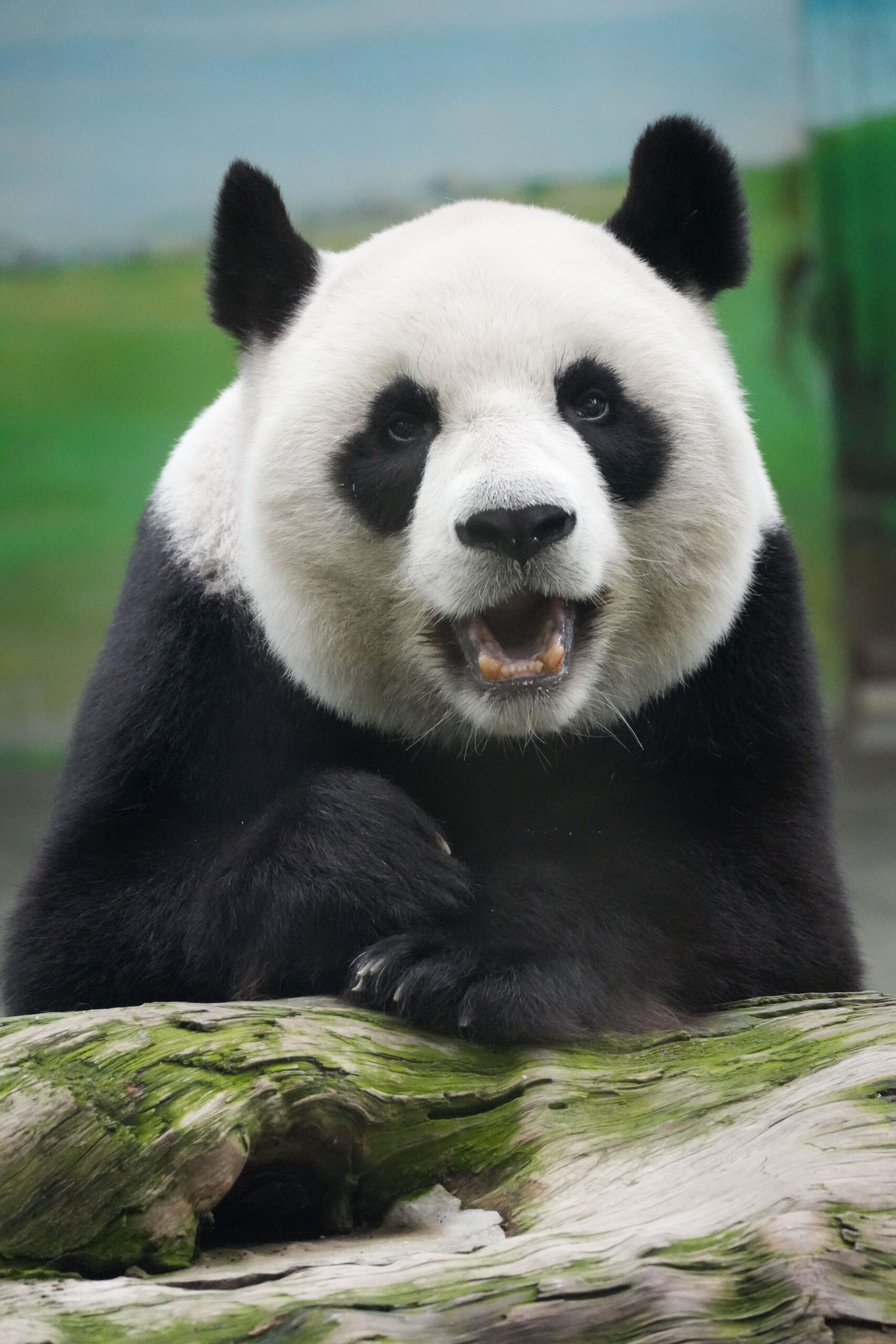
Giant Panda Vocalizations
Although giant pandas are often thought of as “quiet animals,” they are actually known to use more than ten different types of vocalizations.
🐑 “Maa” (Bleating)
A sound resembling the bleat of a sheep.
This is the most frequently heard vocalization.
They make this sound during the breeding season or to signal that they harbor no hostile intent toward another panda.
🐤 “Pee-pee” / “Kyu” (Peeping/Squeaking)
Sounds made by cubs (babies) to call their mothers.
They often make these sounds when hungry, cold, or anxious.
🐶 “Wan!” (Barking)
A short, dog-like bark.
They emit this sound when startled or on alert.
🐷 “Boo-boo” / “Fun-fun” (Snorting/Snuffling)
Sounds resembling snorting or sniffing.
These are heard when the panda is relaxed or checking the scents in its surroundings.
🦁 “Grrr…” (Growling)
A low growl.
They make this sound to threaten, express anger, or during territorial disputes.
😮💨 “Haff” / “Pushu” (Huffing/Snorting)
Sounds of a sharp exhalation of breath.
These serve as signs of alertness or mild intimidation.
Seasonal Activities
Giant pandas are bears that do not hibernate. They remain active throughout the year, adjusting their elevation and the types of bamboo they eat according to the season.
🌸 Spring (March–May)
Breeding season (primarily March–May).
Males expand their home range in search of females.
Vocalizations and scent-marking behaviors increase.
As bamboo shoots become abundant, they consume large amounts of highly nutritious young bamboo.
☀️ Summer (June–August)
They move to cooler, higher-altitude areas to escape the heat.
Activity is concentrated in the early morning and evening; during the day, they spend more time resting in the shade of trees or rocks.
They eat bamboo leaves and young stems while frequently replenishing their water intake.
🍂 Autumn (September–November)
A time to build up physical strength for the winter.
They spend long periods eating nutritious bamboo to maintain their body weight.
Young pandas may separate from their mothers and become independent.
❄️ Winter (December–February)
They do not hibernate and remain active even in the snow.
They often move to lower-altitude areas to avoid the cold.
They continue to forage as long as bamboo is available.
Daily Activity Pattern
Giant pandas are active both day and night, alternating between periods of activity and rest.
Generally, they follow this rhythm:
🌅 Early morning: Foraging
☀️ Daytime: Resting
🌆 Evening: Foraging
🌙 Nighttime: Foraging and moving
They spend nearly half the day (approximately 10–16 hours) eating bamboo.
Walking Speed
While giant pandas give the impression of being leisurely, they are bears capable of moving surprisingly fast when necessary.
Normal Walking Speed
They typically walk slowly at a speed of about 2–4 km/h.
They often move while foraging and rarely rush.
Running Speed
When sensing danger or chasing other individuals during the breeding season, they are believed to be capable of accelerating to a top speed of around 30–32 km/h.
Although this speed applies only to short distances, it is fast enough that a human sprinting at full speed could not easily catch up to them.
Tree Climbing
Pandas, especially the young ones, are adept at climbing trees.
They climb trees for purposes such as:
Protecting themselves from predators
Playing
Resting
Adults can also climb, but they do so less frequently due to their large size.
Distance Traveled
In the wild, they travel anywhere from a few hundred meters to several kilometers a day while foraging for food within bamboo forests.
Their home range varies depending on the season and the distribution of bamboo, and they may also move between different elevations.
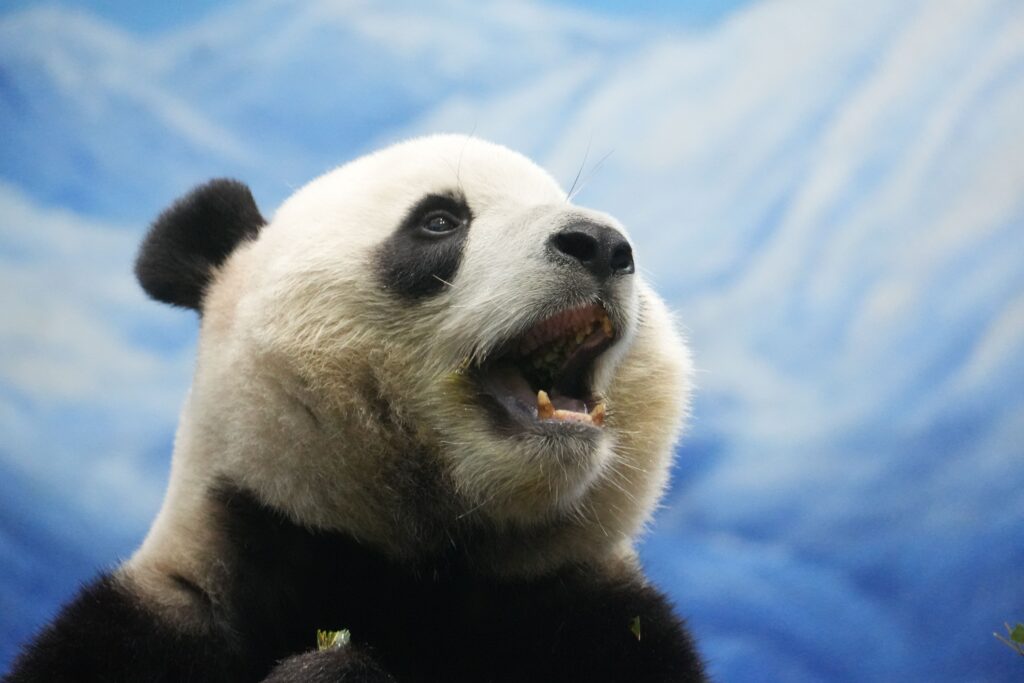
About Giant Panda Cubs
Let’s take a look at giant panda cubs.
- Birth
Gestation: Approximately 5 months (may be longer due to delayed implantation)
Size at birth: Very small, weighing approximately 100-200g and measuring approximately 15cm
Appearance: Almost hairless, pink, with closed eyes
- Growth
Lactation: Breastfeeding for approximately 8-9 months
Hair development: Black and white fur begins to grow around one month after birth
Eye opening: Opens eyes around 6-8 weeks after birth
Walking: Begins walking around 3 months after birth
Weaning: Begins eating bamboo around 8-9 months after birth, and becomes independent after about one year
- Relationship with mother
Protected in or near the mother’s arms, receiving nursing and temperature regulation
Learns how to forage by observing the mother’s behavior
Highly dependent on the mother, surviving without her is difficult
- Personality and Characteristics
Timid and very vulnerable
Dependent on their mother, they quickly hide from her if they sense danger
Exploring and playing habits gradually begin within the first few months of life
Are giant pandas an endangered species?
Giant pandas are designated as an endangered species and are listed in Appendix I of the Convention on International Trade in Endangered Species of Wild Fauna and Flora (CITES). The population of pandas continues to decline due to the following reasons. The estimated population is said to be only about 1,600. The amount of food given to them each day is large, and newborn pandas eat all the leaves and bamboo on the mountains and roads, so care must be taken.
Habitat loss and destruction
Environmental destruction is a problem in China. Furthermore, land development in East Asia has been rapid since the 2010s, and the number of places where pandas can live is rapidly decreasing due to agriculture, development, and deforestation. Many sanctuaries have been established and panda research and breeding programs are underway.
Can giant pandas be bred?
Giant pandas are an endangered species and are also listed in Appendix I of the Convention on International Trade in Endangered Species of Wild Fauna and Flora (CITES), so international trade is strictly restricted, making breeding extremely difficult. First, let’s take a look at them at Adventure World. Of course, they are also imported in large quantities domestically and can be viewed for various purposes and at various times of the year. They often appear at large events.
- Legal and Management Constraints
Giant pandas are listed as an endangered species (IUCN: Vulnerable), and international trade is restricted by the Convention on International Trade in Endangered Species of Wild Fauna and Flora (CITES).
Even in Japan, private captivity is prohibited by law.
Only organizations with special permission, such as zoos, conservation facilities, and research institutions, are permitted to keep them.
- Ecology and Difficulty of Breeding
Large and Powerful
Weights of 70-160 kg require sturdy fencing and safety management.
Unique Diet
Bamboo is their staple food, and it is necessary to ensure adequate bamboo for each species and age.
Large living space is required.
A mountain forest-like environment is required for mobility.
Breeding is difficult.
Management during the breeding season is extremely difficult, and wild breeding behavior must be replicated.
Vulnerable to stress.
Captivity and changes in the environment can lead to loss of appetite and illness.
- Examples of captivity
They are kept in zoos around the world, equipped with spacious grounds, bamboo groves, water areas, and exercise facilities.
In Japan, they are kept at Ueno Zoo and Shirahama Adventure World.
In captivity, they are thoroughly managed with regard to diet, health, safety, and breeding.
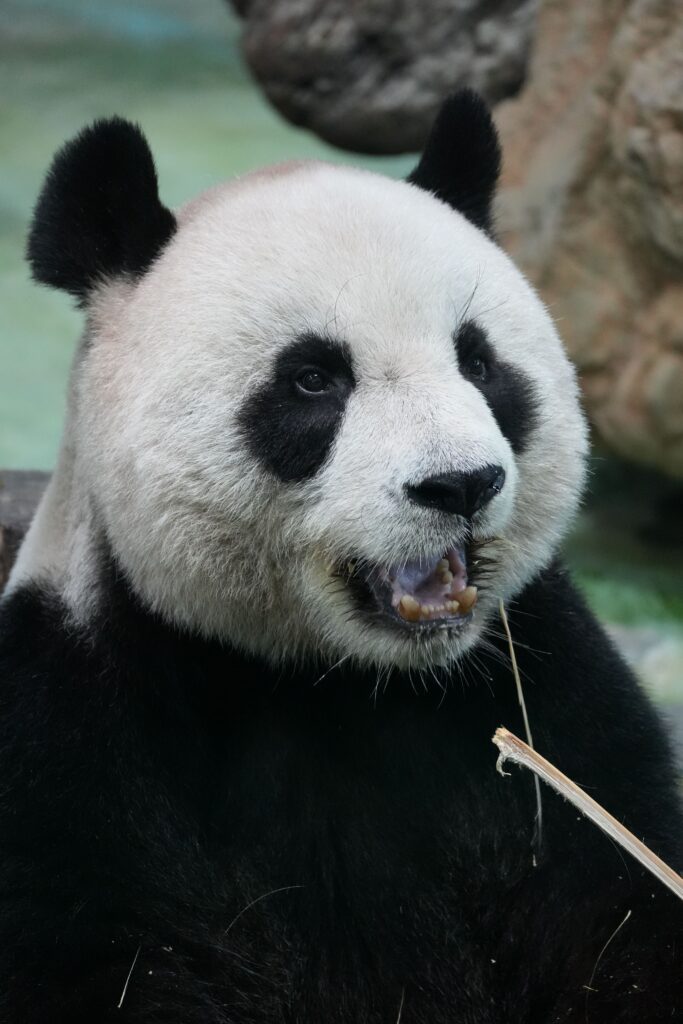
Zoos Housing Giant Pandas (Japan and Worldwide)
Giant pandas are kept in only a limited number of zoos around the world. Facilities outside China house them as part of cooperative conservation and research programs with China.
Japan
In Japan, there was only one facility where giant pandas could be seen.
Ueno Zoo
This zoo houses and exhibits giant pandas.
The twins, “Xiao Xiao” and “Lei Lei,” are popular attractions.
China
In China, giant pandas are housed in over 60 zoos and conservation facilities. Key facilities include:
Chengdu Research Base of Giant Panda Breeding
China Conservation and Research Center for the Giant Panda (Wolong Base)
Beijing Zoo
Chongqing Zoo
These facilities play a vital role in breeding, research, and reintroduction into the wild.
Introducing other animals
コメント