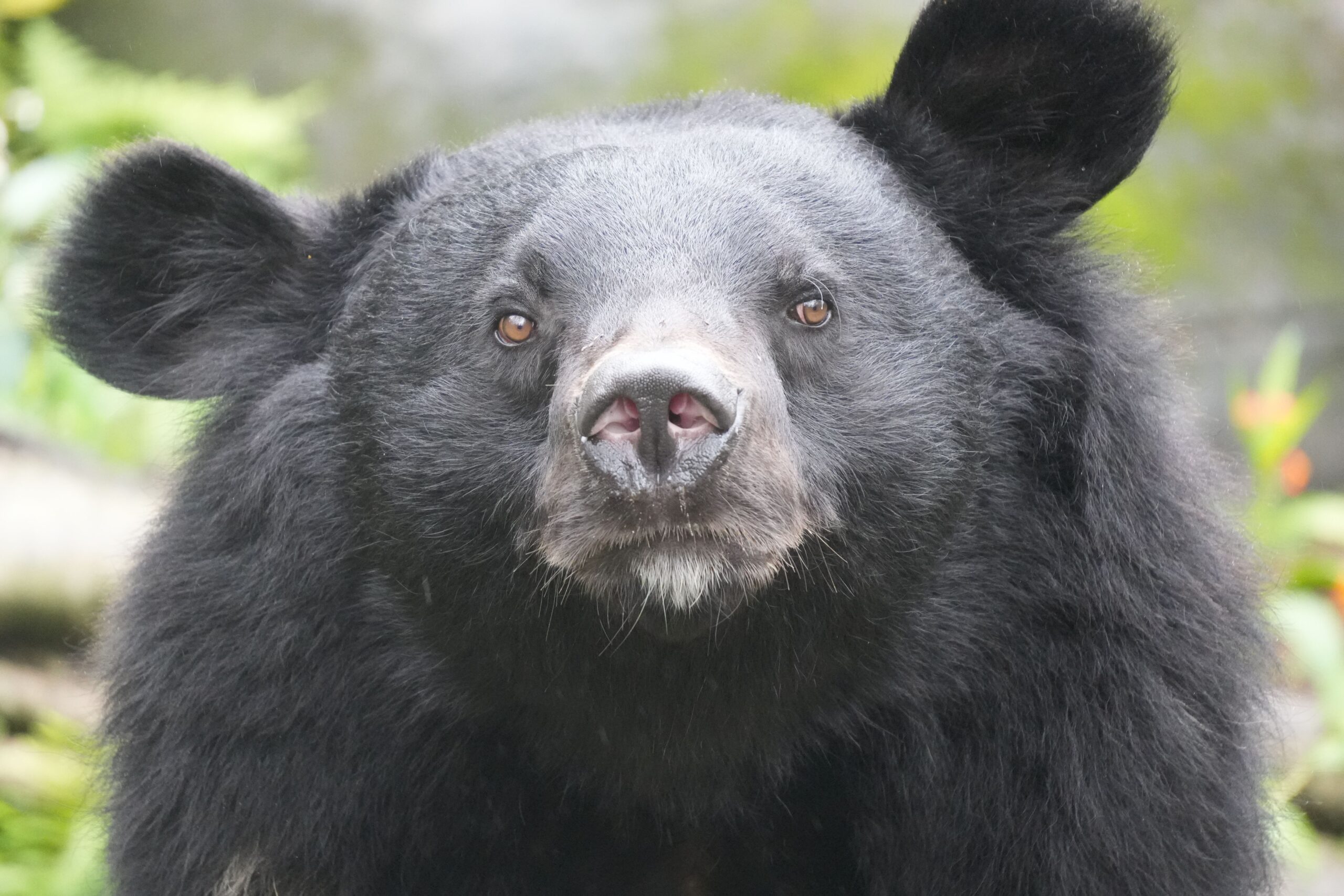
What kind of animal is a black bear? We will explain its characteristics, ecology, and habitat. Asiatic black bears are mainly found in Asia and have a very wide distribution, but their population is not stable and they are designated as an endangered species. I’ll give you an explanation.


- What is Asiatic black bear? About basic status
- What are the roots and origins of the Asian black bear?
- About habitat
- feature is? What kind of creature is it?
- What is your personality like?
- What is the ecology like?
- About Molting
- About Vocalizations
- Seasonal Activities
- Walking Speed
- About Asiatic Black Bear Cubs
- Is the Asian black bear an endangered species?
- Can Asiatic black bears be kept as pets?
- Zoos Housing the Species (Japan & Worldwide)
- Introducing other animals
What is Asiatic black bear? About basic status
Asiatic black bears are carnivores classified in the class Mammalia, carnivora, family Bear, genus Bear. The scientific name is Ursus thibetanus and the kanji is tsukiwakuma. Also known as the Asian black bear or the Himalayan bear. A list of basic information is below. The body length is 120-180cm and the weight is 50-120kg. Tail length 6 – 10.5cm.
| Japanese(和名) | ツキノワグマ |
| English(英名) | Asian black bear/Asiatic black bear/Himalayan black bear/Moon bear |
| scientific name(学名) | Ursus thibetanus |
| classification(分類) | Mammalia、Carnivora、 Ursidae、Ursus 哺乳綱、食肉目、クマ科、クマ属 |
| IUCN Status(保全状況) | VULNERABLE |
| Length(体長) | 120 – 180cm |
| Weight(体重) | 50 – 120kg |
What are the roots and origins of the Asian black bear?
The roots of the Asian black bear (scientific name: Ursus thibetanus) lie in an ancient lineage of the bear family (Ursidae) dating back more than 5 million years.
The modern Asian black bear evolved in Eurasia, developing primarily across the Himalayas and East Asia.
Ancestors: Ancient bears from about 5 million years ago
The general evolutionary trajectory of bears is as follows:
Ancient Carnivora (Miacids)
↓
Ancestors of the bear family (approx. 20 million years ago)
↓
Ancient bear genera (e.g., Ursavus)
↓
Modern bear genus (Ursus)
↓
Asian black bear (Ursus thibetanus)
The bear family belongs to a group with ancestors closely related to dogs; they diverged from a common ancestor shared with the dog family (Canidae).
Direct ancestors of the Asian black bear
The immediate ancestors of the Asian black bear belong to an ancient Ursus lineage that existed between 5 million and 3 million years ago.
Evolutionary path:
Ancient Ursus species in Europe and Asia
↓
Asian black bear lineage
↓
Asian black bear (Ursus thibetanus)
The Asian black bear is considered a species that retains relatively primitive (ancestral) characteristics among modern bears.
Where did they originate?
Their origins are believed to be centered in:
The Himalayan region
Southern China
East Asia
Eastern Central Asia
Subsequently, they expanded their range alongside the spread of forest environments.
Current distribution:
Japan (Honshu and parts of Shikoku)
China
Korean Peninsula
Russian Far East
Himalayan region
Northern Southeast Asia
Why do they have a white “moon-ring” on their chest?
The white chest marking—the Asian black bear’s most distinctive feature—
may have evolved as a means of individual identification or as a visual signal to other bears. However, the precise reason for this evolutionary trait has not been fully elucidated.
The shape varies significantly among individuals,
including crescent-moon shapes,
V-shapes,
necklace-like patterns,
and small spots.
Origins of the Japanese Black Bear
The Japanese black bear belongs to a lineage that migrated from the Asian mainland.
It is believed that
during the Ice Age,
they migrated from the direction of China and the Korean Peninsula
to the Japanese archipelago
several hundred thousand years ago.
Genetic differences emerged by region within Japan,
resulting in distinct populations such as
the Honshu lineage,
the Kii Peninsula lineage,
and the Shikoku lineage.
About classification
Asiatic black bears are classified into the following subspecies.
- Ursus thibetanus thibetanus – チベットツキノワグマ
- Ursus thibetanus formosanus – タイワンツキノワグマ
- Ursus thibetanus gedrosianus – バロチスタンツキノワグマ
- Ursus thibetanus japonicus – ニホンツキノワグマ
- Ursus thibetanus laniger – ヒマラヤツキノワグマ
- Ursus thibetanus mupinensis – シセンツキノワグマ
- Ursus thibetanus ussuricus – ウスリーツキノワグマ
About habitat
Its habitat is mainly Asia. It is distributed in India, Japan, China, Taiwan, and even Pakistan and Iran. Individual Asian black bears and brown bears often appear in the high mountains and forests where humans are active. Please note that the number of countries where hunting is prohibited is increasing.
① Global Distribution
Asiatic black bears (Ursus ursus) are found throughout Asia.
Japan
China
Korean Peninsula
Russian Far East
Himalayan Region (India, Nepal, etc.)
Northern Southeast Asia
② Habitat in Japan
● Honshu and Shikoku
Mountain forests
Beech and oak forests
May also be found in satoyama (village forests)
● Hokkaido
❌ Not found
(Hokkaido is home to brown bears)
Japan’s Asiatic black bears are found only in Honshu and Shikoku.
③ Preferred Environment
Deciduous broadleaf forests
A mixture of coniferous and broadleaf forests
Areas near streams and rivers
Forests rich in food
Prefers forests rich in acorns and nuts, in particular.
④ Altitude
Wide range from low to high mountains
Seasonal migration
Spring: Lowlands
Summer: Mid-mountain
Autumn: Fruitful areas
They migrate in search of food.
⑤ Relationship with human settlements
In recent years, due to
Deforestation
Depopulation
Food shortages
they are more likely to appear in villages.
They may even come close to fields and settlements.
They are not “an animal exclusive to the mountains.”
feature is? What kind of creature is it?
Asiatic black bears have black fur all over their bodies. Its most distinctive feature is the crescent-shaped or V-shaped white markings on its chest. Their eyes and ears are small, and they live mainly in forests, often moving to lower elevations during the winter. They also have a strong tendency to hibernate during the winter. They have no exclusive territory and can move around freely.
① Appearance
Body color: Black to dark brown
White crescent-shaped pattern (moon ring) on chest
Body length: Approximately 120-190 cm
Weight: 50-150 kg (males are larger)
The pattern is the origin of its name.
② Physical abilities
Excellent at climbing trees
Fast runner (around 40 km/h)
Can also swim
Strong front legs for dexterity
Better motor skills than they appear.
③ High intelligence
Good memory
Can remember where food is
Ability to learn danger
Ability to judge situations.
④ Diet (omnivorous)
Mainly plants
Nuts, acorns
Fruit, wild vegetables
Also eats animal matter
Insects, fish
Small animals, carrion
Diet changes with the seasons.
⑤ Personality Traits
Generally timid and cautious
Avoids conflict
Very dangerous when cornered
Not an animal that actively attacks humans.
What is your personality like?
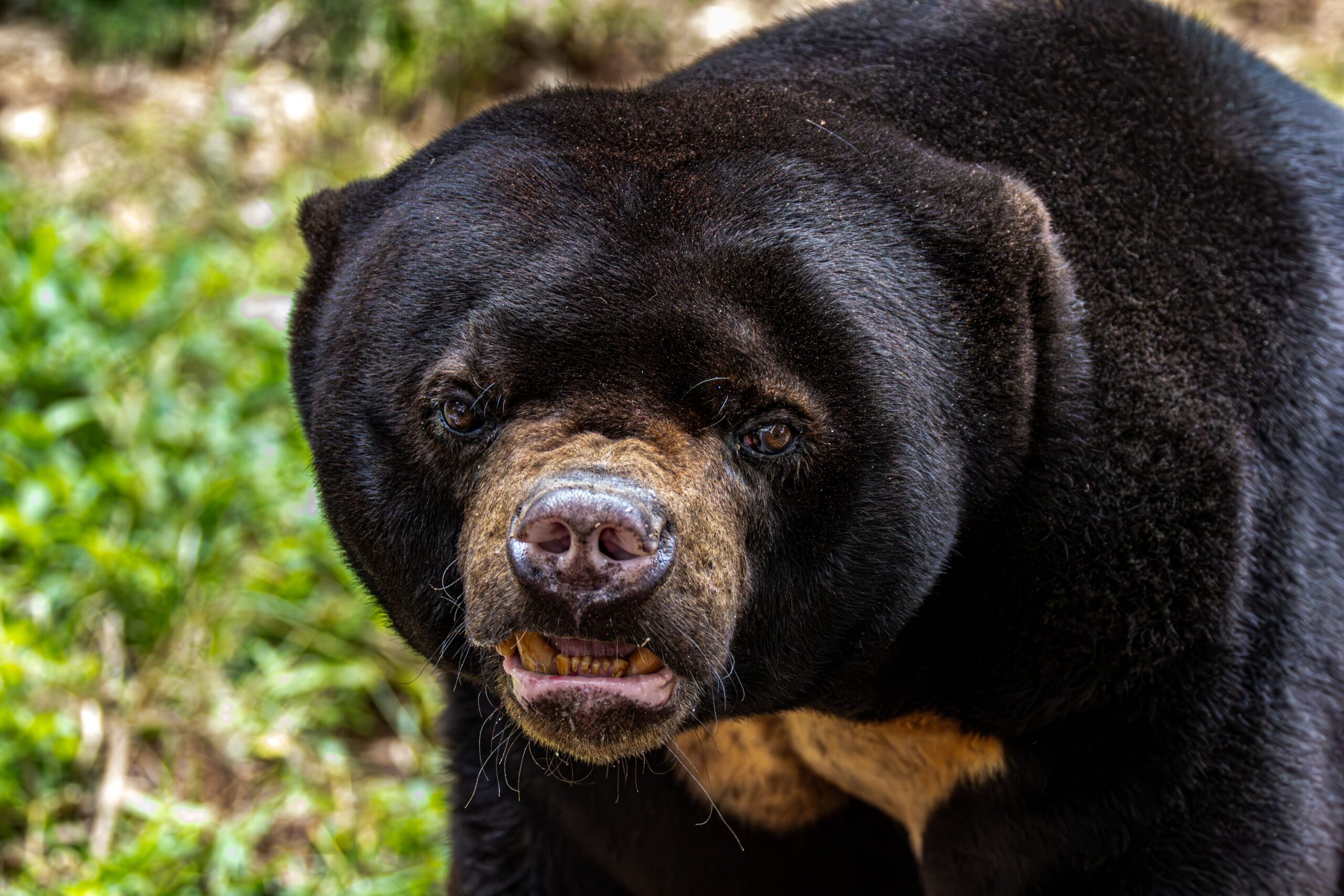
Asiatic black bears have a fear of humans and are very timid and cautious. Therefore, they do not often attack humans.
① Basically timid and cautious.
Dislikes human presence.
Sensitive to sounds and smells.
Naturally avoids humans.
In the wild, “escape” is their basic strategy.
② Solitary and self-paced.
Does not form groups.
Has its own home range.
Keeps distance from other individuals.
Quiet, solitary creatures.
③ Curious.
Shows interest in new smells and foods.
However, check carefully.
May also be attracted to crops in human settlements.
A combination of timidity and curiosity.
④ High learning ability.
Learns “where there is food.”
Remembers dangerous experiences.
Becomes less wary once accustomed to humans.
This leads to village visits.
⑤ Conditions that lead to aggressive behavior.
When startled by a sudden encounter.
A mother bear protecting her cubs.
When there is no escape route.
When food is in danger.
Attacks as a defensive reaction.
⑥ There are large individual and situational differences.
Gentle individuals
Nervous individuals
Dangerously tame individuals
Personality changes depending on the environment.
What is the ecology like?
Asiatic black bears subsist on the fruits and buds of plants such as acorns and beech, small vertebrates, insects, invertebrates, and animal carcasses. The mode of reproduction is viviparous. The population breeds from June to October. They give birth to two young, and the lactation period is about 3 months. Lifespan is about 20 years.
① Activity Period
Mainly diurnal to crepuscular
Active in the morning and evening
May become more nocturnal in populated areas
Flexible in changing their daily routine to avoid humans.
② Behavior
Generally solitary
Males and females are largely separate except during breeding season
Home ranges are wide, sometimes spanning several tens of kilometers
③ Diet (Varies significantly with the seasons)
Omnivorous, but primarily plant-based
Spring: New shoots, wild vegetables, and grasses
Summer: Fruits, insects, ants, and wasp nests
Autumn: Acorns and chestnuts (most important)
When scarce: Fish, small animals, carrion, and crops
Having a sufficient diet in autumn can mean the difference between life and death.
④ Tree Climbing and Foraging
Excellent tree climbing skills
Eats fruit from trees
May break off branches and drop them to the ground (bear dens)
Leaves traces in the forest
⑤ Hibernation
November to March
Hibernates in dens, tree holes, or rock caves
Does not sleep completely
Birth occurs during hibernation (females)
Raising begins during hibernation.
⑥ Breeding
Mating Season: Early Summer
Delayed Implantation
(Under poor conditions, pregnancy is not possible)
Birth: 1-2 cubs (rarely 3)
Cubs remain in the den until spring
⑦ Lifespan
Wild: Approximately 20-25 years
Captive: Can live nearly 30 years
Are there any natural enemies?
Asiatic black bears are one of the largest mammals, so they have no natural enemies.
About Molting
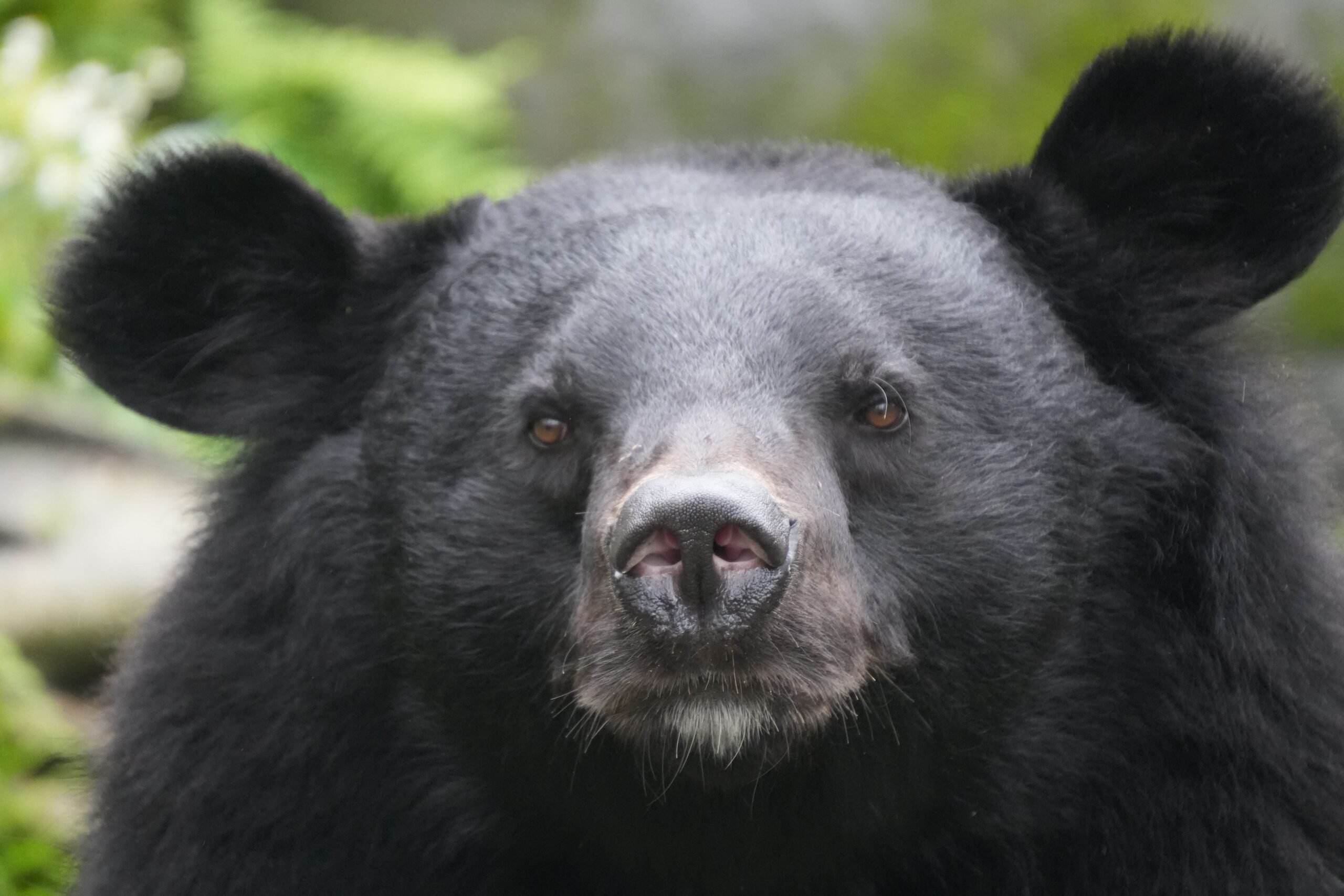
Molting (the shedding and replacement of fur) is a crucial physiological process for the Asiatic black bear (Ursus thibetanus) to adapt to seasonal changes.
For Asiatic black bears in Japan, the major cycles involve transitioning from winter fur to summer fur (in spring) and from summer fur to winter fur (in autumn).
🌱 Spring Molting (Winter Fur → Summer Fur)
Timing: Around April to June
After waking from hibernation, Asiatic black bears shed their thick winter coats.
Changes
Thick undercoat is shed
Coat transitions to summer fur, which facilitates easier body temperature regulation
Fur appearance becomes temporarily unkempt
In the mountains during spring, bears are sometimes seen rubbing their bodies against trees or pressing their backs against rocks and tree bark.
They do this to:
Shed old fur
Relieve itching
Groom their new fur
☀️ Summer Coat (Summer Fur)
Timing: Around June to September
Compared to winter fur, summer fur is:
Shorter
Less dense
Better at dissipating heat
Because Asiatic black bears have black fur, they absorb heat easily, making heat management important during the summer.
To regulate their body temperature, they utilize:
Areas along mountain streams
Cool forests
High-altitude locations
🍂 Autumn Molting (Summer Fur → Winter Fur)
Timing: Around September to November
They grow a thick coat again in preparation for hibernation.
Changes
Long guard hairs (outer coat) develop
Dense undercoat increases
Insulation performance improves
Winter fur traps a large amount of air, creating an “insulation layer” around the body.
❄️ Role of Fur During Hibernation
Asiatic black bears do not undergo true hibernation but rather winter dormancy (a state of torpor similar to hibernation).
During the winter:
Food intake drops significantly
Body temperature lowers slightly
Heart rate decreases Their thick winter fur helps to:
prevent a drop in body temperature,
conserve energy, and
keep the cubs warm.
About Vocalizations
Contrary to their appearance, the vocalizations of the Asiatic black bear (Ursus thibetanus) are remarkably diverse.
Although they are generally quiet animals due to their solitary nature, they employ a variety of sounds for purposes such as communication between mother and cub, signaling alarm, intimidation, and mating behavior.
🐻 1. Low-pitched sounds: “Kuu” or “Kururu” (Reassurance/Contact)
These are sounds made when communicating with other bears or their cubs.
Characteristics:
Low and soft
Sounds produced deep in the throat
Short, repeated sounds
Mainly used for:
Mother-cub recognition
Close-range communication
Signaling a sense of security
🐾 2. Cub vocalizations
Cubs vocalize frequently to maintain contact with their mothers.
Typical sounds:
“Myaa”
“Pii”
“Koon”
…and other high-pitched sounds.
Purpose:
Calling the mother
Signaling anxiety
Communicating hunger
Cubs rely more heavily on vocalization during the period immediately after birth.
⚠️ 3. Intimidation sounds: “Huu” or “Gaa”
When sensing danger, they use low-pitched sounds to intimidate.
Examples:
Forcible exhalation through the nose (snorting)
Growling
Clacking teeth
Vocalizing with the mouth open
Observed particularly:
During sudden close-range encounters
When protecting cubs
When guarding food
🐻 4. Pre-attack growl
When on high alert, they emit a low growl:
“Grrrrr…”
Simultaneously, they may:
Make their bodies appear larger
Strike the ground with their forepaws
Snort
…and perform other such actions.
This serves as a warning: “Do not come any closer.”
🍂 5. Mating season vocalizations
The mating season for Asiatic black bears is primarily in early summer (around May to July).
When males and females approach one another, they use:
Low-pitched calls
Snorting sounds
Soft growls
…and other similar sounds. However, it is not an animal that calls out loudly to others, as deer do.
Seasonal Activities
The annual activity patterns of the Asiatic black bear (Ursus thibetanus) are heavily influenced by seasonal changes in food availability and the cycle of winter dormancy (hibernation).
For Asiatic black bears in Japan, the cycle generally follows this pattern: Spring = Waking up; Summer = Growth; Autumn = Preparing for winter; Winter = Dormancy.
🌱 Spring (March–May): Waking from Winter Dormancy
Main Activities
Emerging from the winter den
Beginning to roam in search of food
Recovering physical strength
Since they have eaten very little during the winter, replenishing nutrients is the top priority in spring.
Diet
New grass shoots
Young leaves
Wild edible plants (sansai)
Tree buds
Insects
They consume a large amount of easily digestible plant matter, especially in early spring.
🐻 Characteristic Spring Behaviors
- Rapid increase in activity
Although their physical strength is depleted immediately after winter dormancy, they travel over wide areas in search of food.
- Mother and cub activity begins
Cubs born during the winter dormancy period emerge from the den with their mothers in the spring.
The cubs learn the following from their mothers:
Tree-climbing practice
Foraging techniques
Danger avoidance
☀️ Summer (June–August): The Season of Most Stable Activity
Main Activities
Moving through the forest
Foraging on abundant plant life
Growing larger
Food is relatively plentiful in the summer.
Diet
Grasses
Leaves
Fruits
Insects
Beehives
Small animals
While Asiatic black bears are omnivores, those in Japan tend to have a diet with a high proportion of plant matter.
🌳 Summer Characteristics
Active tree climbing
Asiatic black bears are particularly skilled at climbing trees compared to other bear species.
Purposes:
Eating fruit
Searching for honey or insects
Using trees as resting spots
Use of water sources
During hot periods, they utilize:
Mountain streams
Riversides
Damp forests
🍂 Autumn (September–November): The Pre-Hibernation Feeding Period
Autumn is the most critical season for the Asiatic black bear. Objective:
To store up fat in order to survive the winter.
Main food sources:
Nuts from the beech family (Fagaceae)
Particularly important:
Beech nuts
Japanese oak (Mizunara) acorns
Konara oak acorns
These are high in calories and help build up fat reserves before hibernation.
Others:
Wild grapes
Hardy kiwi (Sarunashi)
Various nuts
Insects
Etc.
Behavioral changes in autumn:
Expanded home range
They travel long distances in search of food.
Approaching human settlements
In years when mountain nuts are scarce,
persimmons,
chestnuts,
and agricultural crops
may draw them closer to areas where humans live.
❄️ Winter (December–March): The season of winter dormancy
Asiatic black bears enter a state of winter dormancy in cold regions.
*Strictly speaking, this differs from the true hibernation seen in animals like squirrels; it is a state of dormancy resembling hibernation, but with only a slight drop in body temperature.
Changes during winter dormancy:
Feeding almost ceases
Heart rate drops
Activity levels decrease
Fat reserves are consumed
Winter dormancy sites:
Preferred locations:
Hollows at the base of trees
Rock cavities
Burrows in the ground
Underneath fallen logs
Etc.
Safety and heat retention are key factors.
Walking Speed
Despite their stocky appearance, the Asiatic black bear (Ursus thibetanus) possesses exceptional physical agility.
While they usually walk at a leisurely pace, they can move much faster than humans when the situation demands it.
🐻 Normal Walking Speed
During routine movement, their speed is:
Approximately 3–5 km/h
Their objectives include:
Foraging for food
Patrolling the forest
Checking for scents
They walk quietly when there is no need to rush.
Asiatic black bears are plantigrade animals—meaning they place the entire sole of the foot on the ground—resulting in a gait similar to that of humans.
🏃 Running Speed
When sensing danger or pursuing prey, they can reach speeds of:
Up to approximately 40–50 km/h
Over short distances, they are faster than:
Top human sprinters
Large dogs
🪵 Mobility in the Forest
The Asiatic black bear’s strengths extend beyond just speed on flat ground.
🌳 Tree-Climbing Ability
They are exceptionally skilled climbers, even among bear species.
Reasons for climbing:
Eating fruit
Searching for beehives
Avoiding danger
Resting
⛰ Navigating Slopes
Asiatic black bears in mountainous areas move with stability across:
Steep slopes
Ravines
Rocky terrain
This is due to their powerful limbs:
Forelimbs:
Digging power
Climbing power
Hind limbs:
Strong propulsive force
Power for ascending slopes
About Asiatic Black Bear Cubs
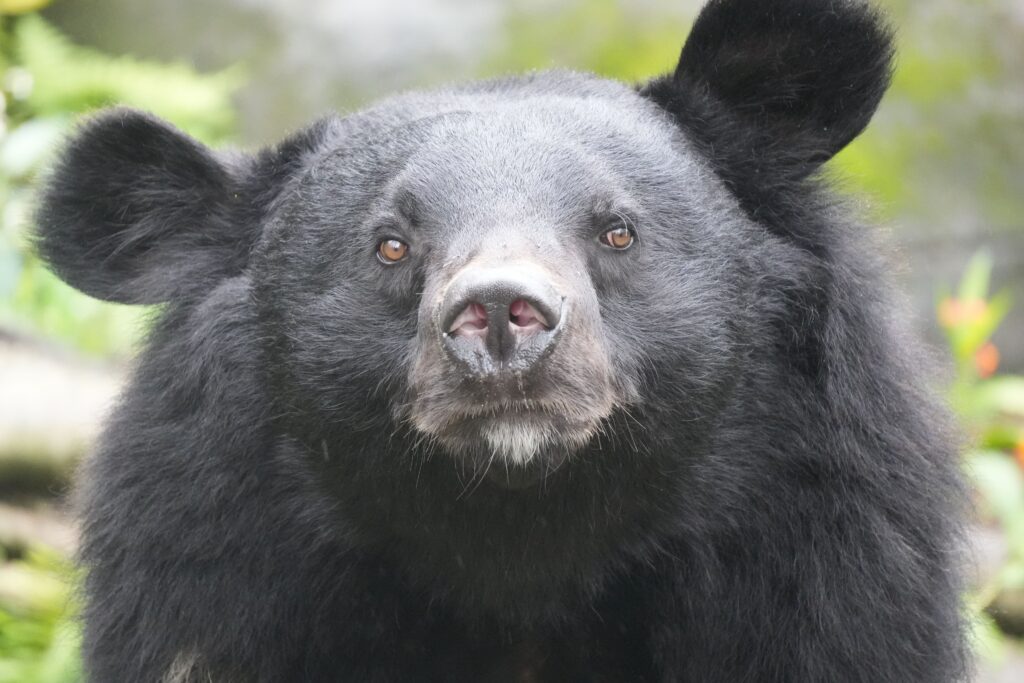
The most distinctive feature of Asiatic black bear cubs (cubs) is that they are very small and helpless at birth, but grow up protected by a strong bond with their mother.
① Immediately after birth
Birth: During hibernation (January-February)
Body length: Approximately 20cm
Weight: Approximately 300g (lighter than a plastic bottle)
Eyes are closed
Her fur is thin and her teeth are underdeveloped
They are surprisingly small for such a large animal.
② Growth in the den
Completely dependent on breast milk
Protected by the mother’s body heat and milk
The mother is awake and nursing even during hibernation.
Hibernation does not mean complete sleep.
③ Spring (2-3 months old)
Eyes open
Fur grows in
Starts walking
Starts leaving the den
Begins to resemble a “bear.”
④ Mother-Cub Life
Cubs stay with their mother for about 1-2 years.
They learn how to forage and avoid danger.
Mothers are very aggressive in protecting their cubs.
Most human accidents involve mothers and cubs.
⑤ Sibling Relationships
Litter Size: 1-2 (Rarely 3)
Siblings Grow Together Playfully
There is competition, but killing is rare.
⑥ Independence
They leave their mothers between 1.5 and 2 years of age.
Males Disperse Longer
Females May Remain Near Their Mother’s Range
Is the Asian black bear an endangered species?
Asiatic black bears are animals that are easily hunted or retaliated against by humans because they can cause direct damage to crops, beekeeping, and humans themselves, and because their gallbladders are used for medicinal purposes. The subspecies Balochistan black bear is listed on CITES Appendix I. Japanese black bears are on the decline, and may even become extinct in some areas. In Japan, if you check the research materials, it seems that the number of consultations about encounters with bears is increasing.
Global Assessment (IUCN)
Assessment: LC (Least Concern)
Target: All Asian black bears
Widely distributed, including China, Russia, and Southeast Asia
At the global level, they are not facing imminent extinction.
● Japan as a whole
The Ministry of the Environment’s Red List assesses them differently depending on the regional population.
● Areas at high risk of extinction
Asiatic black bears in Shikoku
Critically Endangered
Estimated population size is extremely low
Most endangered in Japan
● Areas experiencing decline or instability
Kii Peninsula (southern Kinki region)
Vulnerable or Near Threatened
Severe habitat fragmentation
● Relatively stable areas
Tohoku and Chubu mountainous regions
Relatively large population
However, large annual fluctuations
Can Asiatic black bears be kept as pets?
Asian black bears are not suitable as pets. It is not suitable for amateurs as it can cause harm to surrounding humans and livestock. Events are held at the zoo, and you can often see them with a guide. Check out the latest information about the zoo on the site map from the menu on the homepage.
① Legally Prohibited (Japan)
Asiatic black bears are classified as wild animals and large dangerous animals.
In Japan, under the Animal Welfare and Management Act, Wildlife Protection and Management Act, and prefectural ordinances,
individuals are prohibited from keeping them as pets.
Keeping them is permitted only in facilities with special permits and equipment, such as
zoos, shelters, and research institutions.
② Safety Issues
Adults weigh around 100 kg.
Excellent running, climbing, and swimming abilities.
Extremely powerful bite and arm strength.
Unpredictable behavior.
Uncontrollable at home, no matter how small they are raised.
③ Personality and Instinct Issues
Basically timid, but with a strong defensive response.
They will switch to attacking when startled.
Even when accustomed to humans, their “wild instincts” do not disappear.
They are not domesticated animals like dogs or cats.
- Environmental Issues
Large exercise space required
A sturdy cage with double doors is essential
Measures to prevent tree climbing and digging are required
Food and medical costs are extremely high
Physically impossible in an average household.
Zoos Housing the Species (Japan & Worldwide)
The Asiatic black bear (Ursus thibetanus) is a bear species kept in a relatively large number of zoos across Japan.
As a familiar large mammal native to Japanese forests, many facilities house them for the purposes of educational exhibits and conservation activities.
🇯🇵 Major Zoos in Japan Housing Asiatic Black Bears
🐻 Ueno Zoological Gardens (Tokyo)
One of Japan’s most prominent zoos.
Features:
Long history of exhibiting Asiatic black bears
Allows observation of native Japanese mammals within an urban setting
Implements behavioral displays and environmental enrichment for the bears
Behaviors that can be observed:
Walking around
Climbing trees
Foraging for food
Resting
🐻 Yokohama Municipal Kanazawa Zoo
A zoo known for exhibiting animals native to mountainous regions.
Features:
Exhibits Japanese forest animals
Uses spacious enclosures for housing
Incorporates methods to encourage natural bear behaviors
🐻 Tama Zoological Park
A zoo with extensive grounds.
Features:
Exhibits native Japanese animals
Creates environments that closely resemble nature
Facilities well-suited for observing the behavior of large mammals
🐻 Kyoto City Zoo
One of Japan’s zoos with a long history.
Features:
Exhibits Japanese wildlife
Housing practices that prioritize animal welfare
Emphasis on educational exhibits
🐻 Sapporo Maruyama Zoo
A zoo that leverages Hokkaido’s natural environment.
Features:
Exhibits animals from northern regions
Extensive experience in housing bear species
Focuses on conservation education
🌏 Major Facilities Worldwide Housing the Species
🇨🇳 Beijing Zoo
China is a primary habitat for the Asiatic black bear, and the species is kept in many facilities there.
Features:
Exhibits Chinese wildlife
Research and conservation education regarding Asian bear species
🇨🇳 Shanghai Zoo
Features:
Exhibits animals from the Asian region
Displays native animals, including the Asiatic black bear
🇮🇳 Nandankanan Zoological Park
Subspecies of the Asiatic black bear (Himalayan type) inhabit India, and they are kept in zoos there for conservation purposes. 🇺🇸 San Diego Zoo
A world-renowned wildlife conservation facility.
Key features:
Experience in caring for bears
Wildlife conservation research
Educational exhibits
🇺🇸 Smithsonian National Zoo
Key features:
Research on the conservation of rare species
Track record of exhibiting Asian wildlife
Introducing other animals
コメント