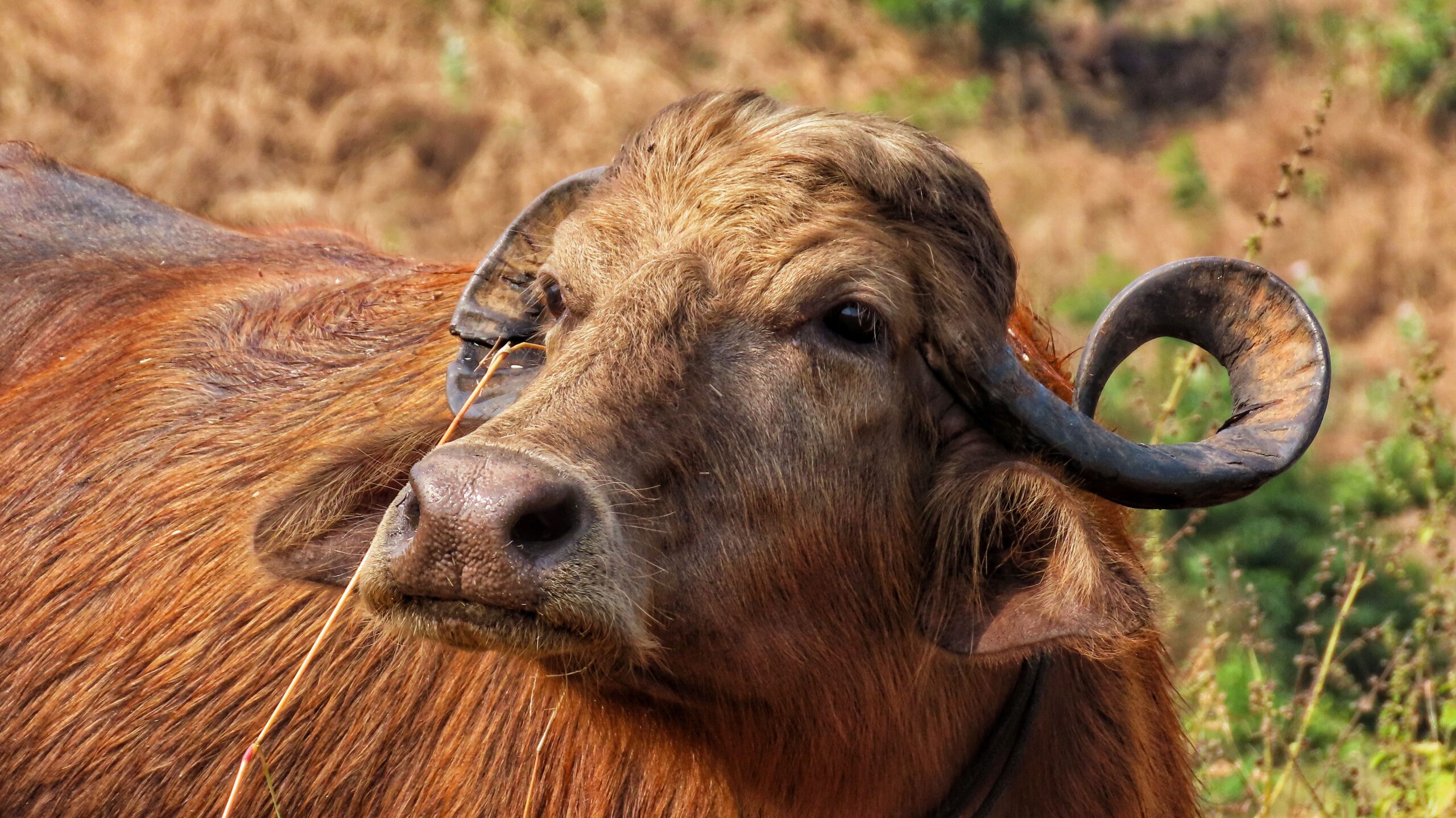
What kind of animal is the Asian buffalo? You can also view free photos and images. We will explain its characteristics, ecology, and habitat. Water buffalo are quite widely distributed in Southeast Asia, and their physical condition is over 2 meters, making them larger than humans. Many live in groups, making them quite an impressive companion.


- What is an Asian water buffalo? About basic status
- What are the roots and origins of the Asian water buffalo?
- About habitat
- feature is? What kind of creature is it?
- What is your personality like?
- What does the ecology look like?
- Vocalizations
- Seasonal Activities
- Walking Speed
- About Asian Water Buffalo Calves
- Is the Asian buffalo an endangered species?
- Can Asian buffalo be kept as pets?
- Zoos where they are kept (Japan & Worldwide)
- Introducing other animals
What is an Asian water buffalo? About basic status
Asian water buffalo is a completely different species from cows. It is an artiodactyla that is classified in the mammalian class Artiodactyla (Cetacean artiodactyla) and the Bovidae genus Asiatic buffalo. It is quite large, with a body length of 200-300cm and a weight of 700-2000kg. The list of information is as follows. The kanji is buffalo, and the scientific name is Bubalus bubalis.
| Japanese(和名) | アジアスイギュウ |
| English(英名) | Asiatic Water Buffalo |
| scientific name(学名) | Bubalus bubalis |
| classification(分類) | Mammalia、Artiodactyla/Cetartiodactyla、 Bovinae、Bubalus 哺乳綱、偶蹄目、ウシ科、アジアスイギュウ属 |
| IUCN Status(保全状況) | ENDANGERED |
| Length(体長) | 200-300cm |
| Weight(体重) | 700-1200kg |
What are the roots and origins of the Asian water buffalo?
The ancestor of the Asian buffalo is the wild buffalo (scientific name: Bubalus arnee), which still lives in the Indian subcontinent and Southeast Asia. The domesticated Asian water buffalo (Bubalus bubalis) is thought to have diverged from this wild species.
Origin of evolution
classification
Family: Bovidae
Subfamily: Bovinae
Genus: Bubalus
Closely related species:
A different strain from the African buffalo (Syncerus caffer)
A member of the Bovini family, which is similar to yaks and cows.
The buffalo genus evolved millions of years ago in Asia and adapted to wetland and riverine environments. It is particularly notable for its large horns, wide hooves, and adaptation to an aquatic life.
Distribution of wild buffalo (Bubalus arnee)
Wild buffalo once lived over a wide range of areas.
Main distribution:
northeast india
Southern Nepal
bangladesh
myanmar
Around Thailand
cambodia
southern china
Nowadays, its habitat has decreased significantly, and it remains in limited areas such as national parks in India.
History of domestication
Domestication of the Asian water buffalo began later than that of cattle.
More than 6,000 years ago (around 4300 BC)
River buffalo
Origin: Western Indian subcontinent
Usage:
milk production
meat
agricultural traction
After that,
middle east
egypt
mediterranean region
italy
It has spread to
Swamp buffalo
It is thought that it was domesticated in a separate lineage.
Origin:
southern china
Around the Indochina Peninsula
Period:
Approximately 3,000 to 7,000 years ago
Features:
Very compatible with paddy farming
Ability to walk on muddy ground
Mainly developed in Southeast Asia
classification
| 階級 | 分類 |
|---|---|
| 界 | 動物界(Animalia) |
| 門 | 脊索動物門(Chordata) |
| 綱 | 哺乳綱(Mammalia) |
| 目 | 偶蹄目(Artiodactyla) |
| 科 | ウシ科(Bovidae) |
| 属 | スイギュウ属(Bubalus) |
| 種 | アジアスイギュウ(Bubalus bubalis) |
About habitat
The Asian water buffalo is distributed primarily in India, but also in Southeast Asia (Thailand, Nepal, Bangladesh, and Myanmar). Wild domesticated populations are also bred in Europe, Argentina, and Australia.
- Origin and Distribution
Origin: South Asia (India, Pakistan, Nepal)
Distribution: Southeast Asia, southern China, the Philippines, Indonesia, etc.
Domesticated individuals have been introduced to agricultural areas in tropical and subtropical regions around the world.
- Natural Environment
The Asian water buffalo is a large herbivore adapted to wetlands and waterside habitats.
Wetlands and Marshes
Prefers muddy, wetlands, such as river floodplains and marshes.
Frequently bathes in water and mud to regulate body temperature and prevent parasites.
Rivers and ponds
Feeds on soft grasses near water.
Wild individuals gather in groups near water and use water for subsistence.
Agricultural land
Domesticated individuals utilize rice-growing areas and wetlands.
Coexist with humans, feeding on grass, rice straw, and potatoes.
- Climate and Altitude
Climate: Adapted to tropical to subtropical regions.
Tolerates high temperatures and humidity; requires water and mud.
Altitude: Flatlands to low mountains (mainly 0-500m).
- Habitat Characteristics
Living in groups: Forages and rests in groups near water and marshes.
Closely connected to water: Bathing in mud and water regulates body temperature, protects the skin, and prevents parasites.
Domesticated individuals often depend on human farmland and rice paddies for subsistence.
feature is? What kind of creature is it?
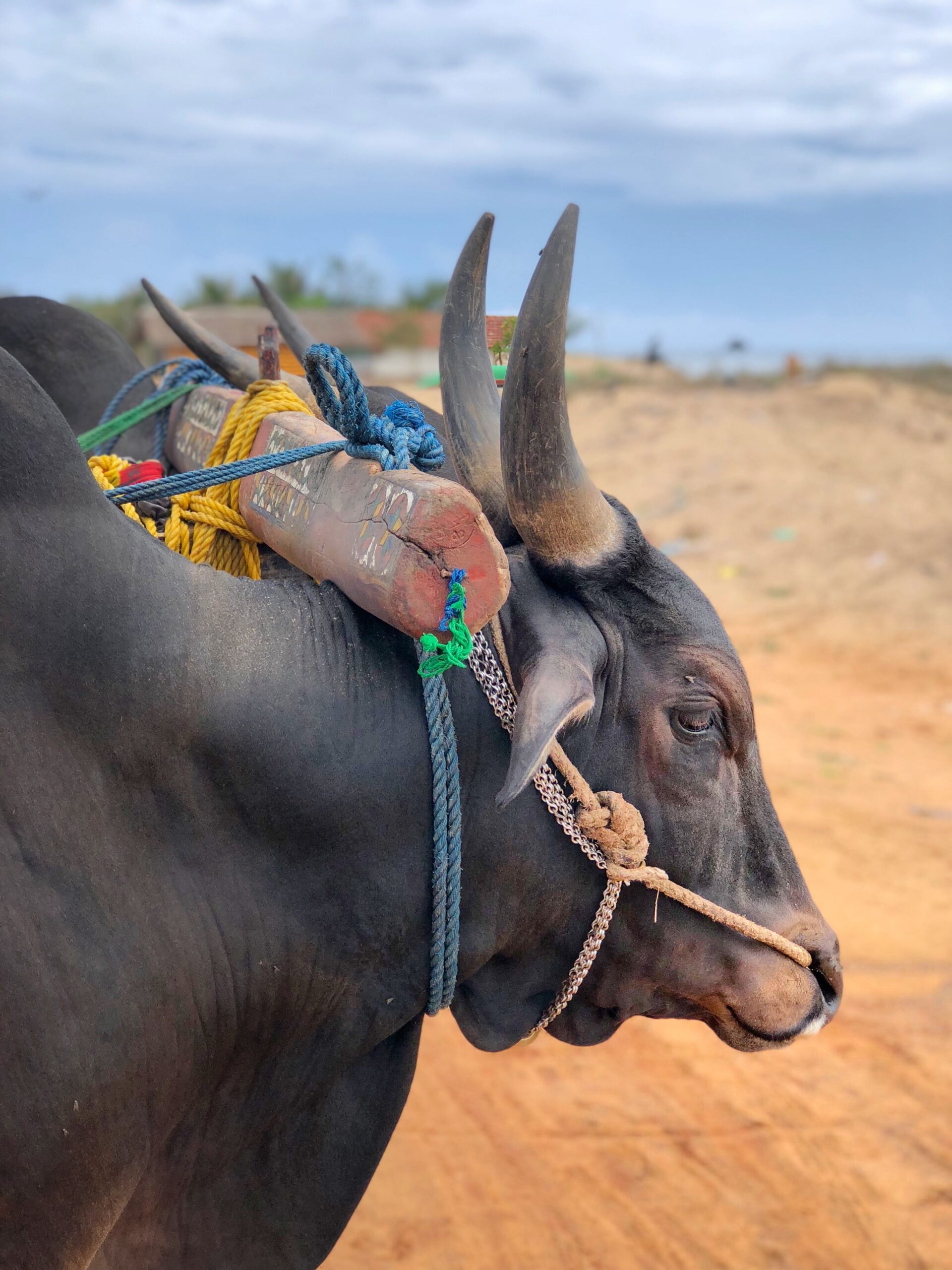
The Asian water buffalo is also one of the larger members of the bovidae family, with horns about 1 meter long. The cross section is triangular, which is a distinctive feature. It has almost no fur, and its body color is gray or grey-black. The lower parts of the limbs are white and there are individual differences. Asian buffalo live in forests and tall grasslands, but because they rely heavily on water, they often appear in swamps and wetlands. They may be active during the day and night, but are more active in the early morning.
- Physical Characteristics
Physique: Large and muscular
Body Length: Approximately 2-3m
Weight: Males 400-900kg, Females 300-600kg
Coat Color: Dark brown to gray, with a slightly glossy finish in the wild
Head and Horns:
Large, rounded head
Males have large, curved horns
Limbs: Artiodactyls (two hooves) allow them to walk easily in muddy areas near water
Nose and Ears: Broad snout, large ears
- Behavior and Personality
Personality: Gentle and has a strong tendency to live in groups
Sociality: They live in groups, and domesticated individuals are obedient to humans
Defensive Instinct: They use their horns to intimidate when threatened
- Diet
Herbivory
Eats grass, potatoes, rice straw, aquatic plants, etc.
Foraging Behavior
Feeds slowly near water or in muddy areas
Domesticated individuals feed on rice fields or pastures
- Adaptability
Adapted to waterside and muddy areas
They regulate their body temperature by immersing themselves in mud or water
They take mud baths to protect themselves from parasites and pests
Adapted to humid environments
They are tolerant of hot and humid tropical and subtropical environments
What is your personality like?
The Asian buffalo is a highly social animal that values discipline. They generally form herds and live in groups. Sometimes they form large herds of up to 100 individuals. They also love bathing in water and will sometimes go into the mud to regulate their body temperature.
- Personality of Wild Species
Social and Group-Living
Wild individuals typically forage and rest in groups.
They have ranks and roles within the group, and cooperate with each other.
Strong defensive instincts.
When sensing danger, they use their horns to intimidate or quickly escape.
They prioritize group behavior over solitary behavior to ensure safety.
- Personality of Domesticated Species
Gentle and docile
Easily tamed by humans, they can be used for milking and farm work.
Even males are less aggressive and many are easy to handle.
Intelligent and cooperative
Highly adaptable to group behavior and their environment.
Enduring
Able to cool their bodies for long periods in water or mud.
- Caution
Males can be aggressive during the breeding season and in the wild.
They use their horns, especially in battles over territory and females.
Alert
Sensitive to sudden noises and movements, they may flee or charge when startled.
What does the ecology look like?
Asian water buffalo are herbivorous, subsisting on grass, tree leaves, stems, bark, and aquatic plants. The form of coexistence is viviparous. The gestation period is 300 days, and they are polygamous. It is possible to give birth to 1 to 2 puppies at a time. Their lifespan in captivity is 25 to 30 years.
- Living Environment and Activities
Wetland and Waterside Lifestyle
Live in environments with water and mud, such as rivers, swamps, marshes, and rice-growing areas.
Immerse yourself in mud and water to regulate your body temperature and prevent parasites.
Population Lifestyle
Live in small to medium-sized groups, cooperating in feeding, resting, and bathing.
Having a hierarchy and role within the group.
- Diet
Herbivory
Eats grasses, tubers, aquatic plants, rice straw, etc.
Foraging Behavior
Slowly eats soft plants in mud and waterside areas.
Domesticated individuals also eat crops from pastures and farmland.
- Behavior Patterns
Generally diurnal, but more active in the morning and evening to avoid the heat.
Closely Related to Water
Regulates body temperature in water or mud during high daytime temperatures.
Social Behavior
Coordinates with the group when feeding, resting, and bathing.
Males may fight during territorial disputes and breeding seasons.
- Reproduction
Breeding Season: Breeding is possible throughout the year in tropical regions.
Gestation Period: Approximately 10-11 months
Litter Size: Usually one (rarely two)
Rearing: The mother protects the young, and they grow up under the protection of the pack.
- Adaptability
Specialized for aquatic life
Mud bathing and water bathing regulate body temperature and protect the skin
Tolerant of humid environments
Adapted to hot and humid tropical and subtropical environments
Living in a pack also provides protection from predators.
Are there any natural enemies?
The Asian buffalo has no specific natural enemies.
Vocalizations
Asian water buffalo (both wild and domesticated) use a variety of vocalizations depending on the situation, centered around a low, resonant “moo.” Their calls are slightly lower in pitch than those of domestic cattle and are characterized by their ability to carry over long distances, even through wetlands and forests.
Basic Call: “Moo”
Characteristics:
Low, deep voice
Resonant, vibrating quality
Can carry for hundreds of meters
Uses:
Checking the location of herd members
Calling to offspring
Expressing anxiety or excitement
They often call back and forth to confirm each other’s locations, especially when the herd is on the move.
Calls of Young Buffalo (Calves)
Calves produce higher-pitched sounds than adults.
Characteristics:
Short calls resembling “mya” or “pee”
Frequently vocalize when searching for their mother
Functions:
Signal to the mother
Request for nursing
Call for help in times of danger
Mothers identify their own calves through these vocalizations and scent.
Alarm Calls
When sensing danger, they produce:
Short, low “buoh” sounds
Sounds accompanied by snorting
Growls
In the wild, these are used to signal caution regarding:
Tigers
Leopards
Crocodiles
Humans
The entire herd may freeze and adopt an alert posture, accompanied by low vocalizations and snorting.
Calls During Mating Season (Males)
Males produce particularly low-pitched sounds during the breeding season.
Characteristics:
Deep, prolonged bellows
Low-frequency sounds that seem to make the ground tremble
Purpose:
Attracting females
Intimidating other males
Larger males tend to produce lower-pitched calls.
Seasonal Activities
The Asian water buffalo (wild water buffalo) is an animal that alters its behavior in response to seasonal changes in water availability, vegetation, and temperature. They are particularly influenced by the Asian monsoon climate.
🌸 Spring (March–May)
Late dry season / Period of adaptation to rising heat
Activity
Increased reliance on water sources
Activity concentrated in the morning and evening
Body temperature regulation via mud-bathing and wallowing during the day
Behavior
Traveling over wide areas due to dwindling grass
Searching for water sources in herds
Moving toward areas where fresh grass is sprouting
Characteristics
As Asian water buffalo have few sweat glands and are sensitive to heat, they spend more time submerged in water or mud as temperatures rise.
☀️ Summer (June–August)
Rainy season / Period of active breeding and foraging
Activity
Increased activity levels during the rainy season
Long periods of foraging in grasslands and wetlands
Frequent mud-bathing
Diet
Consumes primarily:
Grasses (Poaceae)
Aquatic plants
Young shoots
Wetland vegetation
Behavior
Shorter herd travel distances
Settling in areas abundant in water and food
Active calf-rearing
🍂 Autumn (September–November)
Late rainy season / Period of building physical reserves
Activity
Improved nutritional status
Peak physical condition
Strengthened herd cohesion
Breeding
Depending on the region, there is an increase in:
Mating activity
Male-to-male competition
Males engage in:
Low-pitched vocalizations
Threat displays using horns
Behaviors to make themselves appear larger
❄️ Winter (December–February)
Dry season / Period of energy conservation
Activity
Foraging concentrated in the morning and evening
Increased resting time during the day
Concentration around water sources
Behavior
Herds utilize safe locations
Increased travel distances in areas with sparse grass
Temperature regulation
In colder regions, behaviors include:
Reduced mud-bathing
Sunbathing
Seeking shelter from the wind
Walking Speed
Although the Asian water buffalo (Bubalus bubalis) is a large, heavy animal, it is more agile than its appearance suggests. While it usually walks at a leisurely pace, it can reach considerable speeds when threatened or moving over short distances.
Normal Walking Speed
Approx. 3–5 km/h
Slow movement
Moving while grazing
Heading to a watering hole as a herd
They walk with a steady gait, swaying their massive bodies.
Brisk Walk
Approx. 6–10 km/h
Moving as a herd
When sensing danger
When keeping up with the herd
Due to their heavy weight, they lack the agility of smaller animals, but they can move powerfully over long distances.
Running Speed
Top speed: Approx. 30–40 km/h
Asian water buffaloes are capable of running over short distances.
Situations involving running:
Fleeing from predators
Intimidating threats (such as humans)
When the herd moves in unison
However, they are not suited for sustained high-speed running.
Mobility in Water and Mud
The Asian water buffalo’s most notable characteristic is its mobility in wetlands, which surpasses its speed on dry land.
Environments where they excel:
Swamps
Muddy areas
Shallow rivers
Rice paddies
Reasons:
Large, splayed hooves
Strong legs
Foot structure that distributes body weight
They do not sink easily in mud and possess superior mobility compared to domestic cattle.
About Asian Water Buffalo Calves
This article provides a detailed overview of Asian Water Buffalo (Bubalus bubalis) calves.
- Birth and Early Characteristics
Birthing Period
Breeding is possible throughout the year in the tropics.
Gestation may vary slightly depending on the dry or rainy season.
Gestation Period: Approximately 10-11 months
Number of calves born: Usually 1, occasionally 2
Weight and Length: Approximately 25-35 kg at birth, approximately 70-90 cm in length
Appearance:
Fur color is light brown or gray, gradually turning dark brown as they grow.
Horns are rare, but males develop large, curved horns as they grow.
- Behavior/Lifestyle
Dependence on Mother
Drinks mother’s milk immediately after birth
Lives in a group while being protected by the mother
Social Learning
Learns herd rank and behavioral patterns from the mother and other adults in the group
Movement/Foraging
Begins eating grass and aquatic plants within a few weeks
Initially obtains nutrition from a mixture of mother’s milk and grass
- Growth Process
Postnatal Period Characteristics: Drinks mother’s milk immediately after birth. Coat color is light, horns are almost absent. Around one month, begins foraging on grass and aquatic plants. Learns movement in the group. 3-6 months: Mainly herbivorous. Body size approaches adult size, horns grow slightly (males). Approximately one year: Able to move independently in the group. Horns begin to develop in males.
- Defense/Vigilance
Young animals are protected by their mother and the group and hide from predators.
Immers in mud and water to regulate body temperature and prevent parasites
Is the Asian buffalo an endangered species?
Asian buffalo are domesticated because they are useful for farming and carrying cargo, and their meat, leather, and horns are also used. However, the population of wild buffalo is rapidly decreasing due to habitat loss due to development. Therefore, it is designated as an endangered species. Furthermore, wild water buffalo are becoming more and more domesticated, and the number of wild buffaloes in the wild is decreasing.
- Conservation Status of Wild Buffalo
Scientific Name: The wild type is considered to be Bubalus arnee (Wild Water Buffalo)
IUCN (International Union for Conservation of Nature) Red List
Wild Water Buffalo (Bubalus arnee): Endangered (EN)
The population has declined significantly, and in the wild it is found mainly in India, Nepal, and Thailand.
Causes of Decline
Habitat Destruction (Drainage of Wetlands and Farmland)
Hunting and Poaching
Decrease in Genetic Purity due to Hybridization with Livestock
- Conservation Status of Domesticated Buffalo
Domesticated Asian Water Buffalo (Bubalus bubalis)
Widely Raised in India, Thailand, China, the Philippines, and Indonesia
Least Concern
The population is very large due to its use for milk, meat, and agricultural labor.
Can Asian buffalo be kept as pets?
Although the Asian water buffalo has been domesticated, it is not suitable for ordinary people to keep. Because they are very large animals, they require a lot of space. It would be wiser to see it at a zoo.
- Size and Environmental Issues
Adult Weight: Males 400-900 kg, Females 300-600 kg
Body Length: Extremely large, measuring 2-3 m
A home environment is insufficient to accommodate their ecological behaviors, such as exercise, bathing in water, and mud bathing.
Waterside or wetland environments are essential, and it is impossible to recreate an appropriate environment at home.
- Personality and Behavior
They have a tendency to live in groups, and being alone can be very stressful.
Males can become aggressive during breeding season or during territorial disputes.
Because they enjoy mud baths and water baths, they are not suitable for indoor or garden care.
- Laws and Regulations
While there is no problem with keeping them as livestock, keeping wild buffalo (Bubalus arnee) and imported wild individuals is prohibited by law.
Permission from the Ministry of Agriculture, Forestry and Fisheries or local government may be required for keeping them.
- Alternatives
If you’re interested in keeping them as pets, miniature pigs or small herbivores (goats, sheep, etc.) are more realistic options.
The safest way to observe Asian buffalo is at a zoo or farm.
Zoos where they are kept (Japan & Worldwide)
Note: The Asian water buffalo (Bubalus bubalis) commonly seen in zoos are domesticated breeds. The wild species (Bubalus arnee*) is endangered, and examples of them being exhibited in captivity are extremely rare.
🇯🇵 Facilities in Japan
Tama Zoological Park (Tokyo)
Species: Asian water buffalo (domesticated breed)
Exhibit area: Asian Zone
Features:
Lineage originally used for pulling water buffalo carts on Yufu Island, Okinawa
Many individuals are accustomed to humans
Displayed as a large herbivore
Ishigaki Yaima Village
A facility showcasing water buffalo culture
Houses individuals that work pulling water buffalo carts
Visitors can observe the traditional use of water buffalo in Okinawa
Yufu Island Water Buffalo Carts
One of the most famous locations for water buffalo keeping in Japan
Role has shifted from agricultural use to tourism
A facility where visitors can get up close to the water buffalo
🌏 Zoos worldwide
🇦🇺 Taronga Zoo
Exhibits Asian water buffalo
Exhibit recreates wetland and grassland environments
Features domesticated Asian water buffalo, not the wild species
🇦🇺 Taronga Western Plains Zoo
Kept in a spacious paddock
Strong connection to the water buffalo culture introduced to northern Australia
Introducing other animals
コメント