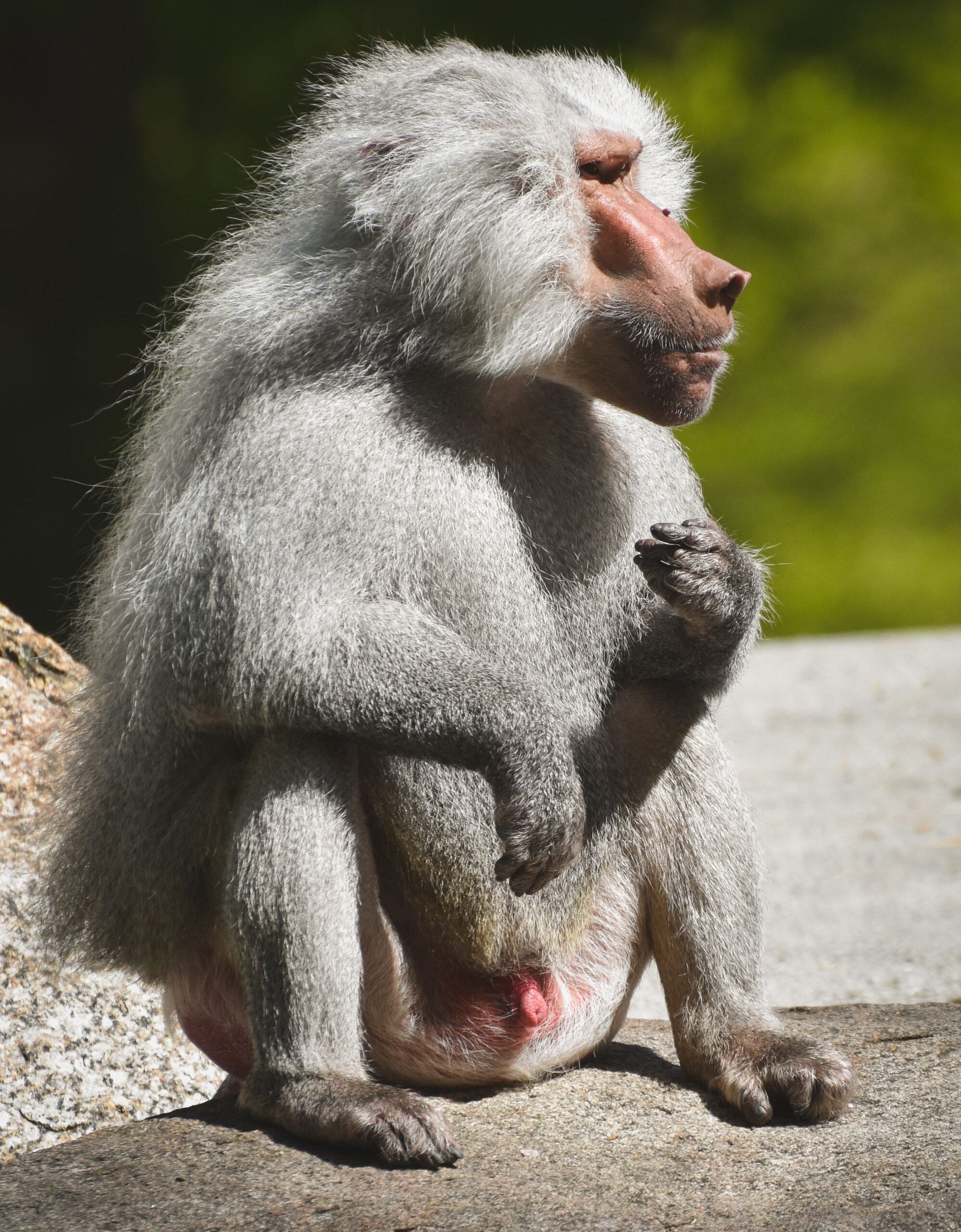
What kind of animal is a baboon? We will explain its characteristics, ecology, and habitat. It is an animal that was worshiped as a god in ancient Rome and has a very long history. They live in large numbers in the arid mountainous areas from eastern Africa to Saudi Arabia, and are very familiar to people in the Middle East.



- What is a baboon? About basic status
- What are the roots and origins of the hamadryas baboon?
- About habitat
- feature is? What kind of creature is it?
- What is your personality like?
- What is the ecology like?
- About Molting
- About Their Vocalizations
- Seasonal Activities
- Walking Speed
- About Baby Hamadryas Baboons
- Is the clown baboon an endangered species?
- Can a baboon be kept as a pet?
- Zoos Housing Hamadryas Baboons (Japan & Worldwide)
- Introducing other animals
What is a baboon? About basic status
The baboon is a primate that belongs to the genus Baboon in the family Cercopitheinae. The scientific name is Papio hamadryas. Male and female monkeys have different body lengths, ranging from 60 to 80 cm and weight from 10 to 20 kg. The list of information is as follows. This is an animal that can be seen in illustrated books.
| Japanese(和名) | マントヒヒ |
| English(英名) | Sacred baboon/Hamadryas baboon |
| scientific name(学名) | Papio hamadryas |
| classification(分類) | Mammalia、Primate、 Cercopithecidae 、Papio 哺乳綱、霊長目、オナガザル科、ヒヒ属 |
| IUCN Status(保全状況) | LEAST CONCERN |
| Length(体長) | 60-80cm |
| Weight(体重) | 10–20kg |
What are the roots and origins of the hamadryas baboon?
The hamadryas baboon (Papio hamadryas) belongs to a lineage of baboons that evolved in the region stretching from northeastern Africa to the Arabian Peninsula. It is a very ancient lineage of monkey, characterized by the silvery-white “mantle” (mane) of the males, from which the species derives its name.
Approximately 7 to 10 million years ago: Ancestors of baboons
The ancestors of the genus Papio (which includes the hamadryas baboon) are believed to have evolved in Africa.
Phylogenetically, the lineage is as follows:
Primates
↓
Old World monkeys
↓
Cercopithecidae (Old World monkey family)
↓
Genus Papio (Baboons)
↓
Hamadryas baboon (Papio hamadryas)
The genus Papio evolved while adapting to:
Rocky areas
Savannas
Arid regions
Habitat and origins of the hamadryas baboon
Their current natural distribution spans:
African side
Ethiopia
Eritrea
Djibouti
Northern Somalia
Asian side
Yemen
Southwestern Saudi Arabia
This is unusual for primates; they are one of the few species to have expanded from the African continent into the Arabian Peninsula.
It is believed that the ancestors of these baboons spread to the Arabian Peninsula during a period when the area around the Red Sea was easier to cross than it is today.
Why did they adapt to arid regions?
While many monkeys inhabit forests, the hamadryas baboon is an exception, capable of living in:
Areas bordering deserts
Rocky mountains
Dry grasslands
The reasons for this include:
① Life in rocky areas
Resting on cliffs at night
Avoiding predators (such as leopards)
Monitoring surroundings from high vantage points
② Omnivorous diet
They have a very wide-ranging diet.
Foods consumed:
Grass
Seeds
Fruit
Roots
Insects
Small animals
Scorpions, etc.
They are able to survive even in environments where food is scarce.
Taxonomy of Hamadryas baboons
| 分類階級 | 分類名 |
|---|---|
| 界 | 動物界(Animalia) |
| 門 | 脊索動物門(Chordata) |
| 亜門 | 脊椎動物亜門(Vertebrata) |
| 綱 | 哺乳綱(Mammalia) |
| 目 | 霊長目(Primates) |
| 亜目 | サル亜目(Haplorhini) |
| 上科 | オナガザル上科(Cercopithecoidea) |
| 科 | オナガザル科(Cercopithecidae) |
| 亜科 | マントヒヒ亜科(Papioninae) |
| 属 | マントヒヒ属(Papio) |
About habitat
The habitat is very large. It is widely distributed from the African continent to the Arabian Peninsula and the Middle East, including Sudan, Yemen, and Ethiopia.
- Distribution
The Hamadryas genus is distributed throughout the African continent, with different species living in different regions:
Species Main Distribution
Anubis Hamadryas (Papio anubis) West to East Africa, dry grasslands and savannas south of the Sahara
Hamadryas (Papio hamadryas) Northeastern Africa (Ethiopia, Eritrea), southwestern Arabian Peninsula
Green Hamadryas (Papio cynocephalus) East Africa (Kenya, Tanzania)
Chakmant Baboon (Papio ursinus) South Africa (Botswana, Republic of South Africa)
Cukka Hamadryas (Papio papio) West Africa (Guinea, Senegal)
- Habitat and Ecological Characteristics
Mainly inhabit savannas, grasslands, and dry forests.
Uses trees and rocky areas as resting and observation spots.
Often found along rivers and near water sources.
Adapted to terrestrial movement and feeding rather than arboreal life.
Avoids extremely dry environments such as deserts and snowy regions.
- Habitat Key Points
Locations where food and water sources can be secured are important.
Resting areas such as rocky areas, cliffs, and caves increase the safety of the herd.
Living in herds requires a large territory and space to move around.
feature is? What kind of creature is it?
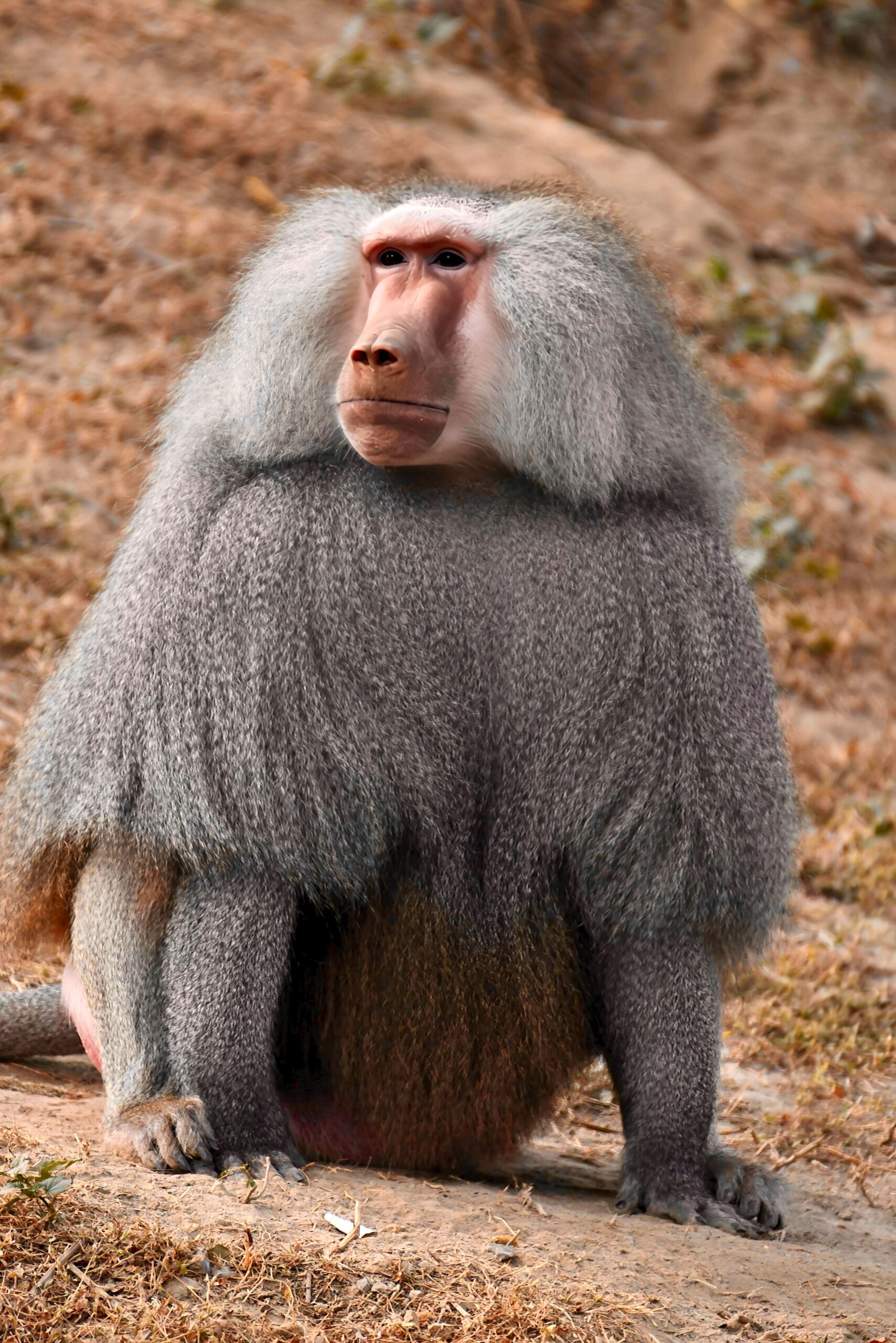
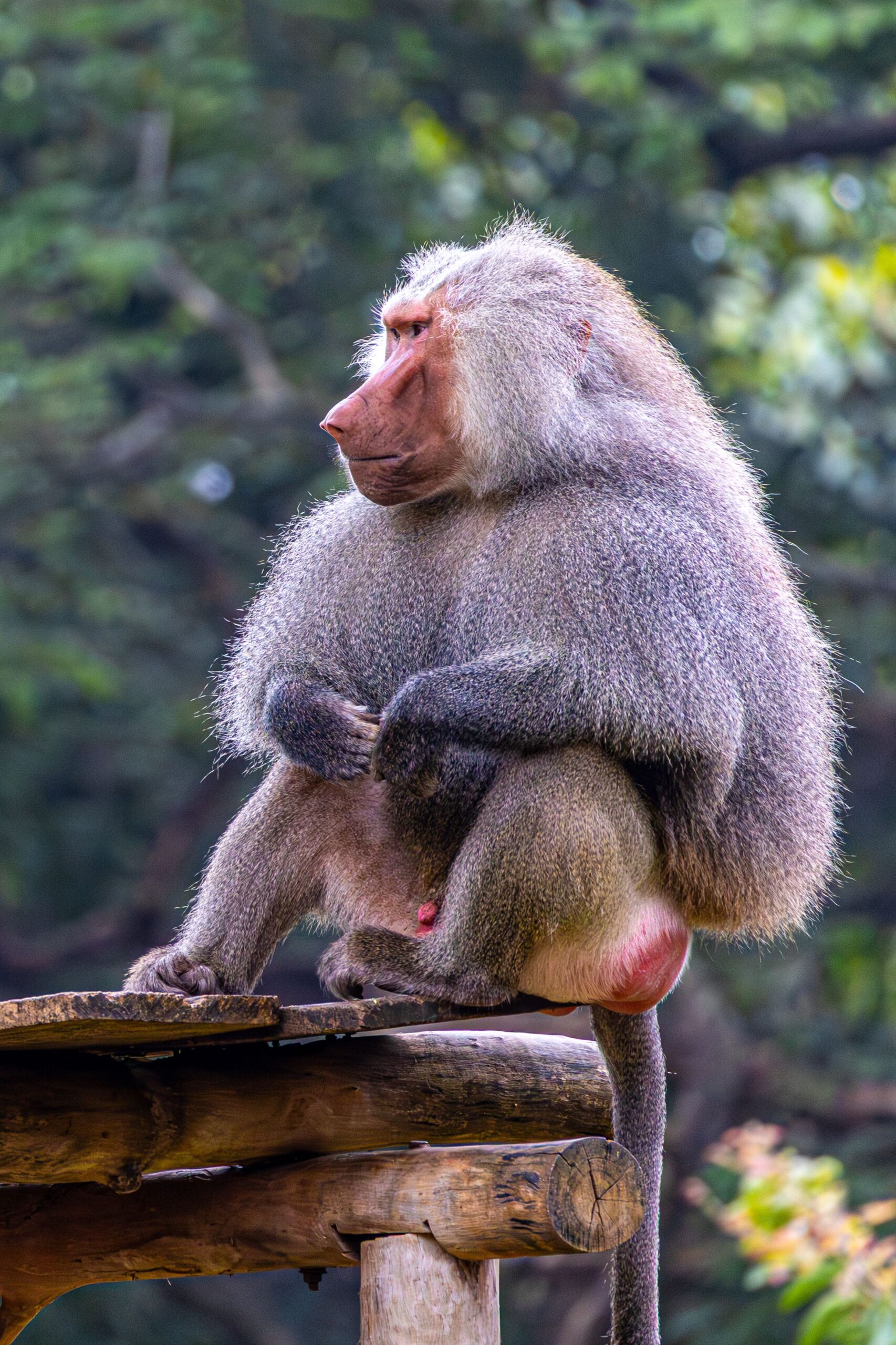
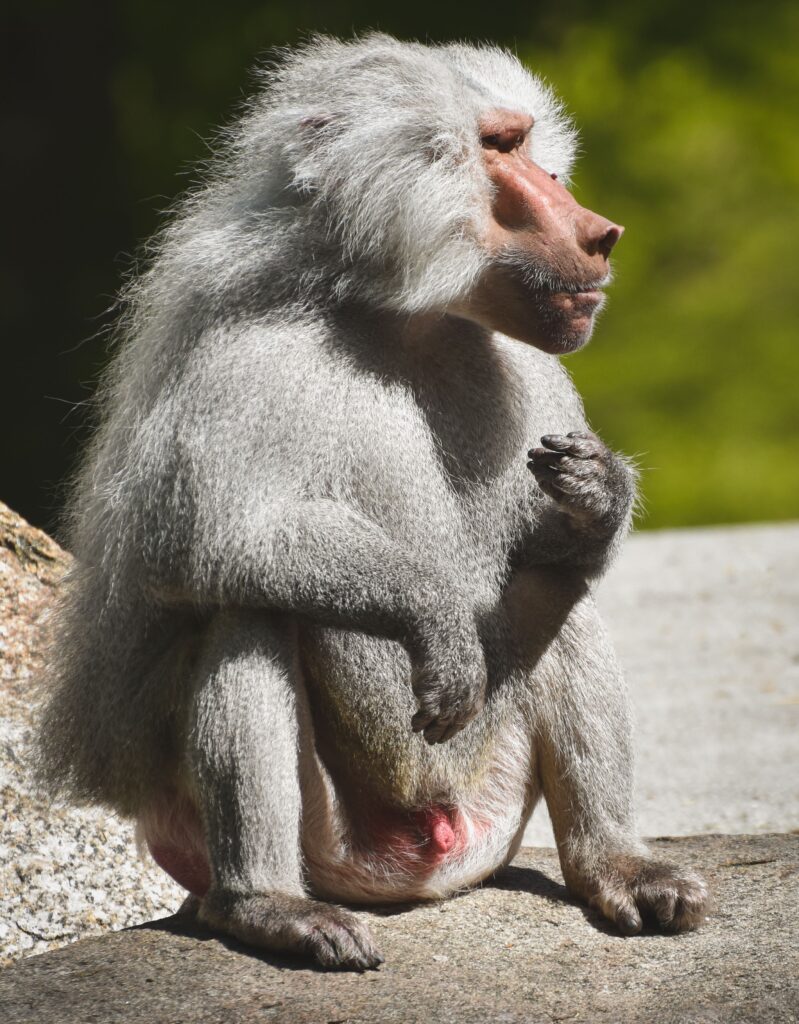
Baboons live in dry, mountainous areas. They mainly live in groups, preferring grasslands and rocky areas. At night, the herd gathers and sleeps as a group to protect themselves from predators. Males have gray body hair, especially on the sides and shoulders, while females and juveniles have brown body hair. Even when females grow older, the hair on their sides and shoulders does not grow. The baboon’s butt has no hair and is bright red, making it very conspicuous.
- Physical Characteristics
Body Shape/Size
Large monkeys with long, sturdy limbs.
Body Length: Males: Approximately 50-115 cm, Females: Approximately 40-80 cm
Tail Length: Approximately 30-60 cm
Weight: Males: Approximately 20-40 kg, Females: Approximately 10-20 kg
Face/Head
Long snout, and some males have a prominent mantle (long shoulder hair).
Facial color ranges from brown to reddish-brown depending on the species.
Fur Color/Coat
Back: Brown to gray, belly: Light-colored.
Some species have long shoulder and back hair, forming a mantle.
Teeth/Jaw
Developed canine teeth, used for intimidation and fighting within the group.
- Personality and Sociality
Highly social, living in groups
They form groups of dozens to hundreds of individuals
They are territorial, with clear hierarchies and social roles
Highly intelligent, and exhibit cooperative behavior and conflict resolution
They are cautious and somewhat timid, but are also very curious
- Behavior and Ecology
Adapted to terrestrial life
They prefer foraging and moving on the ground rather than in trees
They use trees for resting and observation
Diet: Omnivorous
Eat a wide variety of foods, including fruits, seeds, leaves, insects, small mammals, and birds
They are diurnal, active in the morning and evening
Well-developed social communication skills
They communicate through vocalizations, facial expressions, and body movements
- Special Abilities
Excellent coordination and vigilance
They protect themselves from predators by standing guard in groups
Males are strong and have been known to use their tusks to intimidate others during hierarchical battles
What is your personality like?
Baboons are energetic and lively, and can also be quite ferocious. They have a rough temper and are aggressive, so they are not suitable for breeding.
Hamadryas Baboon Personality Characteristics
Highly Social
Live in groups, with clear hierarchies and roles
Show cooperative behavior and conflict management
Highly social learning ability, learning behavior through observation and imitation
Highly cautious and timid
Sensitive to predators and humans
When they sense danger, they will quickly flee or seek refuge in high places
Curious
Interested in new and moving objects
Actively exploratory, they excel at finding food and safe places
Aggressive and territorial
Males are particularly territorial and competitive
Maintaining hierarchy within the group through threats and fang attacks
Females also have social status within the group, displaying both cooperative and aggressive behavior
Highly intelligent and adaptable
Changes behavioral patterns depending on food and environment
Makes sophisticated decisions, such as avoiding danger and cooperating with others
What is the ecology like?
They are omnivorous, eating insects, small reptiles, leaves, fruits, and seeds. Form a polygamous harem and increase the number of females in the harem. Their bright red and conspicuous buttocks give them a sexual appeal during the mating season. The gestation period is over 4 months. They can give birth to one baby at a time. The lifespan is said to be around 30 years.
- Living Environment
Mainly found in the savannas, dry forests, grasslands, and rocky areas of Africa.
Uses suitable places for resting and observation, such as near water sources, in the shade of trees, and on rocky areas.
Although they also use trees, they are primarily adapted to terrestrial life.
- Behavior
Diurnal (active from morning to evening)
Live in groups, with clear social hierarchy and roles.
Group members watch over and cooperate to protect themselves from predators.
Often travel in groups when foraging or traveling.
- Diet
Omnivorous and highly adaptable.
Main foods:
Fruits, leaves, seeds, and bark.
Insects, lizards, small mammals, and bird eggs.
Flexibly adapts their range and foraging methods depending on the food source.
- Reproduction
Breeding is possible year-round, with peaks in different regions.
Gestation period: Approximately 6 months.
Give birth to one or two young at a time.
Mothers raise their young, and they learn the social behaviors of the group.
- Social Structure
Packs range in size from a few dozen to a few hundred individuals.
Males compete for hierarchical status within the pack to gain power and mating rights.
Females are matriarchal, with parents, children, and sisters cooperating.
They communicate within the pack through play, threats, vocalizations, and physical gestures.
Are there any natural enemies?
The natural enemies of the cloaked baboon are lions and leopards. Large mammals pose a great threat.
About Molting
The molting process of the hamadryas baboon differs slightly from the distinct “winter coat to summer coat” transition seen in animals like the mouflon. As primates adapted to the arid regions of northeastern Africa, hamadryas baboons prioritize continuous coat renewal and thermoregulation over drastic seasonal changes in fur.
Basic Molting Process
Hamadryas baboons shed and replace their fur gradually throughout the year.
Characteristics
Rarely shed large amounts of fur all at once
A continuous process where old fur falls out as new fur grows
Loose fur is removed through grooming
This is a common type of molting among primates.
Spring to Summer (Dry/Hot Season)
Changes
Fur becomes slightly thinner
Improved air circulation across the body surface
Easier heat dissipation
In the hamadryas baboon’s habitat, daytime temperatures can approach 40°C; consequently, their fur serves more to protect against UV rays and safeguard the skin than to provide insulation against the cold.
Rainy Season (Cooler Season)
Changes
Fur condition improves
Increased food availability leads to a glossier coat
Growth of new fur is stimulated
As food sources such as plants and insects become more abundant, the animal’s nutritional status is reflected in the quality of its fur.
About Their Vocalizations
The vocalizations of the hamadryas baboon are not merely “sounds”; they serve as a means of communication essential for maintaining their complex social lives. Because they possess a highly developed social structure among baboon species, they employ a wide variety of calls depending on the situation.
Alarm Calls
These calls are made when a predator or threat is spotted.
Primary targets:
Leopards
Hyenas
Eagles
Humans
Characteristics:
Short, sharp sounds
Rapid, continuous cries
Alerts the entire troop
Examples:
Sharp sounds like “Wha! Wha!”
Or “Ah! Ah!”
Upon hearing the warning, the troop immediately takes action:
Moving to rocky terrain
Gathering the young into the center
Males keeping watch over the surroundings
Male Threat Calls
Mature males produce low-pitched sounds to protect the troop.
Characteristics:
Low growls
Snorting sounds
Short roars
Purpose:
Intimidating other males
Warning the troop
Defending females and young
Males with harems, in particular, use a combination of their voices, physique, and silvery capes to assert their presence.
Mother-Infant Calls
Communication between mother and infant is crucial.
Infant
High-pitched sounds
Shrill cries
Whining/cooing sounds
Purpose:
Calling the mother
Expressing anxiety
Requesting to nurse
Mother
Soft, low-pitched sounds
Contact calls
Used to soothe the infant.
Troop Contact Calls
As hamadryas baboons travel over wide areas, troop members use subtle vocalizations to communicate with one another.
Examples:
“Follow me”
“I am here”
“We are moving”
“There is no danger”
These calls facilitate the exchange of information.
A great deal of vocalizing occurs, especially in the morning when the troop moves out from the cliffside where they slept.
Seasonal Activities
The activity patterns of Hamadryas baboons are heavily influenced by the shift between the rainy and dry seasons. Inhabiting arid rocky mountains and savanna regions—such as the Ethiopian Highlands, Eritrea, Djibouti, and northern Somalia—their behavior is dictated more by the availability of water and food than by the four traditional seasons.
Spring (approx. March–May) — Birth and Troop Growth
Note: The timing of the rainy season varies by region.
Key Activities
Birth
Child-rearing
Troop stabilization
Increased foraging
Behaviors
Females give birth in safe locations
Mother-infant bonds strengthen
Young individuals engage in more play
Newborns are characterized by:
Dark fur
Large eyes
Strong dependence on the mother
Social interaction within the troop increases, centering around the infants.
Summer (approx. June–August) — Adaptation to Heat
This can be the most challenging period in arid regions.
Key Activities
Foraging in early morning and evening
Resting during the day
Securing water sources
Behavioral Patterns
Early Morning:
Descend from cliffside sleeping sites
Search for grass and seeds
Midday:
Rest in the shade of rocks
Grooming
Evening:
Forage again
Search for water
Hamadryas baboons have the ability to adjust their activity times to avoid the heat.
Autumn (approx. September–November) — Rainy Season and Social Activity
Key Activities
Increased food availability
Troop movement
Reproductive activity
Rainfall leads to:
Grass growth
Increased seeds
Increased insects
…resulting in improved nutritional status.
Reproduction
While Hamadryas baboons can reproduce year-round rather than during a specific short season, births tend to increase when food conditions are favorable.
Winter (approx. December–February) — Coping with the Dry Season
Key Activities
Foraging
Increased travel distances
Troop defense
During the dry season, they utilize:
Food sources:
Dried grass
Seeds
Roots
Subterranean plant parts
Small animals
Walking Speed
The walking speed of the hamadryas baboon has evolved to suit its natural habitats—arid regions, rocky mountains, and savannas. While not built for high-speed sprinting like a cheetah, they possess excellent endurance for long-distance travel and great agility on rocky terrain.
Normal Walking Speed
Approximately 2–4 km/h
This is the typical speed when the troop is on the move.
Common situations:
Moving to foraging grounds
Moving to water sources
Moving as a whole troop
Because hamadryas baboons frequently stop to…
examine the ground
search for food
check the location of other troop members
…their actual average speed tends to be lower.
Brisk Walking (When Alert or Moving)
Approximately 5–8 km/h
They increase their speed when sensing danger or needing to keep up with the troop.
Characteristics:
Moving quickly on all fours
Lifting the head to scan the surroundings
Infants staying close to their mothers while moving
Running Speed
They can run quite fast over short distances.
Top speed: Approximately 30–40 km/h (estimated)
Situations:
Escaping from predators
Conflicts between males
Rejoining the troop
However, for baboons, the ability to escape by utilizing complex terrain is more important than running at high speeds across flat ground.
About Baby Hamadryas Baboons
This article provides detailed information about baby Hamadryas baboons (genus Papio).
- Appearance and Characteristics
Birth Weight: Approximately 0.5-1 kg
Body Length: Approximately 30 cm
They have soft fur and are often born brightly colored (reddish-brown or yellowish) to stand out among their mother and the pack.
Their tails are short and still developing.
Their canine and front teeth are underdeveloped, and they receive their nutrition from their mother’s milk.
- Behavioral Skills
They can cling to their mother’s back or belly immediately after birth.
They begin to walk and explore the pack within a few weeks of age.
From around one month of age, they learn social behavior and hunting and foraging skills through play and imitation.
- Diet and Growth
They receive their nutrition from their mother’s milk: For the first few weeks of life, they rely primarily on breast milk.
From around three months of age, they begin to sample small amounts of pack food, such as fruits and insects.
They become largely independent between six months and one year of age, and are able to forage for their own food.
- Socialization
They learn through play with their mother, sisters, and other young animals within the group.
They acquire hierarchy and offensive/defensive skills through play.
Play with other young animals and interactions with their mothers are important for their later social lives.
- Defense and Safety
Since young animals cannot escape predators on their own, they rely on the protection of their mother and the group.
Mothers carry their young on their backs or bellies and protect them in burrows, under rocks, or in trees.
Is the clown baboon an endangered species?
It is listed in Appendix II of the Washington Convention, and international trade is restricted, but it is not designated as an endangered species.
- Current Classification
According to the International Union for Conservation of Nature (IUCN) Red List, most of the major species of the Hamadryas genus (e.g., Hamadryas anubis, Hamadryas gigantea, and Chacmant baboon) are classified as “Least Concern” (LC).
In other words, they are not currently endangered.
- Population Status
Widely distributed, with populations generally stable.
Although localized declines due to urban development and agricultural land conversion may occur, the species as a whole is at low risk of extinction.
- Threats
Habitat Destruction
Deforestation, agricultural expansion, urbanization, etc.
Conflicts with humans
Treatment as pests or hunting due to crop-eating
Natural Predators
Lions, leopards, eagles, etc.
Climate Change
Localized impacts due to reduced water and food resources
- Conservation Status
Since they are not endangered, widespread conservation efforts are generally unnecessary.
However, localized habitat conservation and measures to ensure coexistence with humans are important.
Can a baboon be kept as a pet?
As explained above, baboons are also known for being very aggressive and have a bad temper. Therefore, it is not suitable for the general public to keep. At the zoo, you can see monkeys up close, so take a look at the monkeys that are shown around at events.
- Legal Issues
Hamadryas baboons are wild animals, and in many countries, it is illegal to keep them as pets without special permission.
In Japan, they may be classified as “designated animals” or “endangered wild animals,” requiring permission from the prefectural governor to keep them.
Internationally, import and export restrictions may be imposed under the Convention on International Trade in Endangered Species of Wild Fauna and Flora (CITES).
- Ecological and Behavioral Issues
Large, strong, and active
At home, they are likely to damage furniture and walls, or harm people.
Highly social and require a social life.
Kept alone, they can become stressed, leading to aggression and abnormal behavior.
Highly intelligent and curious
They have strong exploratory and problem-solving abilities, making them difficult to manage in captivity.
They are omnivorous and require a wide range of nutrients.
They require a balanced diet of fruits, leaves, insects, and small animals, which is difficult to replicate at home.
- Theoretical Requirements
A large exercise area and a safe enclosure.
An environment where they can spend time in groups with their peers.
Providing food and water.
Wildlife management expertise and veterinary care.
- Practical Alternatives as Pets
While hamadryas baboons themselves cannot be kept as pets, small primates with social and active lifestyles are suitable for homes.
Examples: ferrets (improved mustelids), small monkeys (such as squirrel monkeys, although permission is required).
Zoos Housing Hamadryas Baboons (Japan & Worldwide)
The Hamadryas baboon (Papio hamadryas) is kept in a relatively large number of zoos compared to other baboon species. They are particularly popular in primate exhibits because visitors can observe the males’ distinctive silvery-white, mantle-like fur and their complex, polygynous social structures.
🇯🇵 Zoos in Japan where you can see Hamadryas baboons
Chiba City Zoological Park
A prominent facility in Japan where they are easily viewed.
Features:
Exhibited in the “Monkey Zone”
Visitors can observe the males’ white, mantle-like fur
Visitors can observe troop social dynamics and grooming behavior
Chiba City Zoological Park provides information on Hamadryas baboons, covering topics such as their natural habitat, physical characteristics, and social structure.
Higashiyama Zoo and Botanical Gardens
A facility that has long placed a strong emphasis on its primate exhibits.
Things to observe:
Color differences between males and females
Troop behavior
Social hierarchy
*Note: Exhibit status may change due to breeding or animal transfers, so it is recommended to check before visiting.
🌍 Notable facilities worldwide
San Diego Zoo (USA)
One of the world’s most famous facilities for exhibiting Hamadryas baboons.
Features:
Housed in a large troop
Spacious exhibit recreating a rocky terrain
Visitors can observe the social structure involving males, females, and offspring
San Diego Zoo exhibits a troop of over 20 individuals, showcasing natural behaviors such as climbing rocky terrain, vocalizing, and grooming.
Zoo Berlin (Germany)
One of Europe’s leading zoos.
Features:
Extensive primate exhibits
Long history of keeping baboons
Tierpark Berlin (Germany)
A facility with vast grounds.
Features:
Many exhibits designed for animals that live in troops
Exhibits that utilize a rocky terrain environment
Introducing other animals

コメント