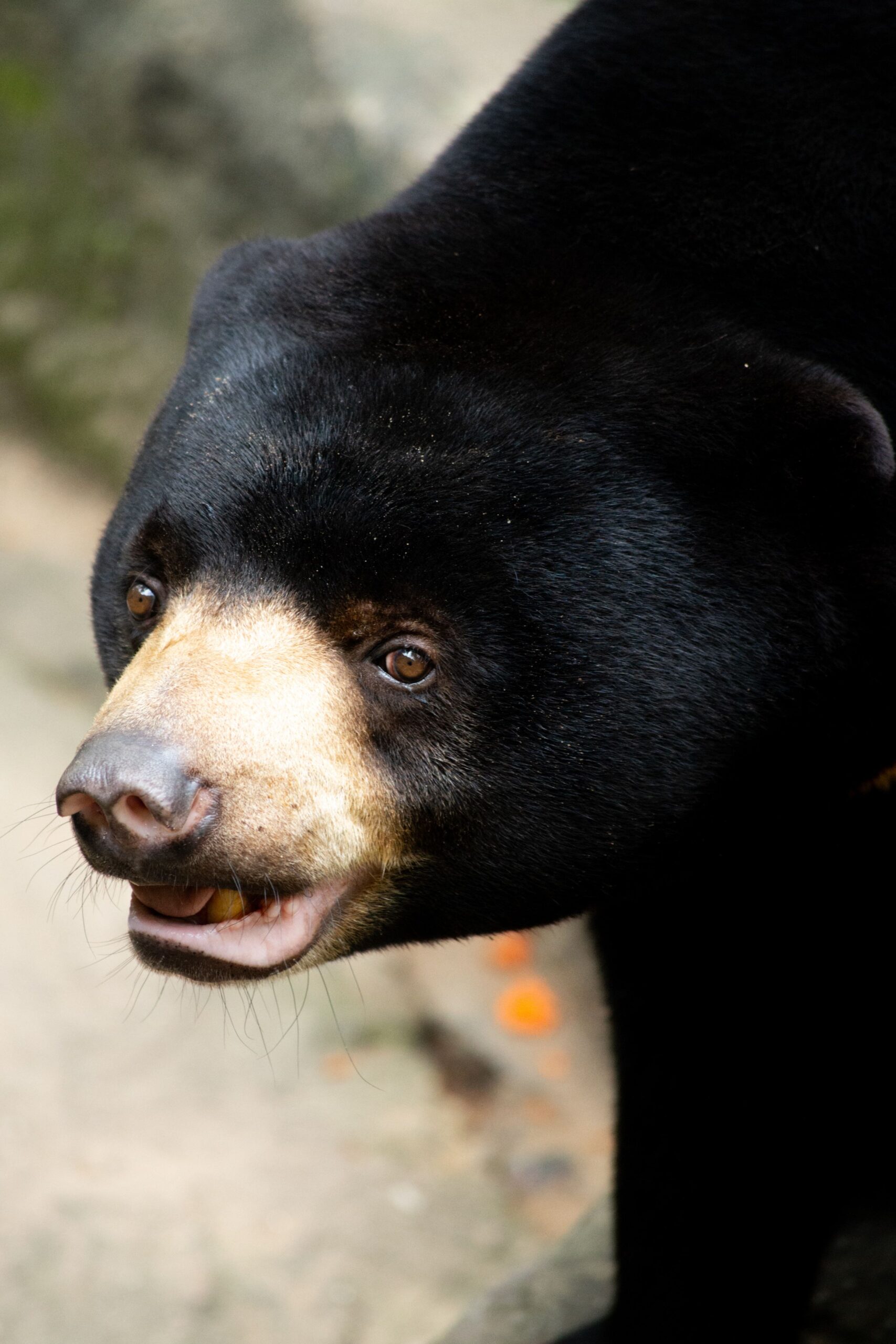
What kind of animal is a sloth bear? We will explain its characteristics, ecology, and habitat. It is a large animal that is commonly seen in India, and is mainly found in South Asia. Although the bear looks very durable and strong, it is actually designated as an endangered species, and there is a possibility that it may become extinct.






- What is a sloth bear? About basic status
- What are the roots and origins of the sloth bear?
- About habitat
- feature is? What kind of creature is it?
- What is your personality like?
- What does the ecology look like?
- About Molting
- Vocalizations
- Seasonal Activity
- Regarding Walking Speed
- About Sloth Bear Cub
- Is the sloth bear an endangered species?
- Can sloth bears be kept as pets?
- Zoos Housing Sloth Bears (Japan & Worldwide)
- Introducing other animals
What is a sloth bear? About basic status
A sloth bear is a mammal classified in the class Mammalia, order Felidae (order Carnivora), family Carnivora, genus Sloth. The body length is 140-190cm and the weight is 50-100kg. The list of information is as follows. The scientific name is Melursus ursinus, written in kanji as 懶bear.
| Japanese(和名) | ナマケグマ |
| English(英名) | Sloth bear |
| scientific name(学名) | Melursus ursinus |
| classification(分類) | Mammalia、Carnivora、Ursidae、Melursus 哺乳綱、ネコ目、クマ科、ナマケグマ属 |
| IUCN Status(保全状況) | VULNERABLE |
| Length(体長) | 140-190cm |
| Weight(体重) | 50-100kg |
What are the roots and origins of the sloth bear?
The sloth bear (Melursus ursinus) is a species of the bear family (Ursidae) that evolved independently on the Indian subcontinent.
Despite the name “sloth” bear, it is not related to sloths; it belongs to the same family as brown bears, polar bears, and Asian black bears.
Origins: Diverged from bear ancestors about 5 to 8 million years ago
The ancestors of the sloth bear were early bears that evolved in the Northern Hemisphere.
General evolutionary lineage:
Early carnivores (approx. 50 million years ago)
↓
Caniformia (ancestors of bears, dogs, etc.)
↓
Ursidae / Bear family (approx. 20 million years ago)
↓
Ancestors of extant bears
↓
Sloth bear lineage (diverged approx. 5–8 million years ago)
The sloth bear is considered to belong to a lineage that retains relatively primitive characteristics compared to other living bear species.
Where did they evolve?
Sloth bears evolved on the Indian subcontinent.
Current distribution:
🇮🇳 India
🇳🇵 Nepal
🇧🇹 Bhutan
🇱🇰 Sri Lanka (parts of)
…and others.
It is believed that their bear ancestors migrated south from Eurasia and adapted to the forest environments around India.
What kind of bears were their ancestors?
The ancestors of the sloth bear were not specialized “ant-eaters” like the species is today.
During the course of evolution, they:
Expanded into tropical and subtropical forests
Avoided competition with other large carnivores
Utilized insect resources (specifically termites and ants)
…shifting their lifestyle in these directions.
As a result, they acquired a unique foraging method:
Powerful sense of smell
↓
Detecting underground insects
↓
Destroying nests with long claws
↓
Sucking up the insects with their lips 4. Why are they called “Sloth Bears”?
When Europeans first encountered them in the 18th century,
their long claws,
long fur,
tree-climbing ability,
and insect-based diet
led people to mistakenly believe they resembled South American sloths.
As a result, they were given the English name:
“Sloth bear”
In reality, however:
❌ They are not slow-moving.
❌ They are not related to sloths.
About classification
The following subspecies of sloth bear exist:
- Melursus ursinus ursinus
- Melursus ursinus inornatus
scientific classification
- 界:動物界 (Animalia)
- 門:脊索動物門 (Chordata)
- 綱:哺乳綱 (Mammalia)
- 目:食肉目に近縁とされる「ナマケグマ目」もしくはかつては Pilosa
- 目(現代分類):ナマケグマ目 (Pilosa)
- 下目:ナマケグマ下目 (Folivora)
- 科:ナマケグマ科 (Bradypodidae と Megalonychidae)
- 3本指ナマケグマ科:Bradypodidae
- 2本指ナマケグマ科:Megalonychidae
About habitat
Sloth bears are distributed in India, Nepal, Bangladesh, and Sri Lanka. In Japan, many people often mistake them for Asiatic black bears. There are obvious differences among bears, such as their eyes, noses, and what they eat.
- Habitat Overview
Live primarily in the tropical rainforests of Central and South America.
Mainly arboreal, rarely descending to the ground.
Prefers areas with dense trees and abundant foliage for food.
- Distribution by Species
Three-toed Sloth Bear (Bradypus)
Species Main Distribution
Bradypus variegatus (Giant Sloth Bear) Northern to Central South America (Brazil, Venezuela, Colombia, Peru, etc.)
Bradypus tridactylus (Brazilian Sloth Bear) Northern Brazil, Guyana, Colombia
Bradypus torquatus (Manaus Sloth Bear) Forests along the eastern coast of Brazil (Atlantic Forest)
Bradypus pygmaeus (Pygmy Sloth Bear) Isla Pygmea, a small island in the Gulf of Panama
Two-toed Sloth Bear (Choloepus)
Species Main Distribution
Choloepus didactylus (Caribbean two-toed sloth bear): Northern South America, Amazon Basin
Choloepus hoffmanni (Hoffmann’s sloth bear): Central America to northern South America (Costa Rica, Panama, Colombia, Ecuador, etc.) - Environmental Characteristics
Mostly found in the canopy layer (the upper layer of forests)
Prefers humid tropical rainforests
Habitat fragmentation due to human development and deforestation
feature is? What kind of creature is it?
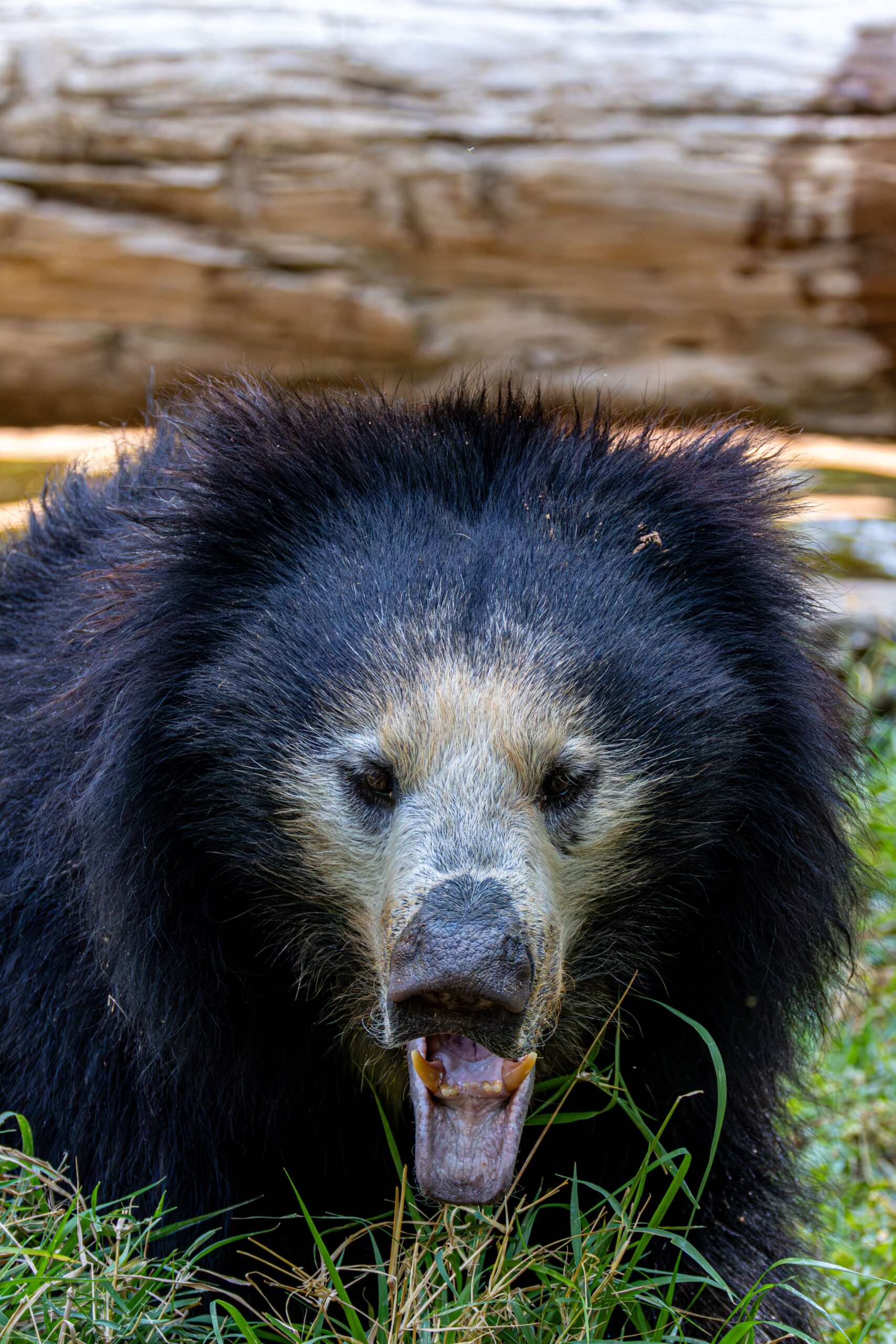
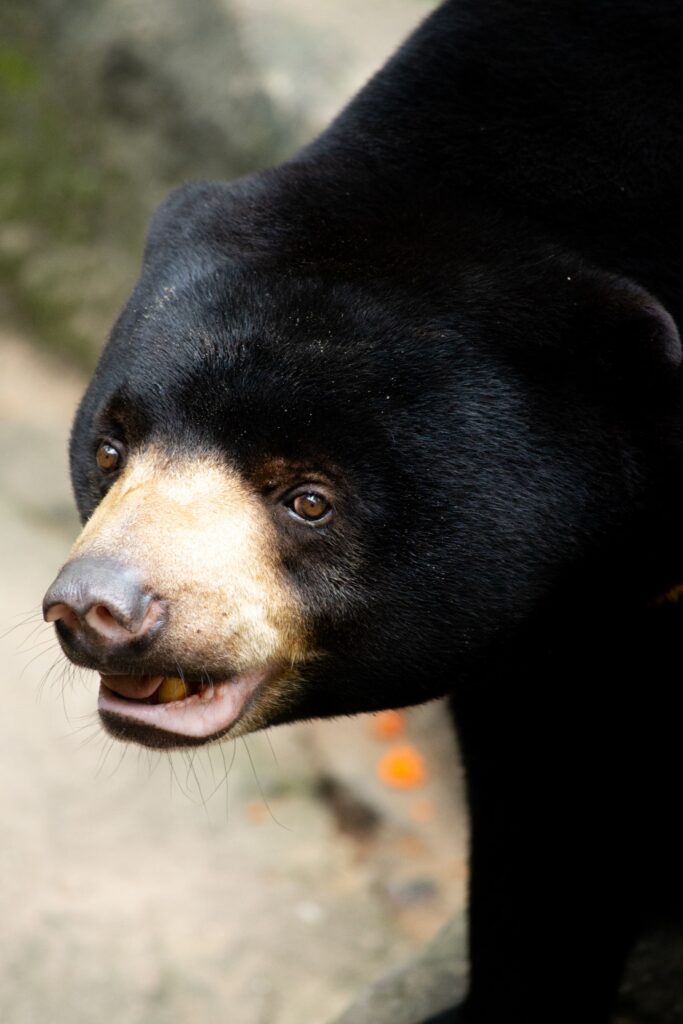
The sloth bear’s fur is black or reddish-brown, with long body hair and no hair on the soles of its feet. The eyes and ears are small. The front legs turn inwards, and the hind legs are shorter than the front legs and have claws. They can skillfully climb trees using their strong, long claws. They can also hang from trees using their curved claws, which is reminiscent of sloths, hence the name. This bear prefers scrub forests and humid evergreen forests, and is nocturnal.
- Physical Characteristics
Size: Approximately 50-70cm from head to tail, weighing approximately 3-9kg (depending on species)
Body Type:
Round, stocky body
Long arms and long claws allow them to hang from trees
Hair:
Thick, coarse hair
Algae sometimes grow on their hair, giving it a green appearance → providing camouflage in the forest
Face:
Small, round face
Small ears, round, black eyes
- Movement/Behavior
Very slow
Movement speed: Approximately a few meters per minute
This is due to their low metabolism, which reduces energy consumption
Primarily arboreal
Spends most of their time hanging from tree branches
Descends to the ground only about once a week
Sleep:
May sleep 15-20 hours a day
- Diet
Mainly folivorous
Eats leaves and young shoots
Due to the slow digestion process, they move slowly
Occasionally eats fruit and twigs
- Personality and Biology
Gentle and unaggressive
Lives a low metabolic and energy-efficient lifestyle
To protect themselves from predators (such as jaguars and large birds), they move slowly and use camouflage-colored fur to make themselves less noticeable
What is your personality like?
Sloth bears are often alone. Although they are not very large, they are very ferocious and may even attack humans.
Sloth Bear Personality and Behavior
Gentle and gentle
Rarely aggressive
Generally non-combatant with humans and other animals
Priority is given to avoiding danger
Laid back and at their own pace
Very slow to move, spending most of their day in trees
Eat slowly, mainly leaves that take a long time to digest, so they don’t need to move actively
Can also be timid
When encountering predators (jaguars, eagles, wolves, etc.), they will defend themselves without fighting
They often stay still in trees to camouflage
Generally solitary
Generally live alone
Rarely form groups other than parent-child pairs
An “energy-saving” personality adapted to their environment
A low metabolism conserves energy, so they don’t move around much
Gentle and inconspicuous, they adopt a strategy for longevity
What does the ecology look like?
Sloth bears subsist on honey, termites, insects, and bird eggs. After destroying the nest with their strong claws, they eat the prey with their long tongue. The form of coexistence is viviparous. Their gestation period is 6 to 7 months, and they can give birth to 1 to 3 cubs at a time in burrows that they dig themselves or in natural caves. Children become independent after 1 to 3 years. The lifespan is said to be around 30 years.
- Habitat
Arboreal Life
Spends most of their time on tree branches
Descends to the ground only to defecate or move
Territory is not very large
Eats food while moving slowly along tree branches
Primarily solitary
- Diet (What they eat)
Predominantly folivorous
Mainly young leaves and branches, rarely fruit
Digestion is slow, so they move very slowly
Specialized Stomach
Multi-chambered stomach, slowly ferments and breaks down leaves
Digestion can take more than a week
- Movement/Activity
Movement is very slow
A few meters per minute
Move carefully between tall trees
Long Sleep
Sleep 15-20 hours a day
Sleep is not much different between day and night, but they often rest in trees at night
- Social Structure and Reproduction
Generally solitary
Does not form groups except with parents and young
Reproduction
Gestation lasts approximately six months
Usually gives birth to a single baby
Baby lives with their mother in trees
Baby remains dependent on their mother for several months
Are there any natural enemies?
Sloth bears have no natural enemies.
About Molting
The sloth bear (Melursus ursinus) exhibits a “seasonal molting” pattern, where its coat changes significantly depending on the season.
Adapted to the hot environment of India, they shed their old fur—particularly during the transition from the dry season to the hot season—to better cope with the heat.
Molting Periods
While the timing of molting varies by region, the general pattern is as follows:
🌸 Spring to Early Summer (approx. March–June)
Peak molting season
Winter fur is shed
Coat transitions to a summer style
Increased shedding
This period is crucial for thermoregulation as temperatures in India rise sharply.
☀️ Summer (approx. May–July)
Reduced fur volume
Coat appears shorter
Facilitates heat dissipation from the skin
However, sloth bears do not develop a truly short coat; they retain their characteristic long, black fur.
🍂 Monsoon Season (approx. June–October)
New fur grows in
Coat becomes sleek and uniform
Sebum increases water resistance
Coat condition becomes important due to the humid forest environment.
❄️ Winter (approx. November–February)
Since India rarely experiences extreme cold:
There is little drastic change to a thick winter coat
It is a period of maintaining the existing coat
Characteristics of the Sloth Bear’s Coat
Sloth bears possess a coat that is highly distinctive among bear species.
Long, coarse black fur
Functions:
Protects skin from insects
Prevents abrasion from forest branches and vegetation
Thermoregulation
White chest marking
The white “V-shaped” or “Y-shaped” chest marking may shift slightly during molting.
Used for individual identification
The basic pattern remains consistent even after the fur is replaced
Vocalizations
The vocalizations of the sloth bear (Melursus ursinus) are particularly diverse among bear species, ranging from low growls to loud roars.
These sounds are primarily used for intimidation, signaling alertness, communication between mother and cub, reproductive behavior, and expressing emotion.
🐻 “Huffing” or “snorting” sounds
Alertness and intimidation
Produced when sensing an enemy or danger.
Situations:
Encountering humans
Being approached suddenly
Protecting a cub
Characteristics:
Forcefully exhaling through the nose
Making the body appear larger
Sometimes striking the ground with the forepaws
🐻 “Grrr” or “Uuu” growls
Preparing to attack or expressing dissatisfaction
Primarily used for:
Warning an opponent
Guarding food
Intimidating other individuals
Since sloth bears have poor eyesight, vocal intimidation serves as a crucial defensive mechanism.
🐻 High-pitched screams or shrieks
Intense fear or during an attack
They produce surprisingly loud vocalizations given their appearance.
Characteristics:
Extremely loud
Carries over long distances
Serves as a warning to predators or humans
Most commonly observed when a mother bear is protecting her cub.
🐻 Sniffing or snuffling sounds
Exploration and communication
Sloth bears possess an excellent sense of smell.
Situations:
Confirming the presence of others
Foraging for food
Gathering information about the surroundings
Seasonal Activity
The activity of the sloth bear (Melursus ursinus) is strongly influenced by the shifting seasons of the Indian subcontinent: the dry season, the hot season, and the monsoon (rainy) season.
Key factors include changes in temperature and the availability of food sources such as termites, ants, and fruits.
While generally nocturnal or crepuscular (active at dawn and dusk), their specific activity times vary by season.
🌸 Spring (approx. February–April)
Transition from the late dry season to the hot season
Activity
This is one of the periods of peak activity during the year.
Reasons:
Termites and ants become active
Fruits begin to ripen
The cold of winter has passed
Main behaviors:
Digging the ground to search for insects
Traveling over wide areas in search of fruit
Seeking out water sources
Reproductive behavior
Diet
Primary foods:
Termites
Ants
Beehives
Figs
Mahua fruit
Wild fruits
Behavior involving the destruction of termite mounds increases significantly.
☀️ Summer (approx. April–June)
The hottest period
A challenging season for sloth bears.
Changes in activity times
Daytime:
Resting to avoid the heat
Resting in the shade of trees or in caves
Nighttime:
Increased activity levels
Extended foraging time
Behaviors
Increased reliance on water sources
Reduced travel distances
Utilization of shade
In regions where temperatures approach 40°C, body temperature regulation becomes critical.
Diet
Foods that increase:
Ripe fruits
Insects
Honey
Flowers
In areas where fruit becomes abundant, the diet shifts from being insect-heavy to fruit-heavy.
🌧️ Monsoon Season (approx. June–October)
A time of abundant food
Activity
Nutritional status improves during the monsoon season.
Increased behaviors:
Foraging
Traveling
Physical recovery
Raising young
Diet
Abundant foods:
Termites
Insects
Fruits
Plant roots
Beehives
As the ground softens, digging becomes easier. Relationship with Reproduction
Depending on the region, the period around the rainy season is when the following may be observed:
Reproductive behavior
Rearing of young
Mothers increase their offspring’s survival rate by raising them during times when food is abundant.
🍂 Autumn to Winter (approx. October–February)
Dry Season
Activity
As temperatures drop, this is a relatively comfortable time for activity.
Characteristics:
Increased daytime activity
Ability to travel long distances
Expanded foraging range
Food
During the dry season, they feed on:
Termites
Roots
Nuts
Fruits
Insect larvae
…and more.
Rest
In cold regions, there is an increase in:
Reduced nighttime activity
Use of caves
However, sloth bears do not hibernate.
Regarding Walking Speed
Contrary to the name “Sloth Bear” (Melursus ursinus), this animal is capable of moving very quickly when necessary.
While their routine movement is slow, they possess impressive sprinting ability when sensing danger, making it difficult for a human to outrun them.
Normal Walking Speed
As a general guide, the sloth bear’s normal movement speed is:
Approximately 3–5 km/h
In the forest, they move while foraging—sniffing the ground for scents, searching for termite mounds, or looking for fruit—so their actual average speed is even slower.
Running Speed
When threatened or agitated:
🐻 Sprinting
Speeds are estimated to reach
Approximately 30–40 km/h or more
Characteristics:
Charging with the body held low
Pushing off the ground with powerful foreleg muscles
Rapid acceleration over short distances
Comparison with Humans
Animal Speed | Human (normal walking): ~4–5 km/h | Human (sprinting): ~20–25 km/h | Sloth Bear: ~30–40 km/h+ | Cheetah: ~100 km/h
Sloth bears are not long-distance runners, but they possess immense power when charging over short distances.
About Sloth Bear Cub
This article provides detailed information about sloth bear cubs (babies), including their growth, characteristics, and lifestyle.
- Birth and Physical Characteristics
Birth Weight: Approximately 250-500g (depending on species)
Body Size: Small and round at birth
Fur: Covered in soft fur from birth
Limbs and Claws: Already have long claws and can firmly grasp onto trees
- Behavior and Lifestyle
Dependence on Mother
Immediately after birth, they cling to their mother’s chest or belly
They maintain safety by clinging tightly to their mother’s back or belly
Movement
They are barely able to walk independently
They move with their mother in trees
- Growth
Nursing Period: Approximately 5-6 months
Weaning: After 5-6 months, they begin to eat leaves and fruit little by little
Dependence on Mother: They remain in their mother’s tree until about 1 year of age
Independence: They begin to move independently at 1.5-2 years of age
- Personality and Behaviors
They feel safe and secure in their mother’s arms
Generally docile and slow-moving, just like adults
As they become accustomed to life in trees, they practice grasping onto trees with their claws
- Protection from predators
Cubs are protected from predators by being held by their mothers.
They are less visible in trees and benefit from the green (algae) camouflage of their mothers’ fur.
Is the sloth bear an endangered species?
Sloth bears were exterminated because they cause damage to crops and sometimes attack people. As a result, their population has declined and they are designated as an endangered species. Furthermore, it is listed in the Washington Convention, and international trade is strictly restricted. Hunting of sloth bears is also a big problem because it is believed that their gallbladders are medicinal.
- Assessment by the International Union for Conservation of Nature (IUCN)
Sloth bears are divided into two genera: the two-toed sloth bear (Choloepus) and the three-toed sloth bear (Bradypus). The current status of each of the major species is as follows:
Three-toed sloth bear (Bradypus)
Species IUCN Classification Comments
Bradypus variegatus (Giant sloth bear) LC (Least Concern) Widespread distribution, relatively stable population
Bradypus tridactylus (Brazilian sloth bear) LC Limited range, but large population
Bradypus torquatus (Manaus sloth bear) EN (Endangered) Habitat restricted to the eastern coast of Brazil, declining due to deforestation
Bradypus pygmaeus (Pygmy sloth bear) CR (Critically Endangered) Found only on small islands, very small population
Two-toed sloth bear (Choloepus)
Species IUCN Classification Comments
Choloepus didactylus (Caribbean two-toed sloth bear) LC Widely distributed in the Amazon Basin and other areas.
Choloepus hoffmanni (Hoffmann’s sloth bear) LC: Widely distributed from Central America to northern South America.
- Reasons for Endangerment
Deforestation and Habitat Destruction
The Manaus sloth bear and pygmy sloth bear, in particular, have small habitats due to forest loss.
Contact with humans
Accidents caused by roads and development, capture for pets
Food shortages
Deforestation reduces the availability of leaves and fruits to eat.
Decreased genetic diversity
Species living on small islands and in small forests are at risk of inbreeding.
Can sloth bears be kept as pets?
Sloth bears have the potential to attack humans in the first place, so although it’s not a big deal, they are not suitable for breeding, so you should avoid them.
- Difficulty in Raising
① Specialized for Arboreal Life
Spends most of their lives in trees
They hang from trees using their long claws, requiring a large, high space
Recreating their lifestyle at home is extremely difficult
② Difficult to manage
They are primarily folivorous, eating leaves
They have a specialized stomach that takes a long time to digest food, absorbing nutrients through fermentation
They are prone to nutrient deficiencies and indigestion when fed human diets
③ Low Metabolism and Long Lifespan
They move slowly, so they are prone to lack of exercise
In the wild, sloth bears live for 20-30 years, but raising them at home is even more difficult
- Legal Restrictions
In many countries and regions, keeping wild animals requires a permit or is prohibited
In Japan, wild sloth bears are designated as designated or rare species, and permits are required for keeping them.
- Health and Safety Issues
Their unique claws pose a risk of scratches and injuries
They accumulate stress in environments that are unsuitable for their natural habitat, making them prone to illness
Even though they are not hunted by predators, their low stress tolerance makes them mentally vulnerable in a home environment
Zoos Housing Sloth Bears (Japan & Worldwide)
The sloth bear (Melursus ursinus) is kept in zoos around the world—particularly those in India—for conservation and breeding purposes.
While relatively rare in Japan, they can be seen in zoos across India as well as in major zoos in Europe and the United States.
🇯🇵 Major Zoos in Japan
🐻 Ueno Zoological Gardens
One of the primary facilities in Japan where sloth bears can be seen
Displayed as an animal native to the Indian subcontinent
Visitors can observe features such as their long claws, distinctive mouths, and adaptations for an insect-based diet
🐻 Yokohama Zoological Gardens “Zoorasia”
Houses sloth bears within the Asian animal exhibit area
Exhibit designed to reflect a forest environment
Visitors can observe foraging behaviors and activity patterns
🐻 Higashiyama Zoo and Botanical Gardens
A zoo with an extensive track record of exhibiting bear species
A facility with a history of keeping and displaying sloth bears
🌏 Major Facilities Worldwide
🇮🇳 India (Native Habitat)
Many zoos in India keep sloth bears for conservation and educational purposes.
Notable examples:
🐻 National Zoological Park, Delhi
India’s premier national zoo
Conducts conservation and educational exhibits for native species
🐻 Mysore Zoo
One of India’s oldest and most historic zoos
Displays animals native to India, including sloth bears
🐻 Arignar Anna Zoological Park
A large-scale zoo
Has a history of keeping sloth bears
🇺🇸 United States
🐻 National Zoo
A Smithsonian-affiliated zoo
Has a track record of keeping and breeding sloth bears
🐻 San Diego Zoo
A world-renowned, large-scale zoo
Conducts exhibits and conservation research on bear species
Introducing other animals
コメント