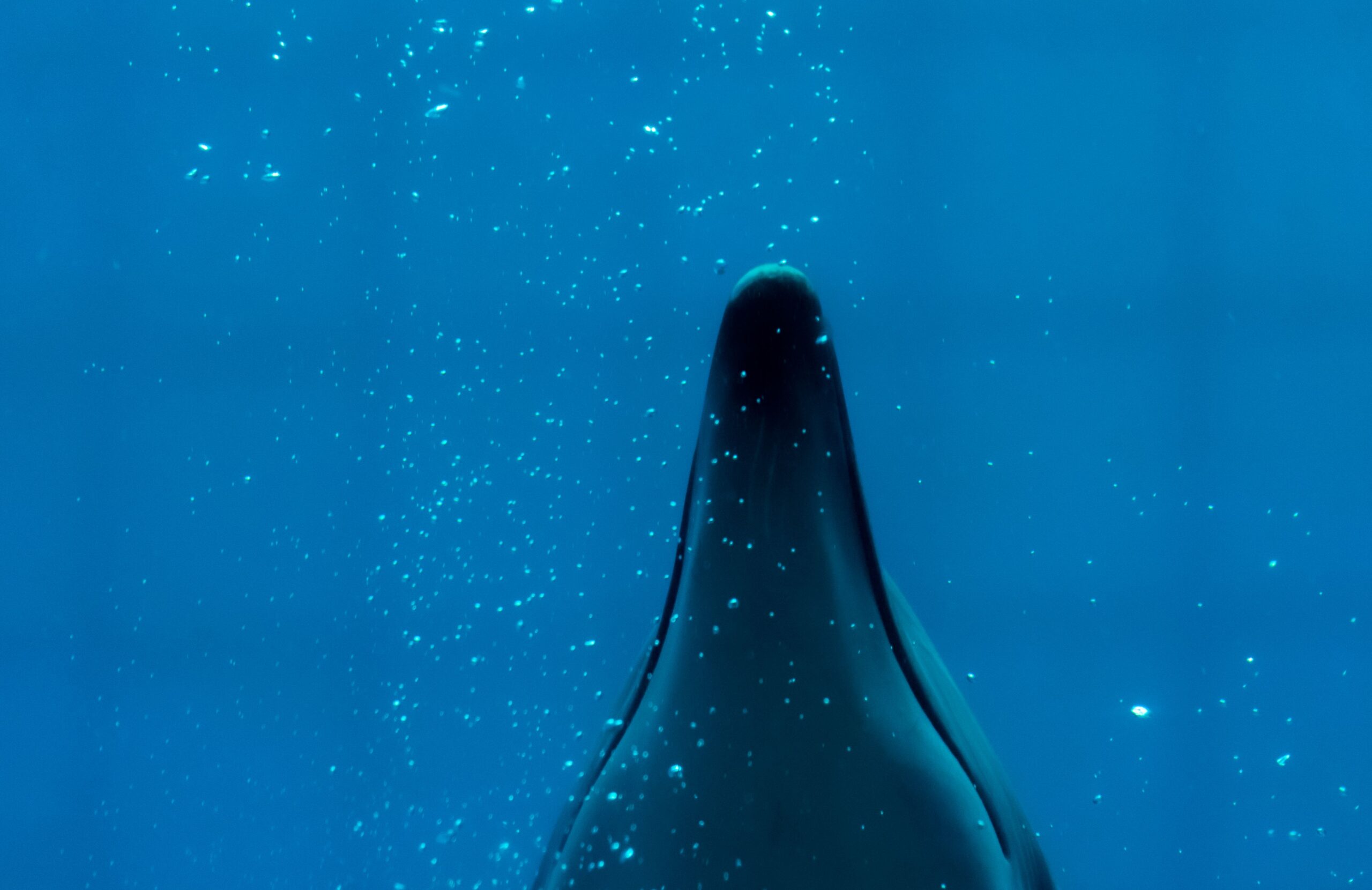
What kind of animal is the River Dolphin? We will explain its characteristics, ecology, and habitat. It is a Southeast Asian dolphin, and some can be seen in northern Australia, so its habitat is very wide, but it is actually designated as an endangered species. Let’s take a closer look at the details.









- What is a River Dolphin? Basic Stats
- What are the roots and origins of the Irrawaddy dolphin?
- Habitat
- What are its characteristics? What is it like?
- What is its personality like?
- What is its ecology like?
- About Diving
- About Their Vocalizations
- Seasonal Activities
- Swimming Speed
- About Baby River Whales
- Are River Dolphins Endangered?
- Can River Dolphins be kept as pets?
- Captivity in Zoos and Aquariums (Japan & Worldwide)
- Introducing other animals
What is a River Dolphin? Basic Stats
The Irrawaddy Dolphin is a marine mammal that belongs to the genus Orcaella, family Delphinidae, suborder Odontoceti, order Cetacea. Its English name is 河巨頭, and its scientific name is Orcaella brevirostris. The list of information is as follows. Its total length is over 2m and its weight exceeds 100kg.
| Japanese(和名) | カワゴンドウ |
| English(英名) | Irrawaddy Dolphin |
| scientific name(学名) | Orcaella brevirostris |
| classification(分類) | Mammalia、Odontoceti、 Delphinidae、Orcaella 哺乳綱、ハクジラ亜目、マイルカ科、カワゴンドウ属 |
| IUCN Status(保全状況) | ENDANGERED |
| Length(体長) | 2m |
| Weight(体重) | 130kg |
What are the roots and origins of the Irrawaddy dolphin?
The roots of the Irrawaddy dolphin (Orcaella brevirostris) differ significantly from those of the beluga whale; they evolved from a lineage of oceanic toothed whales that expanded into coastal and riverine environments. Although they bear a slight physical resemblance to belugas, they are not closely related in evolutionary terms. Under current classification, they belong to the family Delphinidae (oceanic dolphins).
The evolutionary path of the Irrawaddy dolphin
The general evolutionary progression is as follows:
Land mammals (approx. 50 million years ago)
↓
Primitive cetaceans (moved into the ocean)
↓
Toothed whales (approx. 30 million years ago or later)
↓
Ancestors of the Delphinidae family
↓
Coastal dolphins
↓
Genus Orcaella (Irrawaddy dolphins)
In other words, the Irrawaddy dolphin is:
Not a dolphin that originated in rivers, but rather an oceanic dolphin that moved back into river environments.
What kind of dolphin was its ancestor?
The ancestor of the Irrawaddy dolphin was likely a primitive member of the Delphinidae family that inhabited the oceans during the Miocene epoch (approximately 23 million to 5.3 million years ago).
In the oceans of that era, dolphins were diversifying into various forms, such as:
High-speed dolphins that pursued fish
Small dolphins that lived in coastal areas
Dolphins adapted to shallow waters
Among these groups, certain lineages expanded into:
Estuaries
Bays
Mangrove areas
The lower reaches of large rivers
Why did they move into rivers?
The primary reason the Irrawaddy dolphin moved into rivers was environmental adaptation.
① Abundant food sources
Estuaries and large rivers teemed with:
Small fish
Shrimp
Crabs
Shellfish
In particular, the murky waters likely offered fewer large marine predators and less competition from other species.
② Adaptation to coastal shallows
The Irrawaddy dolphin is not a strictly freshwater dolphin. Habitat:
Coasts
River mouths
Brackish water areas
Some large rivers
Representative habitats:
Myanmar: Irrawaddy River
Cambodia/Laos: Mekong River
Indonesia: Mahakam River
etc.
Classification
River whales were recognized in 1866 when they were reported as a new species by Richard Owen. Genetically, they are closer to killer whales than to dolphins. The Australian river whale is found in Australia and is becoming recognized as a separate species.
Taxonomy of River Dolphins
- 界(Kingdom): 動物界 (Animalia)
- 門(Phylum): 脊索動物門 (Chordata)
- 綱(Class): 哺乳綱 (Mammalia)
- 目(Order): 鯨偶蹄目 / 鯨目 (Cetacea)
- 亜目(Suborder): 歯鯨亜目 (Odontoceti)
- 科(Family): ハクジラ科 (Delphinidae)
- 属(Genus): ゴンドウクジラ属 (Orcaella)
- 種(Species):
- カワゴンドウ(淡水系個体群): Orcaella brevirostris
- 近縁種: 海洋性のゴンドウクジラ (Orcaella brevirostris) とは同種だが、生息域が川や沿岸域に限定される。
Habitat
They are found in Southeast Asia (India, Bangladesh, Myanmar, Thailand, Indonesia, Cambodia, Philippines) and northern Australia. River whales can also be found in the Mekong River and Ayeyarwady River.
Main Habitats
Rivers of Asia
Mekong River (Laos, Cambodia, Thailand, Vietnam)
The world’s best-known freshwater population. It is listed as endangered, with an estimated population of only a few hundred individuals.
Indus River (Pakistan)
Small populations exist, but their numbers are extremely small.
Rivers of India
Lower Ganges River Basin
Although reported at one time, their population may have declined dramatically in recent years.
Coastal and brackish waters of Southeast Asia
Estuarine estuaries and lagoons in Malaysia and Indonesia
Populations adapted to brackish waters where freshwater and seawater mix.
China
Yangtze River
There once existed a population known as the “Yangtze River dolphin,” but the remaining individuals are considered nearly extinct.
Habitat Characteristics
Freshwater: Mid- to lower reaches of rivers, with relatively slow currents.
Brackish water: Places where seawater and freshwater mix, such as river estuaries and lagoons.
Depth: They feed on fish in relatively shallow rivers where the bottom is visible.
Impact of human activities: Their habitat is shrinking due to dam construction, shipping traffic, and water pollution.
What are its characteristics? What is it like?
The river whale has no beak and looks similar to a finless porpoise or a beluga whale. Its entire body is brown with a lighter color underside. Its lips are flexible and it can blow water out of its mouth. It inhabits the warm coastal waters and rivers from the Bay of Bengal to northern Australia. It swims by rotating as it rises and only raises its tail above the water when it dives.
- Physical Characteristics
Size
Adults measure approximately 2-2.5 m in length and weigh around 90-150 kg.
Body Shape
Their dorsal fin is small and round (not nearly triangular, but turtle-shell shaped).
They have a rounded head, a dolphin-like face, and a short snout.
Their body color is gray to pale blue-gray, with a whitish underside.
Unique Features
Because they belong to the Pilot Whale genus, they have a rounder shape than typical dolphins.
They are similar to oceanic pilot whales, but the freshwater species is slightly smaller and slender.
- Behavior and Ecology
Primaries
They often live in small groups (5-20 individuals).
Diet
They feed on fish and small crustaceans.
They are adept at catching fish even in shallow rivers.
Swimming
They live in rivers with a leisurely pace, rather than fast swimming.
Calls
They communicate with high-pitched clicks and calls.
Reproduction
Mothers care for their young for long periods of time.
They give birth to one calf at a time.
- Ecological Characteristics
Because they are adapted to freshwater and brackish waters, their body shape is suited to river currents, something not seen in marine dolphins.
Their dorsal fins are small, allowing them to swim in shallow waters, reducing resistance from currents.
Because they live in rivers close to human habitation, they are heavily affected by boats and fishing.
What is its personality like?
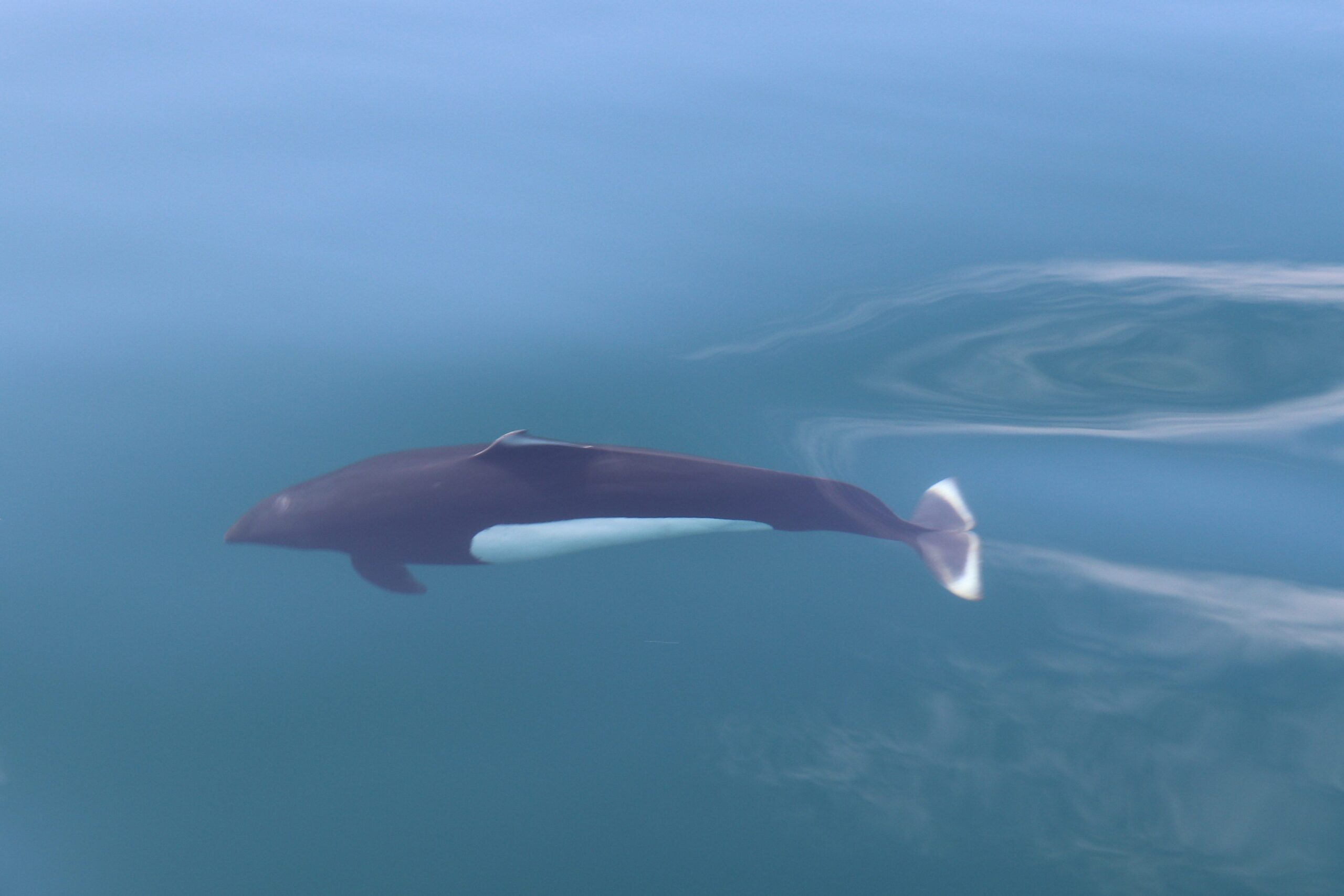
The river whale, like other dolphins, has a very gentle and calm personality.
River Whales’ Personality and Behavior
Gentle and calm
They often swim leisurely in rivers and rarely become suddenly aggressive.
They are relatively docile toward humans and may approach them out of curiosity (however, contact with wild individuals is dangerous).
Highly curious
They may approach boats or anglers and are sensitive to changes in their surroundings.
They may also play with floating objects or bubbles on the water’s surface.
Social
They live in small family or parent-child groups.
They actively communicate with each other (by calling and clicking).
They exhibit cooperative behavior within the group to protect and care for their young.
They can also be timid.
They are sensitive to strong currents, boat noise, and large-scale fishing activity.
They will suddenly flee as a group if they sense danger.
Playful
They have been observed jumping on the water surface and splashing with their tails and bodies.
In river environments, they also play games with fish in shallow waters, chasing each other.
What is its ecology like?
The river whale mainly eats squid and fish. It lives by eating creatures that live on the bottom of the water. Its lifespan is about 30 years.
- Habitat
Freshwater rivers: Live in shallow areas and winding channels in the mid- to lower reaches.
Brackish waters: Live in places where freshwater and saltwater mix, such as estuaries and lagoons.
Water depth: Can catch fish in shallow rivers.
Impacts of human activity: Boat traffic, fishing, water pollution, and dam construction limit their habitat.
- Diet (What do they eat?)
Mainly fish (carp, catfish, freshwater fish, etc.)
Also prey on small crustaceans.
Preying method
Work together in schools to drive and catch fish.
Because rivers are shallow, they hunt by jumping and circling.
- Behavior
School Life: Usually small groups of 5-20 individuals.
Swimming Pattern: Often swims slowly in rivers, rarely making sudden movements.
Calls/Communication:
Communicates with peers using high-frequency clicks and whistling calls.
May alter sounds to suit the river environment.
- Reproduction
Gestation Period: Approximately 10-12 months.
Birth: One baby at a time.
Rearing: Mothers take the lead in caring for the baby for an extended period.
Sexual Maturity: Females reach sexual maturity at approximately 5-10 years, males slightly later.
- Adaptations and Characteristics
Small dorsal fin → Easier to swim in shallow, flowing rivers.
Small, rounded body → Adapted to river navigation and prey hunting.
Timid and cautious → Sensitive to boats and humans.
Do they have any natural enemies?
Sharks are the biggest threat to the river whale.
About Diving
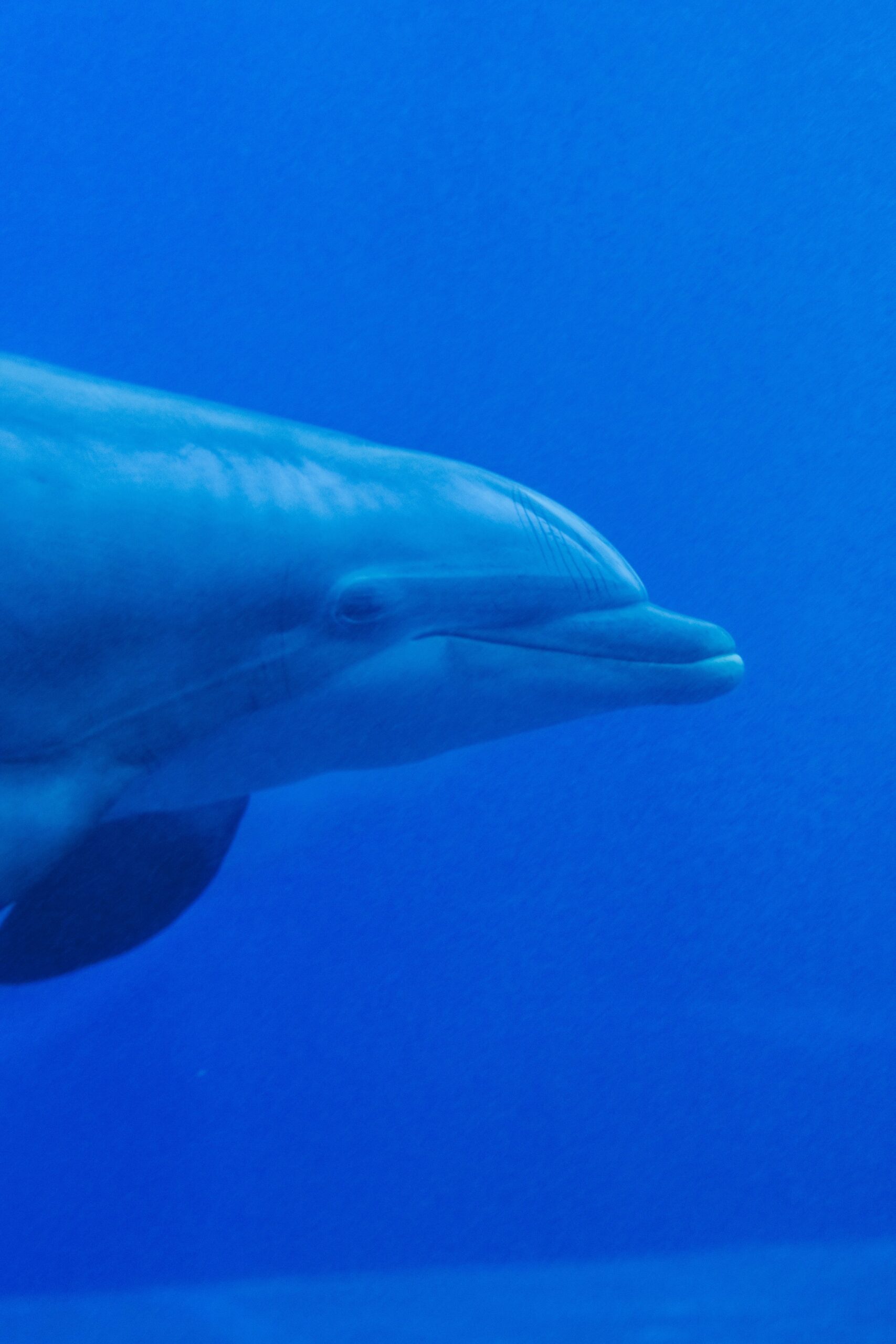
The diving ability of the Irrawaddy dolphin is not of the “deep-diving” type seen in belugas or bottlenose dolphins; instead, it is characterized by capabilities evolved for hunting prey in shallow rivers and coastal waters.
Dive Duration
Typical: Approximately 1–3 minutes
Long dives: Around 5–6 minutes
Rather than diving for extended periods, Irrawaddy dolphins tend to:
Thoroughly explore the underwater environment
Repeatedly perform short dives
Rivers and Coastal Areas
Typical:
Around a few meters to 20 meters
Deep areas:
Can dive up to
Several tens of meters
Since their habitat consists primarily of shallow waters—such as
The Mekong River
The Irrawaddy River
Estuaries
Mangrove areas
—they do not require the ability to dive to depths of hundreds of meters.
Why don’t they dive deep?
Their hunting grounds are not in the deep ocean, but rather:
Near the riverbed
In shallow coastal waters
Over muddy bottoms
Around rocky areas
Their prey consists of
Small fish
Shrimp
Crabs
Mollusks
so there is no need to pursue them into deep water.
About Their Vocalizations
The vocalizations of the Irrawaddy dolphin differ somewhat from the “varied, song-like sounds” of the beluga whale; instead, they have evolved into a high-performance acoustic system suited for life in murky rivers and coastal waters.
① Click Sounds (Pulsed Sounds)
These are the most important sounds.
Uses:
Locating fish
Scanning the riverbed or rocky areas
Gauging distance from other dolphins
Detecting obstacles
Mechanism:
Emit sound
↓
Reflects off an object
↓
Analyze the returning sound
↓
Understand the surrounding environment
In murky rivers, sound is more important than vision.
② High-Frequency Pulsed Sounds
Irrawaddy dolphin clicks contain very high frequencies.
Characteristics:
Rapid, continuous emission of short sounds
Precise scanning of narrow areas
Capable of detecting even small fish
Particularly effective in:
Muddy bottoms
Mangrove areas
Areas with strong currents
③ Whistles
Sounds commonly observed in dolphins.
Uses:
Communicating with others
Maintaining the pod
Social interaction
Irrawaddy dolphins are highly social and travel in pods ranging from a few to several dozen individuals, making acoustic coordination essential.
How do they produce sound?
It differs from the human vocal cord mechanism.
Irrawaddy dolphins use:
“Phonic lips” (sound-producing organs)
located deep within the nasal passage.
Process:
Move air from the nasal passage
Vibrate the sound-producing organs
Focus the sound using the “melon” (fatty organ) on the head
Radiate the sound into the water
Seasonal Activities
The seasonal activities of the Irrawaddy dolphin are not characterized by large-scale “Arctic-style seasonal migrations” (like those of beluga whales); instead, they are strongly influenced by changes in the river environment caused by the alternation between the rainy and dry seasons.
🌱 Spring (March–May): End of the Dry Season / Foraging Season
Varies by region
Key Activities
Gathering in deep areas
Increased time spent foraging
Moving in pods
As river water levels drop during the late dry season,
Shallow areas increase
Fish migration routes shift
…causing Irrawaddy dolphins to utilize deeper waters and river pools (deep sections).
Behavioral Characteristics
Frequent use of echolocation
As water levels recede,
Rocks
Driftwood
Riverbed
…obstacles become more prevalent, making exploration via click sounds crucial.
☔ Summer (June–September): Rainy Season / Period of High Activity
This period sees the most significant environmental changes in tropical regions.
Rising river levels
During the rainy season,
River width expands
Water depth increases
Variety of prey increases
…leading to an expanded activity range.
Moving in pursuit of prey
During the rainy season, fish move to:
Tributaries
Shallow areas
Coastal zones
Irrawaddy dolphins follow them, sometimes:
Entering tributaries
Moving toward river mouths
Utilizing new feeding grounds
Calf-rearing period
In many regions, the following are observed:
Birth
Calf-rearing
Calves learn the following from their mothers:
Swimming techniques
Echolocation
Foraging methods
🍂 Autumn (October–November): Falling Water Levels / Season of Movement
As the rainy season ends,
River water levels drop
Fish distribution shifts
…causing changes in their activity range.
Key Activities
Shifting feeding grounds
Moving to deeper waters
Reorganizing pods
Efficiently catching fish
As falling water levels make it easier for fish to congregate in limited areas,
Herding fish in pods
Foraging in shallow areas
…become more common behaviors.
❄️ Winter (December–February): Dry Season & Energy-Saving Period
Although located in the tropics, this period marks the dry season.
Key activities include:
Utilizing specific deep-water areas
Minimizing travel distances
Concentrating foraging efforts in specific areas
These behaviors are particularly critical for river-dwelling populations.
In rivers like the Mekong, water levels drop significantly during the dry season, leading to issues such as:
Shrinking habitats
Concentration of individuals
Increased vulnerability to human activity
Swimming Speed
The Irrawaddy dolphin is not a high-speed swimmer like the bottlenose dolphin; instead, it is a slow-moving but highly maneuverable swimmer capable of making tight turns in narrow, complex river environments.
Normal Speed
Approximately 3–8 km/h
This is the speed at which they typically swim.
Uses:
Foraging for food
Traveling with the pod
Patrolling the river
Irrawaddy dolphins excel at hunting by using sound to locate and approach prey, rather than chasing it down.
Cruising Speed (During Travel)
Approximately 5–10 km/h
They swim at a steady pace to conserve energy when traveling through rivers or along the coast.
Their range of movement varies depending on environmental conditions, such as:
Deep sections of the river
Estuaries
Shallow coastal waters
Maximum Speed
Approximately 20–25 km/h
They are capable of short bursts of speed.
Situations:
Chasing fish
Escaping danger
Rapidly approaching other dolphins
However, they are not adapted for sustained high-speed swimming.
About Baby River Whales
Baby River Whales (juveniles) have the following characteristics. Because they are adapted to life in rivers and estuaries, they exhibit behaviors and ecology slightly different from adults.
- Physical Characteristics
Body Length: Approximately 80-100 cm at birth
Weight: Approximately 10-15 kg
Body Color: Light gray, slightly darker on the back, and whitish on the ventral side
Dorsal Fin: Small, rounded, the same shape as adults
- Behavior and Personality
Dependent on Mother: For about a year after birth, they swim close to their mother, protecting them from food and danger.
Playful: They jump on the water surface and chase each other with their mother and siblings.
Learning Behavior:
They learn how to hunt and catch fish from their mother.
They also practice adjusting to the currents of rivers.
Sociability: They learn to communicate with their group members early on.
- Biological Features
Diet: Breastfed for the first few months of life.
Weaning: Around 6-12 months of age, babies gradually begin eating fish.
Growth: Over the course of 1-2 years, they nearly double their body length and become capable of moving like an adult.
Dangers: Young babies are at high risk of accidents in shallow rivers, due to boat traffic, and becoming entangled in fishing gear.
Are River Dolphins Endangered?
River dolphins are designated as an endangered species. Their population is declining due to humans, with the biggest threat being capture for the purpose of catching oil. Decreasing population and shrinking habitat are major issues, and habitat fragmentation has also occurred. In the early 2000s, the number of individuals dropped dramatically to just around 50, and complete extinction was feared. However, conservation efforts are progressing, and the population is beginning to increase.
- International Union for Conservation of Nature (IUCN) Assessment
Freshwater river populations (e.g., Mekong River, Yangtze River)
Some populations are classified as “Endangered” (EN) or “Critically Endangered” (CR) on the IUCN Red List.
For example, the Mekong River river dolphin is Endangered (EN).
The Yangtze River river dolphin is considered nearly extinct.
Marine populations
Coastal-dwelling pilot whales are sometimes classified as Vulnerable (VU).
- Reasons for Endangerment
Habitat Destruction
Dam Construction and Channel Improvements Divide River Environments
Changes in Flow Speed and Depth, Reducing Feeding Grounds
Conflicts with Fisheries
Frequent Entanglement in Nets and Fishing Gear
Dwindling Fish Stocks Lead to Less Food
Water Pollution
Deteriorating River Water Quality Due to Industrial Wastewater and Pesticides
Vessel Traffic
Collisions Caused by Vessel Traffic on Rivers
Low Reproductive Rate
Small Herds and Low Number of Offspring
Can River Dolphins be kept as pets?
River dolphins are an endangered species and cannot be kept by the general public. We recommend viewing them at an aquarium or other venue and being guided through events. You can see them at dolphin shows.
- Legal and Conservation Issues
Designated as an endangered species, capture and sale are strictly regulated internationally (listed under CITES Appendix I or II).
Capturing and keeping wild river dolphins is illegal in Japan.
Overseas, captivity is generally permitted only in special research facilities and aquariums.
- Ecologically Difficult to Keep
Requires a vast freshwater or brackish water environment.
Recreating the flow of a river or estuary is nearly impossible.
Special dietary habits.
Eat large amounts of raw fish and must learn predatory behavior.
Highly social.
Living in small groups, keeping them alone is stressful.
Health management is difficult.
Wild individuals are sensitive to disease and stress, and there are few examples of them surviving long lives in artificial environments.
- Aquarium Breeding
Marine pilot whales and freshwater river dolphins are only kept in limited numbers in specialized facilities.
They are extremely rare in Japanese aquariums and are rarely observed.
Breeding them requires large pools, specialized staff, and the constant presence of veterinarians.
Captivity in Zoos and Aquariums (Japan & Worldwide)
Compared to belugas or bottlenose dolphins, the Irrawaddy dolphin (also known as the kawagondō in Japanese) is rarely kept in captivity. Global trends toward keeping them for public display are currently in decline due to factors such as their specialized adaptation to freshwater and brackish environments, declining population numbers, and international conservation regulations.
🇯🇵 Can they be seen in Japan?
Currently, there are no facilities in Japan that permanently exhibit Irrawaddy dolphins.
Species commonly kept in Japanese aquariums include:
Bottlenose dolphins
Pacific white-sided dolphins
Belugas
Finless porpoises
…making instances of Irrawaddy dolphins in captivity extremely rare.
While there have been past instances of individuals imported from overseas being exhibited, there are currently no confirmed facilities in Japan where they are on public display.
🌏 Major facilities worldwide where they are kept
🇮🇩 Indonesia: Facilities near the Mahakam River basin
In Indonesia—one of the Irrawaddy dolphin’s natural habitats—they are sometimes kept for conservation and research purposes.
Habitat:
Mahakam River
Estuaries
Coastal areas
However, the focus is on rehabilitation and conservation research, differing in nature from facilities intended for public display.
🇰🇭 Cambodia: Mekong River conservation facilities
Irrawaddy dolphins in the Mekong River are critically endangered; current efforts focus on:
Population surveys
Habitat protection
Preventing conflicts with humans
Protecting wild individuals takes precedence over keeping them for display.
🇲🇲 Myanmar: Irrawaddy River
This is the region from which the species derives its name.
While there are past records of captured individuals and displays involving human interaction, conservation activities are the primary focus today.
Introducing other animals



コメント