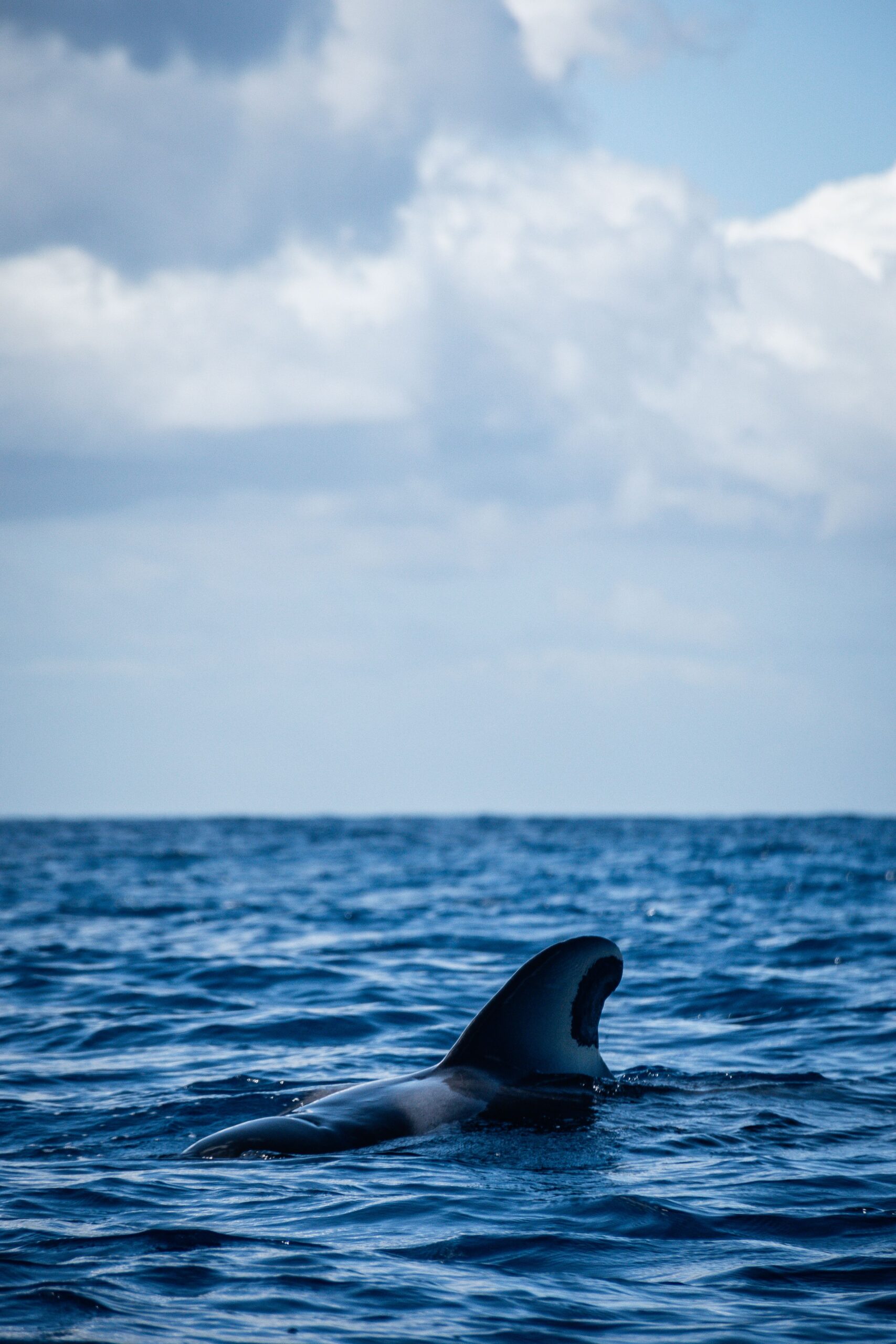
What kind of animal is a Risso’s Dolphin? We will explain its characteristics, ecology, and habitat. This dolphin is a rare animal that is hard to see even in aquariums. It grows to a huge size of about 3m in length, so it is difficult to keep it as a pet, but it puts on a very flashy performance in dolphin shows.










- What is a Risso’s Dolphin? Basic Stats
- What are the roots and origins of Risso’s dolphin?
- Habitat
- What are its characteristics? What kind of creature is it?
- What is their personality like?
- What is their ecology like?
- About Diving
- About Vocalizations
- Seasonal Activities
- On Swimming Speed
- About Risso’s Dolphin Baby
- Are Risso’s dolphins endangered?
- Can Risso’s dolphins be kept as pets?
- Facilities Housing Risso’s Dolphins (Japan & Worldwide)
- Introducing other animals
What is a Risso’s Dolphin? Basic Stats
Risso’s dolphins are marine mammals belonging to the Delphinidae family and the Risso’s genus. They are large dolphins that can grow to 3-4m in length and weigh 300-600kg. Their kanji characters are flower giant heads, their scientific name is Grampus griseus, and their English name is Risso’s dolphin. The list of information is as follows:
| Japanese(和名) | ハナゴンドウ |
| English(英名) | Risso’s dolphin |
| scientific name(学名) | Grampus griseus |
| classification(分類) | Mammalia、Odontoceti、 Delphinidae、Grampus 哺乳綱、ハクジラ亜目、マイルカ科、ハナゴンドウ属 |
| IUCN Status(保全状況) | LEAST CONCERN |
| Length(体長) | 3-4m |
| Weight(体重) | 300-600kg |
What are the roots and origins of Risso’s dolphin?
Risso’s dolphin (scientific name: Grampus griseus) is a type of dolphin descended from primitive toothed whales that emerged approximately 20 to 30 million years ago. Taxonomically, it belongs to the oceanic dolphin family (Delphinidae) and represents a species that has undergone a unique evolutionary path among the “pilot whale” group (often referred to as gondō in Japanese).
Ancestors were land mammals
Like modern dolphins and whales, the distant ancestors of Risso’s dolphin
evolved from artiodactyls (even-toed ungulates; a lineage close to modern hippopotamuses)
that lived on land.
The general evolutionary progression is as follows:
Land mammals
↓ (approx. 50 million years ago)
Early whales (Archaeoceti)
↓
Toothed whales (Odontoceti)
↓
Ancestors of the oceanic dolphin family (Delphinidae)
↓
Risso’s dolphin
Unique evolution of Risso’s dolphin
Risso’s dolphin possesses features that are quite distinct from other dolphins.
● Massive head
The “gondō” part of its Japanese name implies:
A large head (kyotō)
A rounded forehead
Risso’s dolphins lack a distinct beak (rostrum), and their heads have a shape that protrudes forward.
This is believed to be an adaptation to life in the deep sea.
● Evolution toward a white body
At birth, they are:
Dark gray
A color close to black
However, as they grow, their skin turns white.
The reason for this is:
Contact with other individuals
Play
Fighting
…which leave behind white scars.
Because these white markings resemble “flowers,” the species is known in Japan as Hanagondō (literally “flower-pilot-whale”).
Where did they originate?
Before evolving into their current form, the ancestors of Risso’s dolphin are believed to have
diverged from an ancient lineage of the oceanic dolphin family
that had spread into warm waters across the globe. Its current primary distribution spans temperate to tropical waters worldwide, including:
the Pacific Ocean
the Indian Ocean
the Atlantic Ocean
the Mediterranean region
and others.
ハナゴンドウの分類学
- 界(Kingdom): 動物界 (Animalia)
- 門(Phylum): 脊索動物門 (Chordata)
- 綱(Class): 哺乳綱 (Mammalia)
- 目(Order): 鯨偶蹄目 / 鯨目 (Cetacea)
- 亜目(Suborder): 歯鯨亜目 (Odontoceti)
- 科(Family): ハクジラ科 (Delphinidae)
- 属(Genus): ハナゴンドウ属 (Feresa)
- 種(Species): ハナゴンドウ (Feresa attenuata)
Habitat
Risso’s whales live in temperate and tropical seas around the world, so they are distributed worldwide. They seem to like warm seas, and prefer the open ocean rather than coastal waters. The minimum water temperature is 10°C, and they tend to prefer 15°C or higher.
- Main Habitat
Tropical to subtropical open ocean
Warm waters of the Pacific, Indian, and Atlantic Oceans
Around Japan, they can be found in the waters south of Okinawa and the Ogasawara Islands.
Pelagic
Most often live in the open ocean rather than nearshore waters.
Most often travel to deep waters and along ocean currents.
- Habitat Characteristics
Water Temperature: Prefers warm waters between 20-30°C.
Depth: Lives in a wide range of depths, from deep waters to mid-depths in the open ocean.
Schooling: Usually travels in small schools of 10-30 individuals.
Migratory Behavior: Moves according to food resources and seasons.
- Points of Interest
Rarely enters rivers or shallow waters; they are entirely marine.
Sightings are rare; they often dive in the open ocean to catch food.
They sometimes work together in schools to hunt for fish and squid.
What are its characteristics? What kind of creature is it?
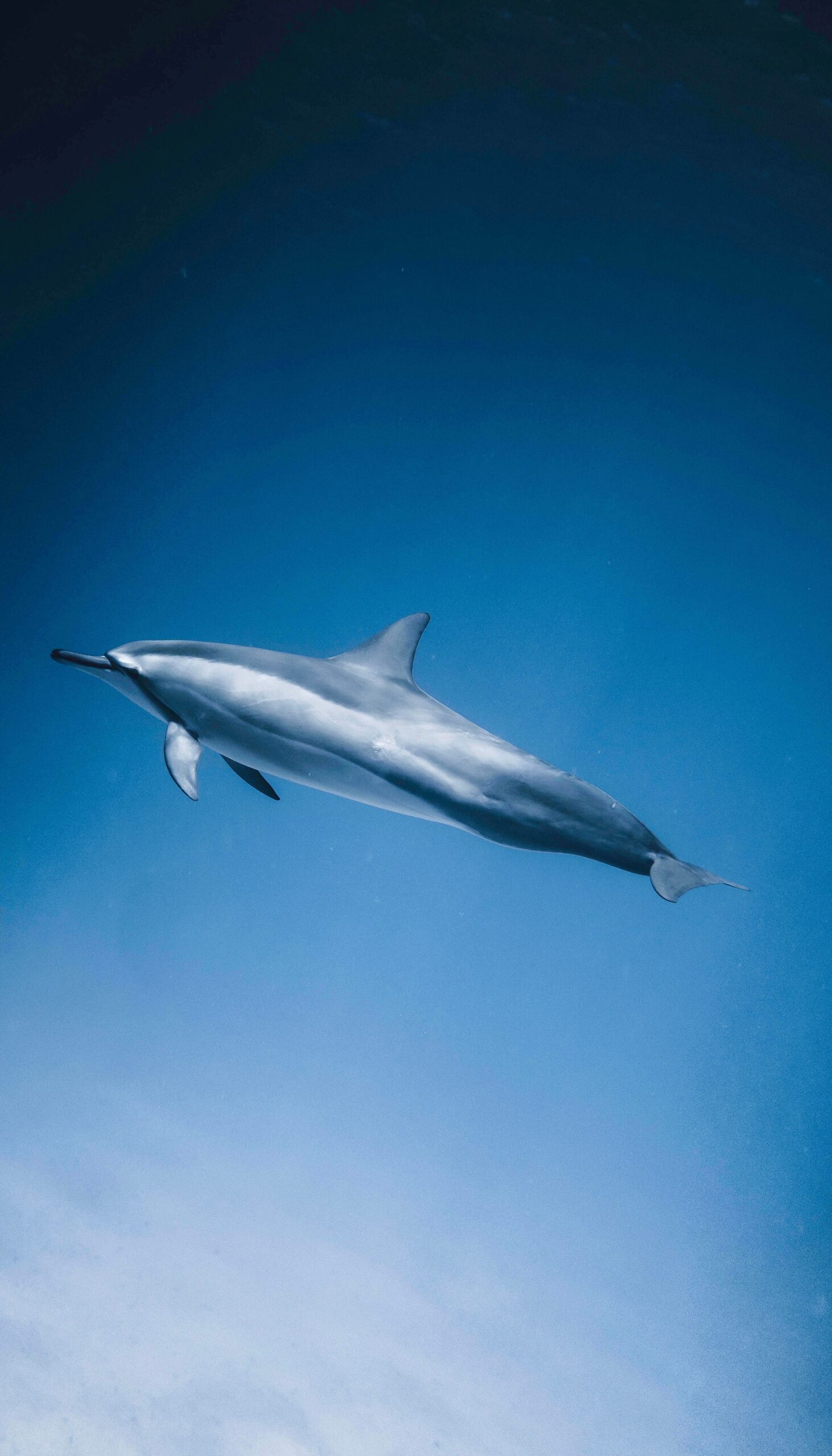
Risso’s whales have a sturdy upper body that tapers toward the caudal peduncle. They have a round head and no beak. They have a high, sickle-shaped dorsal fin, long pectoral fins, and a body color that ranges from gray-white to dark gray. They turn white with age. They are actually quite different from pilot whales, as they have no teeth on their upper jaw. They have many scratches on their bodies that make them look like they have lots of flowers in bloom, hence the name “flower” pilot whales.
- Physical Characteristics
Body Color: Blackish throughout, with a lighter color around the chest and mouth
Body Length and Weight:
Adults are approximately 2.5 m long
Weight: Approximately 150-200 kg
Dorsal Fin: Triangular, slightly curved
Snout (Beak): Short, rounded, and well-formed for a toothed whale
Body Type: Muscular and sturdy. Adapted for high-speed swimming in the open ocean
- Behavior and Personality
School Life
Live in small shoals (approximately 10-30 individuals)
Sometimes work together to catch prey
Agile and active
Able to swim at high speeds and migrate in the open ocean
Mysterious and rarely observed
Often diving deep in the open ocean, it is little known
- Ecological Characteristics
Diet: Preys on fish and squid
Reproduction: Gives birth to a single offspring
Peco-adapted: Can migrate across wide ocean areas and swim in deep waters
What is their personality like?
Risso’s whales are very social animals that value discipline. They are usually seen in groups, but often act alone.
- Sociable
Live in small groups (approximately 10-30 individuals)
They sometimes cooperate within the group to catch prey
They are thought to communicate with others through clicking sounds and calls
- Active and agile
Swimming at high speeds, they migrate through the open ocean
They have excellent diving abilities and can catch prey in deep waters
- They can also be mysterious and timid
They often dive deep into the open ocean, and observations have been rare
They are highly wary of ships and humans and often avoid approaching them
- They may be playful
They have been observed jumping and using their tails in groups
Like ocean-going dolphins, they may learn social skills through play.
What is their ecology like?
Risso’s whales live by eating fish, crustaceans, invertebrates, etc. Their lifespan is about 40 years.
- Habitat
Live mainly in the open ocean and deep seas
Distributed in the tropical to subtropical Pacific, Indian, and Atlantic Oceans
Mostly active in the open ocean deeper than near the coast
Water Temperature: Prefers warm waters of 20-30°C
Depth: Capable of diving from mid- to deep-sea depths
School Life: Lives in small schools of 10-30 individuals
Migratory Behavior: Travels long distances depending on food resources and the season
- Diet
Preys primarily on fish and squid
Dives to pursue prey and sometimes cooperates in schools
- Reproduction and Rearing
Gestation Period: 10-12 months
Birth: One baby at a time
Chubby animals learn hunting and pack life while playing alongside their mothers
- Society & Behavior
They live in groups and communicate with others through clicking and calls.
They are skilled at high-speed swimming and have excellent diving abilities.
They are adapted to life in the open ocean, and although difficult to observe, they are active and agile.
- Adaptability
Muscular and slender bodies → adapted to high-speed swimming and open-ocean life.
Adapted to hunting and schooling in the open ocean and deep sea.
They have developed cooperation within groups and the ability to dive.
Do they have any natural predators?
Killer whales are the biggest threat to Risso’s whales.
About Diving
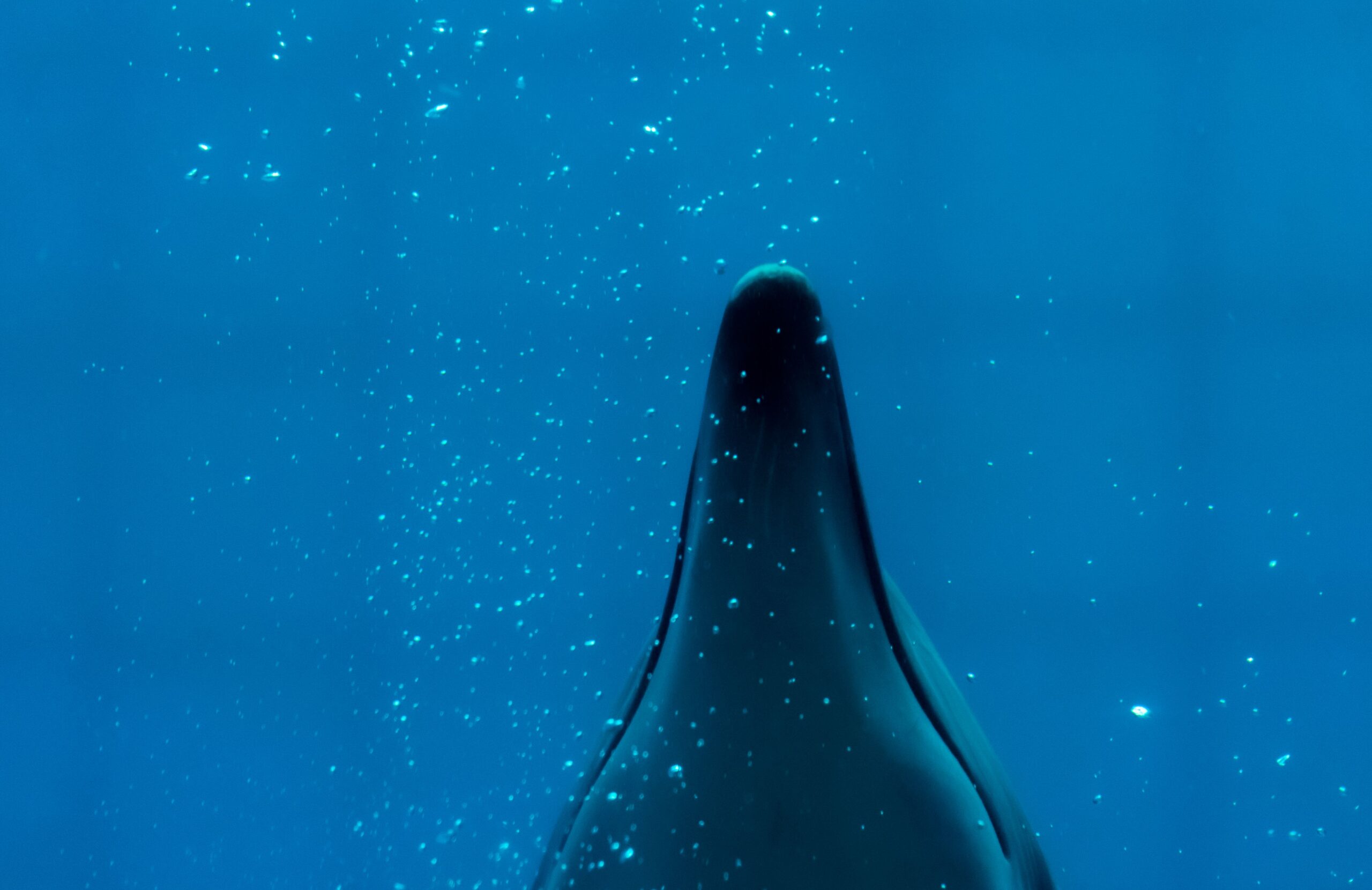
Risso’s dolphins (Grampus griseus) are a type of toothed whale known for “deep diving,” utilizing relatively deep waters compared to other dolphin species. They have evolved strong diving capabilities to pursue their primary prey: deep-sea squid.
Diving Depth
Typical: Tens to hundreds of meters
Maximum recorded: Hundreds of meters (potentially diving to depths of nearly 600–1,000 meters)
They often dive deep, particularly at night, to pursue squid rising from the depths.
Diving Duration
Risso’s dolphins can dive for:
Typical: Approximately 5–15 minutes
Long dives: Around 20 minutes
While this does not match the sperm whale (capable of diving for over an hour), it represents a high level of capability for a small dolphin species.
How do they dive so deep?
① A body that stores large amounts of oxygen
Unlike humans, toothed whales—including Risso’s dolphins—possess:
High levels of myoglobin in their muscles
High hemoglobin concentrations in their blood
…allowing them to retain significant amounts of oxygen within their bodies.
In other words, they have a mechanism to store oxygen not only in their lungs but also in their muscles.
② Diving response
When diving deep, the following physiological reactions occur:
Heart rate decreases
Blood flow is concentrated on vital organs
Oxygen consumption in muscles is suppressed
Rather than simply “holding one’s breath” as humans do, the body itself shifts into an energy-saving mode.
About Vocalizations
Risso’s dolphins use a variety of sounds primarily for echolocation and communication with their pod. Because they inhabit the deep sea, their ability to gather information through sound is highly developed.
Echolocation Sounds (Clicks)
The most characteristic sounds made by Risso’s dolphins are
rapid clicking sounds resembling “click-click” or “snap-snap” noises.
Uses:
Locating squid and fish
Measuring distance
Identifying the size and shape of objects
These sounds contain a significant amount of energy in the ultrasonic range (tens of kHz and above), which is difficult for humans to hear.
Mechanism:
Sound is generated near the nasal passages
↓
Focused by the fatty tissue in the forehead known as the “melon”
↓
Projected forward as a beam
↓
Reflected sound is received by the lower jaw
↓
Analyzed by the brain
They possess a sonar-like capability involving this process.
Social Vocalizations
Risso’s dolphins are highly social animals that produce various sounds within their pods.
Common examples:
● Whistles
High-pitched sounds resembling a human whistle or a “peep-peep” or “whew-whew” noise.
Functions:
Locating pod members
Maintaining pod cohesion
Calling out to other individuals
Dolphins are known to possess “signature whistles”—unique sounds used for individual identification, similar to human names.
● Pulsed Sounds
Lower-pitched, continuous sounds resembling “kak-kak” or “gug-gug.”
Uses:
During times of excitement
Social interaction
Exchanging information within the pod
Unique Characteristics of Risso’s Dolphin Sounds
Compared to other dolphins, Risso’s dolphins tend to:
Use a higher proportion of lower-frequency clicks
Utilize sounds that travel effectively in the deep sea
Communicate with pod members over long distances
Since light does not reach the deep sea, they live in a world
“constructed by sound” rather than a “visual world.”
Seasonal Activities
Risso’s dolphins (Grampus griseus) are highly migratory dolphins that alter their habitat areas, depths, and pod behaviors according to the season. Unlike tuna, however, they do not follow fixed, large-scale migratory routes; instead, their movements are primarily dictated by water temperature and the distribution of their prey (especially squid).
Spring (March–May)
Activities: Movement to feeding grounds and pod formation
Key Behaviors
Pods that had dispersed during winter regroup.
An increasing number of individuals move northward as water temperatures rise.
They travel offshore in search of deep-sea squid.
Diet
In spring, they often pursue:
Spear squid (Heterololigo bleekeri)
Firefly squid (Watasenia scintillans)
Deep-sea cephalopods
Characteristics
Spring is considered a period of heightened reproductive and social activity.
Summer (June–August)
Activities: Movement to higher latitudes and intensified foraging
Key Behaviors
Move northward as water temperatures rise.
Utilize deep offshore waters.
Increase deep-diving activity at night.
In summer, squid sometimes move from the deep sea to shallower layers, and Risso’s dolphins follow them.
Diving Patterns
Daytime:
Resting and searching in deep waters (hundreds of meters).
Nighttime:
Hunting squid that have risen to shallower depths.
Autumn (September–November)
Activities: Pursuing prey and forming larger pods
Key Behaviors
Concentrate in areas rich in prey.
Pod sizes increase.
Long-distance movements increase.
In autumn, they forage actively, coinciding with:
An increase in squid populations
Seasonal migrations of marine life
Social Behavior
During this period, there is a tendency for increased:
Physical contact between individuals
Swimming activities
Acoustic communication
Winter (December–February)
Activities: Movement to warmer waters and utilization of the deep sea
Key Behaviors
Move to warmer waters.
Utilize offshore areas and locations with complex seafloor topography.
Target deep-sea squid.
As water temperatures drop in winter and prey in shallow waters decreases, they utilize the more stable deep-sea environment.
On Swimming Speed
Risso’s dolphins (Grampus griseus) are a type of dolphin capable of both high-speed swimming and deep-sea exploration. They do not swim at high speeds constantly; rather, they vary their speed significantly depending on the situation.
● Cruising Speed
Approximately 5–10 km/h
During routine movement—such as
moving slowly in a pod,
searching for food in the deep sea, or
maintaining distance from other pod members—
they employ an energy-efficient swimming style.
● Top Speed
Approximately 25–35 km/h
They rapidly increase their speed during situations involving danger avoidance, pursuit, play, or excitement.
For example, they accelerate when:
escaping from predators,
making sharp turns as a pod,
chasing prey, or
playing with other individuals.
① Propulsion via the Tail Fluke
Unlike fish, which move their tails from side to side,
Risso’s dolphins propel themselves by moving their tail flukes up and down.
The mechanism works as follows:
Muscles around the spine generate force
↓
Tail fluke moves up and down
↓
Water is pushed backward
↓
Forward movement is achieved through reaction force
② Swimming Adapted for the Deep Sea
Risso’s dolphins are not simply built for raw speed.
They navigate the deep sea efficiently by utilizing:
a streamlined body,
powerful tail flukes,
a flexible spine, and
large pectoral fins for precise directional control.
③ Sharp Turning Ability
To pursue squid in the deep sea,
they excel at:
rapid ascents,
rapid descents,
U-turns, and
changing direction as a pod.
Since squid often flee at high speeds, maneuverability is more critical than simple straight-line speed.
About Risso’s Dolphin Baby
Risso’s Dolphin baby (Feresa attenuata) dolphins (young) differ slightly in appearance and behavior from adult dolphins, and are characterized by a strong dependency on their mother and herd.
- Physical Characteristics
Body Length: Approximately 1 m at birth
Weight: Approximately 15–20 kg
Body Color: Gray to black throughout, becoming dark black like an adult as it matures
Dorsal Fin/Snout: Same shape as an adult, but smaller and rounder
- Behavior/Personality
Dependent on Mother
For the first few months of life, they swim close to their mother, protecting them from food and danger.
Playful
They may play on the water surface using their tail fin or body.
They learn social skills by chasing each other around in their school.
Learning Behavior
They learn hunting and migratory behavior by observing the behavior of their mother and school.
- Biological Features
Diet: Breastfed for the first few months
Weaning: Begins eating fish, squid, and other prey within a few months to a year
Growth: Reaches adult size within 1–2 years and begins participating in school activities
Dangers: Young are sensitive to predators, ships, and food shortages in the open ocean.
Are Risso’s dolphins endangered?
Risso’s dolphins are not endangered when viewed as a whole. They are kept in aquariums around the world and occasionally appear in dolphin shows. The population is said to be 60,000 along the coast of the United States, 170,000 in the eastern Pacific, and 80,000 in the western Pacific.
- International Union for Conservation of Nature (IUCN) Assessment
The IUCN Red List classifies it as “Least Concern (LC).”
It is distributed widely across tropical and subtropical waters, and its population is considered relatively stable.
- Why it is not endangered
Distributed widely across tropical and subtropical open oceans
It lives in groups and has a relatively stable reproductive rate
Its only natural predators are killer whales and large sharks
- Caution
Fisheries and bycatch: It may be accidentally caught in purse seines
Environmental change: Marine pollution and climate change may affect its prey resources and habitat
Can Risso’s dolphins be kept as pets?
Risso’s dolphins are too large for ordinary people to keep as pets. If you’re looking for one, we recommend visiting an aquarium or other place to view them and getting guided or guided by events.
- Legal and Conservation Issues
Rossi’s dolphins are internationally protected marine mammals.
Capturing and selling wild specimens is prohibited in most countries.
Even in Japan, keeping wild specimens as pets is illegal.
Only aquariums and research facilities with special permission can keep them in captivity.
- Ecological and Breeding Environment Issues
Pelagic: Their migration habits over large ocean areas in schools make this impossible to replicate at home.
Highly social: Keeping them alone is stressful.
Unique diet: They require large quantities of fish and squid, and their feeding behaviors must be learned.
Water temperature control is difficult: They require warm tropical to subtropical waters.
- Aquarium Breeding
Very few examples of captivity exist worldwide.
Even in Japan, captivity is limited to a limited number of facilities.
Care requires large aquariums, specialized staff, and a veterinarian.
Facilities Housing Risso’s Dolphins (Japan & Worldwide)
Risso’s dolphins (Grampus griseus) are rarely kept in captivity. This is because they are deep-sea dwellers that require a large range of movement and struggle to adapt to environmental changes. Consequently, they are not as commonly kept in captivity worldwide as bottlenose dolphins.
🇯🇵 Major Facilities in Japan
Enoshima Aquarium (Shin-Enoshima Aquarium)
A prominent facility in the Kanto region where Risso’s dolphins can be seen.
Features:
Has a track record of dolphin shows and training demonstrations.
Allows visitors to observe the species’ distinctive rounded heads and white scarring patterns.
Enables comparisons with other dolphin species, such as bottlenose dolphins.
Minamichita Beach Land
One of the facilities in the Tokai region where Risso’s dolphins can be seen.
Features:
Places a strong emphasis on the husbandry and exhibition of dolphins.
Allows for the observation of the animals’ behavior and their relationships with keepers.
Taiji Whale Museum
A facility known for its exhibits on pilot whales, Risso’s dolphins, and other cetaceans.
Features:
A facility specializing in cetaceans.
Extensive experience in the research and husbandry of pilot whales and Risso’s dolphins.
Comprehensive collection of materials and information regarding cetaceans, including Risso’s dolphins.
Adventure World
A large-scale theme park and zoological facility in Wakayama Prefecture. It has exhibited Risso’s dolphins.
Features:
Houses a wide variety of marine mammals.
Has a track record of breeding and researching dolphins.
🌎 Examples of Captivity Worldwide
United States
Facilities such as SeaWorld San Diego have kept Risso’s dolphins in the past.
However, the number of Risso’s dolphins currently on permanent public display worldwide is very limited.
Regions with past records of captivity
🇺🇸 United States
🇯🇵 Japan
🇨🇳 China
🇪🇸 Certain facilities in Europe
Records exist for these and other locations.
However, the exact number of individuals currently in captivity is low and fluctuates due to transfers between facilities and mortality.
Introducing other animals

コメント