What kind of animal is a zebra? We will explain its characteristics, ecology, and habitat. There is probably no one who doesn’t know about this animal, but it is also known that there are many subspecies. So what kind of subspecies are there? Where do you work? I will summarize and explain everything.


- What is a zebra? About basic status
- What are the roots and origins of the zebra?
- Where is the habitat?
- feature is? What kind of creature is it?
- What is your personality like?
- What is the ecology like?
- Zebra Vocalizations
- Seasonal Activities
- Walking Speed
- About Zebra Calves
- Are zebras an endangered species?
- Can zebras be kept?
- Zoos Housing Zebras (Japan & Worldwide)
- Introducing other animals
What is a zebra? About basic status
Zebras are mammals with distinct black and white stripes on their bodies. It is a popular animal in the class Mammalia, perissodactyla, family Equina, genus Equida. Depending on the species, the body length is 200-300 cm, the shoulder height is 140-160 cm, and the weight is 300-500 kg.
| Japanese(和名) | シマウマ |
| English(英名) | Zebra |
| scientific name(学名) | Equus |
| classification(分類) | Mammalia、 Perissodactyla、Equidae、Equus 哺乳綱、奇蹄目、ウマ科、ウマ属 |
| IUCN Status(保全状況) | NEAR THREATENED~ENDANGERED |
| Length(体長) | 200-300cm |
| Weight(体重) | 300-500kg |
What are the roots and origins of the zebra?
The roots of the zebra do not lie in a “zebra-specific ancestor”; rather, they are the result of evolution branching off from the Equus group (the horse family), which emerged approximately 4 to 4.5 million years ago. Modern zebras are very close relatives of horses and donkeys.
Ancient ancestors: Small forest-dwelling horses
About 55 million years ago, the ancestors that would eventually lead to the modern horse family were small mammals (proto-horses) living in North America.
Early members of the horse family were characterized by:
Small bodies
Multiple toes
A diet of tree leaves in forests
As they evolved, they underwent changes such as:
Increasing body size
Lengthening legs
Reducing the number of toes to a single hoof
Improving their ability to run across grasslands
The emergence of Equus: The lineage leading to modern zebras
The genus Equus—to which modern horses, donkeys, and zebras belong—is believed to have appeared approximately 4 to 4.5 million years ago.
These ancestors evolved in North America and subsequently spread across the globe, moving from:
North America
↓
Asia and Europe
↓
Africa
- The direct ancestors of zebras
Research suggests the following lineage leading to modern zebras:
Equus simplicidens (a North American horse from ~4 million years ago)
↓
Equus stenonis (an ancient European horse)
↓
Equus koobiforensis (an ancient African species)
↓
Modern zebras
In other words, zebras are not simply:
“Striped horses that have always lived in Africa”
But rather:
Descendants of ancient horses that originated in North America, migrated across the world, and evolved uniquely within Africa.
Why did they develop black-and-white stripes? There are several theories regarding the zebra’s most distinctive feature: its stripes.
Prominent theories include:
① Protection against flies (a leading theory)
Research has shown that blood-sucking insects, such as horseflies and tsetse flies, find it difficult to land on surfaces with striped patterns.
→ An adaptation for survival in the hot African climate.
② Confusing predators
When a herd runs together, the stripes blend together, potentially making it difficult for predators like lions to target a specific individual.
③ Body temperature regulation
There is also a theory that airflow caused by the temperature difference between the black and white stripes helps regulate body temperature.
About classification
There are many subspecies of zebra. Each species is widespread in Africa, but all are in critical condition as they are all designated as endangered species. The pattern varies depending on the subspecies. A leading theory is that the reason zebras have stripes is to “lower their body temperature.” The same goes for giraffes.
| Name (名前) | Scientific Name (学名) | Habit (生息地) |
| grevy zebra グレビーシマウマ | Equus grevyi | Southern Ethiopia, Kenya エチオピア南部、ケニア |
| savannah zebra サバンナシマウマ | Equus quagga | Angola, Botswana, Democratic Republic of the Congo, Eswatini, Ethiopia, Kenya, Malawi, Mozambique, Namibia, Rwanda, South Africa, South Sudan, Tanzania, Uganda, Zambia, Zimbabwe アンゴラ、ボツワナ、コンゴ民主共和国、エスワティーニ、エチオピア、ケニア、マラウイ、モザンビーク、ナミビア、ルワンダ、南アフリカ、南スーダン、タンザニア、ウガンダ、ザンビア、ジンバブエ |
| Mountain zebra ヤマシマウマ | Equus zebra | Republic of South Africa, Namibia, Angola 南アフリカ共和国、ナミビア、アンゴラ |
Equus grevyi
Grevy’s zebra is a zebra that lives from Ethiopia to Kenya. It is the largest zebra, living in savannahs and semi-desert areas, with a body length of 200-300 cm. They have many fine stripes compared to other zebras. This zebra is listed as an endangered species.
Equus quagga
Savannah zebras are fairly large, measuring 127-140cm in height and 217-246cm in length. Due to its wide range of habitat, it is classified as a near-threatened species, but there are still a large number of them. It is characterized by thick black and white stripes.
Equus zebra
The mountain zebra is 215-260cm long. Tail length 40-55m. Shoulder height 120-150cm. There are two subspecies: the Cape mountain zebra and the Hartman mountain zebra. The fur on the whole body is white, with thin black stripes on the back. It is designated as an endangered species.
Where is the habitat?
Zebras are widely distributed on the African continent. Most of its relatives live in the east.
- Grant’s Zebra (Plains Zebra)
Scientific Name: Equus quagga
Distribution: Eastern to Southern Africa
Kenya, Tanzania, Uganda, Botswana, Zimbabwe, South Africa, etc.
Environment: Savanna, grasslands, open woodlands
Characteristics: Thin stripes on the sides of the body, adapted to herd living on flat land
- Mountain Zebra (Bontebok Zebra)
Scientific Name: Equus zebra
Distribution: Mountainous regions of South Africa and Namibia
Environment: Rocky, hilly, and dry mountainous regions
Characteristics: Distinct stripes, adapted to agile movement in rugged terrain
- Grevy’s Zebra
Scientific Name: Equus grevyi
Distribution: Northern Ethiopia, Northern Kenya
Environment: Semi-arid plains, dry grasslands, shrublands
Characteristics: Large body with fine stripes, adapted to herd behavior in arid regions
Distinct habitat habits
Herbivorous, preferring open grasslands and savannas
Often forming herds near water sources
Some species are also adapted to arid regions and rugged rocky mountain terrain
feature is? What kind of creature is it?
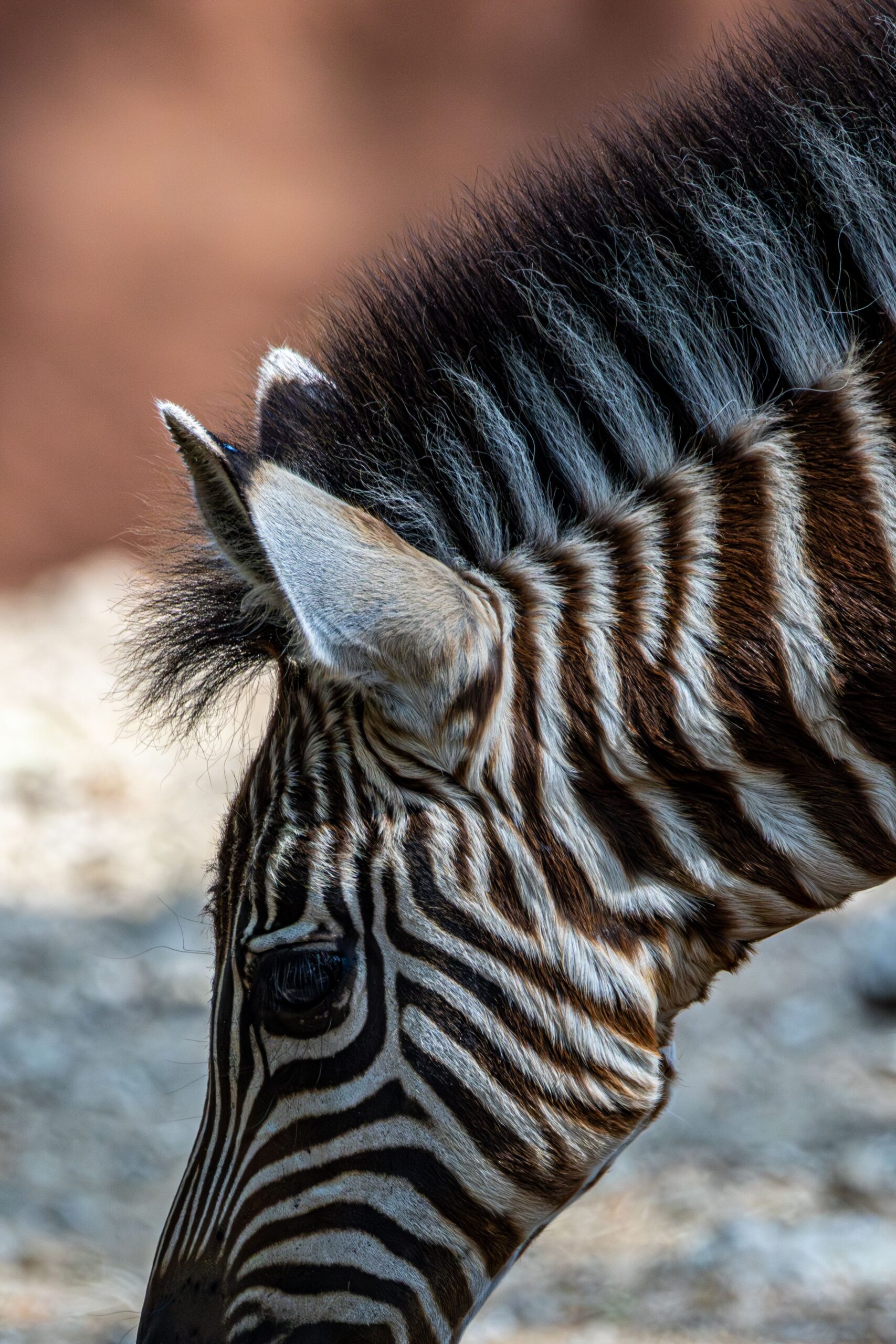
Zebras have distinctive coat colors with distinct black and white stripes. They have a keen sense of sight and smell, and excellent hearing, allowing them to detect enemies and escape. Zebras’ black and white stripes are visible even from a distance, but they actually serve as a protective color. Zebras live not only in grasslands, savannahs, and shrublands, but also in hills and mountains.
- Physical Characteristics
Body Size
Body Length: Approximately 2.2-2.5m
Shoulder Height: Approximately 1.2-1.5m
Weight: Approximately 200-450kg (varies by species)
Stripes
White and black stripes cover the entire body.
Stripes vary by species and individual.
Stripes are thought to serve various purposes, including camouflage to protect against predators, temperature regulation, and insect repellent.
Face and Ears
Their faces are long and horse-like, with erect ears that are sensitive to movement.
Their facial expressions are relatively calm.
Legs and Hooves
Long, muscular legs are well-suited for fast running.
Their odd-toed hoofs (one per side) allow them to walk and run steadily on hard ground.
- Behavioral Characteristics
Highly Social
Often Live in Groups
Plains zebras form large herds to protect themselves from predators.
Speed
They are extremely fast runners, reaching speeds of up to 65 km/h.
Herbivore
They primarily eat grass, but will also eat leaves and buds.
They often rest near water and eat while eating.
Chooting
They sometimes make a “hee-hoo” sound similar to that of a horse.
- Personality and Habits
Highly Cautious
Sensitive to predators (lions, hyenas, etc.)
Ensuring Safety by Living in Groups
Move While Paying Attention to Their Surroundings
Gentle and Non-Aggressive, They Have a Strong Defense Instinct
Defend Against Predators by Kicking and Biting
What is your personality like?
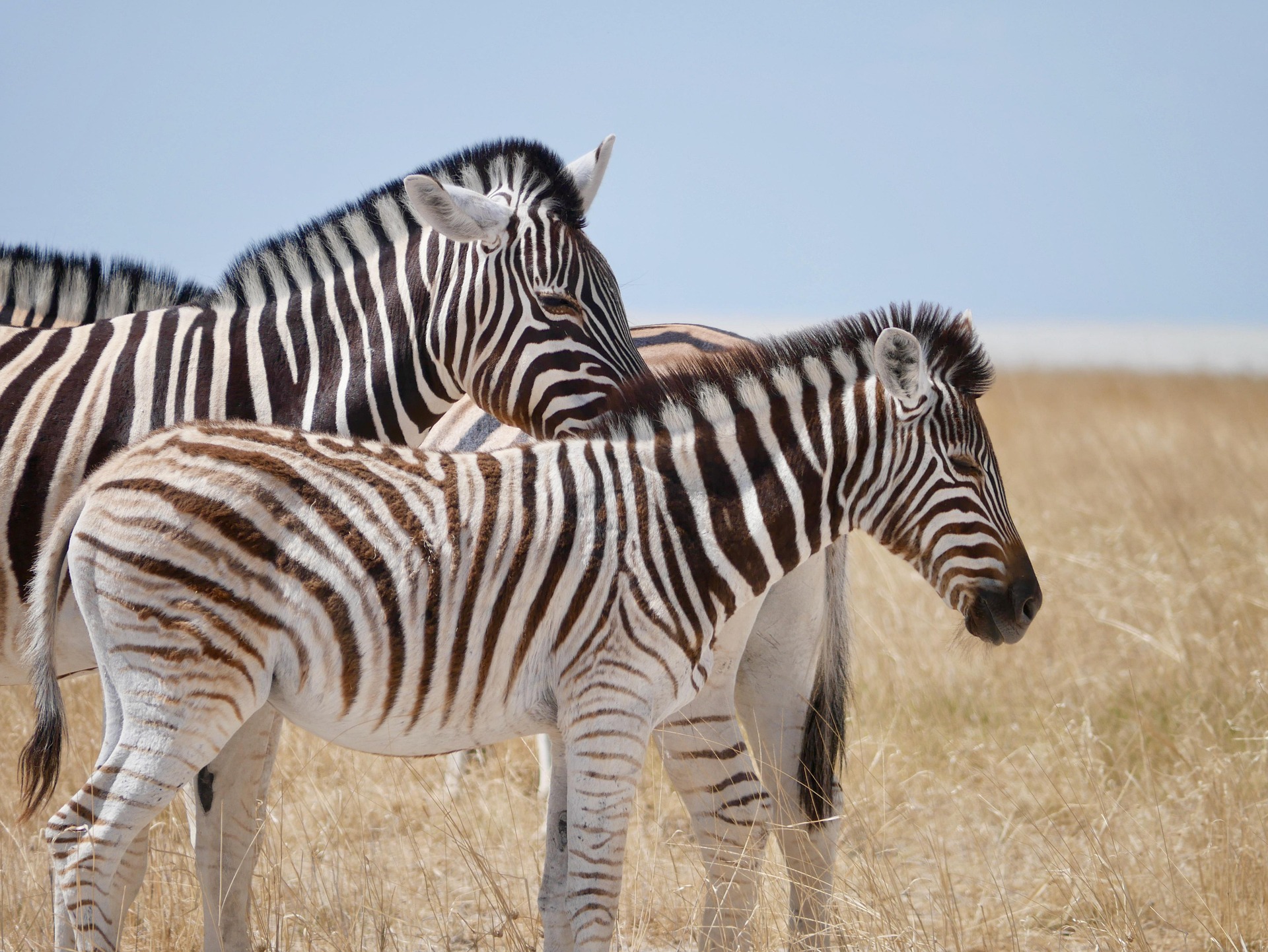
Zebras have very rough temperaments and are very cautious, making them completely unsuitable for horseback riding, and they are said to be difficult to train. It is not suitable for riding or transporting at all. When attacked by carnivores, they use teamwork to retreat, making them highly social animals.
- Highly cautious
Because they live in an environment where predators (lions, cheetahs, hyenas, etc.) are common, they are always alert to their surroundings.
Even the slightest noise or movement can trigger a reaction from the entire herd.
- Highly social
Prefers to live in groups.
Within the group, there are hierarchies and leaders, and they cooperate to maintain the safety of the group.
They are also observed to protect their young and weaker members.
- Gentle but with a strong self-preservation instinct.
Generally gentle and not aggressive.
However, they will engage in defensive behaviors such as kicking, biting, and running away from predators or threats.
- Curious but cautious
They are interested in new things and changes, but do not approach immediately and observe carefully.
They are equally wary of humans and other animals.
What is the ecology like?
Zebras primarily eat grass, but they also eat fruits, tree buds, shrubs, and twigs. Breeding is polygamous and breeds throughout the year. The gestation period is one year, and it is possible to give birth to 1-2 calves at a time. Zebras have a lifespan of about 20 years in the wild and 25 years in captivity.
- Lifestyle
Diurnal
Active during the day, eating grass and drinking water
Living in herds
Plains zebras form large herds
Grévy’s zebras and mountain zebras sometimes live in small herds or act alone
Migration
They may travel long distances in search of grass
They travel in groups to protect themselves from predators
- Diet
Grass-eater
Eat primarily grass
May also eat leaves and buds
Water Intake
Rest and eat near water sources
In arid areas, they may migrate in search of water
- Reproduction
Breeding Pattern
Polygamy is common (males form harems with multiple females)
Gestation Period
Approximately 12 months
Offspring
Typically give birth to a single offspring
Offspring are able to stand up quickly and move with the herd
- Defense and Predator Protection
They protect themselves from predators by living in groups.
When they sense danger, they send out warning signals and flee en masse.
They defend themselves by kicking and biting when necessary.
- Movement and Behavioral Characteristics
They move nomadicly on savannas and grasslands.
They may travel tens of kilometers in search of food and water.
Grévy’s zebras are adapted to arid lands and can travel long distances by learning about water sources.
What are the natural enemies of zebras?
The zebra’s natural enemy is the lion.
Zebra Vocalizations
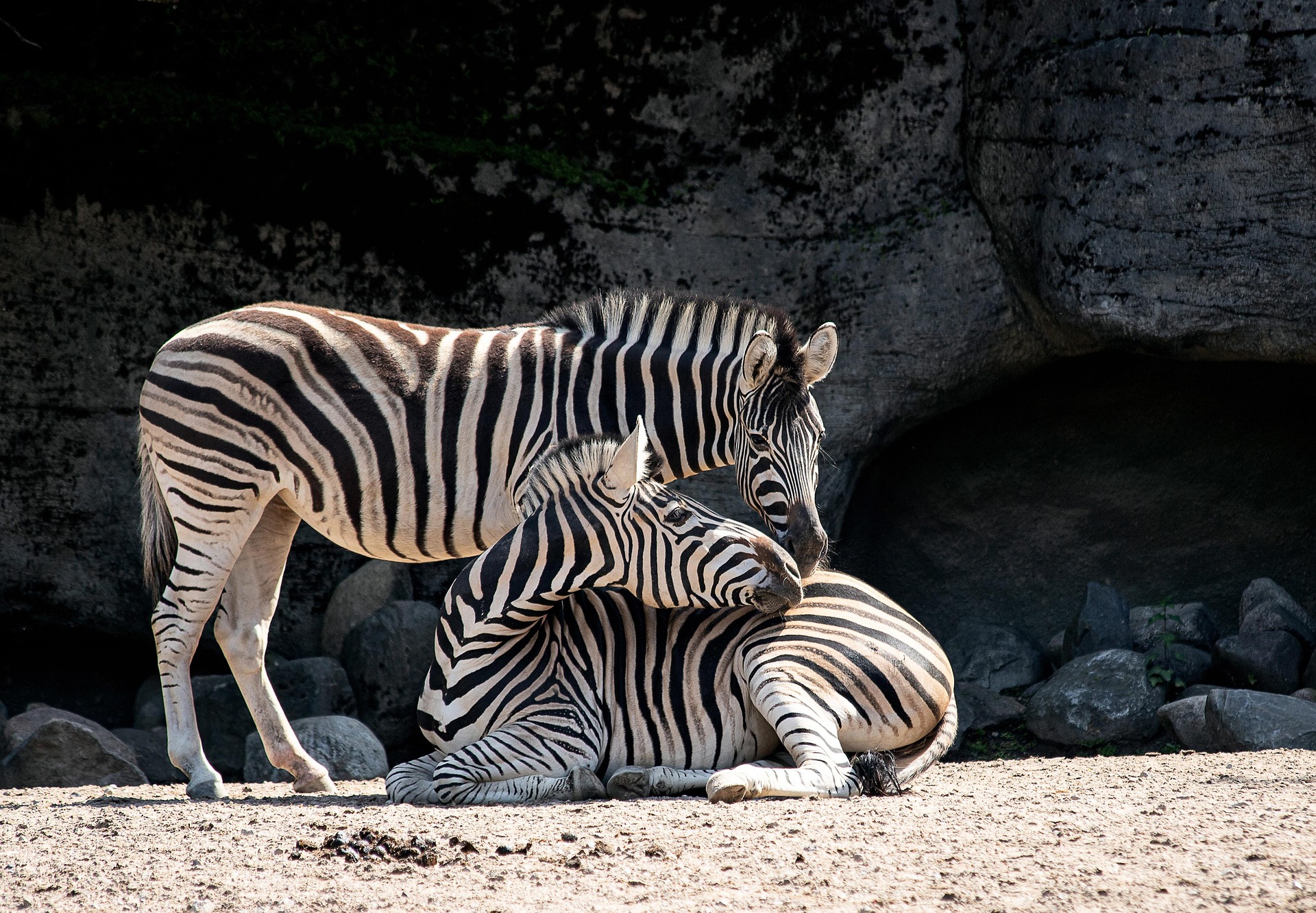
Zebra vocalizations differ significantly from the typical “neigh” or “whinny” associated with horses. They communicate with their herd using a variety of sounds, including high-pitched, sharp cries, dog-like barks, and calls resembling those of a donkey.
“Wow!” or “Ho-ho” calls (Contact calls)
These are their most distinctive vocalizations.
They are used to:
Locate herd members
Call out to individuals that have strayed
Confirm positions while on the move
These are low-pitched calls that carry over long distances, playing a vital role for these herd-dwelling animals.
“Hee-hee” or “Kee” sounds (Alarm calls)
These sounds are made when the animal senses danger.
Examples:
Spotting a predator, such as a lion
Alerting the herd to danger
Protecting their young
In these situations, they also adjust the position of their ears and body to signal alertness to the entire herd.
Donkey-like “Kwaa” calls
This is a particularly well-known sound.
Taxonomically, zebras share more characteristics with donkeys than with horses, so their vocalizations also resemble those of donkeys.
Sound profile:
“Kwaa… Kwaa…”
It has a slightly more raspy quality than a standard horse’s neigh.
Calls made by foals
Young zebras:
Make high-pitched cries
Call for their mothers
Express anxiety or hunger
These vocalizations serve a purpose similar to the crying of human infants.
Seasonal Activities
Zebra activity varies significantly by season. Zebras living on African grasslands, in particular, alter their migration, breeding, and foraging behaviors in response to the shifts between the rainy and dry seasons.
Spring (Start of the rainy season; varies by region)
Activities
Grass begins to grow; foraging increases
Herds become more active
Breeding activity increases
Rainfall triggers abundant new grass growth, making this a time of plentiful food for zebras.
Behavioral Characteristics
Increased competition among males
Shifts in territory and herd dynamics
Increase in births
Summer (Rainy season; period of abundant grass)
Activities
Spending much of the day grazing
Forming large herds
Undertaking long-distance migrations
Zebras are primarily herbivores and consume large quantities of grass daily.
Plains zebras, in particular, participate in massive migrations alongside animals like wildebeest.
Example:
Around Serengeti National Park, large-scale migrations in search of grass occur in sync with the rainy season.
Autumn (Transition to the dry season)
Activities
Migrating in search of water sources
Strengthening herd cohesion
Heightened vigilance against predators
As grass becomes scarce, they migrate while relying on their memory of locations such as:
Rivers
Springs
Waterholes
Winter (Dry season)
Note: In Africa, this is considered the “dry season,” differing from the winter experienced in Japan.
Activities
Traveling long distances to find water
Behaviors aimed at conserving energy
Ensuring safety through herd cohesion
With grass scarce during the dry season, zebras make full use of their migratory capabilities.
Daily Activity Rhythm
Zebras generally follow this pattern:
Morning
Drinking water
Grazing
Midday
Resting to avoid the heat
Waiting in the shade of trees
Evening to Night
Foraging again
Migrating
Walking Speed
A zebra’s walking speed and mobility vary depending on the species and the situation. While they usually walk at a leisurely pace, they can run extremely fast when they sense danger.
Approximate speeds: Slow walk: ~3–5 km/h; Normal movement: ~5–8 km/h; Trot: ~15–25 km/h; Running: ~40–60 km/h; Top speed: Around 65 km/h.
Gait Characteristics
Like horses, zebras utilize different gaits:
Walking
Trotting (a two-beat gait)
Galloping
Particularly during long-distance travel, they maintain a steady pace for tens of kilometers rather than wasting energy on all-out sprints.
Long-Distance Travel Ability
Zebras possess excellent endurance.
Examples:
They may travel tens of kilometers in a single day.
They undertake great migrations in response to the rainy and dry seasons.
They navigate by remembering the locations of water sources and grasslands.
Plains zebras in the Serengeti National Park area are known to undertake seasonal migrations spanning hundreds of kilometers.
Escaping Predators
When attacked by animals such as lions, they escape by:
Reaching speeds of over 60 km/h over short distances
Making sharp turns
Running in a zigzag pattern
Although zebras have a lower top speed than horses, they survive by:
Having good eyesight
Possessing strong legs
Being adept at changing direction
Maintaining vigilance within the herd
About Zebra Calves
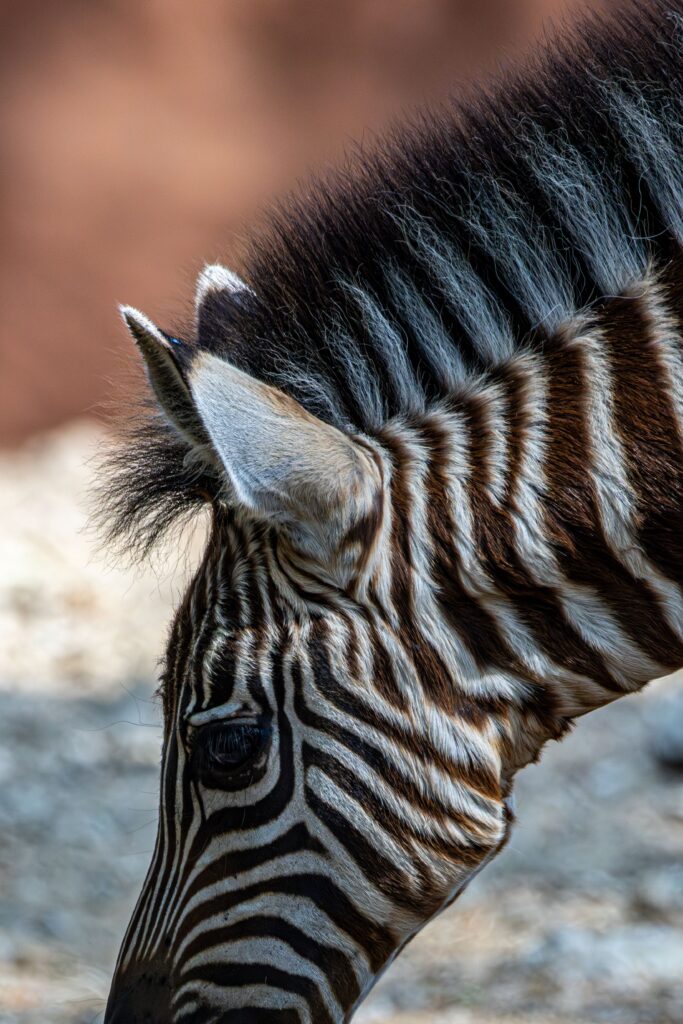
Let’s take a look at zebra calves (babies). Zebras are adapted to move immediately after birth, allowing them to quickly participate in life on the grasslands.
- Birth and Early Characteristics
Birth Period
Varies by season, but births are more common during the rainy season.
Litter Size
Usually one cub (twins are extremely rare).
Body Size
Birth Weight: Approximately 25-50 kg
Body Length: Approximately 90-110 cm
Stripes
Stripes present from birth.
After birth, the color gradually darkens, making individual differences more noticeable.
- Growth and Behavior
Standing and Moving
Stands up within a few hours of birth.
Able to move with the herd.
Lactation Period
Breastfed for approximately 6 months.
Begins to eat a small amount of grass around 2 months of age.
Play
Acquires physical and social skills by running around with other cubs within the herd.
- Herd Protection
Cubs are protected in the center of the herd.
Adult zebras keep a watchful eye on their surroundings to protect them from predators.
If they sense danger, they will immediately flee with their mother and the herd.
- Independence and Growth Rate
Weaning: At approximately 6 months of age, they switch completely to a herbivore.
Independence: They become independent within the herd at 1-2 years of age.
Maturity: Males are able to breed at 3-5 years, while females are able to breed at 2-3 years.
Are zebras an endangered species?
Zebras, including most subspecies, are listed as endangered. Due to their ferocious nature, they are completely unsuitable for livestock, and are headed toward extinction. The reasons are as follows.
habitat destruction
Habitat destruction by humans is the biggest problem. Due to land development, habitat areas are shrinking and becoming fragmented. Competition with livestock is also a big problem.
Overhunting for food and fur
Overhunting for food and fur is also a problem. Illegal hunting is very common in Africa, and animals are hunted as a means of making money.
Can zebras be kept?
For the reasons mentioned above, they are designated as an endangered species and have a very violent personality, so they are not suitable for breeding at all. It is also not suitable for livestock. Let’s enjoy it at the zoo. There is information on events, etc.
- Current Status of Captivity
Zebras are often kept in zoos and safari parks around the world.
In Japan, they are exhibited at Ueno Zoo, Tama Zoological Park, and Kobe Animal Kingdom, among others.
Capturing wild individuals is prohibited, and most captive individuals are bred or adopted.
- Difficulties of Captivity
Large Space Required
Zebras are herd animals that live on grasslands.
Sufficient exercise space can lead to stress and health problems.
Dietary Management Required
Large amounts of grass-based food are required.
Nutritionally balanced diet and hydration management are essential.
Horse socialization in groups.
Stress easily builds up when kept alone.
Multiple zebras are recommended.
Health Management
Due to their long lifespan (20-30 years in the wild, and over 30 years in captivity), regular veterinary checkups are required.
- Laws and Regulations
Zebras are listed in Appendix II of the Convention on International Trade in Endangered Species of Wild Fauna and Flora (CITES), and international trade requires permission.
Even when kept in Japan, they must comply with the Animal Welfare Act and regulations regarding specific animals.
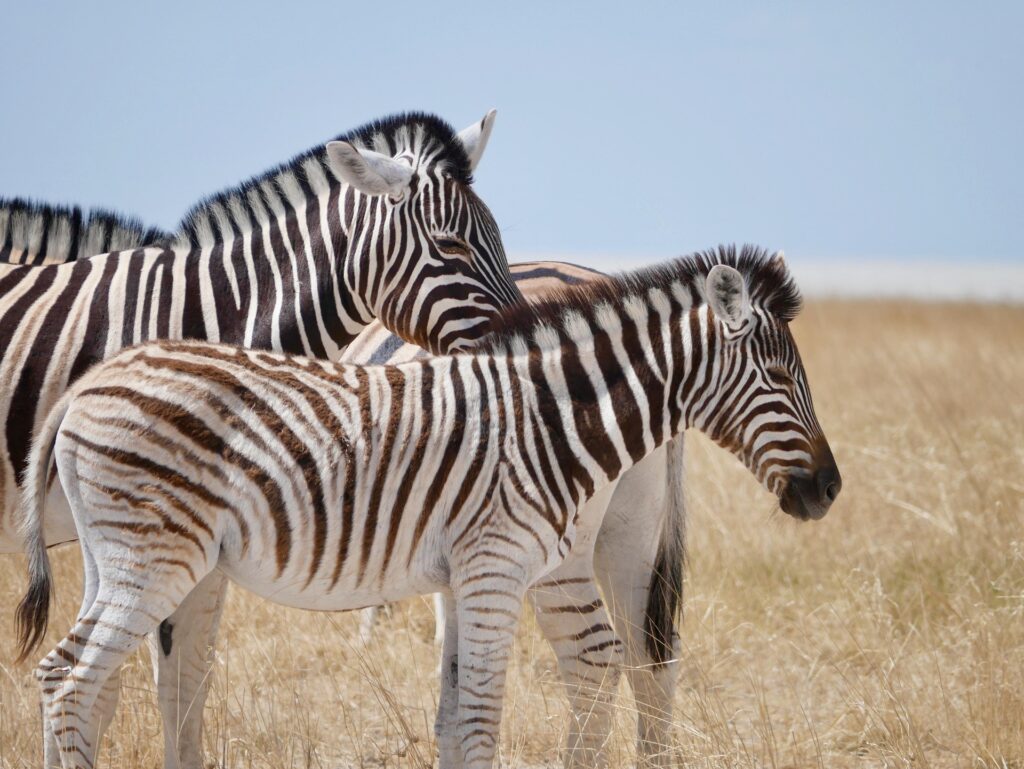
Zoos Housing Zebras (Japan & Worldwide)
Zebras are kept in zoos and safari parks around the world. In Japan, the Plains Zebra (including the Chapman’s Zebra) is the most common type, while overseas facilities also engage in the conservation and breeding of rare species like the Grévy’s Zebra and Mountain Zebra.
🇯🇵 Major Zoos in Japan Where You Can See Zebras
Tama Zoological Park (Tokyo)
Species kept: Grévy’s Zebra
Features:
One of the few facilities in Japan housing Grévy’s Zebras
Can be observed in a spacious outdoor enclosure within the “Africa Zone”
Displayed alongside other African savanna animals, such as giraffes
Grévy’s Zebras are the largest of the zebra species and are an endangered species with a small wild population.
Tobu Zoo (Saitama)
Houses Plains Zebras
Visitors can watch them running in a spacious, grassland-style enclosure
A highlight is the mixed-species exhibit featuring giraffes and other animals
Adventure World (Wakayama)
Viewable in a safari-style setting
Zebras can be seen living in a spacious environment
A representative animal of the African savanna area
Hirakawa Zoological Park (Kagoshima)
Houses Chapman’s Zebras
Displayed in the African savanna zone alongside giraffes, ostriches, and other animals
🌍 Famous Zebra-Housing Facilities Worldwide
San Diego Zoo
Houses many African animal species
Features vast exhibit environments
Renowned for conservation and research regarding African savanna animals, including zebras
Disney’s Animal Kingdom
Houses Hartmann’s Mountain Zebras
Participates in breeding programs
Features a spacious savanna-style exhibit
London Zoo
Known for conservation efforts regarding rare species like the Grévy’s Zebra
Actively involved in breeding endangered species
Nairobi National Park
Zebras can be observed in an environment close to the wild
A conservation-area style viewing spot rather than a traditional zoo
Introducing other animals
コメント