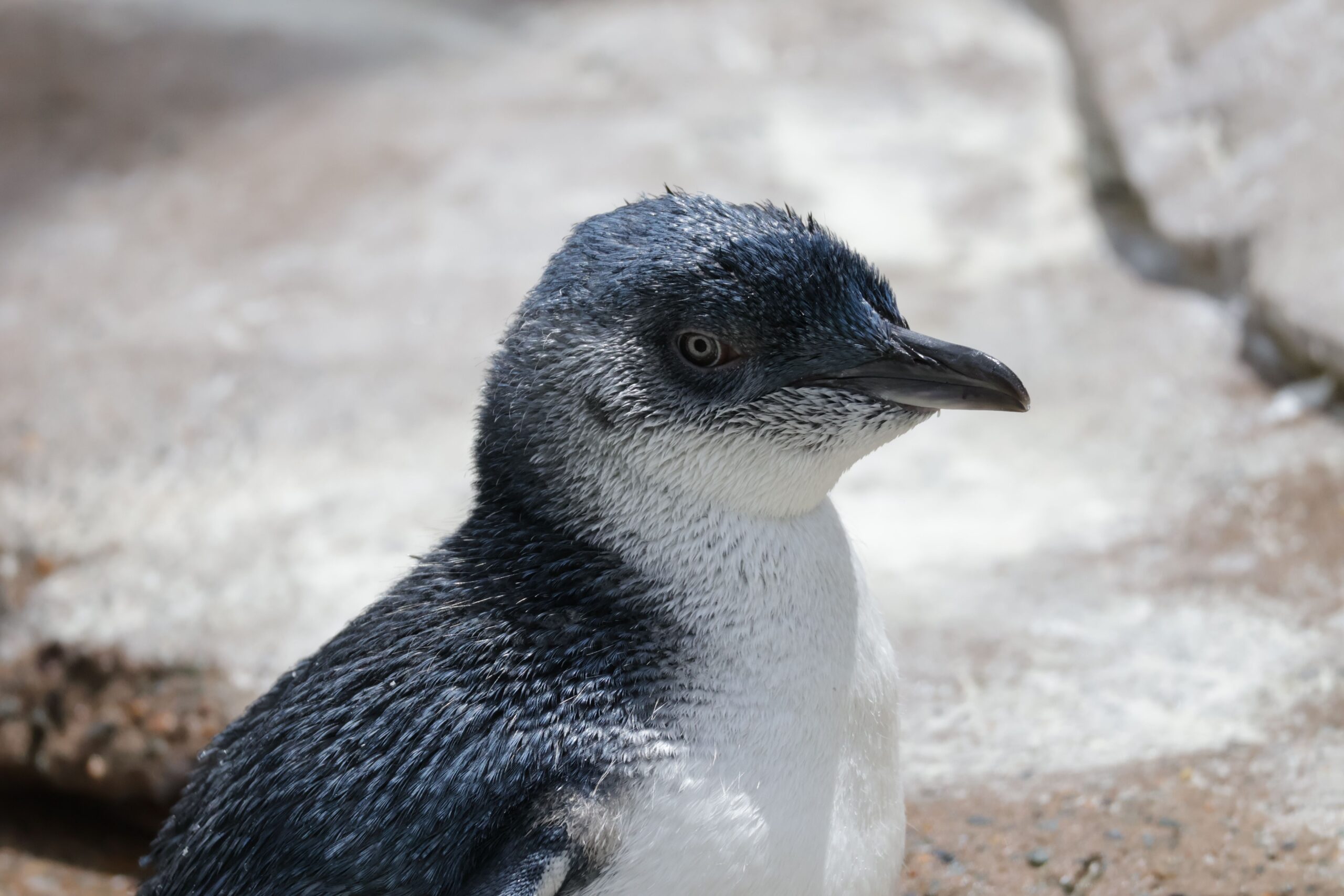
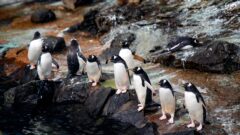
We will explain the characteristics, personality, habitat, and food of the white penguin. The white-bellied penguin is a type of small penguin, and its ecology is similar to the little penguin, making it a subspecies. It is characterized by the wide white border of the flipper.





- Basic information about the white penguin
- What are the roots and origins of the White-Faced Penguin?
- What’s going on in taxonomy?
- feature is? What kind of creature is it?
- What is your personality like?
- Molting in White-Faired Penguins
- What is the ecology of the white penguin?
- White-winged Penguin Diving
- White-winged Penguin Calls
- Seasonal Activities
- Do they become attached to humans?
- Characteristics of White-spotted Penguin Chicks
- Is the white-bellied penguin an endangered species?
- Is it possible to keep penguins?
- Zoos where they are kept (Japan and Worldwide)
- Fellow members of the same group
Basic information about the white penguin
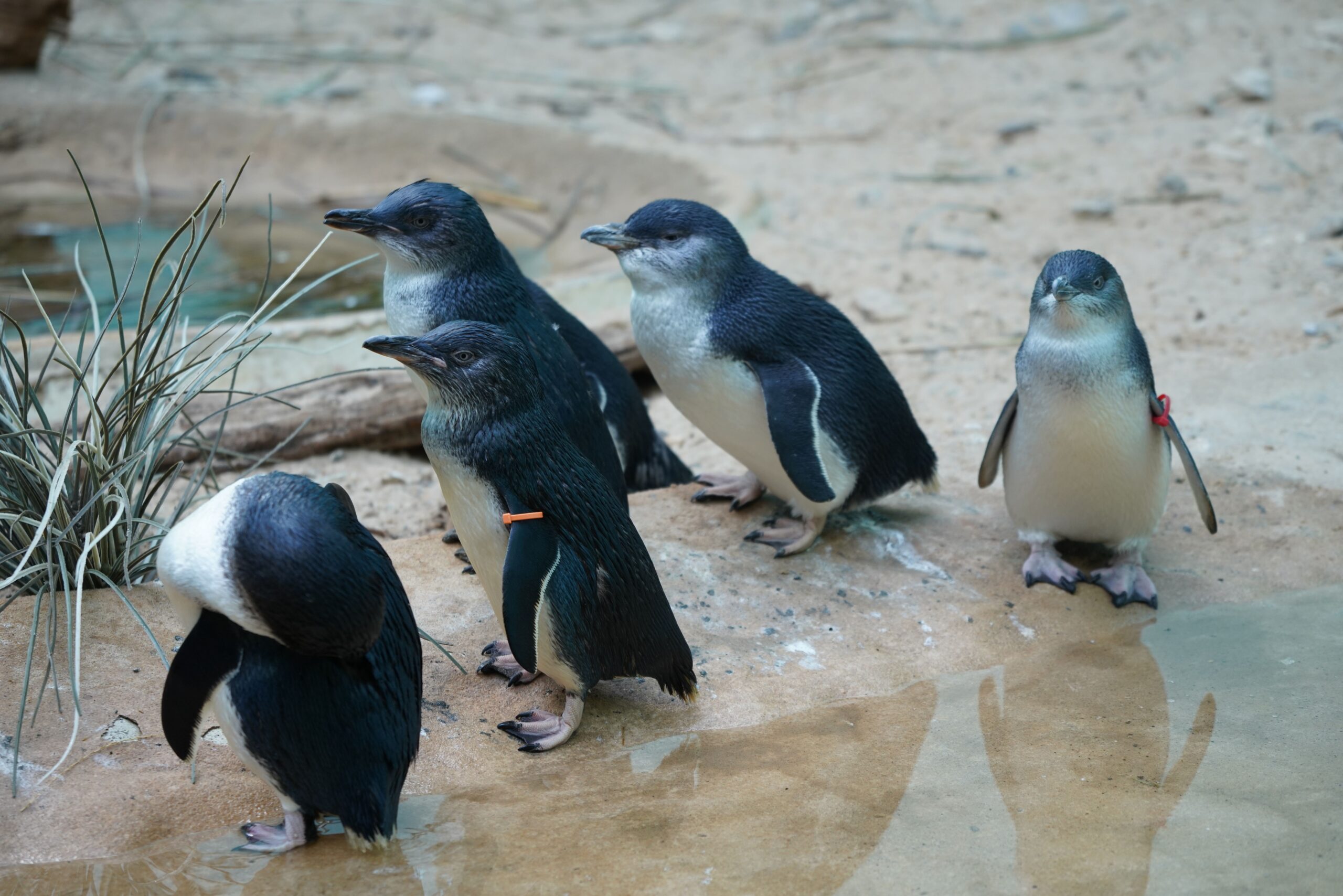
The white-flippered penguin is quite similar in appearance and size to the small penguin. It is slightly larger than the little penguin and is considered a subspecies. It is classified as a bird. It is one of the penguins most at risk of extinction and is in a very critical situation. Its English name is White-flippered Penguin, and its scientific name is Eudyptula albosignata. Its feathers are clearly different from those of the little penguin.
| Japanese(和名) | ハネジロペンギン、ハネジロコビトペンギン、マガイコビトペンギン、シロツバサペンギン |
| English(英名) | White-flippered Penguin |
| scientific name(学名) | Eudyptula albosignata |
| classification(分類) | Sphenisciformes, Spheniscidae, Eudyptula ペンギン目ペンギン科コガタペンギン属 |
| IUCN Status(保全状況) | Critically Endangered (EN) |
| Height(身長) | 40 – 50cm |
| Weight(体重) | 1kg |
What are the roots and origins of the White-Faced Penguin?
The White-Faced Penguin is a penguin species that has been debated for many years as to whether it is an independent species or a regional population of the Little Penguin.
It is considered to be a regional population (subspecies or regional type) of the Little Penguin inhabiting southeastern New Zealand.
Its scientific name was traditionally
Eudyptula albosignata (independent species theory),
but in recent years, it has often been treated as
Eudyptula minor albosignata
(a subspecies of the Little Penguin).
Where did it evolve?
White-Faced Penguins are mainly distributed in
the Banks Peninsula
around Christchurch
It is thought that over long periods of geographical isolation, this regional population developed
white edges on its wings
slightly different breeding behaviors
differences in calls and genetic characteristics
What are its ancestors?
The ancestors of all penguins evolved approximately 60 million years ago in the Southern Hemisphere after the extinction of the dinosaurs, as flightless seabirds.
The genus Eudyptula, which includes the Little Penguin, is a relatively old lineage among extant penguins.
Its origin is likely around New Zealand.
It is thought that it later expanded its distribution to the southern coast of Australia.
Why is it called “White-Flippered Penguin”?
The name comes from the white band on the trailing edge of its wings (flippers).
Because the white area is more prominent than in typical Little Penguins,
it came to be called the White-Flippered Penguin.
What’s going on in taxonomy?
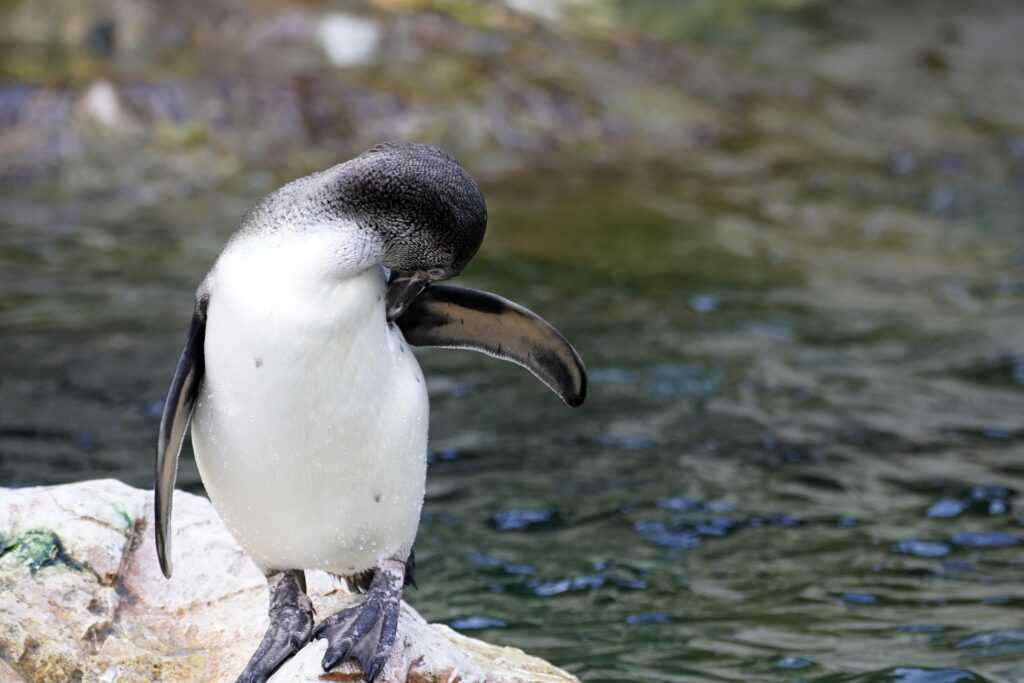
The little penguin was first publicly described in an academic book in 1781 by German naturalist Johann Reinhold Forster. Because they are extremely similar in size to small penguins, they were originally thought to be the same species. However, in recent years, they have been considered to be a separate species, and the white-bellied penguin is considered to be a subspecies of the little penguin.
Classification of the White-spotted Penguin
Kingdom: Animalia
Phylum: Chordata
Class: Aves
Order: Sphenisciformes
Family: Spheniscidae
Genus: Spheniscus
Species: White-spotted Penguin (Spheniscus demersus)
About the habitat of the white penguin
The habitat of the white-spotted penguin is the Banks Peninsula and Motnow Island in southeast New Zealand. This means it is almost entirely New Zealand. Therefore, it lives in a fundamentally different habitat from the chinstrap penguin, king penguin, gentoo penguin, and Adelie penguin.
Geographic Distribution
Coastal South Africa
Distributed along the coast from around Cape Town to the Eastern Cape
Coastal Namibia
Also found on small islands and coastal areas along the Namib Desert
Major Breeding Sites
Boulders Beach (South Africa)
Duihu Bay, Robin Island, etc.
Habitat
On Land
Builds burrows in rocky areas or sandy beaches
Forms colonies during the breeding season
Underwater
Feeds on fish (sardines, anchovies, etc.) and krill in shallow coastal waters
Typically forages within a range of several tens of kilometers from islands or land
Characteristics
Adapted to warm coastal areas
Unlike Antarctic and sub-Antarctic penguins, they are sensitive to cold and live in warm waters
Vulnerable to human activity and fishing
feature is? What kind of creature is it?
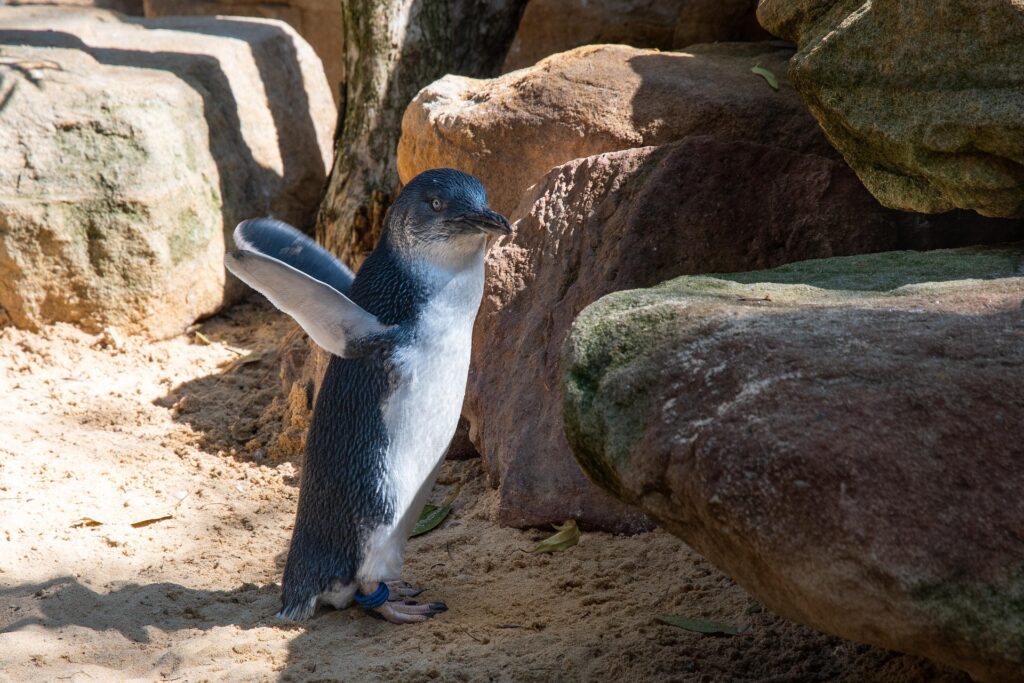
The white penguin is characterized by its small body length of 40-45 cm, which is slightly larger than the little penguin, and the white edge of the flipper. The white-bellied penguin has a similar lifestyle to the little penguin, foraging in the sea during the day and returning to its burrow at night. Even their lifestyle is similar to that of a little penguin.
- Body Shape and Size
Body Length: Approximately 60-70 cm
Weight: 2.2-3.5 kg
A small to medium-sized penguin with a body shape suited to swift swimming.
Their wings are specialized for propulsion underwater (they cannot fly).
- Feather Color and Pattern
Back: Blue-gray
Belly: White
They have black spots on their chests, and the pattern varies slightly from individual to individual.
They have a white ring around their face, and a distinctive line running from above their eyes to their cheeks.
Individuals can be identified by their feather color and pattern.
- Behavior and Habits
Excellent Swimmers: They feed on fish and krill in shallow coastal waters.
They can skillfully use their wings to change direction underwater.
Burrow Life: They build nests in holes dug in rocks or sand, protecting their eggs and chicks from predators.
They form colonies and live together during the breeding season.
- Reproduction and Sociality
Monogamy is common, and they may breed with the same partner year after year.
Both parents take turns incubating the eggs and feeding the chicks.
Within the colony, parents and offspring are identified by their voices and patterns.
- Other Characteristics
Live in warm waters, such as the coast of South Africa.
Sensitive to climate, human activity, and introduced predators (such as cats and dogs).
Shy in the wild, but relatively gentle under observation or in captivity.
What is your personality like?
Just like little penguins, white-bellied penguins are also very aggressive. This is because they have many external enemies due to their small size, so they cannot survive unless they are treated with a strong attitude. Therefore, until you get used to it to a certain extent, if you touch it easily, you will be bitten by its beak. In the wild, they are not surprised when they see large humans.
- Social and Cooperative
During the breeding season, they form colonies and live in groups of hundreds to thousands of birds.
They exhibit cooperative behaviors, such as huddling (where they huddle together to protect themselves from the cold and predators).
They have strong parent-child and pair bonds, and they recognize each other and cooperate in raising their young.
- Timid and Wary
In the wild, they are extremely wary of predators (seals, seagulls, introduced predators, etc.).
They are also timid towards humans and often hide in burrows or behind rocks.
- Curious
In captivity or in sanctuaries, they may show curiosity about humans and changes in their environment.
They may be observed approaching closely during feeding and as they become accustomed to their new environment.
- Loyal and Cooperative
They are monogamous and highly loyal to their mate.
They cooperate in caring for chicks and take turns guarding the nest, demonstrating responsible behavior.
- Other
Although individual differences exist, they generally have a calm and gentle appearance.
In the wild, they are wary and cautious, but in captivity, they display a calm and collected personality.
Molting in White-Faired Penguins
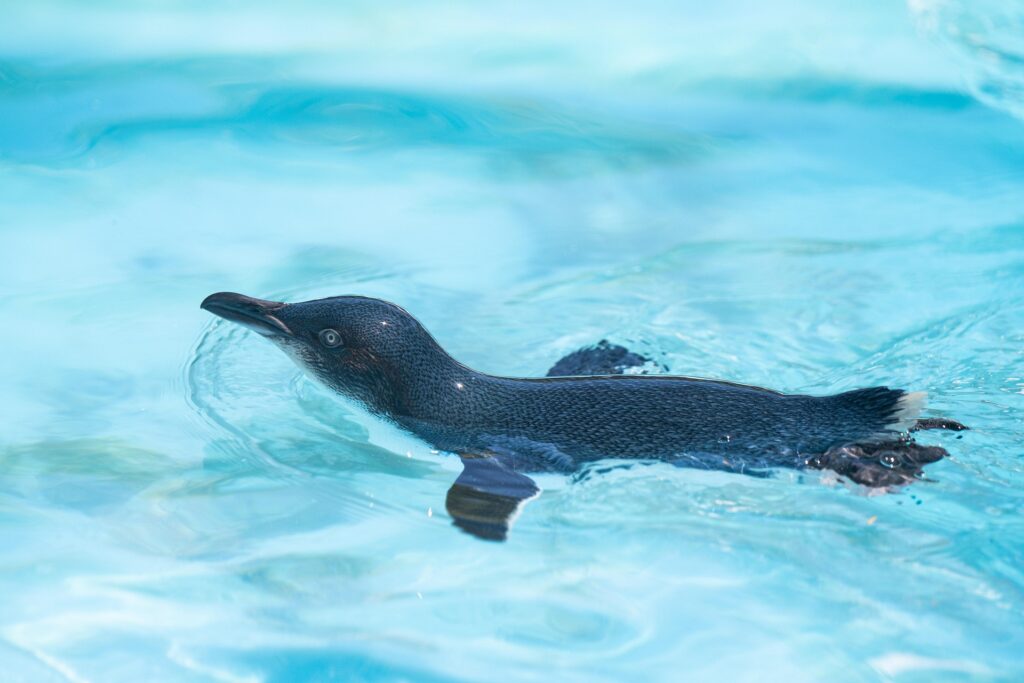
Molting in white-faired penguins follows essentially the same pattern as that of their close relative, the Little Penguin.
What is molting?
Penguin feathers are not for flight, but rather play an important role in:
Waterproofing
Insulation
Buoyancy regulation
Therefore, they need to periodically replace old feathers with new ones.
Molting Period
White-faired penguins mainly inhabit the eastern part of the South Island of New Zealand, and
Molting often occurs after the breeding season,
around January to March (summer to early autumn in the Southern Hemisphere).
Molting Period
Approximately 2-3 weeks
Some individuals may take nearly 4 weeks.
During this period, they undergo a “complete molt,” where all their feathers are replaced at once.
What is the ecology of the white penguin?
Black-bellied penguins mainly eat small fish, squid, and small crustaceans. During the breeding season, they build nests deep inside rock holes or caves and lay eggs. Lays two eggs.
- Biology
Activity Pattern
Forages in the ocean during the day and rests in burrows.
Preys on fish (sardines, anchovies, etc.) and krill in shallow coastal waters.
Uses its wings to maneuver skillfully underwater, swimming at speeds of up to 10 km/h.
Breeding
Breeding Season: Mainly March to August off the coast of South Africa (varies by species).
Nest: Digs holes in rocks or sand, or builds nests under vegetation.
Number of Eggs: Usually two.
Brooding: Both parents take turns incubating the eggs, feeding them mouth-to-mouth even after hatching.
Monogamy is common, with strong pair bonds.
Sociality
Forms colonies and lives in groups during the breeding season.
Uses calls and patterns to identify parents and offspring and pairs.
Huddles (huddles) to protect themselves from predators and the cold.
- Lifespan
Wild: Average of approximately 10-15 years
Captive: If the environment and diet are stable, some individuals can live for over 20 years.
Lifespan is significantly affected by predators, fishing, and environmental changes.
- Threats and Conservation
Predation of eggs and chicks by introduced predators (cats, dogs, rats)
Food decline due to fishing
Destruction of nests due to coastal development and tourism
Conservation efforts include artificial construction of nests, the establishment of protected areas, and monitoring.
White-winged Penguin Diving
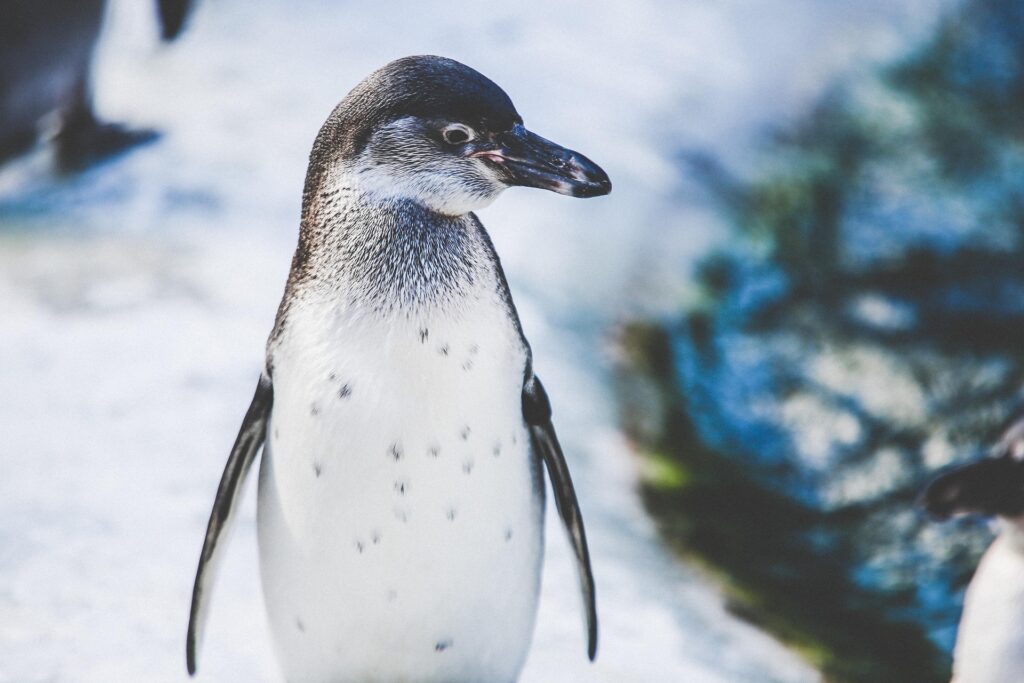
The diving ability of the white-winged penguin is thought to be almost the same as that of its close relative, the little penguin.
Diving Depth
They usually forage at depths of 10-30m.
If schools of fish are in deeper areas, they may dive to 50-60m or more.
There are also records of little penguins reaching depths of nearly 70m.
Diving Duration
Generally 20-60 seconds
Longer dives can last 1-2 minutes.
Underwater
Wings (flippers) generate propulsion
Legs are used for changing direction and braking
Their streamlined bodies reduce resistance
Therefore, they can swim efficiently despite their small size.
White-winged Penguin Calls
The calls of the White-winged Penguin are very similar to those of its close relative, the Little Penguin.
What do they sound like?
White-winged Penguins are small penguins, about 30 cm in length, but their calls are surprisingly loud.
They make low, resonant sounds and growls such as:
“Aaaah!”
“Boooo!”
“Grrr…”
“Gyaah, gyaah!”
Those hearing them for the first time are often surprised by the powerful sound, which seems unbelievable coming from such a small penguin.
Why do they call?
① Communication with mates
During the breeding season, males and females call to recognize each other.
② Nest location locating
Parent birds returning from the sea at night call to find their nests in the dark colony.
③ Parent-offspring recognition
Chicks also use calls to identify their parents.
④ Intimidation
When defending their territory or burrow, they will make loud noises towards their opponents.
Seasonal Activities
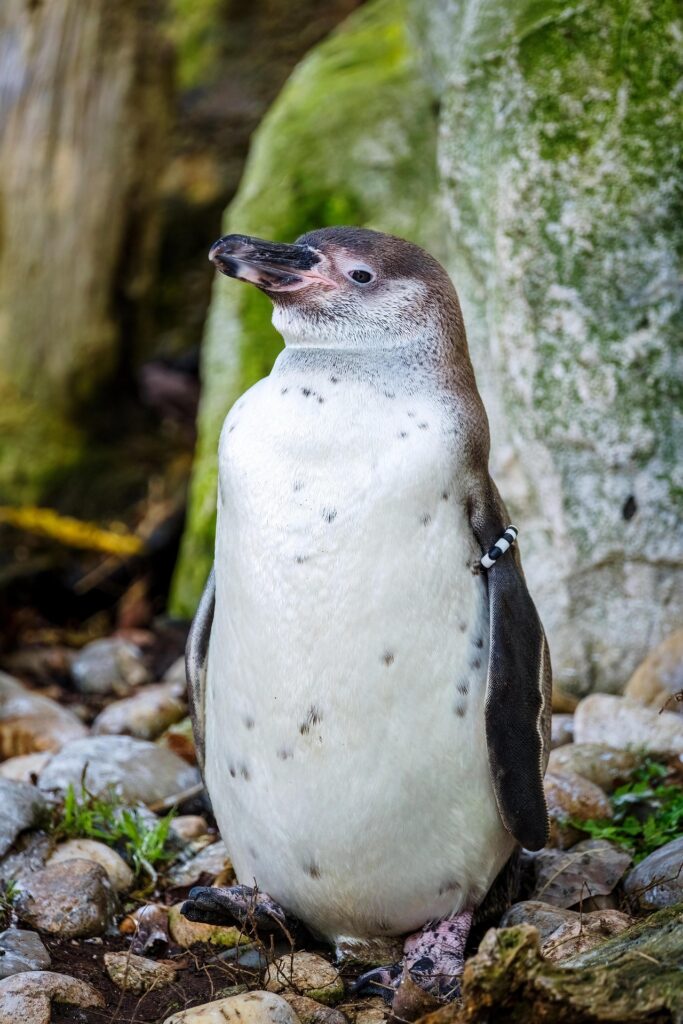
White-toed penguins primarily inhabit the Banks Peninsula area in eastern New Zealand’s South Island. Because they live in the Southern Hemisphere, their seasons are reversed compared to Japan.
Spring (September-November)
Breeding season
More individuals return to the colony
Pair formation and courtship become active
Nest burrows are prepared
Egg laying and incubation begin
They are often seen calling to each other at night during this period.
Summer (December-February)
Peak of raising chicks
Chicks hatch
Parent birds go to the sea daily to forage for food
Feeding of chicks continues
Chicks grow rapidly
They forage at sea during the day and return to the nest in the evening and at night.
Autumn (March-May)
Fledging and molting
Young birds become independent
Breeding activity ends
They accumulate body fat before molting
Complete molting takes place
During molting, they cannot go to the sea and remain still on land. Winter (June-August)
Life is primarily spent at sea.
Some individuals spend time away from their breeding grounds.
They spend a lot of time foraging.
They recover their strength and prepare for the next breeding season.
The colony is less active than in spring and summer.
Daily Activity Pattern
White-toed penguins are basically diurnal foragers.
Morning
Depart from nest for sea
Midday
Dive to catch small fish and squid
Evening
Return to shore
Night
Rest in the nest
During the breeding season, they incubate eggs and care for chicks
Communication through vocalizations
Do they become attached to humans?
White-winged penguins are not animals that become attached to humans in the general sense.
In the wild, they are generally very wary.
White-winged penguins are wild animals, so
When people approach, they will:
Flee to their nests
Crouch down and become motionless
Hide in their burrows
Make threatening calls
They exhibit these behaviors.
They are especially sensitive to stress during breeding and molting seasons.
They may not flee
In protected areas and research facilities,
people frequently come and go
They have learned that humans do not prey on them
Therefore, some individuals do not panic and flee even when people are nearby.
However, this is
They are “used to humans”
This does not mean that they “like humans” or “recognize humans as their owners.”
What about in captivity?
Little penguins kept in aquariums and similar facilities may:
Remember the voices of zookeepers
Remember feeding times
Approach specific zookeepers
However, unlike attachment behaviors seen in dogs and cats, this is thought to be primarily the result of learning about:
food
habits
safety
and other related factors.
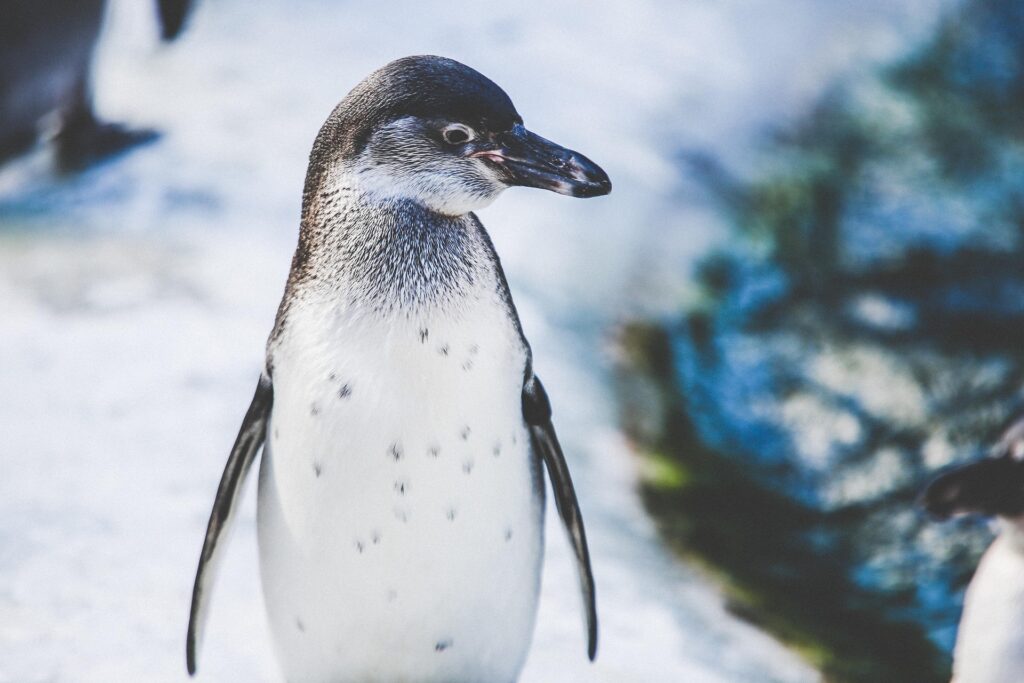
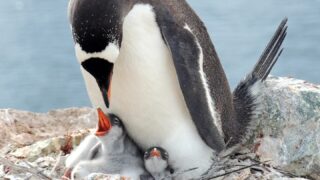
Characteristics of White-spotted Penguin Chicks
White-spotted penguin (Spheniscus demersus, African penguin) chicks have unique characteristics in their development, appearance, and behavior. Details are summarized below.
- Eggs and Hatching
Number of Eggs: Usually 2 (Rarely 1)
Egg Size: Approximately 5-6 cm x 4 cm
Days to Hatching: Approximately 38-42 days
Both parents take turns incubating the eggs
- Chick Appearance
Immediately after hatching, chicks are covered in fluffy gray down (powder)
Body Length: Approximately 12-15 cm, Weight: Approximately 80-120 g
Eyes are somewhat large, and the black and white markings on their faces are underdeveloped
- Development
Protection within the Nest: Parent birds take turns guarding the eggs and chicks
Feeding: Parents feed them fish and krill by mouth
Molt: Approximately 2 months after hatching, the chicks change from down to waterproof feathers
Fledgeling: Approximately 60-90 days later, the chicks leave the nest and are able to forage independently in the sea
- Behavior and Sociality
Before fledging, chicks from the same colony form flocks.
They have strong bonds with their parents and recognize each other by their voices and patterns.
When threatened, they hide in their burrows or huddle together in groups.
- Threats
Predation of eggs and chicks by introduced predators (cats, rats, dogs, etc.)
Deterioration of breeding environments due to human activity and destruction of burrows.
Is the white-bellied penguin an endangered species?
Is the white-bellied penguin an endangered species? Unfortunately, it is one of the most endangered animals. The estimated population is said to be only 3,000 to 4,000 birds.
- Biology
Activity Pattern
Forages in the ocean during the day and rests in burrows.
Preys on fish (sardines, anchovies, etc.) and krill in shallow coastal waters.
Uses its wings to maneuver skillfully underwater, swimming at speeds of up to 10 km/h.
Breeding
Breeding Season: Mainly March to August off the coast of South Africa (varies by species).
Nest: Digs holes in rocks or sand, or builds nests under vegetation.
Number of Eggs: Usually two.
Brooding: Both parents take turns incubating the eggs, feeding them mouth-to-mouth even after hatching.
Monogamy is common, with strong pair bonds.
Sociality
Forms colonies and lives in groups during the breeding season.
Uses calls and patterns to identify parents and offspring and pairs.
Huddles (huddles) to protect themselves from predators and the cold.
- Lifespan
Wild: Average of approximately 10-15 years
Captive: If the environment and diet are stable, some individuals can live for over 20 years.
Lifespan is significantly affected by predators, fishing, and environmental changes.
- Threats and Conservation
Predation of eggs and chicks by introduced predators (cats, dogs, rats)
Food decline due to fishing
Destruction of nests due to coastal development and tourism
Conservation efforts include artificial construction of nests, the establishment of protected areas, and monitoring.
Is it possible to keep penguins?
This article summarizes information on raising African penguins (Spheniscus demersus). The bottom line is that it is nearly impossible to raise them in an average household, and they are mainly kept in specialized facilities such as zoos and aquariums.
- Environment Requirements
Water and Land
Aquarium: Requires ample space and depth for swimming.
Land: Requires an area with rocks and sand for resting and nesting.
Water Temperature Management: Because they live in warm coastal waters, a water temperature of around 15-20°C is ideal.
Water Quality Management
Maintain salinity, water temperature, and cleanliness.
It is important to keep the water clean using a filtration system.
- Diet
Maintains small fish (sardines, anchovies, etc.) and krill.
Feed two to three times daily.
Vitamins and supplements may be given as nutritional supplements.
- Breeding Management
During the breeding season, artificial nesting holes or rock shelters are prepared.
Observe mating compatibility and breeding behavior, and provide support as needed.
Egg and chick care requires specialized knowledge.
- Health Management
Regular health checks (weight, feathers, digestive system, etc.)
Prevent infections and parasites.
Easily stressed by the environment and human influences.
- Law and Ethics
Because the white-spotted penguin is an endangered species, captivity is limited to facilities with special permits.
Keeping it in an ordinary home is virtually impossible under the law.
Summary
White-spotted penguins are cute, but they are delicate and require specialized care.
It is safest to keep them in specialized facilities such as zoos and aquariums, where experienced caretakers are responsible.
Zoos where they are kept (Japan and Worldwide)
White-winged penguins are extremely rare, and there are very few facilities worldwide that keep them.
Japan
Based on currently available information,
there are no zoos or aquariums in Japan that keep white-winged penguins.
The small penguins that can be seen in Japanese facilities are often:
Little Penguin
Humboldt Penguin
African Penguin
etc.
World
Because the white-winged penguin’s habitat is limited to the South Island of New Zealand, almost all exhibition and conservation facilities are concentrated in New Zealand.
International Antarctic Centre
A facility located in Christchurch, New Zealand.
It has a track record of protecting and exhibiting white-winged penguins that were injured and unable to be returned to the wild.
Conservation Facilities and Rehabilitation Centers
Conservation organizations and rehabilitation facilities exist around the Banks Peninsula.
The focus is on conservation and research purposes rather than general zoo exhibits.
Why are there so few facilities?
White-winged penguins have:
An extremely limited distribution area
A small population
Highly endangered
Conservation is a priority
Therefore, they are not exported to zoos around the world like other penguins.
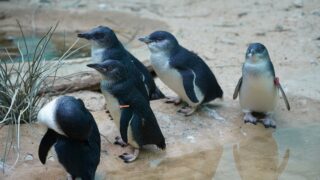
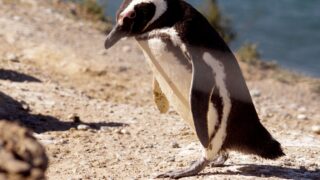
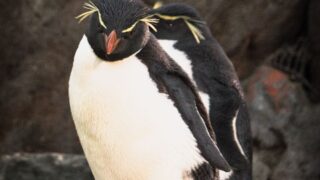
Fellow members of the same group
コメント