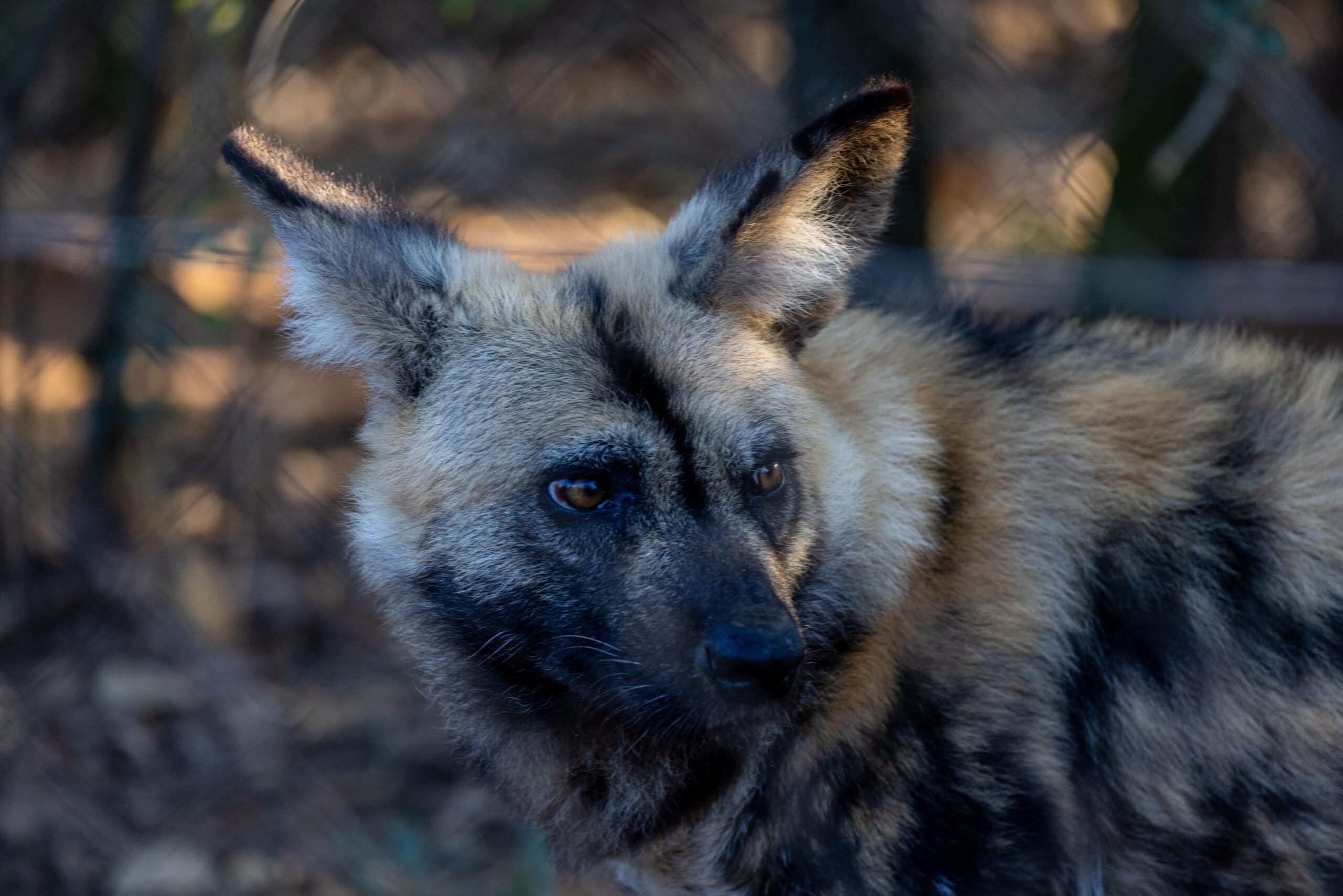
What kind of animal is the African wild dog, a member of the canine family that hunts in packs? We will explain in detail about its characteristics, ecology, and habitat. It is the largest dog found in Africa and has a very sturdy overall appearance, which gives it a very scary impression. However, it is designated as an endangered species.


- What is Lycaon? About basic status
- What are the roots and origins of the African wild dog?
- About habitat
- feature is? What kind of creature is it?
- What is your personality like?
- What is the ecology like?
- African Wild Dog Vocalizations
- Seasonal Activities
- Locomotion Speeds
- About young African wild dogs
- Is Lycaon an endangered species?
- Can Lycaons be bred?
- Zoos Housing the Species (Japan & Worldwide)
- Introducing other animals
What is Lycaon? About basic status
Lycaon is a carnivorous animal classified in the genus Lycaon, order Carnivora, family Canidae, class Mammalia. This species alone constitutes the genus Lycaon. The scientific name is Lycaon pictus. The body length is 76-112cm and the weight is 17-36kg. Males are larger than females. The genus name Lycaon means “wolf”. Shoulder height: 60-78cm, tail length: 30-41cm. Below is a list of basic information.
| Japanese(和名) | リカオン |
| English(英名) | African hunting dog/African wild dog/Lycaon/Cape hunting dog |
| scientific name(学名) | Lycaon pictus |
| classification(分類) | Mammalia、 Carnivora、Canidae、Lycaon 哺乳綱、食肉目、イヌ科、リカオン属 |
| IUCN Status(保全状況) | ENDANGERED |
| Length(体長) | 76 – 112cm |
| Weight(体重) | 17 – 36kg |
What are the roots and origins of the African wild dog?
The African wild dog (Lycaon pictus) belongs to an ancient lineage within the Canidae (dog) family that dates back approximately 5 to 7 million years. It is a highly specialized carnivore that diverged from the lineage of modern dogs and wolves at a very early stage.
Ancestry: A “uniquely evolved canid,” not part of the wolf lineage
Although African wild dogs resemble hyenas in appearance, they are taxonomically classified as members of the dog family (Canidae).
Family: Canidae
Genus: Lycaon
Species: Lycaon pictus
However, their evolutionary path differs significantly from that of modern dogs and wolves (genus Canis).
Canid ancestors originated in North America over 10 million years ago and subsequently spread to Eurasia and Africa. The lineage leading to the African wild dog diverged from this group.
The ancient Lycaon lineage: Xenocyon
Extinct large canids are known as candidates for the direct ancestor of the African wild dog.
Key example:
The Xenocyon lineage
Inhabited Eurasia and Africa approximately 3 to 1 million years ago
Large, pack-hunting predators
Possessed characteristics similar to modern African wild dogs
However, current research does not definitively conclude that Xenocyon lycaonoides was the direct ancestor of the African wild dog; it is considered more likely to have been a closely related evolutionary branch.
Why did the African wild dog develop such a unique appearance?
The African wild dog evolved to specialize in “pursuit hunting”—chasing down prey. Evolved Characteristics:
🦷 Specialized Teeth
Knife-like molars designed to slice through flesh
A shape optimized for processing meat more efficiently than bone
🐾 Four-Toed Feet
Typical canids:
Five toes on the front paws
African Wild Dogs:
Four toes on the front paws
This adaptation reduces drag while running, providing an advantage for long-distance pursuits.
🏃 Remarkable Endurance
Unlike cheetahs, which rely on explosive bursts of speed,
African Wild Dogs maintain speeds of 50–60 km/h during prolonged chases
They track prey over distances ranging from several to over a dozen kilometers
They engage in pack hunting with a very high success rate
…evolving into “endurance hunters.”
They Were Not Always Limited to Africa
While they currently inhabit mainly sub-Saharan Africa, their ancestral lineage once had a much wider distribution.
Fossil records show
Europe
Asia
Africa
…that fossils belonging to the African Wild Dog lineage have been discovered in these regions.
In other words, the modern African Wild Dog
can be described as a “survivor of an ancient hunting dog lineage that once spanned the globe.”
About classification
Lycaon is the only species that constitutes the genus Lycaon.
分類学(Taxonomy)
- 界(Kingdom): 動物界 (Animalia)
- 門(Phylum): 脊索動物門 (Chordata)
- 綱(Class): 哺乳綱 (Mammalia)
- 目(Order): 食肉目 (Carnivora)
- 科(Family): イヌ科 (Canidae)
- 属(Genus): リカオン属 (Lycaon)
- 種(Species): アフリカオオカミ/リカオン (Lycaon pictus)
About habitat
The Lycaon is the largest dog found in Africa. It mainly lives in South Africa.
- Geographic Distribution
Mainly found in sub-Saharan Africa
Especially found in the following regions:
East Africa: Kenya, Tanzania
Southern Africa: Botswana, Zimbabwe, Namibia, South Africa
Found in parts of West Africa, but populations are small
- Habitat
Savanna
Populates in open grasslands and shrublands
Dry grasslands and semi-desert areas
Moves only within areas where water sources and prey are available
Tends to avoid forests and jungles
Open terrain allows for better visibility and more efficient hunting
- Habitat Characteristics
Moves over wide areas in packs
May travel 10–30 km per day in search of prey and water
Cooperative behavior within packs and maintaining territory are essential for survival
Due to habitat loss, it is now limited to scattered areas
feature is? What kind of creature is it?
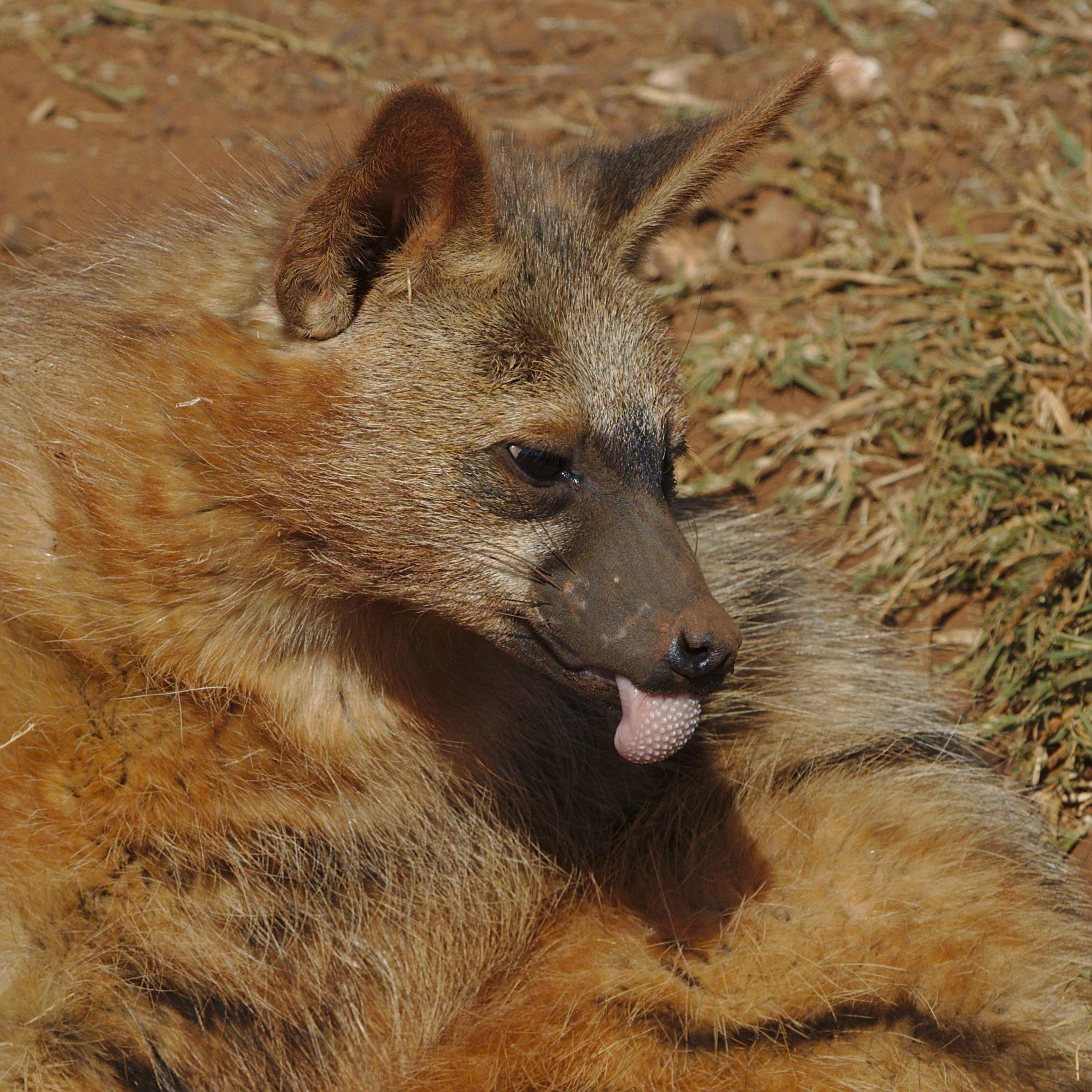
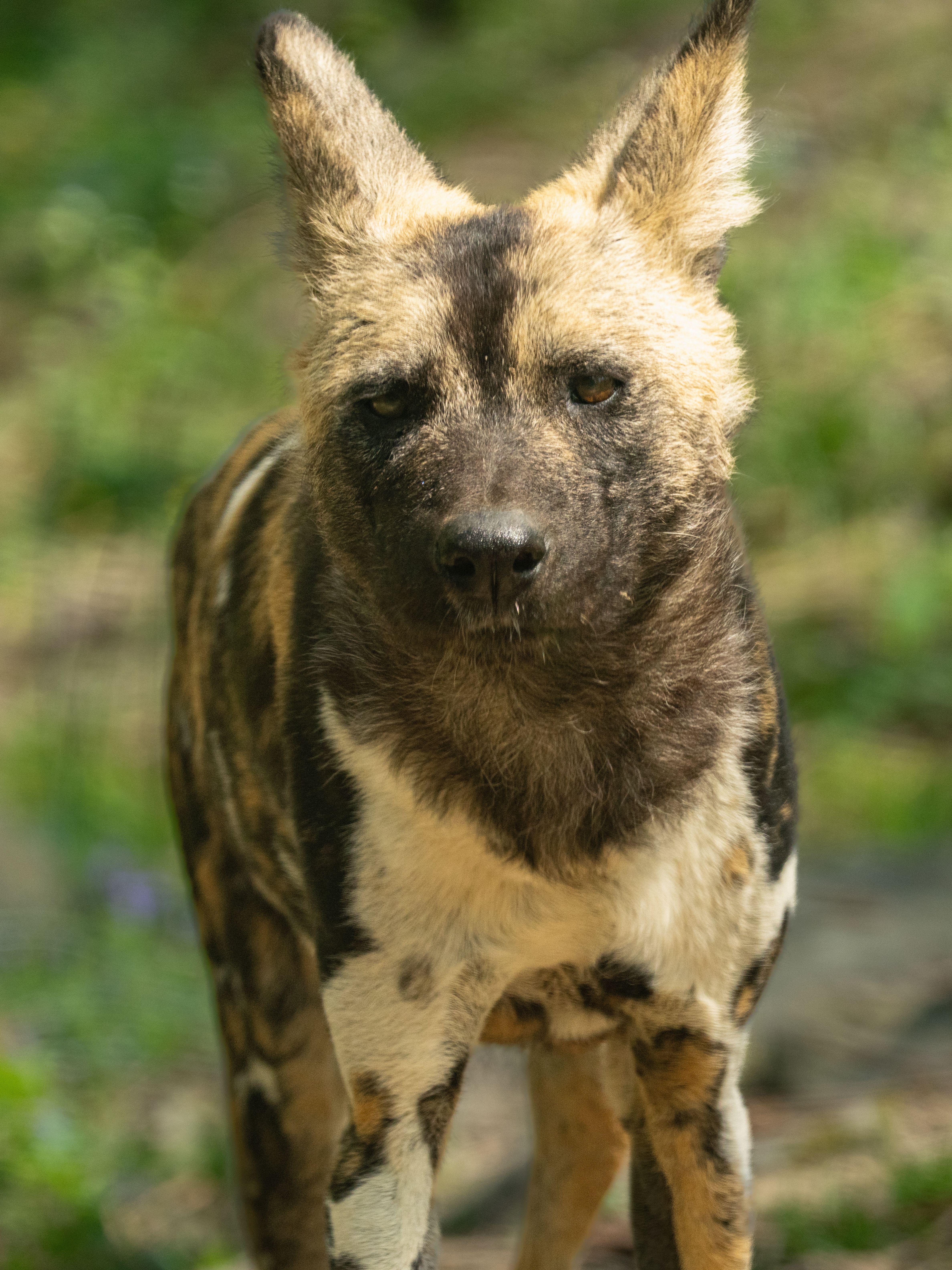
Lycaon’s ears are rounded and large. The auricle has the effect of regulating body temperature. The canine teeth and fourth molars are developed into knife-like shapes and are specialized for eating meat. The body hair is short and coarse, and the coat color is white, black, gray, or brown. Lycaons mainly live in open areas such as grasslands and savannahs, and are mainly active during the day. They form groups of about 7 to 15 individuals called packs to capture prey.
- Physical Characteristics
Body Size
Body Length: Approximately 75-110 cm (excluding tail)
Tail Length: Approximately 25-40 cm
Weight: Approximately 20-30 kg
Coat Color/Pattern
White, black, and brown mottled patterns across the body
Patterns vary from individual to individual, making them easy to identify
Face, Ears, and Legs
Elongated face with large, rounded ears
Elongated feet adapted for long-distance running
The fifth toe on the front feet is degenerate, allowing them to run using only four toes
- Behavioral Characteristics
Pack Life
Hunts cooperatively in packs
Highly coordinated behavior within the pack
Hunting
Tracking and capturing medium- to large-sized herbivores over long distances
High hunting success rate, even among canines
Calls/Communication
Communicates with a high-pitched “keek-keek” sound
Uses vocalizations for cooperation and warning within the pack
- Personality and Behavior
Highly Social
They cooperate within their groups, raising their young, and sharing food.
Vigilance and Agility
They are highly wary of predators and humans, and quickly escape.
Play and Communication
They have developed play habits with their young and within their groups, which fosters socialization.
What is your personality like?
Lycaons are very social animals and excel at teamwork. Because they are cooperative, there is a strong sense of camaraderie. It is an animal that is thought to have a very strong bond with them.
- Physical Characteristics
Body Size
Body Length: Approximately 75-110 cm (excluding tail)
Tail Length: Approximately 25-40 cm
Weight: Approximately 20-30 kg
Coat Color/Pattern
White, black, and brown mottled patterns across the body
Patterns vary from individual to individual, making them easy to identify
Face, Ears, and Legs
Elongated face with large, rounded ears
Elongated feet adapted for long-distance running
The fifth toe on the front feet is degenerate, allowing them to run using only four toes
- Behavioral Characteristics
Pack Life
Hunts cooperatively in packs
Highly coordinated behavior within the pack
Hunting
Tracking and capturing medium- to large-sized herbivores over long distances
High hunting success rate, even among canines
Calls/Communication
Communicates with a high-pitched “keek-keek” sound
Uses vocalizations for cooperation and warning within the pack
- Personality and Behavior
Highly Social
They cooperate within their groups, raising their young, and sharing food.
Vigilance and Agility
They are highly wary of predators and humans, and quickly escape.
Play and Communication
They have developed play habits with their young and within their groups, which fosters socialization.
What is the ecology like?
Lycaon hunts and eats antelopes such as kazel and impala. They also catch and eat black-tailed wildebeest. They usually hunt in groups. The success rate of hunting is said to be high, at over 60%. Breeding occurs from April to July, and the gestation period is 60 to 80 days. They reach sexual maturity in one to one and a half years, and have a lifespan of about 11 years before leaving the nest.
- Lifestyle
Diurnal/Crepuscular
Active mainly during the day, evening, and early morning
Live in open grasslands and savannas
Pack Living
Travel in packs and cooperate in hunting and raising their young
Pack sizes are typically around 10-20 individuals, but can exceed 30
- Diet
Obligate carnivores
Main prey: Medium-sized herbivores such as baby zebras, gazelles, impalas, and wildebeest
Hunting Characteristics
Work together as a pack to drive and capture prey, covering long distances
Hunting success rate is higher than that of other canids (approximately 60-70%)
Food Sharing
If a hunt is successful, food is shared based on the pack’s rank and level of cooperation
- Reproduction
Breeding Pattern
Breeding is near-monogamy and occurs within the group.
Gestation Period
Approximately 70 days
Birth
2-12 cubs (average 6) per birth
Baby calves are protected by the group, and they also practice hunting with the group.
- Movement and Range
Nomadic Movement
They often travel 10-30 km per day in search of prey and water.
Territory
Each group has its own territory, and maintains boundaries with other groups through vocalizations and scent.
- Group and Defense
Protects the group from predators (lions, leopards, hyenas)
When danger is detected, the entire group moves quickly.
Cooperative behavior within the group is key to survival.
Are there any natural enemies?
Lycaon has no particular natural enemies. Even against lions, multiple lions may jump at you. Together, we will take action and defeat wild carnivores such as hyenas and cheetahs. In social life, the members of each individual cooperate with each other.
African Wild Dog Vocalizations
The vocalizations of the African wild dog (Lycaon pictus) differ significantly from those of domestic dogs or wolves. They utilize high-pitched sounds to communicate with pack members over long distances and a variety of calls to maintain pack cohesion.
High-pitched “Pee-pee” call (whistle-like sound)
This is their most distinctive vocalization.
A high, sharp, whistle-like sound
Audible to pack members hundreds of meters away
Used for communication when the pack is dispersed during a hunt
Sound profile:
“Pee—! Pee—!”
To human ears, it can sound like a bird’s call or the sound of a whistle.
“Wee-wee” affectionate call (contact call)
Used among pack members.
Functions:
Pups calling for parents
Gathering pack members
Confirming the pack’s location
African wild dogs are highly social animals, and vocal communication is crucial to them.
“Whimper/whine” sounds (similar to domestic dogs)
Commonly produced by:
Pups
Young individuals
Subordinate pack members
Softer than a wolf’s howl; closer to the whimper of a domestic dog.
Short barks (similar to “woof-woof”)
When sensing danger or becoming excited, they produce:
Short barks
Growls
Low-pitched growls
However, they do not bark as frequently as domestic dogs.
Seasonal Activities
The activity patterns of African wild dogs (Lycaon pictus) vary significantly depending on the shift between wet and dry seasons, prey movements, and their reproductive cycle. While there are regional differences across Africa, general seasonal changes are as follows:
🌧 Wet Season (Approx. November–March; varies by region)
“A season for raising pups and expanding the pack”
The wet season is a time when prey numbers increase and grasslands recover.
Key activities:
🐾 Focus on pup-rearing
🏠 Life centered around the den
🦌 Hunting small- to medium-sized prey
👥 Strengthening pack bonds
When African wild dogs breed, the female raises the pups in an underground den for about 70 days.
During this period, the pack engages in highly cooperative behavior:
Leaving the nursing female at the den
Other members going out to hunt
Regurgitating captured meat to bring back to the nursing female
☀️ Dry Season (Approx. April–October)
“A season of peak hunting capability”
In the dry season, the grass withers, making prey easier to spot.
Key activities:
🏃 Long-distance travel
🦌 Cooperative hunting of large prey
🌅 Increased activity at dawn and dusk
💧 Hunting near waterholes
During the dry season, they track animals such as:
Impala
Kudu
Gazelles
Warthogs
To avoid the heat, African wild dogs often follow this pattern:
Morning
→ Active hunting
Midday
→ Resting in the shade
Evening
→ Becoming active again
🌱 Breeding Season (Often May–July, depending on the region)
“The entire pack shifts into pup-rearing mode”
A defining characteristic of African wild dogs is a social structure where, typically, only the dominant male and female breed.
During the breeding season, the following occur:
Courtship behavior
Establishing pack hierarchy
Searching for a den
Reducing their range of movement
Gestation period:
Approx. 70 days
↓
Birth:
Mainly late dry season to around the start of the wet season
↓
Pup-rearing:
Lasts for several months
Locomotion Speeds
The movement speed of the African wild dog (Lycaon pictus) varies significantly between routine travel and hunting. Their defining characteristic is not explosive power, but rather the endurance to keep running for extended periods.
🚶 Normal Walking Speed
Approx. 4–6 km/h
Speed when the pack is moving leisurely
Uses:
Patrolling the territory
Pack relocation
Scouting for prey
This speed is comparable to the average human walking pace (approx. 4–5 km/h).
🏃 Travel Speed (Trot)
Approx. 8–12 km/h
African wild dogs are capable of long-distance travel and employ an energy-efficient running style.
Characteristics:
Keeping the head low
Moving at a steady rhythm
Maintaining a consistent pace across the entire pack
⚡ Hunting Speed
Pursuit speed
Approx. 50–60 km/h
They rapidly increase their speed once prey is spotted.
However, unlike cheetahs—
which reach top speeds for only a few seconds—
they are not that type of runner.
African wild dogs are:
endurance runners capable of maintaining a speed of around 50 km/h
for anywhere from several minutes to over ten minutes.
🏃♂️ Top Speed
Estimated:
Approx. 65–70 km/h
…is often cited.
However, they are not short-distance sprinters like cheetahs (which reach speeds in the 100 km/h range).
About young African wild dogs
- Lifestyle
Diurnal/Crepuscular
Active mainly during the day, evening, and early morning
Live in open grasslands and savannas
Pack Living
Travel in packs and cooperate in hunting and raising their young
Pack sizes are typically around 10-20 individuals, but can exceed 30
- Diet
Obligate carnivores
Main prey: Medium-sized herbivores such as baby zebras, gazelles, impalas, and wildebeest
Hunting Characteristics
Work together as a pack to drive and capture prey, covering long distances
Hunting success rate is higher than that of other canids (approximately 60-70%)
Food Sharing
If a hunt is successful, food is shared based on the pack’s rank and level of cooperation
- Reproduction
Breeding Pattern
Breeding is near-monogamy and occurs within the group.
Gestation Period
Approximately 70 days
Birth
2-12 cubs (average 6) per birth
Baby calves are protected by the group, and they also practice hunting with the group.
- Movement and Range
Nomadic Movement
They often travel 10-30 km per day in search of prey and water.
Territory
Each group has its own territory, and maintains boundaries with other groups through vocalizations and scent.
- Group and Defense
Protects the group from predators (lions, leopards, hyenas)
When danger is detected, the entire group moves quickly.
Cooperative behavior within the group is key to survival.
Is Lycaon an endangered species?
African wild dogs are designated as an endangered species. They used to be widely distributed in sub-Saharan Africa, excluding deserts and dense forests, but their distribution has narrowed considerably. They are already extinct in most of North and West Africa. Their lives are tougher than you might imagine, and more and more of them are being raised in institutions.
exterminated as a pest
Because African wild dogs attack livestock, farmers have retaliated against them, and many of them have been killed. They are also being exterminated through traffic accidents, shooting, trapping, and poisoning. Their population is also declining significantly in Central and Northeast Africa. They often die of illness and other factors before their young have a chance to grow up.
Can Lycaons be bred?
African wild dogs are not suitable for keeping as pets. They attack livestock, so it is extremely difficult for ordinary people to keep them as pets. It is preferable to see them at zoos. Although this animal has never been heard of in Japan, it is now possible to see them at Yokohama Zoo Zoorasia and Fuji Safari Park. They are very fast, and humans cannot keep up with them.
- Current Status of Captivity
They are often kept in zoos and safari parks around the world.
In Japan, they are exhibited at Tama Zoological Park and Higashiyama Zoo and Botanical Gardens.
Captivity of wild individuals is prohibited, and captive individuals are kept for conservation and breeding purposes.
- Difficulties of Captivity
They require ample space for exercise.
They are animals that live cooperatively in groups.
Without sufficient exercise space, stress and health problems can occur.
Social behavior in groups.
Keeping them alone is extremely stressful.
Cooperative behavior within the group is essential for survival and mental well-being.
Dietary management is difficult.
They are obligate carnivores, pursuing and capturing medium-sized herbivores over long distances.
In captivity, they require a supply of meat and a nutritionally balanced diet.
Health Management and Safety Measures
Due to the risk of fighting and aggression among individuals within the group, facility design is important.
Regular veterinary care and infection control measures are required.
- Laws and Regulations
Listed in Appendix II of the Convention on International Trade in Endangered Species of Wild Fauna and Flora (CITES).
A permit is required for international trade.
Even within Japan, animals must comply with the Animal Welfare Act and regulations regarding specific animals.
Zoos Housing the Species (Japan & Worldwide)
The African wild dog (Lycaon pictus) is a rare canid that is challenging to keep in captivity. Currently, they are housed in select zoos and safari parks around the world for breeding and conservation purposes. Records indicate that more than 50 facilities globally have housed the species.
🇯🇵 Zoos in Japan
There are currently no zoos in Japan that maintain a permanent exhibit of African wild dogs.
While they have been kept in Japanese zoos in the past, they are now extremely rare in the country due to factors such as:
The need to live in packs
The requirement for large exercise areas
Difficulties in managing breeding
The need for coordination with international breeding programs
🇬🇧 United Kingdom
ZSL London Zoo
A leading facility for African wild dog conservation activities
Involved in the protection of the rare West African lineage
ZSL Whipsnade Zoo
Keeps packs in spacious environments
Participates in conservation research
🇺🇸 United States
San Diego Zoo
World-renowned for African wild dog conservation
Conducts breeding and educational programs
Bronx Zoo
A large zoo with a history of keeping African wild dogs
Cincinnati Zoo & Botanical Garden
A facility known for exhibiting and conserving African wild dogs
🇩🇪 Germany
Zoo Berlin
A zoo with a long history
Has a record of keeping African wild dogs
Zoo Duisburg
One of the European facilities that houses African wild dogs
Introducing other animals

コメント