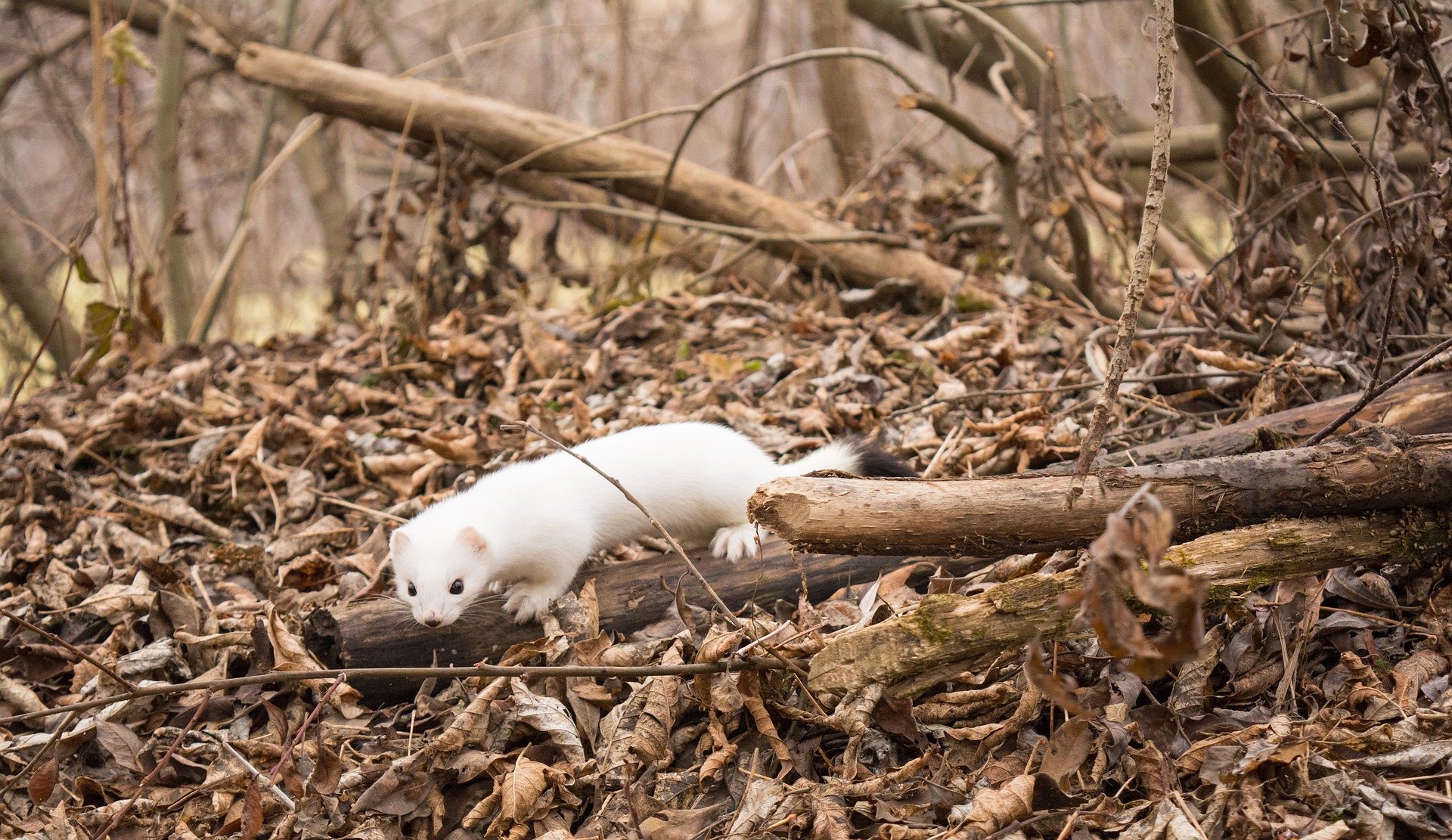
What kind of animal is a stoat? We will explain its characteristics, ecology, and habitat. Stoats have a characteristic that their appearance changes considerably between summer and spring as their fur grows back. The stoat has a typical weasel morphology. I will explain what kind of characteristics it has.





- What is stoat? About basic status
- What are the roots and origins of the stoat?
- About habitat
- feature is? What kind of creature is it?
- What is your personality like?
- What is the ecology like?
- About Molting
- Vocalizations
- Seasonal Activities
- Locomotion Speed
- About Baby Stoats
- Is the stoat an endangered species?
- Can ermines be kept as pets?
- Zoos Keeping Stoats (Japan and Worldwide)
- Introducing other animals
What is stoat? About basic status
The stoat is a mammal classified in the genus Mustelidae, family Mustelidae, order Felidae (Carnivora). The body length is 13-33cm and the weight is about 150-300g. The scientific name is Mustela erminea, and it is written in kanji as Hakuto.
| Japanese(和名) | オコジョ |
| English(英名) | Stoat/Ermine |
| scientific name(学名) | Mustela erminea |
| classification(分類) | Mammalia、Carnivora、 Mustelidae、Mustela 哺乳綱、ネコ目、イタチ科、イタチ属 |
| IUCN Status(保全状況) | LEAST CONCERN |
| Length(体長) | 13 – 33cm |
| Weight(体重) | 150 –300g |
What are the roots and origins of the stoat?
The stoat (scientific name: Mustela erminea) is a carnivorous mammal belonging to the weasel family (Mustelidae); it is a type of weasel that evolved to adapt to cold climates.
Origins and Roots
Current research suggests that the stoat’s ancestors diverged from other weasels on the Eurasian continent approximately 5 to 7 million years ago. This period saw environmental changes characterized by a cooling climate, a reduction in forests, and an expansion of grasslands.
As a result, they are believed to have acquired the following characteristics:
An increase in small rodents, such as mice
Evolution into a slender, elongated body shape that allows for easy entry into rodent burrows
Adaptation to life in cold regions
Thriving During the Ice Age
Stoats held a significant advantage during the Ice Age, which began approximately 2.6 million years ago.
The reasons include:
The ability to move freely through tunnels beneath the snow
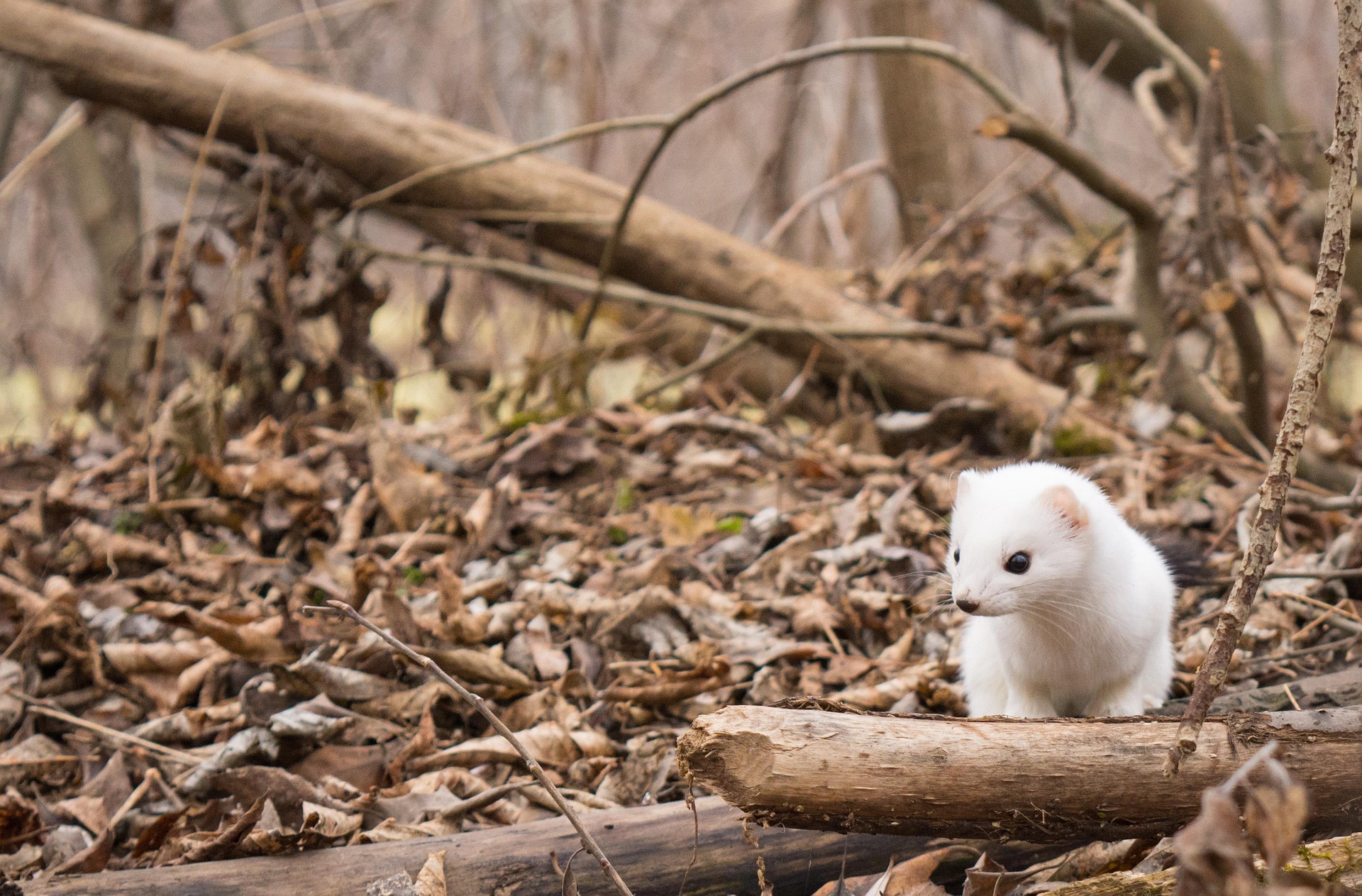
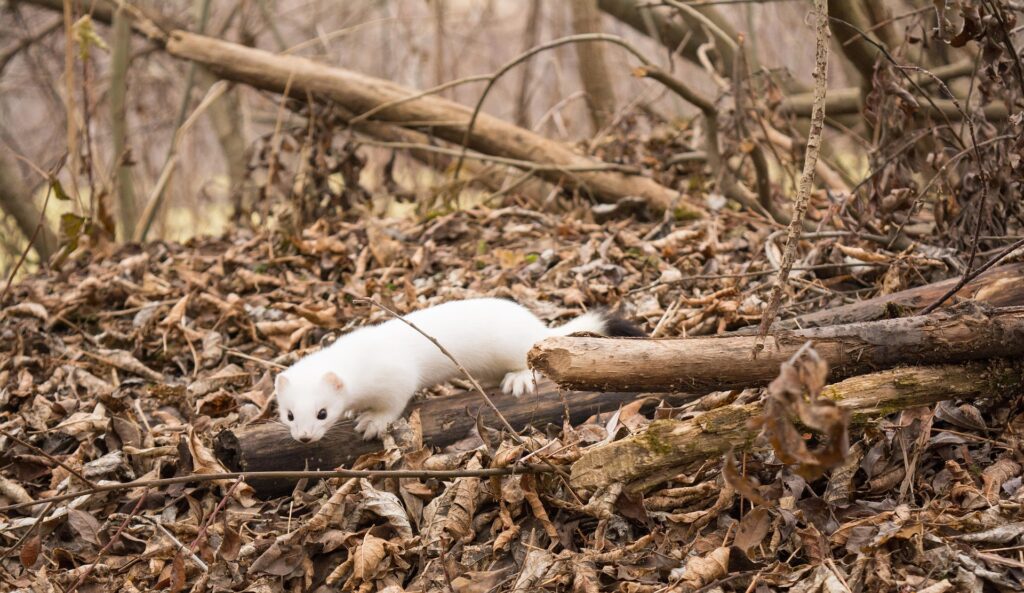
A coat that turns entirely white in winter (except for the black tip of the tail)
Camouflage that hides them from predators and makes them less noticeable to prey
Thanks to these adaptations, they became widely distributed across Europe, Asia, and North America.
How did stoats arrive in Japan?
Two main subspecies inhabit Japan:
Hondo stoat (Mustela erminea nippon)
Ezo stoat (Mustela erminea orientalis)
These are believed to be the descendants of populations that crossed from Siberia to the Japanese archipelago when sea levels dropped and land bridges formed during the Ice Age. When the Ice Age ended and sea levels rose, these populations became isolated on the archipelago and evolved into distinct subspecies.
Lineage (Evolutionary Path)
Mustelidae (Weasel family) (approx. 20 million years ago)
│
├─Marten
├─Ferret
├─Mink
└─Stoat (diverged approx. 5–7 million years ago)
│
├─European and North American populations
└─Japanese Hondo stoat and Ezo stoat
About classification
Stoats are classified into more than 35 subspecies, so there are many types. Here we will introduce subspecies that mainly live in Japan.
Mustela erminea nippon
The Hondo Stoat is a subspecies that inhabits the Tohoku and Kyushu regions of Honshu. The body length is 18-20cm for males and 14-17cm for females. The tail length is approximately 5-7cm for males and 6cm for females. Males weigh about 200g and females about 160g. Basically, they live alone and live in the crevices between rocks. This species is designated as an endangered species.
Mustela erminea orientalis
The Ezo stoat is an animal that can only be seen in Hokkaido. Males are approximately 24cm long and females are approximately 22cm long, and their fur is pure white throughout the year. They do not hibernate and are active throughout the year, and their active hours vary. It is designated as an endangered species due to overfishing.
About habitat
The stoat’s habitat is primarily Europe, North America, and Japan.
- Distribution
Distributed throughout the Northern Hemisphere
North America (Alaska, Canada, northern USA)
Europe (from Iceland to Eastern Europe)
Asia (Siberia, Mongolia, parts of Japan)
Adapted to cold climates and forests, from temperate to polar regions
- Habitat
Forested areas (deciduous and coniferous forests)
Grasslands and wastelands
Farmland and mountainous areas
They generally prefer areas with ground or shrubs, building nests in holes or under rocks.
- Nests and Hiding Places
To protect themselves from predators, they build dens in holes in the ground, crevices in rocks, or under fallen trees.
In winter, they may borrow the nests of small animals to sleep in.
- Climate Adaptation
They have adapted to cold climates, changing to white winter fur to blend in with the snowy landscape.
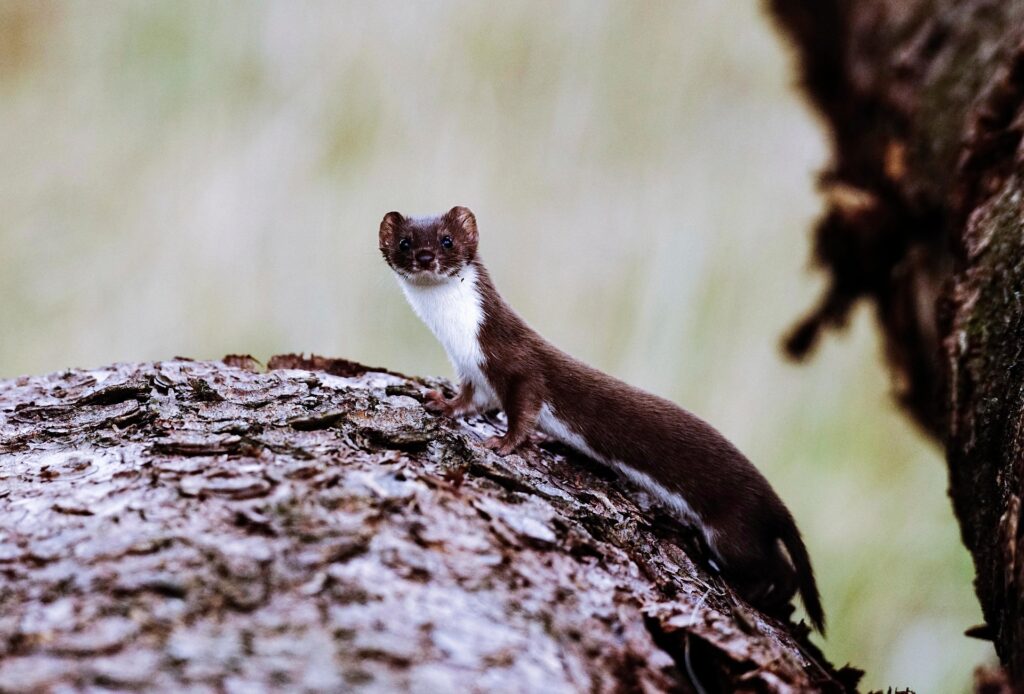
In warmer climates, they live with brown fur.
feature is? What kind of creature is it?
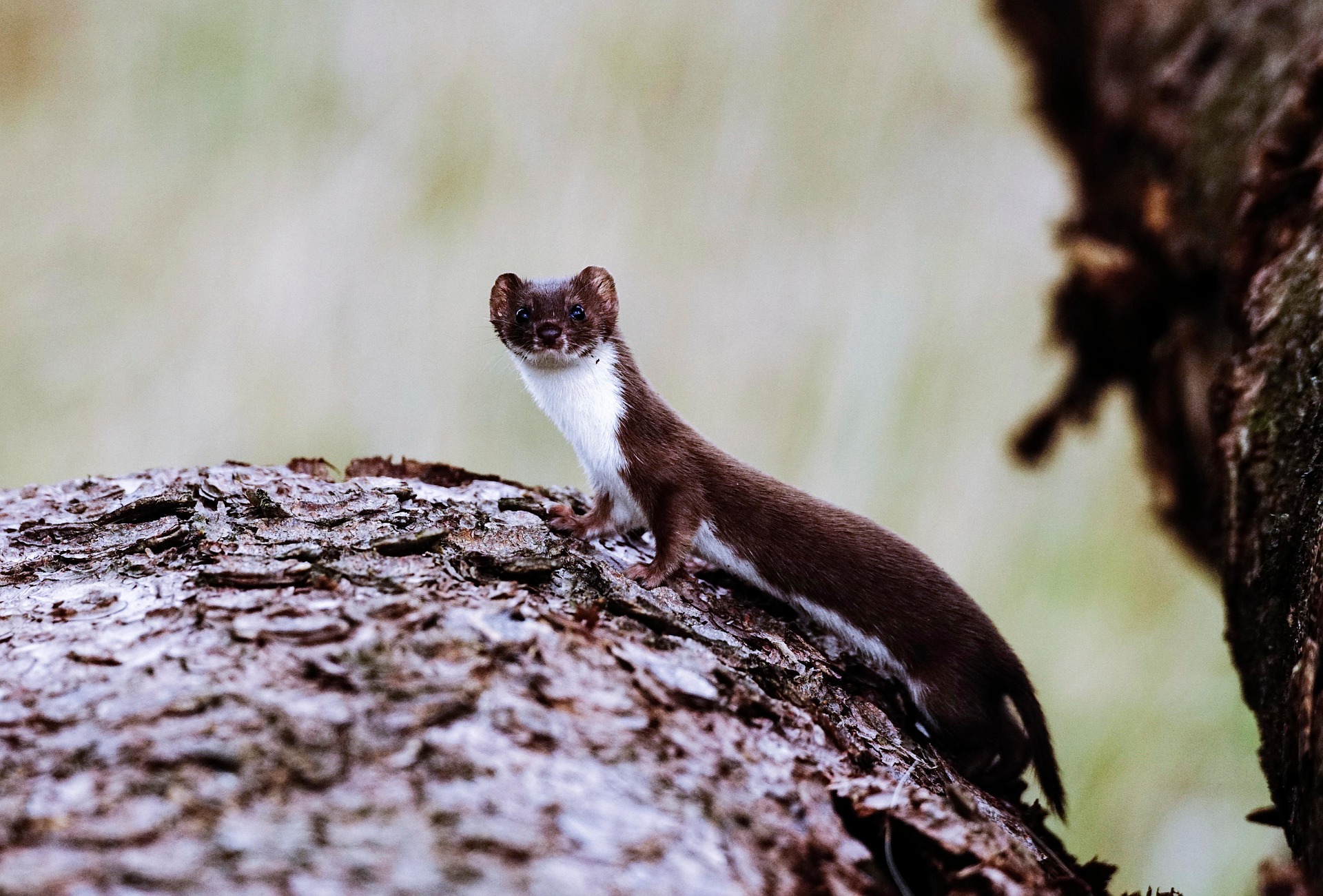
Stoats are extremely agile, and are good at climbing trees and swimming, making them versatile. They live alone and nest in crevices between rocks and tree roots. They molt twice a year, and in the summer their dorsal side is brown and their ventral side is white, but in the winter their entire body tends to be white. The ermine’s hind legs are relatively long, giving it excellent jumping ability.
- Physical Characteristics
Body Type
Slender, lithe body
Body Length: Approximately 17-32 cm (Tail: Approximately 7-12 cm)
Weight: Approximately 100-250 g
Coat Color
Summer: Brown back, whitish belly
Winter (in cold regions): Body fur turns almost entirely white (tail tip remains black)
Tail
Distinctive black tuft at the tip of the tail (still black in winter)
Face/Ears
Small, round ears and a pointed nose
Large eyes with well-developed vision
- Personality/Behavior
Very active and agile
Runs quickly and is good at jumping
Curious
Early sensitive to small animals, insects, and other moving objects
Strong predatory instinct
Can catch mice, baby rabbits, and baby birds
- Biology & Abilities
Nocturnal/Crepuscular
Although active during the day, they are most active in the evening and at night.
Excellent Hunting Ability
Despite their small size, they can quickly sneak up on and capture prey.
Burrow Use
Rather than digging their own holes, they use other animals’ nests or crevices between rocks.
Adaptability
Adapts to a wide range of habitats, from forests and grasslands to farmlands and mountainous areas.
In cold regions, they can blend in with the snow using their winter fur.
What is your personality like?
Contrary to their cute appearance, stoats are very aggressive and violent. They are not suitable as pets.
Stoats’ Personality Traits
Curious and active
Always alert to their surroundings and curious about everything
Quickly moving, they can easily fit into small holes and thickets
Highly agile and agile
Using their small size, they excel at jumping and quickly changing direction
While hunting, they are capable of sneaking and sudden attacks
Highly cautious
Shy of predators and humans
If they sense danger, they will instantly hide or flee
Primarily solitary
Rarely living in groups, they are territorial
Hunt and secure nests within their own territory
Combative and have a strong hunting instinct
They may boldly take on larger or more active prey
They can become aggressive when prey is nearby
What is the ecology like?
In addition to eating small mammals, stoats also eat insects and other insects. The reproductive form is viviparous. The gestation period is about one month. Lifespan is 4 to 6 years.
- Habitat
Live primarily in forests, grasslands, mountainous regions, and around farmland in the Northern Hemisphere.
Prefers environments with abundant grasses and shrubs, burrows, and rock crevices.
In cold regions, they change into winter fur and blend into the snowy landscape.
- Behavior
Nocturnal/Crepuscular (active in the evening and at night).
Sometimes active during the day, but often hide to avoid danger.
Primarily solitary.
Territorial, only interacting with others during breeding season.
Excellent athletic ability.
Agile, they excel at jumping and changing direction.
Easily navigate through narrow holes and complex terrain.
- Diet
Carnivorous (predatory).
Mainly feeds on small mammals (such as mice and baby rabbits).
Also eats bird chicks, eggs, and insects.
They are highly agile hunters, sneaking up on their prey and attacking them.
- Nests and Hiding Places
Rather than digging their own holes, they use other animals’ nests, crevices in rocks, and under fallen trees.
In winter, they may use burrows under the snow or other animals’ nests as sleeping spaces.
- Breeding
Breeding season is from spring to early summer.
Gestation period: Approximately 9-10 months (possibly due to delayed conception).
They give birth to 3-12 young at a time.
The young leave their dens at approximately 1-2 months of age and begin to learn hunting behavior.
Are there any natural enemies?
Stoats are said to be relatively small mammals, so they have many natural enemies. Foxes, dogs, etc. are their natural enemies and are preyed upon. Birds of prey such as eagles and hawks are also a threat.
About Molting
Molting in stoats is the process of shedding and replacing their fur in accordance with the seasons. This is not merely a simple replacement of hair; it evolved as an adaptation to optimize camouflage and heat retention.
Why do they molt?
There are two main purposes:
Camouflage
Summer: Brown fur that blends in with the ground and rocks.
Winter: White fur that blends in with the snowy landscape.
Improved Insulation
Winter fur is denser than summer fur and traps more air, making it easier to maintain body heat even in severe cold.
What triggers molting?
The primary factor influencing molting is the duration of daylight (day length).
As days grow shorter in autumn,
hormone secretion changes,
and new white winter fur begins to grow.
Conversely, as days grow longer in spring, the coat changes back to brown summer fur.
Temperature plays a minor role, but the coat does not turn white simply because it snows; daylight duration is the main trigger.
The molting process
Autumn (around September–November)
Brown → White
The coat turns white starting from the head and belly, gradually spreading across the entire body.
Winter
The entire body becomes white (though the tip of the tail remains black).
Spring (around March–May)
White → Brown
The coat changes back to summer fur.
*The timing may vary depending on the region, altitude, and individual animal.
Vocalizations
While stoats do not typically vocalize often, they use a variety of sounds depending on the situation. True to their nature as members of the weasel family, their calls are characteristically high-pitched and sharp.
Main Vocalizations
“Kee!” / “Kii!”
This is their most well-known call.
They emit this sound when startled, when issuing a threat, or when confronting an enemy.
“Chi-chi-chi-chi” / “Chi, chi”
These are short sounds made when the animal is excited or on alert.
“Kuk-kuk-kuk” / “Grrr”
These sounds may be heard during close-range communication, such as between a mother and her young.
They may also emit a low growl when threatening others.
“Kyan!”
This is a scream-like sound sometimes emitted when the animal is severely startled or captured.
Communication Beyond Vocalization
In fact, stoats rely more heavily on scent than on vocalizations for communication.
They release secretions from scent glands located near the anus to:
mark their territory
signal their presence to potential mates
intimidate others when sensing danger
Seasonal Activities
Stoats are active year-round and do not hibernate. Their coat color, behavior, and reproductive patterns change with the seasons.
🌸 Spring (March–May)
They molt from their white winter coat to their brown summer coat.
The breeding season begins; males travel over wide areas in search of females.
They actively hunt prey such as mice, small birds, and insects.
Their range of movement expands as the snow melts.
Characteristics
This is one of the periods of peak activity during the year.
☀️ Summer (June–August)
Their entire coat turns brown for the summer.
It is the peak time for raising young, and parents go out hunting frequently.
They prey on a diverse range of animals, including mice, moles, small birds, insects, and frogs.
They tend to avoid activity during the hottest part of the day, moving instead during the morning, evening, or night.
Characteristics
The young grow rapidly and begin learning hunting skills.
🍂 Autumn (September–November)
As daylight hours decrease, they begin molting into their winter coat.
They store fat in preparation for winter and increase the frequency of their hunting.
They efficiently secure energy reserves before prey becomes scarce.
Characteristics
They may sometimes be seen with a coat that is a mix of brown and white.
❄️ Winter (December–February)
Their entire coat turns white for winter, except for the tip of the tail, which remains black.
They do not hibernate; instead, they hunt mice and other prey by moving through tunnels beneath the snow (the sub-nivean zone).
They remain active even in the bitter cold.
Characteristics
Their white coat acts as camouflage against the snowy landscape, making it difficult for both prey and predators to spot them.
Locomotion Speed
Although small in size, the stoat is an extremely quick and agile animal. Rather than walking, it frequently moves using a “bounding” or hopping gait characteristic of the weasel family.
Walking Speed
During routine movement,
it travels at approximately 2–5 km/h while exploring its surroundings.
When hunting, it repeatedly pauses and makes rapid changes in direction.
Running Speed
When chasing prey or fleeing from predators,
it is believed capable of accelerating to speeds of around 20–30 km/h.
Despite its small size, it is highly agile over short distances.
Jumping Ability
Leveraging its slender body and powerful hind legs, the stoat
can jump horizontally about 1–2 meters
and vertically around 50 centimeters.
This distance is several times its body length (approximately 17–32 cm).
Movement on Snow
In winter, it utilizes not only the snow’s surface but also the spaces formed beneath the snow (the sub-nivean zone).
It can move quickly through the snow.
It can track prey through mouse tunnels.
Its white winter coat makes it difficult to spot.
Consequently, it maintains a high hunting success rate even in winter in snowy regions.
About Baby Stoats
This section provides detailed information about baby stoats.
- Appearance and Characteristics
They are very small immediately after birth, measuring approximately 7-10cm in length and weighing approximately 5-10g.
They are born with their eyes closed and open within a few days.
They have thin fur, with short downy hairs growing over pinkish skin.
The black tip of their tail is not yet noticeable.
- Behavioral Ability
For the first few weeks of life, they remain motionless in the den and grow under their mother’s protection.
After their eyes open, they gradually begin to walk and explore the den.
At 1-2 months of age, they observe their parents’ hunting behavior and begin to imitate hunting.
- Defense and Hiding
Mothers protect their young in the depths of the den.
They stay still and hide in the depths of the den to protect from predators.
The young have little ability to escape and rely on their mother’s protection.
- Diet and Growth
They are breastfed for the first few weeks after birth
They begin to eat small prey (such as insects) in the den within a few weeks of birth
They become fully capable of feeding on their own at about 1-2 months of age
They grow rapidly, leaving the den at 3-4 months and becoming independent while learning to hunt
- Sociality
Young animals are completely dependent on their mothers in the den
They have little contact with other individuals and grow up largely solitary
They learn hunting and territorial behavior by observing their parents’ behavior
Is the stoat an endangered species?
Unfortunately, although stoats are stable due to their large number as a whole, many subspecies are designated as endangered species. In Japan, the Hondo Stoat has been designated as a natural monument. The Ezo stoat is also a near-threatened species.
- Current Status
According to the International Union for Conservation of Nature (IUCN) Red List, the stoat is classified as “Least Concern (LC).”
This means that it is not currently endangered.
- Population Status
Distributed across a wide area of the Northern Hemisphere (North America, Europe, Asia, and parts of Japan), its population is generally stable.
However, there are some areas where populations are declining due to agricultural land development and deforestation.
- Threats
Habitat Destruction
Deforestation, urban development, road construction, etc.
Predators and Competitors
Natural enemies include owls, foxes, and weasels.
Food competition also affects population density.
Climate Change
In areas with little snow, the effectiveness of winter fur camouflage is reduced.
- Conservation Status
Since it is not an endangered species, no special conservation efforts are generally required.
However, forest conservation and measures to coexist with agricultural land development may be important in some areas.
Can ermines be kept as pets?
Unfortunately, they are listed as an endangered species, and considering that ermines are extremely aggressive, they are not suitable for breeding at all. We recommend viewing it at zoos and events.
- Legal Issues
Stoats are wild animals, and in many countries, it is illegal to keep them as pets without special permission.
In Japan, they are treated as part of the mustelidae family, and petting requires permission from the prefectural governor.
Internationally, import and export are sometimes regulated by CITES (Convention on International Trade in Endangered Species of Wild Fauna and Flora).
- Ecological and Behavioral Issues
Highly active and agile
In domestic environments, they will run around and damage furniture and floors.
Nocturnal and crepuscular.
They sleep during the day, making observation and interaction difficult.
Solitary and highly territorial.
Not suited to living with other individuals or close contact with humans.
Strong predatory instincts.
May attack small animals and pets (such as mice and birds).
- Requirements for Keeping Stoats (Theoretically)
Even if legally possible, the following conditions are required:
A large area for exercise and hiding places.
An environment that does not interfere with nocturnal activity.
Access to natural food sources, such as small animals and insects.
Supervision by a wildlife-savvy veterinarian.
- A viable alternative as a pet
While stoats themselves cannot be kept as pets, small, domestic mustelids can be.
Examples: ferrets (mustelidae, improved species), hedgehogs, flying squirrels, etc.
Zoos Keeping Stoats (Japan and Worldwide)
Stoats are animals that are rarely kept in captivity, both in Japan and around the world. Because they are highly active and can squeeze into narrow crevices using their slender bodies—and are also sensitive to stress—they are generally considered unsuitable for standard public exhibits.
Zoos in Japan where you might see a stoat
Currently, very few facilities in Japan have stoats on permanent display.
Inokashira Park Zoo
This facility has a track record of keeping Japanese stoats (Mustela erminea nippon) and is actively involved in the conservation of rare species. As exhibit status varies by season, it is recommended to check before visiting.
Note: While other facilities have kept stoats in the past, some may no longer have them on display. You can check the latest information via the Japanese Association of Zoos and Aquariums (JAZA) animal database.
Major facilities worldwide (past and present)
Breeding success has been reported in the past.
Minnesota Zoo
This zoo has a long history of exhibiting stoats and closely related mustelids.
Wildwood Trust
A facility dedicated to the conservation and exhibition of native British wildlife; they have a history of keeping stoats.
Leningrad Zoo
Introducing other animals

コメント