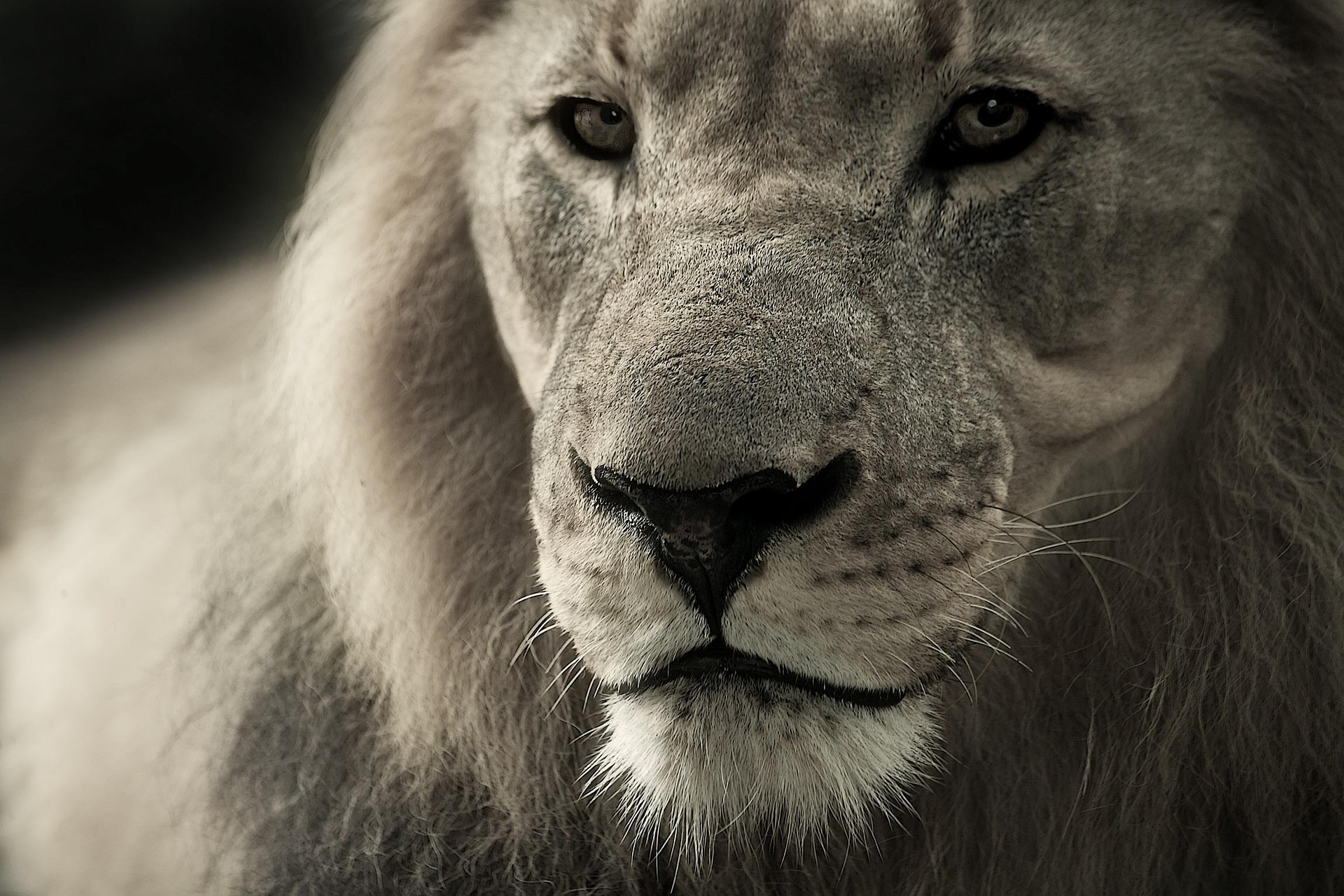
What kind of animal is a lion? We will explain its characteristics, ecology, and habitat. Lions are the largest cat species and can often be seen in zoos. However, they are also very ferocious animals and can even kill humans. I will explain what kind of characteristics it has.








- What is a lion? About basic status
- What are the roots and origins of the lion?
- About habitat
- feature is? What kind of creature is it?
- What is your personality like?
- What is the ecology like?
- Lion Vocalizations
- Seasonal Activities
- Walking Speed
- About Lion Cubs
- Are lions an endangered species?
- Can lions be kept in captivity?
- Zoos Housing Lions (Japan & Worldwide)
- Introducing other animals
What is a lion? About basic status
A lion is a carnivorous animal classified in the class Mammalia, order Carnivora, family Felidae, genus Leopard, and its scientific name is Panthera leo. The kanji is shi. They are famous throughout the world and are known as the “kings of beasts” and are generally considered to be the strongest animals. It has a very distinctive mane and is the strongest cat in the world. The body length is 140-250cm and the weight is 120-225kg. Tail length for males: 90 – 105 cm, females: 70 – 100 cm. Shoulder height: male 123cm, female 107cm.
| Japanese(和名) | ライオン |
| English(英名) | Lion |
| scientific name(学名) | Panthera leo |
| classification(分類) | Mammalia、 Carnivora、Felidae、Panthera 哺乳綱、食肉目、ネコ科、ヒョウ属 |
| IUCN Status(保全状況) | VULNERABLE |
| Length(体長) | 140-250cm |
| Weight(体重) | 120-225kg |
What are the roots and origins of the lion?
The roots of the lion (Panthera leo) trace back to an ancestral large carnivorous felid that appeared approximately 5 to 10 million years ago. The origins of the modern lion itself are believed to lie primarily in East Africa.
Ancestors of the lion: The emergence of the large felid genus Panthera
Lions belong to the genus Panthera within the family Felidae.
Related species include:
Lion (Panthera leo)
Tiger (Panthera tigris)
Leopard (Panthera pardus)
Jaguar (Panthera onca)
Snow leopard (Panthera uncia)
The Panthera lineage diverged more than 6 million years ago, eventually evolving into the large cats we see today.
The first lions emerged in Africa
The lineage leading to modern lions is believed to have developed in East Africa during the Pliocene epoch (approximately 5 to 2.6 million years ago).
During that time, forests in Africa were shrinking, and grasslands (savannas) were expanding.
These environmental changes favored lion-like predators that possessed:
Bodies capable of running fast
The ability to target large prey
Habits of hunting in groups
Lions once inhabited a much wider range
While modern lions are found primarily in Africa and parts of India, they once inhabited regions across the globe.
Hundreds of thousands of years ago, their range extended to:
Africa
Europe
The Middle East
Asia
North America
A prominent ancient lion:
Cave lion (Panthera spelaea)
A large lion that spread across northern Eurasia from about 500,000 years ago onwards.
Characteristics:
Larger than modern lions
Adapted to cold climates
Coexisted with large animals like mammoths
It was a quintessential predator of the Ice Age. 4. The Lion’s Mane Evolved Later
Surprisingly, early lions may not have possessed the kind of mane seen today.
The mane found on modern male lions is a relatively recent trait, likely having developed between approximately 320,000 and 190,000 years ago.
Possible reasons for this include:
Competition among males
Attracting females
Signaling strength
Why Do Only Lions Form “Prides”?
While most modern felids (members of the cat family) live solitary lives, lions are unusual in that they form groups known as prides.
The evolutionary reasons for this are believed to include:
Cooperating to take down large herbivores
Raising offspring communally
Defending territory
Research suggests that lions may have already developed the characteristics of group living before they spread from Africa to the rest of the world.
About classification
Lions are distributed mainly in Africa, but can also be found in the Middle East. There are the following subspecies, each with its own characteristics. Here is a list of all the species information. Lions are a major animal alongside giraffes and cheetahs. They are the only species that are all endangered. Basically, when observing all of them, they usually spend their time in groups, forming families.
| Name (名前) | Scientific Name (学名) | Habit (生息地) |
| India Lion インドライオン | Panthera leo leo | Northern, western and central Africa, India アフリカ大陸北部・西部・中部、インド |
| Africa Lion アフリカライオン | Panthera leo melanochaita | Southern and eastern African continent アフリカ大陸南部・東部 |
| sri lanka lion スリランカライオン | Panthera leo sinhaleyus | sri lanka スリランカ |
| european cave lion ヨーロッパホラアナライオン | Panthera leo fossilis | Europe ヨーロッパ |
| cave lion ホラアナライオン | Panthera spelaea | From Eurasia to North America ユーラシア大陸から北アメリカ大陸 |
| american lion アメリカライオン | Panthera atrox | USA アメリカ |
Panthera leo leo
A modern lion. It is distributed in northern, western and central Africa and India.
Panthera leo melanochaita
A modern lion. It is distributed in southern and eastern Africa.
Panthera leo sinhaleyus
It is a subspecies of an extinct prehistoric lion unearthed in Sri Lanka. Unfortunately, this subspecies is already extinct.
Panthera leo fossilis
It is thought to be an early subspecies of the cave lion and is said to have lived in Europe at least 550,000 years ago, but it is now extinct.
Panthera spelaea
It is said to be slightly larger than modern lions and probably did not have a mane. This lion is already extinct and is said to have lived during the Pleistocene.
Panthera atrox
An extinct species that lived in North America. It is said that they lived between about 340,000 and 11,000 years ago.
About habitat
Modern lions are found mainly in the Middle East, Africa and the Sahara Desert. According to information, they are mostly born in the Middle East and Africa, and live together from children to adults. They are a large cat species that is becoming extinct in some places. They are constantly seeking food to live.
- African Lion (Panthera leo)
Distribution
Mainly found in sub-Saharan Africa
Especially in East Africa (Kenya, Tanzania), Southern Africa (Botswana, South Africa, Namibia), and parts of West Africa
Habitat
Savanna, dry grasslands, semi-desert areas
Typically lives in groups in open grasslands and shrublands
- Asiatic Lion (Panthera leo persica)
Distribution
Limited to Gir Forest in India
Very few wild individuals, found only in protected areas
Habitat
Dry forests, grasslands, shrublands
Live in areas with abundant water and prey
- Habitat Characteristics
Pack Life
Live in prides (groups) dominated by females
Prefers open environments with good visibility
Hunting Locations
Hunts near grasslands and water sources where prey is abundant
Causes of Distribution Decline
Habitat Shrinkage (Agricultural Land Development, Deforestation)
Poaching and Conflict with Livestock
feature is? What kind of creature is it?
Lions are the largest members of the cat family, along with tigers. The hair on the body is short, usually yellowish brown or grayish brown, and the ears are rounded, and males have a long mane that covers the head, shoulders, and chest. Lions have a different lifestyle and are unique among the cat family, living in groups on the savannah. Form groups of 10 to 15 animals. They have territories and mark them with urine, etc. It has great athletic ability and can reach speeds of 60km/h.
- Physical Characteristics
Body Size
Male: Approximately 2.4-3.0m in length (including tail), 150-250kg in weight
Female: Approximately 2.0-2.7m in length, 120-180kg in weight
Coat Color and Mane
Generally yellowish-brown to light brown
Males have a dark mane around their neck, though this varies from individual to individual.
Females are maneless and have a body shape adapted for hunting.
Face, Eyes, and Ears
Their faces are short and rounded, with sharp eyes.
Their ears are small and rounded, and they are sensitive to sound.
Legs and Claws
They capture prey with their powerful front legs and sharp claws.
They can run at speeds of around 50km/h, making them suitable for short-distance raids.
- Behavioral Characteristics
Carnivorous (Predator)
Preys primarily on medium- to large-sized herbivores such as zebras, wildebeest, and gazelles.
Females primarily hunt, while males are involved in defending the group and securing prey.
Group Life
Live in female-dominated prides.
Males protect the pride and maintain their territory.
Calls
They announce their territory and presence with a low, resonant “roar.”
They often roar at night or early in the morning.
- Personality and Habits
Sociality
They cooperate in group hunting and raising children.
Aggression and Defense
They are very aggressive toward their group and territory.
They may also aggressively fight against predators.
Movement Characteristics
They often rest during the day and tend to be nocturnal.
They are agile and powerful when hunting and fighting for territory.
What is your personality like?
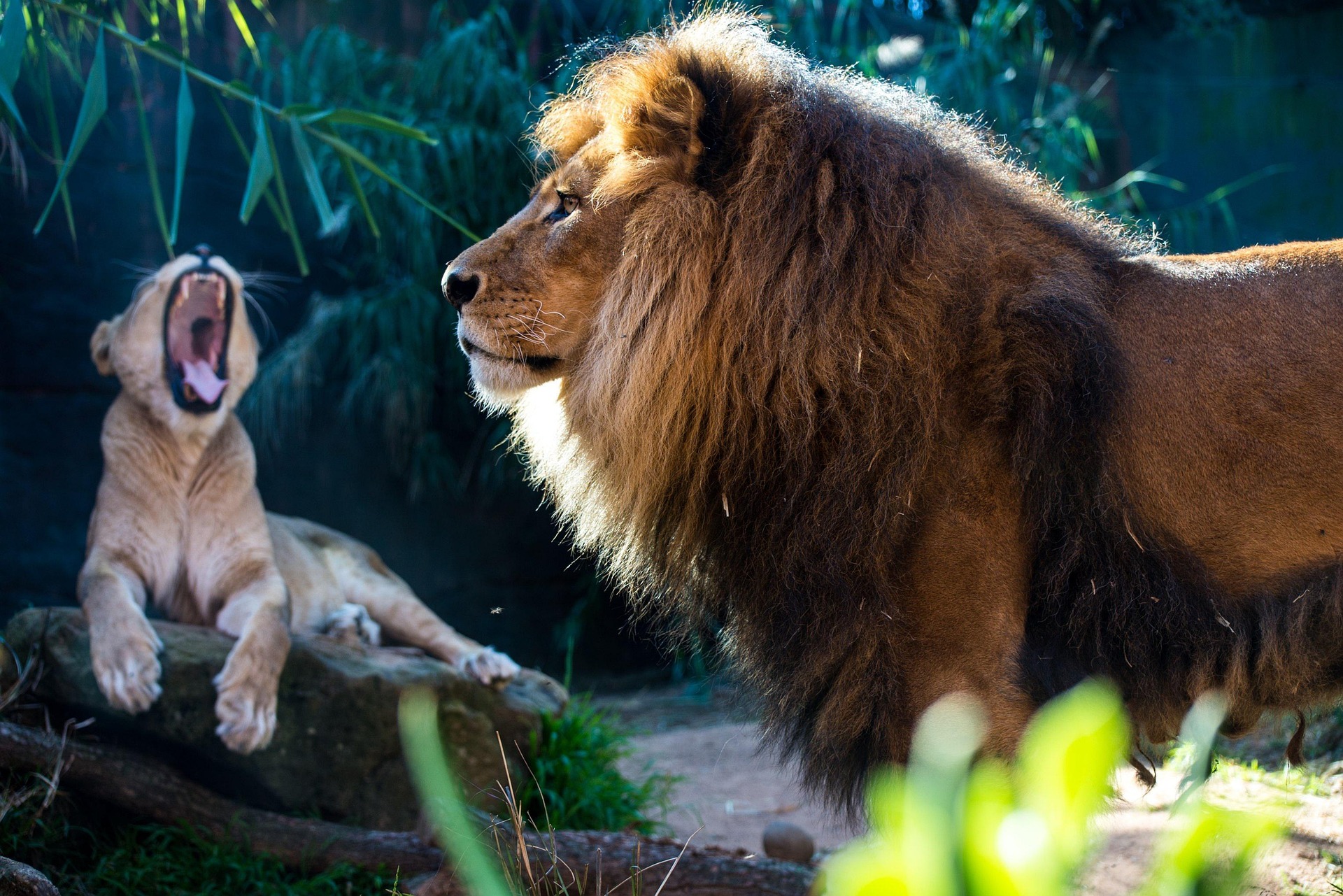
Lions have a leader-like personality and lead those around them. It is unique among the cat family because it has a higher pride than any other animal, actively communicates with its friends, and is a highly social animal. They are large animals that work together to protect each other. From young lions to the elderly, the range and roles are determined by each other and they exert great power. It’s a fine animal.
- Highly Social
Live in prides (groups) centered around females
They cooperate within the group to hunt and help raise their young
Aware of group order and hierarchy
- Strong Aggression and Defensive Instinct
Males can be very aggressive in defending their territory and pride
Females also act bravely when hunting and protecting their young
They actively defend themselves against predators and other threats
- Vigilance and Cautious
Males, in particular, behave cautiously around other males within their territory and external enemies
They are alert to their surroundings to ensure the safety of the group
- Gentle and Playful
They may play and engage in physical contact within the group
When not hunting or fighting, they rest and remain docile during the day
What is the ecology like?
Lions eat small animals such as rabbits and rodents, as well as bird and ostrich eggs, fish, and reptiles. Hunting is achieved by approaching the prey while hiding in the grass and pouncing on it from close range. Breeding is polygamous, there is no fixed breeding season, and the gestation period is 3 months. It is possible to give birth to 1-3 puppies at a time. Children open their eyes between 1 week and 10 days after birth, and begin walking around 2 weeks after birth. The lifespan is about 20 years.
- Lifestyle
Rests during the day and is active at night and early in the morning
They often rest in grass or shade during the day, focusing their activity on cooler times of the day.
Live in groups
Move in female-dominated prides
Males protect the group and maintain their territory.
- Diet
Carnivorous (predator)
Main prey: zebras, wildebeest, gazelles, buffalo, etc.
Females are the primary hunters, while males are involved in defending larger prey and territories.
Hunting Method
Works in groups to drive prey and make short-distance raids.
They are often nocturnal or crepuscular.
- Reproduction
Breeding Method
Polygamy is common (males form groups with multiple females).
Gestation Period
Approximately 3.5 months (approximately 110 days)
Birth
1-4 cubs at a time (average 2 cubs)
Baby cubs are raised in a hidden place and rejoin the group after a few weeks.
- Groups and Defense
Groups cooperate to protect their young from predators and predators.
Males in a group may fight with other males to defend their territory.
Group size and cooperation are directly related to survival.
- Movement and Range
They may travel tens of kilometers across savannas and grasslands.
They move nomadicly depending on the distribution of water sources and prey.
Do lions have no natural enemies?
Lions have no predators, but their immature cubs are often targeted by hyenas living in the grasslands, so they are by no means invincible animals. Lions always act in groups as a family and attack their prey, but they can also be defeated. They can also be chased away.
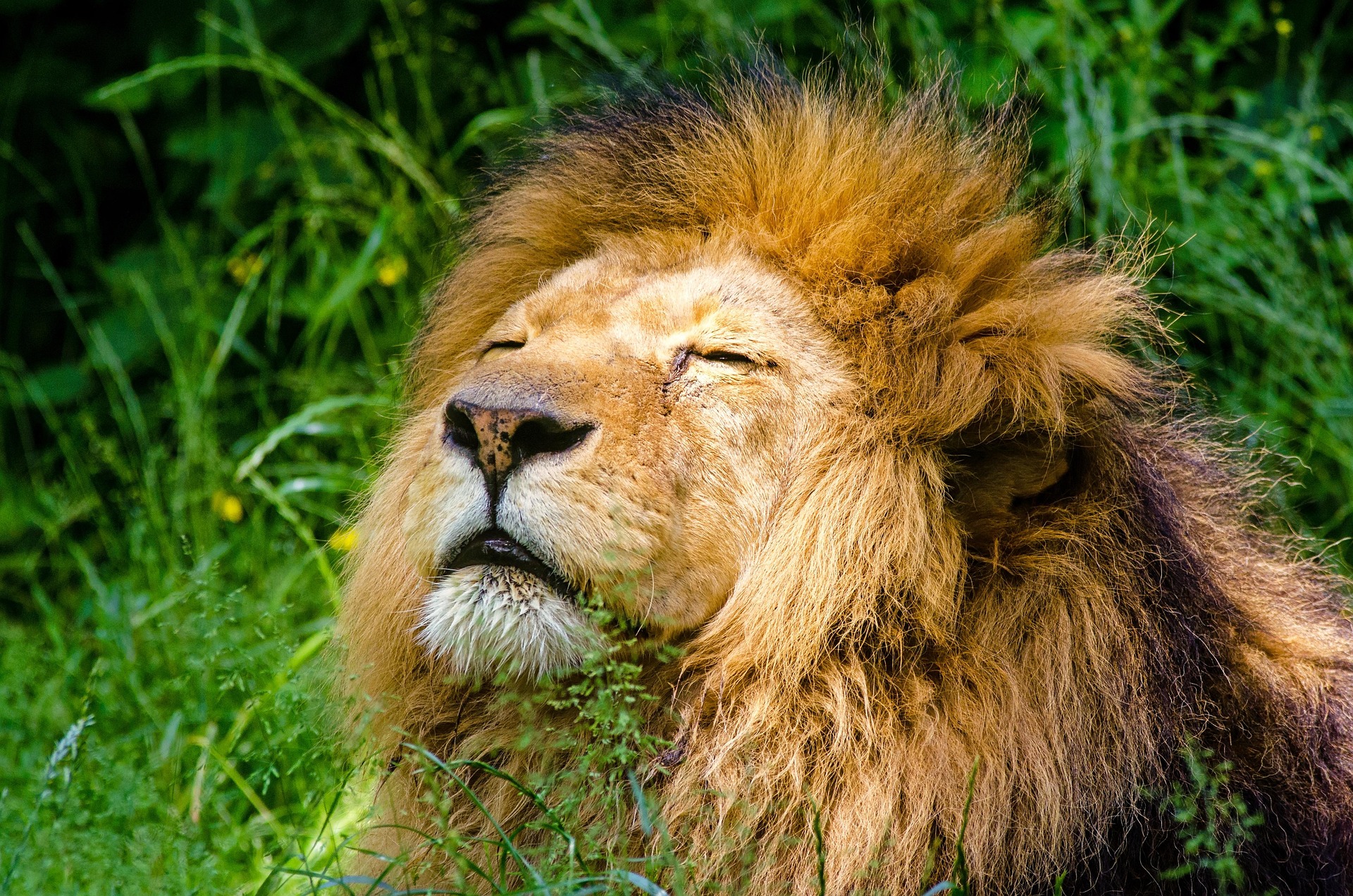
Lion Vocalizations
When people think of a lion’s voice, they usually imagine a mighty “Roar!” However, lions actually use a variety of different vocalizations.
🦁 1. Roar — “The Territorial Call”
This is their most famous vocalization.
Characteristics:
A deep, booming, and massive sound
Can carry over 8 km (approx. 5 miles) under favorable conditions
Primarily used by males
Most frequent at night or early morning
Purpose:
To declare, “This is my pride’s territory”
To intimidate other males
To locate other members of the pride
Lions have evolved vocal cords and throat structures that allow them to produce loud, low-frequency sounds.
🦁 2. Purr / Chuff
A low sound similar to that of a domestic cat.
Situations:
Communication between parent and cub
A signal of reassurance to pride members
When relaxed
However, unlike domestic cats, they do not purr continuously.
🦁 3. Growl
A low, threatening sound (like “Grrr…”).
Situations:
Guarding prey
Warning enemies
Conflicts within the pride
🦁 4. Grunt
A short, guttural sound (like “Uh, uh”).
Situations:
Calling out to pride members
Checking in while on the move
🦁 5. Cub Vocalizations
Cubs make sounds that are more similar to domestic cats than to adult lions, such as:
Meowing sounds
Cries for help
Sounds expressing a desire for affection or attention
Seasonal Activities
Lion activity varies significantly depending on the season (dry vs. rainy) due to changes in temperature and the movement of prey. Lions living in the African savanna, in particular, employ specific strategies for each season.
🌱 Rainy Season (Approx. November–May)
Activity Level: Moderate to High
A time of rainfall and abundant vegetation.
Characteristics:
Herbivore populations increase
Prey is dispersed
Favorable conditions for raising cubs
Lion Behavior:
Travel over wide areas in search of prey
Target species such as zebras, wildebeest, and buffalo
Females hunt cooperatively
Often a period of growth for cubs
However, the tall grass makes it harder to spot prey.
☀️ Dry Season (Approx. June–October)
Activity Level: High, but shifting to nocturnal habits
A time when water and food become scarce.
Characteristics:
Herbivores gather at waterholes
Prey locations are easier to predict
Hunting success rates may increase
Lion Behavior:
Ambush prey near waterholes
Hunt at night or in the early morning
Rest in the shade during the day
Due to the heat of the dry season, their daily routine looks like this:
Daytime → Mostly resting
Evening to Night → Becoming active
Dawn → Hunting
🌅 Daily Activity Rhythm
Daytime (Approx. 10:00 AM – 4:00 PM)
Activity Level: Low
Resting in the shade
Sleeping
Grooming
Socializing with the pride
Lions may rest for up to 16–20 hours a day.
Evening (Approx. 4:00 PM – 8:00 PM)
Activity Level: Rising
Start moving
Checking territory
Interacting with the pride
Night (Approx. 8:00 PM – 4:00 AM)
Activity Level: Peak
The time when lions are most active.
Behavior:
Hunting
Patrolling territory
Communicating with the pride via roaring
In the darkness, they rely on:
Vision
Hearing
Sense of smell
Walking Speed
A lion’s walking speed varies significantly depending on the situation. Lions are not animals built for sustained high-speed running; instead, they typically move at a leisurely pace and only accelerate explosively during a hunt.
Speed Estimates: Normal walk: ~3–5 km/h | Slow movement: ~5–8 km/h | Approaching prey (stalking): ~5–10 km/h | Trot: ~10–20 km/h | Short-distance dash: ~50–60 km/h | Top speed: ~70 km/h (briefly)
🐾 Typical Walking Style
Lions usually walk at a very relaxed pace.
Reasons:
Large body size (males can weigh 150–250 kg or more)
To avoid wasting energy
To conserve explosive power for the hunt
While they may travel anywhere from a few kilometers to over 20 km in a day, most of this movement is at a slow speed.
🦌 Hunting Speed
Lion hunting does not involve a prolonged chase; rather, it is a short-distance affair:
Slowly approach the prey
Hide in the grass or terrain
Close the distance to about 20–50 meters
Dash suddenly
Tackle the prey with the forelegs
Although their top speed is high, they cannot maintain it for long.
Why can’t they run fast over long distances?
Unlike cheetahs, lions:
Have high muscle mass
Have heavy bodies
Are built for explosive power
That is the reason.
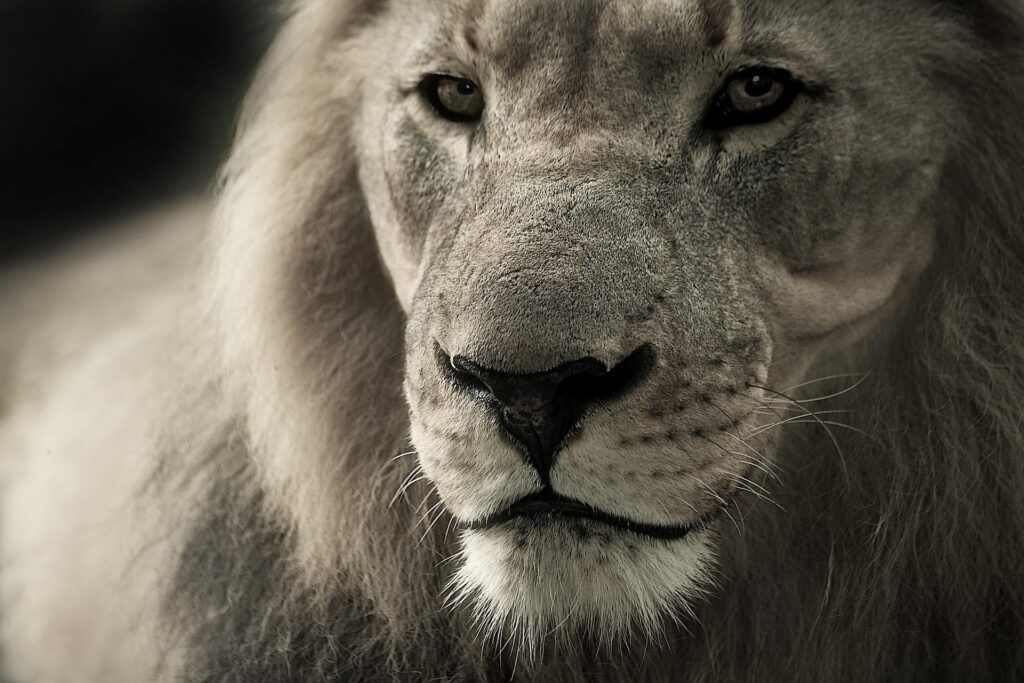
About Lion Cubs
Let’s take a look at lion cubs. From the moment they’re born, lion cubs are equipped with the ability to adapt for survival.
- Birth and Early Characteristics
Birthing Period
Varies by season, but births are more common during the rainy season.
Litter Size
1-4 pups per litter (average 2 pups)
Weight and Size
Birth Weight: Approximately 1.2-2.0 kg
Body Length: Approximately 40 cm
Coat Color
At first, they are yellowish-brown with black spots that disappear as they grow.
The spots serve as camouflage to protect them from predators.
- Growth and Behavior
Standing and Mobility
They stand and follow their mother within a few hours of birth.
Lactation Period
They breastfeed for approximately 6 months.
They begin to eat meat gradually around 2 months of age.
Play
They acquire the motor skills necessary for hunting and defense through playful interactions with other pups and their mother.
- Group Protection
Pups are protected by their mother and other females in the group.
They spend the first few weeks hiding in burrows or bushes to hide from predators.
When they sense danger, the mother and the entire group will flee.
- Independence and Maturity
Weaning: They switch completely to a carnivorous diet at approximately 6 months of age.
Independence within the group: They begin to practice hunting their own prey at 1-2 years of age.
Sexual maturity: Females are able to reproduce at 2-3 years, males at 3-4 years.
Are lions an endangered species?
Unfortunately, many subspecies of lions are already extinct. The remaining species are also listed as endangered. The biggest external enemy will be humans, which will lead to habitat development and the associated loss of prey and hunting.
- IUCN Assessment
Classification: Vulnerable (VU)
Reasons for Extinction
Habitat loss (reduction of savannas and grasslands due to agricultural development and urbanization)
Poaching and conflict with livestock
Decreased genetic diversity due to a decline in reproductive males
- Species Status
African Lion (Panthera leo)
Distributed throughout the sub-Saharan region
Estimated population size is approximately 20,000-25,000
The population in West Africa is particularly small and at high risk of extinction
Asiatic Lion (Panthera leo persica)
Found only in Gir National Park, India
Approximately 400 individuals remain in the wild
Conservation efforts are helping to increase the population, but the species remains endangered
- Conservation Efforts
Habitat protection (establishment of national parks and protected areas)
Anti-poaching measures and prevention of human-animal conflict
Managed breeding to maintain genetic diversity
Can lions be kept in captivity?
Lions can also attack humans, so it is absolutely dangerous, so please refrain from doing so. It is safe to enjoy them at exhibitions and events at the zoo.
- Current Status of Captivity
They are often kept in zoos and safari parks around the world.
In Japan, they are exhibited at Ueno Zoo, Tama Zoological Park, and Kobe Animal Kingdom.
Capturing wild individuals is prohibited, and captive individuals are kept for conservation and breeding purposes.
- Difficulties of Captivity
Large exercise space is required.
Because they are large and powerful animals, facilities of several thousand square meters are recommended for keeping them in groups.
Dietary management is necessary.
Because they are carnivorous, large amounts of meat must be supplied daily.
Nutritional balance and freshness control are also important.
Sociality in groups.
They are prone to stress when kept alone.
Recreating a group environment helps maintain natural behavior.
Health Management and Safety Measures
Regular veterinary examinations are essential.
Facilities require sturdy cages and fences, and safety measures are essential.
- Laws and Regulations
Listed in Appendix I of the Convention on International Trade in Endangered Species of Wild Fauna and Flora (CITES), international trade is generally prohibited.
Even within Japan, animals must comply with the Animal Welfare Act and regulations regarding specific animals.
Zoos Housing Lions (Japan & Worldwide)
Lions are kept in zoos across the globe and can be seen at many facilities in Japan. Zoos primarily house the African lion (Panthera leo).
🇯🇵 Major Zoos in Japan Where You Can See Lions
🦁 Tama Zoological Park
One of Japan’s premier lion exhibition facilities.
Features:
Famous for introducing the world’s first “Lion Bus.”
Lions are kept in a pride within a spacious enclosure.
Allows for easy observation of natural lion behaviors.
Tama Zoological Park also engages in the breeding and rearing of lions.
🦁 Asahikawa City Asahiyama Zoo
A leading zoo in Hokkaido.
Features:
Famous for exhibits that showcase animal behavior.
Visitors can observe how lions live in a cold climate.
The lions’ appearance during winter is also a distinctive feature.
🦁 Maruyama Zoo
A prominent facility in Hokkaido that houses lions.
Features:
Comprehensive educational displays on lion ecology.
Enclosure environment adapted to Hokkaido’s climate.
🦁 Yokohama Zoological Gardens “Zoorasia”
A zoo known for its exhibits of large animals.
Features:
Spacious exhibition areas.
Exhibits that recreate natural wild environments.
🌍 Famous Lion-Housing Facilities Worldwide
🇺🇸 San Diego Zoo
One of the largest zoos in the world.
Features:
Vast grounds.
Exhibits that closely resemble natural habitats.
Renowned for wildlife conservation efforts.
🇿🇦 Kruger National Park
While not strictly a zoo, it is world-famous as a location for observing wild lions.
Features:
Opportunities to observe wild prides.
Witness behavior in a natural environment.
🇸🇬 Singapore Zoo
A highly acclaimed zoo on the global stage.
Features:
Open-style exhibits.
Husbandry practices that prioritize animal welfare.
🇬🇧 London Zoo
One of the oldest zoos in the world.
Features:
A long history of animal care.
Known for research on endangered species.
Introducing other animals


コメント