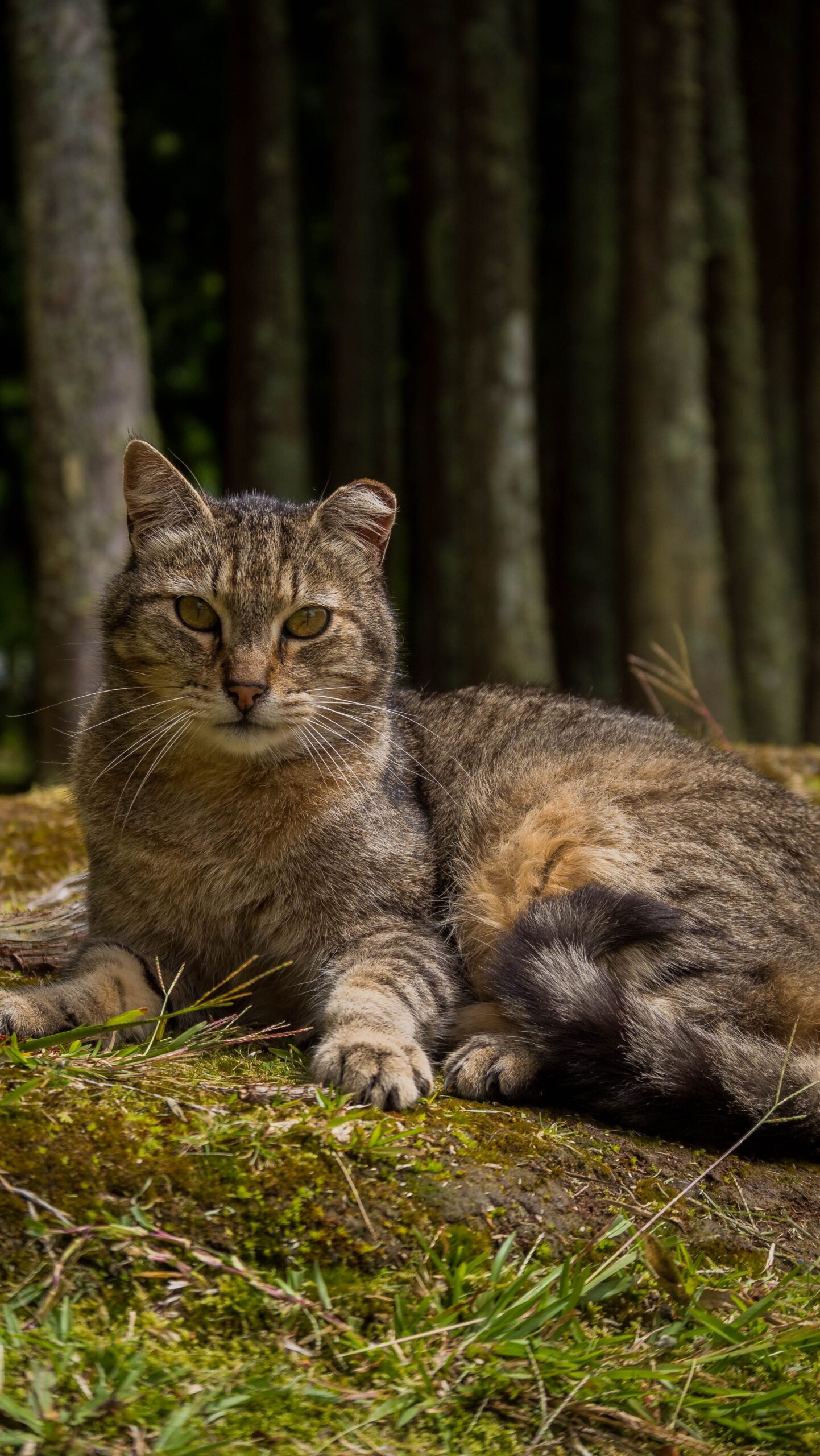
We will explain the characteristics, ecology, and habitat of the Tsushima leopard cat. This cat is a wild feline mammal that lives only in Tsushima, making it a cat endemic to Japan. For this reason, its existence itself is extremely valuable, and because its population is extremely small, it is designated as an endangered species.



- What is Tsushima leopard cat? About basic status
- What are the roots and origins of the Tsushima leopard cat?
- About the habitat of the Tsushima leopard cat
- feature is? What kind of creature is it?
- What will your personality look like?
- What is the ecology of the Tsushima leopard cat?
- Tsushima Leopard Cat Vocalizations
- Seasonal Activity of the Tsushima Leopard Cat
- Walking Speed
- About Tsushima wildcat cubs
- Is the Tsushima leopard cat an endangered species?
- Is it possible to keep Tsushima leopard cats?
- Zoos where they are kept (Japan and around the world)
- Introducing other animals
What is Tsushima leopard cat? About basic status
The Tsushima leopard cat is a subspecies of the Bengal leopard cat, which belongs to the mammalian class Carnivora and the Felidae family. The scientific name is Prionailurus bengalensis euptilurus. This cat is extremely rare and can only be seen in Tsushima, Nagasaki Prefecture, Japan. The body length is 50-80cm and the weight is 3-5kg. Also known as Amur wildcat. It has a long body and a thick tail.
| Japanese(和名) | ツシマヤマネコ、対馬山猫 |
| English(英名) | Tsushima leopard cat |
| scientific name(学名) | Prionailurus bengalensis euptilurus |
| classification(分類) | Mammalia、 Carnivora、Felidae、Prionailurus 哺乳綱、食肉目、ネコ科、ベンガルヤマネコ属 |
| IUCN Status(保全状況) | Critically Endangered |
| Length(体長) | 50-80cm |
| Weight(体重) | 3-5kg |
What are the roots and origins of the Tsushima leopard cat?
The Tsushima leopard cat traces its roots to the leopard cat (Prionailurus bengalensis), a species widely distributed across Asia.
Origins
It is believed that between approximately 100,000 and 200,000 years ago—during the Ice Age when sea levels were lower and the distance to the Asian mainland was reduced—ancestral leopard cats crossed over to the area that is now Tsushima Island.
Subsequently, rising sea levels isolated Tsushima, cutting the population off from other regions for a long period; this isolation led to the evolution of the Tsushima leopard cat as a distinct subspecies with unique characteristics.
Ancestral Roots
Their ancestors belong to the leopard cat populations found in the following regions:
Russia
Northeastern China
South Korea
North Korea
Genetic studies, in particular, have revealed a strong affinity with leopard cats inhabiting the Russian Far East and the Korean Peninsula.
Characteristics Evolved on the Island
As a result of long-term isolation, the Tsushima leopard cat developed the following characteristics:
A somewhat small, stocky build
A thick, short tail
A thick winter coat
Adaptation to a cold climate
Behaviors suited to life in the forest
What will be the classification?
The Tsushima leopard cat was listed as Prionailurus bengalensis euptilura by the Ministry of the Environment of Japan. It was previously included in the genus Felis, and there is a theory that it is the same species as the population in Taiwan and the population on Iriomote Island (Iriomote wild cat).
ツシマヤマネコの分類学(Taxonomy)
| ランク | 分類 |
|---|---|
| 界 (Kingdom) | 動物界 (Animalia) |
| 門 (Phylum) | 脊索動物門 (Chordata) |
| 綱 (Class) | 哺乳綱 (Mammalia) |
| 目 (Order) | 食肉目 (Carnivora) |
| 科 (Family) | ネコ科 (Felidae) |
| 属 (Genus) | ヤマネコ属 (Prionailurus) / 一部はLeopard cat属 (Prionailurus bengalensis) に分類 |
| 種 (Species) | ツシマヤマネコ(Prionailurus bengalensis euptilurus) |
About the habitat of the Tsushima leopard cat
The Tsushima leopard cat lives only in Tsushima, Nagasaki Prefecture, Japan. As a result, their population is extremely small. Because it is a rare and endangered species, there are few videos and other exhibits on online pages.
- Geographic Distribution
Endemic: Found only on Tsushima Island in Nagasaki Prefecture in Japan
Limited to the forests and mountainous areas of Tsushima, it is not naturally distributed anywhere else.
- Habitat
Forest:
Inhabits evergreen forests, deciduous broadleaf forests, and mixed forests.
Based in thickets and rocky areas.
Near water sources: May hunt near rivers and wetlands.
Altitude: Wide range of habitat, from plains to mountains.
- Behavior and Adaptations
Nocturnal: Active mainly at night to hunt for food.
Soliloquy: Maintains a territory and lives almost entirely alone except during the breeding season.
Prey Selection: Preys on mice, small birds, frogs, insects, etc.
- Habitat Status and Conservation
Low population density: Dispersed to limited areas on Tsushima Island
Impacts of human activities:
Habitat fragmentation due to forest development and road construction
Traffic accidents are also contributing to population declines
Conservation Status: Listed as Endangered (EN) on the Ministry of the Environment’s Red List
Protected areas and research and conservation activities are underway
feature is? What kind of creature is it?
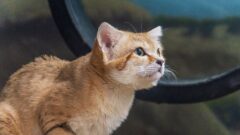
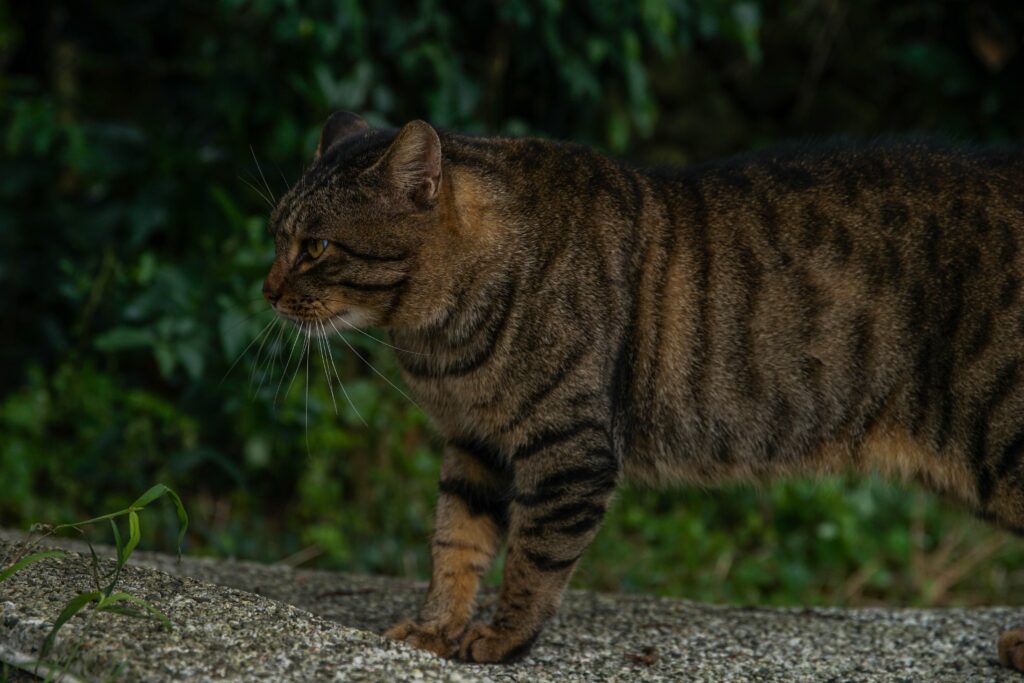
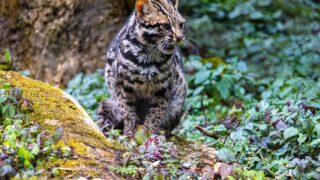
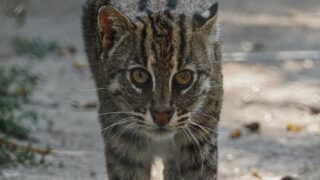
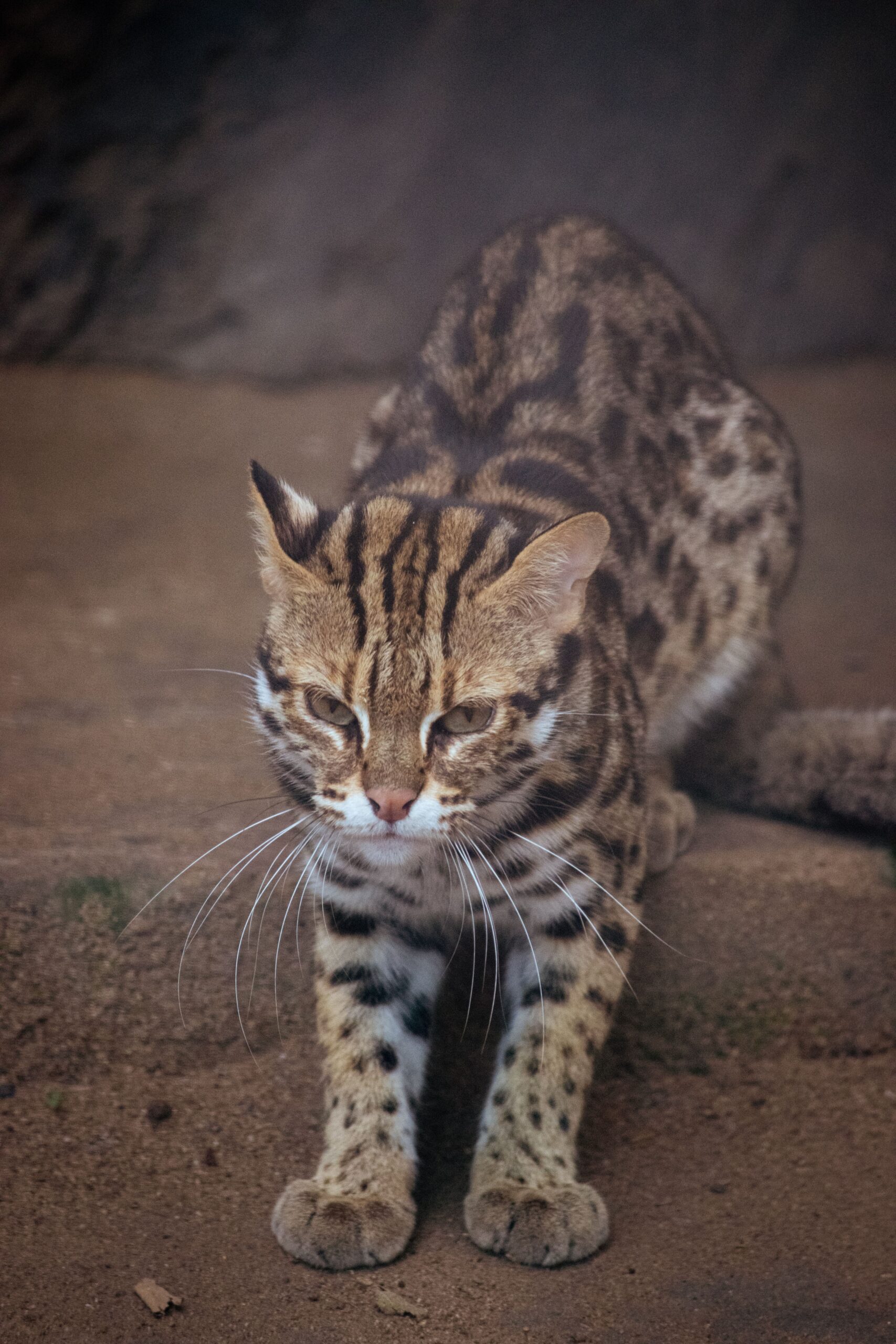
Tsushima leopard cats have characteristics that are different from domestic cats. At first glance, they look identical, but they have spots behind their ears, vertical stripes on their foreheads, and very thick tails. Tsushima leopard cats are known to be sedentary, occupying territories such as broad-leaved forests, forests, waterfronts, fields near villages, and near the coast. They are active only within a range of 1km to 2km.
- Physical Characteristics
Body Type: Small and slim, body length 50-70cm, tail length 25-30cm, weight approximately 3-5kg
Coat Color:
Yellow-brown to gray-brown coat with black spots distributed throughout the body
Short tail with a black tip
Ears: Small and round, often with black spots behind the ears
Eyes: Large and with good night vision
- Behavior and Lifestyle
Nocturnal: Active at night and hunts for prey
Soliloquy: Territorial, generally solitary except during breeding season
Athletics: Skilled at jumping and climbing trees, which they use for hunting and escape
- Diet
Small-sized Carnivorous:
Preys on mice, small birds, frogs, insects, etc.
Adaptively searches for prey in forest environments
- Ecological Characteristics
Territoriality: Each individual has a territory and marks it with scent.
Reproduction: Mating occurs in spring and summer. Gestation period is approximately 60-70 days, and 1-3 pups are born at a time.
Highly cautious: Highly sensitive to humans and other predators.
What will your personality look like?
The Tsushima leopard cat has a very cautious personality and tends to be active from sunset to midnight to dawn. They are also similar to domestic cats in that they are capricious and selfish. I live a relaxing life in an area with a lot of nature.
- Highly cautious
Very timid and cautious: They are sensitive to the presence of humans and predators, and will quickly hide if they sense danger.
Nocturnal: They are rarely seen during the day and are active at night to avoid predation.
- Highly solitary
Territorial: Each individual has its own territory and rarely comes into contact with others except during breeding season.
Highly independent: They hunt and live independently.
- Hunting instinct and agility
High athletic ability: They excel at jumping and climbing trees, and have excellent prey-catching abilities.
Observation and learning ability: They learn the habits and environment of their prey and hunt efficiently.
- Gentle and defensive
Generally gentle and non-aggressive: They will not fight unless they sense danger.
Powerful in defense: They will bite or claw when faced with a predator or danger.
What is the ecology of the Tsushima leopard cat?
Tsushima leopard cats primarily prey on plants, mice, frogs, and birds. These are their only food in Tsushima, where there are no large carnivores. Mating season is from February to March every year, and two to three babies are born between April and June. The gestation period is approximately 2 months. Their lifespan is about 10 years, and they have lived for about 20 years in captivity.
- Habitat
Area: Limited to Tsushima Island, Nagasaki Prefecture
Environment: Forests (evergreen, deciduous, and mixed forests), also use rivers and wetlands
Activity: Nocturnal, resting in bushes or rock shelters during the day
- Diet
Mainly carnivorous:
Preys on mice, small birds, frogs, and insects
Hunting Method:
Sneaks up alone to capture prey
Uses high agility and jumping ability to hunt
- Behavior and Lifestyle
Soliloquy: Territorial, generally isolated except during breeding season
Territory Maintenance:
Marks territory with urine and feces
Wary of other individuals
Breeding Season:
Mates from spring to early summer
Gestation period: Approximately 60-70 days, giving birth to 1-3 pups
- Movement and Adaptation
Athletics: They excel at jumping and climbing trees, which they use for hunting and escape.
Environmental Adaptations:
They protect themselves from predators by being active at night.
They use forest thickets and rocky areas as bases for safety.
- Natural Enemies and Threats
Natural Enemies in the Wild: While they have few natural predators, dogs and humans have a significant impact.
Threats from Human Activities:
Habitat Fragmentation due to Deforestation and Road Construction
Injuries and Deaths Caused by Traffic Accidents
Conservation Status: Designated as Endangered (EN) on the Ministry of the Environment’s Red List, and conservation efforts are underway.
What are the natural enemies of the Tsushima leopard cat?
Currently, the natural enemy of the Tsushima leopard cat is humans. In Tsushima, where there are no large carnivores, humans are the biggest risk. In fact, many cases of Tsushima leopard cats dying from traffic accidents have been reported. This has led to the creation of conservation plans and the emergence of organizations working to conserve the species.
Tsushima Leopard Cat Vocalizations
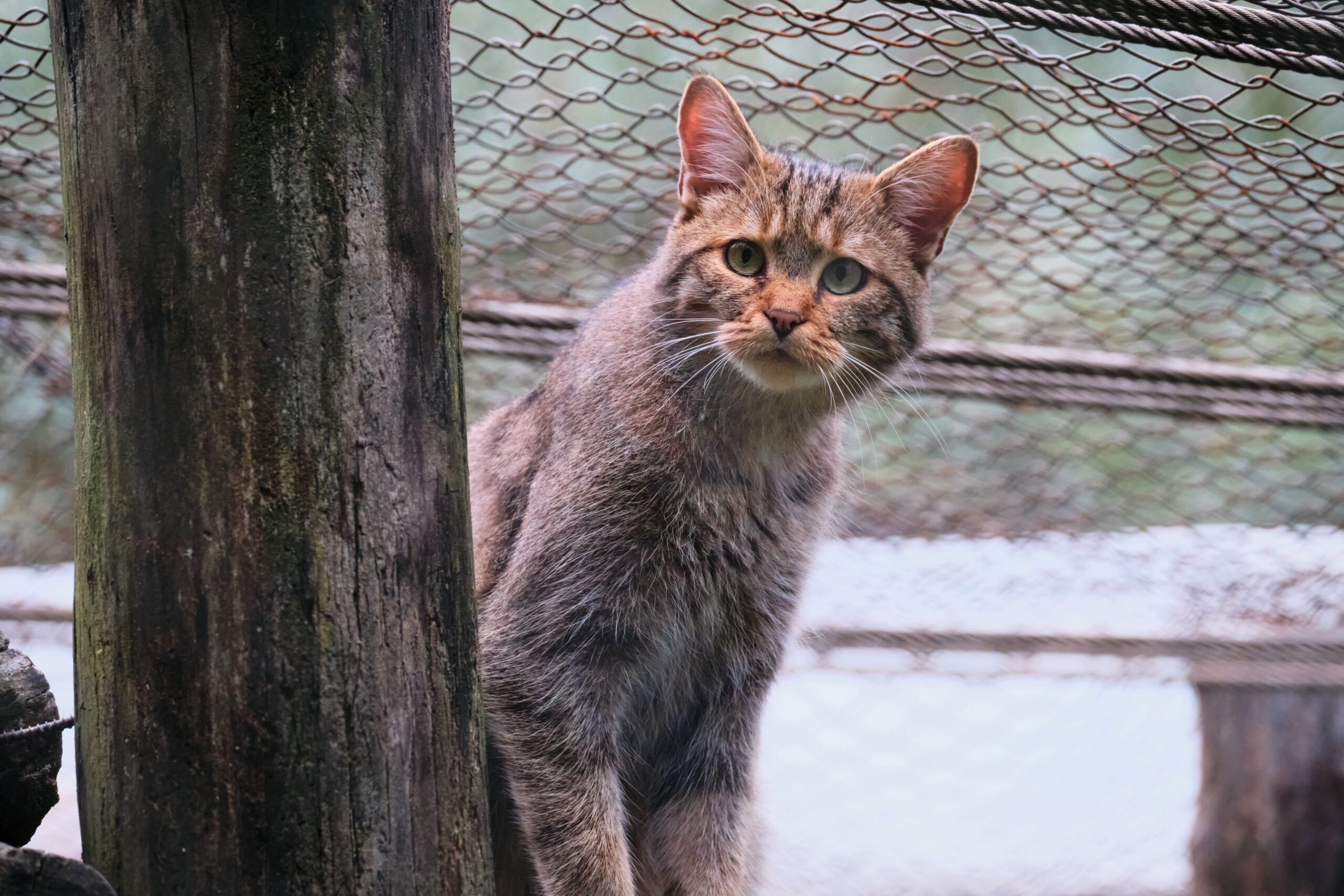
Common Vocalizations
“Nyaa” / “Myaa”
Sounds very similar to the meow of a domestic cat.
These are often heard during the breeding season or during communication between a mother and her kittens.
“Uuu” / “Grrr…”
A low growl used for intimidation.
They make this sound during territorial disputes or when wary of a potential threat.
“Shaa!” (Hissing)
A sound indicating high alert or a threat display.
It is very similar to the hiss of an angry domestic cat.
“Gyaoo” / “Aoon”
A loud call sometimes made by both males and females during the mating season.
It serves to call out to a potential mate.
Kitten Vocalizations
“Pii-pii” / “Myuu”
These sounds are frequently heard when a kitten is calling for its mother or is hungry.
Why They Rarely Vocalize in the Wild
The Tsushima leopard cat is a solitary, nocturnal animal. To avoid detection by prey or predators, they typically communicate through visual cues, scent, and urine marking, so they rarely rely on vocalizations.
Seasonal Activity of the Tsushima Leopard Cat
Although the Tsushima leopard cat remains active throughout the year, its behavior, diet, and reproductive activities vary by season. While primarily nocturnal, they may also be active during the early morning and evening hours.
Spring (March–May)
Following the breeding season, females give birth and begin raising their young.
Prey—such as rodents, frogs, and insects—becomes abundant.
Kittens learn hunting skills from their mothers near the den.
They are active from sunset until dawn.
Summer (June–August)
Due to high temperatures, activity is concentrated at night.
They frequently rest in forests or sheltered rocky areas during the day.
They prey on a diverse range of animals, including frogs, insects, and birds.
They also make greater use of waterside areas.
Autumn (September–November)
Hunting intensifies as they build up physical strength for the winter.
They prey heavily on rodents and birds.
Young cats become independent from their parents and begin searching for their own territories.
Winter (December–February)
During the breeding season, males travel over wide areas in search of females.
Urine and scent marking increase, and territorial behavior becomes more active.
They remain active despite the cold, though activity levels may drop slightly during heavy snow or inclement weather.
Their winter coat becomes denser, enhancing their adaptation to the cold.
Walking Speed
There is no official data on the walking speed of the Tsushima leopard cat in the wild. However, based on research on Bengal cats and domestic cats, which have similar body size and behavior, the approximate speed is thought to be as follows:
Estimated Behavioral Speed: Slow walking: approximately 2-4 km/h; Normal walking: approximately 4-6 km/h; Stealth approaching prey: approximately 1-3 km/h; Treading: approximately 8-15 km/h; Short sprints: approximately 40-50 km/h
Characteristics of Walking:
They walk quietly, using their paw pads to avoid making noise.
When they spot prey, they lower their posture and approach slowly.
They can move over complex terrain such as fallen trees and rocky areas, using their tails for balance.
They can also swim when necessary and may cross small rivers and wetlands.
Daily Distance Traveled:
This varies depending on their range and the availability of food, but they may travel several kilometers during nocturnal activity. Males tend to travel a wider area than usual during the breeding season in search of females.
Key point: Tsushima leopard cats are more interested in “running fast” than in anything else.
About Tsushima wildcat cubs
This article provides information about Tsushima wildcat (Prionailurus bengalensis euptilurus) cubs.
- Birth and Size
Birth Season: Most often spring to early summer (around May-June)
Number of Pups: 1-3 per litter
Birth Weight: Approximately 80-120g
Body Length: Approximately 10-15cm
Coat Color: Light-colored immediately after birth, developing the adult spotted pattern as they mature
- Rearing and Protection
Maternal Care: Nursing, maintaining body temperature, and protecting the young in dens
Raising in Safe Places: Spending time in sheltered areas from predators, such as in the shade of rocks or in bush dens
Pack Cooperation: Tsushima wildcats are primarily solitary, with little contact with anyone other than their mother
- Developmental Process
Nursing Period: Approximately 2-3 months after birth
First Outing: Following their mother near the den
Importance of Play:
Playing with other young helps them develop strength, hunting instincts, and social skills
Developing athletic skills such as climbing and jumping
- Learning and Survival Skills
Learning from Mother:
Learns how to hunt, sense danger, and use burrows.
Gaining Independence: Gradually gains independence between 6 months and 1 year of age, eventually establishing their own territory.
- Maturity
Sexual Maturity: Becomes capable of breeding between 1 and 2 years of age.
Role within the Group: Because they live alone, they generally live independently rather than as part of a group.
Is the Tsushima leopard cat an endangered species?
The estimated population of Tsushima leopard cats is less than 100, and they are in an extremely dangerous situation. The Ministry of the Environment put it on the red list in 1998, with the main causes being people running over it with cars and the fact that their original population was small. For this reason, zoos in Japan have begun implementing breeding programs, and the population is expected to increase in the future. It was designated as a natural monument in 1974 as part of a national project for protection, and in 1994 it was designated as a domestic rare species of wild fauna and flora under the Species Conservation Act.
Is it possible to keep Tsushima leopard cats?
Tsushima leopard cats are a little more wary than domestic cats, but their ecology is almost the same. If you want to keep them, the only way to keep them is to get them from a zoo or a center that protects them. Some individuals have already died, but according to information on Wikipedia, it has been confirmed that they are kept in the following zoos. The zoo also hosts many other events.
- Tsushima Wildlife Conservation Center
- Fukuoka City Zoo
- Inokashira Natural Culture Garden
- Yokohama Zoo Zoorasia
- Toyama City Family Park
- Saikai National Park Kujukushima Zoo and Botanical Garden
- Higashiyama Zoo and Botanical Garden
- Morioka City Zoological Park
- Okinawa Children’s Country
- Kyoto City Zoo
- Legal Restrictions
Designated as a “special animal”: These species are rare in Japan and may be designated as “special animals” by the Ministry of the Environment.
Permission Required: Special permission from the prefectural governor is required to keep them under the Animal Welfare Act and the Wildlife Protection Act.
Personal ownership is generally prohibited: Illegal ownership is subject to penalties.
- Difficulty of Raising
Rare/Endangered Species: Due to low natural populations, capture and import are generally prohibited.
Solitary/Territorial: Timid and wary, they are easily stressed in cramped environments.
Exercise/Environmental Requirements:
Nocturnal and adapted to forest environments.
A large enclosure is required to utilize their high athletic ability (jumping and tree climbing).
Diet: Their natural hunting behavior must be replicated, including feeding on mice, small birds, and insects.
- Realistic Breeding
Only Possible in Zoos and Conservation Facilities: Expert management, breeding plans, and environmental reproduction are required.
Purpose:
Protection/Breeding
Research/Education
Keeping them as pets is unrealistic and dangerous.
Additional Information
The Tsushima wildcat is a “small and cute-looking, but rare and wary wild animal.”
Its high ability to survive in the wild makes it nearly impossible to keep it as a pet. Therefore, breeding and raising it in conservation facilities or zoos is the most practical option.
Zoos where they are kept (Japan and around the world)
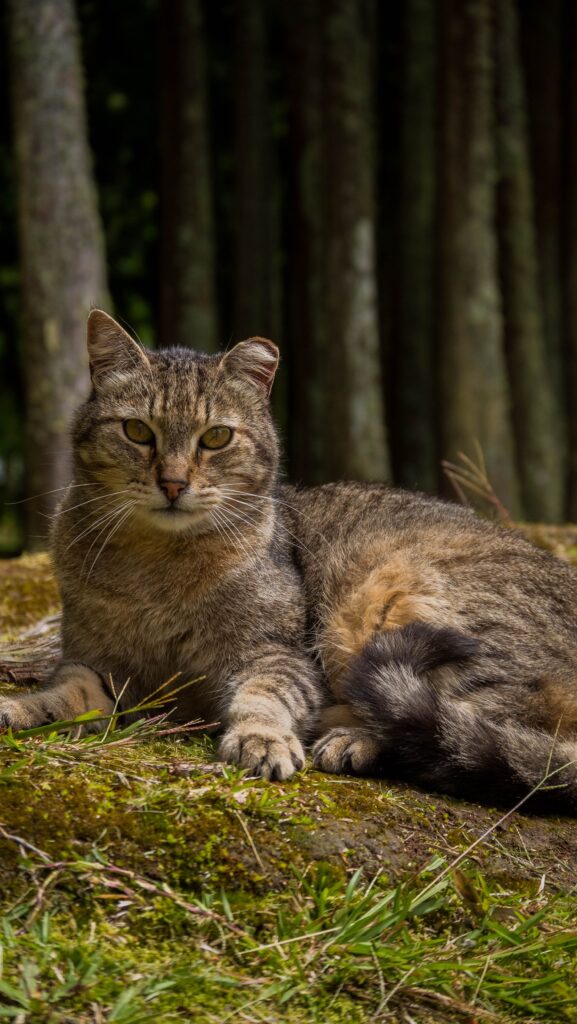
The Tsushima leopard cat is kept only in Japan. It is an endangered species, and because the Ministry of the Environment and the Japanese Association of Zoos and Aquariums cooperate in a breeding and conservation program, it is generally not kept in zoos overseas.
Main facilities where they are kept in Japan:
Tsushima Wildlife Conservation Center
Nasu Animal Kingdom
Inokashira Park Zoo
Yokohama Zoological Gardens Zoorasia
Toyama City Family Park
Higashiyama Zoo and Botanical Gardens
Kyoto City Zoo
Fukuoka City Zoological and Botanical Gardens
Kujukushima Zoological and Botanical Gardens Mori Kirara
Okinawa Children’s Land
These facilities conduct conservation and breeding programs aimed at breeding, maintaining genetic diversity, improving breeding techniques, and environmental education.
Zoos where they are kept worldwide:
To date, as far as can be confirmed, there are no zoos overseas that permanently keep Tsushima leopard cats. The Tsushima leopard cat is a rare species endemic to Japan.
Introducing other animals
コメント