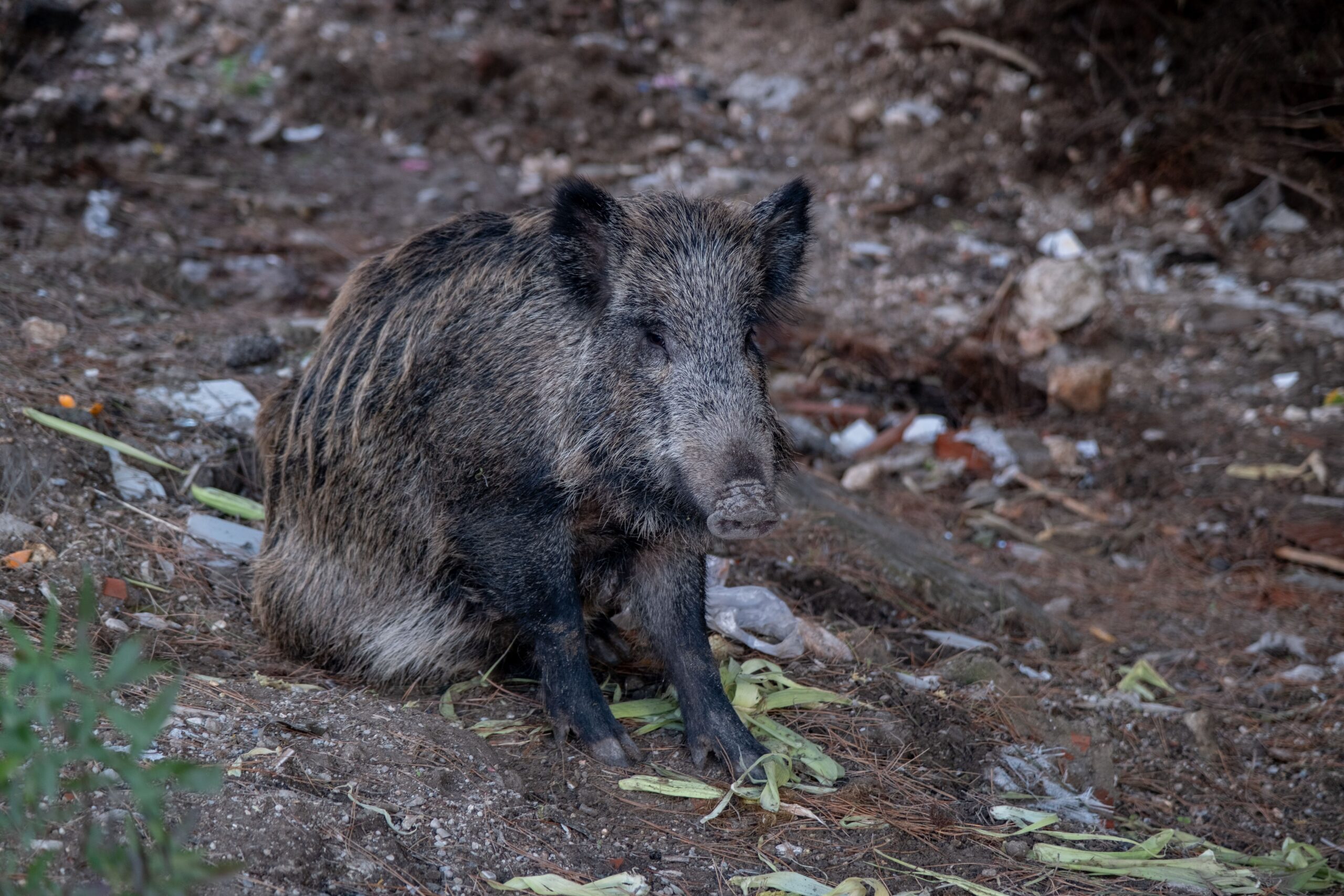
What kind of animal is the Ryukyu boar? We will explain its characteristics, ecology, and habitat (Okinawa, Iriomote Island, etc.). The Ryukyu boar is a wild animal that lives in Japan, but it is actually a very rare animal as it can only be seen in some areas of Japan, so if you are interested, please refer to the article.


- What is Ryukyu boar? About basic status
- What are the roots and origins of the Ryukyu wild boar?
- About habitat
- feature is? What kind of creature is it?
- What does the ecology look like?
- Vocalizations
- Seasonal Activity
- Regarding Walking Speed
- About Ryukyu Wild Boar Juveniles
- Is the Ryukyu wild boar an endangered species?
- Can Ryukyu boars be kept as pets?
- Zoos Housing the Species (Japan & Worldwide)
- Introducing other animals
What is Ryukyu boar? About basic status
The Ryukyu boar is an animal that belongs to the Boar family and the Boar genus. The scientific name is Sus scrofa riukiuanus, and the kanji is Ryukyu boar. The head and body length is 50-110cm, and the weight is about 20-50kg. The list of information is as follows.
| Japanese(和名) | リュウキュウイノシシ |
| English(英名) | ryukyu wild boar |
| scientific name(学名) | Sus scrofa riukiuanus |
| classification(分類) | Mammalia、Cetartiodactyla、Suidae、Sus 哺乳綱、鯨偶蹄目、イノシシ科、イノシシ属 |
| IUCN Status(保全状況) | LEAST CONCERN |
| Length(体長) | 50-100cm |
| Weight(体重) | 20-50kg |
What are the roots and origins of the Ryukyu wild boar?
The Ryukyu wild boar (Sus scrofa riukiuanus) is believed to have descended from wild boars on the Asian mainland (Eurasian wild boars) and evolved in isolation within the Ryukyu Islands over a long period.
① Ancestry: Eurasian Wild Boars
Taxonomically, the Ryukyu wild boar is a subspecies of the wild boar.
Their ancestral wild boars were large mammals widely distributed across:
Southern China
The East Asian mainland
The area around Taiwan
It is believed that some populations migrated from these regions to the Nansei Islands and subsequently diverged on the various islands.
② When did they arrive in the Ryukyu Islands?
A leading theory suggests that
ancestral wild boars entered the Ryukyu Islands
between several hundred thousand and tens of thousands of years ago.
The geography at that time differed from the present;
land bridges formed by lower sea levels,
reduced distances between islands,
and shallow waters
created conditions that facilitated animal migration.
③ Island-driven miniaturization (Insular dwarfism)
The most distinctive feature of the Ryukyu wild boar is its smaller size compared to the wild boars found on Honshu.
Typical wild boar:
Weight: Can reach around 50–150 kg
Ryukyu wild boar:
Weight: Approximately 20–70 kg
This is an evolutionary phenomenon known as “insular dwarfism.”
Reasons:
Limited food resources on islands
Little advantage to growing large
Individuals capable of surviving on less energy held an advantage
Consequently, they are thought to have evolved a smaller body size.
④ Relationship with Taiwanese wild boars
Genetic studies indicate a close relationship between:
wild boars in Taiwan,
wild boars in southern China, and
wild boars in the Ryukyu Islands.
In particular,
it has been suggested that they arrived via a southern route:
Taiwan → Yaeyama Islands → Ryukyu Islands.
classification
| 階級 | 分類 |
|---|---|
| 界 | 動物界(Animalia) |
| 門 | 脊索動物門(Chordata) |
| 綱 | 哺乳綱(Mammalia) |
| 目 | 偶蹄目(Artiodactyla) |
| 科 | イノシシ科(Suidae) |
| 属 | イノシシ属(Sus) |
| 種 | ニホンイノシシ(Sus scrofa) |
| 亜種 | リュウキュウイノシシ(Sus scrofa riukiuanus) |
About habitat
Ryukyu boars are distributed in Japan. Among them, they are concentrated in Kyushu and the Nansei Islands, including Amami Oshima, Kakeroma Island, Uke Island, Yoro Island, Tokunoshima, Ishigaki Island, and Iriomote Island. Some of them can even be seen in Okinawa.
- Distribution within Japan
Subspecies endemic to the Ryukyu Islands
Distributed mainly on Okinawa Island, the Amami Islands, Tokunoshima Island, and Kikaijima Island
This subspecies is distinct from the Japanese wild boar found on Honshu, Shikoku, and Kyushu, and is limited to the Okinawa region.
- Habitat
Ryukyu wild boars are highly adaptable and can live in a variety of environments.
Forests
Also uses subtropical forests, secondary forests, and the areas surrounding mangrove forests
Farmland/Satoyama
Also found near sugarcane fields and farmland
Mountains/Grasslands
Uses grasslands and valleys near forested areas
- Altitude/Climate
Live in plains to mountainous areas (found at altitudes of 0-800m)
Adapted to the subtropical climate, it can survive in Okinawa’s hot and humid climate
- Behavioral Characteristics
Active day and night, but often rests in thickets or deep forests during the day
When foraging, it travels to grasslands and farmland in search of fruit, roots, insects, etc.
Found in areas with human activity, but remains highly cautious
feature is? What kind of creature is it?
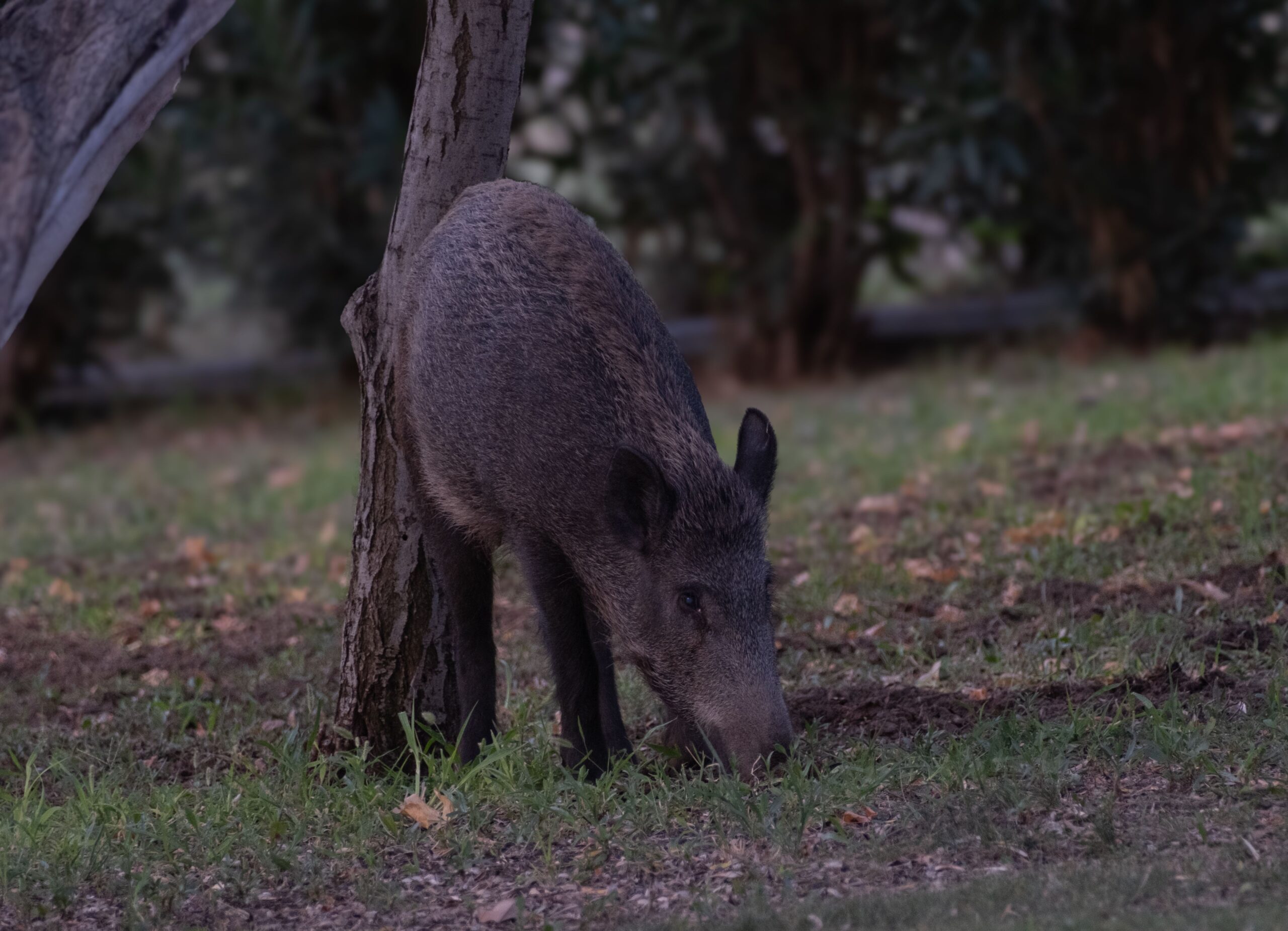
The Ryukyu boar is characterized by being much smaller than the Japanese boar. The Ryukyu boar is characterized by its black body, and it has become a problem because it destroys farmland, causing problems for farmers. It is considered a subspecies of wild boar. This wild boar has a keen sense of smell that allows it to detect even the slightest scent, allowing it to search for food. Basically, they live in forest areas.
- Physical Characteristics
Body Length: Approximately 100-140 cm
Weight: Males 40-80 kg, females slightly lighter
Coat Color: Dark brown, slightly short, with variations in color depending on the region and season
Ears and Nose: Small ears, rounded, well-developed nose
Tail: Short and hairy
Fangs (Males): Well-developed canine teeth (fangs) in the lower jaw, used for defense and fighting
Body Type: Stocky and muscular. Despite their short legs, they can run quickly.
- Behavior/Personality
Highly cautious
If they encounter a predator or a human, they will immediately hide deep in the bushes or forest.
Curious
Sensitive to food and the environment
Live alone or in small groups
Generally solitary, but sometimes in mother-child groups or small groups.
- Diet
Omnivorous
Eat a wide variety of foods, including grasses, roots, fruit, insects, and small animals.
Feeding Method
Digs the ground with its snout to search for roots and insects.
Pecks directly at fruit and nuts.
What does the ecology look like?
Ryukyu boars search for and eat not only plants such as nuts and leaves, but also small animals such as earthworms and lizards. The reproductive form is viviparous. There are two breeding seasons a year. The lifespan is said to be about 10 years.
- Diet and Foraging Behavior
Omnivorous
Eats a wide variety of foods, including grasses, roots, fruits, seeds, insects, and small animals.
May also eat human-grown crops, such as sugarcane fields and orchards.
Feeding Methods
Digs the ground with its snout to search for roots and insects.
Pecks directly at fruit and nuts.
Seasonal Changes
Summer to Autumn: Eats a lot of fruits and seeds.
Winter to Spring: Eats mainly roots and tubers from the ground.
- Activity Patterns
Active both day and night (both diurnal and nocturnal).
Highly cautious.
Hides deep in bushes or forests when it senses danger.
Migration
Repeatedly travels short distances to find food and water sources.
May also travel along mountain paths and forest trails.
- Breeding
Breeding Season
Breeding occurs throughout the year in Okinawa, but is most common in autumn and winter.
Gestation Period: Approximately 115 days
Birthing
Gives birth to 2-6 young at a time.
Raising
The mother raises the young in dens or bushes.
The young become independent within a few months.
- Sociality/Swarming
Generally solitary.
Sometimes live in mother-child groups or small groups.
Males sometimes have territories and may fight with other males during the breeding season.
Are there any natural enemies?
Ryukyu boars have almost no natural enemies.
Vocalizations
The vocalizations of the Ryukyu wild boar (Sus scrofa riukiuanus) are fundamentally very similar to those of the wild boars found on Honshu. However, because they often live alone or in small groups within the forest, their calls are not frequently heard in the wild.
① “Boo-boo” / “Fun-fun” (Normal state)
Low snorting sounds
Used to check the surroundings or interact with other boars
Sometimes produced while foraging for food
Soundイメージ:
“Buf-buf”
“Fun, fun”
② “Gya” / “Kii” (Alert/Danger state)
When detecting predators or humans
When startled
When captured
Short, sharp vocalizations emitted in situations such as these.
Soundイメージ:
“Gya!”
“Kii!”
③ “Kuu-kuu” / “Kururu” (Parent-offspring interaction)
Communication between the mother and her young (piglets) involves:
Soft vocalizations
Snorting sounds
Low grunts
Mother:
“Gugu, gugu”
Young:
“Pii-pii” / “Kuu-kuu”
Sounds resembling these.
④ Threatening sounds / Sounds of anger
When sensing danger, males and mothers may:
Snort loudly
Emit low growls
Clatter their teeth
Soundイメージ:
“Vooo…”
“Buf!”
Seasonal Activity
While the seasonal activity of the Ryukyu wild boar (Sus scrofa riukiuanus) shares some similarities with wild boars on Honshu, they remain active year-round without hibernating, having adapted to the warm climate of the subtropical Ryukyu Islands.
Spring (March–May)
Activity Level: ★★★★★ (Highly active)
A period of high activity for individuals following the breeding season
Foraging for spring shoots, herbaceous plants, insects, earthworms, etc.
Mothers move about with their piglets (uribo)
Characteristics:
Increased movement within the forest
Young boars may be seen with their mothers even during the day
Foraging range expands
Summer (June–August)
Activity Level: ★★★★☆
Due to the hot and humid Ryukyu summer:
Resting deep in the forest or along streams during the day
Stronger tendency toward activity at night and in the early morning
Main behaviors:
Mud-bathing at water sources (using wallows)
Foraging for roots, bulbs, and insects
Resting in the shade
Characteristics:
Increased nocturnal behavior to avoid the heat
Autumn (September–November)
Activity Level: ★★★★★ (One of the most active periods)
A season when food resources become abundant.
Diet:
Tree nuts
Fruits
Subterranean insects
Plant roots
Fallen fruit
Characteristics:
Increased food intake in preparation for winter
Expanded home range
May venture out toward fields and settlements
Winter (December–February)
Activity Level: ★★★★☆
Activity does not decline as significantly as it does for wild boars on Honshu.
Reasons:
The Ryukyu Islands are warm
No snow accumulation
Food sources do not completely disappear
Activities:
Nighttime foraging
Movement within the forest
Breeding behavior
Characteristics:
Period of increased activity for males
Onset of the breeding season; competition occurs between males
Regarding Walking Speed
There is very little research data directly measuring the walking speed of the Ryukyu wild boar (Sus scrofa riukiuanus). However, based on estimates derived from their physique and the capabilities of closely related wild boar species, the speeds fall within the following ranges:
Estimated Movement Speeds
- Normal walking: Approx. 2–4 km/h
- Moving while foraging: Approx. 1–3 km/h
- Hasty movement (when alert): Approx. 6–10 km/h
- Fleeing or charging: Approx. 30–40 km/h
Note: These figures are estimates based on the physical capabilities of wild boars in general, not specific measurements taken from the Ryukyu wild boar.
Impact of Small Body Size
The Ryukyu wild boar is smaller than the wild boars found on Honshu.
Consequently, they exhibit the following characteristics:
Advantages
- Easier to change direction within the forest
- Easier to navigate steep slopes and thickets
- Able to pass through narrow spaces
Disadvantages
- Lack the top speed and charging power of larger wild boars
Mobility Within the Forest
In the environment of the Ryukyu Islands, the following capabilities are more important than sheer speed:
- Ability to climb steep slopes
- Ability to move through muddy areas and ravines
- Ability to push through thickets
Although the Ryukyu wild boar appears to have short legs, they are extremely muscular and possess the ability to:
- Climb slopes quickly
- Move through mud
- Explore wide areas at night
About Ryukyu Wild Boar Juveniles
This article provides detailed information about Ryukyu Wild Boar (Sus scrofa riukiuanus) juveniles (calves).
- Birth and Early Characteristics
Birthing Season: Mainly Autumn to Winter (Breeding is possible in Okinawa at any time of the year)
Number of Pups: Approximately 2-6 per litter
Weight: Approximately 0.8-1.5 kg immediately after birth
Appearance:
Fur is brown or reddish-brown, with white stripes (stripes) on the back.
These stripes disappear within a few months, turning into the dark brown color of adults.
Ears are small, with a short, rounded snout.
Eyes: Open and ready to move around their mother.
- Behavior and Lifestyle
Dependent on Mother
Dependent on Mother for Nursing and Protection for the First Weeks
Mother takes them to feeding areas and teaches them how to forage.
Independence
Pups begin practicing eating grass and roots within the first few weeks of life.
Able to forage independently at approximately 2-3 months of age.
- Defensive Instinct
Highly Vigilance
Their stripes allow them to blend into the grass and hide from predators.
Escape Ability
When their mother senses danger, the young quickly flee into the thickets or forest.
Pack Behavior
Pups belong to small groups with their mothers and sometimes play with their siblings.
- Developmental Process
Postnatal Period: Immediately after birth, they have stripes and remain under their mother’s protection. 2-4 weeks: They begin to eat grass and roots and can move independently. 2-3 months: They can forage independently. They gradually separate from their mother’s group. 6 months: Their weight and body shape approach those of an adult, and the stripes disappear.
Is the Ryukyu wild boar an endangered species?
The Ryukyu wild boar is classified as endangered in the Okinawa Prefecture Red Data Book and is carefully protected. Ryukyu boars can destroy farmland and are often removed by farmers as pests. Ryukyu boar meat is also eaten as hot pot dishes, yakiniku, and sashimi, and the demand for Ryukyu boar meat has increased with the increase in tourists and population, and hunting has progressed considerably, causing the population to decline.
- Conservation Status
IUCN (International Union for Conservation of Nature) Red List
Its parent species, the Japanese wild boar (Sus scrofa leucomystax), is listed as Least Concern (LC).
Although the Ryukyu wild boar has not been officially assessed separately, its population is considered relatively stable.
Situation in Japan (Okinawa Prefecture, etc.)
Distributed on Okinawa Island and the Amami Islands.
It has adapted to a wide range of environments, including forests, satoyama (rural forests), and farmland, making it unlikely to become extinct.
- Reasons for Stability
High Adaptability
Can inhabit a wide range of environments, including forests, farmland, and grasslands.
Omnivorous and rich in food sources.
Eats fruits, roots, insects, and other nutrients regardless of the season.
Highly Reproductive
Can give birth to 2-6 offspring once or twice a year, making it resistant to population decline.
- Caution
Localized declines are possible due to deforestation, agricultural development, road traffic accidents, and human conflicts.
Due to their limited habitat, population isolation may result in a decline in genetic diversity.
Can Ryukyu boars be kept as pets?
Ryukyu wild boars are designated as an endangered species and are extremely difficult to keep. We recommend viewing it at a zoo.
- Legal Issues
In Japan, Ryukyu wild boars are generally not designated as natural monuments or subject to wildlife protection. However, capturing and keeping wild individuals is often prohibited by law.
Special permission (for research, zoos, etc.) is required for keeping.
Unauthorized capture and keeping may be a violation of the Wildlife Protection Act.
- Difficulties in Keeping Them
Highly Wild Nature
Highly wary and not easily tame.
Can be aggressive (especially males, who may use their tusks to intimidate or attack).
Large Body Size
Adults weigh between 40 and 80 kg, making them impossible to keep at home.
High Exercise Needs
They have a roaming habit, and a small cage can cause stress.
They have a unique omnivorous diet.
They require a balanced diet of fruits, roots, insects, and nuts.
Nutrition management in captivity is extremely difficult.
- Danger to Humans
They have fangs and are aggressive.
They may attack due to stress or fear.
Keeping them at home poses a very high risk of injury.
- Alternatives
If you want to keep a wild boar as a pet, we recommend a miniature pig, which has been adapted for domestic use.
Wild Ryukyu wild boars are safe to enjoy through observation and conservation efforts.
Zoos Housing the Species (Japan & Worldwide)
Very few zoos currently keep the Ryukyu wild boar (Sus scrofa riukiuanus) on public display; in Japan, there is essentially only one confirmed facility.
Facilities in Japan
🇯🇵 Okinawa Zoo & Museum (Okinawa City)
Currently kept here
This is the primary facility in Japan where the Ryukyu wild boar is exhibited.
It is displayed and interpreted as a native animal of Okinawa.
Exhibits and educational materials highlight the following:
Distribution: Okinawa Island, Amami, Tokunoshima, the Yaeyama Islands, etc.
Habitat: Forests
Diet: Omnivorous
Size: Smaller than the wild boars found on Honshu
Global Status
🌏 Zoos Overseas
There are no confirmed instances of permanent housing or exhibition in overseas zoos.
While some zoos in Europe and North America keep other subspecies or wild populations of the same genus (Sus scrofa), they do not house the Ryukyu wild boar itself.
Introducing other animals
コメント