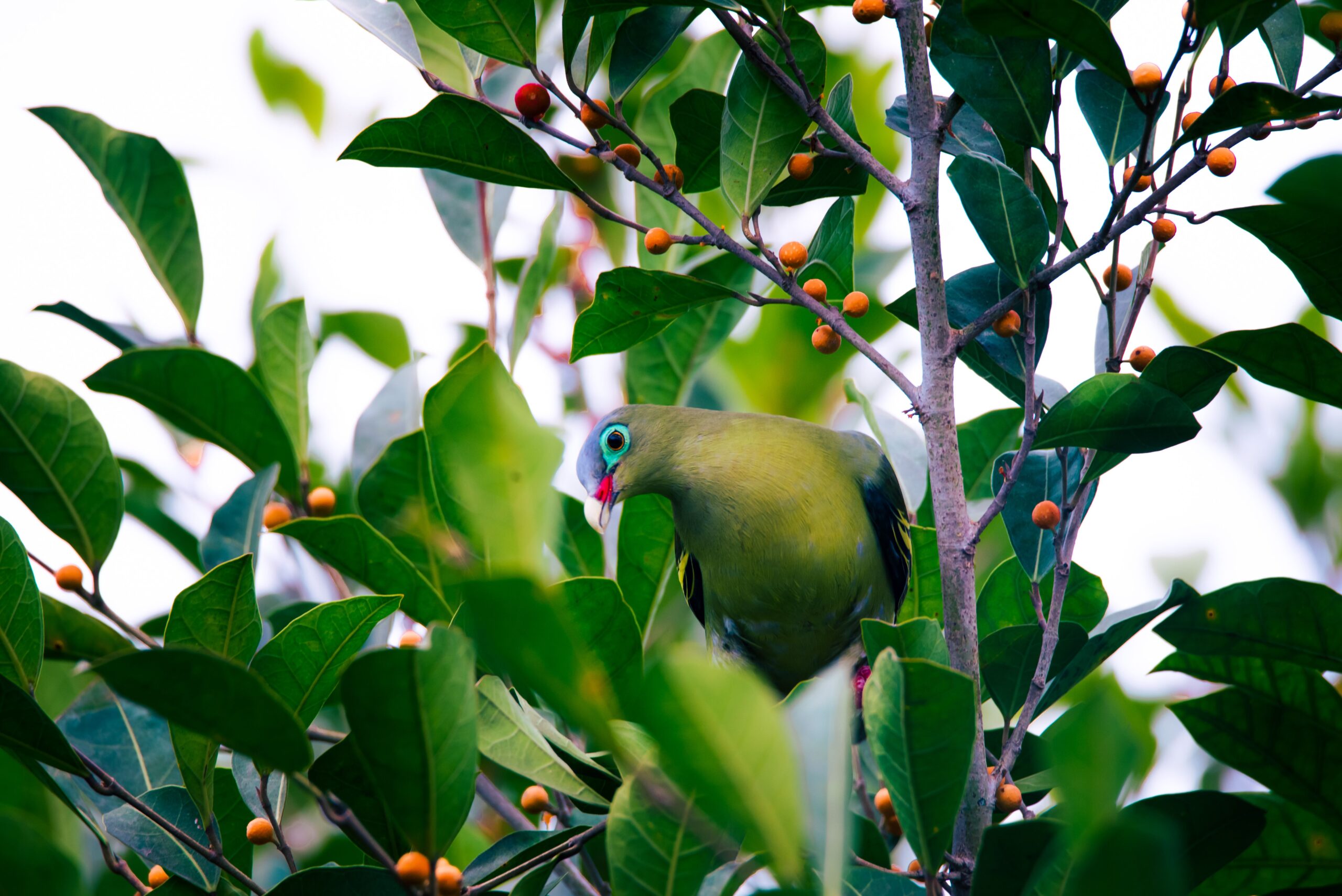
What kind of bird is a green pigeon? We will explain its characteristics, ecology, and habitat. This bird can only be seen in Japan, the Korean Peninsula, and China, and in Japan it can be seen from Honshu to Kyushu. Their population is very stable, and they can be seen in various areas, so be sure to take a look.



- What is green pigeon? About basic status
- What are the roots and origins of the White-bellied Green Pigeon?
- About habitat
- feature is? What kind of creature is it?
- What does the ecology look like?
- About Molting
- About Their Calls
- Seasonal Activities
- Flight Speed
- About Green Pigeon Chicks
- Is the green pigeon an endangered species?
- Can green pigeons be kept as pets?
- Zoos Housing the Species (Japan & Worldwide)
- Introducing other animals
What is green pigeon? About basic status
The Green Pigeon is a bird classified in the genus Pigeon. The total length is 33cm, the kanji is green pigeon, and the scientific name is Treron sieboldii. The list of information is as follows.
| Japanese(和名) | アオバト |
| English(英名) | White-bellied green-pigeon |
| scientific name(学名) | Treron sieboldii |
| classification(分類) | Ave、 Columbiformes、Columbidae、Treron 鳥綱、ハト目、ハト科、アオバト属 |
| IUCN Status(保全状況) | LEAST CONCERN |
| Length(全長) | 33cm |
| Weight(体重) | 0.5kg |
What are the roots and origins of the White-bellied Green Pigeon?
The White-bellied Green Pigeon (scientific name: Treron sieboldii) belongs to the genus Treron within the pigeon family (Columbidae); it is a forest-dwelling, fruit-eating pigeon that evolved in East Asia. Its current distribution centers on Japan but extends to Taiwan, southern China, and northern Vietnam.
Ancestors: The “Tropical Green Pigeon” Group
Tracing the ancestry of the White-bellied Green Pigeon leads back to the Treron genus lineage, which is believed to have originated in the Southeast Asia region several million years ago.
There are approximately 23 species in the genus Treron worldwide, with many distributed across:
Tropical forests of Southeast Asia
The region around India
Southern China
Island regions
Ancestral green pigeons evolved a lifestyle suited to rainforests, characterized by:
Eating tree fruits
Living in the canopy (arboreal life)
Using green plumage to camouflage against leaves
The Japanese White-bellied Green Pigeon: A Lineage That Expanded Northward
The modern White-bellied Green Pigeon (Treron sieboldii) is a species that diverged from tropical ancestors and expanded into the temperate forests of East Asia.
A simplified evolutionary timeline looks like this:
Primitive pigeons
↓
Fruit-eating pigeons (tropical regions)
↓
Genus Treron
↓
East Asian green pigeons
↓
Modern White-bellied Green Pigeon (Treron sieboldii)
In the Japanese archipelago, they adapted to forest environments,
utilizing habitats such as:
Beech forests
Oak forests
Deciduous broad-leaved forests
Why did they become green?
The most distinctive feature of the White-bellied Green Pigeon is its beautiful green plumage.
From an evolutionary perspective, this served:
To conceal themselves within the forest
In tropical and subtropical forests,
green coloration—which blends in with
leaves,
sunlight filtering through the canopy (komorebi),
and branches—
offered a survival advantage. Furthermore, since fruit-eating birds rest motionless in trees for extended periods, having a body color that made them difficult for predators to spot was crucial.
When they arrived in the Japanese archipelago
Although the exact timeframe has not yet been fully determined, it is believed that the ancestors of the White-bellied Green Pigeon entered Japan from East Asia during a period when:
the Asian mainland and the Japanese archipelago were closer together than they are today, and
the climate was warmer.
Subsequently, they adapted to the forest environments of the Japanese archipelago, evolving into the White-bellied Green Pigeon—a species with distinct characteristics unique to Japan.
Taxonomy
- 界 (Kingdom): Animalia(動物界)
- 門 (Phylum): Chordata(脊索動物門)
- 綱 (Class): Aves(鳥綱)
- 目 (Order): Columbiformes(ハト目)
- 科 (Family): Columbidae(ハト科)
- 属 (Genus): Columba(ハト属)
- 種 (Species): Columba janthina(アオバト)
Note: Unlike the common rock pigeon (Columba livia domestica) and the common turtle dove (Columba palumbus), the Japanese green pigeon is characterized by its beautiful blue-green plumage and is primarily adapted to coastal forests and island environments.
About habitat
Green pigeons can be found in Japan (Honshu, Shikoku, Kyushu), the Korean Peninsula, and China.
- Natural Distribution (Place of Origin)
Coastal Area of East Asia
Japan (Southwest Islands, southern Kii Peninsula, etc.)
Southern Korea
Coastal Area of China (Zhejiang Province to Fujian Province)
Pacific Islands
Taiwan, Philippines, Indonesia, Palau, Guam, etc.
- Habitat
Live mainly in coastal forests and coastal rocky areas
Prefers pine forests and evergreen forests on coasts and islands
Forages in forests and often rests and bathes on rocky areas near the coast
Altitude
From coastal areas to low and mid-mountain areas (up to approximately 500 m)
- Migration/Migration
Partial migration
Some individuals migrate south in winter
Adapted to transoceanic migration
Inter-island migration has been observed
Mainly lives on coasts and around islands
- Habitat Characteristics
Gathers on coastal rocky areas and rocky ledges to bathe and replenish salt content
Feeds on treetops in coastal forests
Eat mainly nuts and fruits
feature is? What kind of creature is it?
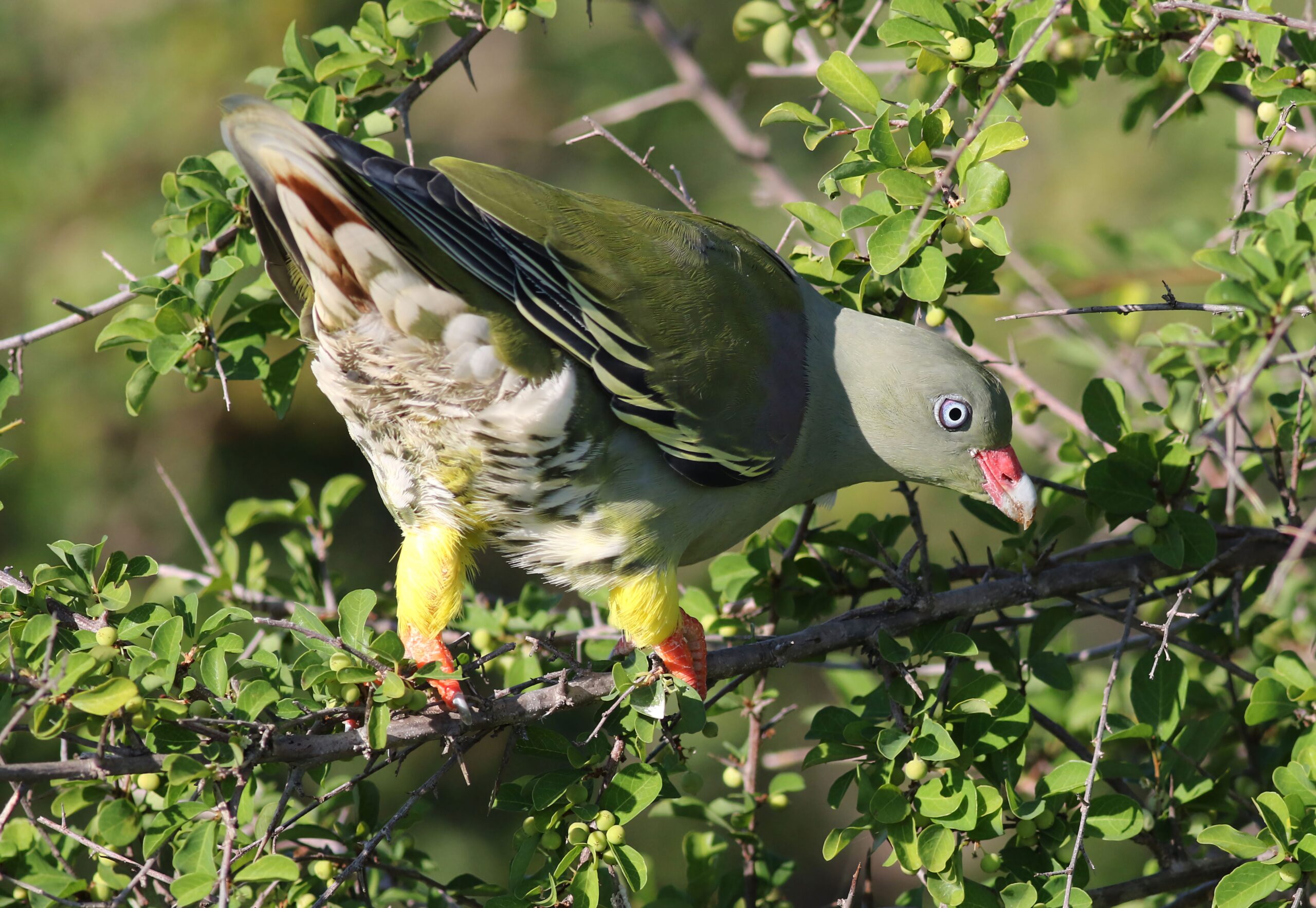
The green pigeon has a dark green upper surface and a bright greenish-yellow color from head to chest. Males can be distinguished from females by the reddish-brown feathers on their wings. As its name suggests, it is olive-colored overall and prefers broad-leaved forests and mixed coniferous forests, and lives alone or sometimes in groups of about 10 individuals. In China, it is a winter bird, and in Hokkaido, it is a summer bird.
- Appearance and Physical Characteristics
Body Size
Body Length: Approximately 32-36 cm
Weight: Approximately 180-250 g
Body Color
Back and Wings: Shiny blue-green to blue-gray
Chest and Belly: Pale gray
The green and blue shimmer depending on the angle of the light, creating a beautiful metallic sheen
Face and Beak
The face is small, and the beak is pale gray.
The eyes are black, giving the face a gentle impression.
Tail Feathers
Slightly long, and the feather color is beautiful in flight.
Appearance: Although small, this beautiful pigeon stands out against the coastal forest with its lustrous blue-green color.
- Behavior/Personality
Timid and cautious
Sensitive to humans and large birds, they quickly take flight when they sense danger
Sometimes live in flocks
They form small flocks of a few to a dozen birds, especially when resting or recharging on the coast
High flying ability
Adapted for agile flight between islands and in coastal forests
Quiet and reserved
Not as vocal as other pigeons
- Diet
Mainly plant-based
Eats mainly nuts and fruits from coastal forests
Salt intake behavior
May ingest minerals from seawater or coastal rocks
What does the ecology look like?
Green pigeons are herbivores, subsisting on fruits and seeds. Green pigeons are known to go to the coast and drink seawater because of a lack of minerals. They build a saucer-shaped nest made of bundled tree branches on top of a tree and lay their eggs in June. They only lay two eggs and have a lifespan of 10 to 20 years.
- Living Environment
Main Habitat
Coastal forests, evergreen forests, and island forests
Rests and replenishes salt on coastal rocks and rock shelves
Altitude
Near the coast to low mountainous areas (approximately 0-500 m)
- Diet
Mainly plant-based
Eats nuts and fruits from trees in coastal forests and on islands
May also eat young shoots and leaves
Salt Replenishment
Has the habit of drinking seawater from coastal rocks and ingesting salt from rocks
Very rarely consumes animal matter such as insects
- Sociality/Swarming
Live alone or in small groups
Often gathers in groups to replenish salt and rest on the coast
Highly agile flying ability
Adapted for island-to-island migration and rapid flight within coastal forests
- Breeding Behavior
Nest Building
Builds simple, dish-shaped nests in trees on islands or in coastal forests.
Breeding Season
Breeding typically occurs in spring and summer, depending on the region.
Number of Eggs
Usually 1-2
Parent Roles
Both parents take turns incubating the eggs and feeding the chicks after they hatch.
- Migration/Migration
Partial Migratory Behavior
Some individuals migrate southward during winter or food shortages.
Mainly lives along coasts and around islands.
Long-distance migration is rare.
Are there any natural enemies?
The green pigeon’s natural enemies are large birds. Eggs are especially targeted.
About Molting
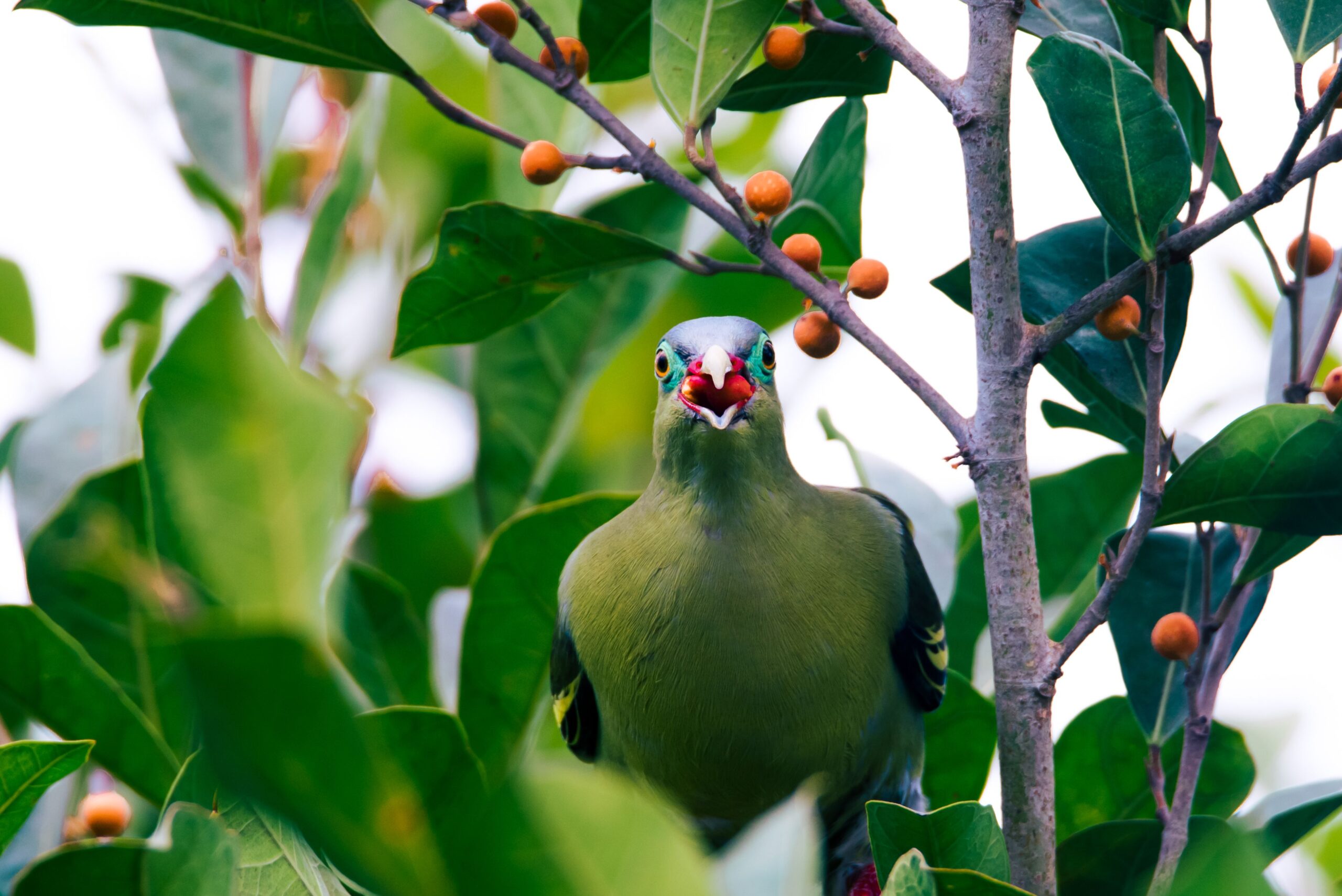
The White-bellied Green Pigeon (Treron sieboldii) undergoes a major molt (a complete molt) once a year. They replace their feathers gradually, renewing them while maintaining their ability to fly.
Molting Period
White-bellied Green Pigeons primarily molt during:
Late summer to autumn (around August to November)
This occurs after the breeding season has ended—specifically during the period following:
The completion of chick-rearing
The recovery of nutritional reserves
Preparation for migration and overwintering
Sequence:
Spring–Summer
↓
Breeding activities
↓
August–November
↓
Complete molt
↓
Overwintering in winter plumage
Which feathers are replaced?
Like common pigeons, White-bellied Green Pigeons molt in a specific, orderly sequence.
Key areas of replacement:
① Flight feathers (remiges)
Large wing feathers
Crucial for flight
Old feathers are shed gradually
Replacement progresses from the inner part of the wing outward
② Tail feathers (rectrices)
Used for steering
Replaced with new feathers
③ Body feathers
Chest
Back
Neck area
These are all replaced.
Characteristics during molting
During the molting period:
Their flight style changes slightly
While flight feathers are being replaced:
They struggle to make sharp turns
They avoid long-distance flights
They tend to spend more time within the forest
However, because birds do not lose all their wing feathers at once, they do not lose the ability to fly.
About Their Calls
The White-bellied Green Pigeon (Treron sieboldii) is known for a particularly distinctive, low, resonant call that sounds like “oh-ah-oh.” Heard from deep within the forest, this mysterious sound has long been familiar to people, often referred to as the “voice of the forest” or the “cry of a mysterious bird from the seaside.”
Typical Calls
The calls of the White-bellied Green Pigeon generally sound like:
“Oh-ah-oh”
“Ho-ho-oh”
“Ah-oh, ah-oh”
To the human ear, they may sound like:
Someone whistling in the distance
A flute-like sound
A mournful or sad voice
A mysterious sound echoing from the mountains
Characteristics of the Call
① Low-frequency sounds that travel very far
The pigeon’s call features:
Low frequency
Continuous sound
High volume
In the forest, the sound reverberates off the trees and can be heard from hundreds of meters away.
② A call that is “unlike a typical pigeon”
Common pigeons:
“Coo-coo”
“Poppo”
Rhythmic calls.
White-bellied Green Pigeon:
Long, drawn-out
Moaning or growling quality
Varying pitch
These are its defining characteristics.
Consequently, people hearing it for the first time may not even realize it is a bird’s call.
Purpose of Calling
Courtship during the breeding season
The primary purposes are:
For males to call females
To assert territory
To form pairs
Activity is particularly high during the breeding season, from spring through summer.
Seasonal Activities
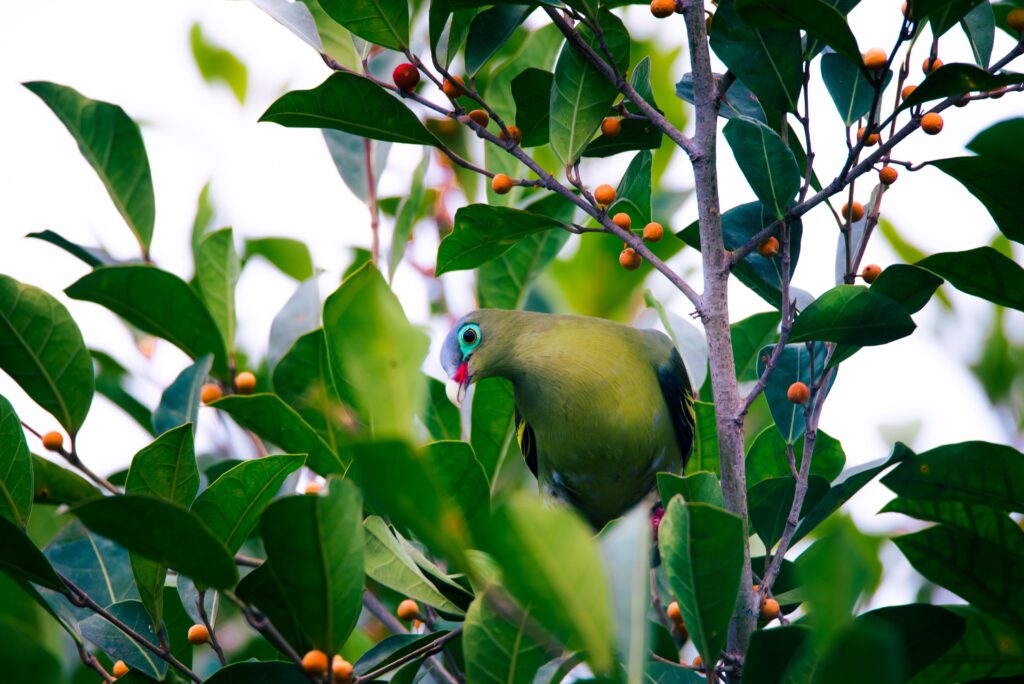
The White-bellied Green Pigeon (Treron sieboldii) is a fruit-eating pigeon adapted to Japan’s forests; its habitat, diet, and flocking behavior change significantly depending on the season.
Particularly distinctive are their forest-dwelling lifestyle during the summer breeding season and their flocking behavior and seawater consumption during autumn and winter.
Spring (March–May)
Season for breeding preparations and territory establishment
Activity levels increase as spring arrives.
Main activities
Returning to the forest
Pair formation
Males calling vigorously
Searching for feeding grounds
Selecting breeding sites
Behavioral characteristics
From early morning, males call out with a distinctive
“Oo-aa-oo”
sound to attract females.
During this period, they are often found in:
The forest canopy (upper parts of trees)
Deep within the woods
High tree branches
…making them difficult to spot.
Summer (June–August)
Peak of breeding and chick-rearing
This is the season when the White-bellied Green Pigeon is most active.
Main activities
Egg-laying
Incubation
Raising chicks
Foraging
Diet
In summer, they utilize resources within the forest, such as:
Wild cherry (Yamazakura) fruit
Mulberry fruit
Dogwood (Mizuki) fruit
New tree shoots
Season of visiting the coast
A famous seasonal spectacle of summer is
the behavior of drinking seawater.
This is observed particularly in areas such as:
Around Oiso Town, Kanagawa Prefecture
Parts of the coast in Hokkaido and the Tohoku region
The purpose is believed to be:
Sodium replenishment
Mineral replenishment
At the coast, they descend to the water’s edge and brave the danger to drink seawater.
Autumn (September–November)
Season for molting and winter preparations
Once breeding concludes, they enter a period of extensive molting.
Main activities
Replacing old feathers
Replenishing nutrients
Flock formation
Preparing for movement
Behavioral changes
Summer:
→ Primarily pairs or small groups
Autumn:
→ Can form flocks of dozens or more birds
Their diet also changes;
they consume large quantities of:
Acorns
Tree nuts
Fruits
Since protein is required for molting, this is a period of heavy feeding.
Winter (December–February)
A season for overwintering and migration
How they spend the winter varies by region.
Northern Japan
They tend to:
migrate south,
seek refuge in warmer areas, or
move from mountainous areas to lowlands.
Western and Southern Japan
In warmer regions, they:
overwinter in forests,
move about in search of fruit, and
travel in flocks.
Flight Speed
Although the White-bellied Green Pigeon (Treron sieboldii) has a plump, rounded appearance, it is a pigeon with high flight capabilities adapted for life in the forest. They travel at high speeds between the forest and the coast, particularly when flying to the shore to drink seawater.
Normal Flight Speed
Approximately 40–60 km/h
The White-bellied Green Pigeon’s standard cruising speed is estimated to be
around 40–60 km/h.
Characteristics:
Regular wing-beating
Straight-line flight
Short-distance travel between forest areas
These are typical of their flight style.
Speed During Long-Distance Travel
When heading to the coast or traveling between locations,
speeds can reach approximately 50–70 km/h.
White-bellied Green Pigeons travel back and forth between:
Mountain forests and the coast
Islands and the mainland
Forests and feeding grounds
At the coast, in particular, they take off en masse from cliffs or rocky areas and move rapidly in flocks.
Diving and Evasive Flight
If they sense danger, they rapidly increase their speed.
Estimated speed:
Potentially around 70 km/h.
Natural predators:
Northern Goshawks
Falcons
Buzzards
When escaping from these predators, they engage in:
Sharp turns
Rapid ascents
Flock-based evasive maneuvers
About Green Pigeon Chicks
This article provides detailed information about green pigeon (Columba janthina) chicks. Green pigeons breed in the trees of coastal forests and islands, and their chicks have characteristics adapted to their environment.
- Birth and Hatching
Number of Eggs: Usually 1-2
Incubation Period: Approximately 17-19 days
Characteristics Immediately After Hatching
Feathers: Soft, pale gray or whitish down
Small, soft beak
Incomplete flight
- Life in the Nest
Nest Location
Simple, dish-shaped nests built in the trees of islands and coastal forests
Parental Care
Both parents take turns incubating the eggs
Even after hatching, parents feed them (fruit and nuts) by mouth
Hide the chicks or defend the nest in times of danger
- Developmental Stage
Early Stage (~2 weeks after hatching)
Feathers are soft and flightless
Completely dependent on parental temperature control and food
Middle Stage (2 weeks to 1 month)
Feathers grow and bodies become stronger
Begin practicing pecking for food by imitating their parents
Late Stage (1-1.5 months)
Feathers approach those of adult birds, enabling short-distance flight
Begin preparing to leave the nest
- Fledging
Time to learn to fly: Approximately 1.5 to 2 months
After leaving the nest
Initially fly close to parents
Gradually become independent and begin foraging for fruit
- Characteristics and Biology
Feathers are lighter in color than adults
Learn how to forage with the guidance and care of their parents
A safe nesting environment in coastal forests is important for chick survival
Is the green pigeon an endangered species?
The green pigeon is not an endangered species. The population is very stable.
- IUCN Red List Assessment
Classification: Near Threatened (NT)
Reason: Populations are declining, particularly due to habitat loss and human activity.
- Causes of Endangerment
Habitat Loss
Deforestation of Coastal Forests and Islands
Habitat Destruction due to Tourism and Development
Impact of Human Activities
Although collection and capture on the coast is rare, there is an indirect impact.
Noise from fishing and tourism, and interference from coastal development
Changes in the Natural Environment
Loss of Nests and Feeding Grounds due to Typhoons and High Tides
- Conservation Status
In Japan, it is sometimes designated as a Natural Monument (Protected in Specific Areas)
Habitat and forest conservation efforts are also underway overseas.
Observation and monitoring are emphasized in response to the declining population trend.
Can green pigeons be kept as pets?
Blue pigeons are designated as natural monuments of Kanagawa Prefecture, so breeding them is not easy.
- Difficulty in Raising
Physical Characteristics
A medium-sized pigeon (approximately 32-36 cm in length, approximately 180-250 g in weight), it is highly wild and wary.
To maintain the beauty of its lustrous feathers, a breeding environment similar to its natural environment is required.
Habitat Dependence
Because they have adapted to coastal forests and island environments, raising them in an artificial environment can be stressful.
High Flying Ability
They require large spaces; small cages do not allow them to fly properly.
- Personality and Behavior
Timid and wary.
They do not easily get used to humans or pets, and stress can damage their feathers or stop them eating.
Tends to live in groups.
Keeping them alone can cause significant psychological stress.
- Laws and Protection
In Japan, there are natural monuments and protected local populations.
Special permission is required for breeding or capture.
Keeping or selling them without permission is against the law.
- Breeding Examples
They are often kept in specialized bird facilities or zoos.
Breeding Requirements:
High flight space and a natural environment
Diet centered on fruits and nuts
An environment that allows parent-like behavior (eating and resting)
Breeding season and chick care
Zoos Housing the Species (Japan & Worldwide)
The White-bellied Green Pigeon (scientific name: Treron sieboldii) is a familiar wild bird in Japan, yet it is relatively rarely kept in captivity. This is because the species is highly adapted to a diet of fruit, making it difficult to manage their feed and environment under human care.
🇯🇵 Zoos in Japan
Kyoto City Zoo
Status
Species Name: White-bellied Green Pigeon
Scientific Name: Treron sieboldii
On display
Kyoto City Zoo keeps and displays White-bellied Green Pigeons; in some instances, the birds on display are individuals rescued from the wild.
Key features of the exhibit:
Male’s reddish-purple wing markings
Green body coloration
Fruit-eating habits
Unique calls
Visitors can observe these characteristics.
Inokashira Park Zoo
Status
History of exhibiting White-bellied Green Pigeons
Displayed in the “Wild Bird Forest / Native Bird Aviary”
Inokashira Park Zoo presents information on the ecology of the White-bellied Green Pigeon, including explanations of their fruit-eating habits and their behavior of drinking seawater.
🌏 Zoos Worldwide
The distribution range of the White-bellied Green Pigeon (Treron sieboldii) is limited to:
Japan
Taiwan
Eastern China
East Asia
Consequently, permanent exhibits at large zoos overseas are extremely rare.
While other members of the same genus (Treron)—such as:
Whistling Green Pigeon (Treron formosae)
Various other green pigeon species (Treron spp.)
—are sometimes kept in captivity abroad, examples of the Japanese White-bellied Green Pigeon (Treron sieboldii) being exhibited overseas are limited.
Introducing other animals
コメント