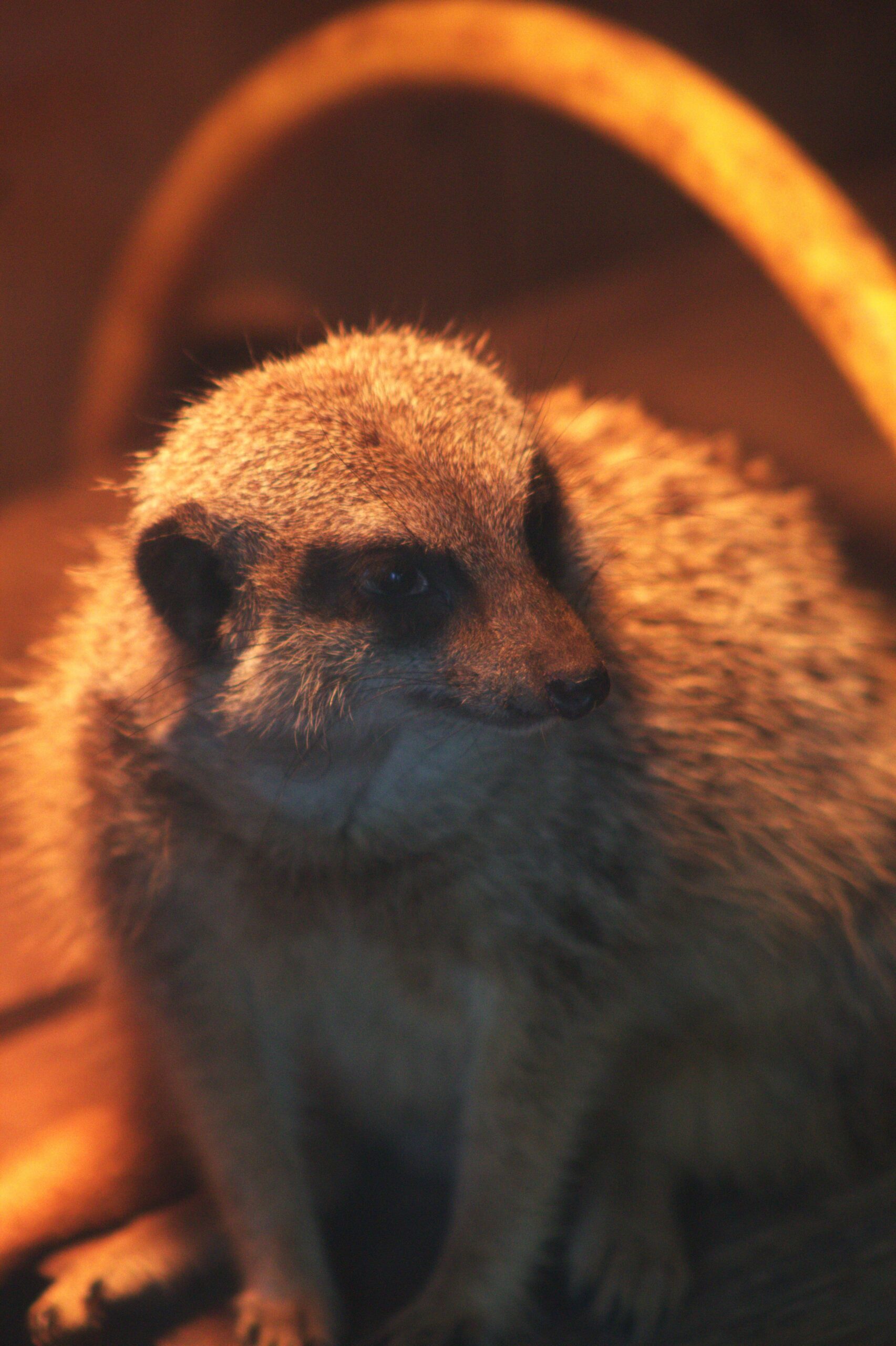
What kind of animal is Fossa? We will explain its characteristics, ecology, and habitat. This cat-like animal is an endemic species that can only be seen on the island of Madagascar, making its existence itself extremely rare. In the first place, the number of individuals is very small, so it is designated as an endangered species.



- What is Fossa? About basic status
- What are the roots and origins of the fossa?
- About habitat
- feature is? What kind of creature is it?
- What is your personality like?
- What does the ecology look like?
- About Molting
- About Fossa Vocalizations
- Seasonal Activity
- Walking Speed
- About Fossa Cubby Animals
- Is the fossa an endangered species?
- Can Fossa be kept as a pet?
- Zoos Housing Fossa (Japan & Worldwide)
- Introducing other animals
What is Fossa? About basic status
The Fossa is a mammal belonging to the Malagasy mongoose family and the genus Fossa. The scientific name is Cryptoprocta ferox. The body length is 61-80cm and the weight is 5-10kg. Shoulder height 37cm, tail length 65-90cm. The list of information is as follows.
| Japanese(和名) | フォッサ |
| English(英名) | Fossa |
| scientific name(学名) | Cryptoprocta ferox |
| classification(分類) | Mammalia、Carnivora、 Eupleridae、Cryptoprocta 哺乳綱、食肉目、マダガスカルマングース科、フォッサ属 |
| IUCN Status(保全状況) | VULNERABLE |
| Length(体長) | 61-80cm |
| Weight(体重) | 5-10kg |
What are the roots and origins of the fossa?
The roots of the fossa (scientific name: Cryptoprocta ferox) lie with an ancestor of the mongoose family that crossed over to Madagascar approximately 20 to 25 million years ago.
Although they resemble members of the cat family, they are not actually cats; they are carnivorous mammals more closely related to mongooses.
Taxonomic Classification
The fossa belongs to the following groups:
Mammals
→ Order Carnivora
→ Family Eupleridae (Malagasy mongooses)
→ Genus Cryptoprocta
In other words,
Lions
Tigers
Cats
…they are more closely related to:
Mongooses
Civets
Where did their ancestors come from?
The ancestors of the fossa are believed to have been primitive mongoose-like creatures from the African continent.
Evolutionary timeline:
Approx. 60 million years ago
↓
Early Carnivora
↓
Approx. 30 million years ago
↓
Development of a lineage close to mongooses
↓
Approx. 20–25 million years ago
↓
Ancestors arrived in Madagascar
↓
Unique evolution on the island
↓
Birth of the modern fossa
Why are there unique animals in Madagascar?
The island of Madagascar separated from the African continent approximately 88 million years ago.
This resulted in an environment characterized by:
Few large carnivores
Few natural predators
Unique evolutionary development
In this environment, the fossa evolved into:
“Madagascar’s apex predator”
Why did they come to resemble cats?
This is a case of convergent evolution.
It is a phenomenon where animals from different lineages develop similar physical traits due to living in similar environments.
The fossa possesses characteristics such as:
A slender, elongated body
A short face
Sharp claws
A flexible spine
Nocturnal habits This is because they evolved in a similar direction to felines that hunt in forests.
However, genetically speaking,
Fossa ≠ Cat.
scientific classification
- 界:動物界 (Animalia)
- 門:脊索動物門 (Chordata)
- 綱:哺乳綱 (Mammalia)
- 目:食肉目 (Carnivora)
- 亜目:ネコ亜目 (Feliformia)
- 科:マングース科に近い Eupleridae(マダガスカル固有の食肉類群)
- 属:フォッサ属 (Cryptoprocta)
- 種:Cryptoprocta ferox(フォッサ)
About habitat
Fossa is endemic to Madagascar.
- Geographic Distribution
Endemic: Distributed throughout the island of Madagascar
Native to Madagascar
Even within the island, population density varies depending on forest conditions.
- Forest Environment
Fossas live primarily in forests, active both in trees and on the ground.
Forest Type Characteristics
Tropical Rainforest: High humidity, densely packed trees, and abundant prey. Fossas’ most active hunting environments:
Dry forests: Low tree density, but abundant small mammals and reptiles, ideal for hunting.
Lowland to mid-altitude forests: Moderately dense trees, ideal for arboreal and terrestrial activity.
- Arboreal and terrestrial use
Arboreal activity
Quickly moves between branches while pursuing prey (lemurs and birds).
Most of their movement, rest, and hunting takes place in trees.
Terrestrial activity
Preys on small mammals and reptiles.
Patrols wide areas, establishing territories and hunting.
- Environmental conditions
Prefers forests with abundant water sources and food.
Vulnerable to deforestation and development, and has difficulty surviving in open areas.
When tree connectivity is severed, capturing prey and moving around becomes difficult.
feature is? What kind of creature is it?
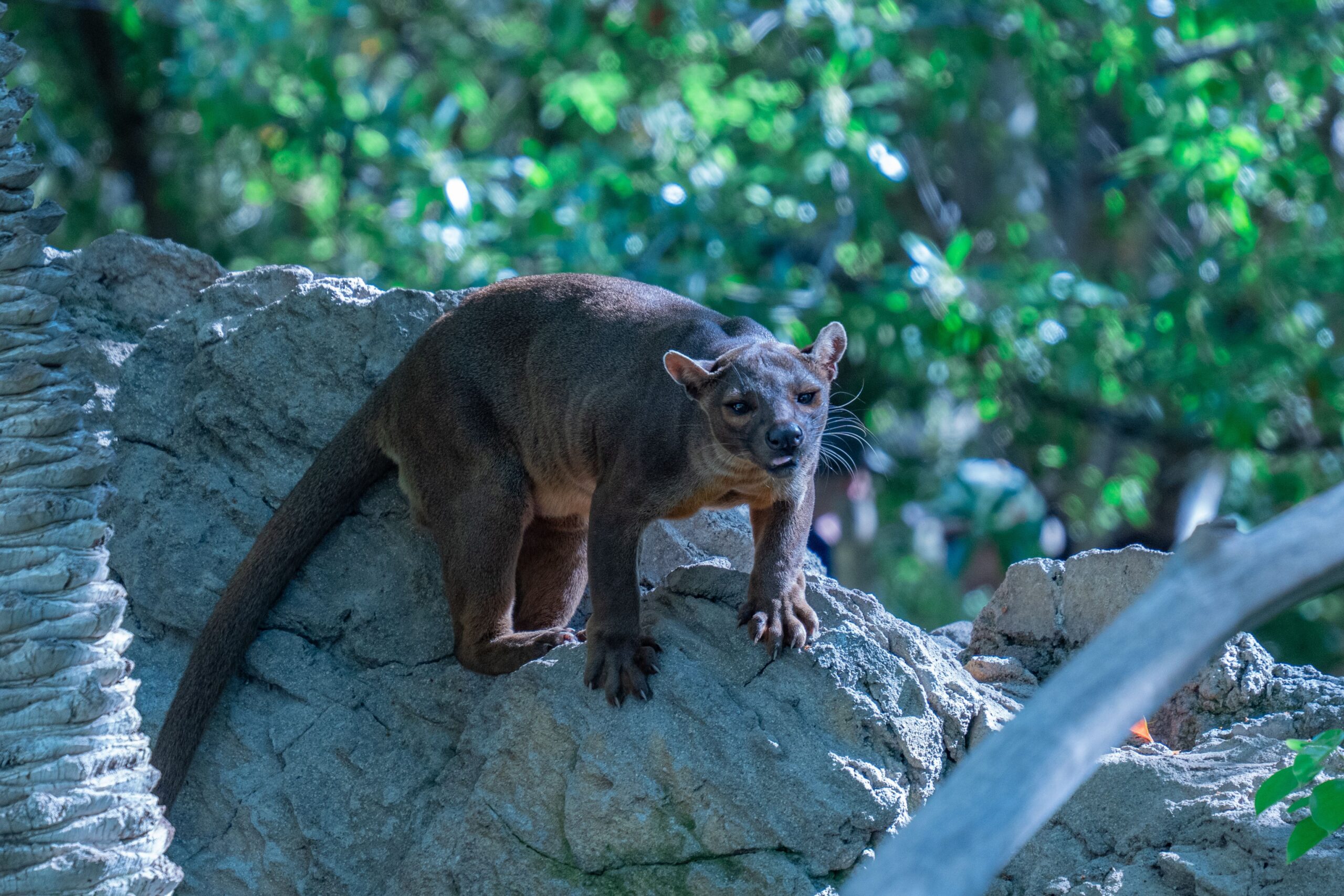
Fossa is distributed throughout the forest regions of Madagascar. They range from mountains to forests. The largest carnivore in Madagascar. The coat color is reddish brown or dark brown, and the hair is soft and short. Fossa are active during the day and night and usually live alone. They are also territorial and are very similar to cats. For this reason, they were once considered part of the feline family.
- Physical Characteristics
Body Type: Slender, muscular, cat-like body
Size: Body length 70-80cm, tail length 60-70cm, weight 5-10kg (males are larger)
Head: Round, cat-like facial features
Hair: Short, brown to reddish-brown
Tail: Long, adapted for balance in trees
Limbs: Strong claws and flexible joints, highly adapted for tree climbing
- Movement/Behavior
Nocturnal, resting during the day
Movement both in trees and on the ground
Quick and agile when hunting
Excellent at chasing prey in trees
- Diet
Carnivorous: Small mammals (such as lemurs), birds, reptiles, and insects
Hunts both in trees and on the ground
One of the top predators in the forests of Madagascar
- Personality and Behavioral Tendencies
They generally live alone.
They are highly intelligent and strategic when hunting.
They can be aggressive, but generally stay within their own territory.
What is your personality like?
Fossa is very cat-like, as it was once classified as a feline. Like cats, they prefer to be alone and have a capricious personality.
Fossa Personality and Behavior
Highly Solitary
Living primarily alone and maintaining their own territories
Least interacting with other individuals except during breeding season
Strong hunting instinct and agile
Pursuing prey both in trees and on the ground
High athletic ability and flexibility allow for efficient prey hunting
Highly cautious
While they have no predators, they can be aggressive toward others who invade their territory
They may quickly flee if they sense danger
Highly intelligent
Uses strategies to capture prey
Makes calculated movements when moving and hunting in trees
Nocturnal calm
Resting and calm during the day
Most active at night, they are less noticeable during the day
What does the ecology look like?
Fossas have excellent sight, hearing, and smell, allowing them to quickly catch prey such as mice. They also eat insects, reptiles, amphibians, and birds. The mode of reproduction is viviparous. The gestation period is 90 days, and it is possible to give birth to one or two cubs at a time. The breastfeeding period is approximately 4 months. The lifespan is said to be 20 years.
- Living Environment
Habitat: Forests throughout Madagascar
Tropical rainforests, dry forests, lowland forests, and mid-altitude forests
Activities both in trees and on the ground
Excellent tree climbers, they move to the trees to track prey
They also hunt on the ground, move around, and patrol their territory
- Diet
Carnivorous predator
Main prey: Lemurs, small mammals, birds, reptiles, and insects
Hunts both in trees and on the ground, and tracks prey
Apex predator in Madagascar’s forest ecosystem
- Sociality and Group Structure
Generally solitary
Only interacts with other individuals except during breeding season
Highly territorial
Marks territory with scent and claw marks
Can become aggressive if other individuals intrude
- Behavior Pattern
Nocturnal (rests during the day)
Activity: Hunts and explores primarily at night
Movement: Moves freely between trees and the ground, and can also jump between branches
Rest: Rests quietly in trees during the day
- Breeding
Breeding Season: Seasonal, but varies depending on environmental conditions
Gestation Period: Approximately 3 months
Litter Size: Usually 1-2 pups
Rearing: Carried by the mother, the pups grow up in the trees, dependent on the mother
Are there any natural enemies?
It is the largest carnivore in Madagascar, meaning it is the top animal and has no natural enemies.
About Molting
The molting process of the fossa (Cryptoprocta ferox) is characterized by continuous fur renewal throughout the year rather than a large-scale seasonal coat change.
Because they are adapted to the tropical and subtropical environments of Madagascar, they do not undergo the distinct switch between “summer coat” and “winter coat” seen in animals like dogs or deer.
Characteristics of Fossa Fur
The fossa’s coat is structured to suit a life in the forest and a predatory lifestyle.
Characteristics:
Short, dense fur
Brownish-red to reddish-brown coat color
Fairly uniform coat texture across the body
Resistant to rain and humidity
Functions:
Thermoregulation
Skin protection
Protection against contact with tree branches and rocks
Noise reduction when approaching prey
The Molting Process
The fossa’s molting follows a continuous cycle:
Old fur sheds
↓
New fur grows from the root
↓
Gradual renewal across the entire body
Consequently, it is rare to see:
Massive shedding all at once
A distinct change in coat color
Seasonal Changes
Madagascar generally experiences two main seasons:
🌧 Rainy Season (approx. November–April)
High temperatures and humidity
Increase in vegetation and prey
Increased activity levels
During this period, metabolism rises, and fur growth and renewal tend to become more active.
☀️ Dry Season (approx. May–October)
Dry conditions
Lower temperatures (especially at night)
Reduced food availability
During this period, the following become important:
Maintaining coat density
Conserving energy
However, they do not develop a distinct “winter coat” to the same extent as animals in cold regions.
About Fossa Vocalizations
Despite their cat-like appearance, fossas possess a diverse range of vocalizations typical of carnivores.
While generally very quiet animals, they produce distinctive sounds during the breeding season or when on alert.
🐾 ① “Purr”
A low, vibrating sound similar to that of a cat.
Common contexts:
Interactions between mother and young
When feeling at ease
During contact with other fossas
Although fossas are not members of the cat family (Felidae), they have evolutionarily developed vocalizations resembling those of cats.
🐾 ② “Hiss”
A sound used for intimidation.
Situations:
When sensing danger
Before an attack
During territorial disputes
Produced by opening the mouth and forcefully exhaling air.
🐾 ③ “Growl”
A low, resonant warning sound.
Situations:
Intimidating other individuals
Guarding prey
States of intense anxiety or tension
🐾 ④ “Call”
A vocalization heard during times such as the breeding season.
Characteristics:
Relatively loud
Prolonged duration
Serves to call out to others
Seasonal Activity
The activity of the fossa (Cryptoprocta ferox) is heavily influenced by the shifts between Madagascar’s “wet season” and “dry season.”
Unlike animals in the Northern Hemisphere, they do not hibernate or grow a winter coat; instead, their behavior changes primarily in response to the activity and breeding cycles of their prey (especially lemurs) and changes in the forest environment.
🌧 Wet Season (Generally November–April)
Activity Level: High
This is a season of heavy rainfall when the forest is at its most lush.
Key Behaviors
🐾 Intensified Hunting Activity
During the wet season, opportunities to find prey increase due to:
Increased lemur activity
The birth of young
An abundance of insects and small animals
Fossas hunt by moving freely across:
Tree branches
The forest floor
The forest canopy
🌳 Increased Arboreal Activity
As vegetation becomes dense during the wet season, there is an increase in:
Moving from branch to branch
Ambushing prey from the trees
Pursuing lemurs
Fossas use their long tails to maintain balance while moving through the trees.
🍼 Relation to Breeding Season
The fossa’s breeding season is concentrated mainly around September and October (the end of the dry season).
Consequently, the wet season encompasses the periods of:
Pregnancy in females
Post-birth rearing of young
Growth of the young
☀️ Dry Season (Generally May–October)
Activity Level: Highly Variable
During the dry season, the forest dries out, and food availability changes.
First Half (Around May–August)
Behaviors
Traveling alone over wide areas
Increasing the distance covered while searching for prey
Marking territory with scent more frequently
As food becomes scarcer, efficient hunting becomes crucial.
Second Half (Around September–October)
Peak Breeding Activity
This is the most distinctive period for the fossa. Behaviors:
Males search for females.
Vocalizations increase.
Scent marking increases.
Interactions between males increase.
Females, in particular, call out from the trees to attract males.
Walking Speed
The fossa (Cryptoprocta ferox) is not built for high-speed running like cheetahs or wolves; instead, it is specialized for “stalking” through forests and moving through the treetops.
While there is limited research data on its exact top speed, estimates based on its physical structure are as follows:
Normal Walking
Approximately 3–5 km/h
This is the speed used when:
Patrolling the forest
Checking scents
Searching for prey
The fossa tends to move quietly while observing its surroundings rather than rushing.
Running
Estimated at approximately 10–20 km/h
It increases speed over short distances for:
Approaching prey
Suddenly pouncing
Evading danger
However, it lacks the ability to run long distances in open areas.
🌳 Arboreal Movement
The fossa is highly adept at:
Climbing trees
Moving between branches
Descending head-first
Changing direction
Reasons:
Highly mobile ankles
It can rotate its hind legs significantly.
↓
Allows for movement up and down tree trunks.
About Fossa Cubby Animals
This article provides detailed information about fossa (Cryptoprocta ferox) cubs. Their interaction with their mother and the forest environment is extremely important.
- Birth and Physical Characteristics
Birth Weight: Approximately 200-300g
Body Length: Approximately 20-25cm
Fur: Covered in short, soft fur, lighter in color than adults
Limbs and Tail: Still thin and small, but able to cling to their mother
- Dependence on Mother
For the first few months of life, they spend their time in their mother’s arms
They cling to their mother’s back or belly, accompanying her on tree movements and hunting trips
For safety, they stay close to their mother
- Growth and Development
Lactation Period: Approximately 3-4 months
Weaning: From 4 months onwards, they gradually try solid foods (small mammals and insects)
Independence: Around 1 year of age, they acquire skills such as hunting and territorial traversal
Social Learning: They learn how to hunt, move, and hide by observing their mother’s behavior
- Behavioral Characteristics
They love to play and practice climbing and jumping.
They are inquisitive and learn exploratory behaviors by staying close to their mothers.
They have a strong habit of clinging to their mothers when they sense danger.
- Protection from Predators
Chubby young are weak on their own, so they rely on their mothers and forest hideouts.
They find safety by hiding in trees.
Is the fossa an endangered species?
Fossa is an endangered species. Overfishing is a problem because they are sometimes eaten as food in their native habitat. Furthermore, because they sometimes attack domestic poultry, they are exterminated as pests and their numbers continue to decline. It is listed in CITES and is considered endangered.
- IUCN Assessment
Classification: VU (Vulnerable)
Reason for Assessment:
Endemic to Madagascar with a restricted distribution
Habitat loss due to deforestation and human activities is severe
- Threat of Extinction
Deforestation and Habitat Destruction
Forests are shrinking due to agricultural development and timber harvesting
Habitat range is shrinking, and prey is declining
Prey decline
Food shortages are occurring due to the decline in prey such as lemurs and small mammals
Human Capture
Sometimes exterminated for attacking livestock
Captivity for pets and research purposes also has an impact
Decreased genetic diversity
Forest fragmentation has isolated populations, posing a risk of inbreeding
- Conservation Status
Found in some protected areas within Madagascar
Forest protection and prevention of illegal hunting are important
Conservation efforts have curbed population decline, but the threat remains significant
Can Fossa be kept as a pet?
Fossas are an endangered species and cannot be kept by the general public. We recommend viewing them at zoos and other locations, and asking them to show you around at events.
- Difficulty in Keeping
① Strong hunting instinct and wild nature
Natural predators with strong carnivorous tendencies
They have a habit of hunting small mammals and birds, and can become aggressive in pet environments.
② Solitary and territorial
They do not form groups, but have territories.
They are likely to become aggressive toward humans and other animals.
③ High intelligence and athletic ability
Ability to move freely in trees and on the ground
They require a wide space and a variety of elevations, which is difficult to recreate at home.
④ Dietary management is difficult
They are carnivorous and feed primarily on wild prey.
Feeding them an appropriate diet at home is difficult, leading to nutritional deficiencies and health problems.
- Legal Restrictions
Endemic to Madagascar, capture, import, and captivity are prohibited under international trade (CITES) and wildlife protection laws in many countries.
Illegal captivity is subject to criminal penalties.
- Health and Safety Issues
Bite and scratch risks
They are highly wild, prone to stress-related aggression and health problems
There is also a risk of infectious diseases (such as those transmitted by monkeys or other wild animals)
Zoos Housing Fossa (Japan & Worldwide)
The fossa (Cryptoprocta ferox) is a rare animal, with few examples kept in captivity worldwide.
This is because it is endemic to Madagascar, has a small population, and is difficult to breed in captivity. Currently, conservation-focused breeding and husbandry are primarily conducted at zoos in Europe and the United States.
🇯🇵 Zoos in Japan
There are currently no zoos in Japan that keep fossa.
🌍 Notable Zoos Worldwide
🇺🇸 United States
San Diego Zoo
Exhibits fossa
Presented as an animal endemic to Madagascar
Also used for education regarding ecology and conservation
Henry Doorly Zoo and Aquarium
Has a history of keeping fossa
A facility featured in photographer Joel Sartore’s “Photo Ark” project
Bronx Zoo
Has a history of keeping fossa
One of the world’s facilities known for exhibiting rare animals
Introducing other animals

コメント