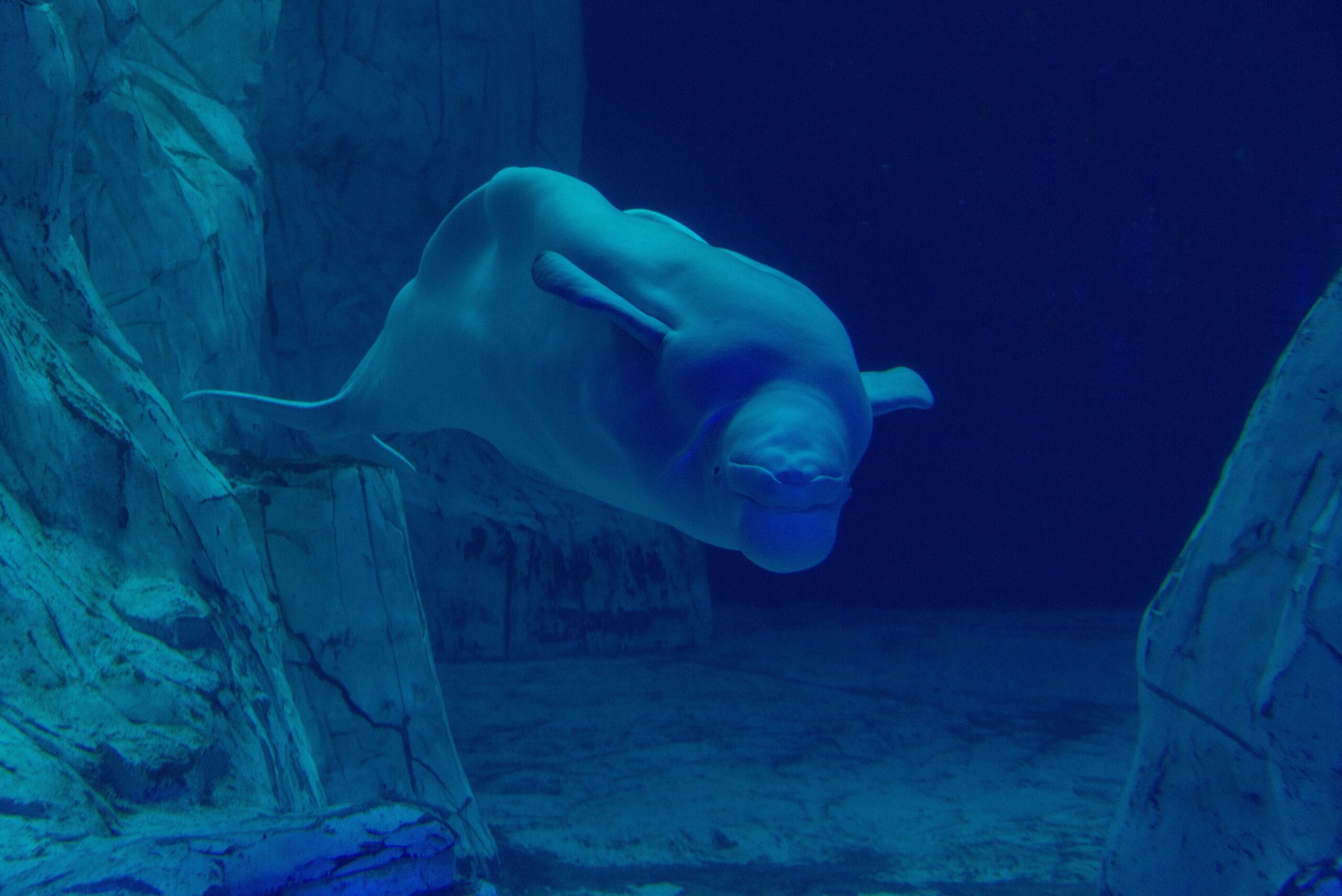
What kind of animal is a finless porpoise? We will explain its characteristics, ecology, and habitat (fish that can be seen in the Seto Inland Sea region and aquariums). Finless porpoises are very small and cute dolphins. They live widely in the Indian Ocean, from the Persian Gulf to Pakistan, India, and Bangladesh.









- What is a finless porpoise? About basic status
- What are the roots and origins of the finless porpoise?
- About habitat
- feature is? What kind of creature is it?
- What is your personality like?
- What does the ecology look like?
- About Diving
- About Their Vocalizations
- Seasonal Activities
- Regarding Swimming Speed
- About Finless Porpoise Baby
- Are finless porpoises an endangered species?
- Can finless porpoises be kept as pets?
- Zoos and Aquariums Housing the Species (Japan & Worldwide)
- Introducing other animals
What is a finless porpoise? About basic status
The finless porpoise is a small dolphin that belongs to the porpoise family, genus Porpoise. The scientific name is Neophocaena phocaenoides, and the kanji is Sunname. The total length is 1.5-2m and the weight is 50-60kg. The list of information is as follows.
| Japanese(和名) | スナメリ |
| English(英名) | Finless porpoise |
| scientific name(学名) | Neophocaena phocaenoides |
| classification(分類) | Mammalia、Cetacea、 Hylobatidae、Symphalangus 哺乳綱、クジラ目、ネズミイルカ科、スナメリ属 |
| IUCN Status(保全状況) | ENDANGERED |
| Length(体長) | 1.5-2m |
| Weight(体重) | 50-60kg |
What are the roots and origins of the finless porpoise?
The roots of the finless porpoise (Neophocaena asiaeorientalis) lie in the cetacean lineage, which evolved from mammals that lived on land approximately 50 million years ago. Modern finless porpoises belong to the family Phocoenidae (porpoises), a group within the order Cetacea (whales and dolphins) that retains ancient characteristics.
Ancestors were land-dwelling mammals
Whale evolution began during the Eocene epoch, about 50 million years ago.
Evolutionary timeline:
Approx. 50 million years ago
Mammals related to land-dwelling ungulates (hoofed mammals)
↓
Early primitive whales (Pakicetids)
↓
Cetaceans adapted to aquatic life
↓
Odontocetes (toothed whales, such as dolphins and orcas)
↓
Phocoenidae (porpoise family)
↓
Finless porpoise
Their ancestors are believed to have branched off from a group closely related to modern cattle and hippopotamuses.
The finless porpoise’s direct lineage: Phocoenidae
The finless porpoise is classified as follows:
Order: Cetartiodactyla
Infraorder: Cetacea
Suborder: Odontoceti
Family: Phocoenidae
Related species include:
Harbor porpoise
Dall’s porpoise
Vaquita (one of the world’s smallest dolphins)
…and others.
When did the finless porpoise’s ancestors emerge?
The family Phocoenidae is believed to have diverged from the dolphin lineage approximately 20 to 15 million years ago (during the Miocene epoch).
Subsequently, a lineage adapted to the shallow waters of East Asia developed, eventually leading to the modern finless porpoise.
Why do they lack a dorsal fin?
The most distinctive feature of the finless porpoise is
“the absence of a dorsal fin.”
This is a result of evolution. Habitat:
Coastal waters
Estuaries
Shallow waters
Inner bays
In these environments, a dorsal fin is not necessarily required.
Conversely,
Rocks
Fishing nets
Shallow areas
…pose a risk of snagging.
Therefore,
It is believed that they evolved to lose the dorsal fin
…resulting in a smooth back.
scientific classification
- 界:動物界 (Animalia)
- 門:脊索動物門 (Chordata)
- 綱:哺乳綱 (Mammalia)
- 目:クジラ目 (Cetacea)
- 亜目:ハクジラ亜目 (Odontoceti) – 歯のあるクジラ類
- 科:ネズミイルカ科 (Phocoenidae)
- 属:スナメリ属 (Neophocaena)
- 種:Neophocaena phocaenoides(スナメリ)
About habitat
Finless porpoises are mainly distributed in ocean areas such as the Indian Ocean. Currently, they can be seen in places such as Ise Bay, Sendai Bay, and the Seto Inland Sea in Japan. You can see photos of the heads, backs, and bumps of creatures on the internet. There is a lot of material available and research is progressing.
- Geographic Distribution
Distribution Area: Western Indian Ocean to Southeast Asia and East Asia coasts
Coastal China, Yellow Sea, East China Sea, Gulf of Vietnam, Gulf of Thailand, etc.
In Japan, they have been spotted in coastal areas such as the Seto Inland Sea and Tokyo Bay.
- Water Characteristics
Prefers shallow coastal areas
Shallow waters and bays with depths of 10-50m
Also found in estuaries and inland bays
Can adapt to low-salinity brackish waters
- Movement and Schooling
Travels in small schools (a few to a dozen individuals)
Migrates along the coast in search of food, but rarely ventures into the open sea
- Environmental Conditions
Water Temperature: Prefers warm coastal areas
Shallow waters with abundant food are key to survival
Habitat is affected by overfishing and development
feature is? What kind of creature is it?
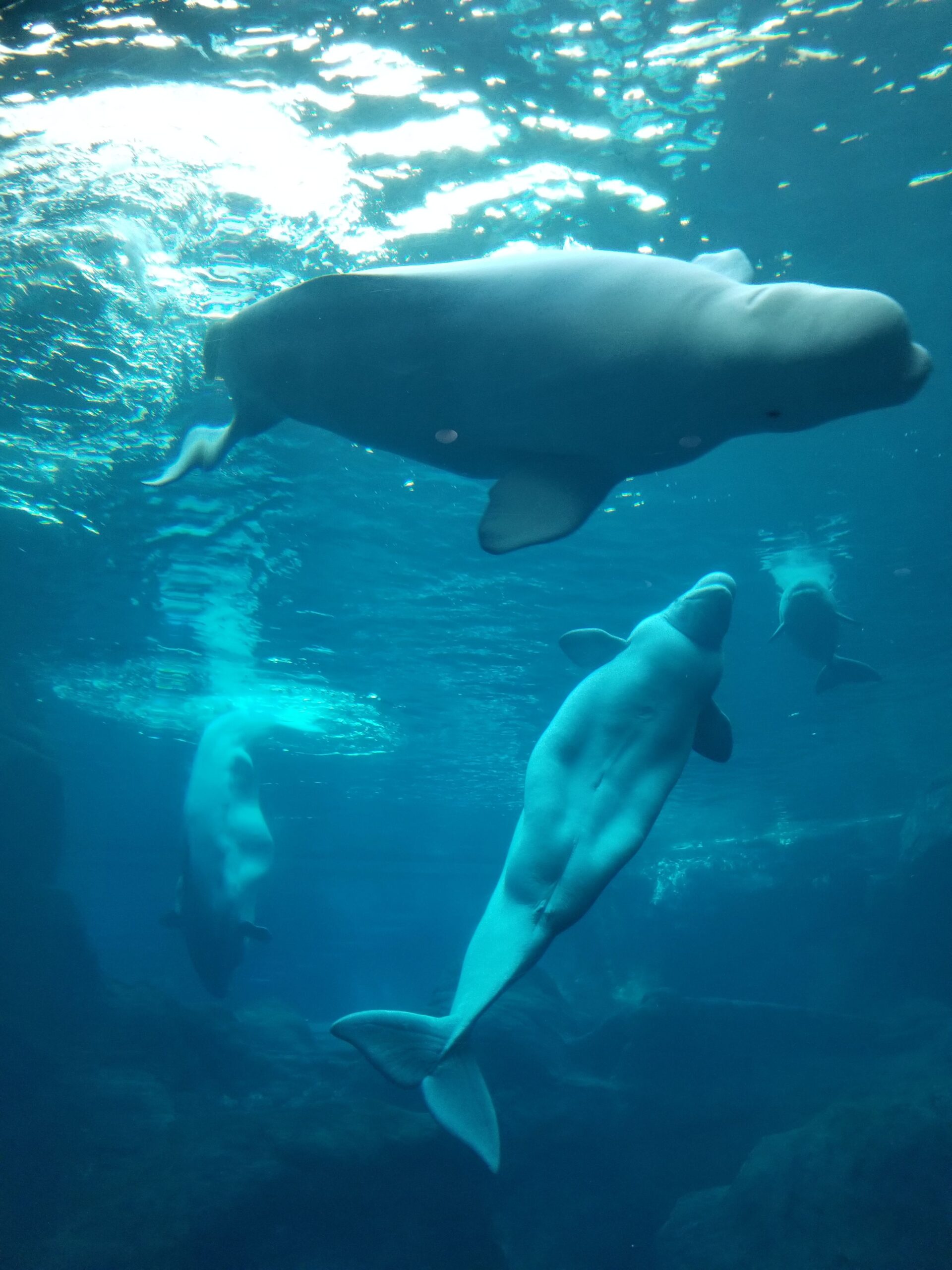
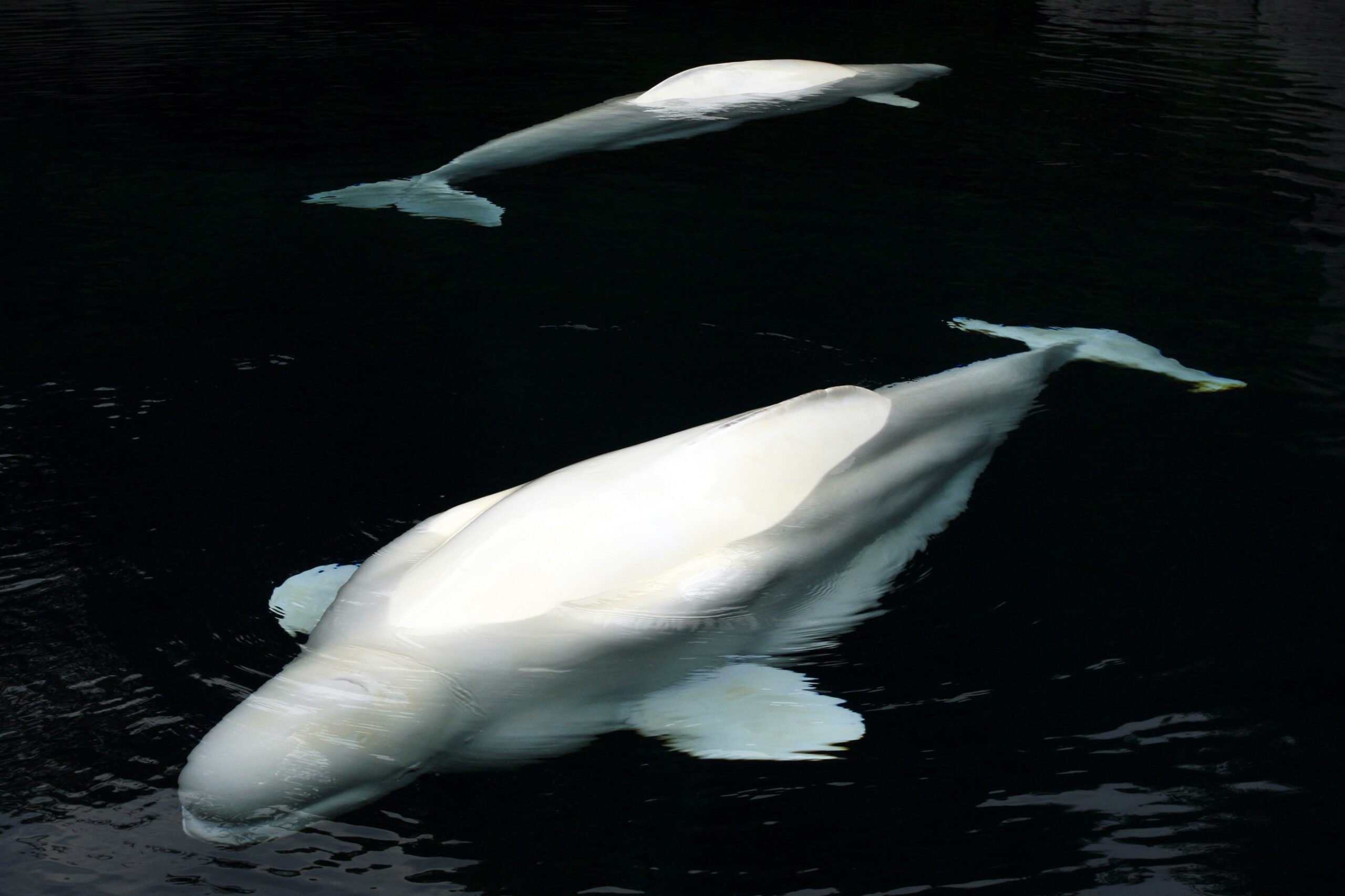
The finless porpoise has a silvery-white body color and a rounded head. The tail fin is crescent-shaped. Finless porpoises have no dorsal fin, making them very distinctive and conspicuous. They are rarely seen in the open ocean, so humans rarely see them. Finless porpoises usually live in shallow waters up to 50 meters deep and can be seen at river mouths.
- Physical Characteristics
Body Type: Small, rounded toothed whale
Body Length: Approximately 1.4-2.0 m in adults
Weight: 50-70 kg
Dorsal Fin: Small, triangular, and inconspicuous
Face: Rounded snout, lacking a long beak like a dolphin’s
Color: Gray back, whitish underside, and generally solid, smooth body
- Movement/Behavior
Swim in shallow coastal waters, moving in small groups (a few to a dozen individuals)
Rarely exhibiting sharp jumps or flashy movements, they tend to swim calmly
Move slowly while searching for food
- Diet
Carnivorous (mainly fish-eating)
Preys on small fish, shrimp, squid, etc.
Preys in shallow waters, moving quickly near the seabed or underwater
- Sociality
Live in small groups
Communicate calmly within the group
Shy of humans, tending to avoid boats and noise
What is your personality like?
Finless porpoises are highly social animals that value discipline. They are usually seen in groups. They often act alone.
- Gentle and Timid
Generally docile and calm in nature
Sensitive to sounds and activity from humans and boats, and will immediately flee when approached
Rarely exhibits flashy jumps or aggressive behavior
- Sociality
Live in small groups (a few to a dozen individuals)
Swim and forage cooperatively within the group
Rarely engage in territorial disputes or fierce competition, coexisting peacefully
- Highly Cautious
Swim slowly near the surface, but will quickly dive if they sense danger
As a coastal fish, they are sensitive to environmental changes and human presence
- Feeding and Behavioral Characteristics
Feeding is calm and planned
Cooperative group behavior is observed to efficiently catch small fish and shrimp
What does the ecology look like?
Finless porpoises live on fish, crustaceans, and invertebrates. The breeding season is uneven and the gestation period is about 10 months. In the wild, they can live up to 23 years.
- Habitat
Living in coastal areas, estuaries, and bays
Mainly active in shallow waters 10-50m deep
Can live in brackish waters of bays and estuaries
Rarely ventures into the open ocean
Prefers shallow waters and coastal areas with abundant feeding grounds
- Diet
Carnivorous (mainly fish-eating)
Preys on small fish, shrimp, squid, etc.
Catches prey by swimming quickly through the water
Forages while moving along food-rich coastal areas
- Sociality/School Structure
Live in small schools (several to a dozen individuals)
Swim cooperatively within the school to search for feeding grounds
Rarely engages in social conflict, coexisting peacefully
- Behavior
Diurnal, active during the day
Swim slowly near the surface, searching for food
Swim quickly to avoid danger
Disperse and search for food while moving in schools
- Reproduction
Sexual maturity: 2-4 years
Gestation period: Approximately 10-11 months
Litter size: Usually one pup
Rearing: Carried by the mother and nursing for several months
Pups are dependent on their mother for survival and follow their parents on the surface and in shallow waters.
Are there any natural enemies?
Sharks are the biggest threat to finless porpoises.
About Diving
The diving capabilities of the finless porpoise (Neophocaena asiaeorientalis) evolved not for deep-sea diving, but for rapid and frequent movement within shallow coastal waters.
Diving Depth
Finless porpoises primarily inhabit areas such as:
The Seto Inland Sea
Inner bays
Estuaries
Shallow coastal waters
Consequently, their typical dives are relatively shallow:
Ranging from a few meters to about 20 meters
Reaching a maximum of around 50 meters
Unlike sperm whales (which dive thousands of meters) or bottlenose dolphins (hundreds of meters), they are diving animals specialized for shallow waters.
Dive Duration
Typical dive times:
Normal: Approximately 30 seconds to 2 minutes
Longer dives: A few minutes
Rather than staying submerged for long periods to chase prey, finless porpoises repeat a cycle of:
“Short dive → Surface → Breathe → Dive again”
Physiological Changes During Diving
Like other cetaceans, finless porpoises are adapted for life underwater.
① Efficient Oxygen Use
When diving, they:
Lower their heart rate
Concentrate blood flow to vital organs
Store oxygen using myoglobin in their muscles
② Flexible Ribcage
When subjected to water pressure:
Their ribs deform flexibly
Air in the lungs is compressed
While these adaptations are more pronounced in animals that dive to great depths, finless porpoises also possess these fundamental diving adaptations.
About Their Vocalizations
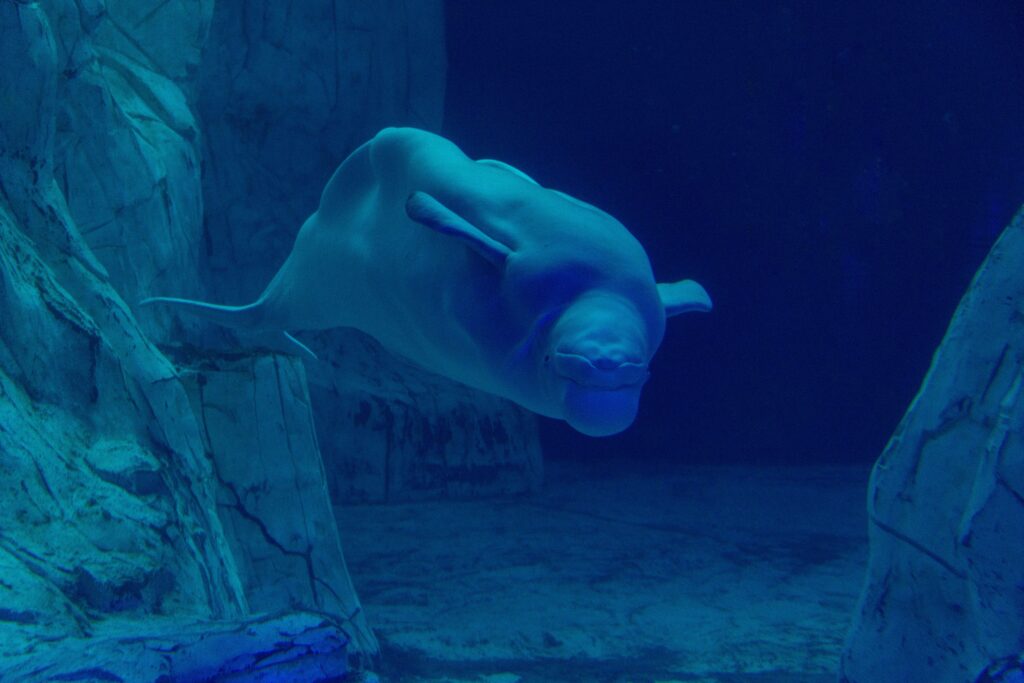
The vocalizations of the finless porpoise (Neophocaena asiaeorientalis) are distinctive among cetaceans; they are a species that relies primarily on ultrasonic “echolocation” for their daily activities. They frequently use high-frequency sounds that are largely inaudible to the human ear.
Characteristic Sound: “Clicks”
The sounds finless porpoises produce most often are
“click-click” or “snap-snap”
short clicking sounds.
However, rather than serving as conversation, these sounds are used for:
checking their surroundings
searching for prey
determining the location of other individuals
The frequencies are extremely high, centering on the ultrasonic range (tens of kHz to over 100 kHz), which humans cannot hear.
Echolocation
Finless porpoises emit sound from an organ in their head,
projecting ultrasonic waves
that bounce off fish or the sea floor
and receiving the echoes
to assess distance, shape, and movement.
This allows them to hunt in:
murky rivers
the ocean at night
shallow waters with poor visibility
Sounds for Communication with Others
Finless porpoises do not often use the complex “whistles” seen in bottlenose dolphins.
Main sounds:
① Clicks
Uses:
locating other individuals
searching for prey
perceiving surroundings
② Burst-pulse sounds
Rapid, continuous clicking sounds.
Uses:
short-range information exchange
approaching prey
alerting/warning
③ Low-frequency sounds / Contact sounds
These are believed to be used between individuals for:
mother-calf recognition
maintaining the pod (group)
Sounds Made by Calves
Because finless porpoise calves stay close to their mothers,
they produce high-frequency clicks
and short contact sounds.
The mother relies on these sounds to track:
the calf’s location
distance
condition
Seasonal Activities
The finless porpoise (Neophocaena asiaeorientalis) does not hibernate or undertake large-scale migrations. While active year-round in the coastal waters and bays near Japan, its behavioral patterns shift depending on water temperature, prey availability, breeding cycles, and sea conditions.
Spring (March–May)
Activity Characteristics
Water temperatures begin to rise
Increased activity among fish and crustaceans
Heightened foraging activity
Behavior
More frequent movement into shallow waters
Moving within bays while chasing small fish
Increased social interaction with other porpoises
Spring is a period of increased activity due to the abundance of food resources.
Summer (June–August)
Activity Characteristics
Water temperatures rise
Fish become abundant
Breeding and rearing season in some regions
Behavior
Active foraging during morning and evening hours
Activity in shallow waters continues during the day
Mother-calf interactions are frequently observed
Calves born in summer learn the following while swimming alongside their mothers:
Swimming techniques
Breathing timing
How to locate prey
Autumn (September–November)
Activity Characteristics
Changes in fish species composition
A time to secure food reserves for the winter
Behavior
Increased time spent foraging
Wide-ranging movement along the coast
Occasional movement in groups
As water temperatures become moderate, this is also a favorable season for observation.
Winter (December–February)
Activity Characteristics
Water temperatures drop
Changes in the distribution of prey species
Behavior
Occasional movement to warmer waters or the inner reaches of bays
Changes in diving duration and activity levels
Conservation of energy
However, finless porpoises are not migratory animals that travel to cold regions; they generally remain within the same coastal areas.
Regarding Swimming Speed
The finless porpoise (Neophocaena asiaeorientalis) is not built for high-speed, long-distance travel; instead, its swimming style prioritizes maneuverability, allowing it to thoroughly explore shallow coastal waters.
Typical Swimming Speeds
Estimates:
Normal swimming: Approx. 2–5 km/h
Foraging: Approx. 3–6 km/h
Avoiding danger: Approx. 10–20 km/h
While they do not reach the high speeds of bottlenose dolphins (which can exceed 30 km/h), they possess ample maneuverability for shallow waters.
Why aren’t they built for high speed?
Finless porpoises inhabit:
Inner bays
Estuaries
Coastal areas
Shallow waters
In these environments:
There is little need for high-speed, long-distance travel.
Agility (the ability to make tight turns) is crucial.
The ability to explore near the seabed is important.
Consequently, their evolution favored:
“Turning and exploration capabilities” over speed.
Physical Characteristics and Swimming Style
① Lack of a dorsal fin
This is the finless porpoise’s most distinctive feature.
Advantages:
Easier to move in shallow water
Easier to swim near the seabed
Less likely to get caught in fishing nets
The absence of a dorsal fin also reduces underwater drag.
② Rounded body shape
Finless porpoises have a rounder physique than dolphins.
This body shape is well-suited for:
Sharp turns
Precise changes in direction
Navigating shallow areas
③ Propulsion from the tail fluke
Like other cetaceans:
They move their tail flukes up and down.
They generate propulsion using powerful muscles.
Unlike fish, which move their tails from side to side, this is a swimming style unique to mammals.
About Finless Porpoise Baby
This article explains the baby finless porpoise (Neophocaena phocaenoides). As a small, coastal toothed whale, it is highly dependent on its mother.
- Birth and Physical Characteristics
Birth Weight: Approximately 5-10 kg
Body Length: Approximately 70-90 cm
Appearance: Approximately the same body shape as an adult, but smaller and with softer skin
Dorsal Fin: A small, prominent triangular dorsal fin develops as the baby grows
Snout: Short and rounded, without a dolphin-like beak
- Dependence on Mother
Swim alongside their mother for the first few months of life
Nursing period: Approximately 6-12 months
They cling to their mother’s back or nearby, and are protected by their mother in times of danger
- Growth and Development
Acquiring the Ability to Swim Unassisted: Begins to swim alongside their mother within a few weeks of birth
Acquiring Foraging: Learns by watching small fish caught by their mother
Social Learning: Learns by observing school movements and danger avoidance
- Behavioral Characteristics
Develops motor skills while playing alongside their mother
Learns to dive and change direction underwater
Sensitive to danger and stimuli, and is dependent on their mother’s instructions and movements
- Protection from predators
Because they cannot defend themselves against predators on their own, the protection of their mother and herd is essential.
Early learning diving skills increases survival rates.
Are finless porpoises an endangered species?
The finless porpoise is listed as an endangered species. This species is particularly endangered in China’s Yangtze River basin, where it is endangered. Since it can only be seen in clean oceans, marine pollution by humans is the biggest threat, and we are in a critical situation due to the destruction of the environment by humans.
- IUCN Assessment
Classification: Vulnerable (VU)
Reason for Assessment:
Limited to coastal areas, its distribution is limited.
Significant impacts from human activities.
- Threat of Extinction
Conflict with Fisheries
Frequent deaths occur as bycatch (entanglement) in bottom trawls and set nets.
Hits are particularly severe in areas with heavy coastal fishing.
Habitat Degradation
Habitat decline due to reclamation at estuaries and coastal areas, industrial development, and pollution.
Water pollution and noise are also sources of stress.
Decreased prey.
A decline in coastal prey such as small fish and shrimp affects survival.
- Conservation Status
Habitat protection is being promoted under coastal protected areas and international regulations.
International trade is restricted by the Convention on International Trade in Endangered Species of Wild Fauna and Flora (CITES).
Preventing bycatch from fishing and development is important.
Can finless porpoises be kept as pets?
Finless porpoises are an endangered species and cannot be kept by the general public. We recommend viewing them at an aquarium and having them show you around at events.
- Difficulty in Breeding
① Unique Habitat
Marine mammals that live in shallow coastal and estuary waters
Requires specific environmental conditions, such as water depth, current, and salinity.
Cannot be reproduced in a home aquarium or small pool.
② Sociality and Stress
They are social creatures that live in small groups, making solitary breeding unsuitable.
Highly intelligent, they can become stressed and aggressive in a cramped environment, leading to health problems and aggression.
③ Difficult to manage their diet
They prey on small fish, shrimp, squid, etc.
It is impossible to properly manage the freshness and variety of seawater and food at home.
④ Difficult to manage health
Lack of seawater environment, disease prevention, and exercise space can damage their health.
Wild individuals are highly susceptible to stress.
- Legal Restrictions
Finally, finless porpoises are subject to wildlife protection laws and the CITES Convention in many countries.
Capturing, importing, and breeding are illegal and subject to penalties.
In Japan, breeding is prohibited without special permission.
- Safety Issues
Wild finless porpoises are not accustomed to humans and are at high risk of stress and aggression.
They are also at risk of diseases and parasites specific to marine mammals.
Zoos and Aquariums Housing the Species (Japan & Worldwide)
While the finless porpoise (Neophocaena asiaeorientalis) is relatively commonly kept in captivity in Japan, it is a rare small cetacean with limited captive facilities worldwide. As a small member of the dolphin family adapted to coastal environments, it is kept in aquariums for both research and public display.
🇯🇵 Major Aquariums in Japan
Toba Aquarium
One of Japan’s leading facilities for keeping finless porpoises.
Features:
A track record of long-term husbandry
Conducts behavioral research on the species
Subjects of study include social interactions between individuals
Toba Aquarium houses finless porpoises and conducts research on their social relationships in captivity.
Sendai Umino-Mori Aquarium
One of the aquariums in Japan exhibiting finless porpoises
A valuable facility for observing the species in the Tohoku region
Kaikyokan
A prominent aquarium for observing finless porpoises on the Sea of Japan coast
Focuses on marine life education regarding the Seto Inland Sea and the Kanmon Straits area
Marine World Uminonakamichi
A facility exhibiting finless porpoises in the Kyushu region
Kept as part of an exhibit on marine life along the Kyushu coast
Miyajima Aquarium
A facility that introduces finless porpoises inhabiting the Seto Inland Sea
Also utilized for local marine environmental education
🌏 Regions Where the Species Is Kept Worldwide
🇨🇳 China
In China, conservation and research are conducted on the Yangtze finless porpoise, a close relative of the species.
Major facilities:
Conservation facilities in the Yangtze River basin
Research centers
Aquarium-style facilities
Objectives:
Conservation of endangered populations
Breeding research
Research on reintroduction to the wild
🇮🇩 Indonesia
There have been instances of the species being kept in captivity in the past.
However, on a global scale, there is not as much continuous husbandry and research compared to Japan and China.
Introducing other animals



コメント