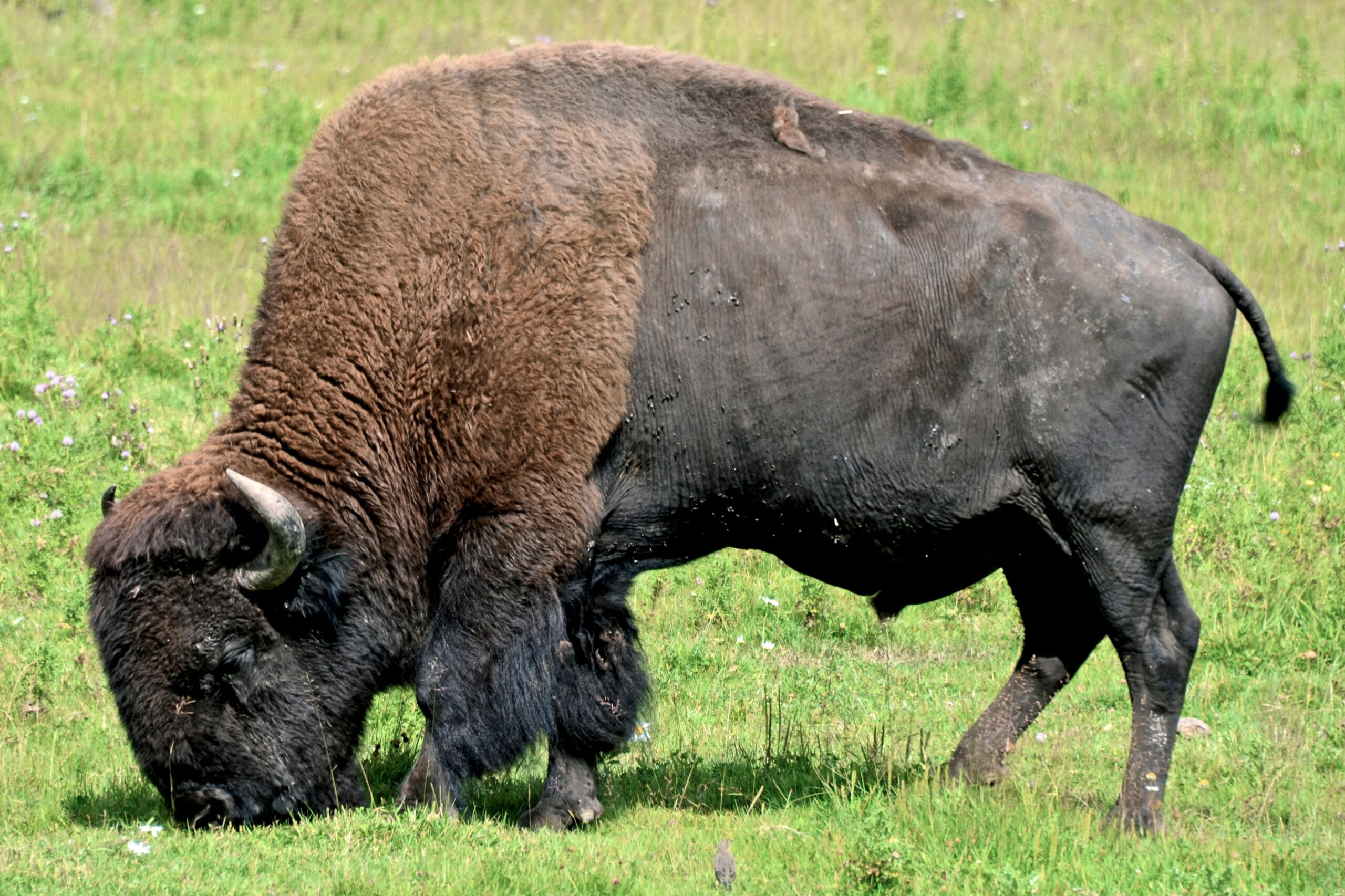
What kind of animal is a bison (American bison, European bison)? We will explain its characteristics, ecology, habitat, and lifespan. When it comes to bison, the most famous are the European bison and the American bison. However, in America, it was on the verge of extinction. I will also explain the background.





- What is a bison? About basic status
- What are the roots and origins of the bison?
- About bison habitat
- feature is? What kind of creature is it?
- What will your personality look like?
- What is the ecology of bison?
- Bison Vocalizations
- Seasonal Activities of Bison
- Walking Speed
- About Bison Calves
- Difference between bison and buffalo
- Are bison an endangered species?
- Zoos Housing Bison (Japan & Worldwide)
- Introducing other animals
What is a bison? About basic status
Bison is an animal classified into the genus Bison in the order Bovidae (artiodactyla) and family Bovidae. It is a medium-sized animal with a body length of 250-350 cm and a weight of 650-1,350 kg. As I will introduce below, there are many subspecies, and they are divided into many classifications. They have a large head and well-developed shoulder muscles to support it.
| Japanese(和名) | バイソン |
| English(英名) | Bison |
| scientific name(学名) | Bison |
| classification(分類) | Mammalia、Artiodactyla、Bovidae、Bison 哺乳綱、ウシ目(偶蹄目)、ウシ科、バイソン属 |
| IUCN Status(保全状況) | VULNERABLE |
| Height(身長) | 250-350cm |
| Weight(体重) | 650-1,350㎏ |
What are the roots and origins of the bison?
The roots of the bison are believed to trace back to Asia between approximately 2.6 and 3.4 million years ago. While only two species of bison survive today, there were many extinct species among their ancestors.
The evolutionary history of the bison
Approximately 5 to 10 million years ago
The tribe Bovini evolved and
diverged into the water buffalo lineage
and the lineage comprising bison, yaks, and cattle. Genetically, the yak is the closest living relative to the bison.
Approximately 3.4 to 2.6 million years ago
The earliest bison are believed to have evolved from Leptobos, an extinct member of the Bovini tribe.
Early fossils have been discovered in China and India.
Approximately 700,000 to 200,000 years ago
The massive steppe bison spread across Eurasia.
During the Ice Age, they crossed the Bering Land Bridge from Siberia and expanded into North America.
Diversification in North America
Giant species with long horns
Ancient bison
Modern American bison
They evolved into the forms we see today; the modern American bison is thought to have acquired its current appearance between 10,000 and 20,000 years ago.
In Europe
The European bison (wisent) survived to the present day.
Genetic analysis suggests it may have originated from interbreeding between the ancestors of the steppe bison and the wild ox (aurochs).
The two surviving species
American bison
Inhabits the grasslands of North America
One of the largest land mammals in the world
European bison
Inhabits the forests of Europe
Once extinct in the wild, the species was successfully reintroduced from individuals kept in zoos.
Extant species are roughly divided into two types.
Extant species are divided into two main species: the European bison and the American bison. As for the American bison, it was once on the brink of extinction, but it has recovered.
| Name:名前 | academic name (学名) | Habit (生息地) |
| European bison ヨーロッパバイソン | Bison bonasus | Europe ヨーロッパ |
| American bison アメリカバイソン | Bison bison | North America 北アメリカ |
バイソンの分類学(Taxonomy)
| ランク | 分類 |
|---|---|
| 界 (Kingdom) | 動物界 (Animalia) |
| 門 (Phylum) | 脊索動物門 (Chordata) |
| 綱 (Class) | 哺乳綱 (Mammalia) |
| 目 (Order) | 偶蹄目 (Artiodactyla) |
| 科 (Family) | ウシ科 (Bovidae) |
| 属 (Genus) | バイソン属 (Bison) |
| 種 (Species) | 主な種は2つ: ・アメリカバイソン(Bison bison) ・ヨーロッパバイソン(Bison bonasus) |
About bison habitat
Bison are distributed in Europe and North America.
- American Bison (Bison bison)
Geographical Distribution: North America
United States (especially the Midwest and Rocky Mountains)
Canadian Plains
Habitat:
Prairies and open woodlands
Her thick fur allows them to withstand the cold, even in snowy winters
Behavior:
Traveling in herds and feeding
Typically preferring areas near water
- European Bison (Bison bonasus)
Geographical Distribution: Europe
Forest reserves in Poland, Belarus, Ukraine, and Romania
Habitat:
Forests and mixed forest-grasslands
Her thick fur allows them to withstand harsh winters
Behavior:
Live in herds
Relatively limited range within forests
- Common Characteristics
Pack Life: Males and females form groups and breed, eat, and travel together
Diet: Herbivorous. Eat mainly grasses, leaves, and shrubs
Adaptations:
Tolerate harsh winters and seasonal fluctuations
Move over a wide area to secure food
feature is? What kind of creature is it?
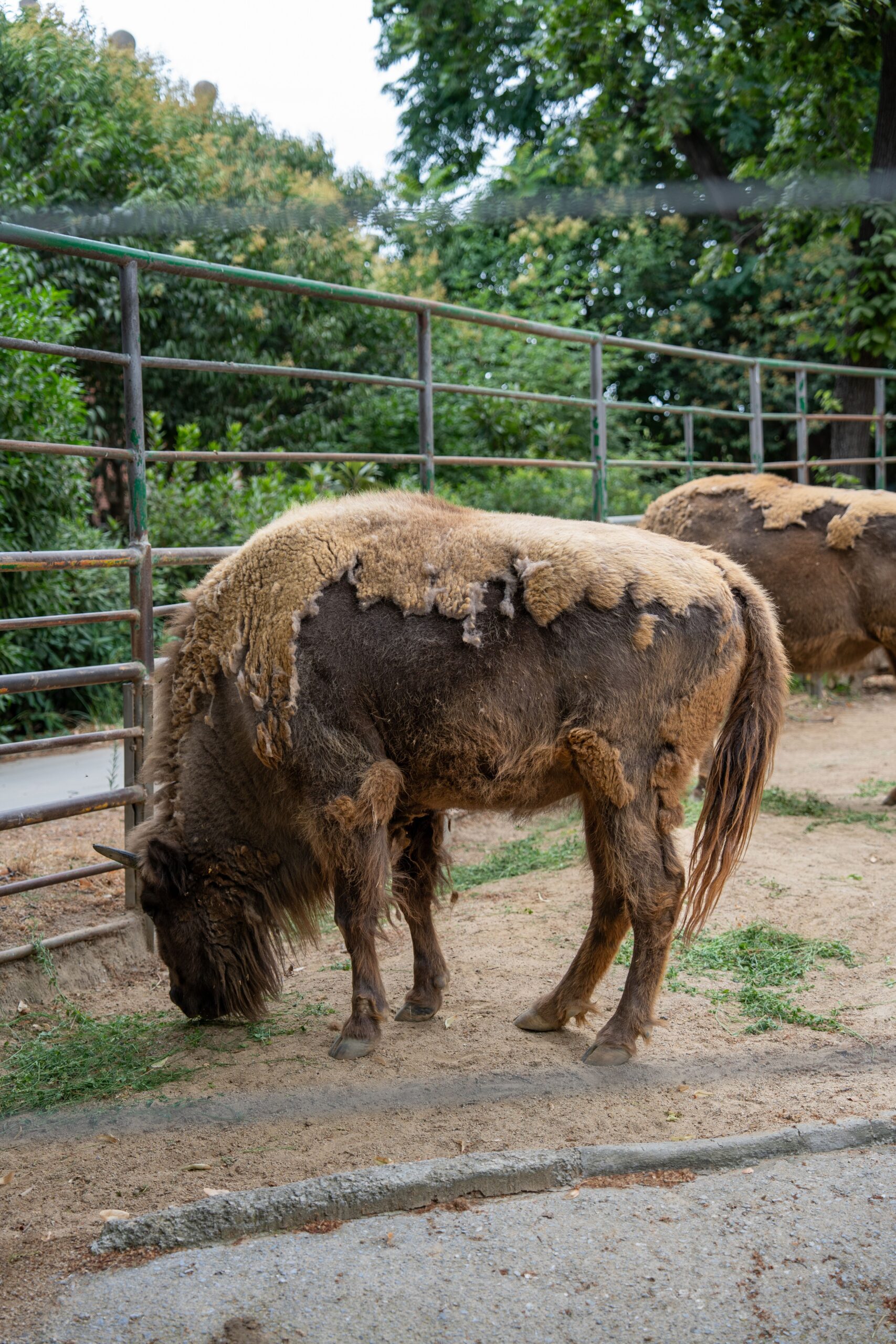
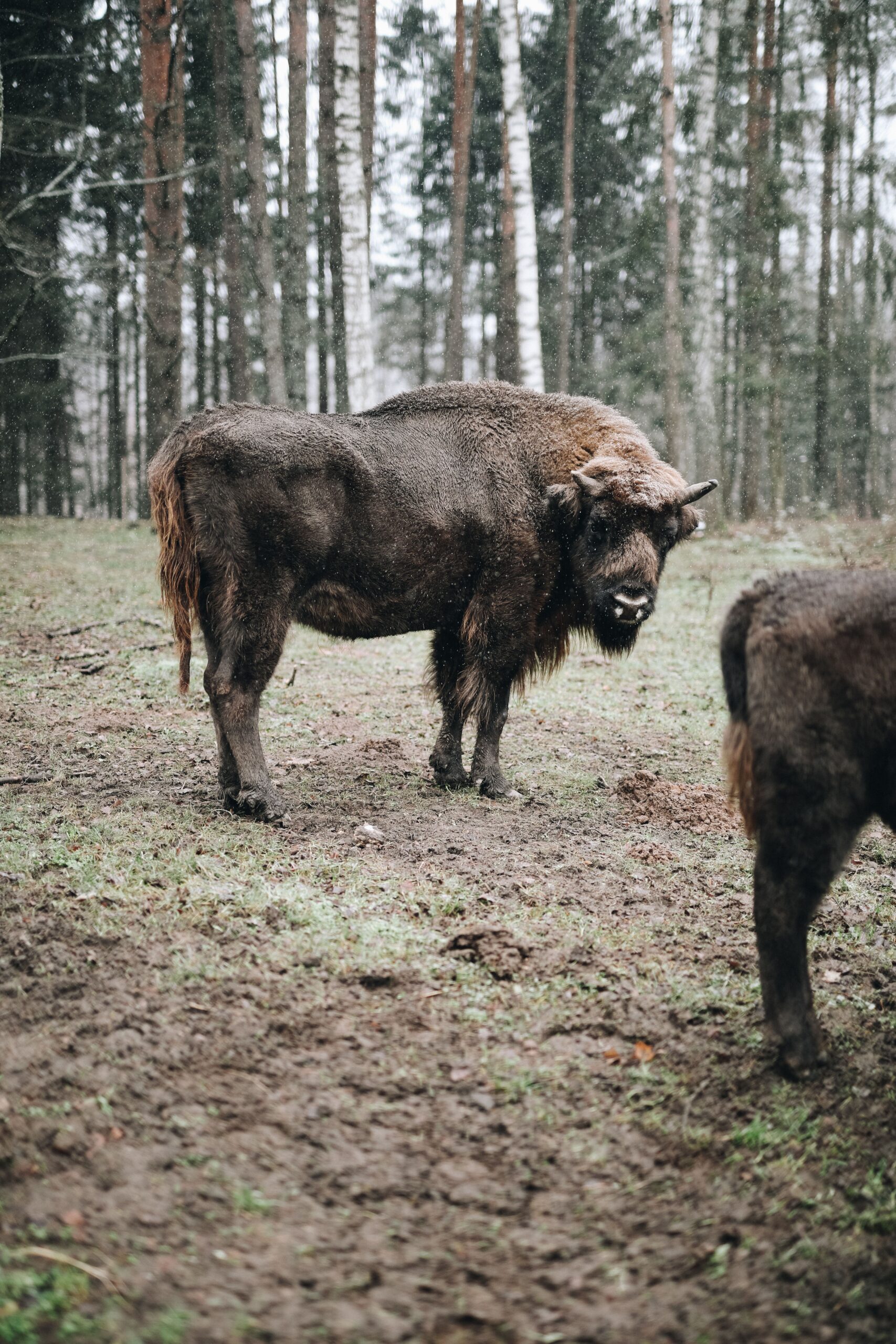
Bison is a member of the cow family and has slightly elongated horns. The hair on the upper body, including the head, is short and the ears are visible. Bison live in grasslands, forests, and steppes, and do not live alone but form large herds. Their muscles are more developed than other animals.
- Physical Characteristics
Body Type: Stocky build, well-developed shoulder muscles, and a large head.
Body Length and Weight:
American Bison: Approximately 2.5-3.5m in length, 450-1000kg in weight
European Bison: Approximately 2.5-3.3m in length, 500-900kg in weight
Horns: Both males and females have curved horns used for defense and fighting.
Fur:
Thick, coarse fur makes them resistant to the cold of winter.
The hair on their front shoulders is particularly long, resembling a mane.
- Behavior/Personality
Pack Life: Males and females live in groups, mating, eating, and traveling together.
Activity: Primarily diurnal.
Defense/Aggression:
Generally gentle, but aggressive when protecting their young or the pack.
Uses their horns and body weight to fight off predators and rivals.
- Diet
Herbivore: Eats mainly grasses, shrub leaves, and young shoots.
Diet: Consumes more than tens of kilograms of grass per day.
- Adaptability
Thick fur and fat allow them to survive harsh winters and snowy environments.
Migrates over a wide area to secure food and water.
Social Ability: Works together as a group to protect themselves from danger.
- Intelligence/Social Ability
Highly Social: They understand group order, and experienced individuals often assume leadership roles.
Communication: Communicates with others through growls and body movements.
What will your personality look like?
Male bison occasionally tend to live alone, but when viewed as a whole, they are clearly highly social and behave in groups, forming herds. This formation allows them to protect themselves from predators.
- Cooperativeness within the group
Highly social: Males and females form groups and cooperate in breeding, migration, and vigilance.
Leadership: Experienced males and females lead the group, detect danger, and make migration decisions.
Friendly: Protective behavior is observed in these groups, including children and weaker individuals.
- Gentleness and Defensiveness
Generally gentle and calm: They rarely fight and are not aggressive toward their peers or other animals.
Highly alert: They are sensitive to predators and humans. When they sense danger, they will use their horns to defend themselves or flee as a group.
Aggression: They will attack forcefully when necessary (for group defense, or competition between males during breeding season).
- Intelligence and Learning Ability
Highly adaptable to their environment: They learn winter behavior and food security methods.
Understanding social rules within the group: Young individuals learn behavior by observing adults.
Warning signals: They warn others of danger through calls and body movements.
- Behavioral Tendencies
Calm and cautious: They usually walk leisurely and graze.
Hermit mentality: They prioritize the safety of the herd over individual behavior.
Sensitive to the seasons and environment: During cold winters and periods with little grass, they adjust their movement and resting schedules as a group.
What is the ecology of bison?
Bison are herbivores, eating grass, leaves, buds, twigs, and bark. The breeding pattern is viviparous, giving birth to one calf from June to September. The gestation period is 285 days, and males reach sexual maturity at 3 years of age, while females reach sexual maturity at 2 to 3 years of age. The lifespan is estimated to be 18 to 22 years.
- Diet
Herbivore: Eats mainly grasses, shrub leaves, and young shoots.
Food Quantity: Consume tens to hundreds of kilograms of plants per day depending on body weight.
Dietary Adaptations: Supplements nutrition by eating shrub branches and fallen leaves, even in winter.
- Movement/Home Range
Pack Life: Males and females form packs and breed, eat, and travel together.
Range of Activity: American bison roam vast grasslands, while European bison are confined to relatively limited forest ranges.
Activity Period: Diurnal, foraging and resting during the day.
- Reproduction
Breeding Season (Bullring Season): Mainly occurs in the summer.
Gestation Period: Approximately 9 months.
Birthing: Usually a single calf, often in the spring.
Raising: Mothers and the pack work together to protect their young.
- Sociality/Behavior
Highly Social: Maintains order within the pack, with experienced individuals acting as leaders.
Vigilance Behavior: They are sensitive to the approach of predators and humans, and use their calls and horns to warn others of danger.
Defense: They are not aggressive, but will use their horns and body weight to defend themselves when necessary.
- Intelligence and Learning Ability
Environmental Adaptability: They change their behavior depending on the season and weather.
Social Learning: Young animals learn pack rules and how to detect danger by observing adults.
What are the natural enemies of bison?
Bison are large animals and live in groups, so they are difficult to prey on, but weaker individuals are preyed on by mountain lions, brown bears, and other animals.
Bison Vocalizations
Despite their imposing appearance, bison use a variety of vocalizations depending on the situation. Their primary calls include the following:
- Low Grunt
Short, low-pitched sounds like “ngh,” “buh,” or “moo.”
These are commonly used to communicate with herd members or for calm, routine interaction.
- Bellow
A very loud, deep, and resonant call—”Buoooh!”
Males produce this sound, particularly during the breeding season, to assert their territory or demonstrate their strength.
The sound can carry for hundreds of meters or more.
- Snorting / Snuffling
“Hmph!” or “Pfft!”
These sounds are observed when the animal is alert, issuing a threat, or excited.
They are sometimes accompanied by pawing at the ground with the front legs.
- Calf Calls
Calves call out to their mothers with higher-pitched sounds, such as “mew” or “moo.”
Mothers respond with short, low-pitched sounds to confirm each other’s location.
- Mother-Calf Communication
Mothers use gentle, low-pitched grunts to calm their calves or encourage them to move.
What do they sound like to humans?
Bison vocalizations are deeper, shorter, and more powerful than the “moo” of domestic cattle. The male’s bellow, in particular, is a heavy, low-frequency sound that resonates in the chest; unlike the high-pitched roar of a lion, it is characterized by a thick, deep bass tone.
Seasonal Activities of Bison
Bison behavior changes significantly depending on the season, heavily influenced by factors such as temperature, food availability, and the breeding season.
🌸 Spring (March–May)
Activity Level: ★★★★☆ (Active)
They begin grazing on new shoots and fresh grass as the snow melts.
They graze for long periods to regain the physical strength lost during winter.
Females give birth to calves conceived the previous summer (peaking between April and June).
Newborn calves (also known as “red dogs” due to their reddish-brown coats) stand up within a few hours and are able to move with the herd.
Key Activities
Foraging
Calf rearing
Herd movement
☀️ Summer (June–August)
Activity Level: ★★★★★ (Most active time of year)
Grass is abundant; they may graze for 9 to 11 hours a day.
The breeding season (rut) occurs around July and August.
Males lock horns to test their strength against one another.
Males let out loud roars and compete for females.
They rest during the hottest parts of the day and are more active in the mornings and evenings.
Key Activities
Breeding
Foraging
Mud wallowing (insect repellent/temperature regulation)
Dust bathing
🍂 Autumn (September–November)
Activity Level: ★★★★☆ (Active)
The breeding season ends, and they graze extensively to recover their strength.
They build up fat reserves in preparation for winter.
Herds reorganize.
They gradually move toward their winter range.
Key Activities
Foraging
Herd reorganization
Long-distance movement
❄️ Winter (December–February)
Activity Level: ★★☆☆☆ (Relatively low)
They use their forelegs and heads to clear away snow and eat dried grass.
Activity time is reduced to conserve energy.
Thick winter coats and subcutaneous fat allow them to withstand temperatures as low as -30°C to -40°C.
During strong winds, the herd huddles together for shelter.
Key Activities
Foraging (grass beneath the snow)
Resting
Huddling for warmth
Walking Speed
Although bison are large animals weighing anywhere from several hundred kilograms to nearly a ton, they are known for moving more quickly than their appearance suggests.
Walking Speed
Normal walking pace: Approx. 3–6 km/h
This is the speed at which they move slowly while grazing.
The herd often maintains a steady pace, allowing them to travel for long periods.
Brisk walk
Approx. 8–15 km/h
Observed when heading to new feeding grounds or when the herd is moving together.
Running Speed
Top speed: Approx. 55–65 km/h
They sprint when escaping danger or during competitive displays between males in the breeding season.
They are faster than humans (who reach about 35–45 km/h in short sprints), making it virtually impossible to catch up to them.
Stamina
They can maintain relatively high speeds not only over short distances but also over medium distances.
Despite their massive size, they move powerfully across uneven terrain and through shallow rivers.
Jumping Ability
Vertical: Approx. 1.5–2 m
Horizontal: Approx. 5–6 m
They possess impressive athletic ability for such large animals.
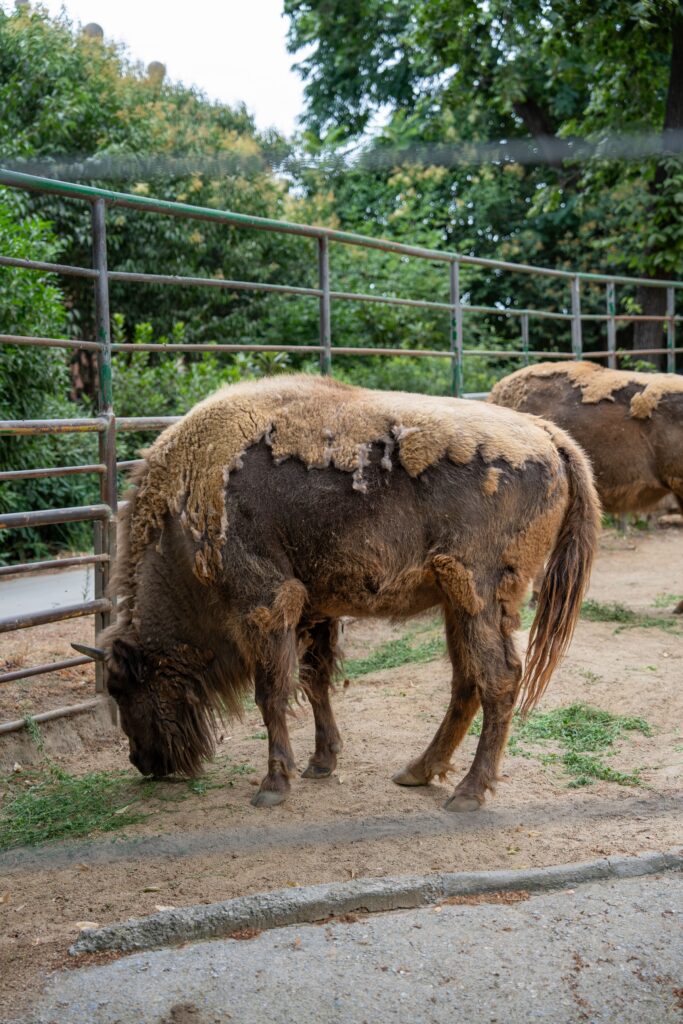
About Bison Calves
This section summarizes the characteristics and lifestyle habits of bison (genus Bison) calves.
- Birth and Size
Birth: Birth occurs primarily in the spring (April-June) after activity resumes.
Birth Weight: Approximately 20-45 kg (depending on the species and the mother’s size).
Body Length: Approximately 80-100 cm.
Fur Color: Light brown immediately after birth, changing to the same dark brown as adults as they mature.
- Rearing and Protection
Maternal-centered Protection: The mother is always by the calf’s side to protect it for the first few months of life.
Pack Cooperation: Other members of the pack may also guard and protect the calf.
Protection from Danger: The entire pack will protect the calf when predators or humans approach.
- Developmental Process
Nursing Period: Approximately 6 months of age.
First Outing: The calf practices walking behind its mother to become accustomed to the herd’s movements.
The Importance of Play:
Playing with other young animals in the pack helps them develop muscle strength and balance.
They learn social skills, their place in the pack, and guarding behavior.
- Learning and Socialization
Learning from their mother and pack:
They learn how to select food, sense danger, and the rules of the pack.
Role in the pack:
As young animals, they focus on observation and play, and will eventually establish their place in the pack.
- Maturity
Males: At 1-2 years of age, they gradually leave their maternal group and may act alone or in small groups.
Females: They remain in the maternal group and learn skills for future reproduction and child-rearing.
Difference between bison and buffalo
By the way, some people don’t know the difference between bison and buffalo. Buffalo often refers to water buffalo that live in Asia and Africa. Bison, on the other hand, refers to those living in North America and Europe. Bison can be easily distinguished from buffalo because they have much longer fur. You can tell by the length of your hair.
Are bison an endangered species?
Bison are not an endangered species. The Japanese bison, a subspecies of the American bison, is an endangered species, but other species are stable. In fact, American bison were on the verge of extinction.
American history is involved
Originally, the United States was inhabited by indigenous tribes who used bison for events and other purposes, and they were never overhunted. However, after the white people forced the Indians to move to reservations, they overhunted the bison. Although their numbers were reduced to a few hundred, they managed to avoid extinction by introducing European bison in time.
Shinrin bison is in a pinch
Bison bison (scientific name: Bison bison athabasca) is at risk of extinction in Canada and the United States. The largest herd totals only about 2,500 individuals. According to 2014 information, the U.S. Fish and Wildlife Service has authorized the reintroduction of “non-essential experimental” populations of spiny bison to three areas in Alaska where programs to protect them are in place. . It is managed in general national parks and protected areas, and its population is expected to increase. I’m looking forward to the future of the United States.
Can bison be kept?
As explained above, bison are very large animals. Therefore, breeding them is extremely difficult. I have to say that it is difficult because it requires a considerable amount of space.
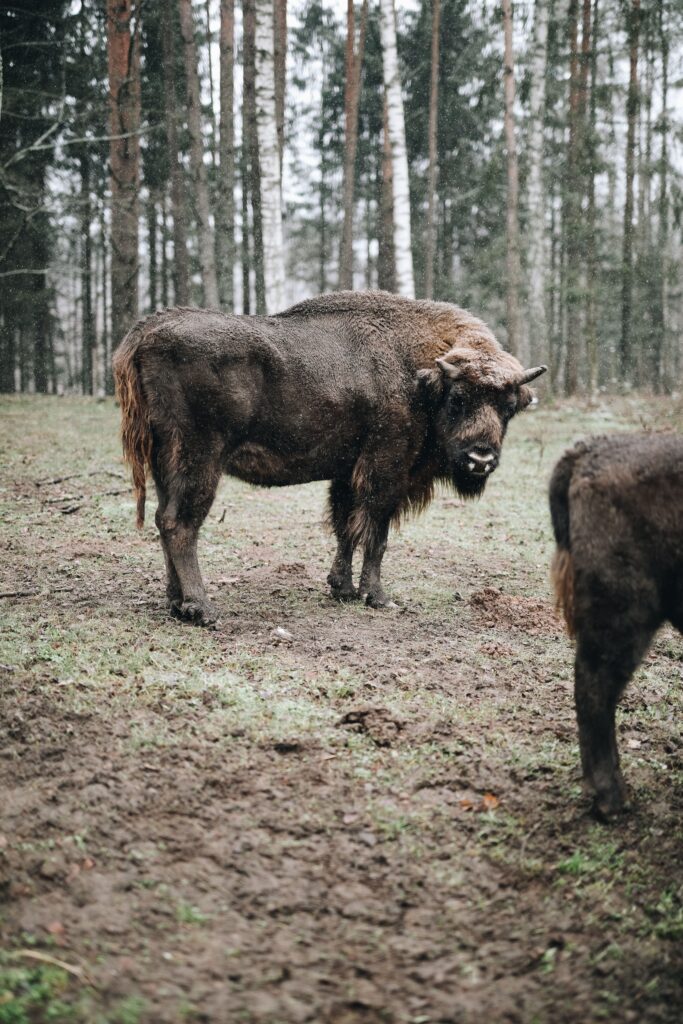
Zoos Housing Bison (Japan & Worldwide)
While facilities exhibiting bison are limited in Japan, they are kept in many zoos and safari parks around the world as part of conservation efforts.
Major facilities in Japan where bison can be seen
- Fuji Safari Park
Species: American Bison
A prominent facility where visitors can observe herds in a safari-style setting.
- Gunma Safari Park
Species: American Bison
Exhibited in the “American Zone,” where visitors can observe them living in herds.
- Tobu Zoo
Species: American Bison
A rare facility in Japan where visitors can observe them up close.
Major zoos worldwide where bison can be seen
European Bison (Wisent)
Zoo Berlin
Boasts one of the world’s best breeding records and participates in reintroduction projects.
Tierpark Berlin
Has successfully bred over 200 European bison since 1955.
Zoo Barcelona
Participates in the European Endangered Species Programme (EEP).
Gdańsk Zoo
One of the leading facilities in Poland, the species’ native region.
Skansen
Known for its conservation breeding and educational activities.
American Bison
In North America,
Bronx Zoo
Smithsonian National Zoo
Calgary Zoo
…and many other zoos and wildlife parks house and breed them.
Introducing other animals
コメント