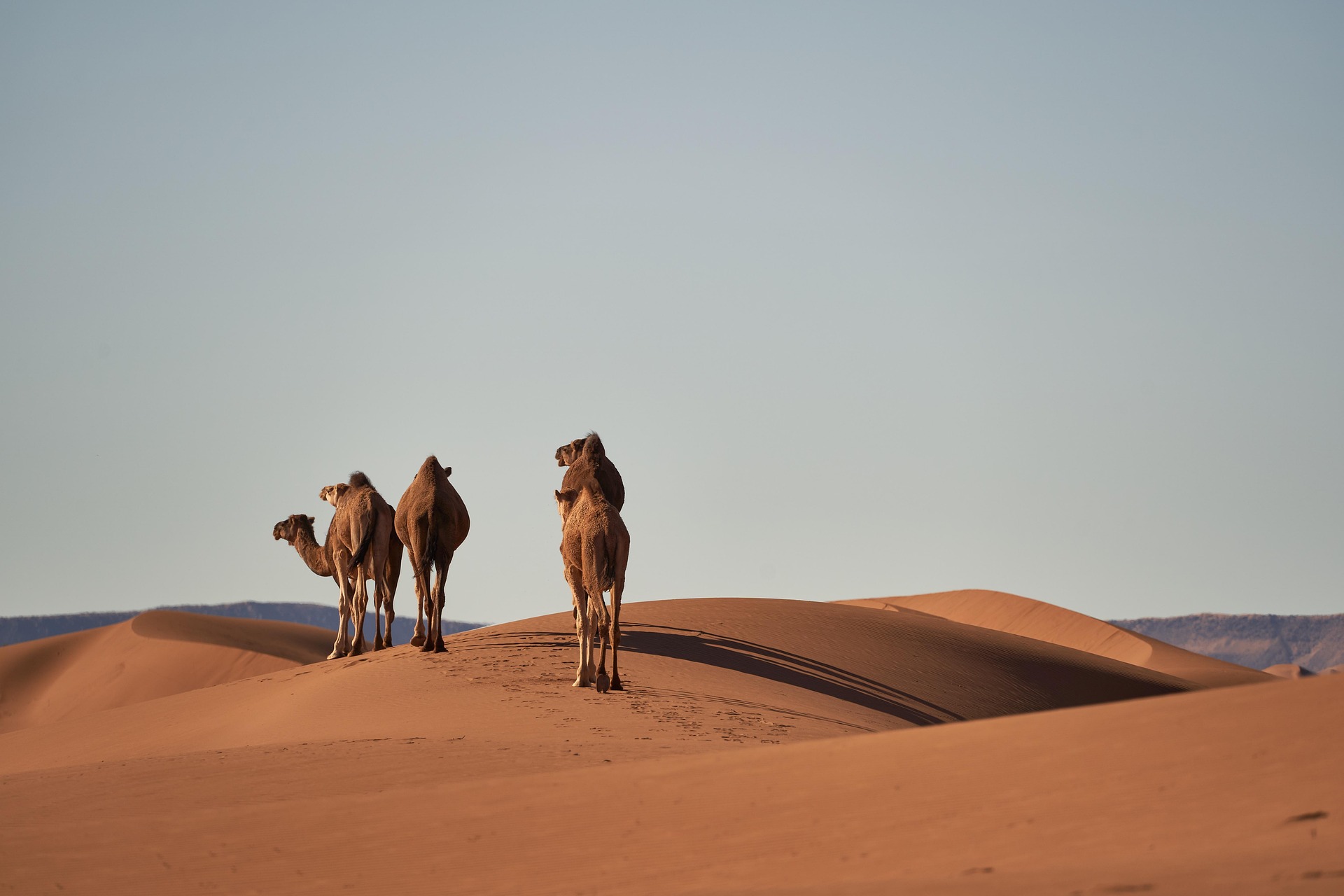
What kind of animal is a camel? We will explain its characteristics, ecology, and habitat. Camels are highly prized animals for people in Africa and the Middle East as they serve as transportation. It is suitable for deserts and dry areas, so it can be said that it is a very familiar animal to people living in desert areas.










- What is a camel? About basic status
- What are the roots and origins of the camel?
- About habitat
- feature is? What kind of creature is it?
- What is your personality like?
- What is the ecology like?
- Camel Vocalizations
- Seasonal Activities
- Walking Speed
- About Baby Camels
- Are camels an endangered species?
- Can camels be kept as pets?
- Zoos where they are kept (Japan and worldwide)
- 🌍 Famous Camel-Keeping Facilities Worldwide
What is a camel? About basic status
Camels are mammals, members of the order Bovidae (artiodactyls), family Camelidae, and genus Camelidae. Camelus is the scientific name, and there are dromedaries and Bactrian camels. The body length is 220 to 350 cm, and the weight is 300 to 1000 kg. Body height up to hump 190-250cm, tail length 55cm. The hair is brown.
| Japanese(和名) | ラクダ(ヒトコブラクダ、フタコブラクダ) |
| English(英名) | Camel/Bactrian camel |
| scientific name(学名) | Camelus |
| classification(分類) | Mammalia、 Artiodactyla、 Camelidae、Camelus 哺乳綱、鯨偶蹄目、ラクダ科、ラクダ属 |
| IUCN Status(保全状況) | CRITICALLY ENDANGERED |
| Length(体長) | 220~350cm |
| Weight(体重) | 300~1000kg |
What are the roots and origins of the camel?
Surprisingly, the roots of the camel lie not in the desert regions we associate with them today, but in North America. The ancestors of modern camels (dromedaries and Bactrian camels) are believed to have originated in North America approximately 40 to 45 million years ago (during the Eocene epoch).
① The Birth of Primitive Camels (Approx. 45 million years ago)
The earliest members of the camel family lived in what is now North America.
Representative example:
Protylopus
About the size of a rabbit
Inhabited forests and wetlands
Looked completely different from the massive desert camels of today
Camels of this era:
Were small
Had multiple toes
Fed on forest vegetation
② Increase in Size and Diversification (Approx. 35 to 10 million years ago)
Over the course of evolution, camel species grew much larger.
Representative types:
🦒 Aepycamelus
Very long neck
Giraffe-like appearance
Fed on leaves from tall trees
🐫 Stenomylus
Slender legs
Ran like a gazelle
🐪 Procamelus
Evolved a body shape closer to that of modern camels
Many types of camels flourished in North America.
🌎 Great Migration Across the Globe
Camel ancestors spread from North America to the rest of the world.
① Toward Asia (Approx. 7 million years ago)
North American camels migrated to Eurasia by crossing the Bering Land Bridge (near the present-day Bering Strait), which existed at the time.
This lineage led to:
Dromedary camels
Bactrian camels
② Toward South America (Approx. 3 million years ago)
A separate lineage migrated south,
becoming the ancestors of:
Llamas
Alpacas
Guanacos
Vicuñas In other words,
camels 🐪 and llamas 🦙 are relatives.
About classification
There are two types of camels: the dromedary and the Bactrian camel.
Camelus dromedarius
The dromedary camel is an animal that has been almost completely consumed by domestic livestock, and its scientific name is Camelus dromedarius. Distributed in countries such as Sudan and Ethiopia, males have a soft palate and have a habit of making deep pink pouches called doulas and hanging them on both sides of their mouths in an attempt to attract females. Their lifespan in captivity is approximately 25 years. The body length can grow up to 350cm.
Camelus bactrianus
Bactrian camels range from China to Mongolia and Central Asia, and the majority have been domesticated. It is characterized by two bumps, which is what makes it different from the dromedary. Body length 220-350cm. Tail length 55cm. It prefers semi-desert areas at an altitude of 1,500 to 2,000 meters and consumes water with a higher salt concentration than seawater. The average lifespan is 20 to 30 years.
About habitat
Their habitat is distributed from Asia, such as China and Mongolia, to the Middle East and Africa. Historically, they have been found in a fairly wide area in Western Asia.
Camel Types and Habitats
Bactrian Camel (Camelus bactrianus)
Two humps on its back
Main Habitat: Arid zones and cold deserts of Central Asia
Mongolia, Kazakhstan, and northwestern China (Gobi Desert)
Characteristics: Hardy to cold, adapted to grasslands and steppes as well as deserts
Dromedary Camel (Camelus dromedarius)
One hump on its back
Main Habitat: North Africa, the Arabian Peninsula, the Middle East, and northwestern India
Dry deserts such as the Sahara and Arabian Deserts
Characteristics: Highly tolerant of heat and dryness, adapted to long-distance desert migrations
Wild Camels
Currently, only a few wild Bactrian camels live in Mongolia and China
Wild dromedary species are nearly extinct, and only domesticated species remain
Habitat Characteristics
Extremely dry deserts and semi-deserts
Areas with drought-tolerant plants such as grasses and shrubs
Able to tolerate environments with limited water and food
feature is? What kind of creature is it?
There are dromedaries and Bactrian camels. This is only the difference between having one or two aneurysms. It is suitable for deserts and dry areas and drinks about 60 to 100 liters of water at a time. You don’t have to drink water for a long time. You can replenish your body by storing water in the hump on your back. They are durable and can carry loads of around 100 kg about 30 km in a day, which has made them adaptable to human society. The fur on the body is brown and the soles of the feet are large and keratinized, making them suitable for walking on sandy surfaces. In the wild, they often travel long distances in groups and eat while eating.
Camel Characteristics
Body Size/Body Shape
Body Length: 2-3 meters
Weight: 300-600 kg
One or two humps on the back serve as fat storage depots
Long, sturdy legs, adapted for long-distance travel in the desert
Soft, broad soles prevent sinking into sand
Hair/Color
Hair is brown or tan, with some individuals showing whitish hues.
Thick hair protects the body from the cold and sheds to regulate body temperature on hot days.
Head/Face
Large eyes and long eyelashes protect the eyes from dust.
Round nostrils They can close their mouths, allowing them to breathe even in sandstorms.
Diet
Herbivore: Eats grasses, shrubs, branches, and leaves in arid regions.
Can survive without water for long periods (days to weeks).
Uses internal fat as an energy source.
Water/Adaptation
Efficiently stores water in their bodies.
Urine is concentrated, and feces are dry and scarce.
Heat temperature fluctuates greatly, allowing them to withstand both heat and cold.
Behavior/Personality
Generally calm and sociable.
Typically lives in groups.
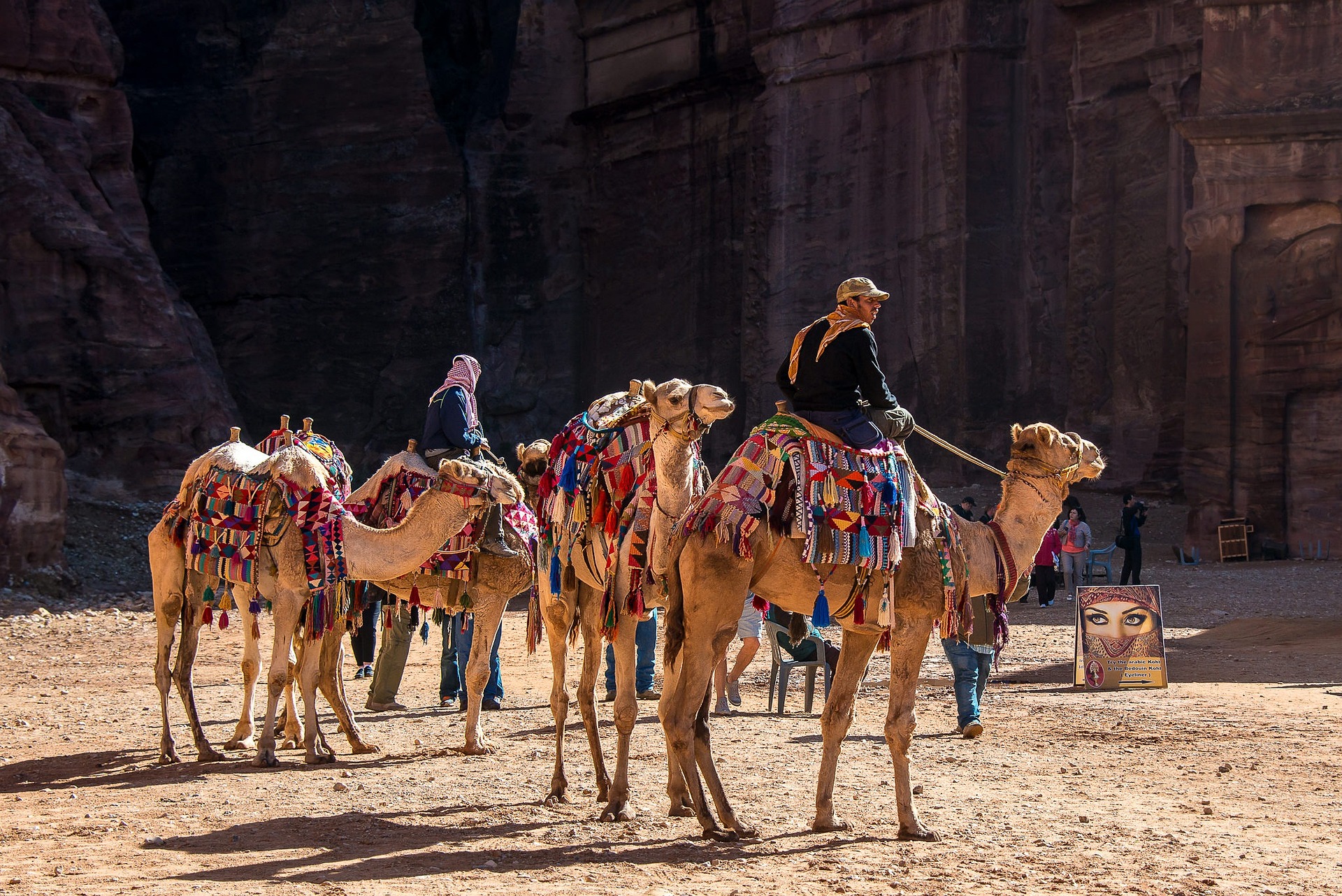
Often used by humans for transport and transportation.
What is your personality like?
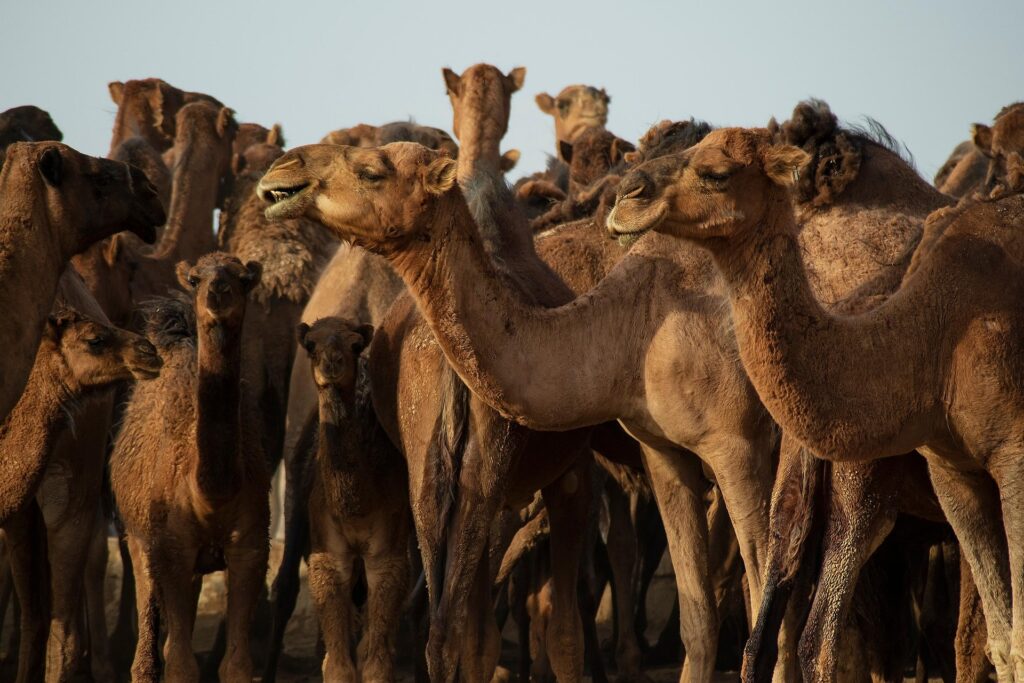
Camels are characterized by their exceptional ability to adapt to given situations. Camels can live in harsh environments and get along well with humans. As you can see, they are said to have a gentle nature and are easy to get along with people.
Camel Personality and Behavior
Calm and docile
Generally low in aggressiveness and easily tamed by humans and other animals
Relaxed and calm even within herds
Patient
Can withstand the harsh desert environment (heat, dryness, food shortages)
Often used as pack animals, they can withstand long walks and heavy loads
Social
Typically live in herds and value relationships with their companions
May exhibit a sense of hierarchy and territoriality within the herd
Intelligence and curiosity
Observant and sensitive to danger and change
Highly adaptable in captivity, they have a high learning ability and can remember simple commands and directions
Temperament
Generally calm, but may spit or kick when angry
Males, in particular, can become aggressive during breeding season
What is the ecology like?
Camels have mostly been domesticated by humans. They are herbivorous, living off plants, insects, and cacti. According to sources, there is fat in the humps inside their bodies. Currently, they use this as energy to survive. Camel blood is also concentrated, so even if blood flow slows down, it does not become more concentrated, and it does not clot even if the temperature changes. Camels do not become sexually mature until they are six years old, making breeding difficult. They have a gestation period of 12 months, and only go into heat once a year. They have a lifespan of 30 years.
Camel Biology
Habitat
Desert, semi-desert, arid grasslands
Can tolerate environments with limited water and food
Bactrian camel: Cold, dry regions (Mongolia, Central Asia)
Dromedary: Tropical desert (Arabian Peninsula, North Africa)
Diet
Herbivore: Eats drought-tolerant grasses, shrubs, branches, and leaves
Can replenish moisture from low-moisture plants
Uses internal fat (humps) as an energy source when water and food are scarce
Water Management
Efficiently retains moisture in the body
Urine is concentrated, and feces are dry and scarce
Can survive for long periods without drinking water
Behavior and Life Rhythms
They often live in groups and are sociable.
They rest during the day to avoid the heat and are sometimes active during cooler times of the day.
They are adapted to long-distance migration, sometimes traveling tens of kilometers in search of food and water.
Breeding
Breeding Season: Varies by species and region, but most occur in spring and summer.
Gestation Period: Approximately 13 months (Bactrian camels), approximately 12 months (dromedary camels).
They give birth to one calf at a time.
Adaptability
They can tolerate extreme temperatures, and can withstand both heat and cold.
Their body structures, such as their legs, fur, and nose, are optimized for the desert environment.
Camel Vocalizations
Camel vocalizations are generally described as low, resonant sounds—often likened to “gwo-gwo,” “bu-bu,” or “moo-moo.” Rather than the cute sounds made by dogs or cats, they produce a unique mix of growls, bellows, and grunts.
① Low Grunts/Moans (Gwooo…)
This is the most common type of vocalization.
Functions:
Communicating with other camels
Expressing dissatisfaction or wariness
Signaling stress
Reacting to humans
They often use these low sounds to signal to other camels that are far away, particularly within the herd.
② “Goro-goro” or “Bu-bu” Sounds (When Angry)
When angry, camels produce sounds that involve:
Snorting
Low growling
Vibrating the throat
These vocalizations become particularly intense when:
They are being loaded with baggage
They are being led by a rope
It is the breeding season for males
③ Sounds Made by Males During Breeding Season (Powerful and Loud)
Male Bactrian and dromedary camels make very distinctive sounds during the breeding season.
Sounds:
“Goooo”
“Bwaaaa”
“Gaaaa”
These are deep, low-frequency sounds.
Additionally, males protrude a sac-like organ in their throat known as a “dulla” from their mouths; they make loud noises while letting foamy saliva drip from it.
This behavior serves to:
Attract females
Intimidate other males
Seasonal Activities
Camels are animals adapted to deserts and arid regions; their activity levels, diet, travel distances, and reproductive behaviors shift significantly with the seasons. Notably, the strategies for coping with seasonal changes differ between the Bactrian camel (Central Asia) and the dromedary camel (Arabia and North Africa).
🐪 Spring (March–May) | A Season of Increased Activity
Behavior
Activity levels rise as the winter cold subsides
Migration in search of new shoots and grasses
Extended time spent foraging in herds
Diet
Young grass
Shrub leaves
Desert vegetation
This is a crucial period for nutritional intake, as desert vegetation proliferates rapidly, especially after rainfall.
Reproduction
Late stage of the breeding season for Bactrian camels
Pregnant females prepare for birth
☀️ Summer (June–August) | A Season of Heat Endurance
This is the harshest season for desert camels.
Behavior
Reduced daytime activity
Foraging during mornings, evenings, and at night
More time spent resting in the shade
Physiological Adaptation
Camels withstand the heat by:
Allowing body temperature to fluctuate between approximately 34°C and 40°C
Minimizing sweat production
Conserving water by producing concentrated urine
Hydration
Depending on conditions, they are capable of:
Surviving without water for several days to weeks
Drinking large quantities of water at once
🍂 Autumn (September–November) | A Season for Storing Nutrients
Behavior
Increased appetite
Storing fat in preparation for winter
Increased long-distance travel
Changes in the Hump
Since the hump serves as a fat storage depot, it changes appearance:
Good nutritional status
↓
Hump stands tall and large
Nutritional deficiency
↓
Hump shrinks and droops
Reproduction
Many species—particularly Bactrian and dromedary camels—enter their breeding season during autumn and winter.
❄️ Winter (December–February) | Battling the Cold
Surprisingly, camels are resilient against not only heat but also cold. Bactrian camels, in particular,
are adapted to regions where temperatures drop below freezing,
such as Mongolia,
western China,
and Kazakhstan.
Behavior
They maintain body temperature with a thick winter coat.
They eat snow and dry grass.
They sometimes obtain moisture from snow.
Characteristics of the Bactrian camel
In winter,
their fur grows longer,
they utilize stored body fat,
and they are able to travel
even in harsh environments.
Walking Speed
While camels usually walk at a leisurely pace, they possess surprising endurance for long-distance travel. Speeds vary depending on the breed and the situation.
🐪 Camel Walking Speeds
Approximate speeds: Normal walk: ~3–5 km/h; Cruising pace (long-distance): ~5–8 km/h; Fast walk (e.g., when ridden): ~10–15 km/h; Running (short distance): ~20–25 km/h; Top speed: ~40–65 km/h (for short bursts).
🏜 Long-Distance Travel Capability
A camel’s true strength lies in endurance rather than raw speed.
Travel in the desert
Capable of traveling approximately 30–50 km per day
Can cover nearly 100 km under favorable conditions
Able to travel for several days without water
In ancient times, camel caravans were used to traverse the desert.
① Large, soft footpads
Resistant to sinking into sand
Easy to walk on snow or mud
② Splayed two-toed feet
Distributes body weight
Improves stability in the desert
③ Long legs
Keeps the body away from ground heat
Allows for a long stride
About Baby Camels
By understanding the characteristics of baby camels, it becomes easier to understand their developmental process and ecological features.
Characteristics of Baby Camels (Calf Camels)
Size at Birth
Body Length: Approximately 1.0-1.2 meters
Weight: Approximately 30-50 kg
The hump on their back is barely developed, and fat accumulates and swells within a few weeks to months after birth.
Appearance/Fur
Covered in downy hair, brown or light brown.
Their fur is soft and not as coarse or long as that of adult camels.
Their eyes and noses are well developed, but are protected by downy hair.
Behavior
Able to stand and walk immediately after birth (suitable for desert migration).
They accompany their mother and drink breast milk.
They are the mother’s primary caregiver within the herd. They associate with other adult animals.
Diet
Initially, they primarily consume breast milk.
At 2-3 months of age, they gradually begin to eat grasses and shrub leaves.
As they grow, they gradually transition to an independent herbivorous lifestyle.
Growth Process
Their hump becomes more noticeable between 6 months and 1 year of age.
They rapidly increase in weight and size, reaching almost adult size within 1-2 years.
They also learn social skills and pack rules during this period.
Personality and Behavioral Tendencies
They are highly curious and observe their mother and packmates.
They will quickly hide near their mother if they sense danger.
They develop motor skills and social skills through play.
Are camels an endangered species?
All camels and dromedaries have been domesticated, so they are almost extinct in the wild. Bactrian camels are listed as an endangered species. However, a major reason for this is that the Bactrian camel was also domesticated.
Endangered status of camel species by species
Dromedary (Camelus dromedarius)
Has one hump on its back
Domesticated and widely kept around the world
Wild populations are nearly extinct, and there is no concern of extinction, but wild species are rarely found.
Bactrian camel (Camelus bactrianus)
Has two humps on its back
Many domesticated individuals exist.
Wild Bactrian camels (Camelus ferus) are endangered.
Their habitat is limited to Mongolia and the Gobi Desert in China.
The population is limited to a few thousand individuals, and conservation efforts are underway.
Can camels be kept as pets?
Camels can be kept as pets. However, it is not easy as it is a very large animal and requires a large amount of space. It’s also very expensive. It’s a good idea for the general public to observe them at zoo events both in Japan and around the world. You can also take photos and videos after checking.
How much does it cost?
Camels eat a lot of food. I eat cactus for about 100,000 yen a month, so it costs a lot of money. Furthermore, it would cost around 5 million yen to purchase, so it is impossible to say that it is an animal that the average person can keep.
Zoos where they are kept (Japan and worldwide)
Camels are kept in zoos around the world. The two species primarily kept in captivity are:
🐪 Dromedary camel (Camelus dromedarius)
🐫 Bactrian camel (Camelus bactrianus) 🇯🇵 Major Zoos in Japan Where You Can See Camels
🐪 Yokohama Zoological Gardens “Zoorasia”
Species: Dromedary (one-humped) camel
Features:
Houses dromedary camels, a rarity in Japan
Exhibits recreate a desert environment
Keeper-led guided tours and training demonstrations are held
🐫 Sendai City Yagiyama Zoological Park (Fujisaki no Mori)
Species: Bactrian (two-humped) camel
Features:
Large camels native to Central Asia
Visitors can observe seasonal changes, such as the growth of a winter coat
Showcases characteristics that allow these camels to thrive in cold climates
🐫 Chiba Zoological Park
Species: Bactrian (two-humped) camel
Features:
A camel species relatively commonly found in Japanese zoos
Characterized by a large physique and two humps
🐪 Higashiyama Zoo and Botanical Gardens
Species: Camel species
Features:
Housed as part of an exhibit for animals from arid regions
🐫 Kobe Oji Zoo
Species: Bactrian (two-humped) camel
Features:
One of the prominent facilities in Japan for viewing camels
🌍 Famous Camel-Keeping Facilities Worldwide
🇺🇸 San Diego Zoo
Species: Dromedary and Bactrian camels
Features:
Extensive educational information on camel ecology
Famous for its arid-zone animal exhibits
🇺🇸 Smithsonian National Zoo
Species: Bactrian camel
Features:
Kept for conservation education purposes
Known for its Central Asian animal exhibits
🇺🇸 Chattanooga Zoo
Species: Dromedary camel
Features:
Exhibits the single-humped Arabian camel
🇿🇦 Johannesburg Zoo
Species: Camel species
Features:
Housed as part of an exhibit for animals from arid regions
🇦🇺 Zoos and Sanctuaries in Australia
Australia is home to a large population of feral dromedary camels, and some zoos and sanctuaries exhibit them.
Introducing other animals




コメント