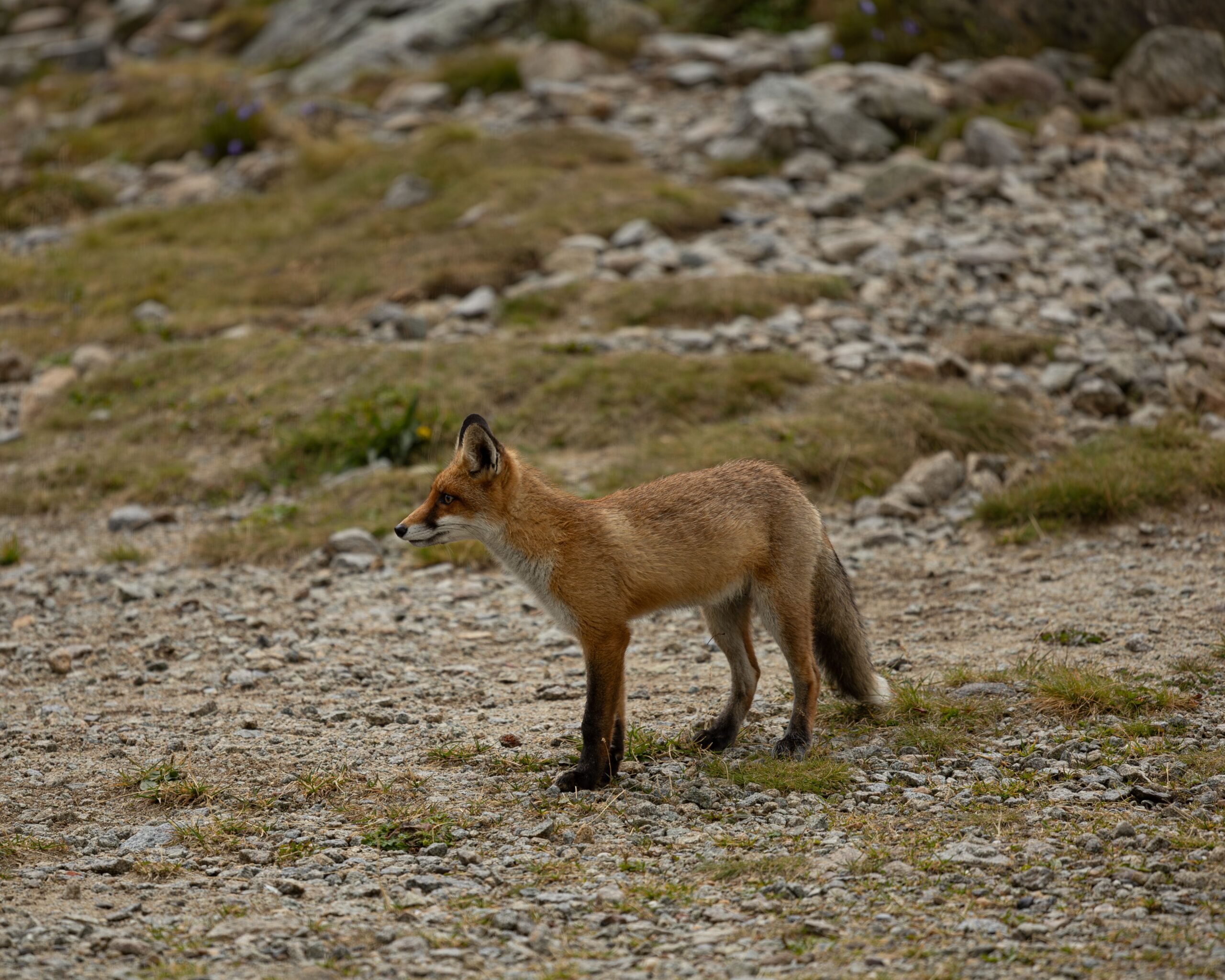
What kind of animal is a fox? We will introduce, disseminate and explain information about its characteristics, ecology and habitat on this page. There is probably no one who doesn’t know about foxes. Foxes live on most continents, so they have a fairly wide distribution, but some subspecies are designated as endangered species and are in a dangerous situation.







- What is a fox? About basic status
- What are the roots and origins of the fox?
- About habitat
- feature is? What kind of creature is it?
- What is your personality like?
- What is the ecology like?
- About Molting
- About Fox Vocalizations
- Seasonal Activities
- Walking Speed
- About Baby Foxes
- Are foxes an endangered species?
- Can foxes be kept as pets?
- Zoos and Facilities Housing Foxes (Japan & Worldwide)
- Introducing other animals
What is a fox? About basic status
A fox is an animal in the genus Fox, in the order Carnivora of the class Mammalia and the subfamily Canidae. There are considerable differences in physique depending on the subspecies or the same division. The body length is 30-70cm and the weight is 2-10kg. The list of information is as follows.
| Japanese(和名) | キツネ |
| English(英名) | Fox |
| scientific name(学名) | Vulpes |
| classification(分類) | Mammalia、Carnivora、 Canidae、Caninae 哺乳綱、食肉目、イヌ科、イヌ亜科 |
| IUCN Status(保全状況) | ENDANGERED |
| Length(体長) | 30~70cm |
| Weight(体重) | 2~10kg |
What are the roots and origins of the fox?
The fox is a small carnivorous mammal belonging to the family Canidae. Modern foxes emerged from the evolutionary lineage of canids that first appeared approximately 40 million years ago.
Divergence from Canid Ancestors
Foxes share a common ancestor with modern dogs and wolves.
Approx. 50 million years ago: Ancestral group of carnivorous mammals (Miacids) appeared
Approx. 40 million years ago: Canid ancestors appeared
Approx. 10 million years ago: The lineage leading to the genus Vulpes (true foxes) diverged
Early canids were smaller predators than modern dogs; they had slender bodies and the ability to climb trees.
Ancestors of Modern Foxes
The red fox (Vulpes vulpes)—the most representative modern fox—is a particularly successful species among foxes.
Evolution of the Red Fox
Origin: Over 1 million years ago
Region of origin: Primarily the Eurasian continent
Subsequent spread:
Europe
Asia
North America
North Africa
Today, the red fox is one of the most widely distributed carnivorous land mammals.
Why did foxes become smaller?
Unlike wolves and large canids, foxes evolved to hunt small animals solitarily.
Evolutionary Characteristics:
| Characteristic | Reason |
|---|---|
| Small body | Easier to move in narrow burrows and forests |
| Large ears | To accurately hear the sounds of small animals |
| Slender snout | To search for underground prey |
| Long, bushy tail | For balance, insulation, and wrapping around the body |
| Excellent hearing | To detect the location of mice and other prey |
In particular, foxes developed the ability to detect mice moving beneath the snow using only sound, then pounce and capture them.
Differences between Foxes, Dogs, and Wolves
| Fox | Wolf | Dog | |
|---|---|---|---|
| Classification | Canidae (Genus Vulpes) | Canidae (Genus Canis) | Canidae (Genus Canis) |
| Build | Small to medium | Large | Highly varied |
| Sociality | Mostly solitary | Pack-oriented | Adapted to human society |
| Hunting Style | Ambush/Surprise attack | Pursuit-based | Cooperative |
| Vocalizations | Varied (screams, barks) | Primarily howling | Barking |
Foxes are members of the Canidae family that have retained a more wild nature compared to dogs.
Origins of Japanese Foxes
The foxes inhabiting Japan are primarily:
Hondo fox (Vulpes vulpes japonica)
Ezo red fox (Vulpes vulpes schrencki)
Arrival in Japan
Approximately several hundred thousand years ago
Entered the Japanese archipelago from the continent via land bridges
Diverged into regional populations due to sea-level changes during the Ice Age
The Ezo red fox of Hokkaido is closely related to continental lineages and has adapted to cold climates.
About classification
The following subspecies of fox exist: This is a quote from Wikipedia. By the way, subspecies that are already extinct have also been confirmed.
- アカギツネ red fox、Vulpes vulpes
- アフガニスタンキツネ (ブランフォードギツネ) Blanford’s fox、Vulpes cana
- オグロスナギツネ pale fox、Vulpes pallida
- オジロスナギツネ Rueppel’s fox、Vulpes rueppelli
- ケープギツネ Cape fox、Vulpes chama
- コサックギツネ corsac fox、Vulpes corsac
- スウィフトギツネ swift fox、Vulpes velox
- チベットスナギツネ Tibetan fox、Vulpes ferrilata
- キットギツネ kit fox、Vulpes macrotis
- ベンガルギツネ Bengal fox、Vulpes bengalensis
- フェネック (フェネックギツネ) fennec、Vulpes zerda (Fennecus zerda)
- ホッキョクギツネ arctic fox、Vulpes lagopus (Alopex lagopus)
- オオミミギツネ bat-eared fox、Otocyon megalotis
- カニクイキツネ属(カニクイイヌ属) Cerdocyon
- カニクイキツネ(カニクイイヌ) crab-eating fox、Cerdocyon thous
- クルペオギツネ属 Lycalopex (Pseudalopex)
- クルペオギツネ (クルペオ) culpeo、Lycalopex culpaeus
- スジオイヌ hoary fox、Lycalopex vetulus
- セチュラギツネ Sechura fox、Lycalopex sechurae
- チコハイイロギツネ Argentine gray fox, chilla、Lycalopex griseus
- パンパスギツネ pampas fox, Azara’s dog、Lycalopex gymnocercus
- フォークランドキツネ属(フォークランドオオカミ属、アザライヌ属) Dusicyon
- フォークランドキツネ(フォークランドオオカミ) Falkland island fox、Dusicyon australis
- ハイイロギツネ属 Urocyon
- ハイイロギツネ gray fox、Urocyon cinereoargenteus
- シマハイイロギツネ island fox、Urocyon littoralis
About habitat
Foxes (silver foxes, Japanese foxes) are widely distributed throughout the world, including Japan (Hokkaido, Shikoku, Kyushu, etc.), North America, South America, Europe, and Africa. In Japan, they are often seen in places such as Honshu.
- Fox Distribution
Foxes are highly adaptable and live in a wide range of areas around the world.
Main Distribution Areas
Eurasia: Japan, China, Russia, and throughout Europe
North America: Canada and the United States
North Africa: Desert areas
Australia: Artificially introduced populations
*Found on almost every continent except Antarctica
- Habitats of Foxes in Japan
The following species are found in Japan:
🦊 Red fox
All over Hokkaido
Forests, grasslands, farmlands, and near the coast
In recent years, they have also been spotted around urban areas
🦊 Japanese red fox
Honshu, Shikoku, and Kyushu
Common in satoyama, mountain forests, and rural areas
- Preferred Environments
Foxes are highly adaptable to their environment.
Forests and grasslands
Farmland and satoyama (undeveloped woodlands)
Deserts and semi-desert areas (e.g., fennec foxes)
Urban suburbs and residential areas
👉 One of the few wild animals that can enter human habitats
- Habitat and behavior
Live in burrows (slope, riverbank, forest edge, etc.)
Prefers places with abundant food
Nocturnal to crepuscular, avoiding human attention
feature is? What kind of creature is it?
Foxes are unusual among canids because they live in small family units rather than in packs. Although it is said that they are not very social, they are often seen traveling in large families. They are mainly nocturnal and often live in forests, forests, and forests near villages. They have a keen sense of smell and hearing, and can run at an extremely fast speed of 70km/h.
- Appearance
Body Type: Slender and supple, with long legs
Body Length: Approximately 60-90cm (tail 30-50cm)
Weight: Approximately 3-10kg (depending on species)
Tail (Bubbly)
Maintains balance
Uses as cold weather protection (wraps around face when cold)
Coat Color
Reddish-brown (red fox) is the most well-known
Various colors, including white, black, silver, and sand
- Excellent Senses
Hearing: Can hear the movement of mice underground
Smell: Accurately detects the scent of food and territory
Vision: Resists darkness and has excellent dynamic vision
👉 Highly developed hunting senses
- Behavior and Abilities
High jumping ability (“mouse jump” to pounce on prey)
Excellent running and explosive power
Primarily solitary (does not form groups)
Digs burrows, where it rests and raises young
- Intelligence and Personality
Highly intelligent and quick to learn
Adapts quickly to new environments
Highly cautious and keeps their distance from others
Curious but cautious
What is your personality like?
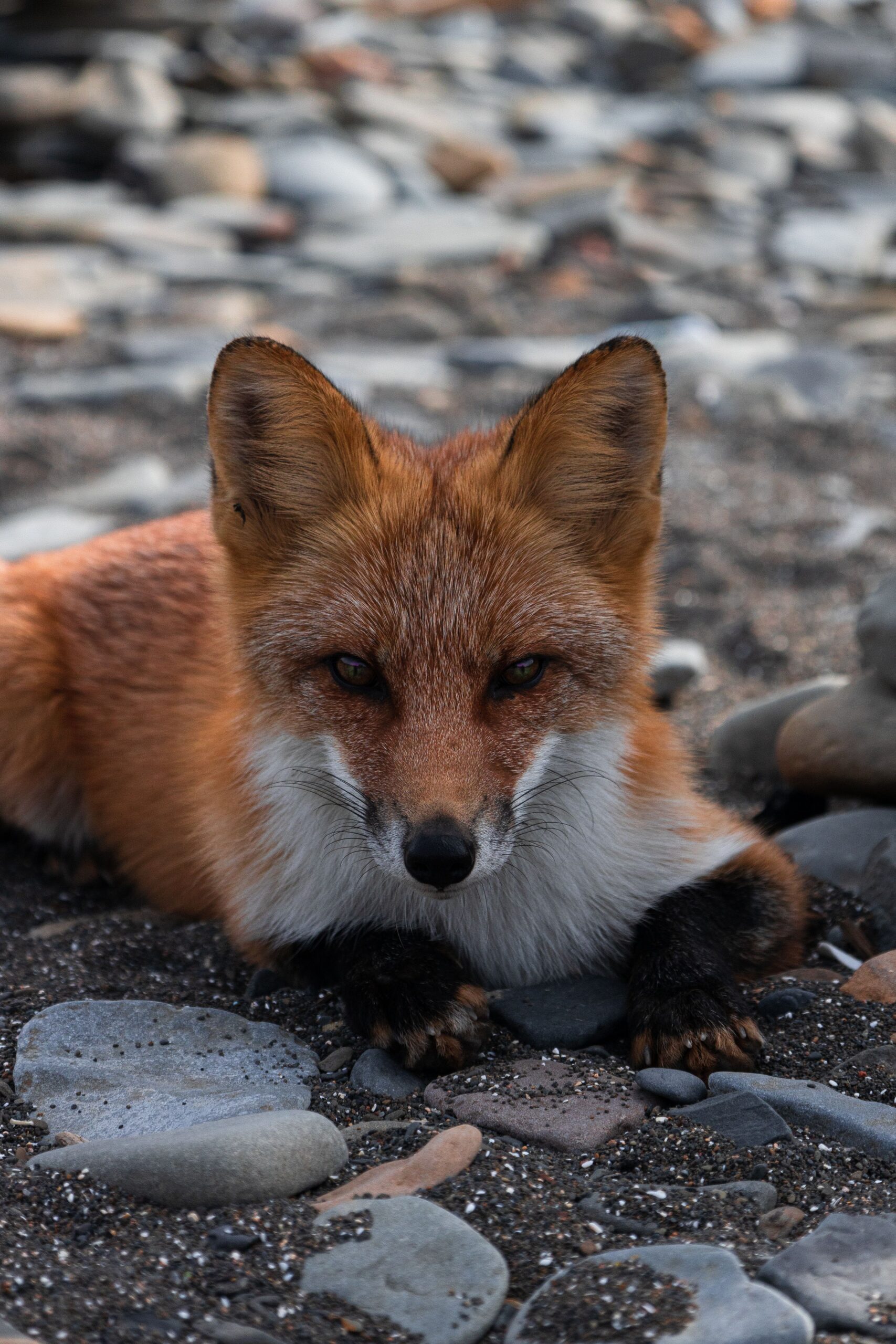
Foxes are known to be agile and highly adaptable animals. However, they can be as capricious and unrestrained as cats. There are considerable individual differences between them. Many people mistake them for wolves because their ears look just like those of wolves. They are carnivorous and are constantly searching for and hunting prey such as chickens.
- Very cautious
Do not approach people or large animals immediately
Sensitive to noise and smells, and will quickly flee if they sense danger
Cautious and vigilant even in familiar environments
- Highly intelligent and able to learn
Avoid traps and dangerous places once they have memorized them
Learn human behavior patterns
Adaptable enough to survive in urban areas
- Solitary behavior is the norm
Do not form groups; primarily act alone
Do not interact with others more than necessary
Typically form pairs only during breeding season
- Curious but cautious
Shows interest in new things
However, they do not approach immediately and will “wait and see”
Rarely engage in reckless behavior
- Sensitive and susceptible to stress
Sensitive to changes in the environment
Understands severe stress from loud noises and continued human interference
In the wild, they have a tendency to “avoid unnecessary conflict”
What is the ecology like?
Foxes are almost omnivorous, so they prey on small animals such as rabbits and mice, birds, insects, and fruits such as apples. They also eat food waste from outside the school, so they are highly adaptable. The breeding season varies depending on the subspecies, but it runs from December to February. They give birth around late March to April. They can give birth to 3-6 pups at a time. Their lifespan is said to be about 10 years.
- Activity
Nocturnal to crepuscular
Mainly active from dusk to night to dawn
Rests in burrows or shade during the day
Selects times when there are fewer humans around
- Lifestyle
Basically solitary
Haves its own territory, marking it with scent
Territory size
Approximately 2-10 square kilometers (depending on the environment and food availability)
- Burrow (Roost)
Digs a burrow in the ground
Slopes, riverbanks, forest edges, etc.
Often has multiple entrances and exits
Mainly used for resting and raising young
- Diet/Hunting
Omnivorous
Mice, small birds, frogs, insects
Fruits, nuts
In urban areas, they may eat human scraps
Typical hunting methods:
Mouse jump (jumping high up to pounce on prey)
- Breeding
Breeding Season: Winter (January–February)
Gestation Period: Approximately 50 days
Litter Size: Approximately 3–6 pups
Females are primarily responsible for raising the young
Males may also provide support by bringing food.
Are there any natural enemies?
The natural enemy of foxes is humans. It is known that there are a very high number of cases of foxes being hit by cars and dying. They are often hit by cars, which are large and not seen in the wild, just like raccoon dogs.
About Molting
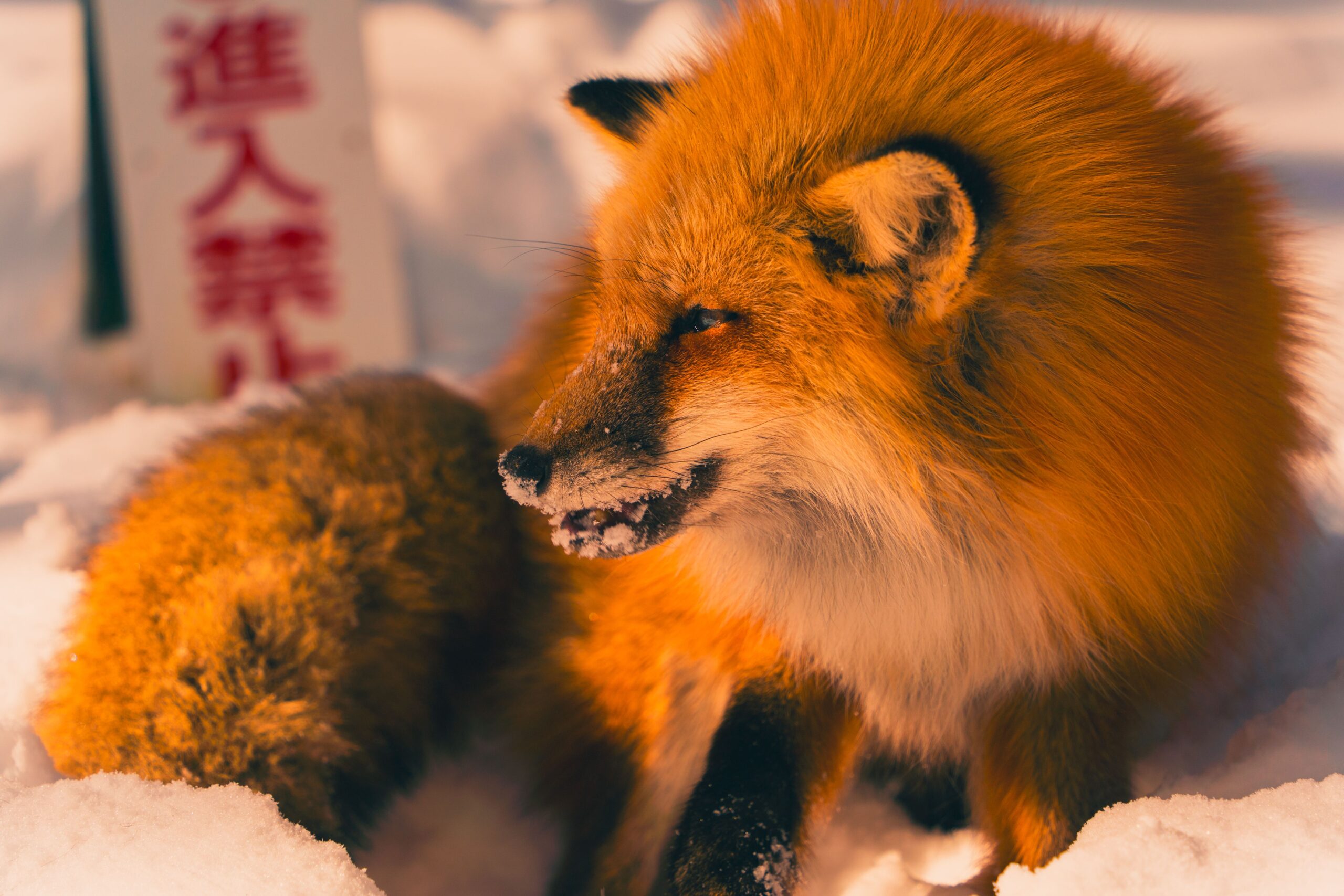
Foxes are animals that undergo significant changes in their fur depending on the season. Red foxes and Ezo red foxes, in particular, inhabit regions with drastic temperature fluctuations; consequently, they undergo seasonal molting, alternating between summer and winter coats.
When Foxes Molt
Red foxes generally undergo two major molting periods per year.
| Season | Molt Type | Characteristics |
|---|---|---|
| Spring (approx. March–May) | Winter coat → Summer coat | Shedding the thick, insulating winter fur |
| Autumn (approx. September–November) | Summer coat → Winter coat | Transitioning to a high-density coat |
The timing varies by region; in colder areas, the transition to the winter coat occurs earlier in the autumn, while the spring molt happens later.
Characteristics of the Winter Coat
In winter, foxes grow a very thick coat to protect their bodies.
Key characteristics:
Increased fur density
Development of an undercoat
Thickening of the tail
Added insulation for the ears and paws
The tail is particularly important,
acting as a “blanket to preserve body heat.”
When sleeping, the fox wraps its tail around its face and nose to shield itself from the cold air.
Characteristics of the Summer Coat
Come summer, they shed a large amount of their winter fur.
Characteristics:
Shorter fur
Reduced undercoat
Easier dissipation of body heat
Slimmer appearance
They shift from a fluffy winter look to a slender appearance in the summer.
The Mechanism of Molting
Fox molting is primarily triggered by the following factors:
① Daylight hours
They sense the length of the day,
determining whether “winter is approaching”
or “the warm season has arrived.”
② Hormonal changes
When the brain perceives changes in light, hormones—such as thyroid hormones—are activated, altering the fur growth cycle.
③ Temperature
Temperature plays a role, but the primary trigger is the duration of daylight.
About Fox Vocalizations
Unlike dogs or wolves, foxes use a remarkably wide variety of vocalizations. Research suggests they employ over 20 distinct types of sounds.
Characteristic Screams (e.g., “Gyaa,” “Gya”)
This is the most well-known fox sound.
Characteristics:
Sounds like a human scream
Frequently heard at night
High-pitched and carries over long distances
Primary purposes:
Territorial claims
Signaling to others
Mating calls
These are heard most often during the winter breeding season (around January and February).
The “Kon-kon” Sound
In Japan, foxes are often associated with the sound “kon-kon,” but actual wild foxes…
…rarely make the specific “kon-kon” sound that humans imagine.
Sounds that are similar include:
Short barks
Warning calls
Signals to others
Barks (Sounds similar to “Wan-wan”)
As members of the canine family, foxes produce barks similar to those of dogs.
Uses:
Alerting to danger
Declaring territory
Checking the distance to others
However, compared to dogs, these barks tend to be:
Higher-pitched
Shorter
Sharper
Kit (Fox Cub) Vocalizations
Kits are particularly vocal.
Main sounds:
“Kun-kun,” “Kyu-kyu” (whining or squeaking sounds)
Uses:
Making demands of the mother
Signaling hunger
Interacting with littermates
During the first few weeks of life, they communicate with their mother using these sounds while inside the den.
Threatening Sounds
When sensing danger, they produce:
Snarls
Teeth-chattering sounds
Low growls
Directed at:
Other foxes
Dogs
Predators
Breeding Season Vocalizations
Fox vocal activity is at its peak during the winter. Around December to February
Reasons:
Searching for a mate
Males and females coming into contact
Increased territorial disputes
Females, in particular, may call out with a high-pitched cry to attract males.
Seasonal Activities
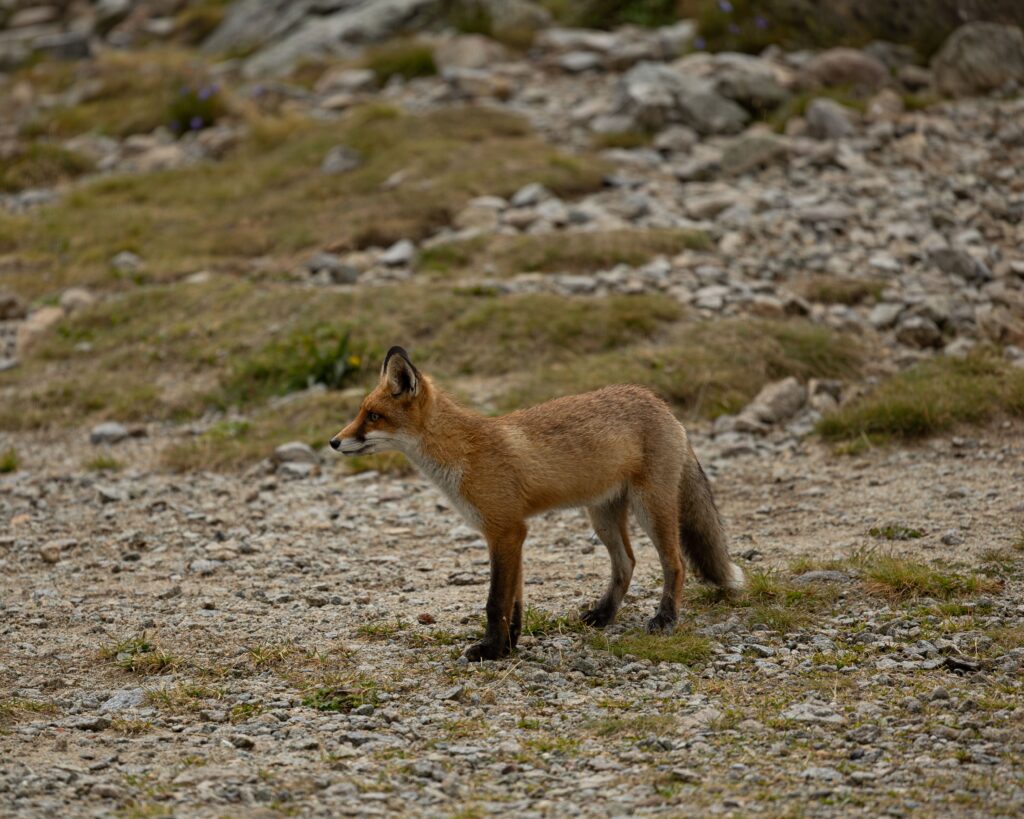
Although foxes are active year-round, their activities—such as breeding, raising young, hunting, coat changes, and range—vary significantly by season.
Spring (March–May)
Raising Young
Spring is the season for raising offspring following the breeding period.
Key Activities
Raising young in the den
Transporting food
Increased hunting frequency
Maintaining territory
Females that mated around January or February give birth in the spring after a gestation period of approximately 50 days.
Fox Kits
Typically 3–6 kits per litter
Stay mostly in the den for the first few weeks
Nursing by the mother
Males also bring food
Spring Hunting
Parent foxes hunt more frequently to feed their growing young.
Main Prey:
Rodents
Small birds
Frogs
Insects
Rabbits/Hares
Summer (June–August)
Growth of Kits and Expanding Range
In summer, the kits begin to venture out of the den.
Key Activities
Practicing hunting through play
Learning hunting skills from parents
Moving as a family unit
Fox kits grow by:
Chasing each other
Play-fighting (nipping/wrestling)
Practicing chasing prey
Summer Characteristics
Due to rising temperatures, they tend to:
Reduce daytime activity
Be active during early morning, evening, and night
In hot regions, they rest in dens or shaded areas during the day.
Autumn (September–November)
Independence and Preparing for Winter
Autumn is a time of major change for young foxes.
Key Activities
Becoming independent from parents
Searching for new territory
Molting into winter coat
Building up energy reserves
Young foxes leave their birthplace to search for a new place to live.
Autumn Diet
Food intake increases in preparation for winter.
Diet:
Mice/Rodents
Birds
Fruit
Insects
Small mammals
Foxes are highly omnivorous and adapt their diet to their environment.
Winter (December–February)
Breeding and Territorial Disputes
Winter is one of the times when foxes are most active.
Key Activities
Searching for mates
Marking and defending territory
Traveling long distances
Hunting
Vocalizations increase, particularly around January and February.
The “screeching” sounds heard in the forest at night are often a form of communication during the breeding season.
Winter Hunting
Foxes demonstrate exceptional hunting skills, even in the snow.
A signature hunting technique:
“Snow Dive”
Locating the sound of a mouse beneath the snow using their ears
Pinpointing the location
Leaping high into the air
Diving headfirst into the snow
Catching the prey with their forepaws
This is a classic fox behavior.
Walking Speed
Unlike wolves, which are long-distance pursuit predators, foxes are animals that approach quietly and capture prey through sudden bursts of speed. While their routine movement is slow, they can move very quickly when hunting or evading danger.
Normal Walking Speed
A fox’s normal walking speed is
approximately 3–6 km/h.
This is close to a human’s leisurely walking pace (about 4 km/h); they move cautiously while checking their surroundings for scents and sounds.
Characteristics:
Quiet footsteps
Checking scents on the ground
Stopping frequently
Staying alert to surroundings
Brisk Walk
When moving with purpose or remaining alert,
they increase their speed to approximately 8–12 km/h.
In this state, they exhibit behaviors such as:
Balancing with their tail while moving
Moving with their head held low
Scanning for prey or danger
Running Speed
A fox’s top speed is estimated to reach
approximately 45–50 km/h.
They are extremely fast over short distances,
allowing them to catch:
Rabbits
Mice
Birds
Small mammals
However, unlike cheetahs, they lack the stamina to maintain high speeds for extended periods.
Hunting Movements
Fox hunting relies on surprise attacks rather than prolonged pursuit.
Typical movements:
① Walk slowly
↓
② Stop upon hearing a sound
↓
③ Lower the body
↓
④ Leap suddenly
↓
⑤ Capture with front paws
When catching mice beneath the snow, in particular, they rely on hearing and precision rather than speed.
About Baby Foxes
This article provides an easy-to-understand explanation of baby foxes (fox cubs), from birth to development.
- Birth
Birthing Season: Spring (March-May)
Litter Size: 3-6 pups are typical (sometimes as many as 10)
Birth Condition
Eyes are closed
Weight: Approximately 100g
Short fur, gray to brownish color
Very helpless, spends most of their time in the den
- Up to 1 Month Old
Raised solely on nursing
Eyes open around 2 weeks old
Hearing and sense of smell gradually develop
Mother fox constantly cares for them
- Den Debut (1-2 Months Old)
Pups begin to leave the den
Gain strength and social skills through play with siblings
Tails begin to grow bushy
Become wary of people and danger
- Hunting Practice (2-4 Months Old)
Parents bring back prey and begin hunting practice
Imitate tricks like jumping mice
Acclimate to a omnivorous diet
- Independence (5-7 months old)
Leaves parents and begins living alone
Begins to search for territory
The competition for survival is most intense during this period
- Personality Characteristics (Young Animals)
Highly curious
Learns hunting and avoidance behaviors through play
Less cautious than adults, but learns quickly
Are foxes an endangered species?
Overall, the fox population is very stable. However, some subspecies are already listed as endangered. Mountain dogs and striped gray foxes have already been designated as such, and many collisions with cars occur every year and are a major cause of death. The main point of this division is whether the destruction of human habitats can be stopped.
- General fox status
Red fox (Vulpes vulpes)
The most widely distributed fox in the world
IUCN: Least Concern (LC)
Populations are stable, including in Japan (Ezo red fox and Japanese red fox).
➡ The “ordinary fox” that many people think of
is almost never at risk of extinction.
- Near-threatened and Extinct foxes
On the other hand, foxes with limited habitats are in extremely dangerous condition.
❗ Examples of extinct species
Not the Japanese wolf
Falkland Islands fox (Dusicyon australis)
Extinct due to humans in the 19th century
⚠ Examples of endangered species
Darwin’s fox
IUCN: Endangered (EN/Vulnerable)
Habitat restricted to parts of Chile
Tibetan fox
Decreasing populations in some areas
- Causes of the crisis
Habitat destruction and fragmentation
Introduction of invasive species
Human extermination and hunting
Diseases (such as mange and rabies)
Foxes living on islands or in restricted areas are particularly susceptible.
Can foxes be kept as pets?
Foxes can be kept as pets. If you want to keep a fox as a pet, there are a few things you need to prepare beforehand. We recommend that you first observe them at a zoo or event. There are many types of foxes, including the red fox. The faces of the foxes vary depending on the type, so they may not be as you imagine.
big cage
Just like dogs, if you don’t want your pet to move around the house, a cage is essential. It’s a good idea to choose one that is spacious enough for your pet to move around in. Your pet will also leave feces, so it’s ideal to have a cage large enough to dispose of. Since your pet was originally a wild animal, if it cannot adapt, it will need to be returned to the wild.
toilet
Foxes rarely learn to use the toilet. The excrement is very smelly, so you must clean the toilet immediately after using it.
How should I feed it?
We recommend a balanced dog food or cat food for your fox. There is no problem with drinking tap water.
Zoos and Facilities Housing Foxes (Japan & Worldwide)
Foxes are relatively small members of the dog family (Canidae) and are naturally wary, so they are not commonly found in large numbers at typical major zoos. However, in Japan, you can see species such as the Ezo red fox, the Japanese red fox, and the fennec fox.
🇯🇵 Facilities in Japan where you can see foxes
Miyagi Zao Fox Village
This is the most famous fox-focused facility in Japan.
Species housed:
Ezo red fox
Silver fox
Japanese red fox (Hondo fox) lineage
Other fox species
Features:
Many foxes live in an environment that allows them to roam relatively freely.
Visitors can see them in their beautiful winter coats.
Visitors can observe the foxes’ natural movements and behaviors.
Inokashira Park Zoo
Species exhibited:
Japanese red fox (Hondo fox / Red fox)
Features:
Exhibited as an animal native to Japan’s satoyama (traditional rural landscapes).
Visitors can learn about fox ecology and Japanese wildlife.
You can see the Japanese red fox in the zoo’s “Japanese Animals” exhibit.
Yokohama Zoological Gardens (Zoorasia)
Exhibit:
Japanese Red Fox (Hondo-gitsune)
Features:
Housed in the “Japanese Countryside” zone
Exhibits include information on their natural behavior and diet in the wild
Obihiro Zoo
Exhibit:
Ezo Red Fox (Kita-gitsune)
Features:
Kept as a representative wild animal of Hokkaido
Visitors can observe physical traits adapted to cold climates
🌍 Major facilities worldwide where foxes can be seen
London Zoo
Species kept:
Red Fox
Small fox species such as the Fennec Fox
Features:
Sometimes exhibited as part of wildlife education programs focused on animals found near urban areas
Berlin Zoo
Species kept:
Arctic Fox
Fennec Fox
Features:
Extensive exhibits of animals adapted to cold climates
San Diego Zoo
Species kept:
Fennec Fox
Desert fox species
Features:
Renowned for its exhibits of small fox species
Moscow Zoo
Species kept:
Arctic Fox
Red Fox
Features:
Extensive experience in keeping animals adapted to cold climates
Introducing other animals


コメント