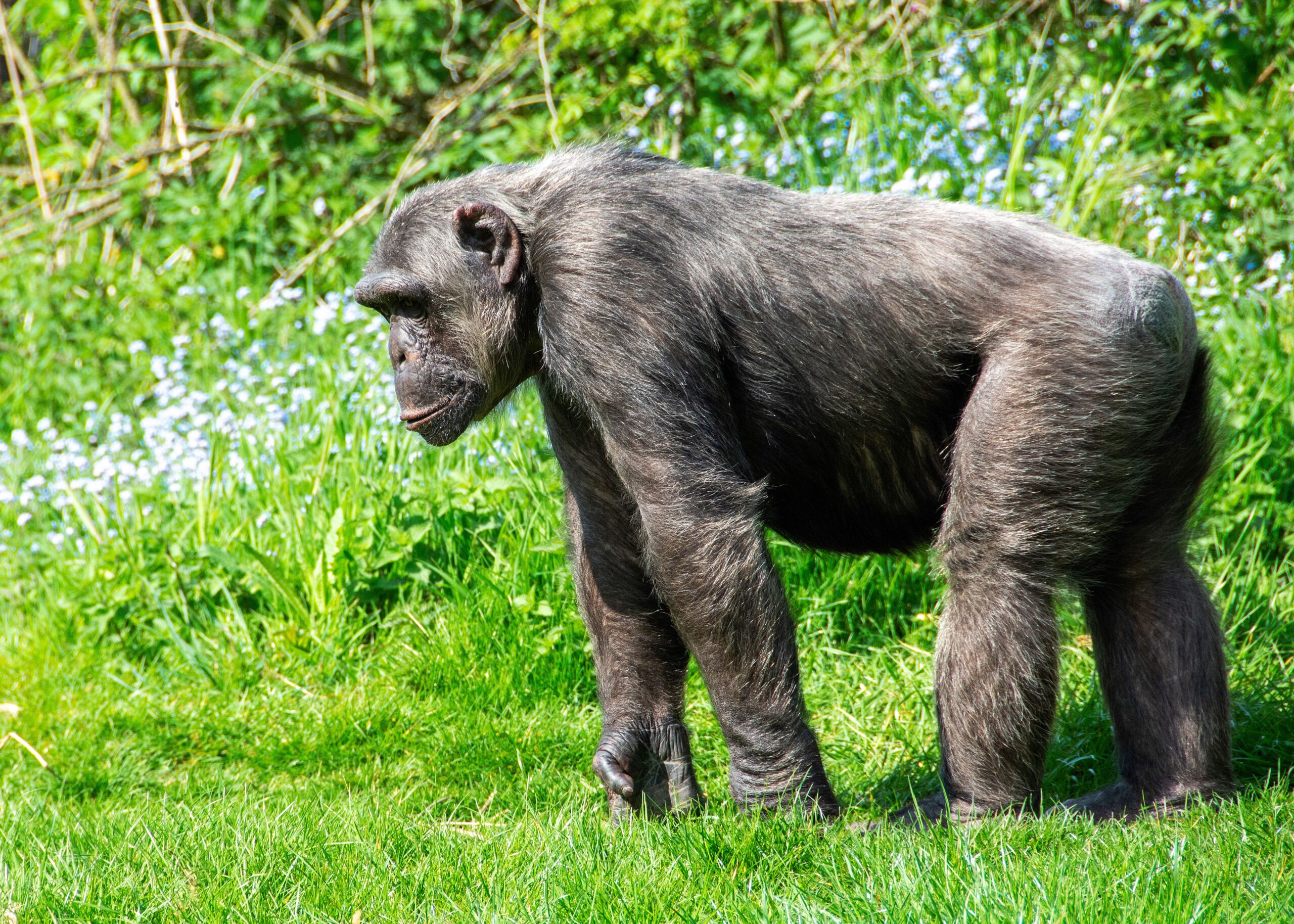
What kind of animal is a chimpanzee? We will explain its characteristics, ecology, and habitat. Multiple groups of males and females can be seen at the zoo. Among the existing primates, they are the most closely related to humans and have the advantage of being able to use tools dexterously just like humans. However, they are unfortunately classified as endangered species.





- What is a chimpanzee? About basic status
- What are the roots and origins of chimpanzees?
- About habitat
- feature is? What kind of creature is it?
- What is your personality like?
- What is the ecology like?
- About Molting
- Vocalizations
- Seasonal Activities
- Walking Speed
- About Chimpanzee Infants
- Are chimpanzees an endangered species?
- Can chimpanzees be kept as pets?
- Zoos Housing Chimpanzees (Japan and Worldwide)
- Introducing other animals
What is a chimpanzee? About basic status
Chimpanzees are great apes classified in the genus Chimpanzee, in the order Mammalia, order Primates, and family Hominidae. The scientific name is Pan troglodytes. The body length can be 70 – 80 cm and the weight can be 30 – 50 kg. The list of information is as follows. Males are larger than females.
| Japanese(和名) | チンパンジー |
| English(英名) | Chimpanzee/Common chimpanzee/Robust chimpanzee |
| scientific name(学名) | Pan troglodytes |
| classification(分類) | Mammalia、Primate、 Hominidae、Pan 哺乳綱、霊長目、ヒト科、チンパンジー属 |
| IUCN Status(保全状況) | ENDANGERED |
| Length(体長) | 70–80cm |
| Weight(体重) | 30-50kg |
What are the roots and origins of chimpanzees?
The roots (origins) of chimpanzees trace back to a common ancestor of great apes that lived in Africa approximately 7 to 10 million years ago. Chimpanzees are among the closest living relatives to humans, belonging to a lineage even closer to humans than gorillas are.
The evolutionary timeline of chimpanzees
Approximately 15 to 10 million years ago
Ancestors leading to modern apes lived in Africa.
The lineages of gorillas, chimpanzees, and humans diverged from the apes of this era.
Approximately 9 to 7 million years ago
The ancestor of gorillas diverged from the human-chimpanzee lineage.
Subsequently, a common ancestor of chimpanzees and humans existed.
Approximately 7 to 6 million years ago
The ancestors of chimpanzees and the ancestors of humans diverged.
From this point, the human lineage evolved toward bipedalism, while the chimpanzee lineage evolved through adaptation to life in the forest.
Types of chimpanzees
There are currently two species in the genus Pan (chimpanzees).
Chimpanzee (Pan troglodytes)
Habitat:
West Africa
Central Africa
Characteristics:
Lives in both forests and savannas
High capability for tool use
Forms complex social structures
Bonobo (Pan paniscus)
Habitat:
Forests of the Democratic Republic of the Congo
Characteristics:
Social structure is more peaceful than that of chimpanzees
Often forms female-centered groups
Strong bonds between group members
Genetic closeness to humans
Chimpanzees and humans share approximately 98–99% of their DNA.
Shared characteristics:
Ability to grasp objects with hands
Advanced social relationships
Emotional expression
Tool use
Learning ability
Cooperation among group members
Chimpanzees, in particular, possess intelligence that ranks among the highest in the animal kingdom.
About classification
The following subspecies of chimpanzees exist:
| 名前 | English Name | Scientific name(学名) |
| チェゴチンパンジー | Central chimpanzee | Pan troglodytes troglodytes |
| ナイジェリアチンパンジー | Nigeria-Cameroon chimpanzee | Pan troglodytes ellioti |
| ケナガチンパンジー | Eastern chimpanzee | Pan troglodytes schweinfurthii |
| ニシチンパンジー | Western chimpanzee | Pan troglodytes verus Schwartz |
Pan troglodytes troglodytes
Chego chimpanzees live in northern Angola, Gabon, southeastern Cameroon, the Republic of the Congo, the Democratic Republic of the Congo, Equatorial Guinea (continental region), and the Central African Republic. The skin on the body and limbs is black. The whole face is black.
Pan troglodytes ellioti
The Nigerian chimpanzee is a chimpanzee that can only be found in Cameroon and Nigeria, and its population is limited.
Pan troglodytes schweinfurthii
Chimpanzees live in western Uganda, northern and eastern Democratic Republic of the Congo, western Tanzania, eastern Central African Republic, Burundi, southwestern South Sudan, and Rwanda. It is also called the woolly chimpanzee or the eastern chimpanzee.
Pan troglodytes verus Schwartz
It is called the western chimpanzee or the masked chimpanzee. Distributed in Ghana, Guinea, Guinea-Bissau, Ivory Coast, Sierra Leone, southern Senegal, and southwestern Mali.
About habitat
Chimpanzees live primarily in Africa.
- Geographic Distribution
Chimpanzees (Pan troglodytes) live only around the equator on the African continent (West and Central Africa).
Main Countries
West Africa: Senegal, Guinea, Sierra Leone
Central Africa: Côte d’Ivoire, Ghana, Nigeria
Central Africa: Cameroon, Gabon, Republic of the Congo
East Africa: Uganda, Tanzania
*They do not live in the Sahara Desert or southern Africa.
- Habitat Types
Chimpanzees are highly adaptable to their environments and live in a variety of habitats, including the following:
Main Habitats
Tropical rainforest (most typical)
Deciduous forest
Savanna forest (mixed forest and grassland)
Riverside forest (gallery forest)
They can adapt to both fully forested and open environments.
- Altitude
Lowlands to mid-mountain
Found from sea level to approximately 2,500 meters above sea level
(e.g., mountain forests in Uganda and Tanzania)
- Habitat and Behavior
Living both in trees and on the ground
At night, they build nests (beds) in trees to sleep
During the day, they often walk and forage on the ground
Tends to prefer forests near water
- Current Habitat
Due to deforestation and agricultural development, their habitat is rapidly shrinking
Habitat fragmentation makes it easier for populations to become isolated
feature is? What kind of creature is it?
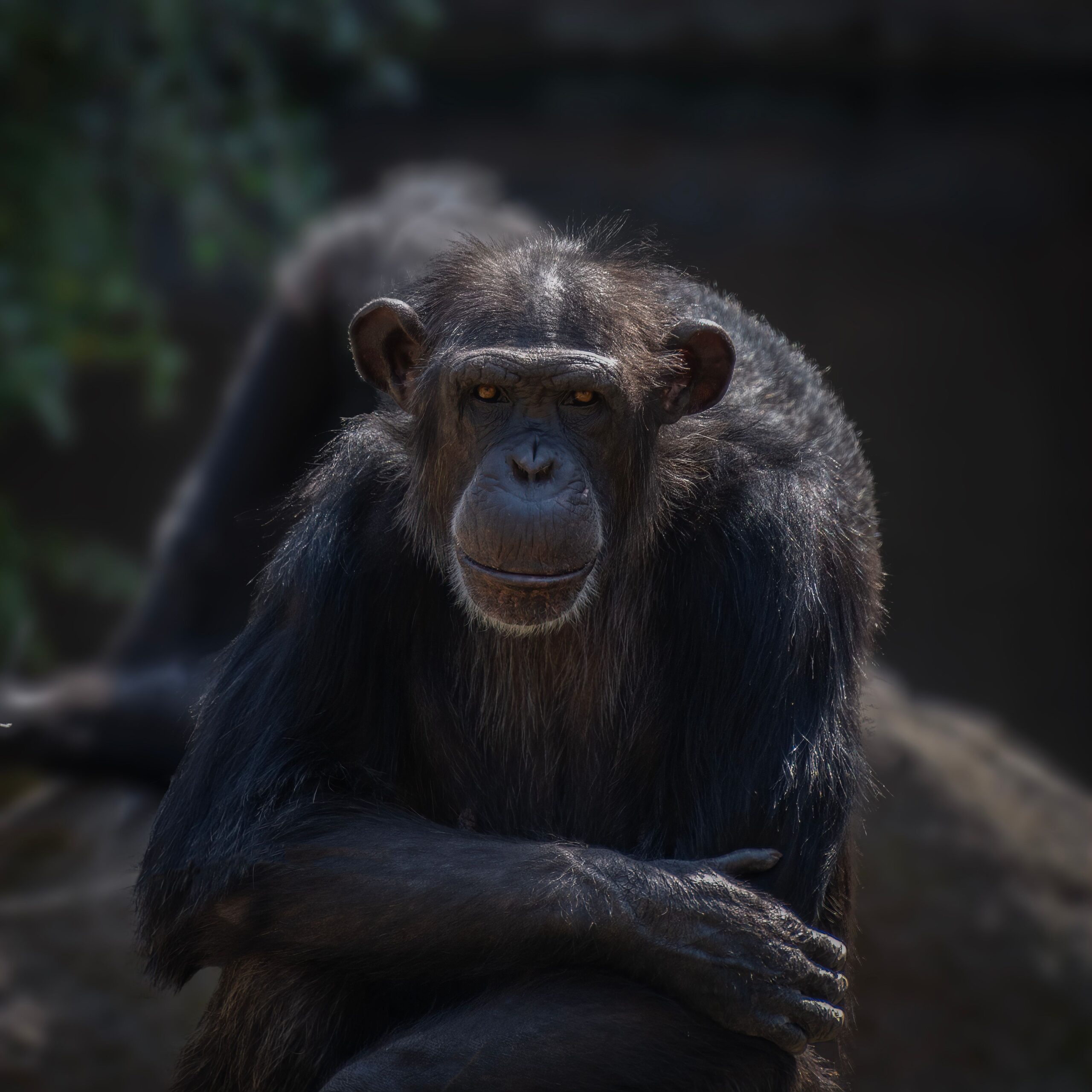
Chimpanzees have a very high learning ability and are able to use tools such as hammers dexterously on the same level as humans. They live in groups of several to 20 individuals and are active during the day. At night, they rest on tree beds made of twigs and leaves. They prefer mountainous areas and tropical rainforests, and their home ranges can reach hundreds of square kilometers.
- Appearance and Physical Characteristics
Body Length: Approximately 1-1.5m
Weight: Males 40-60kg, Females 30-45kg
Fur: Black to dark brown (thinner on face, limbs)
Very long arms (longer than legs)
No tail
Extremely strong, sometimes far exceeding the strength of an adult male.
- Locomotion
Knuckle walking is the basic locomotion
Good at climbing trees and walking across branches
Can also walk bipedally (short distances) when necessary
- High Intelligence
Tool Use
Fishing for termites with twigs
Cracking nuts with stones
High learning and memory abilities
Observing and imitating the behavior of others (cultural behavior)
Capable of simple language comprehension and symbol recognition
- Sociality
Highly social animals
Live in groups of several dozen individuals
Horse groups have hierarchy, alliances, and roles
Express a wide range of emotions (joy, anger, sadness, empathy)
What is your personality like?
Chimpanzees are not shy even when they meet someone for the first time, and they quickly get to know each other. They also tend to live in groups and are highly disciplined animals.
- Highly intelligent
Reads the situation and adapts behavior
Understands the positions and intentions of others to a certain extent
Performs deception and negotiation
Remembers past experiences well
“Thinks and acts” personality
- Social and strong sense of community
Cares for its pack members
Cooperative hunting and defense
May rescue injured pack members
Builds trust through grooming
- Aggression
Very aggressive in territorial and rank-and-file battles
May attack other packs in groups
Strongly expresses anger, fear, and excitement
Both gentle and cruel
- Expresses emotions
Joy, sadness, anger, jealousy, and empathy
Expresses emotions through facial expressions, vocalizations, and gestures
Mourning behaviors have also been observed
- Curious and playful
Exhibits a strong interest in new things
Learns through play
Plays with both children and adults
- Individual differences are significant.
Gentle individuals
Dominant and short-tempered individuals
Sociable individuals
Solitary individuals
Each individual has a completely different personality.
What is the ecology like?
Chimpanzees are omnivorous, eating mainly leaves and fruits, but also seeds, flowers, leaves, bark, honey, insects, wild boars, monkeys, duikers, hyraxes, squirrels, and many other things. The gestation period is 227 to 239 days and sexual maturity occurs 8 to 11 years after birth. The lifespan is said to be around 60-70 years.
- Social Structure (Very Important)
Fission/Fusion Society
They form large groups of 20-100 individuals.
They do not always travel together.
They split into smaller groups (fission) depending on food availability, etc.
They reunite (fusion).
A highly flexible and sophisticated social structure.
- Group Relationships
Male-dominated society
Males remain in their natal group.
Females migrate to other groups upon maturity.
A clear hierarchy exists.
Alliances and political maneuvering are observed.
- Daily Rhythm
Diurnal
Morning: Foraging and migration
Daytime: Resting and grooming
Afternoon: Foraging and social activities again
Night: Building a treetop bed and sleeping.
- Diet and Foraging Behavior
Omnivorous
Fruit is their staple food
Leaves, seeds, flowers, and bark
Insects (ants and termites)
Small mammals (sometimes cooperative hunting)
Tool-based food acquisition
- Movement and Living Space
Uses both arboreal and ground habitats
Distance traveled per day: several kilometers
Has a territory and defends it collectively
- Breeding and Rearing
Gestation period: Approximately 230 days (approximately 7.5 months)
Litter size: 1
Very strong mother-calf bond
Lactation and nursing can last for more than five years
Sexual maturity: 7-13 years
- Lifespan
Wild: 30-40 years
Captive: May live for more than 50 years
Are there any natural enemies?
Chimpanzees’ natural enemies are larger carnivores such as leopards and lions. There are other humans too.
About Molting
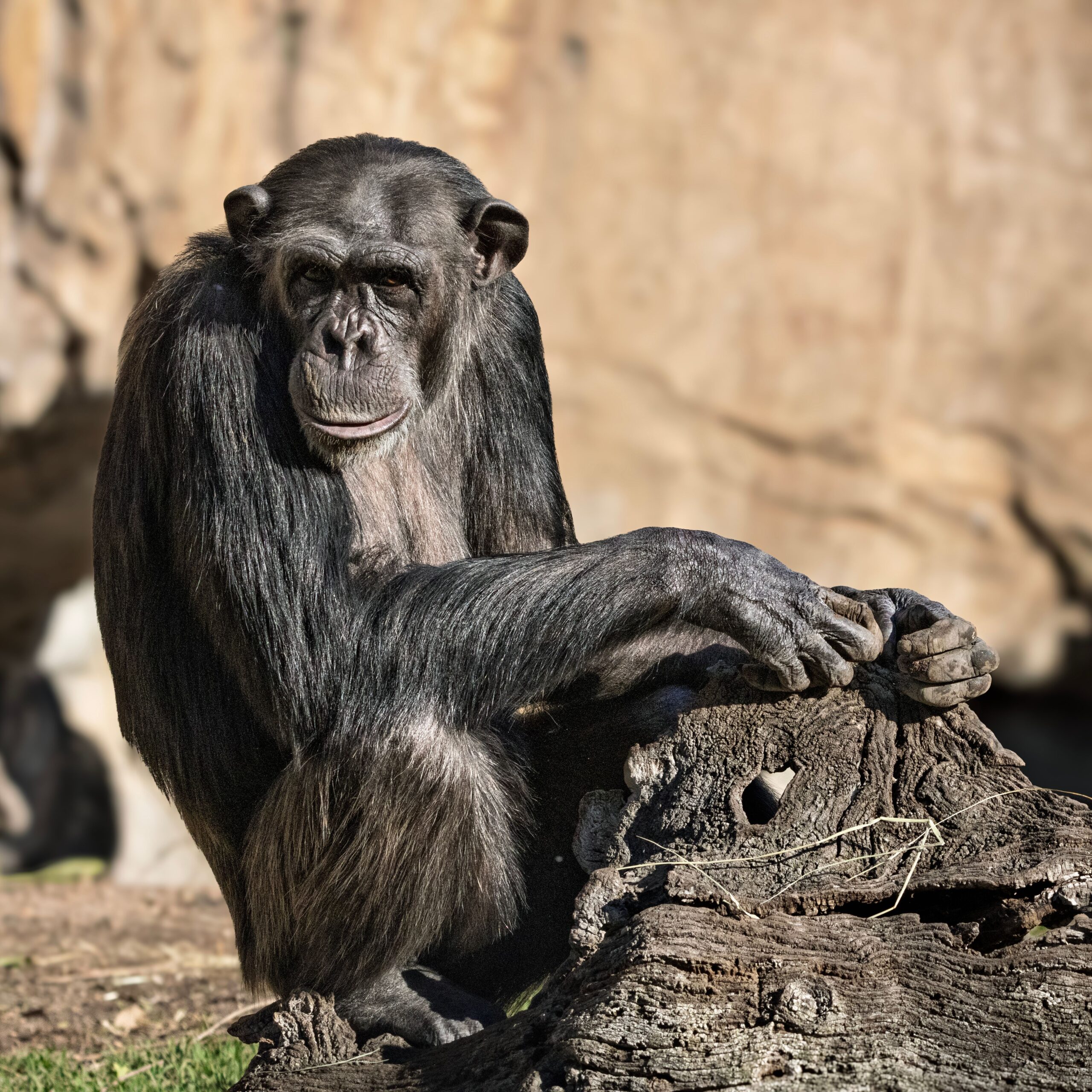
Chimpanzee molting (the replacement of fur) differs from the “seasonal molting” seen in dogs and cats, where large amounts of fur are shed at specific times of the year. Instead, they generally undergo a process of gradual, continuous fur replacement throughout the year.
- Gradual replacement throughout the year
Because chimpanzees inhabit the forests of tropical Africa, they do not undergo a distinct switch between winter and summer coats.
They maintain a year-round cycle of shedding old fur and growing new fur.
This mechanism is similar to the continuous renewal of human hair.
- Times when molting is noticeable
While it varies by region, shedding can appear more noticeable during certain periods:
Dry season (low rainfall)
Humidity is lower.
It is easier to observe the condition of the skin and fur.
Consequently, shed fur may be more apparent.
Rainy season
Humidity is high, causing fur to lie flat against the body.
Conditions favor the growth of new fur.
Vocalizations
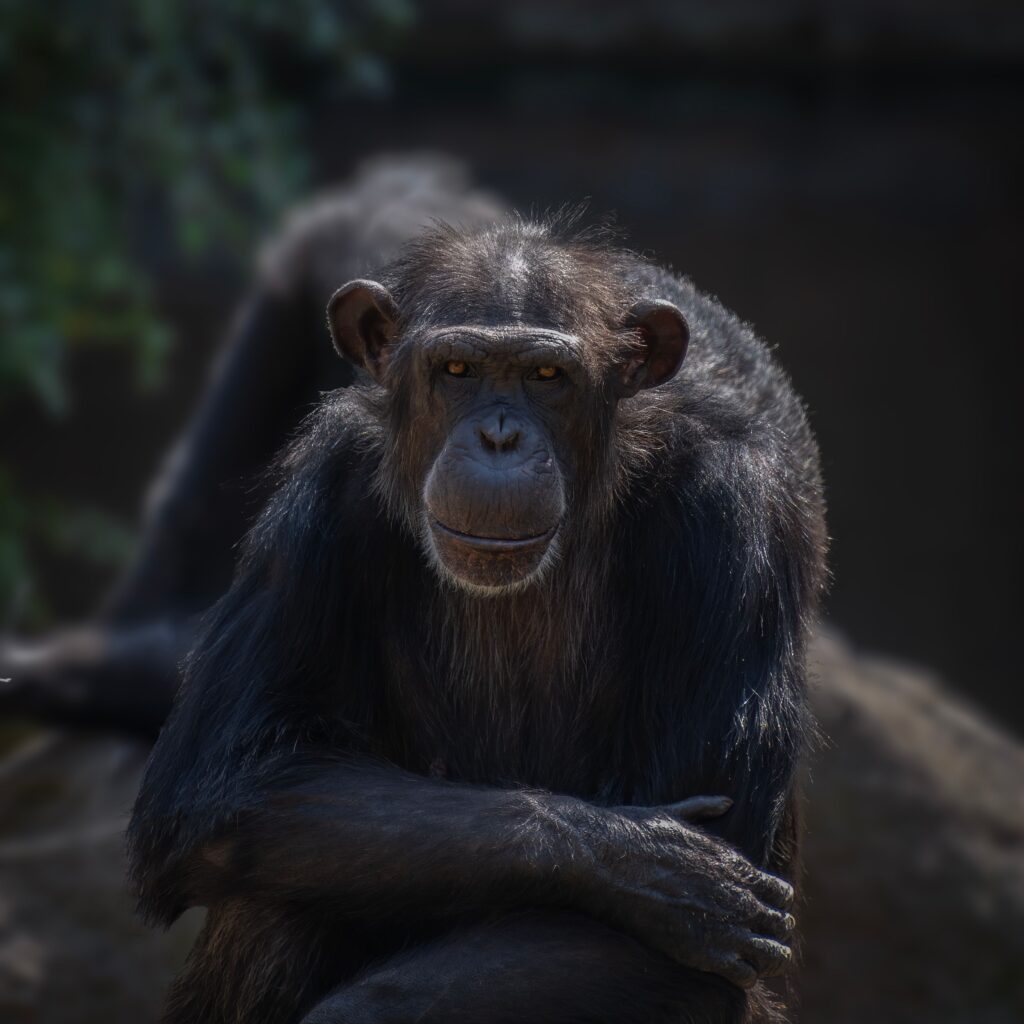
Chimpanzee vocalizations represent a highly complex form of communication within the animal kingdom. They utilize over 30 distinct types of calls and sounds for purposes such as communicating with group members, sounding alarms, expressing emotions, and maintaining social bonds.
Pant-hoot
This is the signature vocalization of the chimpanzee.
Characteristics:
A continuous sequence of sounds: “Hoo, hoo, hoo!”
A loud call that carries for hundreds of meters
Primarily produced by males
Functions:
Locating group members
Gathering the troop
Signaling one’s presence
Strengthening social bonds
Often heard in the morning or evening, this is a distinctive call that echoes through the forest.
Pant-grunt
Characteristics:
A low-pitched sound: “Kuh, kuh, kuh”
Conveys respect or submission toward another individual
Common situations:
When a younger individual approaches the troop leader
When confirming power dynamics
It serves a function similar to a “greeting” in chimpanzee society.
Alarm call
Characteristics:
A sharp, short scream
Alerts the group to danger
Triggers:
Snakes
Predators such as leopards
Unfamiliar objects
Chimpanzees are known to produce different calls depending on the type of danger.
Scream
Characteristics:
A high-pitched, loud scream
Situations:
During fights
When being attacked
When experiencing intense fear
Frequently used by young chimpanzees.
Play vocalization
Characteristics:
Sounds resembling soft laughter
Light, chuckling sounds: “Kuk-kuk”
Situations:
Playing with others
Interactions between young chimpanzees
*Unlike human laughter, chimpanzee “laughter” is primarily produced as a breathing sound during play or excitement.
Seasonal Activities
Since chimpanzees primarily inhabit the rainforests and woodlands of Africa, their activity patterns shift based on the alternation between wet and dry seasons, rather than the four distinct seasons found in Japan.
🌧 Wet Season (Approx. March–May & September–November; varies by region)
Activity Characteristics
Shorter foraging times due to abundant fruit
More time spent in the trees
Shorter travel distances for the troop
Main Behaviors
Searching for fruit
Tree climbing
Grooming with others
Play among the young
For chimpanzees, the wet season is a time of food abundance.
They consume large quantities of:
Figs
Palm nuts
Tree fruits
☀️ Dry Season (Approx. June–August & December–February)
Activity Characteristics
Decrease in available fruit
Increased consumption of leaves, bark, seeds, and insects
Greater travel distances to find food
Main Behaviors
More movement on the ground
Moving toward riverbanks or damp areas
Exploring wide areas as a troop
During the dry season, the ranges of different troops may shift as they seek food.
🌱 Spring (Start of the wet season)
Note: This differs from spring in temperate zones.
Activities:
Eating new buds and young leaves
Increased insect activity
Active child-rearing
Young chimpanzees, in particular, actively engage in:
Practicing tree climbing
Playing with others
Learning to use tools
🍂 Autumn (Period of abundant fruit)
In some regions, this is a time when fruit becomes plentiful.
Activities:
Increased fruit foraging
More interaction between troops
Active relationship-building among males
Walking Speed
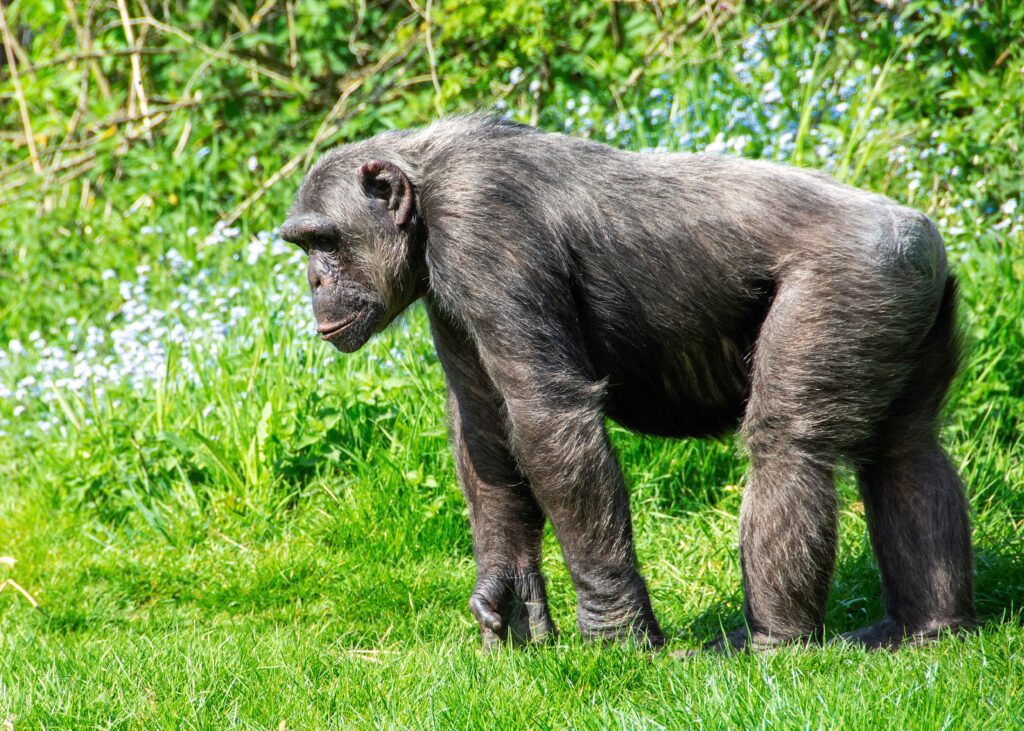
Chimpanzees have evolved to move efficiently through forest environments; rather than walking on two legs like humans, they primarily move on all fours (using a “knuckle-walking” gait).
🚶 Normal Walking Speed
Approx. 3–5 km/h
When moving as a group, their speed is roughly the same as a human’s walking pace.
In the forest, they move at a leisurely pace while navigating around trees and obstacles.
🏃 Running Speed
Top speed: Approx. 30–40 km/h
They are capable of running very fast over short distances.
They display explosive speed when sensing danger, chasing after other group members, or during hunts.
Movement Speed in Trees
Chimpanzees are adapted to life in the trees as well as on the ground.
Arboreal Movement
Moving quickly from branch to branch
Pulling their bodies up using arm strength
Crucial when searching for food (such as fruit)
Young individuals, in particular, are highly skilled at:
Climbing trees
Moving across branches
Swinging and hanging while moving
About Chimpanzee Infants
This article provides an easy-to-understand explanation of chimpanzee infants (babies/juveniles) from birth to development.
- Birth
Litter size: Usually 1 pup
Birth weight: Approximately 1.5-2kg
Fur: Black to dark brown, with thin fur on the face and ears
Condition:
Eyes open
Firmly clings to mother
Clings to mother’s chest or belly immediately after birth
- Infancy (0-3 years)
Completely dependent on mother
Nursing continues for approximately 3-5 years
Mothers always carry their infants or carry them on their backs
Emotions are communicated through crying and facial expressions
The mother-infant bond is very strong
- Toddlerhood (3-7 years)
Gradually begins to play independently from their mother
Plays with other children and young adults, learning social skills
Learns tool use and food selection through observation and imitation
Returns to mother immediately in dangerous situations
- Learning and Play
Play is “Practice”
Chasing
Tree Climbing
Throwing Objects
Carefully Observing the Behavior of Parents and Older Adults
Inheriting the Chimpanzee-Specific “Culture”
- Juvenile to Adolescent Stages
Sexual Maturity:
Females: 7-10 Years
Males: 8-13 Years
Males Begin Learning about Ranking within the Group
Females Prepare to Move to Another Group
- Harsh Survival
Losing their Mother Significantly Lowers Survival Rate
Poaching and Deforestation Often Cause Orphanages
Sometimes Raised in Orphanages
Are chimpanzees an endangered species?
Chimpanzees are animals designated as endangered species. When CITES came into force in 1975, it was listed on CITES Appendix II, and in 1977, the chimpanzee genus was listed on CITES Appendix I, so international trade is severely restricted. Their habitat is being destroyed due to deforestation and development, and they are also being overhunted for food.
Conservation Status (Official Assessment)
Chimpanzee (Pan troglodytes)
IUCN Red List: Endangered (EN/Vulnerable)
This means that the species is at very high risk of extinction in the wild.
Why is it Endangered?
The main causes are:
Habitat destruction
Logging of rainforests, farming, mining, and road development
Forest fragmentation, isolating populations
Poaching and bushmeat
Hunting for meat
Many cases involve the killing of parents to capture young animals
Illegal trade
Captivity for pets and exhibitions (internationally prohibited)
Diseases
Human-originated infectious diseases (such as Ebola)
Increased contact with humans increases the risk
Current Population Status
Wild population: Approximately 170,000-300,000 (estimated)
Drastic decline in some areas, with some populations on the verge of extinction
Can chimpanzees be kept as pets?
As mentioned above, chimpanzees are designated as an endangered species and are also listed in the Washington Convention, so international trade is strictly restricted. Therefore, breeding them is extremely difficult. We recommend viewing them at zoos and events. If you have time, please take a look at the facility information.
- Legally, they cannot be kept as pets.
International Regulations
Chimpanzees are listed in Appendix I of the Convention on International Trade in Endangered Species of Wild Fauna and Flora (CITES).
International trade is generally prohibited.
In Japan
Act on the Conservation of Species of Wild Fauna and Flora
Act on the Welfare and Management of Animals
It is virtually impossible for individuals to keep them as pets.
Keeping them is permitted only in zoos, research facilities, conservation facilities, and other institutions with strict government approval.
*Illegal keeping is subject to severe penalties.
- Extremely dangerous from a safety standpoint
Adult animals have several times the strength of humans
Their bite force is also extremely strong, and fatal accidents have occurred worldwide.
They are emotionally intense and can suddenly become aggressive.
Even if they are tamed and raised, they often become uncontrollable as they grow.
Thinking they’re cute as babies is the biggest pitfall.
- Ecologically, keeping them at home is impossible.
They are highly intelligent and social.
They naturally live in social groups of several dozen individuals.
In cramped environments, they are prone to severe stress, self-harm, increased aggression, and mental breakdowns.
- Serious ethical issues.
Behind the scenes of the pet trade,
Parents are killed and only the young are taken.
This is a major cause of endangered species.
Keeping them as pets is
An act that threatens the survival of the species.
Zoos Housing Chimpanzees (Japan and Worldwide)
Chimpanzees are kept in zoos around the world and play a central role in education, research, and conservation efforts. In Japan, they can be seen at many zoos, including facilities particularly renowned for research into their social behavior and intelligence.
🇯🇵 Major Zoos Housing Chimpanzees in Japan
Ueno Zoological Gardens (Tokyo)
Features:
A premier chimpanzee exhibit in Japan
Allows observation of natural social behaviors within a troop
Has a long history of research into intelligence and behavior
Behaviors to observe:
Grooming
Play
Tool use
Social hierarchy within the troop
Kyoto City Zoo (Kyoto)
Features:
Renowned for its great ape exhibits and research
Exhibits designed to educate visitors about chimpanzee social dynamics
Observation points:
Parent-child relationships
Communication among troop members
Feeding behaviors
Tama Zoological Park (Tokyo)
Features:
Exhibits that utilize a vast site
Allows observation of chimpanzees living in a troop
Highlights:
Behaviors close to those seen in the wild
Easy to observe tree-climbing and locomotion
Higashiyama Zoo and Botanical Gardens (Aichi)
Features:
Extensive great ape exhibits
Allows observation of chimpanzee social behaviors
Asahiyama Zoo (Hokkaido)
Features:
Known for exhibits that showcase animal behaviors
Allows observation of chimpanzee capabilities and movements
🌍 Famous Chimpanzee Facilities Worldwide
San Diego Zoo
Features:
One of the world’s leading zoos
Famous for exhibits that closely replicate the chimpanzees’ natural environment
Initiatives:
Breeding programs
Support for wild chimpanzee conservation
Behavioral research
Leipzig Zoo
Features:
Globally renowned for its “Pongoland” great ape exhibit
Houses chimpanzees, bonobos, and gorillas in spacious environments
Highlights:
Large-scale exhibit recreating a forest environment
Allows observation of natural troop behaviors
Bronx Zoo
Features:
One of the largest zoos in the world
Famous for primate research and conservation activities
Zoo Atlanta
Features:
Long history of chimpanzee research
Focuses on studying individual personalities and intelligence
Royal Burgers’ Zoo (Netherlands)
Features:
Highly acclaimed worldwide for its great ape exhibits
Features spacious, naturalistic facilities
Introducing other animals

コメント