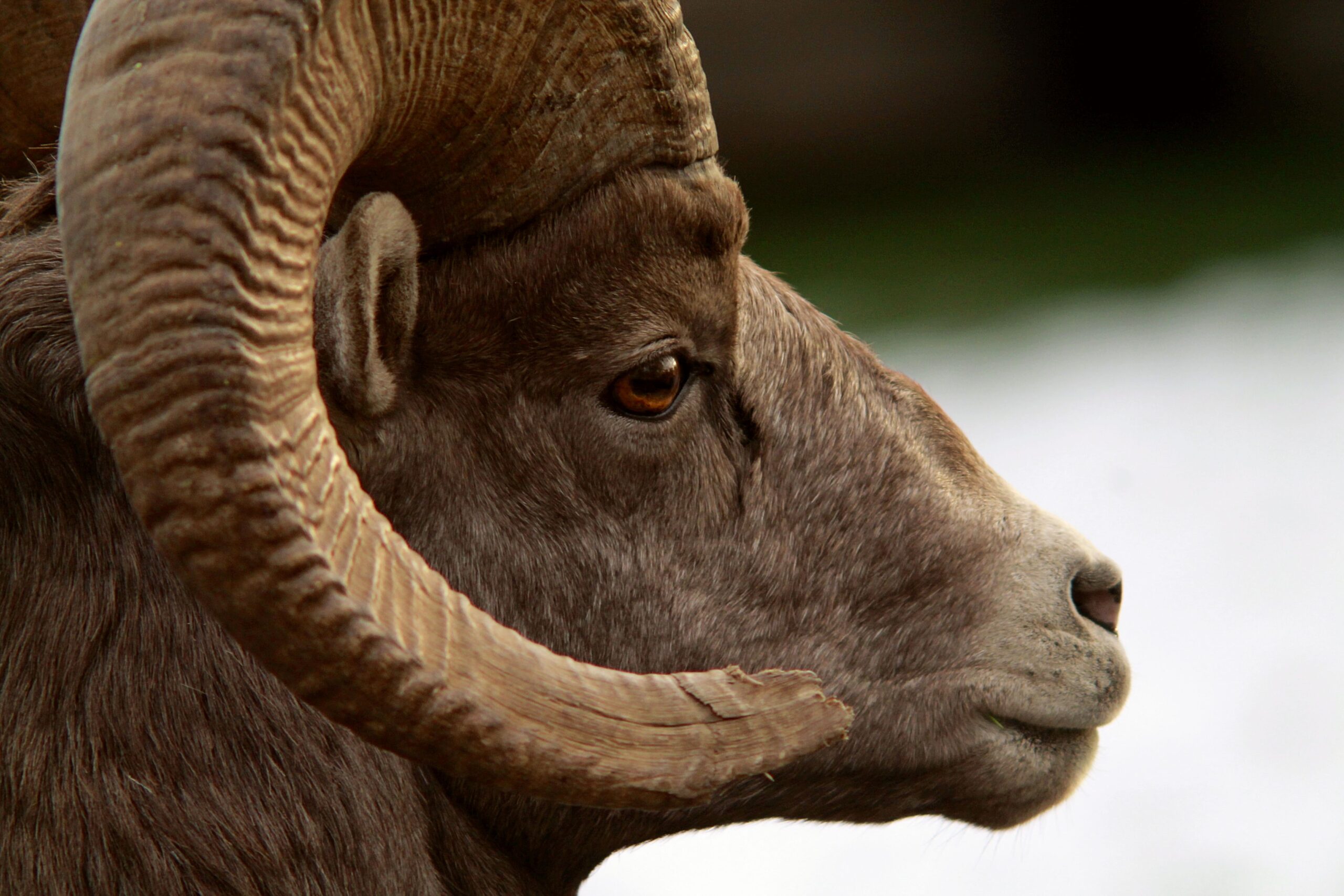
What kind of animal is a bighorn sheep? We will explain its characteristics, ecology, and habitat. Bighorn sheep are a member of the wild sheep family and can be found mainly in the Rocky Mountains of the western United States and southwestern Canada. You can just imagine hitting your head.






- What is a bighorn sheep? About basic status
- What are the roots and origins of the bighorn sheep?
- About habitat
- feature is? What kind of creature is it?
- What is your personality like?
- What is the ecology like?
- Vocalizations
- Seasonal Activities
- About Walking Speed
- About Bighorn Sheep Calves
- Are bighorns an endangered species?
- Can bighorns be kept as pets?
- Zoos Housing the Species (Japan & Worldwide)
- Introducing other animals
What is a bighorn sheep? About basic status
Bighorn sheep (bighorn sheep) are artiodactyls that belong to the Bovidae family. The scientific name is Ovis canadensis. The body length is 150-170cm and the weight is 57-108kg. A list of basic information is below. “sheep” is a cow-eyed creature that is related to sheep.
| Japanese(和名) | オオツノヒツジ (ビッグホーン) |
| English(英名) | American bighorn sheep |
| scientific name(学名) | Ovis canadensis |
| classification(分類) | Mammalia、Artiodactyla、 Bovidae、Ovis 哺乳綱、ウシ目、ウシ科、ヒツジ属 |
| IUCN Status(保全状況) | LEAST CONCERN |
| Length(体長) | 150-170cm |
| Weight(体重) | 57-108kg |
What are the roots and origins of the bighorn sheep?
The roots of the bighorn sheep (Ovis canadensis) lie not in North America, but in Eurasia (specifically the region around Siberia).
Ancestors were wild sheep from Siberia
The ancestors of modern bighorn sheep were wild sheep species that inhabited northern Eurasia anywhere from several hundred thousand to over a million years ago.
The general evolutionary path was as follows:
Early Ovis (sheep genus)
↓
Wild sheep species of Eurasia
↓
Ancestral populations around Siberia
↓
Migration to North America across the Bering Land Bridge
↓
Evolution into the bighorn sheep (Ovis canadensis)
How did they reach North America?
During the Ice Age, the Bering Land Bridge (Beringia)—a landmass formed when the sea receded—existed between what is now Siberia (Russia) and Alaska.
Crossing this bridge,
wild sheep,
mammoths,
bison,
reindeer,
and many other large mammals migrated from Asia to North America.
It is believed that the ancestors of the bighorn sheep also entered North America via this route and subsequently spread into the Rocky Mountains and desert regions.
When did they acquire their current form?
The evolution of the genus Ovis began around 3 million years ago, during which time the North American lineage diverged. Research indicates that North American wild sheep (such as bighorn sheep and Dall’s sheep) split from the Eurasian lineage and underwent their own unique evolution.
In particular, bighorn sheep developed:
hooves capable of climbing steep, rocky terrain,
powerful legs,
males with massive horns,
and a physiology that allows them to survive on sparse vegetation.
Why do they have “massive horns”?
They use them when males compete for mates. Males engaged in head-butting contests,
and individuals with
larger horns,
stronger skeletal structures,
and greater endurance
achieved higher reproductive success.
As a result, individuals emerged with massive, curled horns measuring nearly one meter in length.
About classification
The following subspecies of bighorn exist: The Aujubon bighorn is now extinct.
- O. c. californiana カリフォルニアビッグホーン
- O. c. canadensis ロッキービッグホーン
- O. c. mexicana メキシコビッグホーン
- O. c. nelsoni ネルソンビッグホーン
- O. c. auduboni オージュボンビッグホーン
About habitat
Its habitat is mainly in North America, including the United States and Mexico.
① Main Distribution Areas
Bighorn sheep are wild sheep that live in the highlands and mountainous regions of Central and East Asia.
Mongolia
Kazakhstan
Kyrgyzstan
Tajikistan
Uzbekistan
China (Tibet and Xinjiang Uyghur Autonomous Region)
Russian Far East
② Habitat Characteristics
Elevation: Mountainous areas between 2,000 and 5,000 meters
Terrain: Mountainous rocky areas, cliffs, and slopes
Vegetation: Grasslands, alpine grasslands, and shrublands
Climate: Cold and dry, with deep snow in winter
👉 Adapted to life in dry alpine grasslands.
③ Range of Activity
Often travel in groups.
Move up and down in altitude depending on the season.
Summer: Feed on alpine grasslands.
Winter: Move to lower altitudes with less snow.
④ Relationship with Humans
Since they primarily live in mountainous areas, they have little contact with humans.
However, their habitat can become fragmented due to grazing and hunting.
feature is? What kind of creature is it?
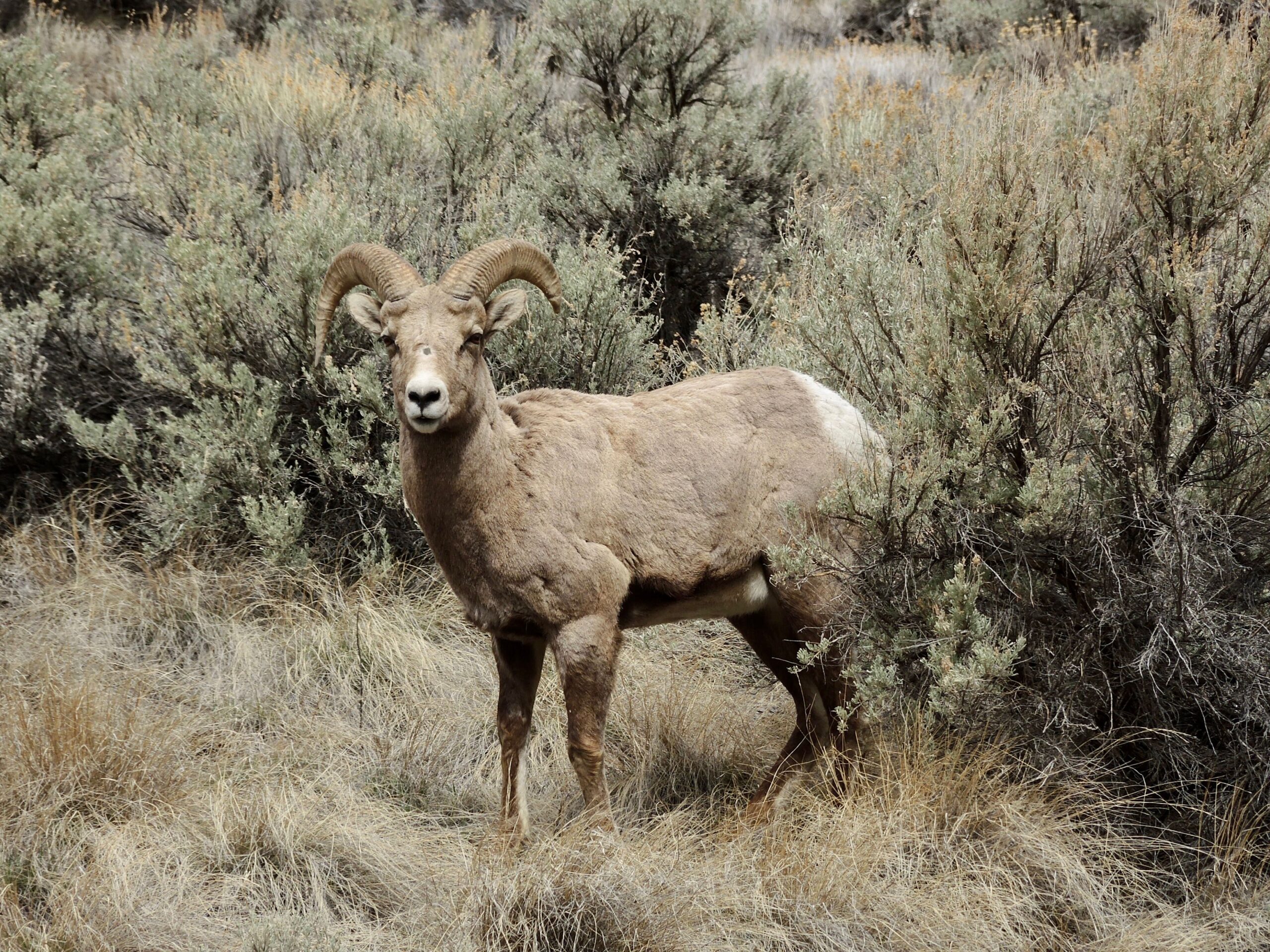
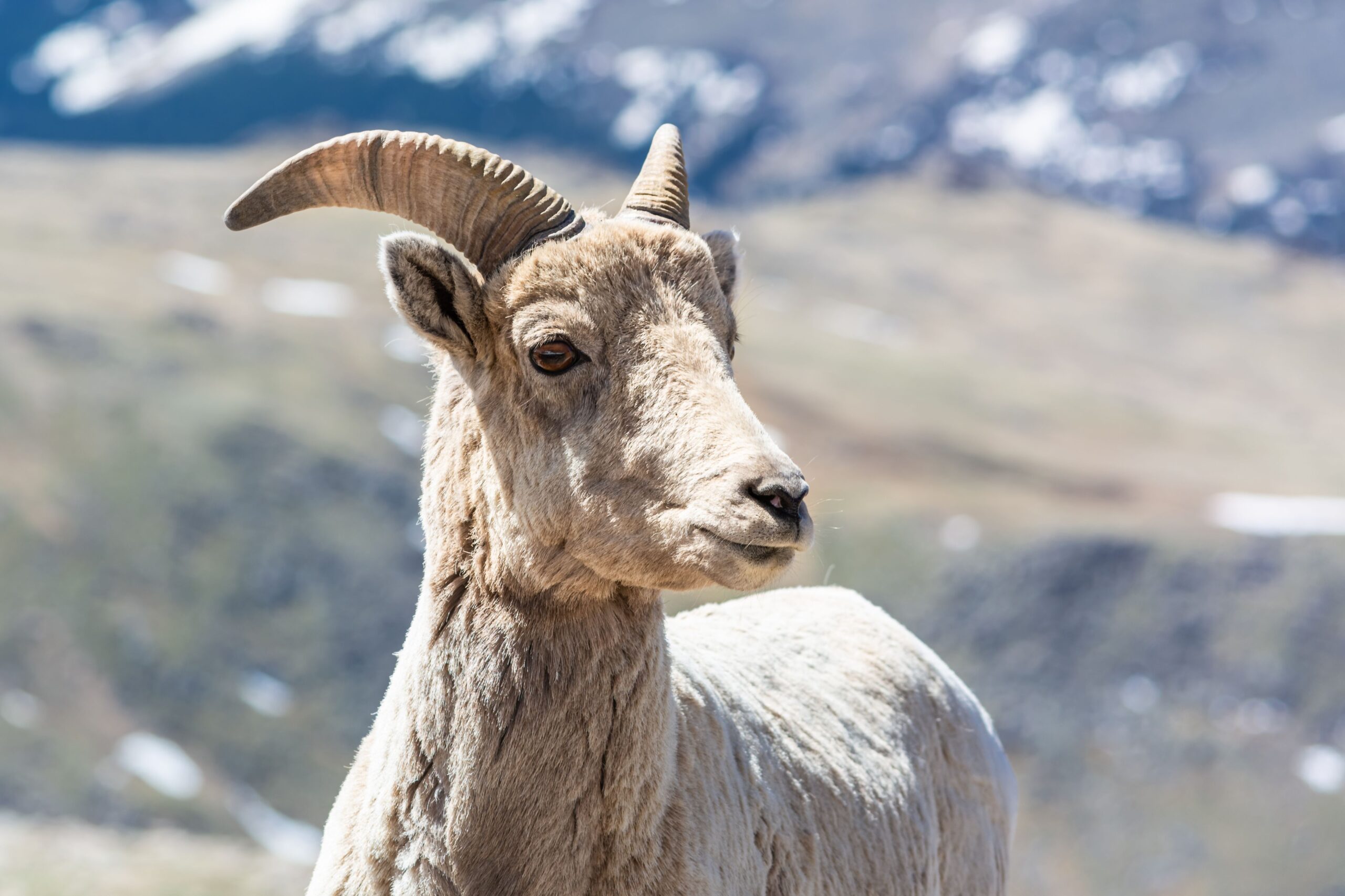
Bighorn sheep have gray-brown fur and white abdomen and rump. Its habitat is mountainous areas centered on the Rocky Mountains. Both males and females have horns, and the female’s horns are almost straight and short. The male’s horns are thick, round, and point outward. Bighorn sheep are also known as bighorns because of their large horns. They usually live and move in small groups.
① Body Size
Body Length: Approximately 1.5-2m
Shoulder Height: Approximately 1.0-1.3m
Weight: Males 90-150kg, Females 40-60kg
👉 One of the largest wild sheep.
② Horn Characteristics
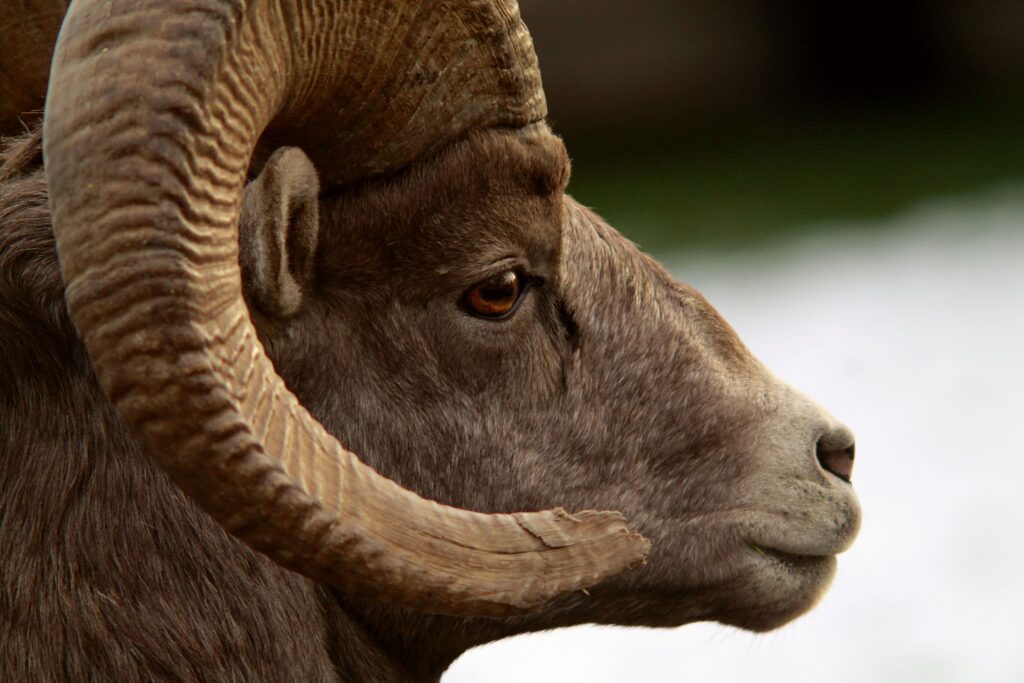
Males have large, curved horns.
Horns are rounded at the tips and encircle the head.
Horns can reach lengths of up to 1.2m or more.
Females have small or almost no horns.
👉 Used for status competition and display within the herd.
③ Coat Color
Winter coat is thick and grayish-brown to brown.
Summer coat is slightly thinner and lighter brown.
Hair from the neck to shoulders is long and mane-like.
④ Athletic Ability
Highly adapted for high mountain and rocky terrain.
Climb rocky terrain quickly and easily, even on steep slopes.
High stamina, allowing for long-distance travel in herds.
What is your personality like?
Bighorns are highly social animals and tend to live in groups. They usually form herds of around 10 to 100 individuals and are highly disciplined animals.
① They are timid and cautious.
Sensitive to humans and predators.
They can detect sound and movement from a distance and flee.
If they sense danger, they will immediately seek refuge in rocky or high places.
👉 Their basic strategy is to “flee.”
② They are competitive within their herd.
Males fight with each other using their horns.
During the breeding season, they engage in fierce physical contests to determine dominance.
Females are relatively calm, but they do fight over food.
③ They are moderately curious.
They check out new objects and plants within the herd.
They immediately retreat if they perceive danger.
They rarely approach recklessly.
④ They are highly adaptable to their environment.
They can survive in harsh environments such as high mountains, rocky areas, and arid regions.
They can move and feed even in snowy winters.
They move seasonally to secure food.
⑤ They generally avoid people in the wild.
Males are dangerous during the breeding season or when cornered.
They are not aggressive due to predation or human habituation, but they will flee immediately if approached.
What is the ecology like?
Bighorns are active during the day and feed on grass, leaves, and tree branches. During the breeding season, males may clash their horns with each other as they compete for females. They are polygynous, and most of their breeding occurs from autumn to early winter, with a gestation period of six months. Lifespan is 15 to 20 years.
① Group Life
They generally live in groups.
Group composition is often divided by gender and age.
Male groups: young males or solitary males
Female groups: females and young animals
There is a hierarchy within the group, and males compete for status by using their antlers.
② Migration/Habitat
Mainly mountainous areas at altitudes of 2,000-5,000m
Seasonal migration (highlands ⇄ lowlands)
Summer: Forages on alpine grasslands
Winter: Moves to lower altitudes with less snow
Capable of traveling long distances in groups
③ Diet
Herbivore (mainly alpine plants)
Grass, shrubs, moss, leaves
In winter, they also eat plants under the snow and dry plants
Strong digestive abilities to cope with harsh environments
④ Breeding
Breeding Season (Ramming Season): Autumn
Males fight for females using their horns
Gestation Period: Approximately 5 months
Birth: 1-2 lambs (rarely 3)
Lambs grow up in groups with their mothers
⑤ Dealing with Predators
Natural Predators: Wolves, leopards, lions (depending on the region)
Flees to rocky or high ground
Quickly moves when the herd senses danger
⑥ Special Abilities
Athletic ability to quickly climb rocky areas
Strength to withstand oxygen deficiencies at high altitudes
Adaptability to forage for food in the snow, even in harsh winters
Are there any natural enemies?
The bighorn’s natural enemies include mountain lions, bears, and coyotes.
Vocalizations
Bighorn sheep vocalizations differ slightly from the typical “baa” of domestic sheep; instead, they use low-pitched, short calls.
- Alarm and contact calls (“Baa” or “Bleat” sounds)
Because bighorn sheep live in herds, they use vocalizations to communicate with one another.
“Meh”
“Beh, beh”
Short, nasal-sounding calls
are used for:
Checking the herd’s location
Signaling danger
Communicating with offspring
- Calls of the young (lambs)
Lambs have a particularly strong bond with their mothers,
calling out to them with high-pitched
“Pee” or “Meh” sounds
or soft calls.
The mother responds with a low-pitched call, allowing them to locate and acknowledge each other.
- Calls of males during the breeding season
Males, distinguished by their massive horns, engage in fierce battles during the breeding season (autumn through winter).
However, they do not assert their territory through loud vocalizations like deer;
instead, they face their opponents while
snorting
growling low
and making threatening sounds.
Then,
the sound of their massive horns colliding—
a loud “Clack!”—
echoes through the mountains.
In fact, the most characteristic sound associated with bighorn sheep is not their vocalizations, but the sound of males clashing their horns.
- Generally quiet animals
To protect themselves from predators (such as wolves and cougars), bighorn sheep rarely vocalize under normal circumstances.
Instead, they communicate through
body movements
the positioning of their ears and tails
the orientation of their horns
and the behavior of the herd.
Seasonal Activities
Bighorn sheep activity patterns vary significantly by season.
Key periods include securing food in winter, giving birth in spring, foraging in summer, and the breeding season (the “rut”) in autumn.
🌱 Spring (March–May): Birthing and Rearing
Key Activities
Females give birth
Growth of offspring (lambs)
Herds begin to move
Spring is a crucial time for mothers, as the melting snow leads to an increase in available vegetation.
Birthing
Gestation period: Approx. 170–180 days
Birthing season: Primarily May–June (varies by region)
Usually a single lamb is born
Females give birth on rocky terrain slightly apart from the herd; the newborn stands and begins walking within a few hours.
Behavior
Mothers and lambs seek refuge on rocky ledges or steep slopes
Vigilance against predators (cougars, wolves, coyotes, etc.)
Young individuals grow within the herd
☀️ Summer (June–August): Foraging and Regaining Strength
Key Activities
Active foraging in the morning and evening
Migration to alpine areas
Building up physical strength
With abundant vegetation, summer offers the best nutritional conditions for bighorn sheep.
Diet:
Grasses
Shrub leaves
Herbs
Cacti (for desert-dwelling populations)
Coping with Heat
Desert-dwelling populations:
Rest in the shade of rocks during the day
Are active in the morning and evening
Travel to water sources
🍂 Autumn (September–December): Breeding Season (The Rut)
This is the most significant event for bighorn sheep.
Male Activity
Mature males engage in
“Clash fights” where they ram their horns together
The sound of the impact can carry for several kilometers.
In these battles,
Horn size
Physique
Stamina
…are critical factors.
Breeding
Winning males gain more opportunities to mate with females.
The breeding season varies by region but generally occurs from autumn to early winter.
❄️ Winter (December–March): Energy-Conserving Lifestyle
Winter is the harshest season.
Key Activities
Minimize travel distances
Rest in areas sheltered from the wind
Forage on limited vegetation
Bighorn sheep are well-adapted to snowy mountains;
Broad hooves
Powerful legs
Excellent balance
…allow them to live even on steep slopes.
Changes in Herds
In winter,
males often form all-male herds,
while females and their young form separate herds.
About Walking Speed
Bighorn sheep are not animals built for high-speed running on flat ground; rather, they are like “mountain athletes” capable of moving quickly across rugged, rocky terrain.
🐏 Normal Walking Speed
During routine movement,
approximately 3–5 km/h
is their typical, leisurely pace.
Since they often graze while moving and advance cautiously as a herd to ensure safety, there is no need for constant rapid movement.
🏃 Speed When Hurrying
When sensing danger or needing to travel quickly,
they can run at speeds of approximately 20–30 km/h.
They display particularly swift movement when:
escaping from predators like cougars
catching up with the herd
engaging in or recovering from clashes between males
🪨 Their Greatest Ability: Vertical Movement
The true strength of bighorn sheep lies in their agility on rocky terrain rather than raw speed.
Key capabilities include:
precisely stepping onto rock ledges only a few dozen centimeters wide
climbing steep slopes approaching 60–80 degrees
jumping across rocky gaps with drops of several meters
descending slopes without slipping
This agility is made possible by the unique structure of their hooves.
About Bighorn Sheep Calves
This section explains bighorn sheep calves.
They are “baby wild sheep adapted to mountain life, small at birth but growing rapidly under the protection of their mother and herd.”
① Immediately after birth
Birthing: Spring to early summer (usually May to June)
Weight: Approximately 4-5 kg
Height: Approximately 30 cm
Hair is soft, with a brown to light brown camouflage coloring
Eyes are open, and they can stand up immediately (almost ambulatory)
👉 They mature precociously, making them an immediate asset in mountainous areas.
② Mother-child life
Mothers constantly protect their lambs
Learn foraging and danger avoidance from their mothers
Protect their lambs and avoid danger
If they have siblings, they learn social skills through playful interactions
③ Growth characteristics
Lambs can climb rocky terrain within a few weeks of birth
Begin eating tough alpine plants within a few months of birth
As they grow, their fur changes from winter to summer fur
Males’ horns begin to grow small between six months and one year of age
④ Learning behavior in the herd
Cubs observe the behavior of their mothers and female pack members
Learn where to feed, detect danger, and how to escape
Male cubs practice fighting and using their horns before leaving their mother’s pack
⑤ Until independence
Separated from their mothers at one to two years of age
Males join young male packs
Females often remain with their mother’s pack
⑥ Survival challenges
Natural predators: wolves, coyotes, large raptors
Food shortages and bad weather often cause deaths
Protection of the pack and mother is directly linked to survival
Are bighorns an endangered species?
Bighorns are not an endangered species. Some subspecies have become extinct due to their numbers being reduced due to overhunting for their magnificent horns, but overall the population remains stable.
- North American Bighorn Sheep (Ovis canadensis)
Distribution: Rocky Mountains, Great Basin, etc. in the United States and Canada
IUCN Rating: LC (Least Concern)
Population: Estimated at approximately 80,000
Protection and reintroduction programs have led to a recovery trend
- Bighorn Sheep (Ovis ammon) – A species found in Central Asia
Distribution: Mongolia, Kazakhstan, China, Kyrgyzstan, etc.
IUCN Rating: NT (Near Threatened)
Populations are declining
Causes:
Hunting (for horns and meat)
Habitat fragmentation due to development and grazing
Food shortages due to overgrazing and drought
- Conservation Status
Many areas are protected by nature reserves and national parks
Hunting is sometimes strictly controlled
Reintroduction programs and artificial conservation are aimed at stabilizing the population
Can bighorns be kept as pets?
Bighorns are not very good pets. We strongly recommend viewing them at a zoo.
① Legal Issues
In Japan, large wild sheep may be designated as designated animals.
Special permission is required for private ownership.
In many US states, keeping wild species is restricted.
Keeping them outside of zoos and research facilities is generally prohibited.
② Personality and Instinct Issues
As wild animals, they are highly cautious.
They may engage in sudden horn-latch or threatening behavior.
Once they reach adulthood, both their horns and weight can be dangerous.
The social behavior and fighting that occur in groups cannot be replicated at home.
③ Environmental Issues
They require ample space for exercise.
They are stressed if there is no terrain, such as rocky areas or slopes.
They also require an environment similar to that of alpine plants.
Because of their herd habits, keeping them alone is stressful.
④ Even lambs are dangerous.
Baby lambs are cute at just a few months old, but they develop adult strength and horns over the course of several years.
Their instincts persist, so even if they become accustomed to humans, they remain dangerous.
⑤ Examples from Overseas
Some wildlife enthusiasts have kept them as pets.
Many cases involve accidents, deaths from stress, and eventual euthanasia.
Zoos Housing the Species (Japan & Worldwide)
Bighorn sheep are very rare in captivity in Japan.
While they inhabit the mountainous regions of North America in the wild, they require spacious, rocky environments for captivity, meaning they are not commonly found in zoos worldwide.
🇯🇵 Zoos in Japan
🐏 Yokohama Municipal Kanazawa Zoo
This is the most prominent facility for keeping bighorn sheep in Japan.
Features:
The first zoo in Japan to keep bighorn sheep
Began keeping the species in 1982
Focuses on exhibiting North American mountain animals
Exhibit environment that recreates a rocky terrain
Kanazawa Zoo has a history of over 40 years of keeping bighorn sheep.
🐏 Morioka City Zoological Park
One of the few facilities in Japan where bighorn sheep can currently be seen.
Features:
Exhibits that utilize the natural environment of the Tohoku region
Spacious area suitable for keeping mountain-dwelling animals
Allows for the observation of herd behavior
🌎 Major Facilities Worldwide
🇺🇸 Denver Zoo
A facility renowned for its exhibits of North American mountain animals.
Features:
Exhibits featuring animals of the Rocky Mountains
Displays featuring North American mountain species, including bighorn sheep
Large-scale enclosure recreating a rocky mountain landscape
Bighorn sheep are exhibited as an iconic North American wildlife species.
🇳🇱 Burgers’ Zoo
A zoo in Europe with a record of exhibiting bighorn sheep.
Features:
Exhibits of North American animals
Displays utilizing a rocky terrain environment
🇺🇸 California Living Museum (CALM)
A facility in California dedicated to the conservation and exhibition of native animals; it houses Desert bighorn sheep.
Features:
Conservation of animals native to California
Recreation of a desert environment
Exhibits aimed at conservation education
Introducing other animals

コメント