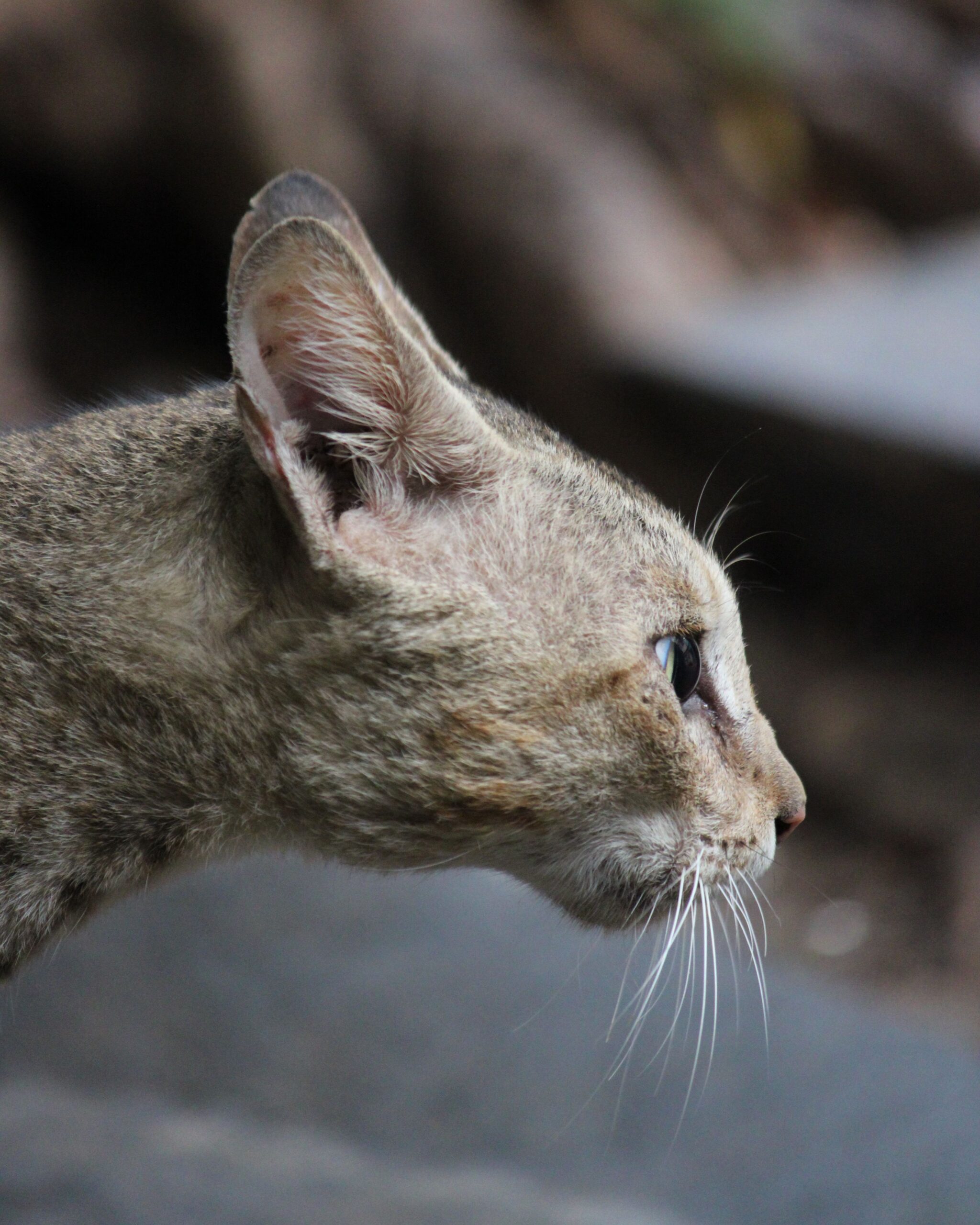
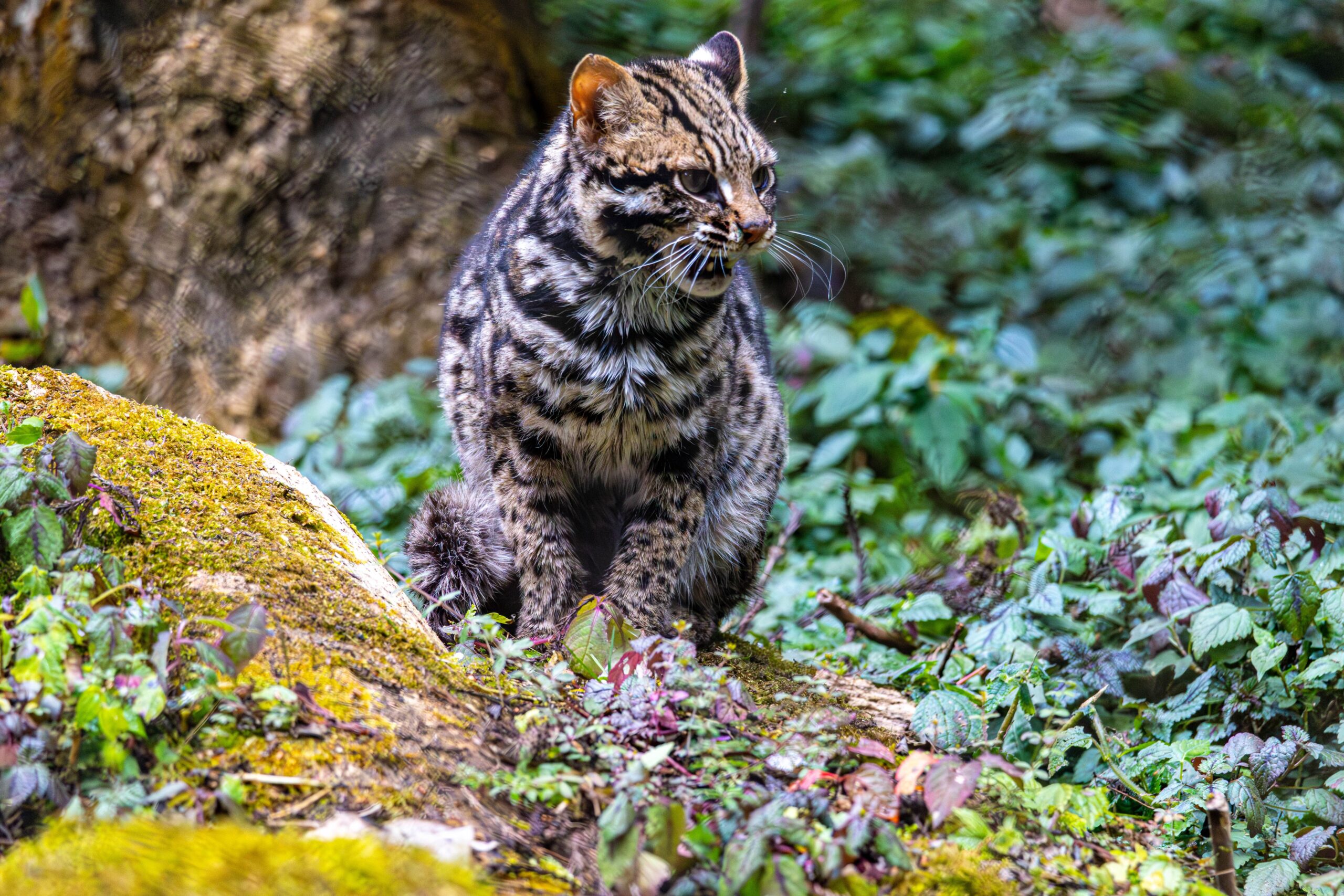
We will explain the characteristics, ecology, and habitat of rusty cats. This cat lives in the forest areas of India and Sri Lanka, and is said to be the smallest cat in the world. For this reason, they are very cute and popular, but on the other hand, they are classified as a near-endangered species and are in critical condition.









- What is a rusty cat? About basic status
- What are the roots and origins of the rusty-spotted cat?
- About the habitat of rusty cats
- feature is? What kind of creature is it?
- What will your personality look like?
- What is the ecology of rusty cats?
- Vocalizations of the Rusty-spotted Cat
- Seasonal Activity of the Rusty-spotted Cat
- Rusty-spotted Cat Locomotion Speeds
- Do they bond with humans?
- About Rusty-Stained Cat Pups
- Is the rusty cat an endangered species?
- Can rusty cats be kept?
- Zoos Housing the Species (Japan & Worldwide)
- Introducing other animals
What is a rusty cat? About basic status
Rusty cats belong to the mammalian order Carnivora and the family Felidae. The scientific name is Prionailurus rubiginosus. The body length is 30-40cm and the weight is 1-1.5kg. They tend to live mostly in the eastern and southeastern regions of Asia. Along with the black-footed cat, it is said to be the smallest cat in the world. The female is smaller in size.
| Japanese(和名) | サビイロネコ |
| English(英名) | Rusty-spotted cat |
| scientific name(学名) | Prionailurus rubiginosus |
| classification(分類) | Mammalia、 Carnivora、Felidae、Prionailurus 哺乳綱、食肉目、ネコ科、ベンガルヤマネコ属 |
| IUCN Status(保全状況) | NEAR THREATENED |
| Length(体長) | 30-40cm |
| Weight(体重) | 1-1.5kg |
What are the roots and origins of the rusty-spotted cat?
The rusty-spotted cat is known as one of the world’s smallest wild cats; it is a small felid that evolved independently on the Indian subcontinent.
Roots and Origins
The rusty-spotted cat belongs to the family Felidae and the subfamily Felinae (small cats).
It is believed to have diverged from the common ancestor of small cat species approximately 8 to 10 million years ago.
Over time, it adapted to environments such as dry forests, scrublands, and grasslands on the Indian subcontinent, evolving into the form we see today.
Genetic studies indicate that while the rusty-spotted cat is closely related to other small Asian wild cats, it is a species with its own unique evolutionary history.
Why is it so small?
The most distinctive feature of the rusty-spotted cat is its small size.
Even as an adult:
Body length: approx. 35–48 cm
Tail length: approx. 15–30 cm
Weight: approx. 0.9–1.6 kg
It is significantly smaller than the average domestic cat.
This small size is considered an adaptation to a lifestyle of efficiently hunting prey such as:
Small rodents
Lizards
Frogs
Insects
Small birds
What will be the classification?
In terms of the lineage of extant species of the cat family, it is the genus Bengal cat. The following subspecies exist in the Bengal wildcat genus: The Tsushima leopard cat and the Iriomote leopard cat are designated as endangered species.
| Name:名前 | academic name (学名) | Habit (生息地) |
| Tsushima leopard cat ツシマヤマネコ | Prionailurus bengalensis euptilurus | Tsushima, Japan 対馬 |
| Iriomote wild cat イリオモテヤマネコ | Prionailurus bengalensis iriomotensis | Iriomote, Japan 西表島 |
| Sunda leopard cat スンダヒョウネコ | Prionailurus javanensis | Java, Bali, Borneo, Sumatra、Indonesia ジャワ島、バリ島、ボルネオ島、スマトラ島 |
| Flat-headed cat マレーヤマネコ | Prionailurus planiceps | Indonesia, Thailand, Brunei, Malaysia インドネシア、タイ、ブルネイ、マレーシア |
| Rusty-spotted Cat サビイロネコ | Prionailurus rubiginosus | India インド |
| Fishing cat スナドリネコ | Prionailurus viverrinus | Indonesia, China, Thailand インドネシア、中国、タイ |
Taxonomy of the Rusty-spotted Cat
- 界 (Kingdom): Animalia(動物界)
- 門 (Phylum): Chordata(脊索動物門)
- 綱 (Class): Mammalia(哺乳綱)
- 目 (Order): Carnivora(食肉目)
- 科 (Family): Felidae(ネコ科)
- 属 (Genus): Felis(ネコ属)
- 種 (Species): Felis catus(イエネコ)
About the habitat of rusty cats
Rusty cats are mainly distributed in southern India and Sri Lanka. This is a cat that has become a hot topic in videos. It is small, about the size of a mouse, and images can be found online.
Habitat & Distribution
Origin: No specific origin. Found worldwide as a type of domestic cat coat color.
Distribution:
Found in homes, urban, and rural areas around the world, including Japan.
Often kept as pets, and commonly seen as stray cats.
Habitat:
Adaptable to both indoor and outdoor habitats.
Urban: Residential areas and parks.
Rural: Near farms and fields.
feature is? What kind of creature is it?
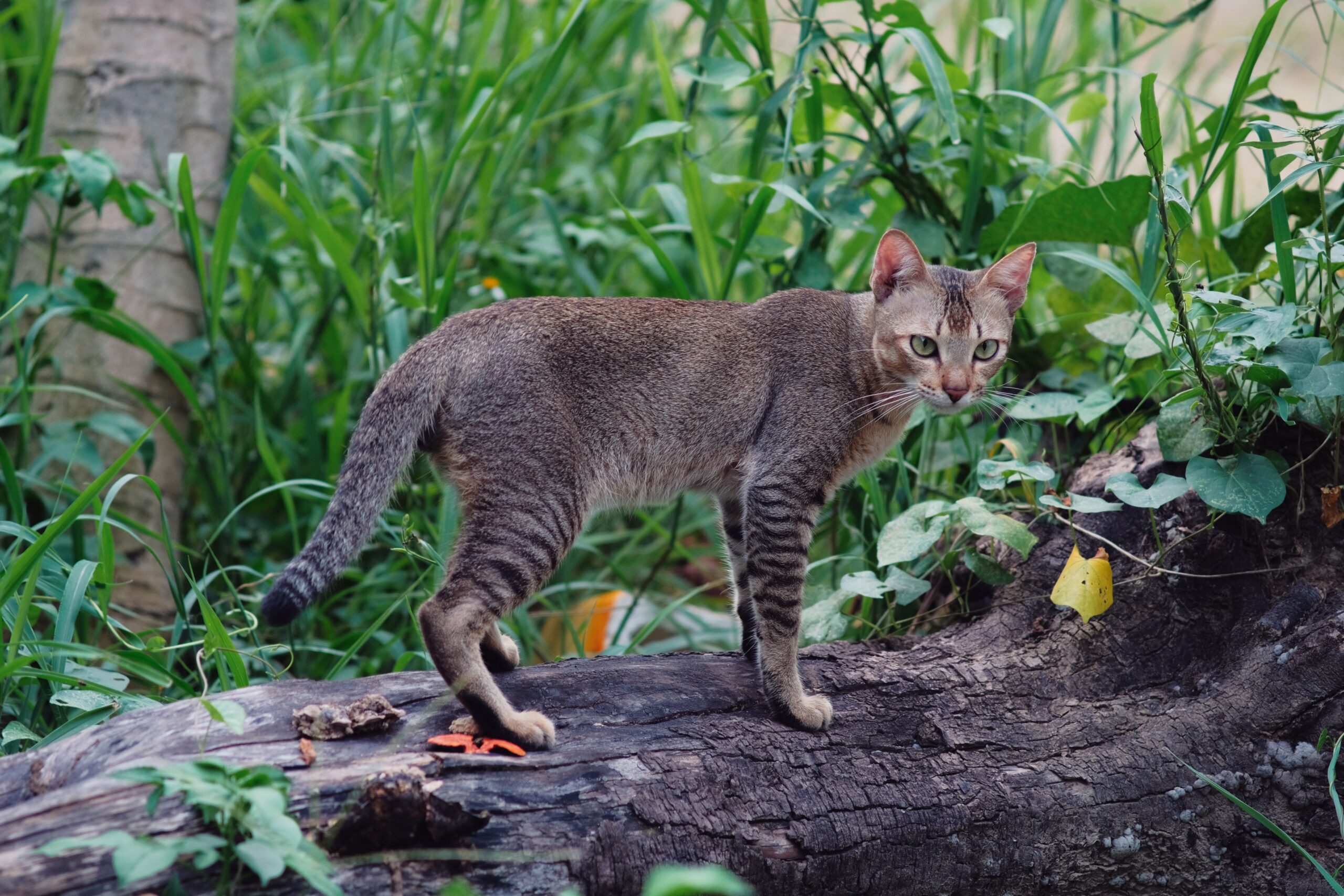
Rusty cats are the world’s smallest cats, weighing only about 1 kg even as adults. It is characterized by its very small size, and its fur is gray in color, with rust-red spots all over its back and flanks. The irises are grayish brown, and the ears are rounded. Rusty cats live mainly in tropical forests and grasslands and are nocturnal. Rusty cats are cats that spend most of their time in trees.
- Physical Characteristics
Coat Color
A unique pattern of mottled black, brown, and orange (reddish)
Irregular color distribution also appears on the face and paws
Eye Color
Various colors, including green, gold, and yellow
Body Shape
Standard medium-sized for a house cat (mostly weighing 3-5kg)
Physique varies from individual to individual, ranging from slim to somewhat stocky
- Gender and Genetic Characteristics
Mostly female
Males are extremely rare (approximately 1/3,000-1/10,000)
This is due to the X-chromosome coat color gene
Interesting genetics
Each cat has a unique pattern, making them “unique in the world”
- Personality Tendencies (General Observations)
While individual differences exist, the following tendencies are commonly reported:
Active and curious
Affectionate toward their owners
Independent yet affectionate
- Biology/Behavior
Diurnal but adaptable
Can adapt to both indoor and outdoor environments as a house cat
Stray cats tend to hunt small animals and insects in urban and rural areas.
What will your personality look like?
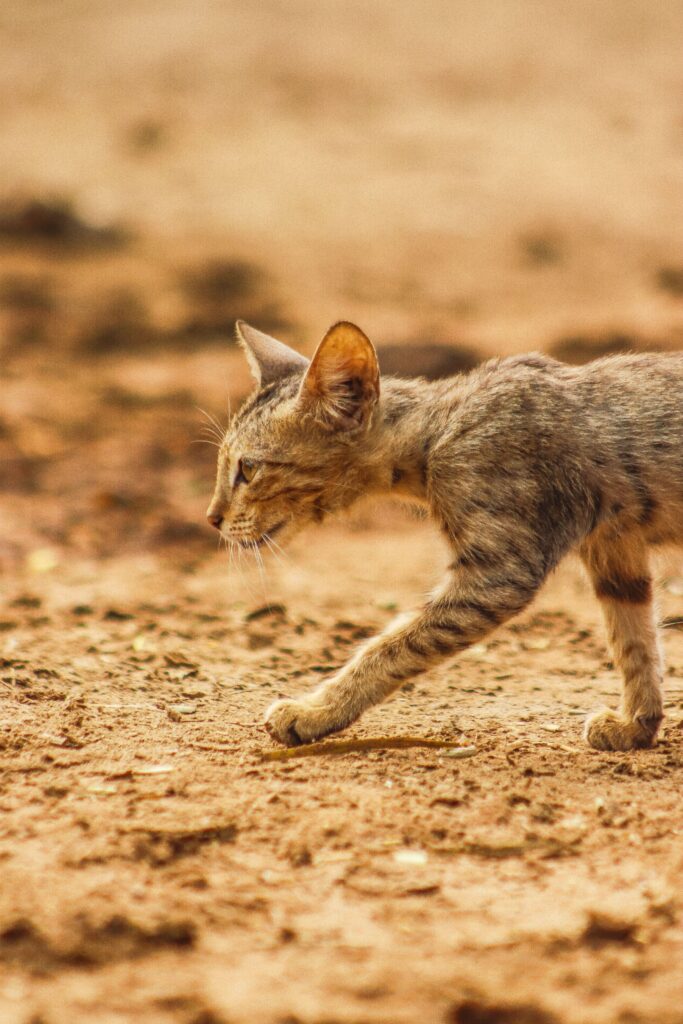
Rusty cats are friendly and cheerful, and are popular with children, so they are often kept as pets. As a result, they have a relatively open-minded personality, which makes them easy to get used to.
Rusty-Spotted Cat Personality Traits
Active and curious
Exploring the home and playing with toys
Many cats enjoy climbing high places
Affectionate and affectionate
They may snuggle up to their owners or even sit on their laps
On the other hand, they can be temperamental, with strong differences between wanting attention and wanting to be left alone
Highly independent
Preferring to do things at their own pace
Some cats dislike being touched unnecessarily
Strong personalities and moody
Sensitive to compatibility with other cats and pets
Each cat’s personality varies greatly
What is the ecology of rusty cats?
Rusty cats primarily feed on rodents and birds, but they also prey on lizards, frogs, and insects. There is not much information about their ecology and reproductive behavior. They are said to have a lifespan of around 12 years.
Rusty-Spotted Cat Ecology and Behavior
Activity Period
Primarily crepuscular (active in the morning and evening)
In captivity, they are often active day and night
Exercise and Play
Curious and loves to explore
Good at playing with toys and small items
Has habits such as climbing and hiding
Diet
Omnivorous, leaning towards carnivorous
Mainly eats cat food, but strays also prey on small birds, mice, and insects
Sociality
Easily attached to their owners, but also very independent
Interaction with other cats and dogs varies greatly
Most can live alone, but can also exhibit pack behavior depending on the environment
Breeding
If kept as a house cat, they are often spayed or neutered
If not spayed or neutered, they will go into heat several times a year
Lifespan
If kept as a house cat: Approximately 12-16 years
If kept as a stray cat: Approximately 5-10 years
What are the natural enemies of rusty cats?
Rusty cats are said to be the smallest cats in the world, so they are full of natural enemies. Since there are so many enemies, it is easy to become prey.
Vocalizations of the Rusty-spotted Cat
As the rusty-spotted cat is a very small and wary wild feline, research regarding its vocalizations in the wild is limited. However, observations in captivity and comparisons with closely related species have revealed that they produce the following types of vocalizations:
- “Meow”
Short, high-pitched vocalizations similar to those of domestic cats.
These are believed to be used for communication between mother and offspring or during close-range interactions.
- “Purr-like trills” (e.g., “prrr,” “rrrr”)
They sometimes produce soft sounds resembling a gentle trill or vibration of the throat.
These sounds are heard when the cat is calm or during interactions between mother and offspring.
- Hissing
A sound produced by opening the mouth and forcefully expelling air, typically used as a threat.
Like other felids, they use this sound for defense or to signal wariness.
- Growling
A low-pitched growl.
They may produce this sound during territorial disputes or when on alert.
- Purring
They have been observed to purr, just like domestic cats.
This behavior is commonly seen when the cat is relaxed or during interactions between mother and offspring.
Seasonal Activity of the Rusty-spotted Cat
The rusty-spotted cat inhabits tropical and subtropical regions such as India and Sri Lanka. Unlike in Japan, where there are four distinct seasons, its activity patterns are shaped by the alternation between the rainy and dry seasons.
Rainy Season
(Timing varies by region, but generally occurs from June to October in many areas)
Activity Characteristics
Rainfall causes forests and grasslands to flourish, leading to an increase in prey.
Hunting activity intensifies at night.
There are more opportunities to catch moisture-loving animals, such as frogs and insects.
Main Prey
Rodents
Lizards
Frogs
Insects
Small birds
Dry Season
(Generally from November to May)
Activity Characteristics
Activity is concentrated around water sources and thickets.
It is believed that there is a higher frequency of hunting small mammals and birds.
They rest in rocky crevices or tree hollows during the day and begin foraging at night.
Rusty-spotted Cat Locomotion Speeds
There is no published scientific data regarding the walking or top running speeds of the rusty-spotted cat. This is due to their very small size and nocturnal nature, which make them difficult to observe.
Normal Walking Speed
They walk cautiously when foraging or patrolling their territory.
Approximately 2–4 km/h (estimated)
They move quietly with their bodies close to the ground, approaching prey without making a sound.
Running Speed
When sensing danger or pursuing prey, they sprint quickly over short distances.
Their top speed is estimated to be around 30–40 km/h.
This estimate is based on comparisons with closely related small wild cats, rather than direct measurements taken from the rusty-spotted cat itself.
Hunting Movements
Rather than relying on raw speed, the rusty-spotted cat excels at:
Quick changes of direction
High leaping ability
Silent approaches
They employ an “ambush-style” hunting method, approaching within a few meters of their prey undetected before pouncing suddenly to make the catch.
Movement in Trees
They are also adept at climbing trees and may:
Move quickly along branches
Leap from tree to tree
Rest in the trees
Do they bond with humans?
The rusty-spotted cat is not a wild animal that bonds with humans.
Although it is one of the world’s smallest felids, it possesses strong instincts for survival in the wild; its nature differs from that of the domestic cat, which has been domesticated to adapt to life with humans.
Reaction to humans
Rusty-spotted cats are extremely wary;
they typically hide in the shadows when they sense a human presence,
quietly leave the area to avoid danger,
and do not approach humans unnecessarily.
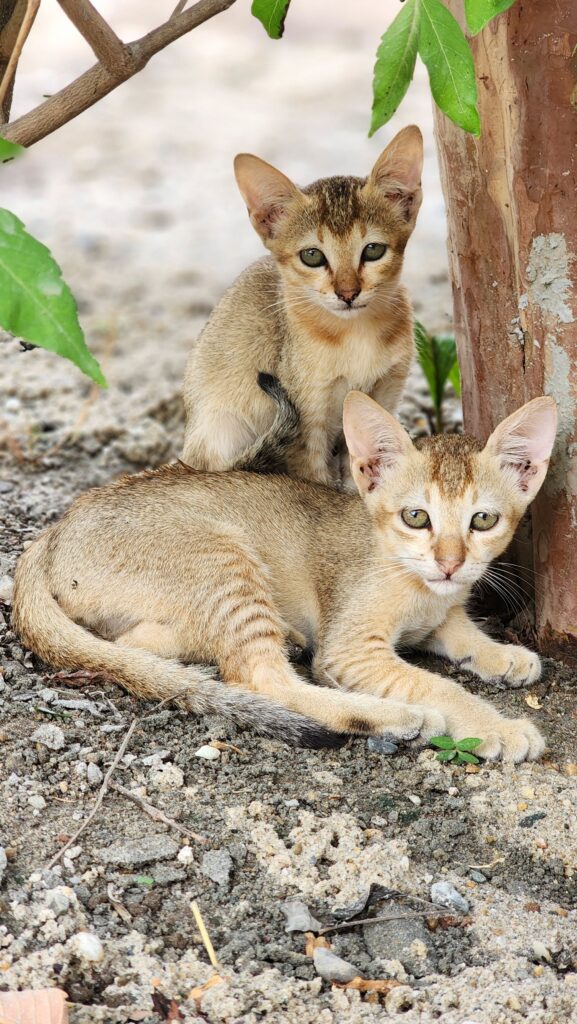
About Rusty-Stained Cat Pups
The following summarizes rusty-stained cat pups (kittens), focusing on their coat color and ecological characteristics.
- Appearance and Coat Color
The spotted pattern is visible at birth, but may not be clearly visible.
The pattern becomes more distinct within a few weeks of birth, becoming almost identical to that of an adult cat.
Eye color changes from a bluish hue to an adult cat’s color (green, gold, etc.) within a few weeks of birth.
- Growth and Body Shape
Birth Weight: Approximately 80-120g (same as a typical house cat)
1 Month Old: Eyes fully open and walking becomes stable.
2-3 Months Old: Play and motor skills develop rapidly.
Around 6 Months Old: Approaches adult size.
- Behavior and Personality (Puppyhood)
Curious and learns hunting instincts through play.
Interaction with humans and other cats is important during the socialization period (around 2-8 weeks old).
Many cats are affectionate and enjoy being held and petted.
Learning to bite and play through interactions with siblings and their mother.
- Physiological Characteristics
Lactation lasts until approximately 4-6 weeks of age.
Weaning begins around 4 weeks of age.
Immunity is supported by nursing from the mother cat, but vaccinations are recommended after approximately 8 weeks of age.
- Precautions (When Keeping Cats)
Nutrition is particularly important during the developmental stage.
Human contact, play, and environmental stimulation are necessary for socialization.
Toribi cats often have unique personalities, so building a trusting relationship with them from an early age can help them grow into calm, mature cats.
Is the rusty cat an endangered species?
The rusty cat is designated as a near-threatened species. Furthermore, as it is listed in Appendix I of the Washington Convention, international trade is strictly restricted, and breeding is quite strict. The causes are as follows.
habitat loss
Land development is progressing rapidly in Southeast Asia and South Asia, and deforestation is progressing considerably. As a result, rusty cats live in trees, making the environment quite harsh.
Cat skins are traded
Rusty cats are hunted and their skins are traded. In some areas, they are hunted for food or as a pest to livestock, and illegal hunting by humans is a problem.
Can rusty cats be kept?
Rusty cats can be kept, and some families in India and Sri Lanka do so, but they are an endangered species and international trade is restricted, so it is extremely difficult to keep them in other countries.
- Can I Keep This Cat?
A pet cat that can be kept entirely at home
It has no special habits or dangers, and can live in the same environment as a regular house cat.
- Key Points for the Household
Indoor Environment
It is recommended to keep this cat indoors as a house cat.
Providing high places and hiding places will help it feel safe.
Escape prevention measures for windows and balconies are necessary.
Diet
Feed cat food according to its stage of growth and weight.
Feed it with weaning food and kitten food for young cats, and adult food for adult cats.
Always keep fresh water available.
Exercise and Play
Toribi cats are often curious and active.
Exercising with toys and cat towers is effective in maintaining their health.
Health Management
Regular Vaccinations and Health Checks
Many owners perform spay/neuter surgery.
Brushing their coat helps prevent hairballs.
- Personality-related tips for raising them
Many of them have unique and volatile personalities.
They are also very independent, so building a trusting relationship with them is better than forcing them to be held.
Interacting with people from a young age helps them grow into affectionate, calm adult cats.
In conclusion, rusty-spotted cats are easy to raise and can be kept in an average household without any problems.
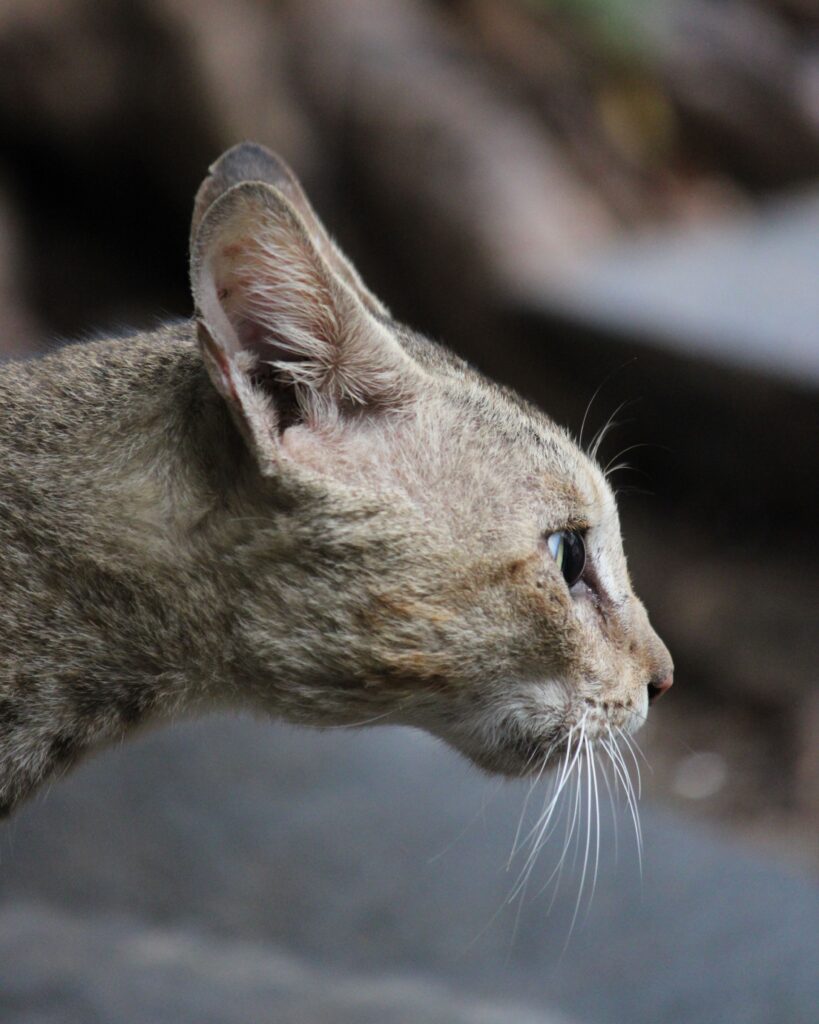
Zoos Housing the Species (Japan & Worldwide)
The rusty-spotted cat is one of the world’s smallest wild cats; while it is kept in captivity more frequently than the flat-headed cat, it is still relatively rare, with breeding and exhibition taking place at only a limited number of zoos.
Japan
Currently, there are no confirmed zoos in Japan that have the rusty-spotted cat on permanent display.
While other small felids—such as the Tsushima leopard cat, Pallas’s cat, sand cat, and leopard cat—are kept in Japanese zoos, the rusty-spotted cat has not been introduced to the country.
Major Zoos Worldwide
Berlin Zoological Garden (Germany)
A prominent European zoo with a track record of keeping and breeding rusty-spotted cats.
It is known for achieving one of the world’s first instances of captive breeding for the species.
Prague Zoo (Czech Republic)
Participates in European breeding programs.
Actively engaged in the conservation of small felids.
Chester Zoo (UK)
Renowned for its conservation efforts regarding rare felids and has experience keeping rusty-spotted cats.
National Zoological Gardens of Sri Lanka (Sri Lanka)
A leading zoo in Sri Lanka, the species’ native country.
Engaged in conservation and breeding initiatives.
Nandankanan Zoological Park (India)
A conservation facility in India that occasionally houses rusty-spotted cats.
Introducing other animals


コメント