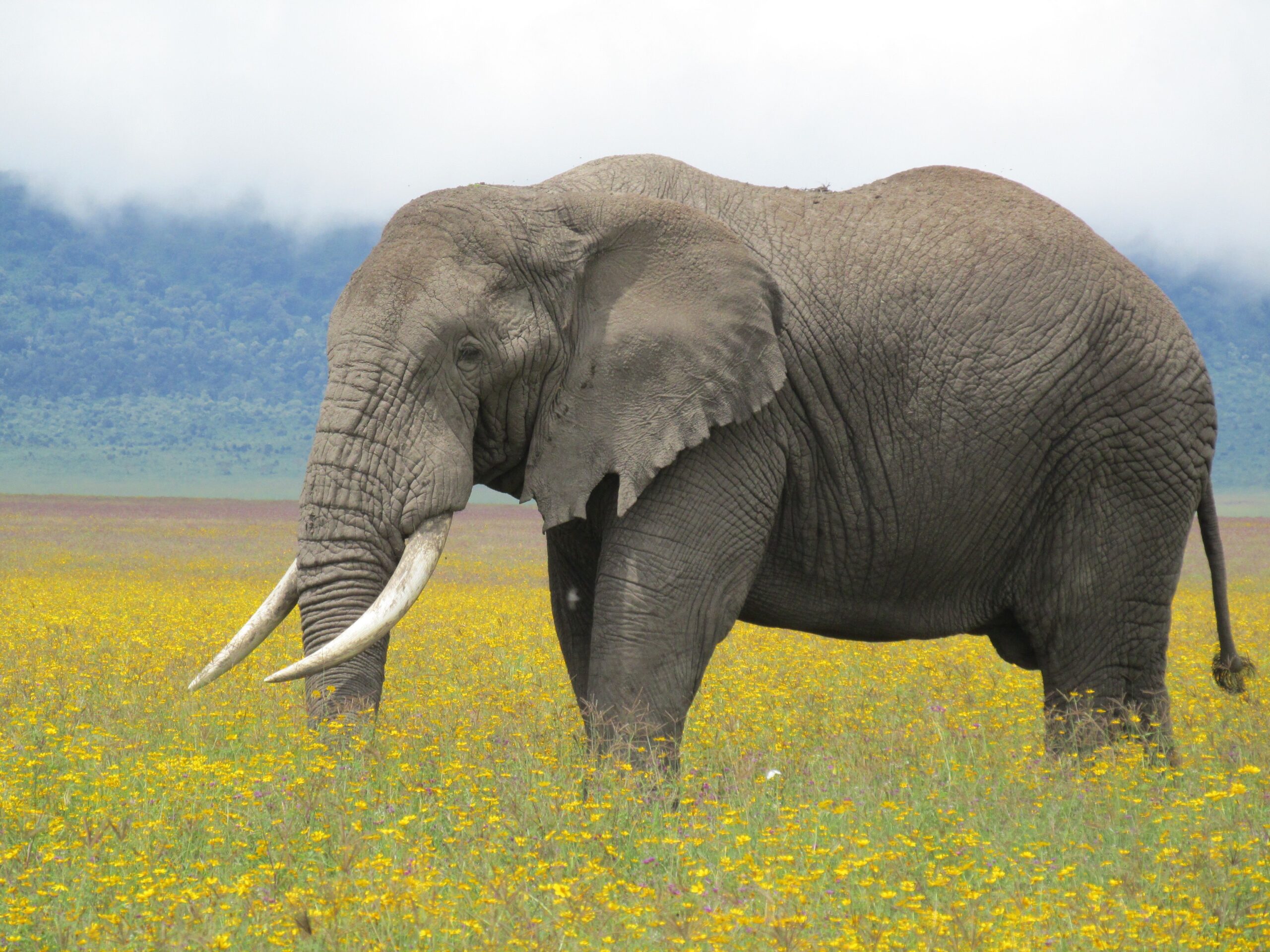
African elephant characteristics, ecology, habitat, lifespan, and is it an endangered species? I will explain about it. The African elephant is said to be the world’s largest land-based wild animal, making it one of the largest animals in the world. However, the African elephant is listed as an endangered species, and the situation is not at all good.





- Basic information about African elephants
- What are the roots and origins of the African elephant?
- What will happen to the classification?
- About the habitat of African elephants
- feature is? What kind of creature is it?
- What will your personality look like?
- What is the ecology of African elephants?
- African Elephant Vocalizations
- Seasonal Activity of African Elephants
- Walking Speed of African Elephants
- Do they bond with humans?
- About African Elephant Calves
- Are African elephants an endangered species?
- Can elephants be kept?
- Zoos where African elephants are kept (Japan and around the world)
- Introducing other animals
Basic information about African elephants
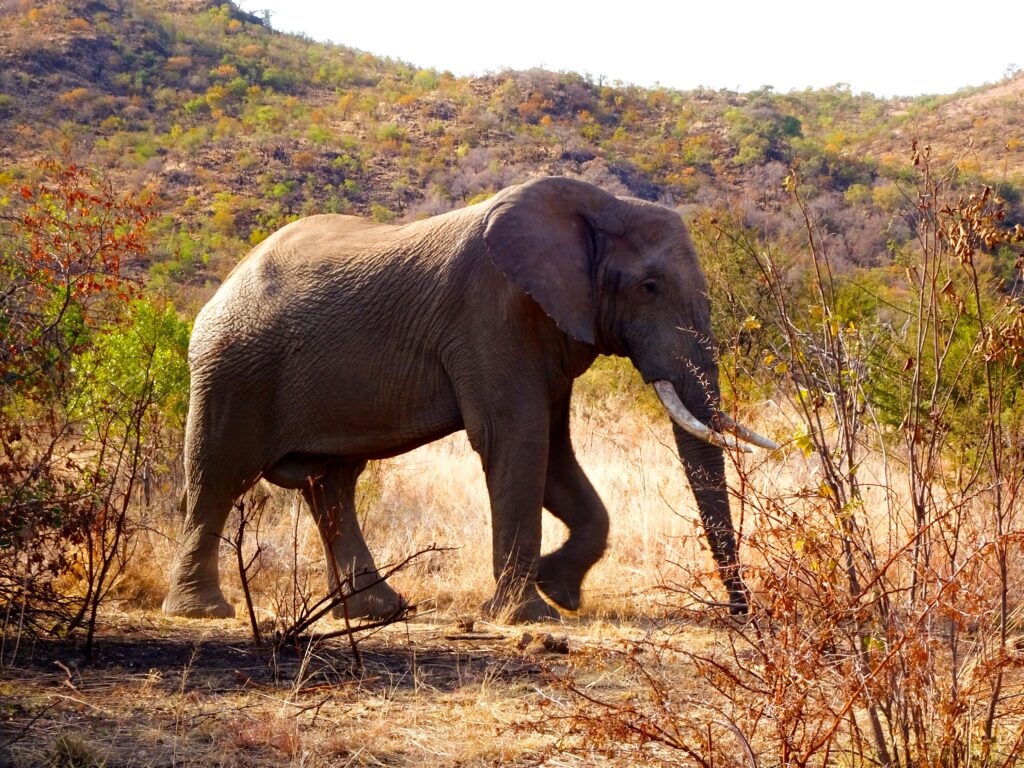
The African elephant is an elephant classified as a member of the Elephantidae family of the order Proboscidae. The scientific name is Loxodonta africana. It is one of the largest land animals in the world, weighing up to 10 tons. It is a very large animal, reaching 6-7 meters in length. There is a subspecies called the savannah elephant. A famous animal both in Japan and around the world.
| Japanese(和名) | アフリカゾウ |
| English(英名) | African bush elephant |
| scientific name(学名) | Loxodonta africana |
| classification(分類) | Mammalia、Proboscidea、Elephantidae 哺乳綱、長鼻目、ゾウ科 |
| IUCN Status(保全状況) | ENDANGERED |
| Height(身長) | 6 – 7.5m |
| Weight(体重) | 10t |
What are the roots and origins of the African elephant?
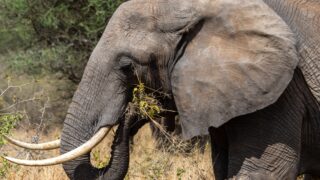
The African elephant lineage dates back to the very early stages of elephant evolution; it is a lineage that underwent unique evolution on the African continent over a long period.
This covers the modern-day
African elephant (and the African forest elephant, Loxodonta cyclotis).
🐘 Conclusion (Ultra-summary)
The African elephant is…
👉 The “oldest extant elephant lineage,” having diverged in Africa approximately 7 to 5 million years ago.
① Elephant ancestors originated in Africa
Elephant ancestors (Proboscidea) first appeared in Africa about 60 million years ago.
Early form:
A primitive mammal—neither a mammoth nor an African elephant.
Resembled a “large, semi-aquatic herbivore” more than an elephant.
② The elephant lineage diverged in Africa
About 7 to 6 million years ago:
A crucial divergence occurred here 👇
Lineage that remained in Africa → African elephant lineage (Loxodonta)
Lineage that spread to Eurasia → Mammoth and Asian elephant lineage
👉 The “ancestor of the African elephant” was established at this point.
③ Evolution of the African elephant
Subsequent evolution within Africa:
Adaptation to forests → Forest elephant (Loxodonta cyclotis)
Adaptation to savannas → Savanna elephant (large grassland elephant)
These are the two modern species:
African elephant (Savanna elephant)
Forest elephant
What will happen to the classification?
It has been revealed that the two existing elephant species, the African elephant and the Asian elephant, diverged genetically about 7.6 million years ago. It has since been revealed that African elephants and forest elephants diverged genetically at least 1.9 million years ago. Therefore, there are currently three types of elephants, and the African elephant is one of them.
| Name (名前) | academic name (学名) | body length (体長) | Weight (体重) | Habit (生息地) |
| African elephant アフリカゾウ | Loxodonta africana | 6〜7.5m | ~7.5t | South of the Sahara Desert サハラ砂漠以南 |
| Asian elephant アジアゾウ | Elephas maximus | 5〜6.4m | ~5.4t | Southeast Asia、South Asia 東南アジア、南アジア |
| African forest elephant マルミミゾウ | Loxodonta cyclotis | 4〜6m | 2.7〜6t | West Africa 西アフリカ |
Classification details
| 階級 | 分類 | 説明 |
|---|---|---|
| 界 | 動物界(Animalia) | 多細胞で自分で動く |
| 門 | 脊索動物門(Chordata) | 脊椎を持つ |
| 綱 | 哺乳綱(Mammalia) | 恒温、毛があり乳で子を育てる |
| 目 | 長鼻目(Proboscidea) | 鼻が長く、牙を持つ |
| 科 | ゾウ科(Elephantidae) | 現生ゾウの科 |
| 属 | Loxodonta | アフリカゾウ属 |
| 種 | L. africana | サバンナゾウ |
| 種 | L. cyclotis | 森林ゾウ |
About the habitat of African elephants
African elephants are found in sub-Saharan Africa. In countries such as Kenya, they live by moving around as a family. They are seen walking around every day, and the International Union for Conservation of Nature is also working to protect them.
- Savanna Elephant (Loxodonta africana africana)
Habitat
Mainly found in savannas and open grasslands of sub-Saharan Africa
Country examples:
Kenya, Tanzania (Serengeti National Park, etc.)
Botswana, Zimbabwe (Chobe National Park)
South Africa (Kruger National Park)
Found at a wide range of altitudes, from sea level to 3,000 meters above sea level
Environment
Adapted to open grasslands and sparse forests
Prefers locations with nearby water sources
Seasonal long-distance migrations (moving in search of water during the dry season)
- Forest Elephant (Loxodonta cyclotis)
Habitat
Limited to tropical rainforests and jungle areas
Mainly found in the Congo Basin in West and Central Africa
Country examples:
Democratic Republic of the Congo, Cameroon, Gabon, Equatorial Guinea, etc.
Environment
Live in densely forested areas
Eat mainly leaves, twigs, and fruit from the ground
Smaller in size and with smaller ears than savanna elephants, they are well adapted to life in jungles
- Habitat Characteristics and Behavior
Water Dependence: African elephants require several hundred liters of water per day, so they live mainly near water and rivers.
Wide Range:
Savanna Elephants: It is not uncommon for them to travel tens to hundreds of kilometers.
Forest Elephants: While their range in the forest is relatively short, they use routes that allow them to pass through the jungle.
Social Structure: They live in groups, with matriarchal groups determining the range of their movements.
- Habitat Threats
Deforestation: Habitat reduction due to agricultural development and logging
Poaching: Declining forest and savanna elephant populations due to ivory hunting
Climate Change: Prolonged dry seasons reduce water sources
feature is? What kind of creature is it?
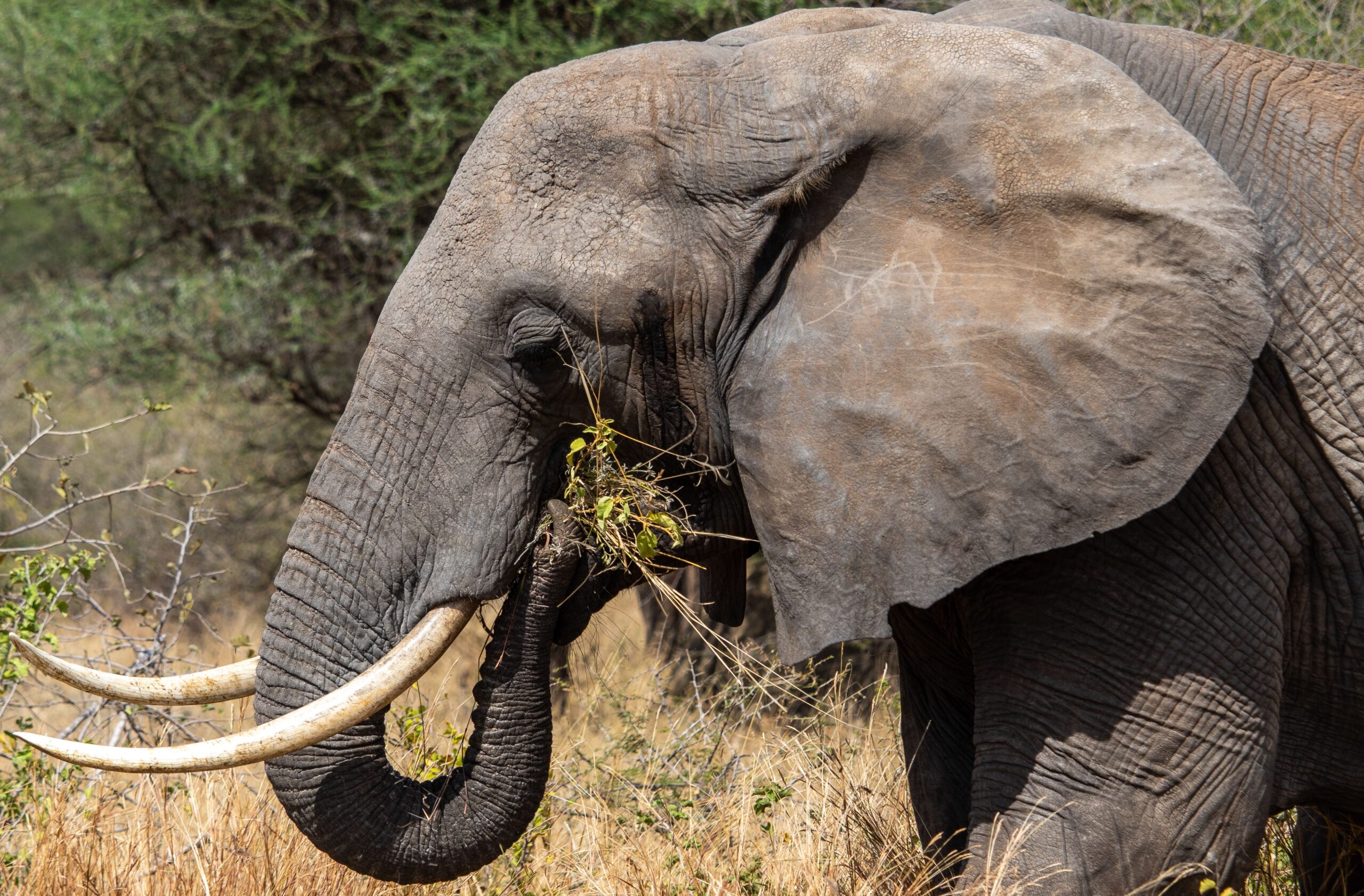
The most distinctive feature of African elephants is their auricles. It is very large and has a wide range of uses for body temperature regulation. They are also known for their very long incisors, which can be up to 350 meters long in males. African elephants usually live in savannahs and forests, and range within an area of 3,700 square kilometers. They form herds of at least 3 to 10 individuals to protect themselves from predators.
- Physical Characteristics and Appearance
Body Size: The largest land mammal
Savanna Elephant: Body length 6-7.5m, shoulder height 3-4m, weight 4-7 tons
Forest Elephant: Slightly smaller, shoulder height 2.5-3m, weight 2.5-4 tons
Ears: Large, with abundant blood vessels, used for thermoregulation (savanna elephants have particularly large ears)
Truncus (tip of nose): Dexterous, used for grasping and sucking water
Tusks: Both males and females have them (forest elephants tend to have thinner, smaller tusks)
Skin: Thick and wrinkled, used for thermoregulation and insect repellent by mud and dust baths
- Intelligence and Behavioral Characteristics
Intelligence: Very high, sometimes using tools
Memory: Able to remember water sources and dangerous locations for a long time
Learning Ability: Adjusts herd behavior through experience and social learning
- Sociality
Group Life:
Matrilineal groups dominated by females (approximately 10-30 individuals)
Males leave the group as they mature and live alone or form small groups of small males.
Communication:
Communicate through low-frequency calls and body movements.
Capable of long-distance communication.
- Diet and Ecology
Herbivory: Eat grasses, leaves, fruits, and bark.
Diet: Consume 100-200 kg of plants per day.
Water Dependence: May drink 200-300 liters of water per day.
Movement: May travel long distances in search of food and water.
- Characteristic Behaviors
Mud and Dust Bathing: Regulate body temperature and protect skin.
Play and Curiosity: Young elephants knock down trees and splash around in water.
Social and Emotional Behaviors: Touch and comfort dead companions.

What will your personality look like?
African elephants have extremely high cognitive abilities and will greet people who treat them kindly, and will attack people who treat them maliciously. Therefore, their cognitive abilities are extremely high, and can be said to be at a level that is not much different from humans.
- Sociality and Cooperation
Emphasis on Matriarchy: They live in female-dominated groups and cooperate with each other in raising children and traveling.
Mutual Helping Spirit:
They may help sick or injured elephants.
When a calf is in distress, the entire herd will protect it.
Hierarchy and Leadership:
Within the herd, the most experienced older female (the matriarch) is the leader.
The herd’s behavior and movements are determined by the leader’s experience.
- Intelligence and Emotions
High Intelligence:
Tool use, excellent learning and memory abilities.
Avoids danger based on past experiences.
Emotional Expression:
Happiness: Playing in water and interacting with other elephants.
Sadness and Mourning: Touching a dead elephant or quietly surrounding it.
Anger: Engaging in defensive behavior in the face of danger or threats.
- Gentleness and Cautiousness
Generally gentle and calm, but can become aggressive when protecting their young or their herd.
In the wild, they keep a relatively distance from humans, but may attack if startled.
Forest elephants, living in dense jungles, are relatively introverted and cautious.
Savanna elephants, living in open spaces, are sociable and active.
- Curiosity and Playfulness
Young elephants are very curious and will touch and play with things.
They engage in behaviors that combine learning and social play, such as knocking down trees and playing in muddy water.
What is the ecology of African elephants?
African elephants drink 100-300 liters of water per day and eat a lot of plants. They are large animals with big appetites, which often surprises humans. They reproduce viviparously. Males compete with each other for females in heat, and the gestation period is 22 months. They give birth to one baby at a time, and the nursing period is about two years. Records of elephants say that the lifespan is 60-80 years. The reason for their long lifespan is that animals with large bodies and low pulse rates tend to live longer.
- Habitat
Savanna Elephant (Loxodonta africana africana)
Live in the savannas and open grasslands of sub-Saharan Africa.
Prefers to live near water sources and travels long distances in search of water during the dry season.
Forest Elephant (Loxodonta cyclotis)
Live in tropical rainforests and jungles.
Live deep in jungles, feeding on leaves, fruits, and bark.
- Diet
Completely herbivorous.
Food:
Grass, leaves, fruits, bark, and twigs.
Diet:
Consume 100–200 kg of plants per day.
Water:
May require 200–300 liters of water per day.
- Behavioral Patterns
Daytime: Eating, moving, and resting
Nighttime: Occasionally active, especially in search of water and food
Range of Movement:
Savanna Elephants: May travel tens to hundreds of kilometers
Forest Elephants: Relatively short distances, but efficiently navigate through jungles
Special Behaviors
Mud and Dust Bathing: Thermoregulation and parasite removal
Play Behavior: Young elephants chop down trees and play in water
Communication:
Elephants communicate over long distances using low-frequency calls
Information is also exchanged within the herd through touch and body movements
- Social Structure
Matriarchal Group: Consists of females and their offspring (10-30 individuals)
Male Lifestyle: As they grow, they leave the matriarchal group and live alone or in small groups of males
Leadership: An older female (matriarch) leads the herd
Raising: The entire herd protects and teaches the calves how to learn and behave
- Reproduction
Gestation Period: Approximately 22 months (one of the longest among mammals)
Birth: One offspring per offspring
Rearing:
Suckling for 2-3 years
Raises through group protection and social learning
Maturity:
Females: Can become pregnant at age 10-12
Males: Can breed at around age 15, but strong males mate with the group after age 20
What are the natural enemies of African elephants?
African elephants have no natural enemies. African elephants are very strong animals and can lift up to 350 kilograms. Therefore, only people with weapons can defeat them.
African Elephant Vocalizations
Like Asian elephants, African elephant vocalizations consist of a two-layered structure—audible sounds and infrasound (ultra-low frequency sounds)—but theirs tend to be lower in pitch, louder, and capable of traveling greater distances.
🐘 ① Trumpeting (Audible Sound)
This is the sound most people associate with elephants.
Sound Characteristics
“Pa-oooon!”
Produced by raising the trunk and vocalizing forcefully
Extremely high volume (comparable to a roar or shout)
Situations
Surprise or alertness
Intimidation (against enemies, lions, etc.)
Excitement
Emergency signals within the herd
👉 African elephant trumpeting tends to sound “wilder” or more aggressive than that of Asian elephants.
🌊 ② Low-Frequency Rumbles (Core Communication)
This is actually the elephants’ primary language.
Sound Characteristics
Humans hear only a low “rumbling” or “throbbing” sound
Sounds bordering on physical vibration
Can travel several kilometers—sometimes up to 10 km or more
Usage
Locating other herds
Calls between mothers and calves
Reproductive signals
Sharing information about danger
👉 “Long-distance communication” spanning the entire savanna
🐘 ③ Unique Characteristics of African Elephants
African elephants specifically feature:
Large ears → Aid in thermoregulation and sound amplification
Powerful low-frequency vocalizations
Wide-ranging acoustic communication between herds
👉 Animals that share information about the landscape itself through sound
🌍 ④ Ground-Based Communication
Beyond vocalizations, African elephants also:
Send signals through the ground via foot vibrations
Detect these signals through the soles of their feet
Exchange information even when out of visual range
Seasonal Activity of African Elephants
African elephant activity is governed even more strongly than that of Asian elephants by the cycle of water resources associated with the wet and dry seasons. In the savanna environment, seasonal changes dictate their very survival strategies.
🌧️ Wet Season Activity
🌿 Characteristics: Dispersal, breeding, and abundant food
When the rains come, the savanna turns lush and green.
🐘 Behavior
Herds disperse and travel over wide areas
High foraging efficiency due to abundant grass, leaves, and fruit
Can sustain life even at small water sources
Relatively stable movement for mothers and calves
🧠 Key Points
Food is distributed “widely and shallowly” (spread out)
Herd cohesion becomes somewhat looser
Breeding activity intensifies
👉 “A season of free-roaming dispersal”
☀️ Dry Season Activity
🌵 Characteristics: Mass gatherings around water and long-distance travel
The dry season is the defining period of the African savanna.
🐘 Behavior
Travel distances can exceed 50–100 km
Massive herds congregate at rivers and water sources
Foraging extends to tree branches, bark, and roots
Intense competition for water
🧠 Key Points
Movement is restricted because water sources are “scattered”
Herds coalesce into large groups
Increased contact with other species (lions, buffalo)
👉 “A season of survival and congregation”
🌡️ Hot Season Activity (Peak heat)
*Often overlaps with the dry season
🐘 Behavior
Shift toward nocturnal activity (resting during the day)
Resting in the shade of trees or at water sources during the day
Increased frequency of mud baths and water baths
Heat dissipation through the ears becomes crucial
👉 “Heat stress avoidance mode”
Walking Speed of African Elephants
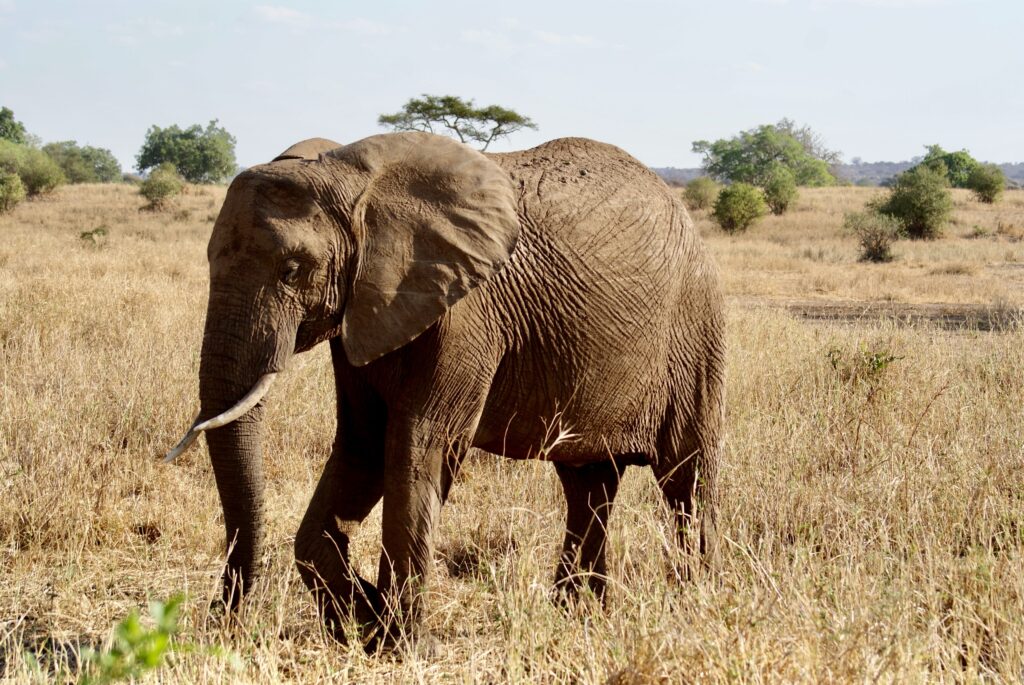
The walking speed of African elephants generally falls within the same range as that of Asian elephants; however, due to their larger size, they are characterized by a movement style that is even more deliberate and stable.
🚶 Normal Pace (Standard Walk)
Approx. 4–6 km/h
Comparable to a human’s brisk walk
Standard travel speed for a herd
👉 An energy-efficient pace for long-distance travel across the savanna
🐘 Brisk Pace (Slightly Hurried)
Approx. 6–10 km/h
Used when avoiding danger or moving toward a watering hole
A speed that calves can just barely keep up with
🐘 Maximum Speed (Short-Distance Dash)
Approx. 20–25 km/h
Can be maintained for only a very short time
Used for intimidation, charging, or fleeing
👉 More of a high-speed charge by a heavyweight than a “run”
Do they bond with humans?
African elephants are animals that learn to build a relationship of trust with humans, rather than simply becoming “tame” or affectionate in the way a pet might. While they do not display the kind of submissiveness seen in domesticated animals like dogs, they can form incredibly strong bonds when the right conditions are met.
👍 When they trust someone
They do not flee when approached
They gently touch with their trunks
They call out using vocalizations
They clearly distinguish their caretakers from others
They may even treat the person as part of the herd
👉 They remember specific individuals as “safe”
⚠️ When wary or hostile
They keep their distance
They display aggression (e.g., trumpeting)
There is a risk of charging
The entire herd engages in defensive behavior
👉 In the wild, they generally view humans as potential threats
🧠 Why do they “seem” to bond with humans?
African elephants:
Possess exceptional individual recognition abilities
Retain memories spanning decades
Learn from human behavior
Clearly express emotions (fear, a sense of security, anger)
👉 Consequently, once they determine that a person is safe, their behavior becomes calm and predictable
About African Elephant Calves
- Birth and Early Characteristics
Gestation Period: Approximately 22 months (one of the longest among mammals)
Birth: Usually one calf, occasionally twins
Weight: Approximately 100-150 kg at birth
Body Length: Approximately 1 m
Appearance:
Nose, ears, and tusks are underdeveloped
Skin is soft and has few wrinkles
Hair is sparse and decreases with age
- Rearing and Protection within the Herd
Nursing by the Mother: Calves receive nutrition through breast milk for 2-3 years
Herd Support:
Other females (“midwives”) in the maternal herd protect the calf
The entire herd is involved in rearing and helps with learning
Social Learning:
Learning how to move, find water, and select food
Imitating behaviors such as tool use and mud bathing
- Behavioral Characteristics
Curious and playful:
Playful with other baby elephants and young males
Killing trees and grass, playing in the mud, bathing, etc.
Ensure safety while moving:
Stay close to the herd and be watched over by your mother and sisters
Communication:
Communicate with other elephants through soft sounds and body movements
- Developmental Process
Cub (0-5 years):
Feeds on both breast milk and plants
Learns basic locomotion and social behaviors
Adolescent (5-10 years):
Develops independence and learns status and role within the herd
Develops strength and cooperation through play
Sexual Maturity:
Females: Can conceive at approximately 10-12 years old
Males: Can breed at approximately 15 years old, but stronger males do not mate until they are 20 years old or older
- Natural Predators and Survival Rate
Although young animals are protected by their pack, they are vulnerable to predators such as lions, leopards, and hyenas.
Cooperation within the pack is essential for survival.
Survival rates increase with age.
Are African elephants an endangered species?
The estimated population of African elephants is 227,900. Unfortunately, it has been designated as an endangered species by the IUCN and is also listed in Appendix I of the Washington Convention, which places strong restrictions on international trade. Why have African elephants been designated as an endangered species? Let me explain why. It turns out that the problem is caused by us humans. For this reason, various projects and activities such as forest protection are currently underway.
Overhunting for ivory continues
Ivory is the reason why wild elephants have been overhunted in large numbers by humans. Ivory is a beautiful material and is highly sought after in the arts, crafts, and manufacturing industries, and sells for a high price. In some regions, illegal poaching and overhunting of living creatures has progressed in society without laws, and elephants are being killed one after another by humans.
Rapid progress in land development
Southeast Asia, South Asia, and Africa are all experiencing rapid economic development and land development. As I explained above, elephants eat large amounts of grass, so if there are no trees left in any place, it means that they will no longer be able to reproduce and survive.
Elephant Day is set
“World Elephant Day” was established on August 12, 2012 by Canadian film director Patricia Sims and a Thai conservation organization as a day to call for the protection of elephants around the world. The purpose is to overcome the threat of extinction and to exchange information and donations from friends to protect elephants. We are asking for your cooperation to protect the declining elephant population. As has been widely reported in the news, we want everyone to be aware of the situation of elephants, which are abundant in the southern part of the African continent, and are registered on the Red List due to overhunting of their tusks and other parts.
Can elephants be kept?
Can elephants be kept as pets? It’s very difficult. First of all, all elephants are endangered species and are strictly protected. Also, since they require a large amount of food, it is wise to assume that it would be extremely difficult for ordinary people to keep them as pets. It is safe to see them at a zoo or in a local national park. They can be seen in groups, mainly in zoos in the United States. If possible, look at materials, etc.
- Body Size and Dietary Constraints
Weight: African elephants weigh 4-7 tons, while Asian elephants weigh 2-5 tons.
Diet:
Eat 100-200 kg of plants per day.
Water requirements: 200-300 liters per day.
Exercise: In the wild, elephants can travel tens to hundreds of kilometers, requiring a large area of land.
→ Securing the space, food, and water required in an average household is practically impossible.
- Sociality and Psychological Stress
Elephants are highly sociable and intelligent animals.
Matrilineal and intra-group social relationships are important, and isolation can cause stress and damage their health.
Lack of opportunities for play and learning can lead to behavioral abnormalities (repetitive behaviors and aggression).
→ Solitary captivity places a significant psychological burden.
- Legal Restrictions
Elephant captivity is strictly regulated in many countries.
Internationally, trade is controlled by the Convention on International Trade in Endangered Species of Wild Fauna and Flora (CITES), making it nearly impossible for individuals to keep elephants.
- Actual Examples of Captivity
Mainly kept in zoos and safari parks
Sufficient exercise areas
Professional animal care staff (veterinarians and trainers)
Appropriate diet, social interaction, and health management
They have also been kept in circuses and for tourism, but problems with stress and abuse have been noted.
- Summary
Elephants are highly unique creatures in terms of their physique, diet, sociality, and intelligence.
Keeping them in an ordinary home is impossible.
Captivity is only possible in facilities with large premises, specialized staff, and a sufficient social environment.
Protecting wild elephants and preventing illegal trade is important.
Zoos where African elephants are kept (Japan and around the world)
African elephants are kept in zoos all over the world, but currently, there is a trend towards consolidation into large facilities focused on conservation and breeding.
🇯🇵 Major zoos in Japan where African elephants can be seen
While the number of elephants kept in captivity is declining in Japan, they can still be seen in several facilities.
Ueno Zoo (Tokyo)
Tama Zoological Park
Higashiyama Zoo and Botanical Gardens
Tennoji Zoo
Fukuoka City Zoo
👉 Due to space constraints and welfare standards, elephant facilities in Japan are likely to become even more concentrated in the future.
🌍 World’s Leading Elephant Zoos
🇺🇸 United States (Largest)
San Diego Zoo
Bronx Zoo
Oregon Zoo
👉 Highly advanced in group keeping and breeding research
🇪🇺 Europe
Zoo Berlin
Chester Zoo
Zoo Zurich
👉 Characterized by high animal welfare standards and large enclosures
🇹🇭 🇮🇳 Asia (Cultural Center)
Thai Elephant Sanctuary (around Chiang Mai)
National Parks and Reserves in India (Many in a semi-wild state)
👉 Thailand and India, in particular, blend “zoos + conservation + culture”
Introducing other animals

コメント