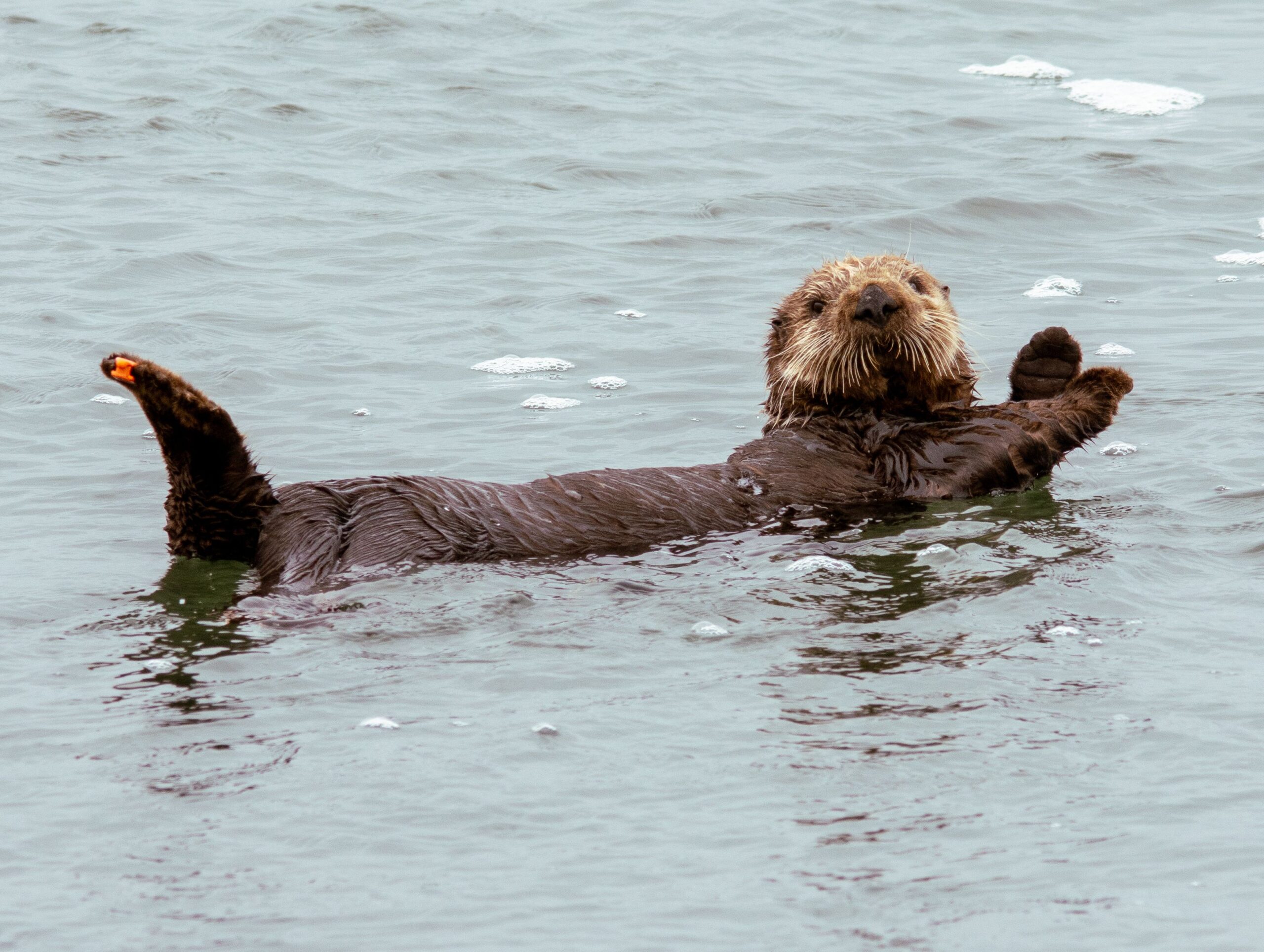
What kind of animal is the sea otter, which is currently a popular and endangered species? We will introduce and explain its characteristics, ecology, breeding, and habitat. Sea otters are cute and popular animals that live in close contact with water. This species is the only living species in the genus Otter, and it is one of the animals that can often be seen in aquariums and zoos.



- What is a sea otter? About basic status
- What are the roots and origins of the sea otter?
- About sea otter habitat
- feature is? What kind of creature is it?
- What is your personality like?
- What is the ecology of sea otters?
- Sea Otter Vocalizations
- Seasonal Activities
- About Diving
- What’s his personality like?
- Are sea otters an endangered species?
- Can sea otters be kept?
- Facilities Housing Sea Otters (Japan & Worldwide)
- Introducing other animals
What is a sea otter? About basic status
Currently, sea otters are mammals belonging to the Mustelidae family. They are 100-130cm long and weigh 22-45kg. Their scientific name is Enhydra lutris, and in kanji it is written as “sea otter.” Of the extant species, this is the only one that makes up the genus Enhydra. A list of information is provided below. They have a cute habit of cracking shells, which is why they are popular. Nowadays, they are an animal that is rarely seen.
| Japanese(和名) | ラッコ |
| English(英名) | Sea Otter |
| scientific name(学名) | Enhydra lutris |
| classification(分類) | Mammalia、 Carnivora、Mustelidae、Enhydra 哺乳綱、食肉目、イタチ科、ラッコ属 |
| IUCN Status(保全状況) | ENDANGERED |
| Length(体長) | 100-130cm |
| Weight(体重) | 22-45kg |
What are the roots and origins of the sea otter?
Tracing the roots of the sea otter (Enhydra lutris) reveals that its ancestors were land-dwelling animals belonging to the weasel family (Mustelidae). In other words, they share a common ancestor with weasels, otters, and badgers.
Origins dating back about 5 million years
Genetic analysis indicates that the sea otter’s ancestors diverged from other otter species approximately 5 million years ago. Subsequently, they evolved adaptations for life in the ocean, eventually becoming the sea otters we see today.
Where modern sea otters originated
Fossil and genetic research suggests that modern sea otters likely evolved in the region stretching from northern Japan (around Hokkaido) to the Russian Far East. From there, they expanded their range to:
The Kuril Islands
The Aleutian Islands
Alaska
The west coast of Canada
California, USA
Why did they come to live in the ocean?
While their ancestors lived much like river or lake otters, the ocean offered an abundance of food sources—such as sea urchins, shellfish, crabs, and other benthic organisms. As more individuals began foraging along the coast, successive generations adapted to a life almost entirely spent in the marine environment. Although sea otters are marine mammals, they did not inhabit the ocean as long ago as whales or dolphins; they are animals that ventured into the sea relatively recently.
Evolutionary traits acquired by sea otters
Possessing the densest fur in the world (estimated at over 60 million to 100 million hairs)
Retaining body heat through fur rather than subcutaneous fat
Using dexterous forepaws to employ stones as tools
Spending the majority of their lives on the ocean surface
Eating and resting while floating on their backs
These traits evolved to enable survival in the cold waters of the North Pacific.
About classification
Sea otters are thought to have branched off from a common ancestor with otters about 5 million years ago. In other words, they were thought to be in the same category as otters. There are the following subspecies of sea otters. In the sea, you can see males and females cracking shells with their stomachs using large stones. They are different animals from seals and sea lions.
| Name (名前) | scientific name (学名) |
| Western sea otter | Enhydra lutris lutris |
| Eastern sea otter | Enhydra lutris kenyoni |
| Southern sea otter | Enhydra lutris nereis |
Enhydra lutris lutris
A member of the sea otter family that lives in the Kurile Islands and the Komandoru Islands. This is the largest sea otter among them.
Enhydra lutris kenyoni
This sea otter lives from the Aleutian Islands to Alaska, and is also called the Alaskan sea otter.
Enhydra lutris nereis
It is called the California sea otter. This sea otter lives on the California coast and was previously distributed in Mexico.
About sea otter habitat
Wild sea otters live in the North Pacific Ocean, from the North American continent to the Kuril Islands.
① Geographic Distribution
Limited to the North Pacific Coast
Sea otters are distributed in a band along the edge of the North Pacific.
Russia: Kamchatka Peninsula, Kuril Islands
Alaska: Aleutian Islands, Gulf of Alaska
Canada: British Columbia
USA: Coastal California
Japan: Eastern Hokkaido (rare around Nemuro and Shiretoko)
They do not live near the equator or in warm waters.
② Preferred Environment
Kelp forests are key.
Areas with giant kelp
Abundant seaweed and relatively calm waves
Abundant shellfish and sea urchins for food
For sea otters, kelp forests are important spaces that serve as homes, dining areas, and safe havens.
③ Why are they limited to the coast?
They cannot find food in the deep sea.
They can only dive to a depth of about 100m.
Shellfish, sea urchins, and crabs are concentrated along the coast.
They cannot survive in the open ocean offshore.
④ Reasons why they do not come onto land
They rely on fur, not fat, to maintain body temperature.
Their fur does not need to dry.
They rest, sleep, and give birth at sea.
They spend almost their entire lives at sea.
⑤ Habitat change and human impacts
Past
Dramatic decline due to overfishing for fur.
Present
Partial recovery due to protection
However, significant regional differences exist.
Current threats
Marine pollution
Oil spills
Climate change
Competition with fisheries
feature is? What kind of creature is it?
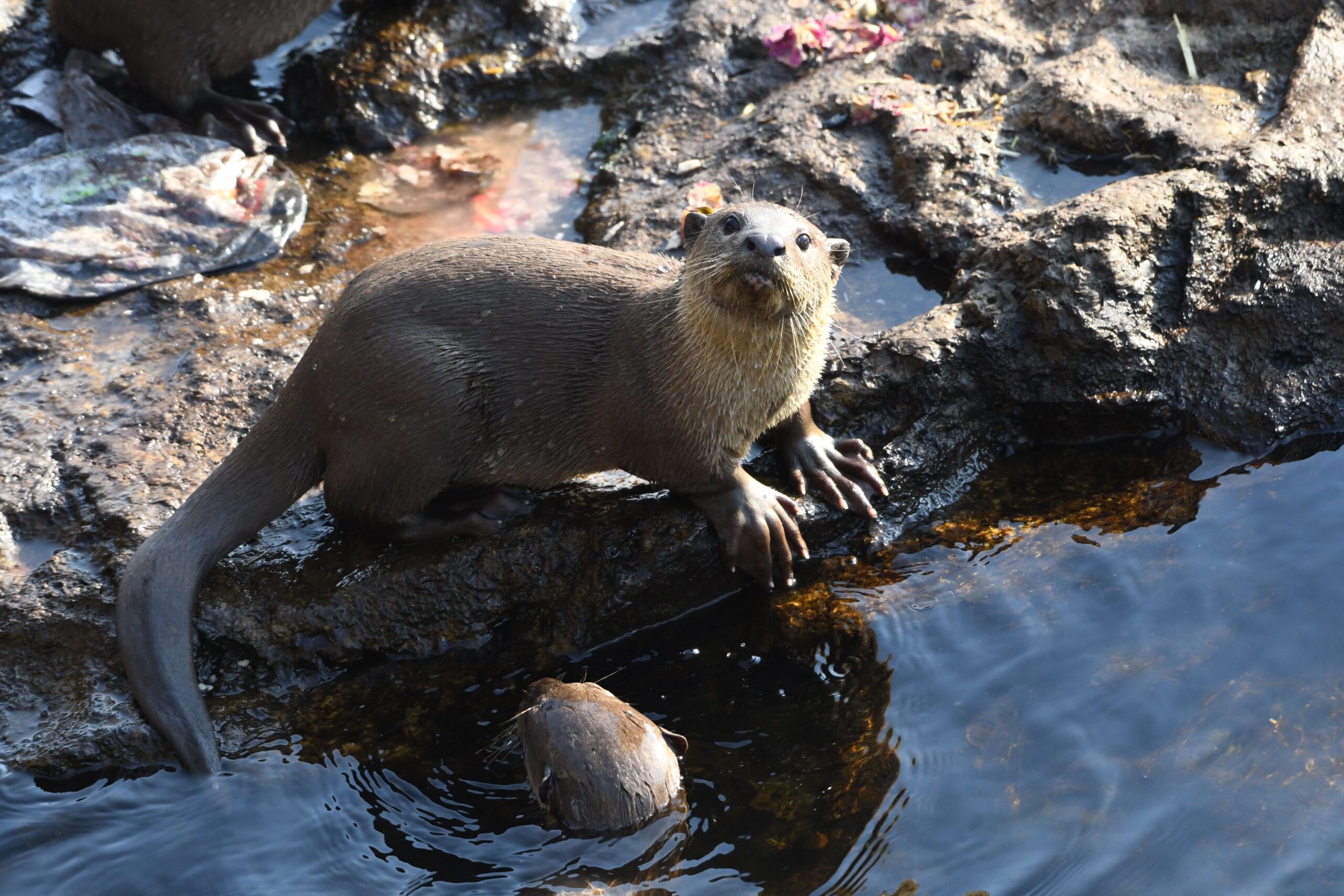
Its body is long and its head is flat and large, but its neck is short and its ears are small. Their fur is brown and they have a very good sense of smell. Sea otters live primarily in the water and rarely come onto land. It is distributed from California in the United States to Alaska, the Aleutian Islands, and coastal areas such as Kamchatka. They often rest during the day and do not leave the water at night.
① The world’s thickest fur
Over 100,000 hairs per cm2
The densest among mammals
Almost no subcutaneous fat
They use their fur to protect their body temperature, making them extremely cold-resistant.
② They spend almost their entire life at sea
They never come onto land
Sleep, give birth, and eat at sea
They are famous for floating on their backs
They are known as “floating marine dwellers.”
③ They are one of the few animals that use tools
They use stones to crack shells
They build a “workbench” on their chest
Each individual has a preferred stone
They are highly intelligent and have the ability to learn.
④ They have an extremely voracious appetite
They eat 20-30% of their body weight per day
Main diet: Sea urchins, shellfish, and crabs
They eat almost every waking hour
They are “continuous eaters” with a high metabolic rate.
- High diving ability
Breath-holding ability: Approximately 5 minutes
Diving depth: Up to approximately 100m
Well-developed whiskers (sensory hairs)
What is your personality like?
Sea otters are very intelligent creatures with gentle personalities, and are able to communicate with humans in detail to some extent through their daily actions and activities.
① They are highly curious and intelligent.
They show a strong interest in their surroundings.
They use stones and tools to distinguish between different species.
They learn new foraging techniques.
They are highly intelligent and learn to learn.
② They appear gentle but are surprisingly strong-willed.
They are generally calm.
They are aggressive in their territories and feeding areas.
They fight (especially between males).
They may have cute faces, but they are wild in the wild.
③ They are highly social.
They form groups (rafts).
They sleep holding hands.
They are close to their peers.
They value cooperation and a sense of security.
④ They are sensitive and sensitive to stress.
They are sensitive to changes in their environment.
They are sensitive to noise and human influences.
They are difficult to manage in captivity.
Cute does not necessarily mean easy to care for.
⑤ They are highly maternal.
They never leave their young.
They groom thoroughly.
Losing their young is psychologically devastating.
What is the ecology of sea otters?
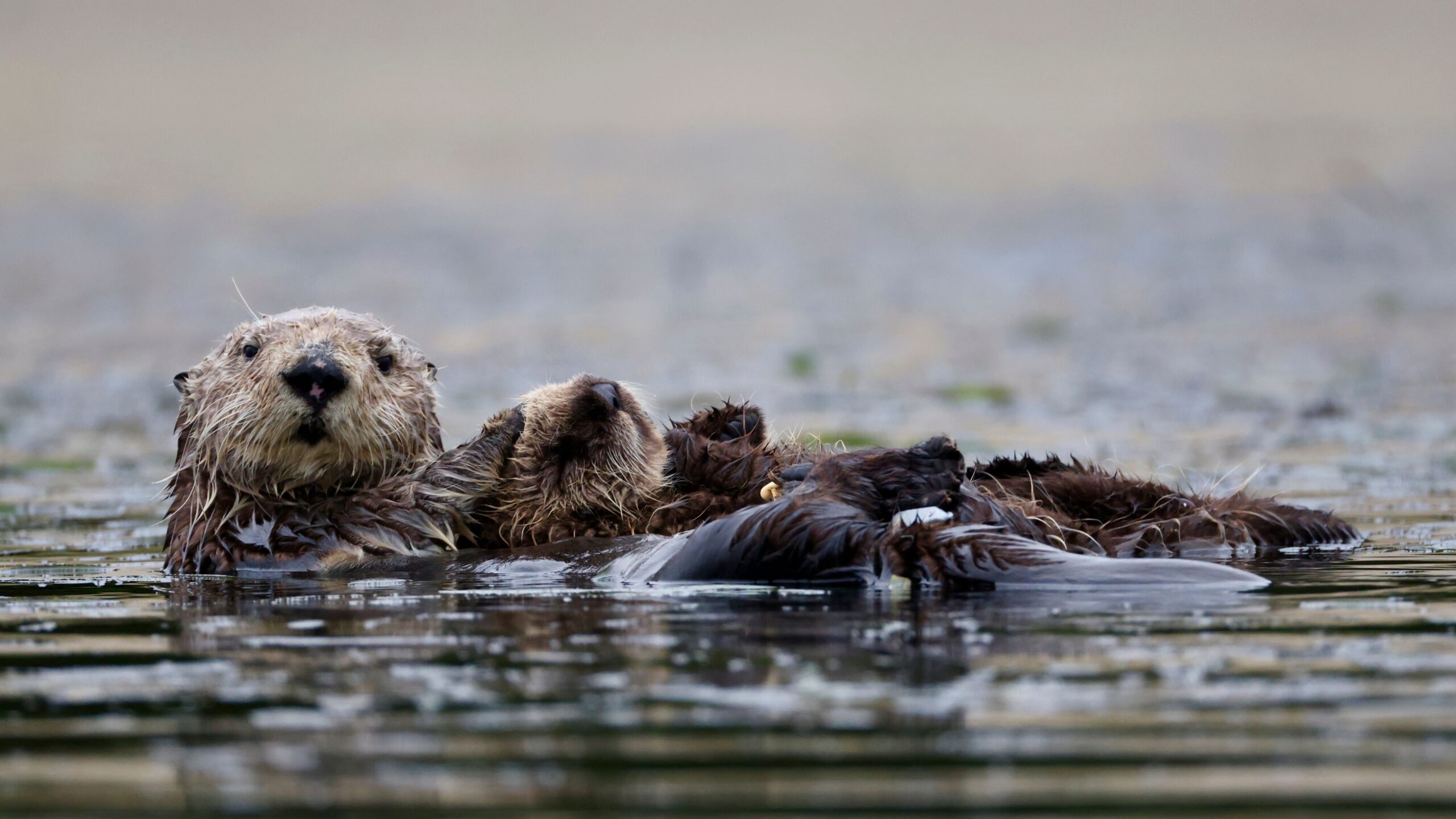
Sea otters live on crustaceans such as sea urchins, shellfish, and crabs, as well as fish. Breeding often takes place around April, and it is possible to give birth to one calf at a time. Parents carry their children on their chests or backs when swimming while raising their children. The lifespan is said to be about 15 years.
① Daily Rhythm
Most of their waking time is spent eating.
Diving
Catching
Eating
Grooming
Most of their waking time is spent eating.
Resting
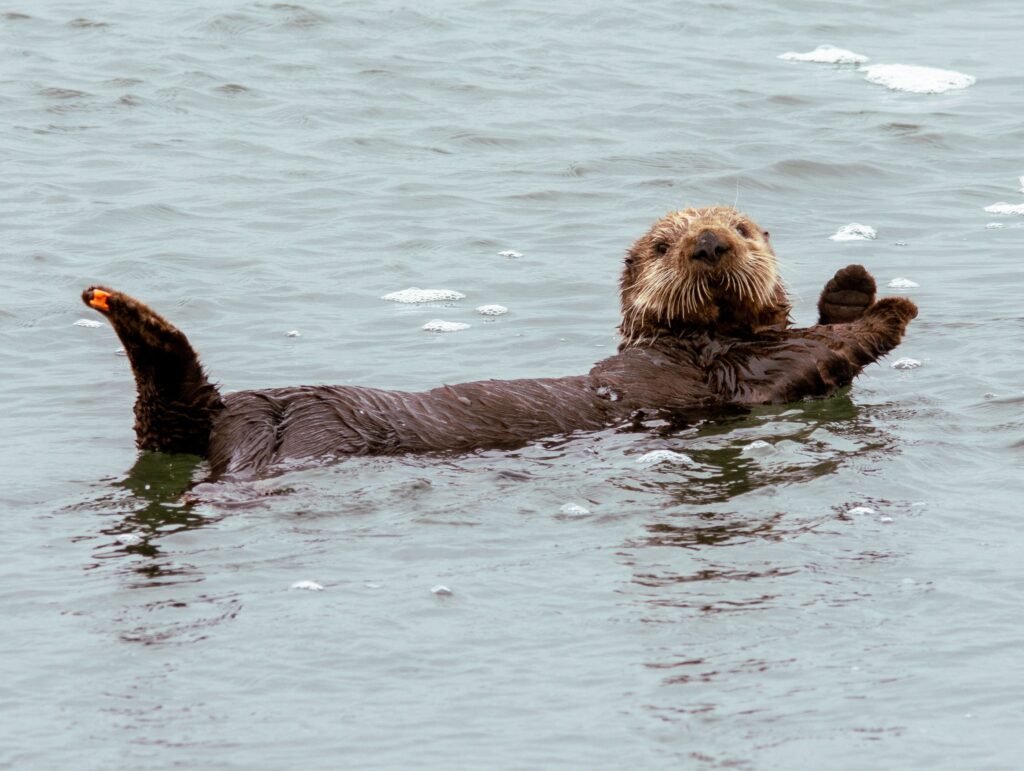
Floating on their backs
Tangling their bodies in seaweed to prevent drifting away
Often floating in schools
② Movement and Behavior
Excellent swimmers
Propulsion using their hind legs and tail
Rarely come onto land
Spend almost their entire life in the ocean
③ Diet (What do they eat?)
Main diet
Sea urchins
Abalone and shellfish
Crabs
Starfish
Octopus
Feeding characteristics
Diving time: Approximately 1-5 minutes
Diving depth: Up to around 100m
Using stones to crack open shellfish (using tools)
They must eat 20-30% of their body weight per day to survive.
④ Maintaining body temperature and grooming
Almost no subcutaneous fat
Insulating with fur
Spends most of the day grooming
Dirty fur = life-threatening condition
Why they are extremely vulnerable to oil pollution.
⑤ Breeding and rearing
Reproduction
No specific breeding season (varies by region)
Gestation period: Approximately 6 months
Rearing
Usually one calf
Solo mother rears calves
Calves live on the mother’s tummy
Keeps calves afloat while unable to swim
The burden on the mother is enormous.
What are the natural enemies of sea otters?
Sea otters’ natural enemies are killer whales and sharks. However, sea otters generally do not have very strong enemies.
Sea Otter Vocalizations
Sea otters are surprisingly vocal animals that use a variety of calls depending on the situation.
Their primary vocalizations include the following:
“Kyu-kyu”: A high-pitched sound often made by pups to call their mothers.
“Pii-pii”: Used when hungry, seeking affection, or trying to get attention.
“Kuk-kuk” / “Chat-chat”: Used for communicating with others or signaling mild alertness.
“Gyaa” / “Kii”: Loud calls made when startled or when issuing a threat.
“Koon”: A gentle sound used by mothers and pups to confirm each other’s proximity.
Sea otter pups, in particular, are very vocal, using these sounds to keep track of their mothers’ locations.
Unlike dolphins or sea lions, which often project loud calls over long distances, sea otters primarily use high-pitched vocalizations suited for short-range communication.
Seasonal Activities
Sea otters do not hibernate and live in the ocean year-round. However, their activities—such as breeding, raising young, and foraging—vary by season.
🌸 Spring (March–May)
Seaweed (such as kelp) grows vigorously, and sea otters often wrap themselves in it while resting.
They actively feed on sea urchins, shellfish, and crabs to build up their physical strength.
In some regions, mother-pup pairs are frequently seen during this time.
☀️ Summer (June–August)
The sea is relatively calm, making it an easier time to forage.
Mothers teach their pups how to swim and catch prey.
They groom frequently to trap air within their fur, maintaining their ability to stay warm.
🍂 Autumn (September–November)
Foraging may increase as they secure sufficient nutrition in preparation for winter.
Young individuals may expand their range and move to new territories.
Breeding activity intensifies in some regions.
❄️ Winter (December–February)
They do not hibernate, even when the cold is severe.
To maintain body temperature, they may consume food equivalent to 20–30% of their body weight daily.
On days with rough weather, they rest in sheltered coves or areas dense with seaweed to avoid the waves.
Year-Round Habits
They spend the majority of each day foraging and grooming.
Grooming is essential for insulation; by trapping air within their fur, they maintain their body temperature even in the cold ocean.
Their primary diet consists of seafloor-dwelling invertebrates such as sea urchins, shellfish, crabs, shrimp, and octopuses.
Unlike deer or bears, sea otters do not have a strictly defined breeding season. While breeding and giving birth can occur year-round, some regions may see peak seasons for births.
About Diving
Although sea otters are marine mammals, they do not dive as deeply or for as long as whales or seals. Their diving behavior is characterized by repeated, short dives to forage on the seafloor.
Diving Capabilities
Typical dive duration: 1–3 minutes
Maximum dive duration: Around 5 minutes (rare)
Common diving depth: 10–20 meters
Maximum recorded depth: Approximately 40–50 meters
What do they do while diving?
Sea otters dive to the seafloor and use their forepaws skillfully to gather food.
Their main prey includes:
Sea urchins
Abalone
Bivalves (such as scallops)
Crabs
Shrimp
Octopuses
Sea snails
Tool Use (Using Stones)
Sea otters are among the few mammals known to use tools.
When they find a stone while diving:
They tuck the stone into their forepaws or the loose skin under their armpits (a pocket-like area).
They gather shellfish or sea urchins.
They surface.
They use their bellies as a work surface to crack open shells with the stone.
This behavior is also known to be passed down through learning.
Physical Adaptations for Diving
Sea otters possess characteristics well-suited for diving:
They can store oxygen in their large lungs.
They lower their heart rate while diving to conserve oxygen.
They swim efficiently using their hind feet and tail.
They use their long whiskers (sensory hairs) to locate prey even in murky water.
What’s his personality like?
① Immediately after birth (neonatal stage)
Appearance
Fluffy, light cream-colored fur
Fur contains a large amount of air
More buoyant than adult animals
Condition
Cannot swim
Cannot dive
Completely dependent on mother
A “natural lifebuoy” that floats in the sea.
② Life of a young animal
Daily life
Spending time on mother’s stomach
Floated on the surface while mother dives
Entangled in seaweed to prevent being washed away by waves
Diet
Initially breastfed only
Gradually introduced to shellfish and sea urchins
Learning by observing how to use tools
③ Mother’s parenting behavior
Always staying close to the young
Extensive grooming
Foraging for food for the young
Mother is extremely overworked.
④ Swimming and diving practice
They begin playing in water within a few weeks of birth
They are repeatedly submerged (a semi-Spartan training)
As their fur regrows, their buoyancy decreases
Many youngsters drop out at this stage.
⑤ The process to independence
They begin diving independently at 4-6 months of age
They learn to catch their own food
They separate from their mother and become independent
⑥ Dangers to youngsters
Death of mother = immediate crisis
Malnutrition
Waves and storms
Killer whales and sharks
Anthropogenic impacts (oil and fishing gear)
Are sea otters an endangered species?
Sea otters are listed as an endangered species. By the beginning of the 20th century, the population had declined to an estimated 1,000 to 2,000 individuals, and they are in a very dangerous state. This is due to the following reasons. It is also listed in Appendix II of the Washington Convention. There are many problems, there is a possibility of extinction, and there is a need for protection.
spread of infectious diseases
In California, their population has declined considerably due to damage caused by a parasite called Toxoplasma gondii. In immunocompromised states, the condition can be serious or even fatal.
Overfishing continues unabated
Overhunting of sea otters for their fur continues unabated. Because of their high-quality fur, their numbers have declined significantly due to overhunting for this purpose, and the government is beginning to take steps to regulate them.
body hair contaminated with oil
Sea otters are animals that live at sea. Due to oil spills, the number of deaths due to oil contamination of body hair is increasing. Sea otters are increasingly losing body heat to seawater and freezing to death. Many people die due to accidents.
Can sea otters be kept?
Sea otters are designated as an endangered species. Furthermore, international trade is severely restricted by the Washington Convention, making it extremely difficult for the general public to keep them. In Japan, they can be seen in aquariums at facilities such as Toba Aquarium and Marine World Uminonakamichi. It is recommended as it has been reported in the news. It is exhibited in areas all over the country (Hokkaido, Tokyo, Fukuoka, etc.). If you have good access and time, let’s see the popular sea otters.
① Strictly Protected by Law
Sea otters are strongly protected internationally.
Convention on International Trade in Endangered Species of Wild Fauna and Flora (CITES)
Capturing, transporting, and keeping sea otters is prohibited in many countries.
Personal ownership is prohibited in Japan.
Trading and transferring sea otters are also illegal in principle.
② Endangered Species
Historically, their population has drastically declined due to overfishing for fur.
Still endangered in some areas.
Sea otters, especially those around Japan, are nearly extinct.
They are managed for the purpose of “population expansion.”
③ Extremely Difficult to Keep
Contrary to appearances, sea otters are among the most difficult to keep.
They eat 20-30% of their body weight per day.
Cold water is essential.
Water quality management is crucial to their survival.
They spend most of their day grooming.
Highly vulnerable to stress.
Even a small mismanagement can lead to mortality.
④ They require an extremely specialized living environment.
Large swimming pools
Stable supply of live shellfish
Strict control of water temperature, salinity, and cleanliness
Intellectual stimulation (using tools)
Cannot be reproduced at home or in general facilities.
So, where are they kept?
✔ Only in certain facilities affiliated with government and research institutions
Marine research facilities
Certain aquariums
Conservation and rehabilitation centers
✔ Purpose
Conservation
Treatment
Research
Environmental education
❌ Not for pet use
Facilities Housing Sea Otters (Japan & Worldwide)
Sea otters are rarely kept in captivity globally; they are primarily exhibited in aquariums rather than zoos.
Facilities in Japan where sea otters can be seen
only one facility houses and exhibits sea otters.
Toba Aquarium
The only aquarium in Japan that keeps sea otters.
It is home to the last remaining captive sea otter in the country.
They are extremely popular, and viewing procedures may change during busy periods.
In the past, over 100 sea otters were kept at various aquariums across regions like Hokkaido, Kanto, and Kansai; however, due to factors such as the aging of the population and the difficulty of importing new individuals from overseas, Toba Aquarium is now the only facility housing them.
Major facilities worldwide where sea otters can be seen
North America
Monterey Bay Aquarium
The world’s most famous facility for sea otter exhibits and conservation.
Globally renowned for the rehabilitation and release of rescued sea otter pups back into the wild.
Seattle Aquarium
Exhibits northern sea otters.
Actively engaged in conservation education.
Vancouver Aquarium
Canada’s premier sea otter exhibit facility.
Aquarium of the Pacific
Participates in sea otter rescue and conservation efforts.
Alaska
Alaska SeaLife Center
Famous for the rescue, research, and rehabilitation of wild sea otters.
Treats and cares for rescued sea otter pups.
Russia
Primorsky Oceanarium
A large-scale aquarium located near the sea otter’s natural distribution range.
Introducing other animals
コメント