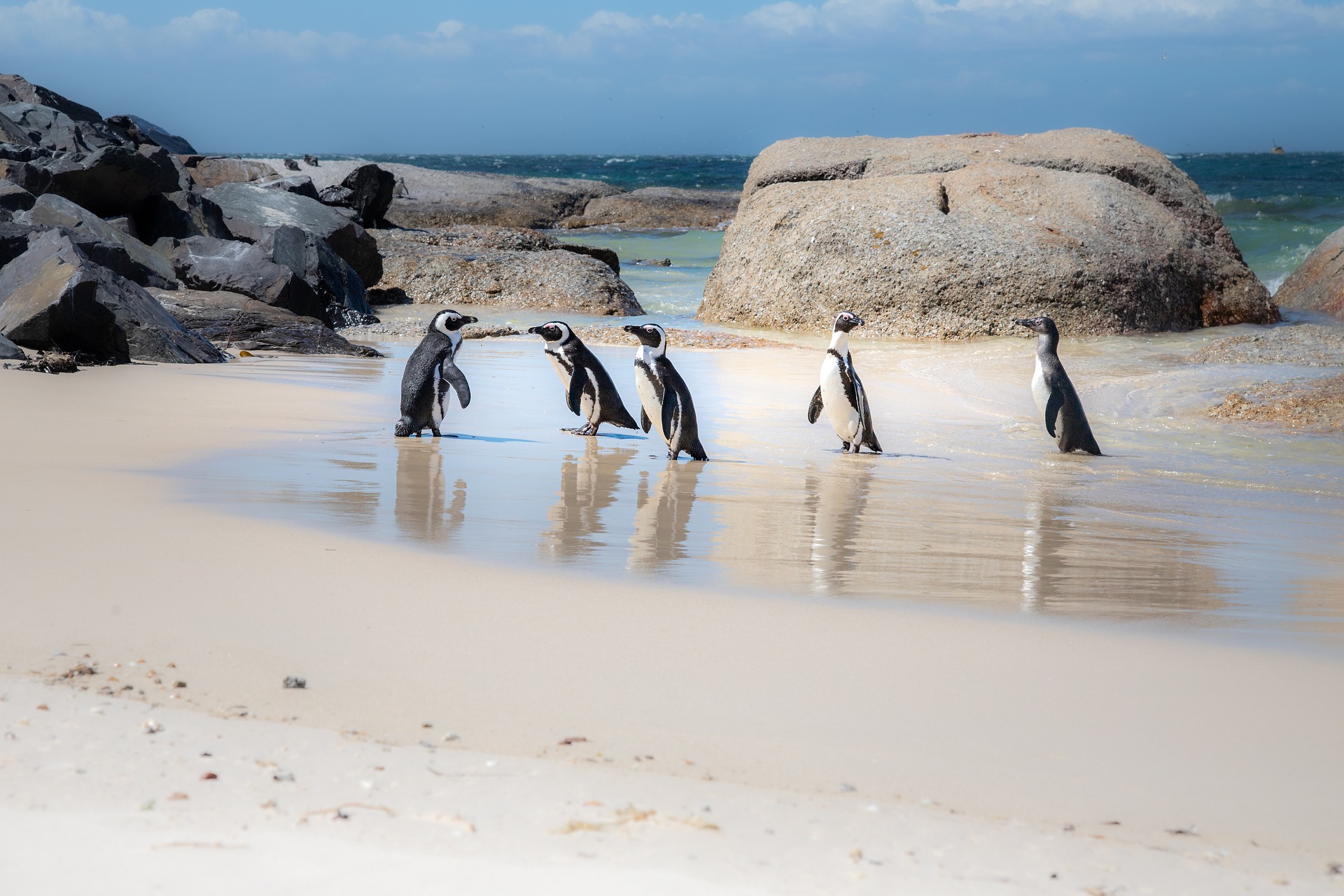
We will explain the characteristics, ecology, and habitat of Cape penguins. Cape penguins are the only penguins that live on the African continent. They are probably one of the most commonly seen penguins in aquariums and zoos. It is a type of penguin that easily adapts to human environments.


- Basic information about Cape penguins
- What are the roots and origins of the Cape Penguin?
- About the Cape Penguin Habitat
- feature is? What kind of creature is it?
- What will your personality look like?
- What is the ecology of Cape penguins?
- Cape Penguin Molting
- African Penguin Diving
- African Penguin Calls
- Seasonal Activities of African Penguins
- About Cape Penguin Chicks
- Are Cape Penguins an endangered species?
- Is it possible to keep cape penguins?
- Zoos where penguins are kept (Japan and around the world)
- Fellow members of the same group
Basic information about Cape penguins
African Penguins are birds that belong to the Humboldt penguin genus (Cape penguin genus). Other names include African penguin, African penguin, jackass penguin, and black-legged penguin. The scientific name is Spheniscus demersus. This species is about 70cm long and can be found near the southern regional coasts of South Africa.
| Japanese(和名) | ケープペンギン、アフリカンペンギン、アフリカペンギン、ジャッカスペンギン |
| English(英名) | African penguin |
| scientific name(学名) | Spheniscus demersus |
| classification(分類) | Sphenisciformes, Spheniscidae, Spheniscus ペンギン目ペンギン科ケープペンギン属 |
| IUCN Status(保全状況) | ENDANGERED |
| Height(身長) | 70cm |
| Weight(体重) | 2-5kg |
What are the roots and origins of the Cape Penguin?
The Cape Penguin, officially called the African Penguin, is the only penguin species found on the African continent.
Origin
It is believed that the ancestors of penguins were flightless seabirds that appeared in the Southern Hemisphere approximately 60 million years ago, after the extinction of the dinosaurs.
The Cape Penguin belongs to the genus Spheniscus, the same genus as Humboldt Penguins and Magellanic Penguins.
Genetic research suggests that the common ancestor of this group existed around South America millions of years ago, and subsequently dispersed to various locations due to ocean currents and climate change.
Humboldt Penguin → West coast of South America
Magellanic Penguin → Southern South America
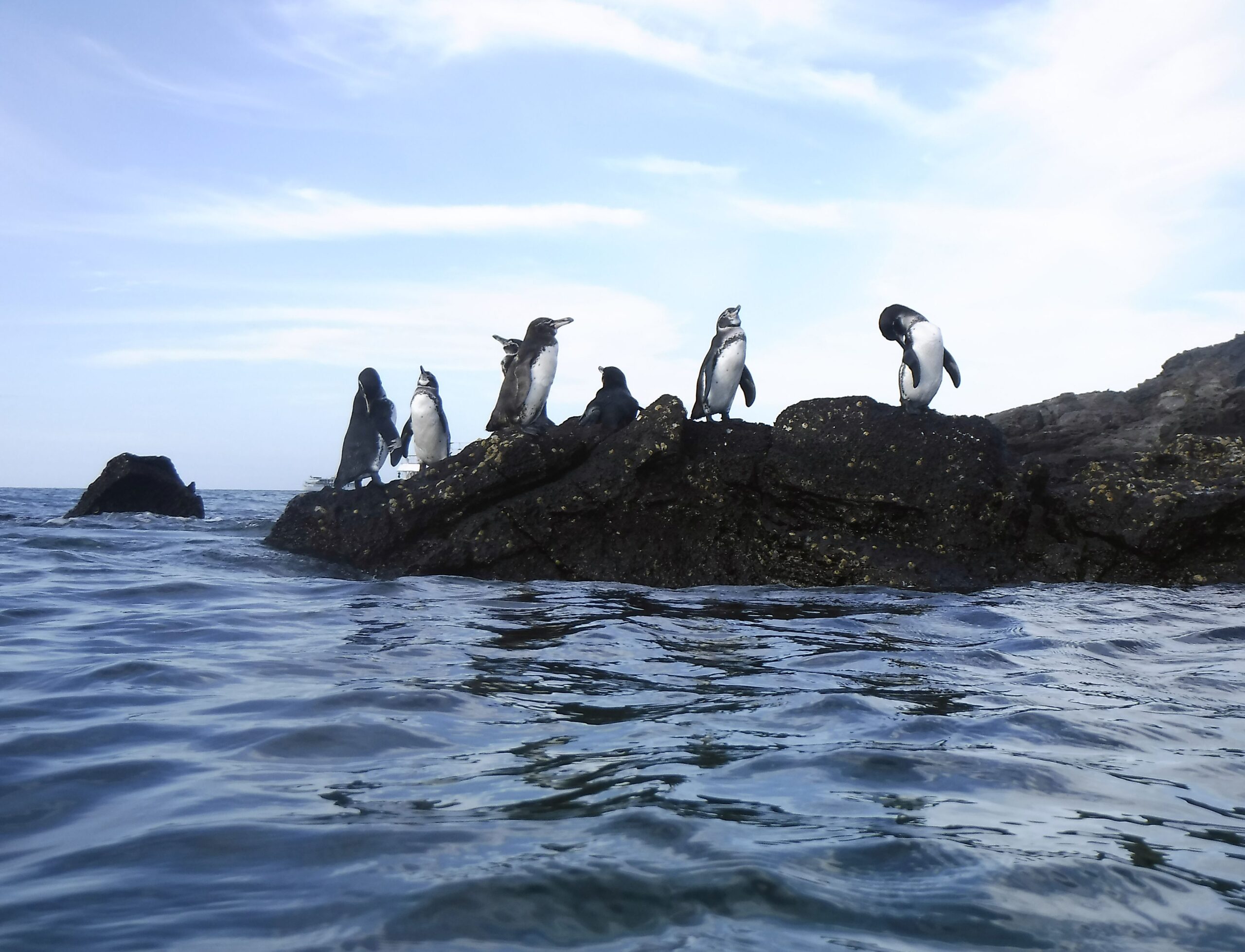
Galapagos Penguin → Galapagos Islands
African Penguin → Southwestern Africa
Why are they in Africa?
Many people associate penguins with Antarctica, but African penguins actually inhabit areas influenced by the Benguela Current, a cold ocean current.
This current carries abundant fish, allowing them to thrive along the coasts of South Africa and Namibia.

What will happen to the classification?
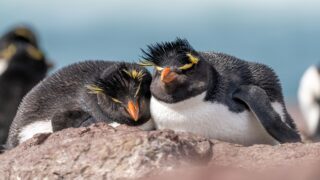
There are four species of Cape penguins in the Humboldt penguin genus (Cape penguin genus). The Cape Penguin was first illustrated in 1747 by British naturalist George Edwards in his Natural History of Unusual Birds. This has helped it become recognized. Cape penguins are now classified in the same category as penguins of the genus Spheniscus, which were introduced in 1760 by French zoologist Mathurin-Jacques Brisson.
| 名前:Name | 属名:Group | 生息地:habit |
| ガラパゴスペンギン(Galapagos Penguin) | Spheniscus フンボルトペンギン属 | ガラパゴス諸島 galapagos islands |
| ケープペンギン(African Penguin) | Spheniscus フンボルトペンギン属 | 南アフリカ South Africa |
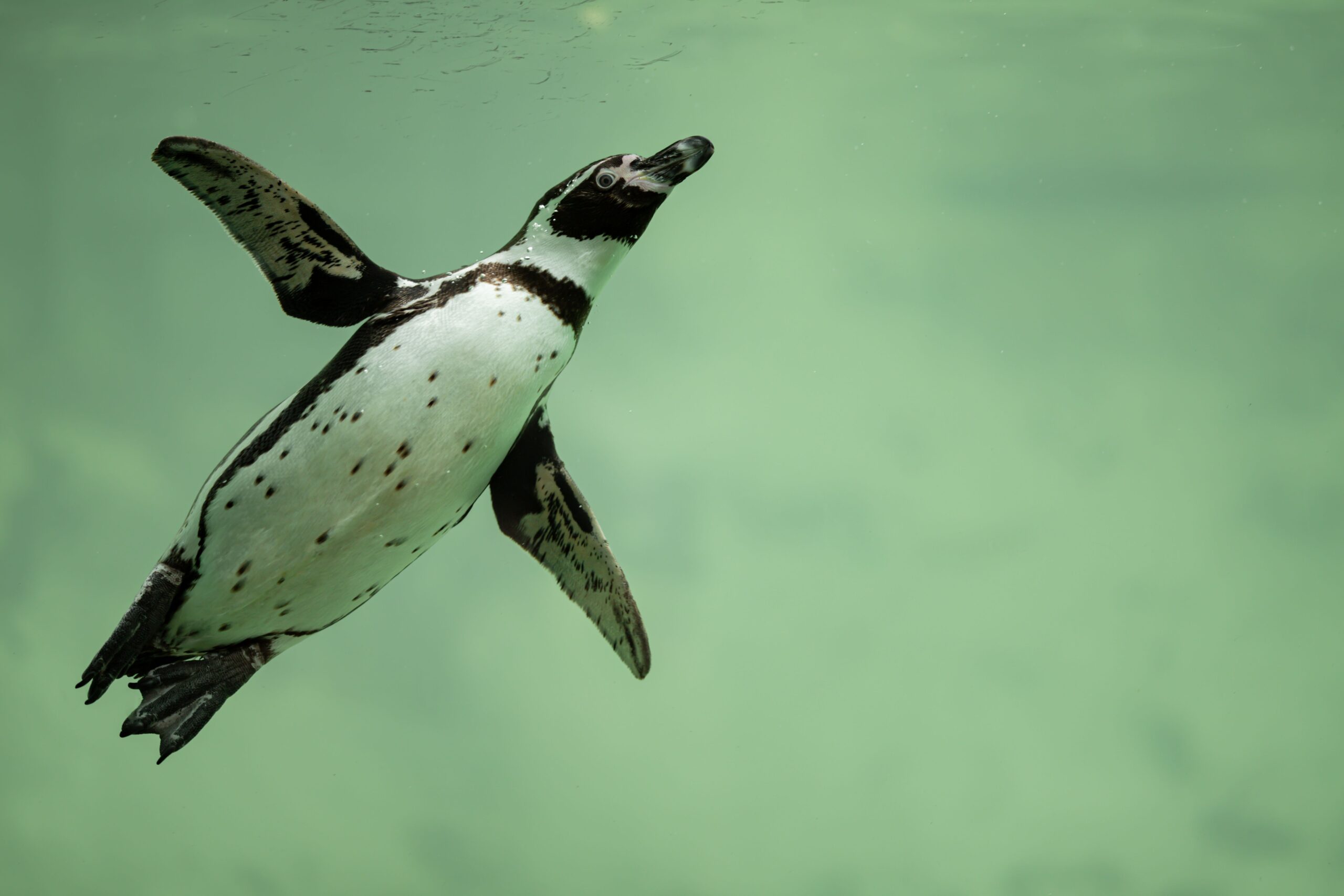
| フンボルトペンギン(Humboldt Penguin) | Spheniscus フンボルトペンギン属 | チリ Chile |
| マゼランペンギン(Magellanic Penguin) | Spheniscus フンボルトペンギン属 | 南アメリカ太平洋岸 south america pacific coast |
African Penguin Classification
Kingdom: Animalia
Phylum: Chordata
Class: Aves
Order: Sphenisciformes
Family: Spheniscidae
Genus: Spheniscus (Humboldt penguin)
Species: Spheniscus demersus (African penguin)
About the Cape Penguin Habitat
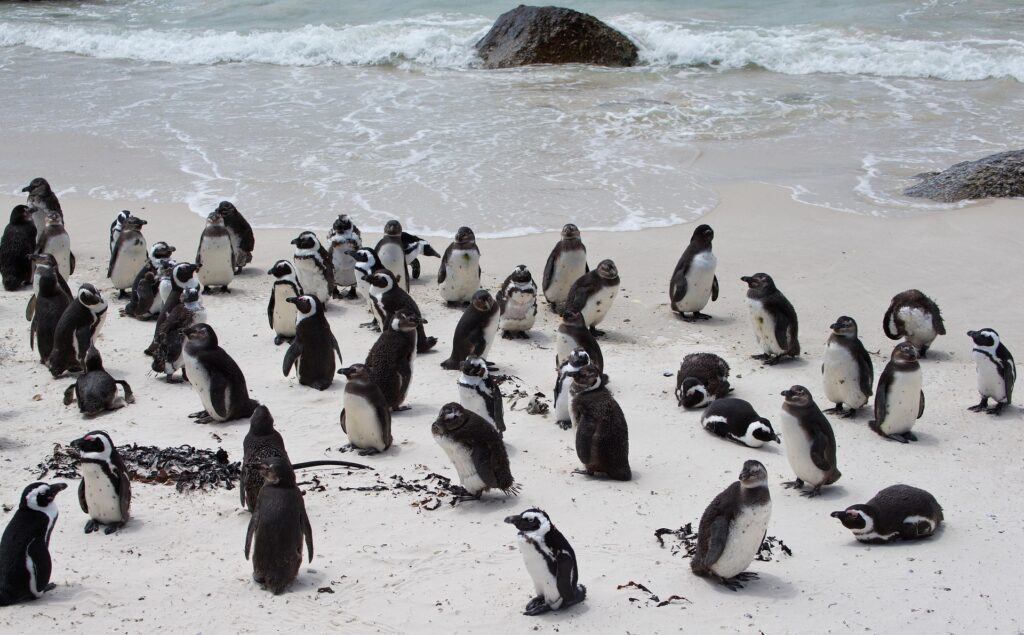
Cape penguins live along the coastline of South Africa. Particularly large numbers of penguins live in the areas surrounding the Agrahas Current, where the ocean currents bring in abundant food. Because they are a little less cautious, they often appear in human residential areas.
- Geographic Distribution
Main Distribution Area: Coastal South Africa and Namibia
Specific Locations:
South Africa: Coastal areas around Cape Town, Boulders Beach, etc.
Namibia: Small coastal islands such as La Palma and Penguin Island
On land, they nest on reefs, sandy beaches, and the shores of small islands.
- Environmental Conditions
Climate: Temperate to subtropical coastal
Habitat:
Nests in caves and sandy holes on reefs and small islands.
They prefer locations with easy access to the ocean, as they hunt for fish near the coastline.
- Ecological Characteristics
Food availability fluctuates due to ocean currents.
Breeding and nesting are dependent on food availability and climate.
They live in groups and are highly social.
feature is? What kind of creature is it?
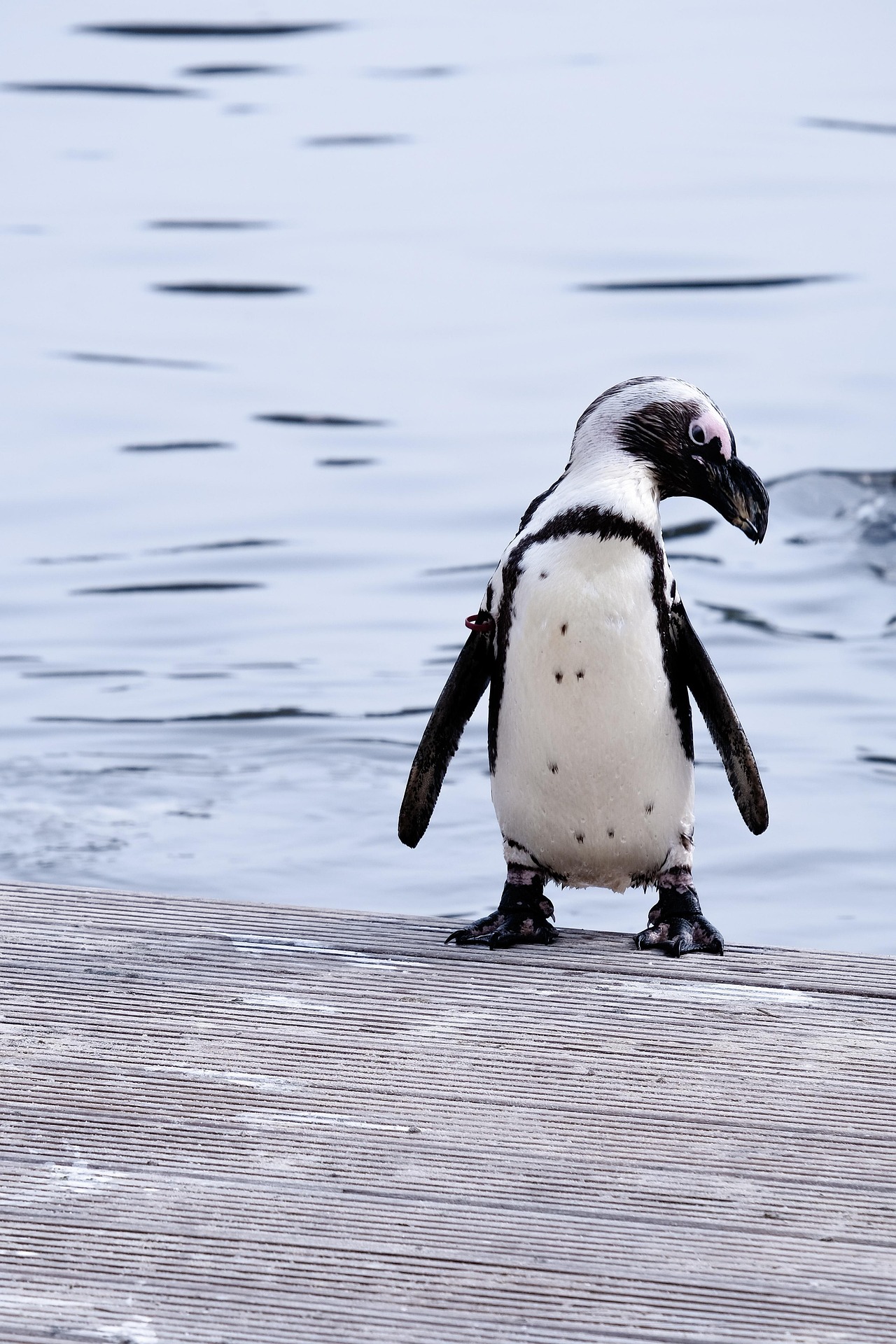
Cape penguins are small penguins with a pure white belly with black spots, and the number of spots varies depending on the individual. They are called jackass penguins because they sound like a donkey’s cry. The biggest feature is that she has a single, thin chest line, and at the same time has a lot of white parts on her face.
- Physical Characteristics
Body Length: Approximately 60-70 cm
Weight: Approximately 2.2-3.5 kg
Body Type: Medium-sized and stocky
Plumage/Pattern:
Black back, white belly
Black bands on the chest, distinctive black and white markings on the head
Pink skin around the eyes helps regulate body temperature
Beak: Medium length and sturdy, adapted for catching fish
- Behavior/Movement
Fast swimming in the water, they are diving predators that pursue small fish.
On land, they waddle and show noticeable social behavior in groups.
During the breeding season, they build nests in pairs and work together to raise their chicks.
- Diet
Their diet is primarily small fish (sardines, anchovies, etc.), but they also eat squid and crustaceans.
The amount and type of food they eat is affected by the season and ocean currents.
- Reproduction and Lifespan
Breeding occurs approximately twice a year, with one to two eggs laid in nesting holes or in the shade of rocks.
Chicks leave the nest within a few weeks under the care of their parents and learn to swim.
Lifespan: Approximately 10 to 15 years in the wild.
What will your personality look like?
Humboldt penguins tend to have the same overall personality and are thoughtful, but Cape penguins often appear in human residential areas, so they are not as wary. Depending on the individual, they may even come close.
- Sociality
They often live in groups, and cooperative behavior is prominent.
During the breeding season, they build nests in pairs or small groups.
- Vigilance
On land, they are somewhat cautious and wary of humans and predators.
In the sea, they are very agile and will quickly flee if they sense danger.
- Activity
They are very active when hunting in the water, and are agile when chasing fish.
On land, they waddle, but they also swim playfully.
- Stubbornness/Independence
During the breeding season, they demonstrate territoriality to protect their nests and chicks.
Otherwise, they are relatively cooperative and follow the group.
- Impression from Humans
On land, they have a cute waddling gait.
In the sea, they are agile and enjoyable to watch.
Personality: Curious yet cautious.
What is the ecology of Cape penguins?
Like other penguins, African penguins live on fish and crustaceans. They lay eggs in coastal areas throughout the year, with two eggs per nest, and the incubation period lasts about one month. The male and female take turns warming the eggs under their feet. The chicks leave the nest 70 to 100 days after hatching. The maximum recorded lifespan is about 15 to 20 years, although there are some reported cases of them living longer than that.
- Habitat
Location: Coastal South Africa and Coastal Namibia
Environmental Conditions:
Temperate to subtropical coasts
Nests in caves or burrows on reefs and small islands
Selects locations close to the ocean for easy fishing
- Diet
Main Food: Small fish (sardines, anchovies, etc.), squid, and crustaceans
Hunting Method: Dives underwater to pursue prey
The amount and type of food is affected by the season and ocean currents
- Reproduction
Breeding season occurs once or twice a year
Lays one or two eggs in the shade of rocks or in burrows
Both parents take turns incubating and raising the eggs
Chicks take several weeks to fledge, learning how to swim and forage from their parents
- Behavior
Live in groups and cooperate to forage for food
Waddles on land and swims agilely in water
During the breeding season, they exhibit territoriality to protect their nests and chicks
- Lifespan
Approximately 100 years in the wild 10-15 years
Survival rates vary depending on predators, food availability, and ocean currents.
What are the natural enemies of the Cape penguin?
Cape penguins have natural enemies both on land and in the sea. On land, dogs, cats, foxes, etc. There are killer whales and sharks in the ocean, so they are not at the top of the food chain.
Cape Penguin Molting
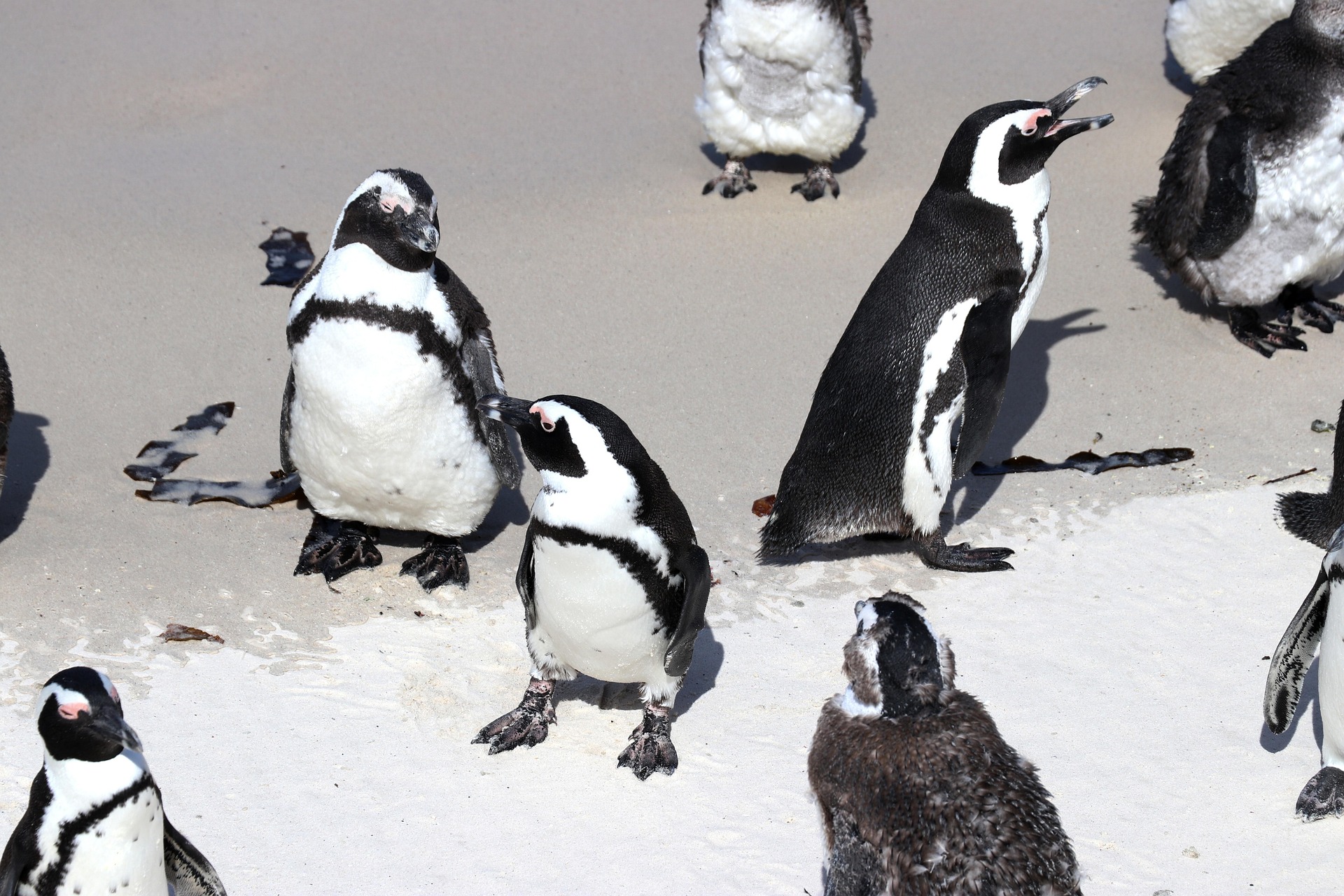
African penguins undergo molting once a year. Molting is an important physiological process in which all old feathers are replaced with new ones.
Characteristics of Molting
Penguin feathers are very dense to maintain waterproofing and insulation. Therefore, instead of shedding feathers gradually, they undergo a complete molt where all their feathers are replaced at once in a short period of time.
Before Molting
For several weeks before molting, they feed heavily in the sea, accumulating fat in their bodies.
Increasing weight
Storing energy
Preparing for the molting period
During Molting
Once molting begins, they come ashore and usually spend about 2-3 weeks there.
During this period,
They shed a large amount of feathers
They lose their waterproofing
They cannot enter the sea
They cannot catch food
Therefore, they fast.
African Penguin Diving
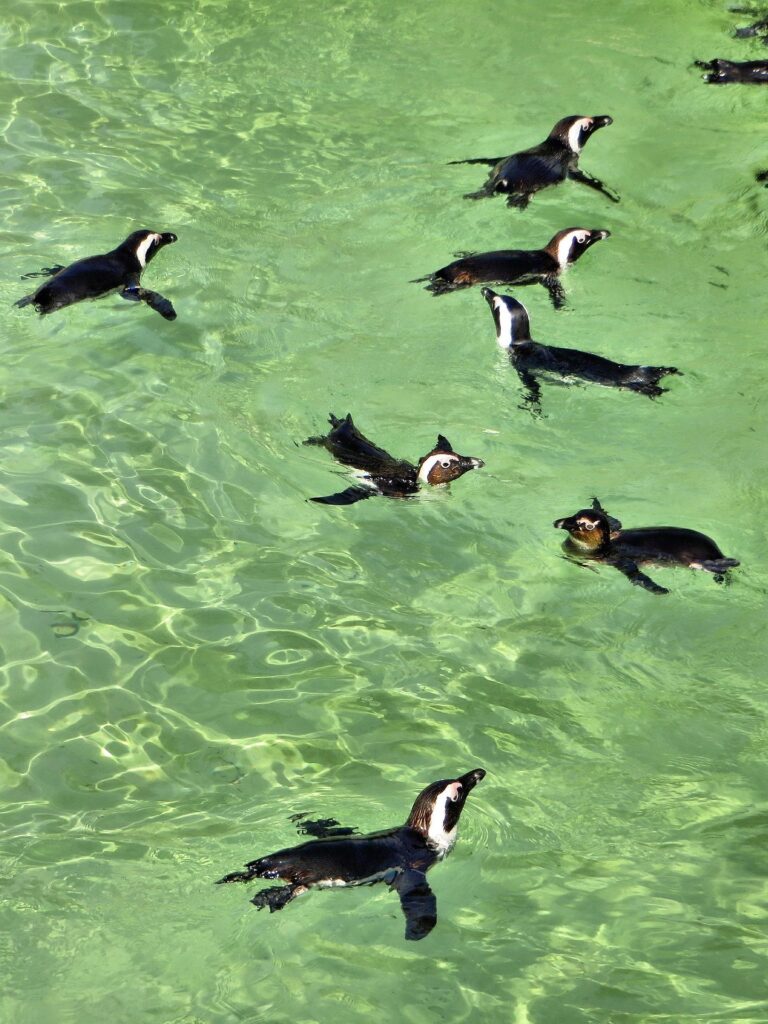
African penguins are excellent divers, chasing and hunting fish underwater.
Diving Depth
Diving depth is typically between 10 and 30 meters during normal foraging.
They can sometimes dive to around 50 meters.
There are even records of dives exceeding 100 meters.
Diving Time
Typical dives last about 1-2 minutes.
In longer dives, it can be around 2-3 minutes.
After diving, they surface to breathe and then dive again.
Swimming Speed
Underwater,
Normally: around 5-10 km/h
When chasing prey: speeds can reach nearly 15-20 km/h.
They swim by flapping their wings, sometimes described as “birds flying over the sea.”
African Penguin Calls
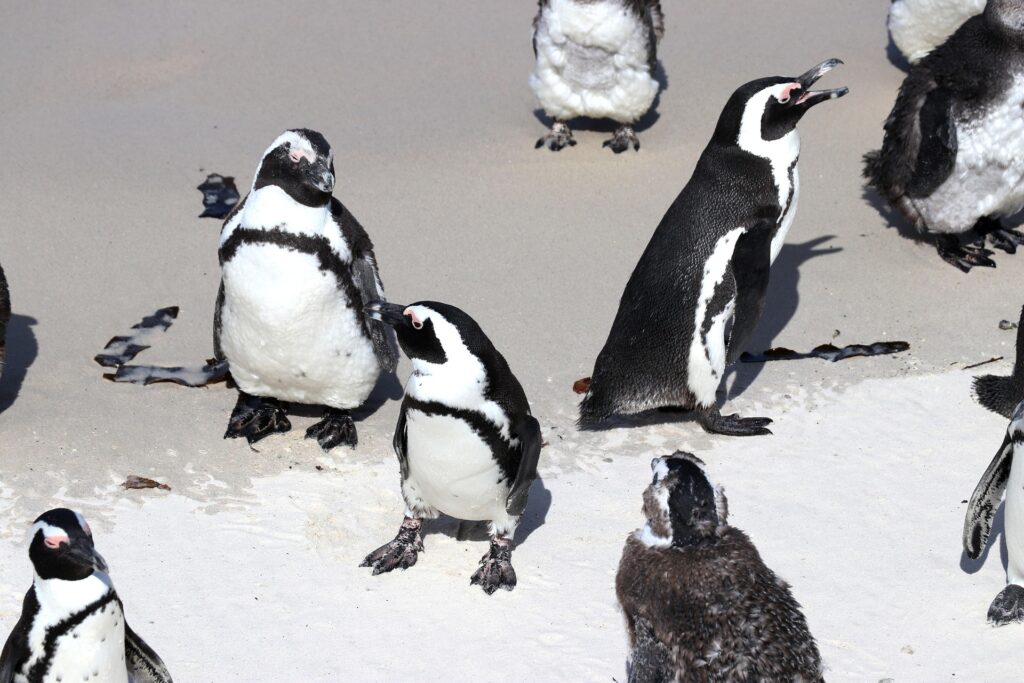
African penguins are known for their particularly loud calls and diverse forms of communication among penguins.
“Donkey-like Calls”
The most famous calls of African penguins are:
“Grrr!”, “Hyaah!”, “Boo, Boo!”
These are loud calls.
Because this call resembles the braying of a donkey (hee-hoo), they were once called
“Jackass Penguin” in English.
The Role of Calls
① Territorial Claim
During the breeding season, they make loud calls around their nests to
“This is my territory”
“Stay away”
to warn other penguins.
② Pair Communication
Males and females use calls for:
Courtship
Confirmation of Pair Status
Taking Incubation Duties
③ Parent-Child Reunion
Hundreds of penguins gather in the colony. Even among them, parents and chicks can distinguish each other’s voices,
and the parents can find their chicks,
and the chicks can find their parents.
This is possible.
Seasonal Activities of African Penguins
African penguins inhabit the coasts of South Africa and Namibia in the Southern Hemisphere. Therefore, their seasons are reversed compared to Japan.
However, breeding seasons vary by colony, so the following is a general annual cycle:
Spring (September-November):
Courtship behavior becomes active
Pair formation
Nest building
Gathering at breeding colonies
Males attract females with calls and may pair with the same partner as the previous year.
Summer (December-February):
Egg laying
Incubation
Chick hatching
Beginning of parenting
Typically, two eggs are laid, and the male and female take turns incubating them.
Once the chicks hatch, the parents catch fish in the sea and feed them regurgitated food.
Autumn (March-May):
Chick growth
Fledging
Young birds become independent
Increased foraging activity
Young penguins venture out to sea and begin foraging for food on their own.
Winter (June-August):
Molting (feather replacement)
Physical recovery
Foraging activity
During molting, they spend about 2-3 weeks on land without eating.
Once their new feathers have grown in, they return to the sea.
About Cape Penguin Chicks
This article provides information about Cape Penguin (Spheniscus demersus) chicks.
- From Egg to Hatching
Egg Laying: Usually 1-2
Nest: Built in the shade of rocks, caves, or burrows
Incubation Period: Approximately 38-42 days
Both parents take turns incubating the eggs
- Chick Characteristics
Fur: Fluffy gray or light brown feathers
Body Size/Weight: Approximately 80-100g at hatching
Inconspicuous Coloring: Camouflage for protection from predators
- Growth and Fledging
Until Fledging: Approximately 8-10 weeks
Learns swimming and foraging from parents
After fledged, they head out to sea with the flock and hunt independently
- Survival Challenges
Susceptible to predators (crows, cats, rats, marine mammals)
Survival rates vary depending on food availability and environmental conditions
The chick stage is the most dangerous period, and parental protection is essential for survival
Are Cape Penguins an endangered species?
Unfortunately, Cape penguins are listed as an endangered species. The estimated number of individuals was once estimated to be in the millions, but now it is said to be around 50,000. Why has it decreased so much? The causes are as follows.
- Current Status
International Union for Conservation of Nature (IUCN) Red List: Endangered
Their population has declined significantly over the past few decades, with an estimated wild population of approximately 25,000 to 30,000 birds.
Their distribution is limited to the coasts of South Africa and Namibia.
- Major Threats
Decreased food supply due to fishing
A decline in small fish (sardines, anchovies, etc.) leads to a decline in reproductive rates
Marine pollution and oil spills
Oil on their feathers prevents them from swimming, increasing the risk of death
Natural predators and invasive species
Cats and rats attack chicks and eggs
Climate change
Food resources are declining due to changes in ocean currents and water temperatures
- Conservation Activities
Protecting breeding grounds (national parks and protected areas)
Securing food through fisheries management
Responding to oil spills and invasive species
Is it possible to keep cape penguins?
Cape penguins are extremely difficult to obtain as their population is decreasing and they are listed as an endangered species. The only option is to have the aquarium or zoo give it to you. However, it is recommended because it can easily adapt to the environment where humans live, as shown in the video below.
- Current Status
There are examples of captivity in zoos and aquariums around the world.
Management is required to mimic natural conditions, so captivity in specialized facilities is a prerequisite.
There have been successful breeding attempts, but environmental control is difficult.
- Captivity Challenges
Water Temperature and Air Temperature Management
Because they are adapted to temperate coastal habitats, water temperature and air conditioning control are important.
Feeding Management
Maintaining a balanced diet, primarily small fish (sardines, anchovies, etc.)
Breeding Difficulties
Breeding requires an environment similar to a burrow or rock shelter.
Breeding rates are often lower than in natural environments.
Endangered Species
International regulations (such as CITES) strictly restrict capture and transfer.
- Conclusion
Care in an ordinary home is impossible.
Even in specialized facilities, advanced management and environmental control are essential for captivity and breeding.
Protection of wild individuals and preservation of their habitat are of utmost importance.
Zoos where penguins are kept (Japan and around the world)
Major facilities in Japan
Chiba Zoological Park: Known for exhibiting African penguins.
Nagasaki Penguin Aquarium: A specialized aquarium housing diverse penguin species from around the world.
Yokohama Hakkeijima Sea Paradise
Nagoya Port Aquarium
Adventure World
Kasai Rinkai Aquarium
Toba Aquarium
At these facilities, visitors can sometimes observe penguins swimming, breeding behavior, and molting.
Major facilities worldwide
Africa
Two Oceans Aquarium: A leading penguin exhibit in South Africa, also involved in African penguin conservation.
North America
Lincoln Park Zoo: Keeps African penguins in the dedicated exhibit “Penguin Cove.”
Monterey Bay Aquarium: Has been involved in the exhibition and conservation of African penguins for many years.
Maryland Zoo: Known for having one of the largest African penguin breeding colonies in North America.
Mystic Aquarium
Participates in breeding programs for the conservation of endangered species.
Europe
Whipsnade Zoo
Exhibits a large colony of African penguins.
Fellow members of the same group
コメント