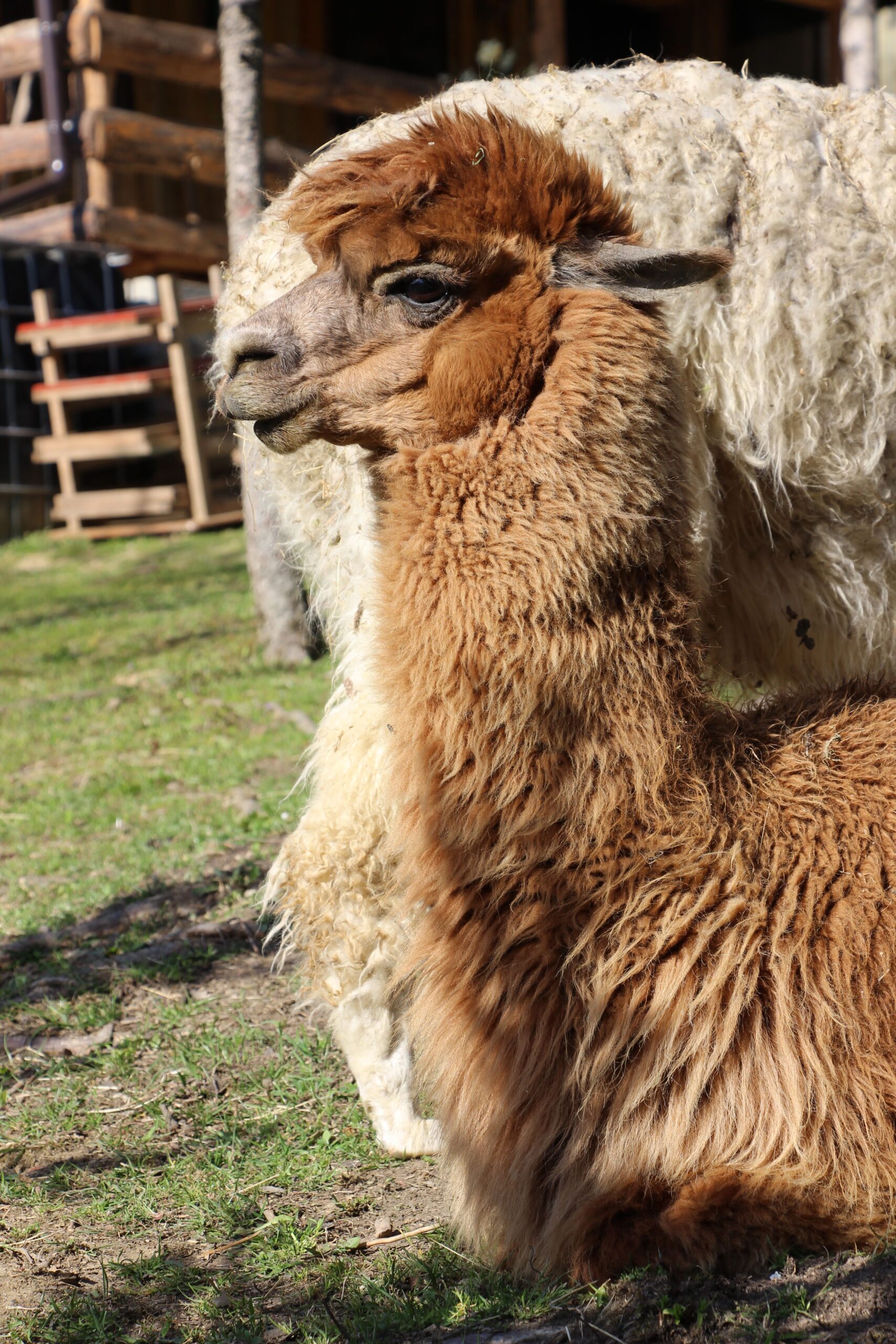
What kind of animal is an alpaca? We will explain its characteristics, ecology, and habitat. A member of the camel family that lives in South America, the animal is known for its thin, fluffy fur, making it a very popular animal in zoos around the world. Alpacas are highly prized all over the world for their wool-like wool.






- What is an alpaca? About basic status
- What are the roots and origins of the alpaca?
- Where will the habitat be?
- feature is? What kind of creature is it?
- What is your personality like?
- What is the ecology like?
- About Alpaca Molting
- About Alpaca Vocalizations
- Seasonal Activities
- About Walking Speed
- About Baby Alpacas
- Are alpacas an endangered species?
- Can alpacas be kept as pets?
- Zoos and Facilities Housing Alpacas (Japan & Worldwide)
- Introducing other animals
What is an alpaca? About basic status
Alpacas are classified in the camelidae family, genus Vicuna. It is a famous domestic animal of South America. The scientific name is Vicugna pacos, and the kanji is written in kanji such as yōda, yōdāda, yōdō. The body length is 2m and the weight is 50-55kg. The list of information is as follows.
| Japanese(和名) | アルパカ |
| English(英名) | Alpaca |
| scientific name(学名) | Vicugna pacos |
| classification(分類) | Mammalia、Artiodactyla、 Camelidae、Vicugna 哺乳綱、鯨偶蹄目、ラクダ科、ビクーニャ属 |
| IUCN Status(保全状況) | LEAST CONCERN |
| Length(体長) | 2m |
| Weight(体重) | 50–55kg |
What are the roots and origins of the alpaca?
Alpacas originated in the high-altitude regions of the South American Andes (specifically, the area encompassing modern-day Peru and Bolivia). They are members of the camelid family that were domesticated by humans; it is believed that the people of the Andes began raising them approximately 6,000 to 7,000 years ago.
The prevailing theory: Descended from the “vicuña”
The prevailing theory is that the modern alpaca (scientific name: Vicugna pacos) was domesticated from the wild vicuña (Vicugna vicugna).
Their phylogenetic relationship is as follows:
Camelidae (Camel family)
└── South American camelids
├── Guanaco (wild)
│ └── Llama (domesticated)
│
└── Vicuña (wild)
└── Alpaca (domesticated)
However, because interbreeding between llamas and alpacas occurred in ancient times, research into their precise genetic origins is still ongoing.
Why did they originate in the Andes?
The Andean highlands presented an environment characterized by:
Altitudes ranging from 3,000 to 4,500 meters
Extreme temperature fluctuations
Expansive grasslands (the Altiplano)
Alpacas adapted to this environment by developing:
Thick fleece (high-quality fiber)
A physiology capable of functioning in low-oxygen conditions
A digestive system that allows them to survive on sparse vegetation
Relationship with ancient Andean civilizations
Alpacas were not merely livestock; they were a fundamental part of life in Andean civilizations.
Uses:
🧶 Fleece → Clothing and textiles
🍖 Meat → Food
💩 Dung → Fuel and fertilizer
🛕 Rituals → Offerings to the gods
Alpacas and llamas held particular importance within the Inca Empire.
Origin of the name
The name “alpaca” became widespread after the Spanish arrived in South America. It is believed to originate from the languages of the indigenous peoples of the Andes (particularly Quechua and Aymara).
About classification
Alpacas have many subspecies. Please refer to the following types. This is a quote from Wikipedia. Some of them are extinct.
- カメルス・ギガス Camelus gigas
- カメルス・ヘステルヌス(エステルヌス) Camelus hesternus
- カメルス・シルヴァレンス(シルワレンス) Camelus sivalensis
- シリアラクダ Camelus moreli
- ヒトコブラクダ Camelus dromedarius
- フタコブラクダ Camelus ferus
- ビクーニャ Vicugna vicugna
- アルパカ Vicugna pacos
- リャマ(ラマ) Lama glama
- グアナコ Lama guanicoe
Alpaca Taxonomy
| 分類階級 | 名称 | 補足 |
|---|---|---|
| 界(Kingdom) | 動物界(Animalia) | 多細胞、真核生物 |
| 門(Phylum) | 脊索動物門(Chordata) | 背骨を持つ |
| 綱(Class) | 哺乳綱(Mammalia) | 恒温・乳腺で授乳する |
| 目(Order) | 偶蹄目(Artiodactyla) | 偶蹄(ひづめ2本ずつ)を持つ |
| 亜目(Suborder) | ラクダ亜目(Tylopoda) | 足の形や消化器の特徴で分類 |
| 科(Family) | ラクダ科(Camelidae) | 背中にこぶの有無でラクダ属と区別 |
| 属(Genus) | ヴィクーニャ属(Vicugna) | 小型・高山適応型の草食動物 |
| 種(Species) | Vicugna pacos | アルパカ |
Where will the habitat be?
Its habitat is South America.
- Origin
Andes Mountains, South America
Country: Peru, Bolivia, Ecuador, Northern Chile, Northwestern Argentina
Elevation: 3,500-5,000m
Environment: Cold, dry zone, alpine grasslands (Páramo Altiplano)
Climate: Large temperature difference between day and night, low precipitation
- Distribution as Livestock
Alpacas are domesticated camelids, and are kept by humans in some areas:
South America: Primarily Peru, Bolivia, and Ecuador
North America, Europe, and Asia: They are sometimes imported and raised for ornamental purposes and for their wool.
Alpaca farms are also found in Australia and New Zealand, where they are used for wool product production.
- Differences from Wild Species
The vicuna (Vicugna vicugna), the ancestor of the alpaca, is a wild species that lives in the alpine grasslands of the Andes in Peru and Bolivia.
Alpacas are fully domesticated and rarely go wild.
feature is? What kind of creature is it?
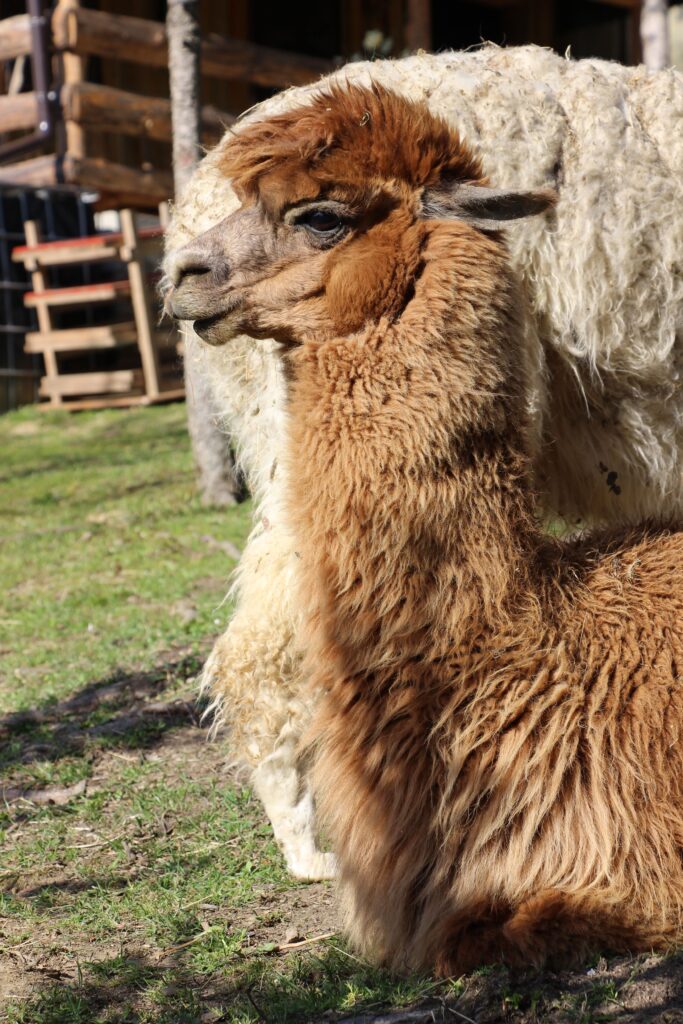
Alpacas have no upper incisors and are characterized by hardened skin. This is a livestock breed that has been bred to make use of its hair, and has evolved since ancient times. The coat color is brown and black. Alpaca wool continues to grow until it is sheared, so if it is not sheared, it will grow to the point that it touches the ground. They always live in herds and are grazed all year round. Alpacas have sharp claws and soft pads on their feet, so they won’t damage the grass.
- Appearance and Physique
Body Length: Approximately 1.5-1.8m (head to tail)
Shoulder Height: Approximately 90cm
Weight: Approximately 55-65kg (depending on breed and gender)
Huacaya: Fluffy, curly, and voluminous
Suri: Long, smooth, shiny fur that hangs down
Fur colors vary, including white, brown, black, gray, and mixed colors
Face and Ears:
Small, rounded face
Ears are long and slender, standing upright
Small nose, with a soft expression
Feet:
Having artiodactyls (two toes), they are well adapted to mountainous habitats
Lightweight and durable, making them easy to walk on steep slopes
- Personality and Behavior
Generally docile, gentle, and timid
Highly social animal that lives in groups
Sensitive to smells and stimuli, and highly alert
May spit when angry (primarily as a threatening behavior)
Highly intelligent, and easily tame humans and other livestock
- Ecology and Habitat Characteristics
Alpine-adapted: Can thrive in low-oxygen environments
Herbivory:
Eats grass, pasture, and shrub leaves
Specialized digestive system with high cellulose-breaking ability
Thermogenesis: Thick fur protects from the cold
Reproduction:
Gestation period: Approximately 11-12 months
One calf is born per litter (twins are rare)
The calf is called a “kuikka”
What is your personality like?
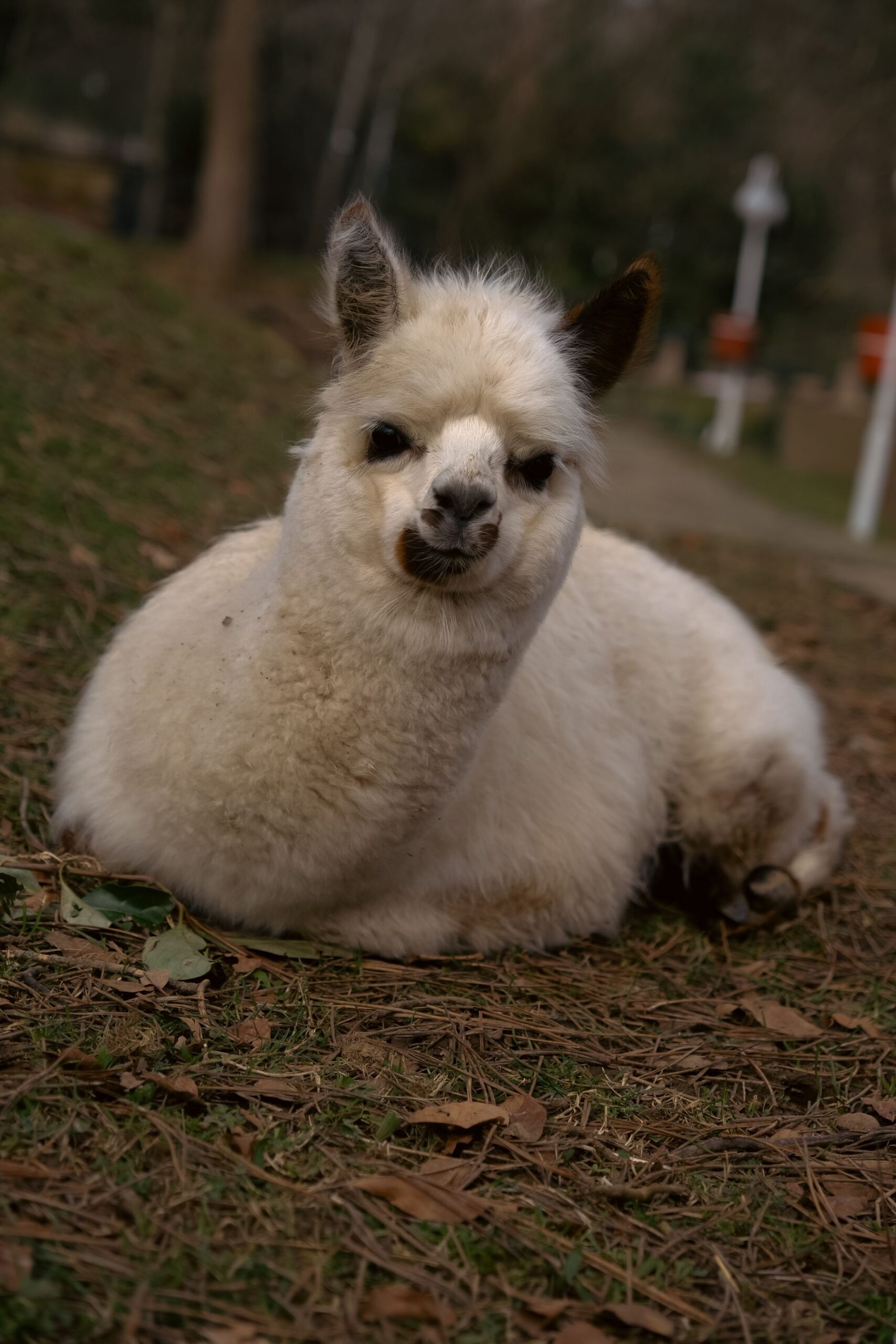
Alpacas are generally curious and very intelligent animals. They are also known for not wanting to fight, and rarely get into fights. It is a very easy animal to care for.
- Gentle and docile
Generally gentle and docile
Rarely aggressive toward humans or other animals
Highly social animals that live in groups and cooperate with others
- Timid and cautious
Sensitive to new people, sounds, and changes in their environment
May spit and intimidate when frightened
Need to keep quiet and at a distance until they become accustomed to others
- Sociality and group behavior
Feeling safe in groups
Communicate with others (through vocalizations and body language)
Keeping multiple alpacas is less stressful than keeping them alone
- Highly intelligent and adaptable
Can learn simple commands and behaviors
Once accustomed to their owners, they will come when called
Due to their cautious nature, they require gradual adjustment when changing environments or care methods
- Playful and curious
Running and hopping around lightly in groups and in new environments
Baby alpacas (kuikkas) are particularly curious and energetic
- Precautions
Because they are timid, they are sensitive to loud noises, sudden movements, and strong stimuli.
They are sensitive to hierarchical relationships within the group, so being kept alone can be stressful.
What is the ecology like?
Alpacas are herbivores and live by eating grass. Male alpacas reach sexual maturity at the age of two and a half and begin breeding around October. The average gestation period is 342 days. Only one baby is born at a time. Alpacas have an estimated lifespan of 15 to 20 years.
- Habitat
Origin: The Andes Mountains of South America (Peru, Bolivia, northern Chile, northwestern Argentina)
Altitude: 3,500-5,000m
Climate: Dry and cold with large temperature differences between day and night
Lifestyle: Lives in herds on vast grasslands and rocky areas
- Diet
Completely herbivorous (herbivore)
Main diet:
Grass of alpine grasslands and shrub leaves
Occasionally consumes dry plants
Digestive system:
Pseudo-ruminant stomach, typical of the camelid family (artiodactylidae)
Efficient fiber digestion
Water intake:
Obtains a large amount of water from grass
Can survive on low water levels
- Sociality and Group Behavior
They live in groups, and communication with their peers is important.
They communicate by calls (bleating, humming, etc.)
They have a hierarchical structure within the group, but are not overly aggressive.
To avoid stress, it is preferable to keep them in groups of at least two rather than alone.
- Breeding and Rearing
Sexual Maturity:
Males: Approximately 2-3 years
Females: Approximately 1-2 years
Breeding Season: Scheduled for dry seasons and periods of abundant food.
Gestation Period: Approximately 11-12 months
Birth: Usually one calf (twins are rare)
Baby Alpaca (Kuikkha):
Able to stand and walk immediately after birth.
They are breastfed and begin playing within the group within a few weeks.
- Behavior Pattern
Diurnal: Active during the day, resting at night
Adapted to high altitudes, they move nimbly even on steep slopes and rocky terrain
Defensive Behaviors:
When threatened, they spit, flee, or warn others
Young individuals are playful, jumping and chasing each other
- Lifespan
Domesticated: 15-20 years
Tends to live slightly longer than wild vicuñas
Are there any natural enemies?
Alpacas have almost no natural enemies. Since it was domesticated by humans, it became protected, so there is no longer any enemy that can be called an enemy.
About Alpaca Molting
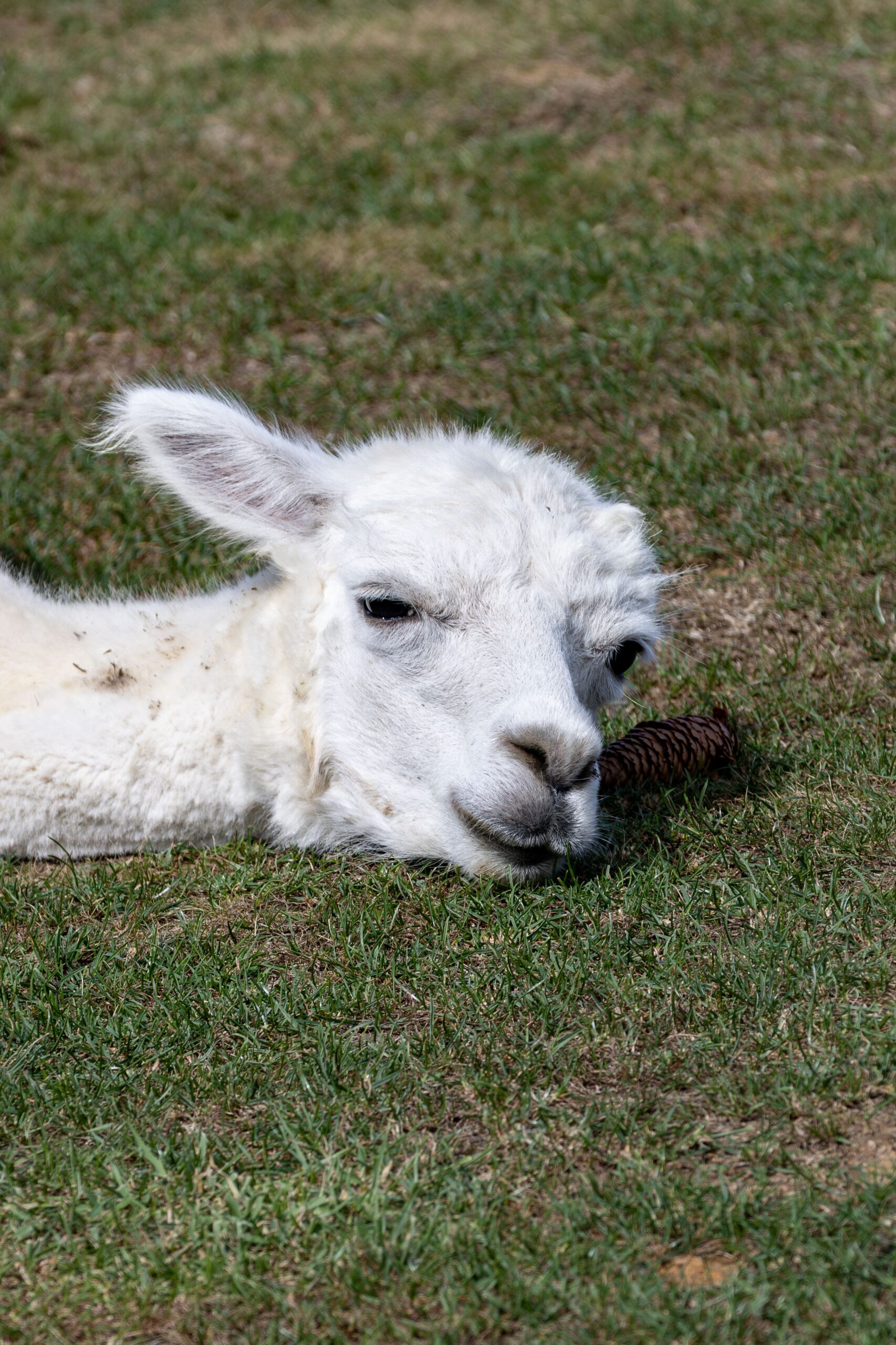
Alpaca molting (the process of shedding and regrowing fleece) is a vital physiological adaptation to the harsh environment of the high Andes. However, it differs somewhat from the “massive natural shedding” seen in dogs or cats.
Management primarily involves annual shearing
Alpacas are typically sheared once a year, usually between spring and early summer (often May or June in Japan).
Reasons:
To reduce the thick coat grown to withstand winter cold before summer arrives
To prevent heatstroke caused by the heat
To harvest high-quality fiber
Alpaca fleece can grow approximately 10–20 cm in a single year.
They do not undergo a “complete molt” in the wild
Unlike sheep, alpacas do not completely replace their entire coat on a seasonal basis.
Fleece characteristics:
Long growth cycle
Fibers (fleece) grow continuously
Old fibers shed gradually while new ones grow
Consequently, even without human shearing, some shedding occurs naturally; however, the fleece can become tangled and mat together, turning into a felt-like mass.
Differences between winter and summer coats
Winter
Temperatures in the high Andes drop below freezing at night, so:
Fleece density increases
Under-fiber (undercoat) increases
Heat retention is maximized
Summer
As temperatures rise:
Fleece density decreases
Body temperature regulation becomes easier
Heat dissipation improves
However, in high-humidity summers like those in Japan, alpacas are more vulnerable to heat than they are in the Andes.
About Alpaca Vocalizations
Alpaca vocalizations differ somewhat from their cute appearance; they use different sounds to communicate with their herd and to signal the detection of danger.
- Basic Vocalization: Low-pitched “Mmm” or “Hnn” sounds (Humming)
The sound most commonly heard from alpacas is known as humming.
Characteristics:
Low, nasal “Mmm” or “Hnn” sounds
Produced with the mouth closed
Soft volume, sustained over a long period
Situations:
Calling out to herd mates
Communicating with their young (crias)
Expressing anxiety or loneliness
Checking their surroundings
Since alpacas are herd animals, they constantly use these soft sounds to acknowledge each other’s presence.
- When Alert: “High-pitched scream” (Alarm call)
When they sense danger, their demeanor shifts drastically from their usual calm vocalizations.
Characteristics:
High-pitched, piercing “Eee!” sound
Carries over long distances
Alerts the herd to danger
Used when spotting natural predators such as:
Foxes
Pumas
Feral dogs
Alpacas are surprisingly wary and play a role in protecting the entire herd.
- Mother calling to her young
Mother alpacas (females) use a distinctive humming sound with their young.
When a cria (baby alpaca):
Wanders away
Feels anxious
Wants to nurse
The mother responds with a low-pitched hum.
Parent and offspring recognize each other through these vocalizations.
- Male-specific vocalization: “Braying”
During the breeding season, males may produce loud, donkey-like calls.
Characteristics:
Drawn-out “Aaa…” sound
Resonates over long distances
Used to attract females or assert territorial claims
This is one of the most striking sounds an alpaca makes.
- When Angry: Growling/Snorting
In situations involving stress or conflict, they produce:
Low growls
Snorting sounds
Threatening noises made before spitting Alpacas are generally mild-mannered, but they clearly make their feelings known if something unpleasant is done to them.
Seasonal Activities
Alpaca activity is strongly influenced by the seasonal changes of their native habitat in the Andean highlands. The seasons in the Andes differ slightly from those in Japan; their rhythms of life are dictated primarily by the shift between the rainy season (summer) and the dry season (winter).
Spring (Approx. September–November: Southern Hemisphere)
*Note: Seasons in South America are the reverse of those in Japan.
Activities:
Winter cold subsides; grass begins to grow
Grazing time increases
Fleece reaches full length
Birthing season begins
Physical Changes:
Transition from winter coat to summer coat
Period of nutritional recovery
In particular, since the gestation period is approximately 11 months, many mother alpacas give birth during this time.
Summer (Approx. December–February: Southern Hemisphere)
The most active season
This corresponds to the rainy season in the Andean highlands, resulting in abundant grass.
Activities:
Grazing starts in the morning
Grazing in herds
Increased water intake
Rapid growth of offspring
Diet:
Grasses (Poaceae family)
Alpine plants
Pasture grass
However, alpacas do not tolerate heat well.
Reasons:
They have thick fleece
They are adapted to cool, high-altitude environments
Consequently, in hot areas, they:
Rest in the shade
Feed primarily in the morning and evening
Reduce activity during the day
Autumn (Approx. March–May: Southern Hemisphere)
Preparation period for winter
Activities:
Foraging for available grass
Storing body fat
Increased time spent moving in herds
Physical Changes:
Fleece density increases
Improved cold resistance
As temperatures in the Andes drop significantly at night, nutritional status during autumn is crucial for winter survival.
Winter (Approx. June–August: Southern Hemisphere)
The harshest season
In the Andean highlands, the environment is characterized by:
Temperatures dropping below freezing
Dry conditions
Scarcity of grass Activities:
Basking in the morning sun to warm the body
Foraging during the day
Resting in a tight-knit group at night
Characteristics:
Minimizing movement to conserve energy
Retaining body heat with thick fur
Efficiently extracting nutrients from sparse vegetation
Daily Activity Rhythm
Alpacas are primarily diurnal.
Morning
Waking up
Heading out to pasture
Grazing
Midday
Foraging
Resting
Ruminating (regurgitating and re-chewing food)
Evening
Foraging again
Moving as a herd
Night
Lying down to rest
Ruminating
Conserving body heat by huddling with the herd
About Walking Speed
Contrary to their leisurely appearance, alpacas are built for endurance, allowing them to travel long distances across high-altitude terrain. They are also surprisingly fast over short distances.
Normal Walking Speed
Average walking speed: Approx. 3–5 km/h
When grazing slowly while moving: Approx. 2–3 km/h
When moving as a herd: Approx. 4–6 km/h
This is roughly the same speed as a human’s normal walking pace (approx. 4–5 km/h).
Running Speed
Alpacas run when fleeing or excited.
Top speed: Approx. 35–40 km/h
However, they are not animals designed to maintain high speeds for long periods like racehorses.
They excel at:
Short-distance dashes
Stable movement in mountainous terrain
Moving across pastures for extended periods
Why Can Alpacas Walk at High Altitudes?
Alpacas are adapted to the Andes Mountains at elevations of 3,000 to 4,500 meters.
① Foot Structure
Alpacas have soft, padded feet rather than hard hooves.
Advantages:
Less likely to slip on rocky terrain
Low impact on the ground
Easier to walk on steep mountain slopes
② Efficient Physiology
Alpacas possess:
A compact body
Strong cardiopulmonary function
Blood characteristics that allow for activity with limited oxygen
This enables them to walk for long periods at a steady, unhurried pace.
③ Herd Movement Habits
In environments close to the wild, they move in a formation where:
A leader takes the lead
Young ones stay in the center
Adults surround the perimeter
This movement style prioritizes safety over speed.
About Baby Alpacas
This article provides detailed information about the development, behavior, and ecology of baby alpacas.
- Name
Curia (Cria)
Spanish for “baby”
Usually refers to a cub up to about 6 months old.
- Birth
Gestation Period: 11-12 months
Birth: Usually a single cub (twins are extremely rare)
Weight: Approximately 6-8 kg at birth
Mother-Child Relationship: Raised by their mother
Initial Behavior:
Stands and begins walking within a few minutes to a few tens of minutes of birth
Drinks breast milk and is dependent on their mother in the herd
- Growth and Development
Weight Gain: May approximately double within the first month of life
Weaning: Gradually transitions to grass or hay between 4-6 months of age
Hair Development:
Has fluffy fur immediately after birth to protect from the cold
Hair type changes to either huacayan (curly hair) or suri (long hair) as they grow.
- Behavior/Personality
Playful and Curious:
Actively runs and jumps within the pack
Chases with other young animals
Social Learning:
Learns hierarchical and social behaviors in the pack from their mother and other individuals
Alertness:
Hides behind their mother when threatened
May spit to intimidate, just like adults
- Nutrition
Breastfeeding:
Mainly during the first 3-4 months of life
Taurine and immune substances are obtained from breast milk
Transition to a Grass Diet:
Starts eating soft grass and hay gradually from around 2 months of age
Completely weaned by 4-6 months of age
- Health Care Tips
Preventing Insufficient Breastfeeding: Monitor for malnutrition and breastfeeding refusal
Cold Protection: Even with thick fur, they are susceptible to hypothermia, so provide a roof or shelter as needed
Parasite Prevention: Regular deworming is recommended, just like for adult animals
Are alpacas an endangered species?
Because alpacas are domesticated, the International Union for Conservation of Nature (IUCN) does not assess their conservation status. Therefore, it has not been evaluated. In the 16th century, when Spain colonized South America, the alpaca population declined by 90%, but has since stabilized as they have been domesticated.
- Domesticated Species
Alpacas are fully domesticated camelids.
They are kept by humans for their wool, ornamental value, and agricultural use, and do not exist in the wild.
Millions of them are kept worldwide, and their populations are stable.
As a result, they are not assessed as endangered or listed as “Not Threatened” on the IUCN (International Union for Conservation of Nature) Red List.
- Their Wild Ancestor (Vicugna) is Protected
The alpaca’s ancestor, the vicugna (Vicugna vicugna), once faced extinction after overhunting drastically reduced its population.
By the 1970s, its population had fallen to approximately 60,000.
Through conservation and management, it has now recovered to over 400,000.
Current IUCN Assessment:
Vicugna: Least Concern
However, conservation and management are necessary in some areas.
Can alpacas be kept as pets?
There is no legal problem with owning an alpaca. However, there are some things like the following, and the hurdles are very high. If you go to a zoo or other place and have time, there will be information about shows, etc., so we recommend checking the outline and details before watching as a customer. Please visit the page and check it out.
How much does an alpaca cost?
If you want to buy an alpaca, it will cost about 1.8 to 2 million yen. This is not a realistic price as it is quite expensive.
How should I feed it?
Alpacas eat 1 kg of hay a day. As you can see from this, they eat a lot, so it costs a lot of money to eat, so you need to be careful. Also, since alpacas live in herds, it is necessary to have multiple animals.
Requires a large area
Since alpacas originally lived in the vast highlands of the Andes, they require large areas of land. It is not at all easy as the breeding space requires appropriate fencing and stables where the alpacas can rest and sleep.
Zoos and Facilities Housing Alpacas (Japan & Worldwide)
Alpacas are currently kept not only in their native South American Andes but also in zoos, ranches, and petting farms around the world. They are particularly popular in Japan, where specialized alpaca ranches also exist.
🇯🇵 Major Facilities in Japan Where You Can Meet Alpacas
Nasu Kogen Rindoko Family Farm (Tochigi Prefecture)
One of the largest alpaca-keeping facilities in Japan.
Features:
Houses a large number of alpacas
Feeding experiences
Walking experiences
Observation in the pasture area
Alpacas formerly kept at the Nasu Alpaca Farm were relocated here; they are now exhibited and available for interaction at Rindoko Family Farm.
Yatsugatake Alpaca Farm (Nagano Prefecture)
Features:
Alpacas raised in the natural environment of the Yatsugatake Mountains
Popular petting/interaction experiences
Events such as shearing
Located in a high-altitude, relatively cool region, providing an environment well-suited to alpacas.
Ichikawa City Zoo and Botanical Garden (Chiba Prefecture)
An example of alpacas kept in a zoo setting.
Features:
Health management by zookeepers
Behavioral displays (such as walks)
Seasonal heat countermeasures implemented
Since alpacas are adapted to the cold environment of the Andean highlands, temperature control is crucial during Japanese summers.
Tobu Zoo (Saitama Prefecture)
Features:
Alpacas kept as zoo exhibits
Successful breeding
Births of baby alpacas have been reported
🌎 Alpaca Facilities Worldwide
🇵🇪 Peru (Country of Origin)
Around Manú National Park and the Andean region
In Peru, alpacas are considered important livestock rather than merely “exhibit animals.”
Uses:
Wool (alpaca fiber)
Meat
Traditional culture
Tourism
You can see alpacas grazing, particularly around Cusco and Lake Titicaca.
🇺🇸 United States
There are many alpaca ranches in the United States. Representative facilities:
Alpacas of America
The Alpaca Hacienda
Features:
Raised for purposes such as:
Breeding
Fiber production
Agritourism (visitor-friendly ranches)
Educational programs
🇬🇧 United Kingdom
Farm-style alpaca facilities are popular in the UK.
Features:
Alpaca walks
Hands-on interaction
Family-oriented tourism
Because alpacas have gentle temperaments and readily bond with humans, they are also used as “walking experience animals” in Western countries.
Introducing other animals
コメント