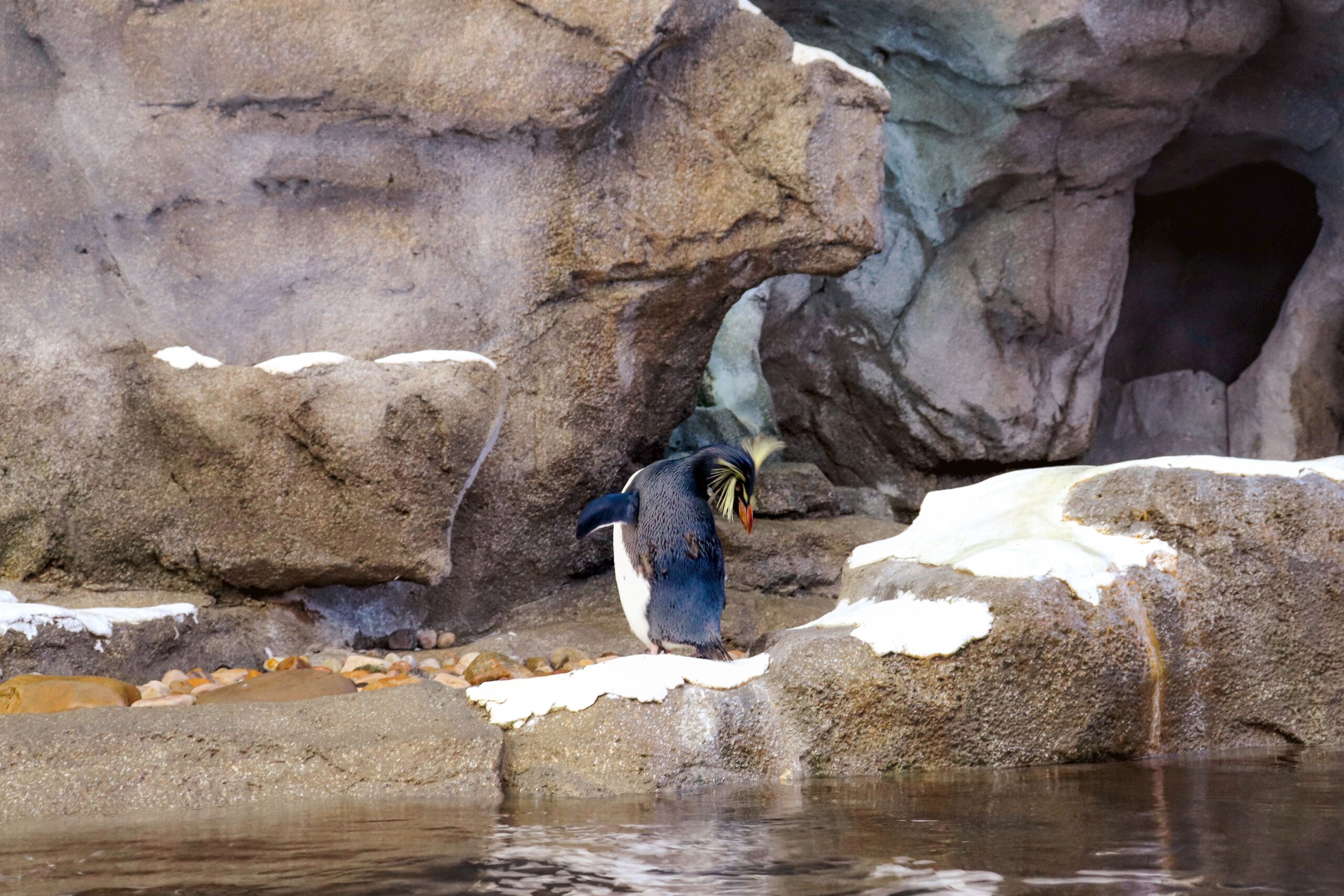
We will explain the characteristics, ecology, and habitat of the golden penguin (Kigashira penguin). The King penguin is a rare penguin that belongs to an endangered species. Their eyes are quite distinctive and have a golden color, making them a unique species. No other penguin species is similar.


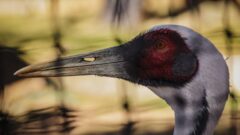
- Basic information about the penguin
- What are the roots and origins of the Yellow-eyed Penguin?
- What will happen to the classification?
- About the habitat of the penguin
- feature is? What kind of creature is it?
- What will your personality look like?
- What is the ecology of the penguin?
- Molting in Yellow-eyed Penguins
- Diving Behavior of the Yellow-eyed Penguin
- Vocalizations of the Yellow-eyed Penguin
- Seasonal Activities of the Yellow-eyed Penguin
- About Yellow-spotted Penguin Chicks
- Is the golden penguin an endangered species?
- Is it possible to keep penguins?
- Zoos and Facilities Housing Them (Japan & Worldwide)
- Fellow members of the same group
Basic information about the penguin
The penguin is a bird belonging to the genus Penguin. The scientific name is Megadyptes antipodes and the English name is Yellow-eyed penguin. This penguin is 60-70cm long and lives near Antarctica. It is a rare species with a very limited habitat. Other names are Yellow-bellied Penguin and Grand Penguin.
| Japanese(和名) | キンメペンギン、キガシラペンギン、グランドペンギン |
| English(英名) | Yellow-eyed penguin |
| scientific name(学名) | Megadyptes antipodes |
| classification(分類) | Sphenisciformes, Spheniscidae, Megadyptes ペンギン目ペンギン科キンメペンギン属 |
| IUCN Status(保全状況) | ENDANGERED |
| Height(身長) | 60-70cm |
| Weight(体重) | 2-5kg |
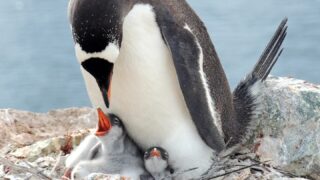
What are the roots and origins of the Yellow-eyed Penguin?
The Yellow-eyed Penguin (also known as the hoiho) belongs to one of the oldest lineages among extant penguin species.
Origins and Roots
Molecular phylogenetic analysis and fossil research suggest that the ancestors of the Yellow-eyed Penguin diverged from the ancestors of other living penguins at a relatively early stage—approximately 20 to 30 million years ago (spanning the late Oligocene to early Miocene epochs). Consequently, it is considered to represent one of the oldest lineages among modern penguins.
Furthermore, the genus Megadyptes—to which the Yellow-eyed Penguin belongs—comprises only this single extant species, marking it as a highly distinctive lineage that has undergone a long period of independent evolution.
Relationship to Fossils
Numerous ancient penguin fossils have been discovered in New Zealand. Giant ancient penguins, some as large as humans, inhabited the region between 50 and 60 million years ago.
However, these giant penguins are not the direct ancestors of the Yellow-eyed Penguin. Both the giant penguins and the Yellow-eyed Penguin are believed to be separate lineages that branched off from an even older common ancestor.
Why Did They Remain in New Zealand?
Yellow-eyed Penguins primarily inhabit the following regions:
New Zealand’s South Island
Stewart Island
Auckland Islands
Campbell Island
Because the area surrounding New Zealand remained a relatively isolated environment for tens of millions of years, the Yellow-eyed Penguin was able to continue its unique evolution with little competition from other species.
What will happen to the classification?
The penguin was first described in 1841 by Jacques-Bernard Ombron and Honoré Jaquinot. It is the only species in the genus Megadyptes, and until now it was thought to be the same species as the little penguin. However, new molecular research in recent years has revealed that they are more closely related to penguins in the genus Eudyptes.
Taxonomy of Yellow-eyed Penguins
| 階級 | 分類 |
|---|---|
| 界 (Kingdom) | 動物界 (Animalia) |
| 門 (Phylum) | 脊索動物門 (Chordata) |
| 綱 (Class) | 鳥綱 (Aves) |
| 目 (Order) | ペンギン目 (Sphenisciformes) |
| 科 (Family) | ペンギン科 (Spheniscidae) |
| 属 (Genus) | Aptenodytes |
| 種 (Species) | Aptenodytes patagonicus |
About the habitat of the penguin
The regional distribution and habitat of the golden penguin is the southeastern part of New Zealand’s South Island, Stewart Island, Campbell Island, and the Auckland Islands.
- Distribution
Limited to subantarctic islands around Antarctica
Major breeding sites:
South Georgia Island
Falkland Islands
Kerguelen Islands
Macquarie Island, etc.
- Habitat
Forms breeding colonies on sandy beaches and rocky areas
Feeds at sea outside of the breeding season and is rarely seen on land
Migrates long distances at sea in winter, feeding on fish and krill
- Behavior and Migration
Always returns to breeding grounds during the breeding season
Swims tens to hundreds of kilometers around the surrounding ocean to feed
Spends most of their time at sea, limiting their terrestrial life to the breeding season
feature is? What kind of creature is it?
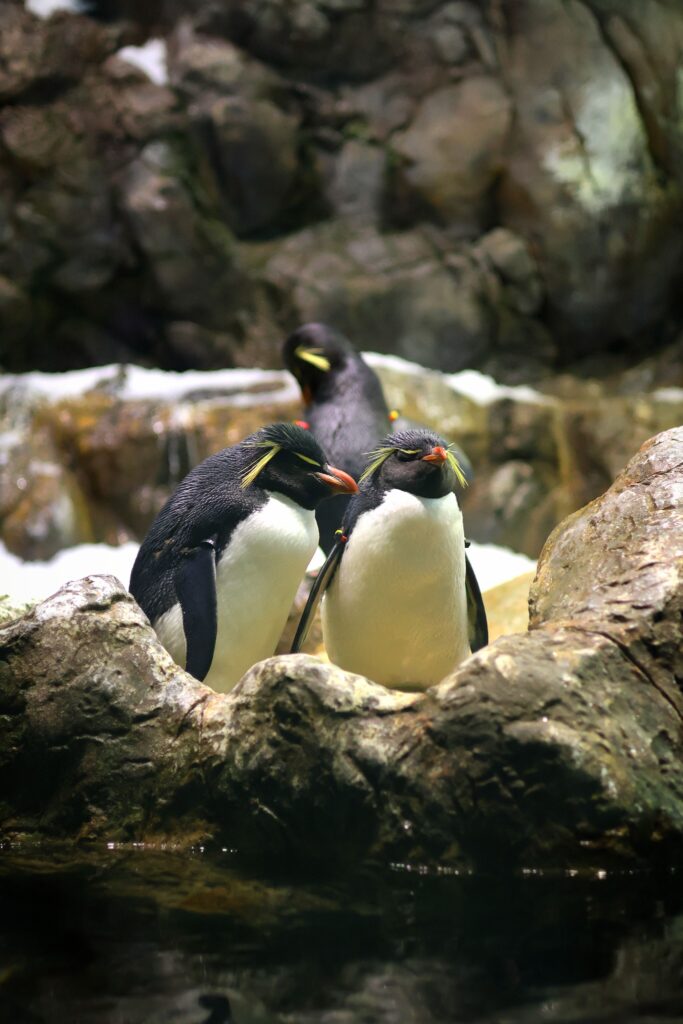
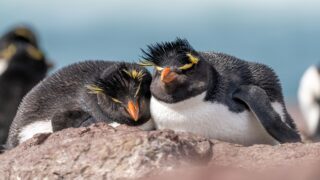
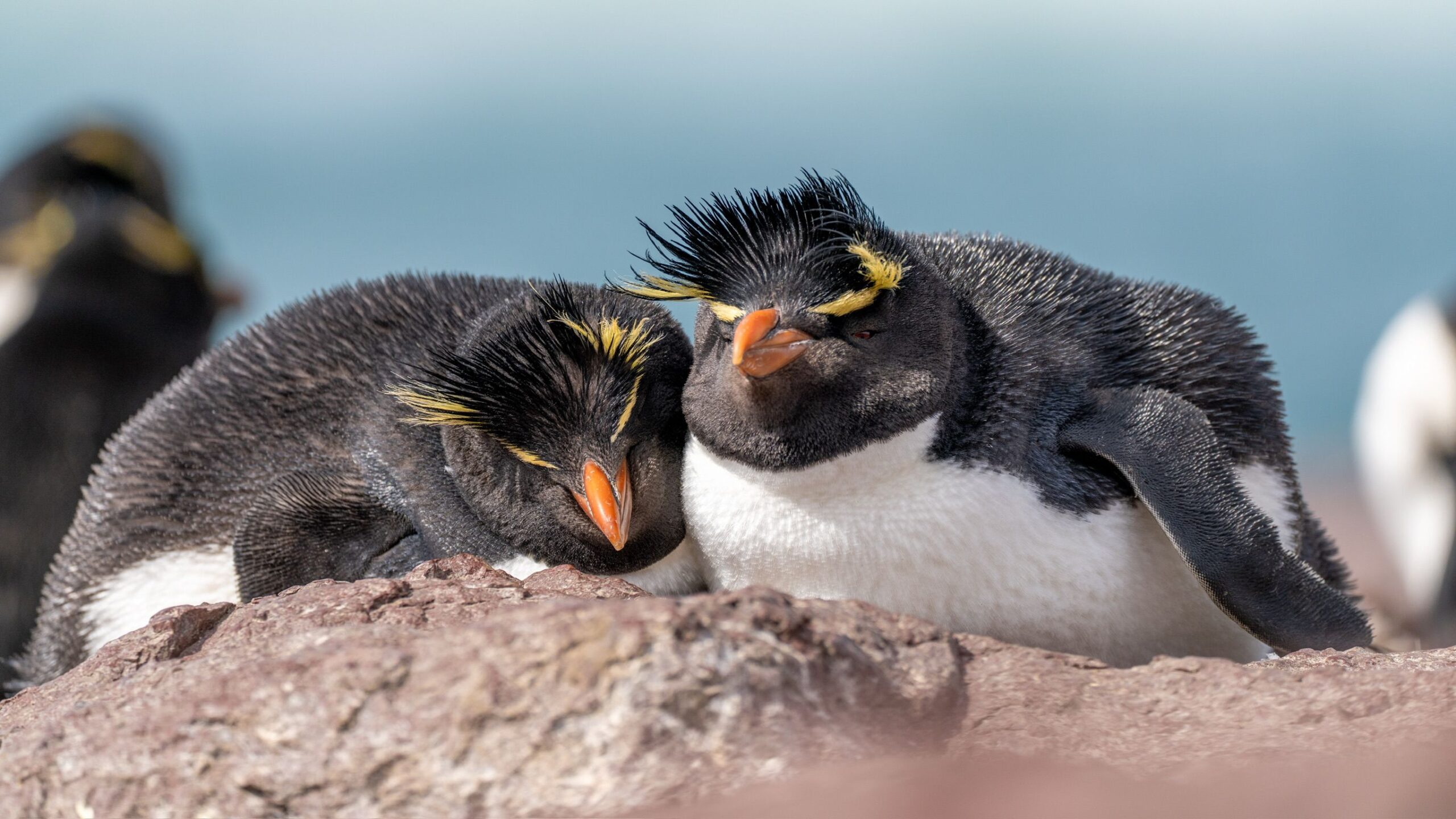
The most distinctive feature of the golden penguin is its golden eyes and yellow plumage with black horizontal stripes. There is a thick yellow stripe from the base of the beak through the eyes to the back of the head. They do not share their breeding grounds with other penguins and are exclusive penguins.
- Physical Characteristics
Size: Approximately 70-90 cm in length, 11-16 kg in weight (large penguin)
Body Type: Stocky and streamlined, adapted for swimming
Feather Color:
Back: Gray to bluish-black
Belly: White
Bright orange-yellow spots on the sides of the head and thorax
Face: Black, with an orange base to the beak
Beak: Long and strong, adapted for preying on fish and squid
Legs: Short and strong, adapted for walking on rocky or sandy beaches
- Ecology and Behavior
Excellent swimmer: Pursues and preys on fish, krill, and squid in the ocean
Diet: Fish, krill, small squid
Reproduction:
Forms large colonies on rocky or sandy beaches
Pairs lay eggs and take turns incubating them
Sociality: Lives in groups and cooperates to raise chicks
- Personality and Characteristics
Sociable and cooperative: They form large flocks during breeding season.
Bold and tenacious: They breed even in cold environments.
Loyal: They are loyal to their mates and breeding grounds, breeding in the same place every year.
- Appearance
A large penguin with distinctive orange-yellow chest markings and a black face.
They are agile and powerful swimmers in the ocean, and have a stocky and adorable appearance on land.
They are also described as “orange-chested giants of the sea.”

What will your personality look like?
King penguins are extremely sedentary and tend to stay in the same area they choose once. They are very cautious and will try to intimidate other animals to keep them away. They nest alone and do not form colonies. An individualistic penguin. They never use caves or burrows.
Yellow-browed Penguin Personality (Behavioral Characteristics)
Social and cooperative
They form large colonies during the breeding season and live in groups.
They work together as a pair to care for their chicks.
Bold and tenacious
They breed in cold sub-Antarctic environments.
They are tenacious in protecting their chicks and eggs.
Loyal
Very loyal to their mates and breeding sites.
They often return to the same breeding sites every year and breed with the same pair.
Curious but cautious
Knocked down on changes in their surroundings and predators.
Bold while foraging, but cautious on land.
What is the ecology of the penguin?
King penguins live on fish, squid, and crustaceans. The breeding season is from September to October. Lays two eggs at a time. The chicks do not form crèches and most tend to stay close to their nest.
- Habitat and Environment
Limited to subantarctic islands around Antarctica
During the breeding season, they form colonies on sandy beaches or rocky coasts.
Forages at sea outside of the breeding season and rarely stays on land.
During winter, they travel long distances at sea, preying on fish and krill.
- Diet (Food)
Preys primarily on fish, krill, and small squid.
Dives underwater to pursue prey.
Forages primarily in the sea and rarely on land.
- Reproduction and Rearing
Breeding season is during the Southern Hemisphere summer (November to February).
They form large colonies on sandy beaches or rocky areas.
Each pair takes turns incubating eggs.
Chicks grow while being fed by their parents, and once they have fully developed feathers, they become independent in the sea.
- Behavior
Highly social, living in groups
Living in groups to protect themselves from predators (seals, seabirds, etc.)
Swimming quickly in the ocean, they pursue prey
On land, they focus on breeding and protecting their chicks
- Adaptability
Feathers and blubber allow them to withstand the harsh low temperatures of sub-Antarctic waters
Streamlined body shapes suitable for diving
Social cooperation allows for successful reproduction
What are the natural enemies of the penguin?
Because penguins are solitary, they tend to be easily targeted by predators. Predators include sea lions, dogs, cats, and weasels. Natural enemies include large fish and large birds in the ocean.

Molting in Yellow-eyed Penguins
Molting—the process of replacing old feathers with new ones all at once—is a critical period for the survival of the Yellow-eyed Penguin.
When Molting Occurs
It takes place around February or March (late summer to autumn in New Zealand) after the breeding season has ended.
They replace all their feathers once a year over a short period.
Characteristics During Molting
The molting process lasts for about 3 to 4 weeks.
Because the feathers lose their waterproofing, the penguins cannot enter the ocean to hunt for food during this time.
They build up sufficient fat reserves before molting begins and survive solely on those stores.
Body weight may drop by approximately 10–20%.
Changes in Appearance
During molting:
Old feathers fall out in clumps, giving the bird a shaggy, unkempt appearance.
New feathers begin to grow on the head and back.
They may look “scruffy,” but this is not a sign of illness.
Once the new plumage has fully grown in, waterproofing and heat retention are restored, and the penguins return to the sea to forage.
Diving Behavior of the Yellow-eyed Penguin
The diving behavior of the yellow-eyed penguin is characterized by “benthic foraging”—hunting for fish and squid near the sea floor.
Diving Characteristics
Typical diving depth: Approximately 40–80 meters.
Deep dives: Can reach depths of around 100–150 meters.
Deepest record: Depths of around 180 meters have been reported.
Dive duration: Usually 1–3 minutes, though some dives may last longer than 4 minutes.
Foraging Behavior
During the breeding season, they typically leave the nest to forage at sea and return the same day; however, if foraging grounds are distant, they may travel to waters tens of kilometers away. They efficiently search for food while repeatedly diving and surfacing, bringing the catch back to their chicks.
Yellow-eyed penguins are known among extant penguin species for a foraging style that focuses heavily on the area near the sea floor, making them particularly susceptible to environmental changes on the seabed and the impacts of fishing activities.
Physiological Adaptations for Diving
Yellow-eyed penguins possess a body adapted for diving:
They trap air within their plumage to maintain high heat retention.
They store oxygen in their blood and muscles, enabling prolonged dives.
Their wings function as “flippers” for underwater propulsion rather than for flight.
Their streamlined bodies reduce water resistance, allowing for efficient swimming.
Vocalizations of the Yellow-eyed Penguin
The vocalizations of the Yellow-eyed Penguin play a crucial role in individual recognition, communication between mates, and the maintenance of territory.
Vocalization Characteristics
Yellow-eyed Penguins produce low-pitched, resonant calls. Phonetically, they may sound like:
“Ah-ah-ah”
“Hoo, hoo”
“Kee, oh”
“Aoh, aoh”
While actual calls vary significantly between individuals—making them difficult to represent precisely in writing—they are characterized by a somewhat melancholy tone that carries over long distances.
Situations for Vocalization
They vocalize primarily in the following situations:
Reunion of mates
During the breeding season, mates call back and forth to signal their locations to one another.
Parent-chick communication
Chicks learn to recognize their parents’ voices, and parents learn to distinguish their chicks’ voices.
Territorial assertion
They signal their presence to other individuals while near their nests.
Courtship behavior
They engage in a courtship and signaling behavior known as the “ecstatic display,” in which they call out while lifting their heads and extending their necks.
Seasonal Activities of the Yellow-eyed Penguin
The activities of the yellow-eyed penguin follow an annual cycle aligned with the seasons of the Southern Hemisphere. In their native New Zealand, the seasons are the reverse of those in Japan.
Spring (September–November) — Breeding Season
In spring, adult penguins return to their breeding grounds and often re-pair with the same mate as the previous year.
Activities during this period include:
Courtship displays
Mutual calling
Nest building
Egg-laying (typically two eggs)
Summer (December–February) — Chick Rearing
Parent birds take turns:
Incubating the eggs
Foraging for food at sea
Feeding the chicks
As the chicks grow, they spend more time alone at the nest.
Autumn (February–April) — Fledging and Molting
Once fully grown, the chicks fledge and head out to sea on their own.
Afterward, the adults undergo their annual molt.
During the molt, they:
Are unable to forage for about 3–4 weeks
Remain stationary on land
Grow new feathers
This is the most physically demanding period of the year.
Winter (May–August) — Life at Sea
After molting, they spend most of their time at sea.
Key activities during winter include:
Diving daily to catch fish and squid
Building up physical strength and fat reserves
Preparing for the following year’s breeding season
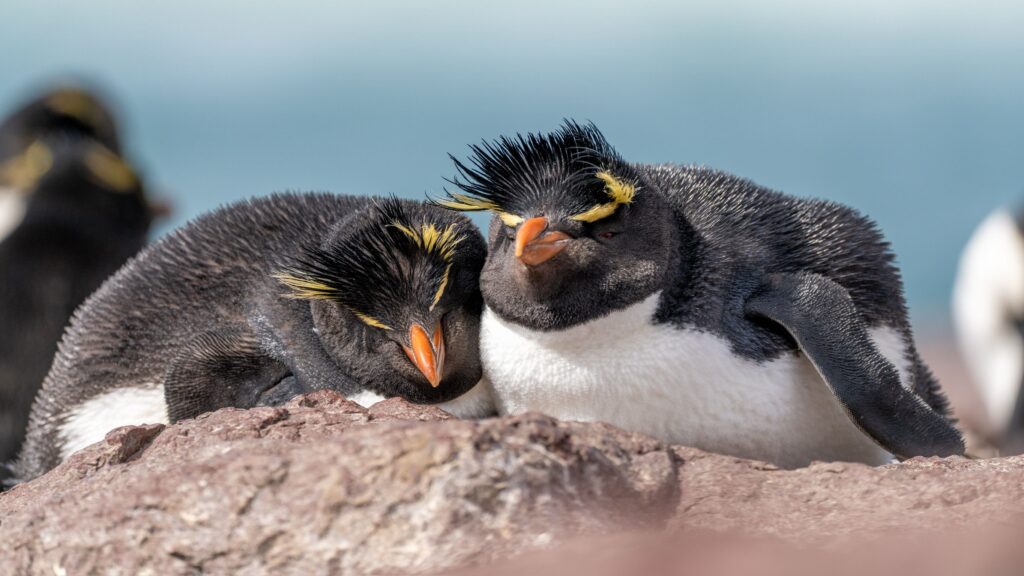
About Yellow-spotted Penguin Chicks
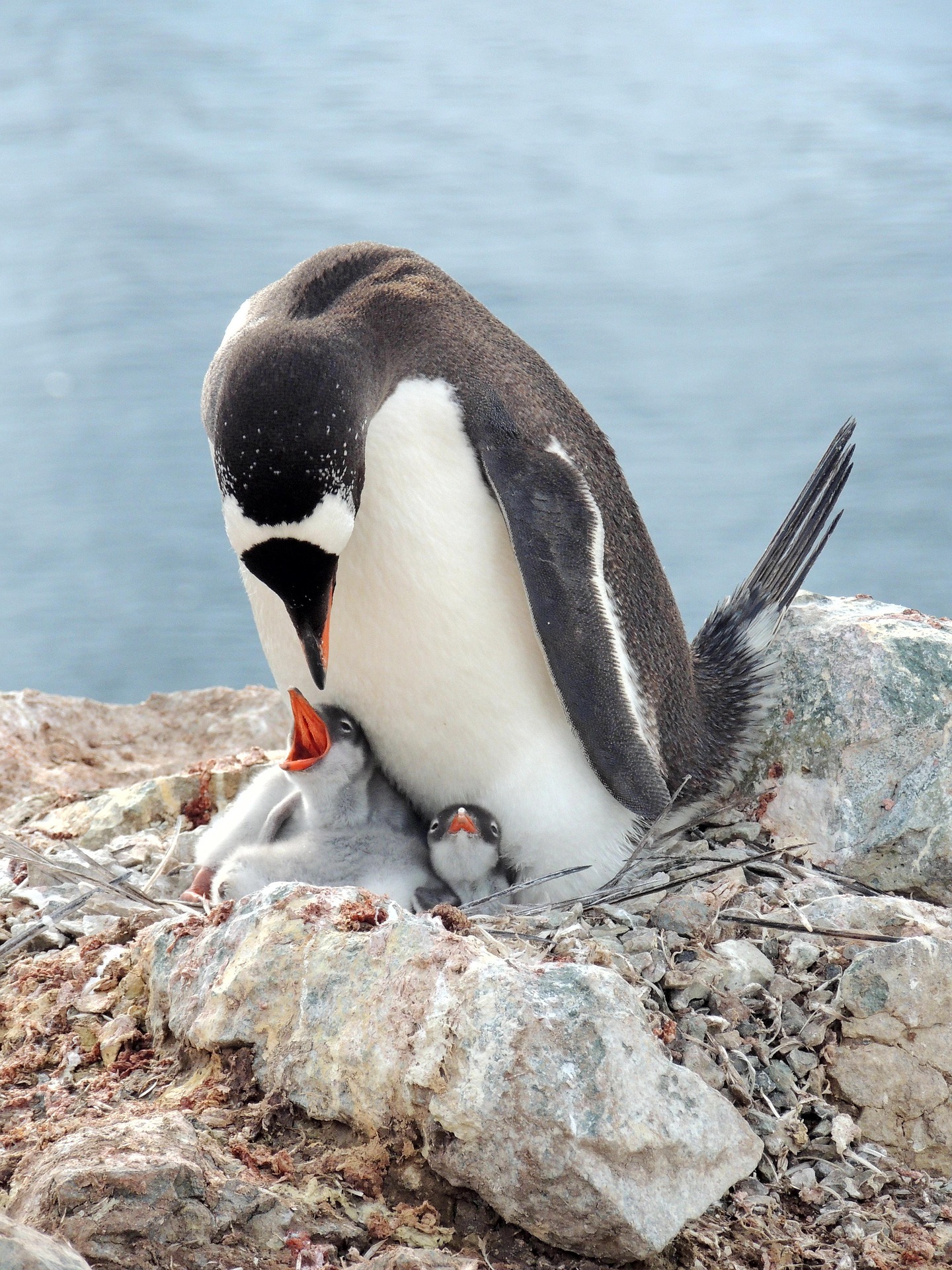
This article summarizes information about Yellow-spotted Penguin (Aptenodytes patagonicus) chicks.
- Hatching
Two eggs are usually laid, but the first one to hatch often takes priority.
The incubation period is approximately 34-37 days.
The parents take turns incubating the eggs and protecting the chicks.
- Appearance and Physical Characteristics
Immediately after hatching, they are covered in fluffy gray down.
Their feathers are not yet waterproof, and they cannot swim.
They have a small, round body, and their limbs are underdeveloped.
- Growth and Development
Early Stage (1-2 weeks after hatching): They are warmed and protected by their parents.
Middle Stage (2-4 weeks): They are fed by their parents and gain strength.
Late Stage (5-8 weeks): Their feathers are replaced and become waterproof.
Chicks may form groups called “kreich” (chickling groups).
- Diet
The parents feed their young fish and krill by mouth.
The parents take turns foraging.
- Independence
Once their feathers have grown in and become waterproof, they begin foraging at sea.
They leave the sea and become independent at about 2-3 months of age.
They live cooperatively in flocks until they reach adulthood.
Is the golden penguin an endangered species?
It is estimated that there are 5,000 penguins in existence. It is designated as an endangered species, and its population is declining due to the following reasons:
Competition with fishing industry
Human populations are also increasing, and we are now catching more fish through fishing. This makes it difficult for macaroni penguins to secure food. Furthermore, due to global warming, it is no longer possible to catch fish that used to be nearby.
artificially introduced predators
Humans have introduced the predator to New Zealand. Originally, there were no terrestrial carnivores in New Zealand, but due to their introduction, they are at risk of extinction.
Is it possible to keep penguins?
The golden penguin is designated as an endangered species. Furthermore, since they are extremely solitary, it would be difficult to keep them unless you are an expert, considering that they are cautious. It is said that they do not get attached to each other.
- Constraints as a Wild Species
A wild species that inhabits sub-Antarctic sandy beaches and rocky areas.
Because they are adapted to low-temperature environments and foraging in wide ocean areas, captivity is extremely difficult.
There are few examples of captivity in zoos around the world, and captivity at home is impossible.
- Difficulties of Captivity
Temperature Control: Temperatures similar to the cold sub-Antarctic environment are required.
Aquarium Size: A large, deep saltwater pool is required for swimming.
Dietary Management: A large and stable supply of fish and krill is required.
Health Management: Wild species are susceptible to stress and disease, making it difficult for them to survive in an artificial environment.
Legal Restrictions: Import, export, and captivity are strictly restricted by the Convention on International Trade in Endangered Species of Wild Fauna and Flora (CITES).
- Summary
Keeping yellow-spotted penguins at home or in small facilities is virtually impossible.
Captivity is only possible in specialized facilities or research institutes under specially controlled conditions.
Actual captivity examples are extremely rare, and observation and conservation must be conducted in the wild.
Zoos and Facilities Housing Them (Japan & Worldwide)
The Yellow-eyed Penguin (also known as hoiho) is a species rarely kept in captivity anywhere in the world. As they are an endangered species and difficult to breed in captivity, most facilities focus primarily on their conservation and rehabilitation.
Zoos and Aquariums in Japan
Currently, there are no zoos or aquariums in Japan that permanently house Yellow-eyed Penguins.
While species such as Humboldt Penguins, King Penguins, and Gentoo Penguins can be seen at many facilities in Japan, Yellow-eyed Penguins have never been introduced to the country and are not on public display.
Major Facilities Worldwide
Almost all Yellow-eyed Penguins are found within New Zealand.
The OPERA (Otago Peninsula Eco Restoration Alliance)
A conservation area where wild individuals can be observed.
The Nest Te Kōhanga
A facility that treats and rehabilitates injured or sick Yellow-eyed Penguins and places them on temporary public display.
Penguin Place
A world-renowned conservation facility where wild Yellow-eyed Penguins can be observed in a near-natural environment.
Dunedin Wildlife Hospital
A specialized facility dedicated to the rescue and treatment of injured or sick birds; it is not a standard zoo.
Fellow members of the same group
コメント