
What kind of animal is an aardvark? We will explain its characteristics, ecology, and habitat. This animal has been confirmed to inhabit a fairly wide area on the African continent, and can even be seen in zoos. Among all mammals, the ecology of this animal is the least understood, and there are many mysteries surrounding it.




- What is an aardvark? About basic status
- What are the roots and origins of the aardvark?
- About habitat
- feature is? What kind of creature is it?
- What is your personality like?
- What is the ecology like?
- Vocalizations
- Seasonal Activity
- Walking Speed
- About Baby Aardvarks
- Is the aardvark an endangered species?
- Can aardvark be kept as a pet?
- Zoos Housing Aardvarks (Japan & Worldwide)
- Introducing other animals
What is an aardvark? About basic status
The aardvark is a mammal classified in the order Aardvaridae, genus Aardvark, and is the only animal belonging to the primitive ungulate order Tubedontidae. The scientific name is Orycteropus afer, and the kanji is earth pig. The body length is 140-220cm and the weight is 40-100kg. Although the name is pig, it has nothing to do with pigs. The list of information is as follows.
| Japanese(和名) | ツチブタ |
| English(英名) | Aardvark |
| scientific name(学名) | Orycteropus afer |
| classification(分類) | Mammalia、Tubulidentata、 Orycteropodidae、Orycteropus 哺乳綱、管歯目、ツチブタ科、ツチブタ属 |
| IUCN Status(保全状況) | LEAST CONCERN |
| Length(体長) | 140-220cm |
| Weight(体重) | 40-100kg |
What are the roots and origins of the aardvark?
Although the aardvark (scientific name: Orycteropus afer) resembles a pig in appearance, it is a mammal that followed a completely different evolutionary path. In fact, it is the only living species in the order Tubulidentata and possesses a highly unique evolutionary history.
Origins and Roots
Aardvark ancestors are believed to have appeared in Africa approximately 55 to 60 million years ago (during the early Paleogene period).
Because the African continent was isolated from other landmasses for a long time, the aardvark evolved as part of a lineage unique to Africa—alongside animals such as elephants, hyraxes, and manatees.
Unrelated to Pigs
Despite its name—which translates to “earth pig” in Japanese—and its resemblance to the animal, the aardvark is not closely related to pigs (which belong to the order Artiodactyla).
Instead, molecular phylogenetic analysis places it in the following group:
Elephants
Hyraxes
Dugongs and manatees
Elephant shrews
Tenrecs
Aardvarks
Collectively known as Afrotheria, these are a group of mammals that evolved from a common ancestor in Africa.
Adaptation to an Ant and Termite Diet
Between 20 and 30 million years ago, the aardvark adapted to the diet it maintains today.
Its evolved characteristics include:
An elongated snout
A sticky tongue that can extend up to 30 cm
Powerful claws on the forelimbs
Thick skin
Specialized tubular teeth that lack enamel (the source of the order name Tubulidentata)
These features are adaptations for efficiently feeding on ants and termites.
A Prime Example of Convergent Evolution
The aardvark bears a strong resemblance to:
Anteaters (South America)
Pangolins (Asia and Africa)
However, these animals are not closely related. Despite evolving from distinct ancestors, they came to resemble one another as a result of adapting to a lifestyle of feeding on ants and termites. This phenomenon is known as convergent evolution.
About classification
The aardvark is the only mammal classified in the genus Aardvark and a member of the primitive ungulate order Tulodontidae.
Aardvark Taxonomy
| 分類階級 | 分類名 |
|---|---|
| 界 | 動物界(Animalia) |
| 門 | 脊索動物門(Chordata) |
| 亜門 | 脊椎動物亜門(Vertebrata) |
| 綱 | 哺乳綱(Mammalia) |
| 目 | ツチブタ目(Tubulidentata) |
| 科 | ツチブタ科(Orycteropodidae) |
| 属 | ツチブタ属(Orycteropus) |
| 種 | ツチブタ(Orycteropus afer) |
About habitat
Aardvarks are widely distributed on the African continent. They live south of the Sahara Desert.
- Region
Distributed primarily throughout sub-Saharan Africa.
Representative countries:
South Africa, Namibia, Botswana
Kenya, Uganda, Tanzania
West Africa (Ghana, Nigeria, etc.)
- Habitat
Prefers arid zones, savannas, and grasslands.
Requires sandy or soft soil where burrows can be dug.
Can also live in forested or humid areas, but requires a secure location for burrowing.
Can survive in dry areas far from water, but avoids deserts with little vegetation.
- Burrows and Living Space
During in long burrows (up to 10m long).
Burrows are used as daytime resting areas, and aardvarks are active at night, feeding on termites and ants.
Burrows are often used alone, but in some cases, multiple aardvarks may dig nearby burrows.
- Geographical Distribution
Distributed over a relatively wide area, primarily in central and southern Africa.
However, there are some areas where populations have declined due to human agricultural and urbanization.
feature is? What kind of creature is it?
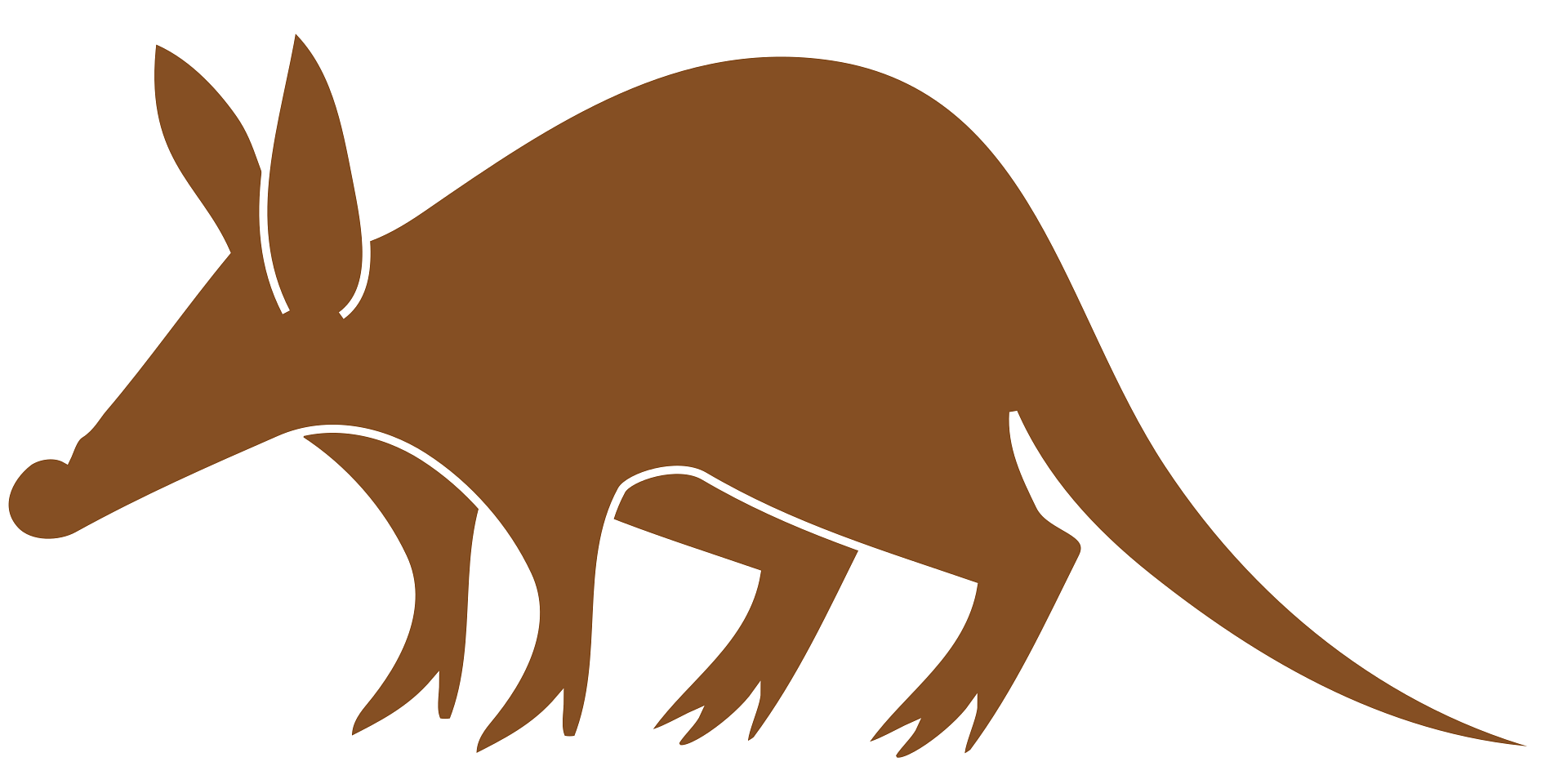
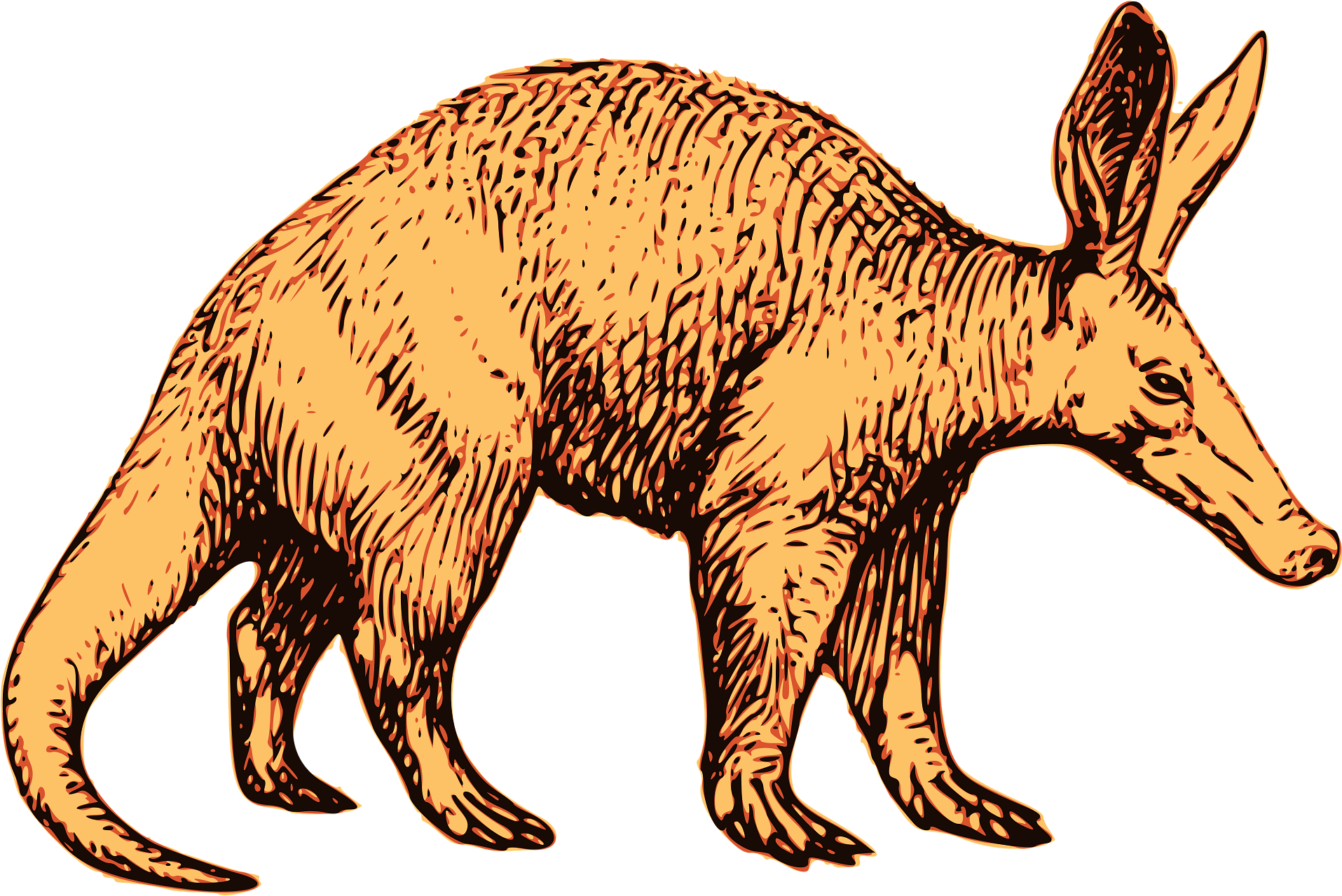
The aardvark is characterized by a long snout. They mainly live in forests and grasslands. They tend to live alone and are nocturnal animals. With their shovel-like claws, they tend to dig a number of burrows within their home range that serve as temporary shelters, and in a pinch they will escape into the holes. They have no teeth or canines, and their molars are made up of tube-shaped objects that continue to grow throughout their lives.
- Physical Characteristics
Body Type
Rounded body, sturdy but surprisingly agile
Forelegs with thick, powerful claws suited to digging
Size and Weight
Body Length: Approximately 1-1.3 m
Tail Length: Approximately 60 cm
Weight: Approximately 40-65 kg
Head
Long, tubular snout with a flexible tip
Uses snout to search for termite and ant nests
Teeth
Almost no front teeth, with numerous rows of tubular molars
Teeth evolved for crushing insects
- Coat Color and Skin
Coat color is gray to brown, with short body hair
Tough skin protects against abrasion during digging and from ant and termite bites
- Personality and Behavior
Nocturnal, resting in burrows during the day
Generally docile and solitary
Shy and tending to avoid humans and predators
Excellent digging ability, digging burrows up to 10 meters long
- Diet
Exclusive insectivores (especially ants and termites)
Use their long snouts and sticky tongues to lick insects from their burrows
Requires very little water, hydrating themselves through food
- Special Abilities
Excellent digging ability
Builds underground burrows to protect themselves from predators
Digs in the soil to search for insects hiding underground
Nocturnal with an excellent sense of smell
Can find ants and termites even in the dark
What is your personality like?
Aardvarks are very gentle animals, but they can also be fearful. It is said that it takes a long time to get attached to people.
Aardvark Personality Traits
Slow and timid
Highly wary of predators and humans
If they sense danger, they will immediately retreat to their burrow
Prefers solitary behavior
Generally solitary
Rarely lives in groups, with mothers raising their young alone
Nocturnal and cautious
Rests in burrows during the day and becomes active at night
Even while active, they remain alert to their surroundings while searching for food
Patient and observant
Concentrates on digging and foraging
Can detect danger from small movements and scents
Curious but cautious
Will approach anything that interests them, but will quickly retreat at the slightest sense of danger
Although they appear docile to humans, they are extremely cautious in the wild
What is the ecology like?
Aardvarks use their long tongues to eat termites. They are thought to be polygynous, and there is no known fixed breeding season. The gestation period is 7 months. They can give birth to one baby at a time. Lifespan is 10 to 15 years.
- Habitat
Distributed primarily in sub-Saharan Africa
Prefers savanna, dry grasslands, and semi-arid regions
Digs burrows in areas with soft soil and rests in them during the day.
- Behavior
Nocturnal: Rests in burrows during the day and becomes active at night.
Excellent digging ability, digging into the ground to search for termites and ants.
Mainly solitary, rarely encountering other aardvarks.
- Diet
Exclusively insectivorous (mainly termites and ants).
Uses its long snout and sticky tongue to lick insects from its burrow.
Very little water required, hydrating itself through food.
- Burrows/Dwellings
Excellent burrow digging ability.
Can reach lengths of up to 10 meters.
Deep, about 2-3 meters, it is used for daytime resting and security.
Burrows are used independently and are rarely shared by multiple aardvarks.
- Reproduction and Rearing
They give birth to one baby at a time.
After giving birth, the mother protects the baby in a den.
The baby is breastfed for several weeks, after which it acquires the ability to forage for itself.
They grow relatively slowly and become fully independent by 2-3 years of age.
Are there any natural enemies?
Aardvark’s natural enemies are carnivores such as hyenas and jackals. When they spot an enemy, they run into their burrow.
Vocalizations
Aardvarks are very quiet animals and rarely make noise under normal circumstances. As nocturnal, solitary creatures, they rely more on their keen sense of smell than on sight or vocalizations to navigate their environment.
“Oink-oink” / “Snort”
Low, snorting sounds.
These may be heard when the animal is calm or exploring its surroundings.
“Grrr…”
A low growl.
Produced when startled or acting defensively.
This sound may also be heard when the animal is on alert inside its burrow.
“Kee!” / “Qew”
High-pitched sounds.
These may be made when a young aardvark calls for its mother, or when the animal feels anxious or in pain.
“Hoo!”
A sound made by forcefully exhaling through the nose.
A sign of alertness or a warning display when the animal senses danger.
Seasonal Activity
Aardvarks are nocturnal animals that remain active year-round and do not hibernate. However, since Africa lacks the four distinct seasons found in Japan, their activity patterns shift significantly between the “wet season” and the “dry season.” Their activity is also influenced by temperature and the activity levels of termites and ants.
🌱 Wet Season (Generally October–March, depending on the region)
Rain stimulates the activity of ants and termites, making this the period when food is most abundant for aardvarks.
Key Activities
Foraging begins immediately after sunset
Successively searching for ant and termite nests
Expanding home range
Breeding observed in some regions
Characteristics
They may travel 10–30 km in a single night.
Softened soil makes it easier to dig or repair burrows.
☀️ Dry Season (Generally April–September)
Drier conditions reduce insect activity, requiring more time to forage.
Key Activities
Traveling over wider areas to forage
Spending more time resting in burrows
Rarely visiting water sources, as they obtain moisture from their food
Characteristics
In extremely hot regions, they may be active during the early morning or late afternoon, in addition to the night.
🌡️ Activity Changes Based on Temperature
Hot Days
Staying in underground burrows to prevent overheating
Starting activity after sunset
Cold Nights
Sometimes active during the warmer daylight hours
This behavior is observed particularly in regions with harsh winter cold, such as South Africa.
Walking Speed
Although aardvarks have large, stocky bodies, they are actually quite agile animals. While they usually walk at a leisurely pace, they can run surprisingly fast when they sense danger.
Normal Walking Speed
Approximately 3–5 km/h
When foraging for food at night, they move slowly with their snouts close to the ground.
Aardvarks have a distinctive gait characterized by:
Arching their backs
Keeping their snouts close to the ground
Checking the scent of the soil with their front paws
…a style of walking that involves constant exploration.
Running Speed
When sensing danger or fleeing to their burrows,
they can accelerate to approximately 30–40 km/h.
It is hard to imagine given their appearance, but their powerful hind legs and well-developed muscles allow them to run quite fast over short distances.
Astonishing Digging Speed
An aardvark’s greatest ability is not running, but digging.
They can dig a hole large enough to conceal their entire body within a few minutes.
They use their strong front claws to dig through even hard ground.
In times of danger, they may choose to “dig and escape” rather than run.
The claws on their front paws are developed like shovels; they use their body weight to dig and fling the soil backward.

About Baby Aardvarks
Here’s a detailed summary of baby aardvarks.
- Appearance and Characteristics
Birth Weight: Approximately 2-3 kg
Body Length: Approximately 30-40 cm
Fur color: Light gray to brown, with soft, short fur
Snouts are still small, and claws on the front legs are still developing
Molar teeth are small at birth, but as they mature, they become able to crush insects
- Behavioral Ability
Able to stand and walk immediately after birth
Survival Skills for Escape from Predators
They may follow their mother and move outside the burrow within a few days of birth
Digging skills and snout usage are immature and are gradually learned through instruction from the mother
- Defense and Hiding
Mothers have the habit of hiding their young deep in the burrow
Cubs remain largely immobile and remain safe within the burrow
They rely on their mother’s actions for protection from predators
- Diet and Growth
They feed on their mother’s milk for the first few weeks after birth.
They begin to eat ants and termites in the burrow a few weeks after birth.
They grow slowly, becoming independent and able to forage for food on their own around 6-12 months of age.
- Sociality
Cubs generally stay alone and stay close to their mother.
They rarely come into contact with other aardvarks.
They grow up learning about hunting and environmental hazards.
Is the aardvark an endangered species?
The aardvark is currently not an endangered species and is classified as Least Concern. However, there are concerns that the population will decrease in the future. Droughts are common in Africa, and aardvarks that have died due to drought are often found.
- Current Status
According to the International Union for Conservation of Nature (IUCN) Red List, the aardvark is classified as “Least Concern (LC).”
This means that while it is not currently endangered, its population may be declining in some areas.
- Population Status
Due to its widespread distribution across Africa, its overall population is relatively stable.
However, there are areas where its habitat is experiencing localized decline due to agricultural land development, urbanization, road construction, etc.
- Threats
Habitat Destruction
Development of savannas and grasslands, agricultural land development, road construction
Predators
Lions, leopards, and hyenas prey on young aardvarks.
Human Conflict
If their dens are located near agricultural land, they may be considered pests.
- Conservation Status
Since it is not an endangered species, there are few large-scale conservation efforts.
However, habitat conservation and avoiding conflicts with agricultural land are considered important.
Can aardvark be kept as a pet?
Aardvarks are creatures that emit a very strong odor. Furthermore, they have a habit of constantly digging with their claws, so they are not very suitable for breeding. We recommend that you check out the information provided at events such as zoos.
- Legal Issues
Aardvarks are wild animals, and keeping them as pets without special permission is illegal in most countries.
In Japan, they may be classified as “designated animals” or wild animals, requiring permission from the prefectural governor to keep them.
Internationally, import and export restrictions may be imposed under the Convention on International Trade in Endangered Species of Wild Fauna and Flora (CITES).
- Ecological and Behavioral Issues
Nocturnal: Because they rest in burrows during the day, they hide in captivity, making observation difficult.
Highly digging ability: In captivity, they dig up floors and gardens, making them difficult to control.
Preferring to be solitary: Due to their low sociality, it is difficult to keep them in groups.
Sensitive and timid: They are easily stressed by environmental changes and humans.
- Conditions Necessary for Keeping (Theoretically)
Even if they are legally kept, the following conditions are required:
A large exercise area and soil that can be dug
An environment where they can be active at night (light and noise control)
A constant supply of insectivores (termites and ants)
Management by a veterinarian with expertise in wildlife
- Practical Alternatives as Pets
Aardvarks themselves cannot be kept as pets, but small herbivores/insectivores with similar habits can be kept.
Examples: Miniature rabbits, hedgehogs, etc.
Zoos Housing Aardvarks (Japan & Worldwide)
Aardvarks are rare animals that are difficult to keep in captivity; consequently, few zoos exhibit them. Because they are nocturnal and have a specialized diet (feeding on ants and termites), their care requires specialized facilities and expertise.
🇯🇵 Zoos in Japan Housing Aardvarks
Tama Zoological Park
A prominent facility in Japan where aardvarks can be seen.
They place great emphasis on exhibiting nocturnal animals and have created an environment tailored to the aardvark’s natural ecology.
They have a proven track record of keeping and breeding aardvarks.
Exhibit Features
They often sleep during the day.
They may be seen moving about from the evening onwards.
Visitors can observe natural behaviors, such as digging in the ground.
Higashiyama Zoo and Botanical Gardens
One of the facilities in Japan with a history of keeping aardvarks.
They were exhibited as nocturnal animals.
*Current exhibit status is subject to change.
🌍 Major Zoos Worldwide Housing Aardvarks
Smithsonian’s National Zoo (USA)
One of the world’s most renowned facilities for keeping aardvarks.
They have been engaged in research and breeding for many years.
Known for its nocturnal animal exhibit (Nocturnal House).
San Diego Zoo (USA)
Famous for its breeding and conservation efforts regarding rare animals.
They have a history of keeping and breeding aardvarks.
Zoo Miami (USA)
A zoo featuring many African animal exhibits, taking advantage of the warm climate.
They have a track record of keeping aardvarks.
Cologne Zoo (Germany)
A zoo with a history of keeping aardvarks in Europe.
They are also involved in breeding research.
London Zoo (UK)
They have kept aardvarks in the past.
Current exhibit status varies.
Introducing other animals
コメント