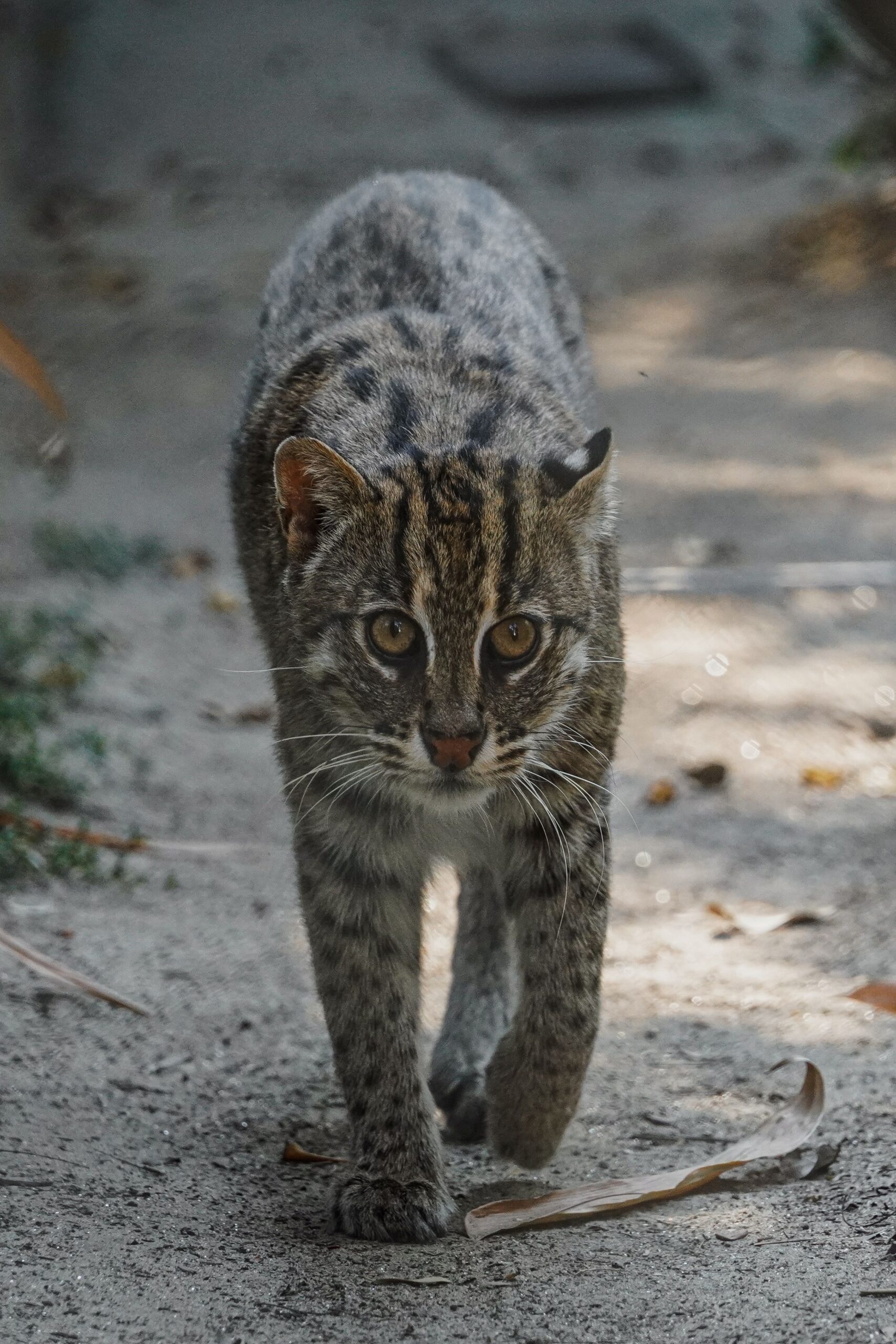
We will explain the characteristics, ecology, and habitat of the Malayan wildcat. It is a cat that has a special appearance, food, color, appearance as a cat, and special ability such as being able to swim even though it is an animal. The fishing cat is the only cat with these characteristics. Malayan wildcats have webbed feet and are good swimmers. He’s a very good cat.







- What is a Malayan wildcat? About basic status
- What are the roots and origins of the flat-headed cat?
- About the habitat of the Malayan wildcat
- feature is? What kind of creature is it?
- What will your personality look like?
- What is the ecology of the Malayan wildcat?
- Vocalizations of the Flat-headed Cat
- Seasonal Activity of the Flat-headed Cat
- Walking Speed of the Flat-headed Cat
- Do they bond with humans?
- About Malayan wildcat cubs
- Is the Malayan wildcat an endangered species?
- Is it possible to keep Malayan wildcats?
- Zoos Housing the Species (Japan and Worldwide)
- Introducing other animals
What is a Malayan wildcat? About basic status
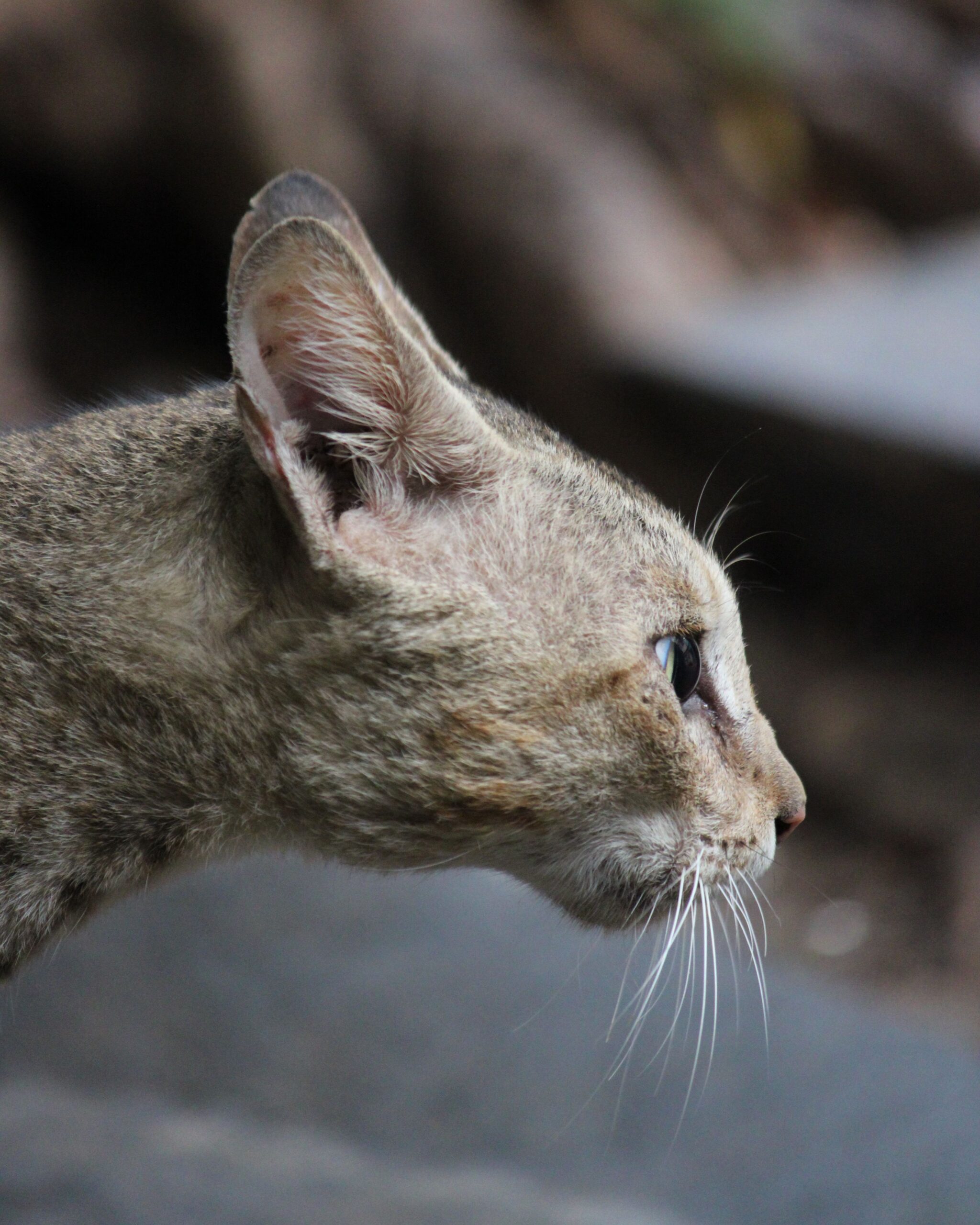
The Malayan wildcat belongs to the mammalian class Felidae. The scientific name is Prionailurus planiceps. The body length is 40-56 cm and the weight is 2-3 kg. Malayan wildcats live in Southeast Asia.
| Japanese(和名) | マレーヤマネコ |
| English(英名) | Flat-headed cat |
| scientific name(学名) | Prionailurus planiceps |
| classification(分類) | Mammalia、 Carnivora、Felidae、Prionailurus 哺乳綱、ネコ目、ネコ科、ベンガルヤマネコ属 |
| IUCN Status(保全状況) | ENDANGERED |
| Length(体長) | 40-56cm |
| Weight(体重) | 2-3kg |
What are the roots and origins of the flat-headed cat?
The flat-headed cat is a very rare small wild cat found in Southeast Asia. Its lineage dates back millions of years.
Origins and Evolution
The flat-headed cat belongs to the subfamily Felinae (small cats) within the family Felidae.
It is believed to have diverged from the common ancestor of modern small cats approximately 8 to 10 million years ago.
As it adapted to the wetlands and rainforests of Southeast Asia, it underwent a unique evolutionary process, specializing in a lifestyle centered around the water.
Consequently, it possesses characteristics that can be described as “semi-aquatic”—a rarity among living felids.
Why does it have a “flat head”?
Its English name, “flat-headed cat,” derives from the distinctive shape of its head.
This shape is thought to be an adaptation for catching prey near the water:
A low, flat head
A forward-projecting muzzle
Forward-facing eyes
These features likely provided an advantage when targeting fish and other prey underwater or at the water’s edge.
Adaptation to the Water
Unlike most members of the cat family, the flat-headed cat is specialized for hunting near the water.
Its primary prey includes:
Fish
Frogs
Shrimp
Crabs
Small mammals
It is also known for the following characteristics:
Partially webbed toes
A lack of aversion to entering the water
A high aptitude for quickly catching fish
What will be the classification?
In terms of the lineage of extant species of the cat family, it is the genus Bengal cat. The following subspecies exist in the Bengal wildcat genus: The Tsushima leopard cat and the Iriomote leopard cat are designated as endangered species.
| Name:名前 | academic name (学名) | Habit (生息地) |
| Tsushima leopard cat ツシマヤマネコ | Prionailurus bengalensis euptilurus | Tsushima, Japan 対馬 |
| Iriomote wild cat イリオモテヤマネコ | Prionailurus bengalensis iriomotensis | Iriomote, Japan 西表島 |
| Sunda leopard cat スンダヒョウネコ | Prionailurus javanensis | Java, Bali, Borneo, Sumatra、Indonesia ジャワ島、バリ島、ボルネオ島、スマトラ島 |
| Flat-headed cat マレーヤマネコ | Prionailurus planiceps | Indonesia, Thailand, Brunei, Malaysia インドネシア、タイ、ブルネイ、マレーシア |
| Rusty-spotted Cat サビイロネコ | Prionailurus rubiginosus | India インド |
| Fishing cat スナドリネコ | Prionailurus viverrinus | Indonesia, China, Thailand インドネシア、中国、タイ |
マレーヤマネコの分類学(Taxonomy)
| ランク | 分類 |
|---|---|
| 界 (Kingdom) | 動物界 (Animalia) |
| 門 (Phylum) | 脊索動物門 (Chordata) |
| 綱 (Class) | 哺乳綱 (Mammalia) |
| 目 (Order) | 食肉目 (Carnivora) |
| 科 (Family) | ネコ科 (Felidae) |
| 属 (Genus) | ヤマネコ属 (Prionailurus) |
| 種 (Species) | マレーヤマネコ (Prionailurus planiceps) |
About the habitat of the Malayan wildcat
Malayan wildcats are distributed throughout Southeast Asia, including Indonesia, Thailand, Malaysia, and Brunei.
- Geographic Distribution
Widely distributed throughout Southeast Asia
Malay Peninsula
Sumatra, Borneo
Parts of Southern Thailand and Kalimantan
Limited to forested tropical regions
- Habitat
Forest:
Wide range of habitats, from tropical rainforests, evergreen broadleaf forests, lowland forests, to hill forests
Uses bushes, fallen logs, and rock shelters on the forest floor as hiding places
Wetlands and Waterside:
Also active along rivers and around wetlands
May also prey on small fish and frogs
Around Farmland:
Mainly found in forests, but may also appear on forest edges near human settlements
- Elevation and Topography
Elevation: Wide range of habitats, from flatlands to hills and low mountains
Terrain Adaptation:
Excellent at climbing and jumping
Ability to live in a variety of terrains, including the forest floor, fallen logs, and rocky areas
- Behavior and Adaptations
Nocturnal: Rests in bushes or fallen logs during the day
Solitude: Has a territory and is mostly solitary except during breeding season
Relationship to Diet:
Feeds on mice, birds, insects, frogs, and small fish
Selects habitats based on diet
- Habitat and Conservation
Population: The exact population size is unknown, but sightings are rare due to the species’ dense forest habitat
Threats:
Habitat loss due to deforestation and development
Risk of human contact
Conservation Status:
Classified as Near Threatened (NT) on the IUCN Red List
feature is? What kind of creature is it?
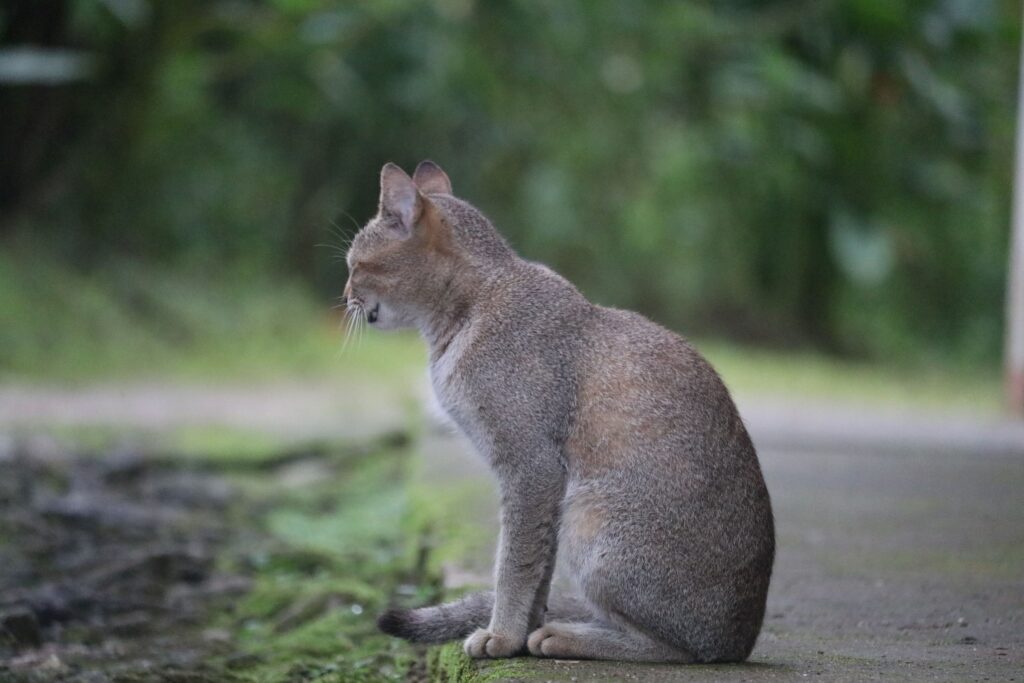
The Malayan wildcat’s body is different from that of a normal cat or individual; it has webs between its claws, making it an excellent cat that can swim. The tail is short and the whole body is covered with thick, soft hair. The fur on the back is dark brown with gray or pale yellow spots. The pinna is small and rounded. Habitats include forests, swamps, and waterside areas. They are nocturnal and like to be alone.
- Physical Characteristics
Body Type: Small cat, body length 45-60cm, tail length 20-30cm, weight approximately 2-4kg
Coat Color/Pattern:
Dark black-brown head, grayish-brown to yellowish-brown body
Small spots and stripes, overall a plain appearance
Sometimes the tail has a dark ring-shaped pattern
Ears/Eyes:
Small, round ears
Large eyes adapted to nocturnal behavior
- Behavior/Personality
Nocturnal: Rests during the day under bushes or fallen trees, active at night
Solitude: Territorial and solitary except during breeding season
Highly alert: Sensitive to predators and humans, quickly hides when sensing danger
Athletic Ability: Good at climbing trees, jumping, and swimming
- Diet
Small carnivorous:
Mice, birds, insects, frogs, small fish, etc.
Hunting method:
Sneaks alone and captures prey with agile movements and jumps.
- Ecological characteristics
Territorial: Each individual has a territory and marks it to let others know.
Reproduction:
Breeding season varies depending on the region and environment, but is mainly spring to summer.
Gestation period is about 60 days, and 1-3 pups are born.
Adaptability:
Adapts to a variety of environments, including forests, rivers, and wetlands.
Nocturnal and solitary, they avoid predators and humans.
What will your personality look like?
The Malayan wildcat is actually one of the most unknown cat species, as little research has been done on it, and not much is known about it. Because they like to be alone, they seem to share the same temperament and selfishness that cats often have.
- Extremely cautious
Timid and cautious: Sensitive to the approach of predators and humans
Good at hiding: Rest in bushes, fallen trees, and rocks during the day and become active at night
- Solitary and independent
Territorial: Each individual has its own territory and rarely comes into contact with others except during breeding season
Independent: They manage all aspects of their lives, including hunting and traveling
- Hunting instinct and agility
High athletic ability: They excel at tree climbing, jumping, and swimming, which they use to capture prey
Learning ability: They adapt their behavior depending on the prey and environment, allowing them to hunt efficiently
- Gentle and defensive
Basically gentle: They are not aggressive unless threatened
Powerful in defense: They will fight back with fangs and claws when threatened
What is the ecology of the Malayan wildcat?
Malayan wildcats are known to eat plants, fruits, frogs, crustaceans, reptiles, small animals, and even fish. The gestation period for breeding behavior lasts approximately 56 days. Females can give birth to 2-3 cubs at a time. The lifespan is said to be about 15 years.
- Habitat
Region: Southeast Asia (Malay Peninsula, Sumatra, Borneo, etc.)
Environment:
Tropical rainforest, evergreen broadleaf forest, hill forest
Uses hiding places such as bushes, fallen logs, and rock shelters on the forest floor
Active along rivers and around wetlands, occasionally preying on small fish and frogs
Activity: Nocturnal, resting in hiding during the day
- Diet
Small carnivorous:
Mice, birds, insects, frogs, small fish, etc.
Hunting Method:
Sneaks up alone and captures prey with jumps and agile movements
- Behavior and Lifestyle
Soliloquy: Maintains a territory and is mostly isolated except during breeding season
Territory Maintenance:
Marks territory with urine, feces, and claw marks
Breeding Season:
Mates in spring and summer
Gestation period: approximately 60 days, giving birth to 1-3 pups
- Adaptability
Athletic Ability: Excellent at climbing trees, jumping, and swimming.
Environmental Adaptation:
Nocturnal and solitary, they avoid predators and human contact.
Can live in a variety of environments, including forests, wetlands, and riverbanks.
- Habitat Status and Conservation
Population: Because they live in dense jungles, there have been few sightings, and their population size is unknown.
Threats:
Habitat loss due to deforestation and development.
Risk of human contact.
Conservation Status: Near Threatened (NT) on the IUCN Red List.
Vocalizations of the Flat-headed Cat
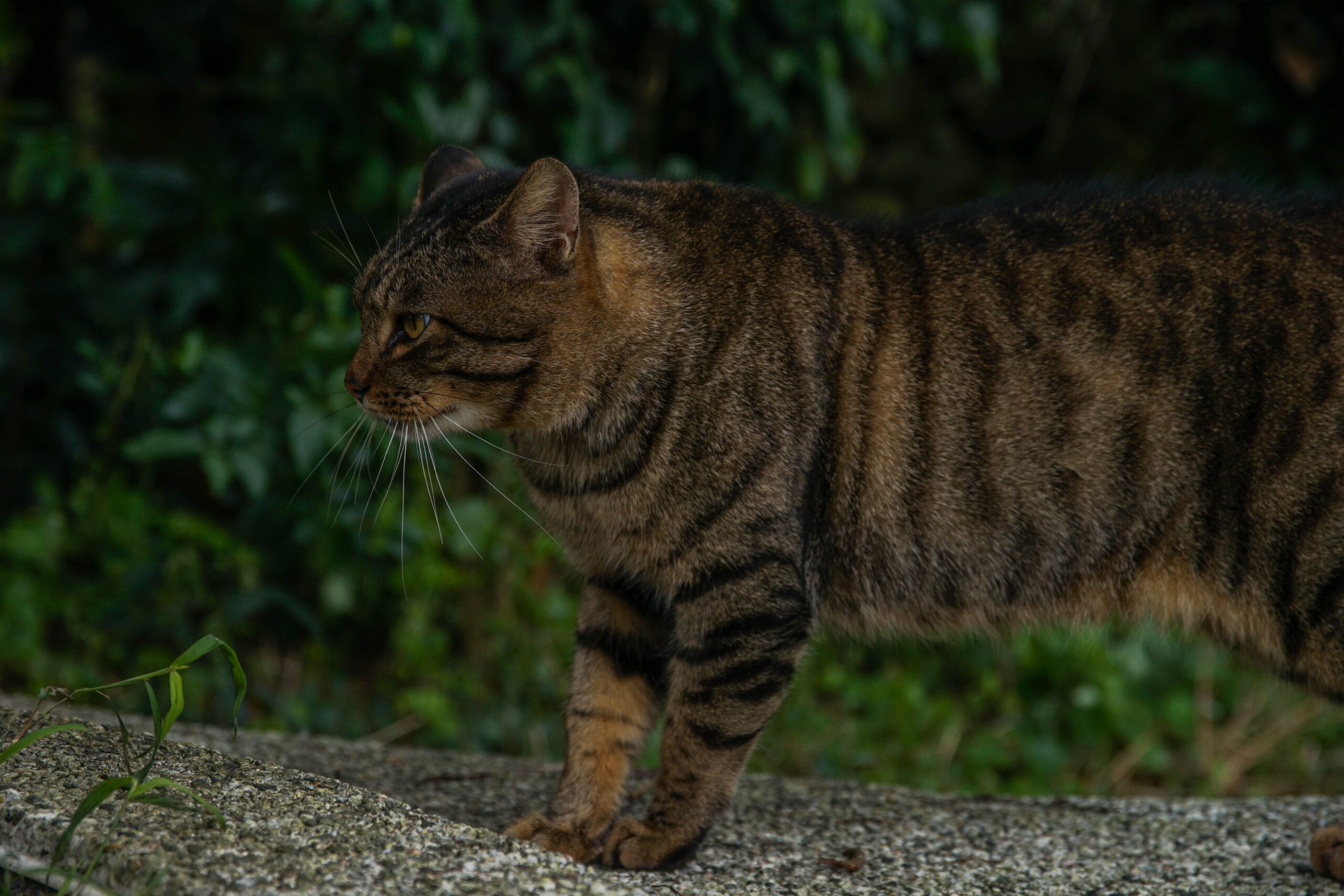
Because the flat-headed cat is extremely rare and sightings are infrequent, there has been little detailed research into its vocalizations. Recordings of the animal in the wild are also very limited.
Based on current knowledge, they are believed to produce the following vocalizations:
A short “meow”
A quieter, softer sound than that of a domestic cat.
It is thought to be used for communication between mother and offspring or during close-range interactions.
A low growl (“grrr…”)
Produced when the cat is threatening or on alert.
It closely resembles the growl of a domestic cat.
A hissing sound
Like other felids, they are believed to produce a hissing sound—exhaling sharply with an open mouth—when facing enemies or threats.
Purring
As with closely related small felids, it is highly likely that they possess the ability to purr, though this has not been sufficiently recorded or studied in the wild.
Seasonal Activity of the Flat-headed Cat
Because the flat-headed cat inhabits tropical regions near the equator, its activity patterns do not shift drastically in response to the “four seasons” seen in places like Japan. Instead, its behavior is largely influenced by the alternation between the rainy and dry seasons.
Rainy Season
(Varies by region, but generally from October to March)
Activity Characteristics
Water levels in rivers and wetlands rise, leading to an abundance of fish and frogs.
Foraging activity along the water’s edge intensifies.
They hunt at night while moving along riverbanks and through mangrove forests.
Common Prey
Fish
Frogs
Shrimp
Crabs
Aquatic insects
Dry Season
(Generally from April to September)
Activity Characteristics
Water levels drop, and the area of available water shrinks.
It is believed that, in addition to fish, they increasingly prey on small mammals and birds.
They concentrate their movements around water sources, efficiently searching for limited food resources.
Walking Speed of the Flat-headed Cat
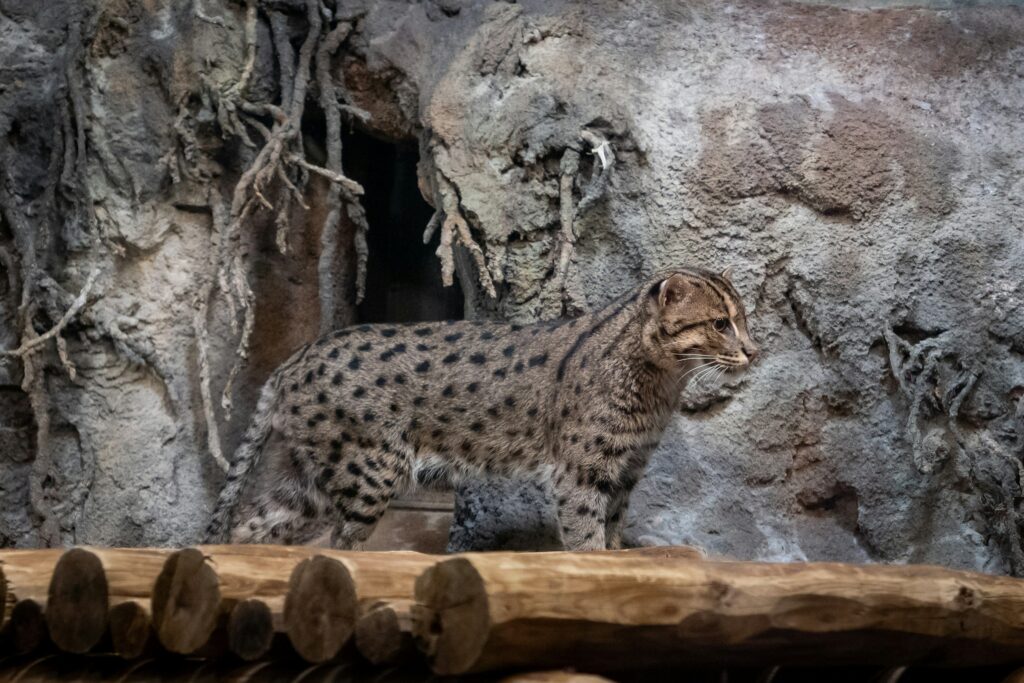
To date, no scientific data directly measuring the walking or running speeds of the flat-headed cat has been published. This is due to the scarcity of wild observations and the limited number of individuals in captivity.
Normal Walking
Estimated at approximately 2–4 km/h.
They search for prey, such as fish and frogs, while walking slowly along the water’s edge.
They are believed to move cautiously to avoid making noise.
Running
They sprint over short distances when sensing danger or pursuing prey.
It is estimated that
they may reach top speeds of around 30–40 km/h.
However, this is an estimate based on comparisons with closely related small wild cats, not a value actually measured for the flat-headed cat.
Mobility Near Water
The flat-headed cat is adapted for movement near water as well as on land.
They walk quickly along the water’s edge.
They sometimes enter shallow water to catch fish.
They possess somewhat developed webbing between their toes, which is believed to facilitate movement in muddy areas.
Do they bond with humans?
The flat-headed cat is not a wild animal that bonds with humans.
As there are very few instances of them being kept in captivity or studied worldwide, details regarding their temperament remain somewhat unclear; however, based on current knowledge, the following characteristics are understood:
Wariness of humans
They are generally extremely wary.
Being nocturnal, they rarely appear in the presence of humans.
It is believed that when they sense a human’s presence, they often quickly conceal themselves in thickets or near the water’s edge.
Behavior in captivity
Individuals kept in captivity may become accustomed to the keepers who care for them daily.
However, this does not mean they “trust humans and bond with them like a pet.”
They may recognize keepers as non-threatening.
They may approach when it is time to be fed.
They do not necessarily enjoy being touched and may experience stress.
About Malayan wildcat cubs
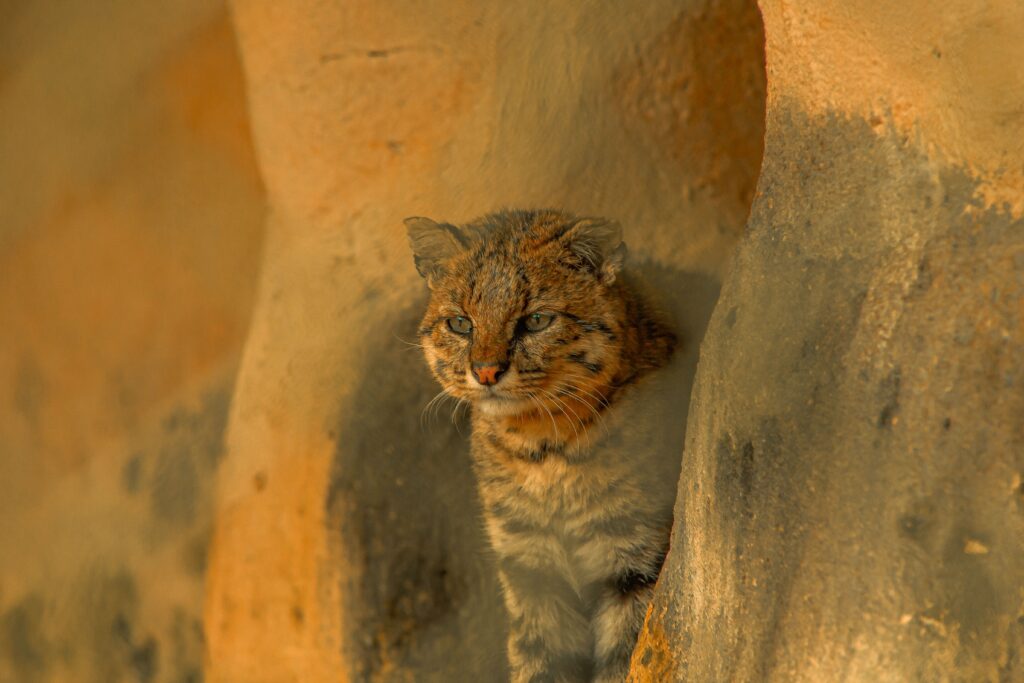
This article provides information about Malayan wildcat (Prionailurus planiceps) cubs.
- Birth and Size
Birthing Season: Varies by region, but typically spring to early summer
Number of Pups: 1-3 per litter
Birth Weight: Approximately 80-120g
Body Length: Approximately 10-15cm
Coat Color: Light-colored immediately after birth, developing the same grayish-brown or spotted pattern as adults as they mature
- Rearing and Protection
Maternal Care:
Nursing, maintaining body temperature, and sheltering in burrows and bushes
Raising in Safe Places:
Places protected from predators, such as bushes on the forest floor, fallen trees, and the shade of rocks
Pack Cooperation:
Primarily solitary, with little protection from anyone other than their mother
- Developmental Process
Nursing Period: Approximately 2-3 months after birth
First Outing: Follows mother near burrow, practicing hunting and movement
Importance of Play:
Playing with other cubs and their mother helps them develop muscle strength, hunting instincts, and alertness
Develops athletic skills, such as climbing and jumping
- Learning and Survival Skills
Learned from their mother:
How to capture prey, detect danger, and use burrows
Gaining Independence:
Becoming increasingly independent between 6 months and 1 year of age, they will eventually have their own territories.
- Maturity
Sexual Maturity: Reproductively viable between 1 and 2 years of age
Behavioral Patterns: They are solitary and utilize the survival skills they learned from their mother.
Is the Malayan wildcat an endangered species?
The Malayan wildcat is listed in Appendix I of CITES, and international trade is severely restricted. It is also designated as an endangered species. This may be due to the following reasons.
habitat destruction
Land development in Southeast Asia has progressed considerably since the 2010s. As a result, habitat destruction is progressing. Areas where Malayan wildcats originally lived are no longer active, making it difficult for them to survive.
human disturbance
Cats are being killed by humans. This is primarily due to overhunting for hunting and pet purposes. There are people who do illegal things. Furthermore, the number of cases of people being hit by cars and dying is increasing rapidly, making it a dangerous situation.
Is it possible to keep Malayan wildcats?
As of the latest update, Malayan wildcats are prohibited from hunting and trade in Thailand, Malaysia and Indonesia, and are fully protected by national laws in all range countries. Therefore, it is extremely difficult for ordinary people to keep them. Since it is a rare animal, there are few records or posts of images such as videos and photos.
- Legal Restrictions
May be treated as a rare wild animal or designated animal.
Special permission from the prefectural governor is required for keeping.
Private ownership is prohibited, and illegal ownership is subject to penalties.
- Difficulties of Keeping
Small and Rare Populations: Capture and import of wild individuals are prohibited.
Solitary and Territorial:
Timid and cautious, they become highly stressed in cramped environments.
Exercise and Environmental Requirements:
Nocturnal and adapted to forest environments.
They require a large enclosure to utilize their athletic abilities, such as tree climbing, jumping, and swimming.
Diet:
They require food that replicates their natural hunting behavior, such as mice, birds, frogs, and small fish.
- Realistic Keeping
Only Possible in Zoos and Conservation Facilities:
Professional management, breeding plans, and environmental reproduction are required.
Purpose of Keeping:
Protection and breeding of endangered species.
Research and Education.
Private ownership is unrealistic and dangerous.
Additional Information
The Malayan wildcat is a “small and cute-looking, but rare and extremely cautious wild animal.”
Since hunting and athletic ability in the natural environment are essential, it is almost impossible to keep them as pets, so the most realistic method is to keep and breed them in conservation facilities or zoos.
Zoos Housing the Species (Japan and Worldwide)
The flat-headed cat is a rare wild cat species with extremely few examples of captivity worldwide.
Japan
Currently, there are no confirmed zoos in Japan that house or exhibit flat-headed cats.
While Japanese zoos house species such as:
Leopard cats
Pallas’s cats
Sand cats
Tsushima leopard cats
…there are almost no records of flat-headed cats ever having been introduced to the country.
Worldwide
Currently, there are very few facilities open to the public.
Songkhla Zoo (Thailand)
It is known as one of the few facilities in the world that houses flat-headed cats.
In 2009, the zoo successfully bred the species, marking a valuable instance of captive breeding.
Introducing other animals
コメント