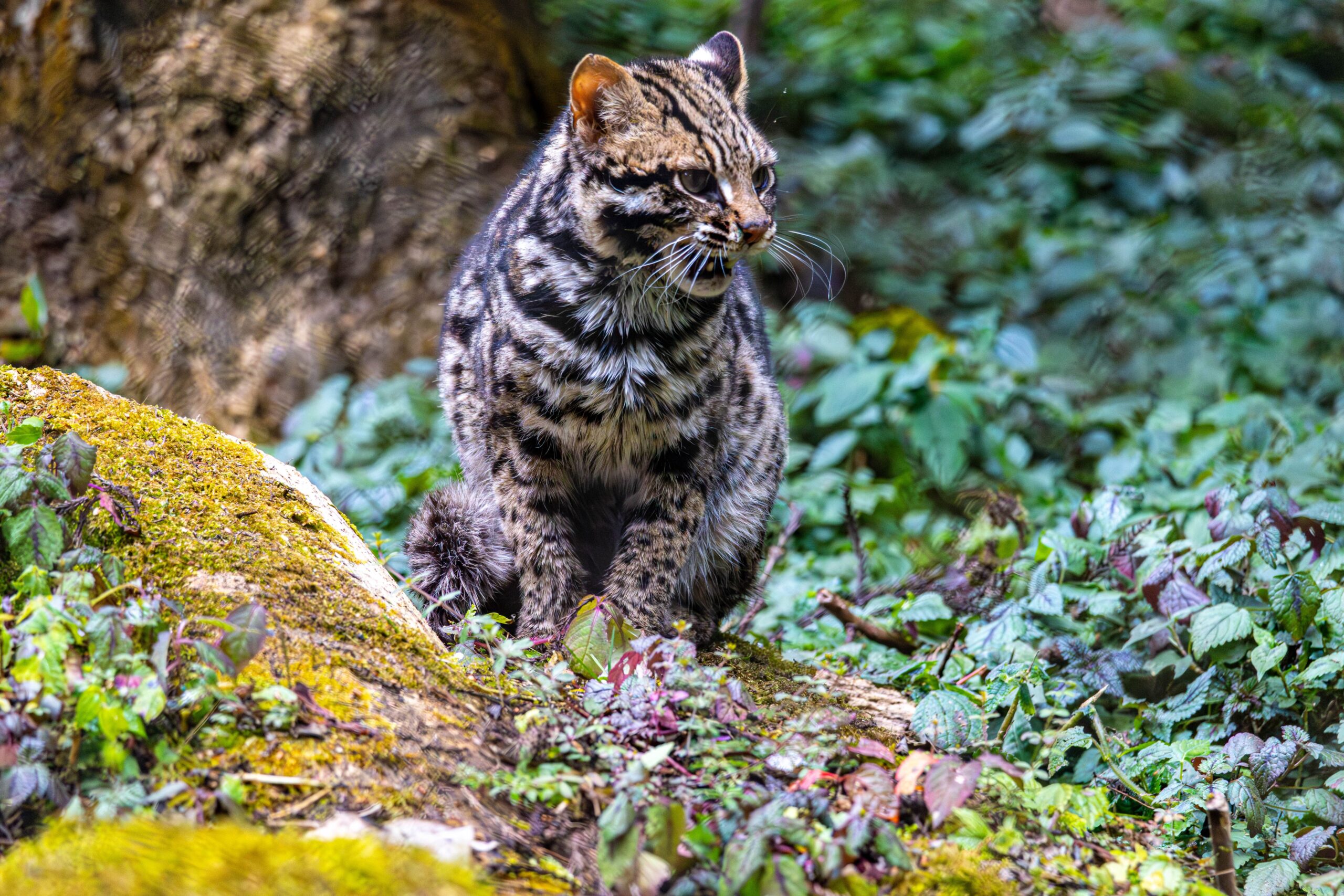
We will explain the characteristics, ecology, and habitat of the Iriomote wildcat. The Iriomote cat lives only on Iriomote Island, Okinawa Prefecture, Japan, and its population is extremely small. This animal is classified as Critically Endangered, meaning it is at high risk of extinction and is in need of urgent conservation efforts.



- What is Iriomote wild cat? About basic status
- What are the roots and origins of the Iriomote cat?
- What will be the classification?
- About the habitat of the Iriomote cat
- feature is? What kind of creature is it?
- What will your personality look like?
- What is the ecology of the Iriomote wildcat?
- Vocalizations of the Iriomote Cat
- Seasonal Activity of the Iriomote Cat
- Walking Speed of the Iriomote Cat
- About Iriomote wildcat cubs
- Is the Iriomote cat an endangered species?
- Can Iriomote wildcats be kept?
- Zoos Housing the Iriomote Cat (Japan and Worldwide)
- Introducing other animals
What is Iriomote wild cat? About basic status
The Iriomote wildcat belongs to the class Mammalia, carnivora, family Felidae, genus Bengal wildcat. The scientific name is Prionailurus bengalensis iriomotensis. The body length is 50-60cm and the weight is 3-5kg. They can only be found in Japan and are a subspecies of the Bengal wildcat. According to information from Iriomote, this cat is the only large wild carnivore. It is a rare animal.
| Japanese(和名) | イリオモテヤマネコ |
| English(英名) | Iriomote wild cat |
| scientific name(学名) | Prionailurus bengalensis iriomotensis |
| classification(分類) | Mammalia、 Carnivora、Felidae、Prionailurus 哺乳綱、食肉目、ネコ科、ベンガルヤマネコ属 |
| IUCN Status(保全状況) | CRITICALLY ENDANGERED |
| Length(体長) | 50-60cm |
| Weight(体重) | 3-5kg |
What are the roots and origins of the Iriomote cat?
The Iriomote cat is believed to have descended from a type of leopard cat (Prionailurus bengalensis) that inhabited the Asian mainland.
Origins
The Iriomote cat is currently generally classified as a subspecies of the leopard cat.
Its ancestors are thought to have expanded their range from the Chinese mainland and Taiwan to the Nansei Islands—crossing land bridges or shallow straits—during the Ice Age, when sea levels were more than 100 meters lower than they are today.
Subsequently, rising sea levels isolated Iriomote Island, and the cats developed unique characteristics while living in isolation on the island over a long period.
Why are they found only on Iriomote Island?
Because Iriomote Island remained isolated from other islands for a long time, the following environmental factors supported the Iriomote cat’s survival:
Few natural predators
The preservation of tropical and subtropical forests
Minimal competition with other feline species
Once considered a new species
When first discovered in 1965,
it was reported as a “new species of wild cat”—
a rarity on a global scale.
However, subsequent DNA analysis and other studies have led to an international consensus that it is a subspecies of the leopard cat. Nevertheless, due to historical context, the distinct name “Iriomote cat” remains widely used in Japan.
What will be the classification?
In terms of the lineage of extant species of the cat family, it is the genus Bengal cat. The following subspecies exist in the Bengal wildcat genus, so we have listed them below. The Tsushima leopard cat and the Iriomote leopard cat are designated as endangered species. These are cats for which there is little documentation.
| Name:名前 | academic name (学名) | Habit (生息地) |
| Tsushima leopard cat ツシマヤマネコ | Prionailurus bengalensis euptilurus | Tsushima, Japan 対馬 |
| Iriomote wild cat イリオモテヤマネコ | Prionailurus bengalensis iriomotensis | Iriomote, Japan 西表島 |
| Sunda leopard cat スンダヒョウネコ | Prionailurus javanensis | Java, Bali, Borneo, Sumatra、Indonesia ジャワ島、バリ島、ボルネオ島、スマトラ島 |
| Flat-headed cat マレーヤマネコ | Prionailurus planiceps | Indonesia, Thailand, Brunei, Malaysia インドネシア、タイ、ブルネイ、マレーシア |
| Rusty-spotted Cat サビイロネコ | Prionailurus rubiginosus | India インド |
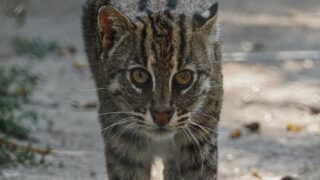
| Fishing cat スナドリネコ | Prionailurus viverrinus | Indonesia, China, Thailand インドネシア、中国、タイ |
イリオモテヤマネコの分類学(Taxonomy)
| ランク | 分類 |
|---|---|
| 界 (Kingdom) | 動物界 (Animalia) |
| 門 (Phylum) | 脊索動物門 (Chordata) |
| 綱 (Class) | 哺乳綱 (Mammalia) |
| 目 (Order) | 食肉目 (Carnivora) |
| 科 (Family) | ネコ科 (Felidae) |
| 属 (Genus) | ヤマネコ属 (Prionailurus) |
| 種 (Species) | イリオモテヤマネコ (Prionailurus iriomotensis) |
About the habitat of the Iriomote cat
According to research, Iriomote wildcats live only on Yaeyama Island and Iriomote Island in Okinawa Prefecture, Japan. They roam within the island of Okinawa and are endemic to Japan. Many wildcats seen in Taketomi Town die in traffic accidents. The area is limited, so local residents and staff have a hard time managing the traffic and cats.
- Geographic Distribution
Endemic: Found only in Iriomote Island, Okinawa Prefecture, in Japan.
Distributed throughout the mountains and forests of Iriomote Island, but populations are small and dispersed.
- Habitat
Forest:
Inhabits evergreen broadleaf forests, mixed forests, and subtropical rainforests.
Uses bushes, rock shelters, and fallen logs on the forest floor as hiding places.
Wetlands and Riverside:
Also active around wetlands and streams.
May hunt for frogs and small fish near water.
Around Farmland: May appear near human settlements, but primarily resides in forests.
- Elevation and Topography
Elevation: Found in a wide range of habitats, from flatlands to mountains.
Terrain Adaptation:
Good at climbing and swimming.
Ability to move in a variety of environments, including rivers, wetlands, the forest floor, and fallen logs.
- Behavior and Adaptations
Nocturnal: Rests in bushes or rock shelters during the day
Soliloquy: Has a territory and is mostly solitary except during breeding season
Predation:
Feeds on mice, birds, frogs, insects, and fish
Flexibly adapts its diet to suit its environment
- Habitat and Conservation
Population: Estimated to be very small, at around 100 individuals
Threats:
Deforestation and road construction
Impact of road accidents and invasive species
Conservation Status:
Listed as Endangered (EN) on the Ministry of the Environment’s Red List
Conservation activities and monitoring are being conducted on Iriomote Island
feature is? What kind of creature is it?
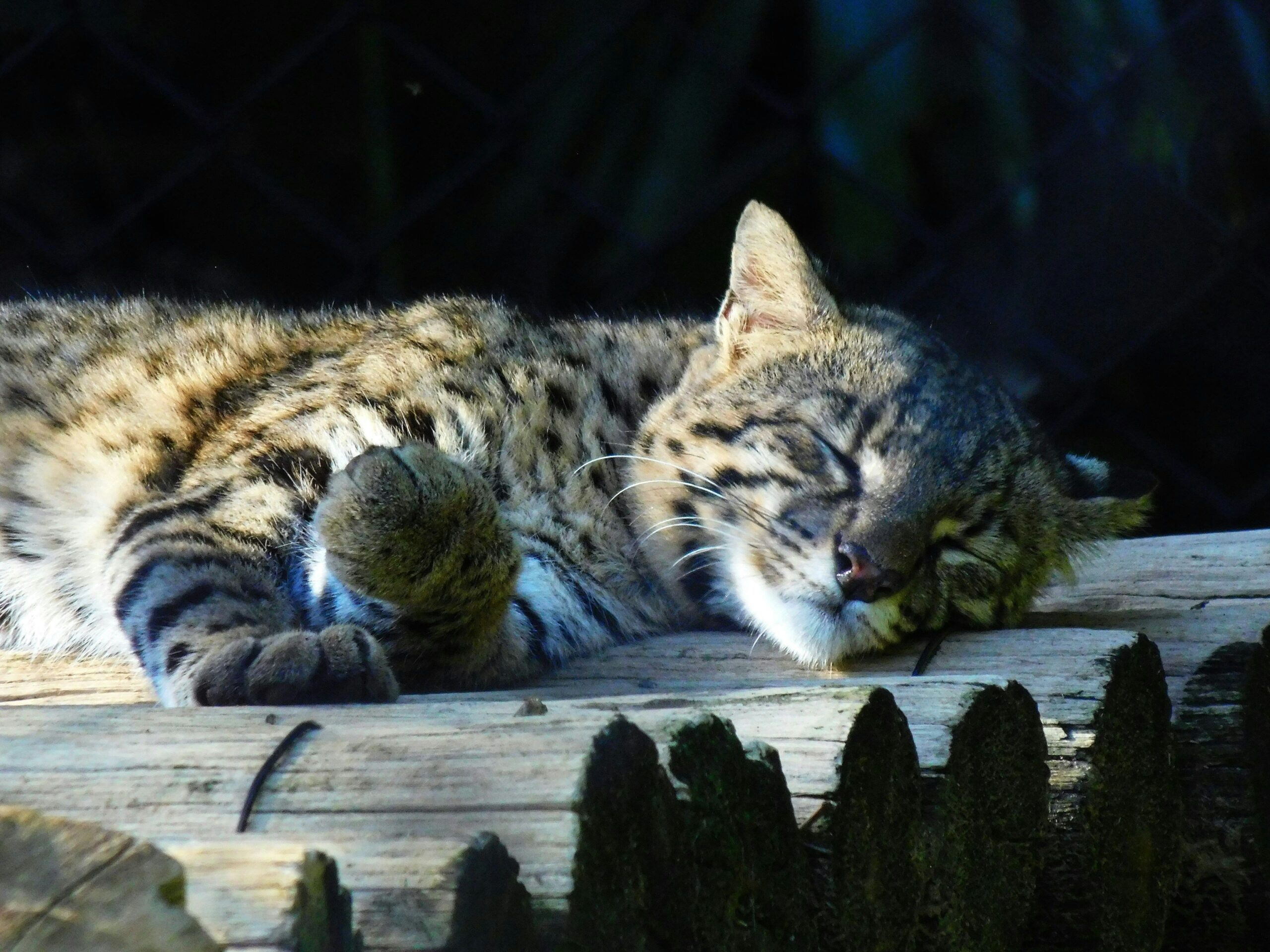
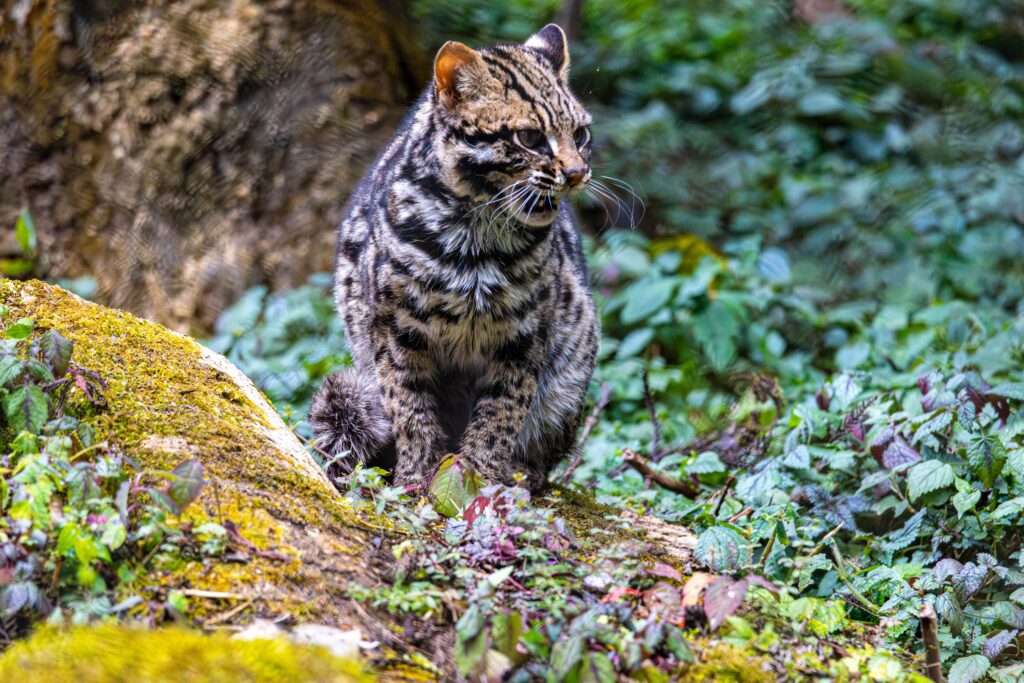
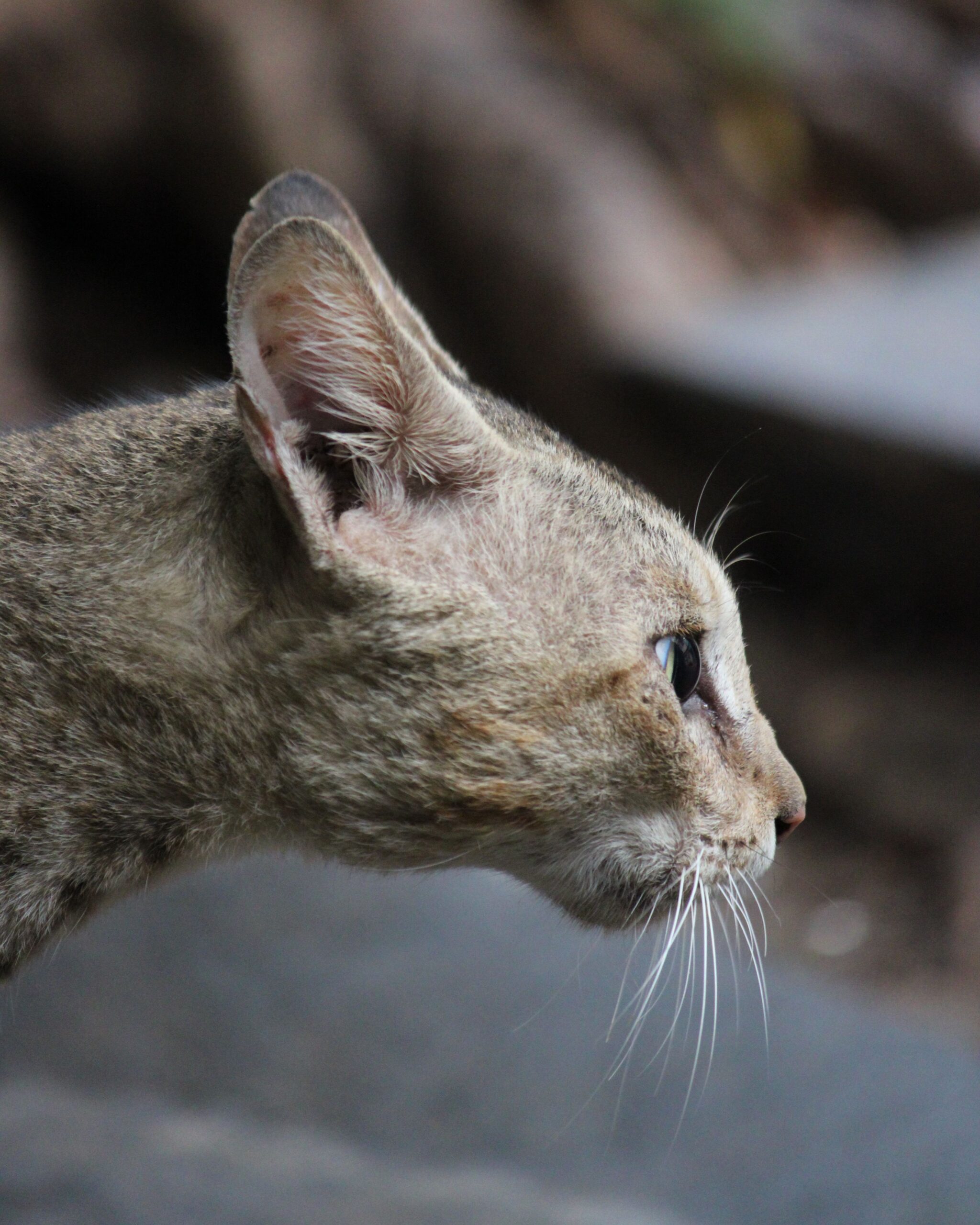
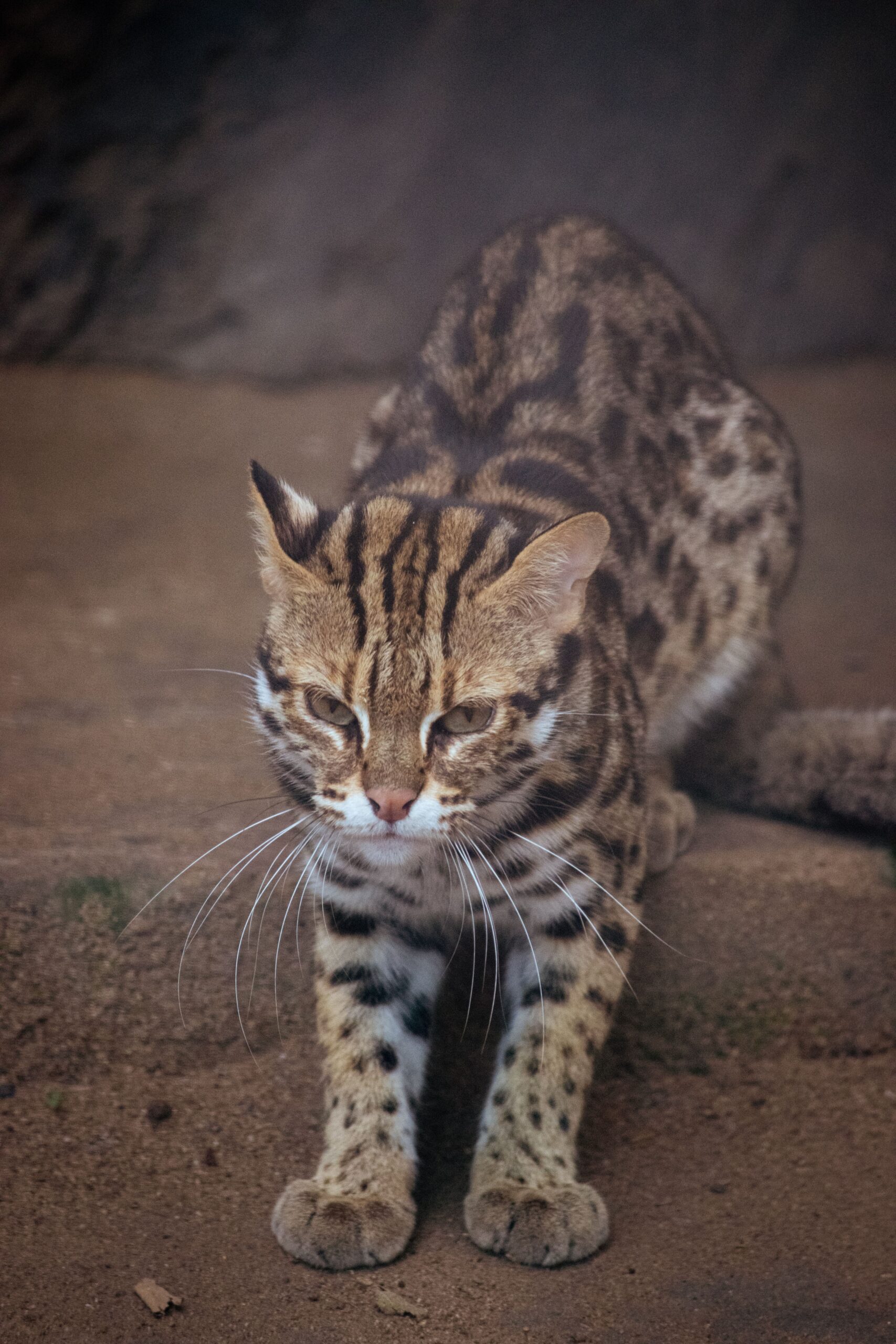
The body of the Iriomote cat has a thick tail to the tip, a long torso, and thick and short limbs. Therefore, they are slightly different from regular domestic cats. In addition, the ground color of the whole body is dark gray or light brown, and the chin is white. There are two dark brown spots on the head, on the left and right cheeks. Iriomote wildcats live throughout Iriomote Island, but their main habitats are wetlands, rivers, mangroves, forests, and lowlands. Cats prefer to live in environments with abundant water.
- Physical Characteristics
Body Type: Small feline, body length 50-60cm, tail length 25-30cm, weight approximately 3-5kg
Coat Color/Pattern:
Yellow-brown fur with scattered black spots
Dark ring pattern on the tail
Ears/Eyes:
Small, round ears
Large eyes adapted to nocturnal behavior
- Behavior/Personality
Nocturnal: Rests in bushes or rocks during the day and is active at night
Soliloquy: Territorial and solitary except during breeding season
Highly alert: Sensitive to predators and humans, quickly hides when sensing danger
Athletics: Skilled at climbing trees and swimming, this is used for preying and escape
- Diet
Small carnivorous:
Mice, birds, frogs, insects, small fish, etc.
Hunting Method:
Sneaks up alone and catches prey by jumping and making quick movements
- Ecological Characteristics
Territoriality: Each individual has a territory and marks it to let others know.
Reproduction:
Breeding season: Spring to Summer
Gestation period: Approximately 60-70 days, giving birth to 1-3 pups
Adaptability:
Adapts to a variety of terrains, including forests, wetlands, and riverbanks
Nocturnal and solitary, they avoid predators and humans.
What will your personality look like?
The Iriomote cat has a very cautious personality and is nocturnal, tending to be active from dusk to midnight to dawn. They are also similar to domestic cats in that they are capricious and selfish. I live a relaxing life in an area with a lot of nature. During the day, they often hide in tree cavities or rock holes.
- Extremely wary
Timid and cautious: Sensitive to the approach of humans, invasive animals, and predators
Good at hiding: Rest in bushes, under fallen trees, or in the shade of rocks during the day and are active at night
- Solitary and independent
Territorial: Each individual has its own territory and rarely comes into contact with others except during breeding season
Independent: They manage all aspects of their lives, including hunting and moving around, independently
- Hunting instinct and agility
High athletic ability: They use tree climbing, swimming, and jumping to capture prey
Learning ability: They adapt their behavior depending on the prey and environment, enabling them to hunt efficiently
- Gentle and defensive
Basically gentle: Not aggressive unless threatened
Powerful in defense: They fight back with fangs and claws when faced with a predator or threat
What is the ecology of the Iriomote wildcat?
Male and female Iriomote wildcats feed on a wide variety of birds, frogs, plants, small animals, as well as amphibians and insects. They are polygamous and breed throughout the year. The average gestation period is about two months, and they can give birth to two or three kittens at a time. Kittens reach full sexual maturity in about one and a half years. They live for about ten years.
- Habitat
Region: Endemic to Iriomote Island, Okinawa Prefecture
Environment:
Evergreen broadleaf forests, mixed forests, subtropical rainforests
Uses hiding places such as bushes on the forest floor, fallen trees, and rock shelters
Also active in wetlands and riverbanks, occasionally preying on small fish and frogs
Activity: Nocturnal, resting in hiding during the day
- Diet
Small carnivorous:
Mice, birds, frogs, insects, small fish, etc.
Hunting Method:
Sneaks up alone and captures prey with jumps and quick movements
- Behavior and Lifestyle
Solo: Maintains a territory and is mostly isolated except during breeding season
Territory Maintenance:
Marks territory with urine, feces, and claw marks
Breeding Season:
Mates in spring and summer
Gestation period: approximately 60-70 days, giving birth to 1-2 pups
- Adaptability
Athletic Ability: Excellent at climbing trees, jumping, and swimming.
Environmental Adaptation:
Nocturnal and solitary, they avoid predators and humans.
Able to live in a variety of environments, including forests, wetlands, and riverbanks.
What are the natural enemies of the Iriomote cat?
Currently, the natural enemy of the Iriomote wildcat is humans. Although there are some large predators, there are many risks such as being hit by a car or having their habitat narrowed due to land development. Iriomote Ishigaki National Park and other places have taken protective measures to prevent traffic accidents. There are also cases of people getting run over in dark tunnels. There are no carnivores on Iriomote Island in Okinawa Prefecture, so there are almost no other predators.
Vocalizations of the Iriomote Cat
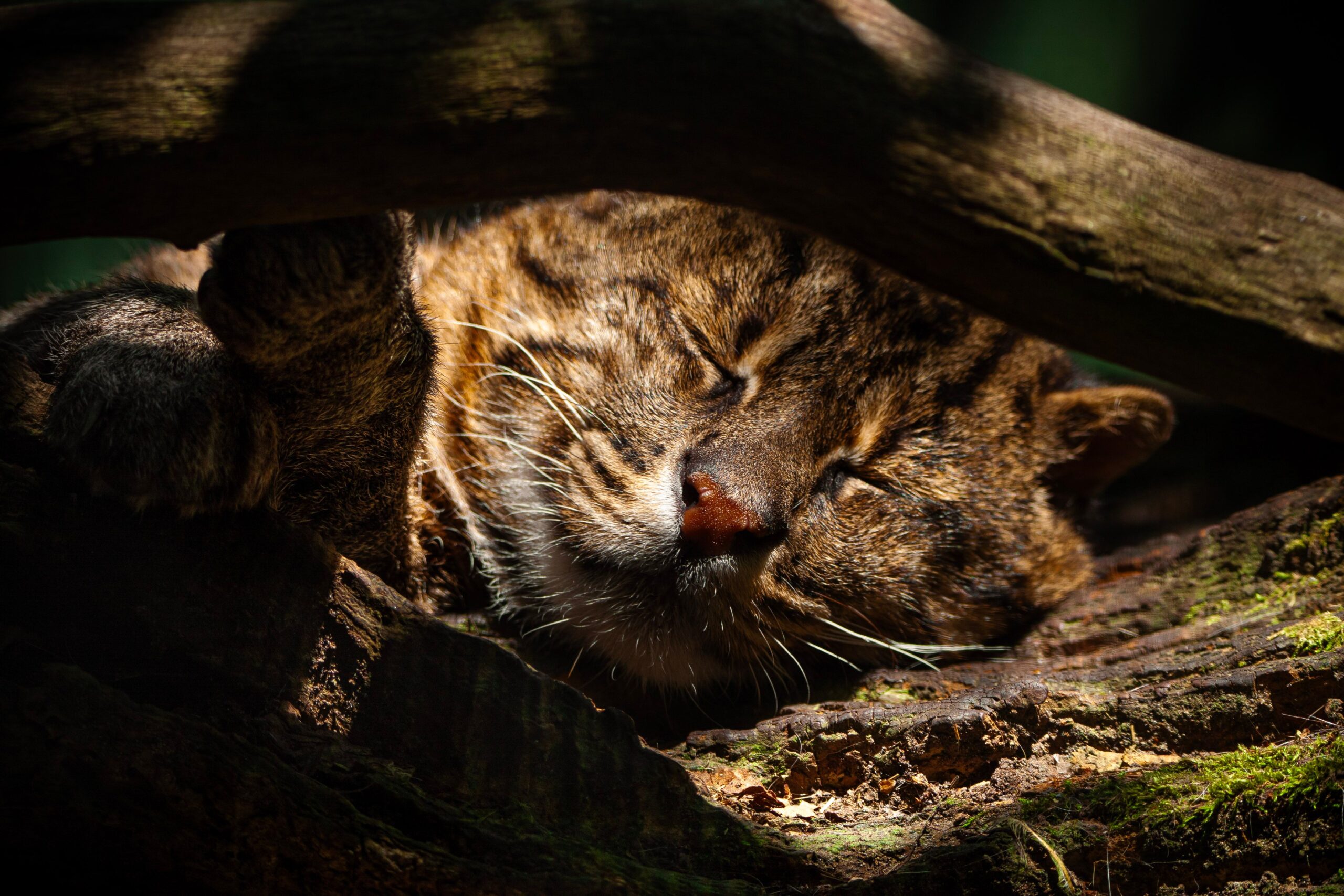
The vocalizations of the Iriomote cat are fundamentally similar to those of domestic cats, though they also produce the low, powerful sounds characteristic of wild felines.
Their primary vocalizations include the following:
“Meow” (or similar sounds): Vocalizations resembling those of domestic cats; these are believed to be used for communication between mother and offspring or during close-range interactions.
“Oo” or “Grrr…”: Low growls used when the cat is alert or issuing a threat.
“Hiss!”: A sound used to threaten adversaries.
During the mating season, they may emit loud, low-pitched calls that carry over long distances.
As Iriomote cats are nocturnal and primarily solitary, they do not often call back and forth to one another. They vocalize less frequently than domestic cats, relying more on scent marking and physical behavior to convey information regarding territory and reproduction.
Seasonal Activity of the Iriomote Cat
The Iriomote cat remains active throughout the year, though its activities—such as breeding, rearing young, and diet—vary by season.
Daily Activity Rhythm
They are most active from evening through the night and into the early morning.
During the day, they often rest in forests, thickets, or at the base of trees.
However, on cloudy days or in areas with little human presence, they may also be active during the day.
Seasonal Dietary Variations
The Iriomote cat flexibly changes its prey depending on the season.
Spring: Mice, birds, lizards
Summer: Frogs, crabs, fish, insects
Autumn: Birds, mice, reptiles
Winter: Mice, birds, frogs, and other prey available year-round
Because Iriomote Island has a subtropical climate, these cats do not experience the drastic drop in activity seen in wild animals on Japan’s main islands during winter. They hunt and remain active all year round; seasonal changes are primarily reflected in their breeding behavior, the rearing of young, and the types of prey they consume.
Walking Speed of the Iriomote Cat
There is very little official data on the walking speed of the Iriomote cat (Iriomote wildcat) measured in the wild. However, based on its ecology and the behavior of its close relative, the Bengal cat, its approximate speed can be estimated.
Normal walking: Approximately 2-4 km/h
When sneaking up on prey: It can walk as slowly as less than approximately 1 km/h.
When moving cautiously: Approximately 4-6 km/h
Short-distance dash to chase prey: Estimated speed of approximately 30-40 km/h
Characteristics of its gait
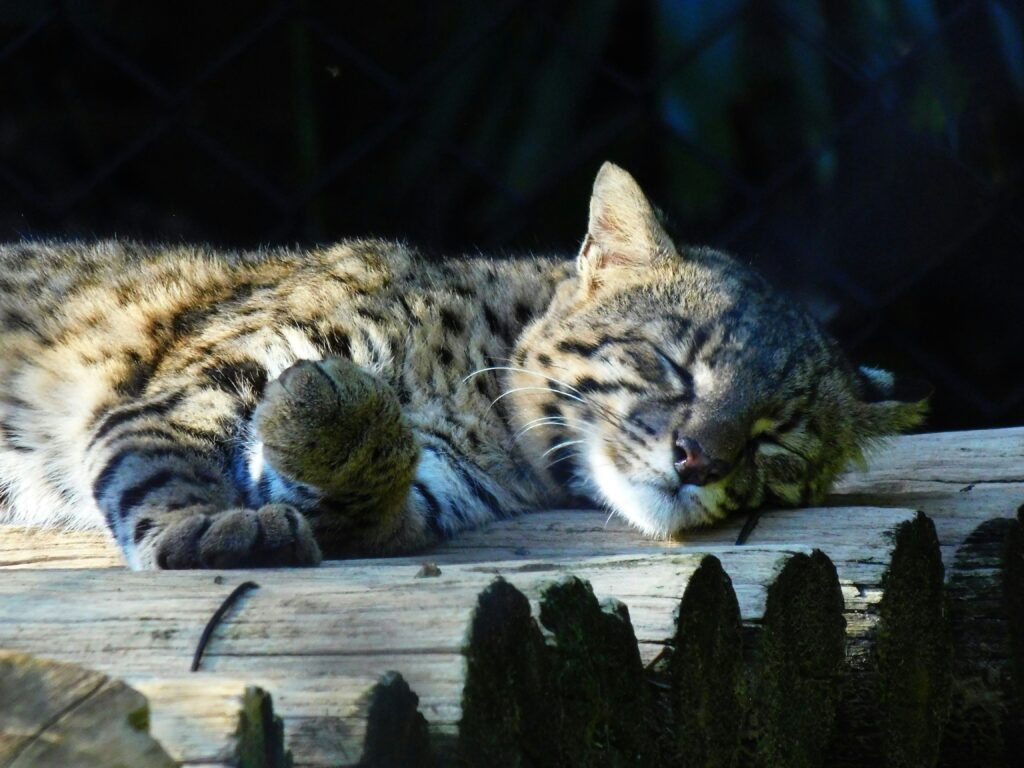
The Iriomote cat is an ambush predator that hunts by approaching silently rather than moving quickly.
It has paw pads that make it difficult to make noise with its footsteps.
It walks slowly in a low posture.
It uses bushes and rocky shelters to approach.
It accelerates suddenly in the last few meters to pounce.
Also, on Iriomote Island, it is found not only in forests but also along riverbanks.
About Iriomote wildcat cubs
This article summarizes information about Iriomote wildcat (Prionailurus iriomotensis) cubs.
- Birth and Size
Birthing Season: Mainly Spring to Early Summer (April-June)
Little Pups: Generally 1-2 per litter
Birth Weight: Approximately 80-120g
Body Length: Approximately 10-15cm
Coat Color: Light-colored immediately after birth, developing the same spotted pattern as adults as they mature
- Rearing and Protection
Maternal Care:
Nursing, maintaining body temperature, and protection in the den
Raising in a Safe Place:
Raising in places protected from predators, such as under rocks, bushes, or fallen trees
Pack Cooperation:
Primarily solitary, with little protection from anyone other than their mother
- Developmental Process
Nursing Period: Approximately 2-3 months after birth
First Outing: Following their mother near the den, practicing hunting and moving
Importance of Play:
Playing with other cubs and their mother helps them develop muscle strength, hunting instincts, and alertness
Developing athletic skills such as climbing and jumping
- Learning and Survival Skills
Learning from Mother:
Learns how to capture prey, detect danger, and use burrows.
Gaining Independence:
Becomes independent between 6 months and 1 year of age, gradually becoming independent and eventually establishing their own territory.
- Maturity
Sexual Maturity: Reproductively viable between 1 and 2 years of age.
Behavior: Acts independently and utilizes survival skills learned from mother.
Is the Iriomote cat an endangered species?
The Iriomote cat is only found on one island in Okinawa Prefecture, so there is no population of it. Estimated population is less than 100 individuals. The Iriomote cat first appeared in an academic paper in 1967. After discovering that it was a rare species, the government’s Ministry of the Environment designated it as a national special natural monument in 1977. In 1994, it was designated as a domestic rare wild animal and plant species. In 2007, it was upgraded from Endangered IB to IA. Some conservation centers such as the Iriomote Wildlife Conservation Center strictly manage them.
Can Iriomote wildcats be kept?
Currently, Iriomote cats can be kept as pets just like normal cats, but because of their cautious nature, they need to be kept with more care than normal cats. In Japan, Iriomote cats are designated as “special animals” and in some areas permission is required. Furthermore, they are listed on the Red List and there is a treaty on international trade under the Convention on International Trade in Endangered Species of Wild Fauna and Flora (CITES), so it is difficult to obtain them through international trade. If you visit the island, you can find them along the coast, so it is a good idea to admire them. There are pamphlets, pages, and signs with information on “watch out for cats jumping out,” so it is clear that the residents are always on the lookout for them.
- Legal Restrictions
Endangered Species: Designated as Endangered (EN) on the Ministry of the Environment’s Red List
Treated as a designated species/rare wild animal, special permission from the prefectural governor is required for captivity.
Private captivity is prohibited in principle, and illegal captivity is subject to penalties.
- Difficulties in Captivity
Rare and Very Small Population: Only found in the wild on Iriomote Island. Capture and import are prohibited.
Solitary/Territorial:
Timid and cautious, becoming highly stressed in cramped environments.
Exercise/Environmental Requirements:
Nocturnal and adapted to forest environments.
A large enclosure is required to utilize their athletic abilities, such as climbing and swimming.
Diet:
Natural hunting behavior must be replicated, so a diverse diet including mice, small birds, and frogs is required.
- Practical Captivity
Only Possible in Zoos and Conservation Facilities:
Expert management, captivity planning, and environmental reproduction are required.
Purpose of Captivity:
Protection and Breeding of Endangered Species
Research/Education
Private captivity is unrealistic and dangerous.
Zoos Housing the Iriomote Cat (Japan and Worldwide)
To put it simply, there are currently no zoos—either in Japan or elsewhere in the world—that have live Iriomote cats on public display.
Japan
In the past, there were individual cats kept in captivity temporarily for rescue and research purposes.
Iriomote Wildlife Conservation Center
This facility has a track record of treating and temporarily housing individual cats rescued after traffic accidents or similar incidents.
It does not currently hold permanent public exhibitions; its primary focus is on rescue, research, and conservation activities.
Okinawa Zoo & Museum (Okinawa Kodomo no Kuni)
This facility once housed a male cat named “Keita,” which had been rescued in 1979.
Keita lived to be approximately 13 years old, but no Iriomote cats have been kept there since.
National Museum of Nature and Science
While there are records of rescued individuals being kept for research purposes in the past, there are currently no live specimens on display.
Worldwide
No zoos or safari parks overseas have been confirmed to house or exhibit the species.
Because the Iriomote cat…
is found only on Iriomote Island,
has an estimated population of around 100 individuals, and
is strictly protected under Japanese law,
…it is not transported overseas for zoo exhibition, even for breeding purposes.
Where to See Them
If you wish to learn about the Iriomote cat, the following locations are recommended:
Iriomote Wildlife Conservation Center (features taxidermy mounts, skeletal specimens, video footage, and ecological exhibits)
Museums and visitor centers on Iriomote Island
In the wild, sightings occasionally occur at night or in the early morning; however, the cats are extremely wary, and the likelihood of spotting one is considered low.
Introducing other animals
コメント