
What kind of cat is the Kodkod, a small spotted cat found in Argentina and Chile? We will explain its body length, characteristics, ecology, and habitat. This cat is very well known in South America and is a wild cat, so it is not a domestic cat. This cat has a cute face and is about half the size of a domestic cat, making it a highly recommended animal.






- What is KodKod? About basic status
- What are the roots and origins of the kodkod?
- About habitat
- feature is? What kind of creature is it?
- What is your personality like?
- About ecology
- Kodkod Vocalizations
- Seasonal Activity
- Walking Speed
- About Kodokodo Baby Cats
- Is the KodKod an endangered species?
- Is it possible to keep KodKod?
- Zoos Housing the Species (Japan & Worldwide)
- Introducing other animals
What is KodKod? About basic status
KodKod is a carnivorous animal classified in the Carnivora order, Felidae family, Ocelot genus. The scientific name is Leopardus guigna. The body length is 40-52cm and the weight is 2-3kg. This cute cat lives secretly in the forests of Chile and Argentina in South America.
| Japanese(和名) | コドコド |
| English(英名) | kodkod |
| scientific name(学名) | Leopardus guigna |
| classification(分類) | Mammalia、 Carnivora、Felidae、Leopardus 哺乳綱、食肉目、ネコ科、オセロット属 |
| IUCN Status(保全状況) | VULNERABLE |
| Length(体長) | 40-52㎝ |
| Weight(体重) | 2-3kg |
What are the roots and origins of the kodkod?
The kodkod (scientific name: Leopardus guigna) is one of the world’s smallest wild felids, inhabiting South America. Its roots lie in a lineage of wild cats that adapted to the forests of the South American Andes region.
Origins and Evolutionary Roots
Place of origin: South America
Its primary distribution range extends from southern Chile to western Argentina. It is particularly well-adapted to the temperate rainforests of Chile (such as the Valdivian forests).
Ancestry: Not the Panthera genus (leopards/big cats), but the Leopardus lineage
The kodkod belongs to the same group of small South American felids as the ocelot, margay, and Geoffroy’s cat.
Evolutionary Background
Ancestral felids that migrated to the South American continent diverged within the forest environment, developing:
a small body
excellent climbing abilities
nocturnal habits
spotted patterns for concealment in dense forests.
Origin of the Name
“Kodkod” is said to derive from the language of the Mapuche, an indigenous people of Chile. In Spanish-speaking regions, it is also known as “guigna.”
Why is it so small?
The kodkod has a body length of approximately 40–50 cm, making it only slightly larger than a domestic cat. This size is considered an adaptation to a lifestyle that involves:
moving through narrow spaces between forest branches
targeting small birds and rodents
ambushing prey within dense forests.
About classification
It is classified as ocelot. The genus ocelot is a genus in the class Mammalia, order Carnivora, family Felidae, subfamily Felinae, and refers to the small cats of the Americas. They are an indigenous American tribe.
コドコドの分類学(Taxonomy)
- 界(Kingdom): 動物界 (Animalia)
- 門(Phylum): 脊索動物門 (Chordata)
- 綱(Class): 哺乳綱 (Mammalia)
- 目(Order): 食肉目 (Carnivora)
- 科(Family): ネコ科 (Felidae)
- 亜科(Subfamily): ネコ亜科 (Felinae)
- 属(Genus): オセロット属 (Leopardus)
- 種(Species): コドコド (Leopardus guigna)
About habitat
It lives in the forest areas of Argentina and Chile.
- Geographic Distribution
Live primarily in Chile and southern Argentina in South America.
In Chile, they are found in forests from central to southern Chile.
In Argentina, they are found in parts of southern Patagonia.
- Habitat
Prefers temperate rainforests, secondary forests, bamboo forests, and other forested areas.
Chooses places where they can hide in the understory or thickets.
Distributes at a wide altitude, from sea level to approximately 2,000 meters.
Prefers areas near water sources, rocky areas, and areas with many fallen trees.
- Habitat Characteristics
Highly stealthy, they rarely encounter humans.
They have a small territory and act alone.
They are closely dependent on forest ecosystems and are vulnerable to deforestation.
feature is? What kind of creature is it?
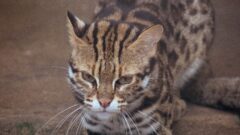
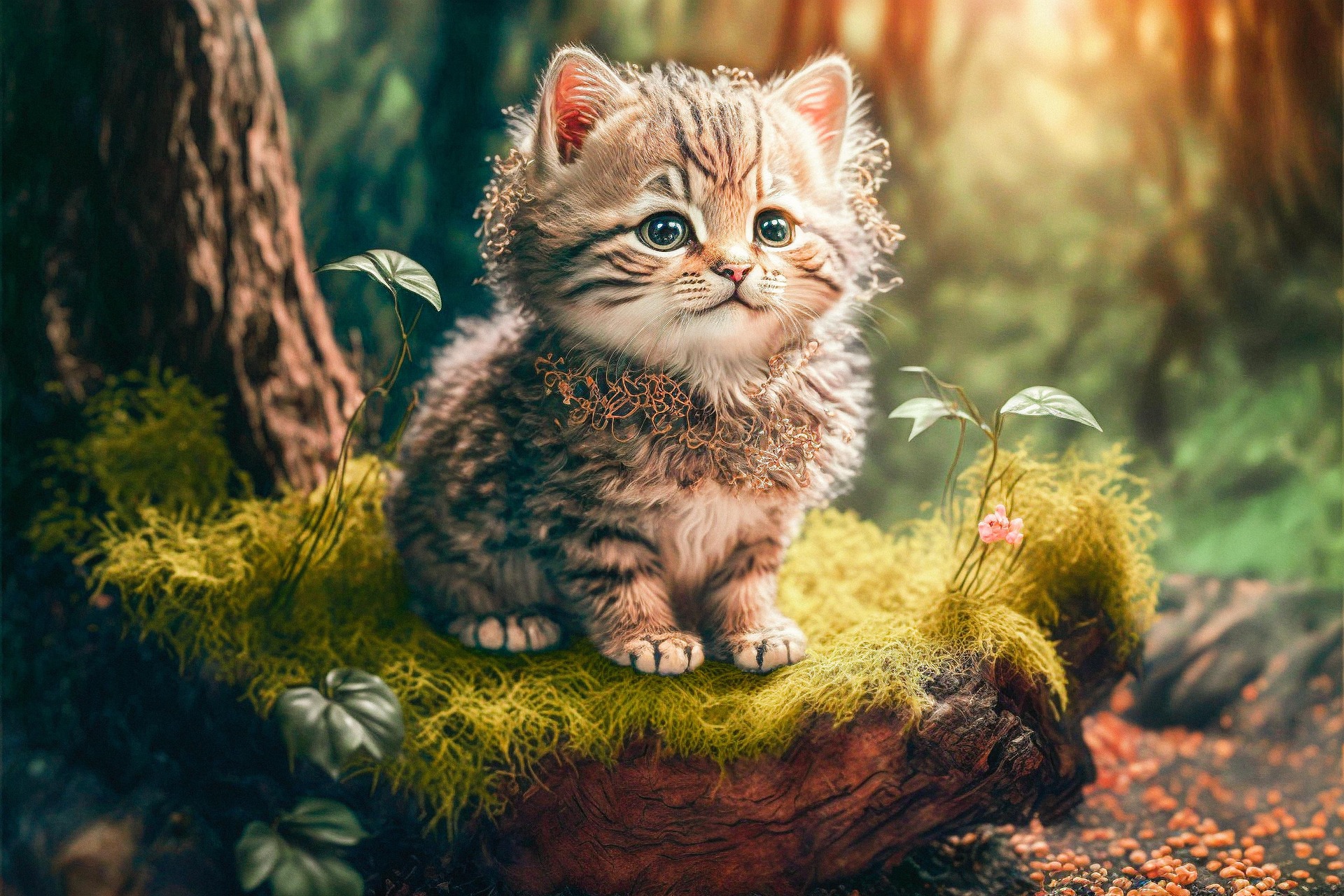
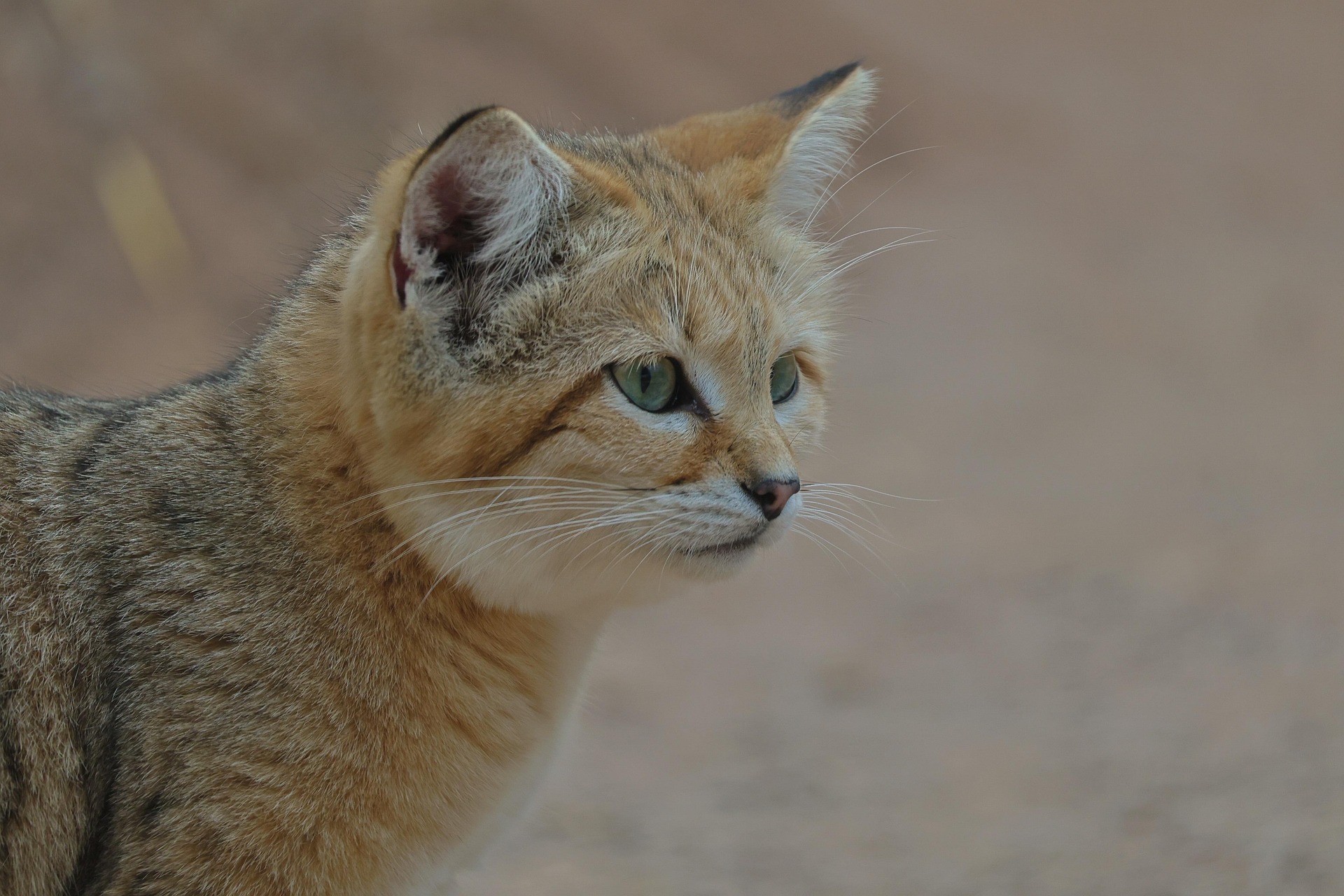
KodKod has a cute face and is about the same size as a domestic cat. It is the smallest wildcat in North and South America. The fur on the back is grayish brown or pale yellowish brown with black spots. There is also a black spot at the base of the tail. There are almost no spots on the face. The auricles are rounded. They can also climb trees and hide in them. They are often active at night.
- Body Size and Shape
Body Length: Approximately 40-52 cm (excluding tail)
Tail Length: Approximately 20-25 cm
Weight: Approximately 2-3 kg
Body Type: Small and stocky, muscular, and good at climbing trees
- Coat Color and Pattern
Coat Color: Grayish-brown to Light Yellowish-brown
Spotting: Dense black spots on the back and sides
Individual Variations: Rarely, individuals are completely black
Uses protective coloration to blend into forest undergrowth and thickets
- Face, Ears, and Legs
Rounded face, large eyes, and wide field of vision
Small, rounded ears
Muscular front and back legs suitable for climbing and hunting
- Behavior and Personality
Highly Stealthy: Often spends daytime hours hiding in the shade of trees or thickets
Soliloquy: Maintains a territory and is mostly active alone
Mostly Nocturnal: More active at night than during the day, hunting prey
- Diet
Feeds on small mammals, birds, reptiles, insects, etc.
Searches for prey in the forest understory and quickly captures it.
What is your personality like?
KodKod has a very timid personality. They are very mysterious animals and live secretly, so if humans approach them, they will get scared and run away immediately.
- Highly Stealthy
Excellent at avoiding humans and predators
Living hidden in forest undergrowth, bushes, and fallen logs
Rarely seen in the wild
- Solitary Lifestyle
They have territories and mostly act alone
They do not live in groups or packs, but hunt and move within their own territories
They mark their territories with scent and claw marks
- Vigilance and Agility
Highly alert, they are sensitive to sound and presence
If they spot prey or an enemy, they will instantly climb a tree or hide in the bushes
They are agile and highly capable of quickly escaping prey or danger
- Hunting Instinct and Curiosity
They have a strong hunting instinct, hunting small mammals, birds, and reptiles
They are curious about new things and environments, but their vigilance prevails
About ecology
Like other cats, the KodKod makes a living by preying on insects and small mammals such as the Southern lapwing, Austral thrush, Chukao tapakuro, Huet, house goose, and chicken. This cat is a mysterious cat with little known about its ecology. It is unknown if there are any natural enemies. The gestation period is 2 months, and it is possible to give birth to 1-3 calves at a time. The lifespan is said to be about 10 years.
- Lifestyle
Solitary
They have territories and act almost exclusively alone.
They mark their territories with scent and claw marks to distinguish them from other individuals.
Highly stealthy
They rest during the day in bushes, under fallen logs, or on tree branches.
They tend to be nocturnal, often hunting at night.
- Diet
Completely carnivorous
Preys on small mammals (such as mice), birds, reptiles, and insects.
Hunting Method
Searches for prey in the forest understory by sound and sound.
They are skilled tree climbers and can capture prey from trees.
- Breeding
Breeding Method
Breeds once a year, from spring to summer.
Gestation Period
Approximately 70-80 days
Birthing
1-4 pups at a time
Baby pups are raised in dens or hidden places and are protected by their mother.
Raising
Cubs spend several months with their mothers, mastering hunting techniques and stealth.
- Behavior/Movement
Movement within a territory
Movement is centered around areas with food and water sources
Stealth and caution
Move quietly to protect themselves from predators (such as mountain lions and large birds of prey)

Kodkod Vocalizations
The vocalizations of the kodkod (Leopardus guigna) are not the powerful roars typical of large cats; instead, they feature high-pitched, short sounds suited to their small bodies.
Common vocalizations include:
Short “nyah” or “myah” sounds
These resemble the sounds of domestic cats but are sharper and have a more wild quality.
They are used to gauge the distance of other kodkods or when the animal is on alert.
Bird-like “chi” or “ki” sounds
These may be produced when the animal is scanning the forest for prey or watching its surroundings.
Low growls (grrr…)
Used for intimidation or defense.
Kitten vocalizations
To call their mothers, kittens make thin, high-pitched sounds resembling “pee-pee” or “mya-mya.”
As nocturnal hunters that live solitary lives in dense forests, kodkods are believed to have evolved understated vocalizations for close-range communication with others, rather than the far-carrying roars of lions or tigers.
Incidentally, kodkods are far more “wild” than domestic cats of similar size; their vocalizations sound less like the “cute meows” of a house cat and more like the signals of a small forest carnivore.
Seasonal Activity
The seasonal activity of the kodkod (Leopardus guigna) shifts in accordance with the seasonal changes of the temperate rainforests spanning southern Chile and western Argentina. Kodkods are primarily nocturnal and solitary; their hunting times and home ranges vary by season.
Spring (approx. September–November): Season of Breeding and Increased Activity
Activity Level: ★★★★★
Activity increases as temperatures rise following the harsh winter.
Males expand their home ranges in search of mates.
Females begin preparations for giving birth.
Hunting becomes easier due to increased activity among small mammals and birds.
Key Behaviors:
Nighttime patrols
Scent-based territorial checks
Marking trees and vegetation
Foraging for prey
Summer (approx. December–February): Peak Season for Rearing Young and Hunting
Activity Level: ★★★★☆
A time of abundant food resources.
Females raise offspring born in spring or early summer.
Actively preys on small animals within the forest.
Main Prey:
Rodents
Small marsupials
Birds
Reptiles
Characteristics:
Most active from night through dawn
Frequent arboreal movement
Utilizes dense vegetation
Autumn (approx. March–May): Preparing for Winter
Activity Level: ★★★★☆
Efficiently securing energy reserves for winter.
Young individuals begin to leave their mothers.
Some individuals search for new territories.
Key Behaviors:
Increased hunting frequency
Expansion of home range
Searching for hiding spots
Winter (approx. June–August): Energy-Conserving Behavior
Activity Level: ★★☆☆☆ to ★★★☆☆
Forests in southern Chile become cold and rainy.
Changes:
Reduced travel distances
More time spent resting in safe locations
Reduced activity during inclement weather at night
However, they do not hibernate.
Winter Characteristics:
Uses locations such as the following for resting:
Beneath fallen logs
Dense thickets
Tree hollows
Walking Speed
There is very little research data accurately measuring the walking speed of wild Kodkods (Leopardus guigna).
However, based on estimates derived from their physique, muscle structure, and the locomotive capabilities of closely related small felids, the speeds are thought to fall within the following ranges:
Estimated speeds: Slow walking (exploring/territory patrolling): approx. 1–3 km/h; Normal walking: approx. 3–5 km/h; Stalking prey: approx. 0.5–2 km/h; Short-distance pursuit or flight: approx. 20–40 km/h (estimated).
- Silent Stalking
They move without making a sound by using the pads on their paws.
They approach in a low-slung posture to avoid detection by birds or small mammals.
- A Short-Distance Hunter
They are not high-speed pursuit hunters like cheetahs.
They are the type that uses an “ambush followed by a sudden pounce” strategy within the forest.
- High Climbing Ability
More than walking speed,
moving across branches,
climbing tree trunks,
and maneuvering through thickets
are the critical skills.
Visualizing their movement
The Kodkod is:
An animal that runs at high speed across open ground ❌
An animal that moves through the forest like a ninja ⭕

About Kodokodo Baby Cats
This article summarizes the life of kodokodo (Leopardus guigna) baby cats. As a small cat native to the forests of South America, it is important for them to be protected by their mothers and learn to be independent from an early age.
- Birth and Early Characteristics
Birthing Period
Most often occurs during spring and summer.
Litter Size
1-4 pups per litter
Body Length and Weight
Body Length at Birth: Approximately 15-20cm
Weight: Approximately 85-120g
Appearance
Hair is soft, grayish-brown or light fawn.
Spotting is visible immediately after birth, but is not as pronounced as in adult cats.
Eyes open within a few days of birth.
- Growth and Behavior
Nursing Period
Drinks milk for approximately 2-3 months.
Den Life
Remains protected in the mother’s den for the first few weeks of life.
Play and Learning
Cubs play with each other and learn hunting and stealth techniques.
Practices climbing and tracking.
- Protected by their mother and their territory
Cubs live in dens with their mothers and wait in safe places when their mothers go hunting.
They are protected from predators within their territories and learn to eat and rest around the den.
They are not very social, but they learn survival skills through their interactions with their mothers.
- Independence and Maturity
Weaning: They transition from breast milk to solid food at approximately 2-3 months of age.
Beginning of behavior outside the den: They accompany their mothers on hunts at 3-4 months of age.
Sexual maturity: They are capable of breeding at approximately 1-2 years of age.
Is the KodKod an endangered species?
Unfortunately, the population of KodKod is decreasing due to the following reasons. It is designated as an endangered species.
deforestation
Deforestation has become a major problem. KodKod lives mainly in forests, so if this habitat is taken away, there will be no place for them to survive.
Expansion of plantations and agriculture
Plantations and agriculture are expanding in Chile and Argentina, which are the habitats of the cod. Cats that have lost their habitat attack livestock and are exterminated by their sisters, farmers, creating a vicious cycle.
Is it possible to keep KodKod?
It is said that the Kodo Kodo population is extremely small, and breeding them is extremely difficult.
- Current Status of Captivity
A wild animal and an extremely rare species
Living in the forests of Chile and Argentina in South America
Captivity is generally prohibited
Only seen in captivity in zoos and conservation facilities
Captivity is limited to conservation and breeding purposes
Very rarely kept in captivity in Japan
- Difficulties of Captivity
Solitary and Territorial Behavior
Highly territorial and lives alone
When keeping multiple individuals, it is necessary to prevent conflict between individuals
Environmental Adaptation
An environment adapted to the temperate rainforests of South America must be recreated
Forest structure, hiding places, and facilities for climbing are required
Dietary Management
Obligately carnivorous, preying on small mammals, birds, and reptiles
Appropriate carnivore food and nutritional management are essential in captivity
High Alertness
Very wary of humans and sensitive to stress
A quiet environment is required, with hiding places where individuals can feel safe
- Laws and Regulations
Protected under Appendix I or II of the Convention on International Trade in Endangered Species of Wild Fauna and Flora (CITES)
International trade is strictly restricted
Must comply with each country’s wildlife protection laws
Zoos Housing the Species (Japan & Worldwide)
To summarize, the kodkod (Leopardus guigna) is a feline species that is very rarely kept in zoos worldwide.
Currently, there are no confirmed instances of kodkods being kept on public display in Japanese zoos.
🇯🇵 Zoos in Japan
Zoos currently housing kodkods in Japan:
None confirmed.
🌎 Examples of Captivity Worldwide
🇨🇱 Chile: Conservation Centers and Wildlife Rehabilitation Facilities
In Chile, where conservation efforts for the kodkod are underway, rescued individuals and those used for research purposes are housed in conservation facilities.
Specifically, limited captivity occurs for the purposes of:
Reintroduction to the wild
Ecological research
Breeding research
Introducing other animals
コメント