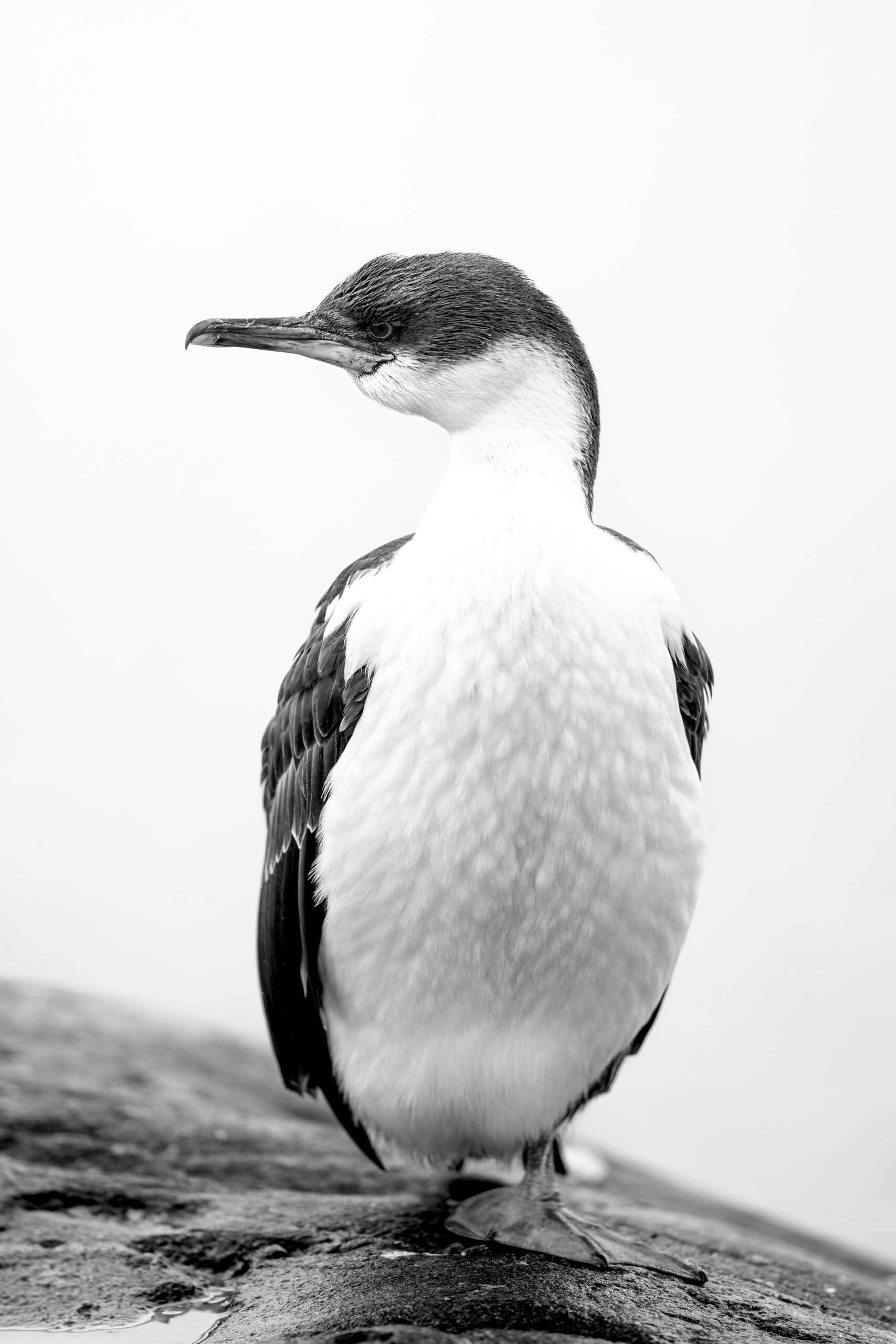
What kind of animal is a large auk? This is a member of the murrelet family, and we will explain its total body length, weight, distribution in the North Atlantic, characteristics, ecology, habitat, and reasons for extinction. Penguins only live in the Antarctic, but they used to live in the North Pole as well. That is the auk. It can be said that it is the only penguin that lives in the Arctic, but it is actually extinct.


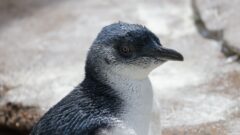
- What is a Great Auk? About basic status
- What are the roots and origins of the Great Auk?
- Taxonomy of the Great Auk
- About the habitat of the Great Auk
- feature is? What kind of creature is it?
- What is your personality like?
- What is the ecology of the Great Auk?
- Great Auk Molting
- Diving of the Great Auk
- Seasonal Activities
- About Great Auk Chicks
- Why did the Great Auk become extinct?
- Introducing other animals
What is a Great Auk? About basic status
The great auk is a type of seabird that is classified as a bird in the order Ploveri and the family Murredae. Its scientific name is Pinguinus impennis, which means penguin. It was a large seabird with a total length of about 80 cm and a weight of 5 kg, and its wings had degenerated and it was unable to fly.
| Japanese(和名) | オオウミガラス |
| English(英名) | Great Auk |
| scientific name(学名) | Pinguinus impennis |
| classification(分類) | Aves、 Charadriiformes、Alcidae、Pinguinus 鳥綱、チドリ目、ウミスズメ科、オオウミガラス属 |
| IUCN Status(保全状況) | EXTINCT |
| Length(全長) | 80cm |
| Weight(体重) | 5kg |
What are the roots and origins of the Great Auk?
The Great Auk (scientific name: Pinguinus impennis) originated from the auk family (Alcidae), a group of seabirds that evolved in the North Atlantic. Although they bear a striking resemblance to penguins, they are not ancestors of penguins but belong to a completely different lineage.
Origins
The ancestors of the Great Auk belonged to the auk lineage, which diverged from a common ancestor shared with gulls and other related birds approximately 30 million years ago. Subsequently, during the Miocene epoch (roughly 23 to 5 million years ago), auks underwent rapid diversification and spread across the North Pacific and North Atlantic.
The Emergence of the Great Auk
The genus Pinguinus (to which the Great Auk belongs) is believed to have evolved in the North Atlantic.
DNA analysis has revealed that:
The Razorbill is its closest living relative;
The two species are sister taxa that diverged from a common ancestor; and
The Great Auk lost the ability to fly while developing exceptional diving capabilities.
Why did it lose the ability to fly?
In the North Atlantic, the Great Auk:
Bred on islands with few land-based predators; and
Led a lifestyle involving deep dives to pursue fish.
Consequently:
Its wings evolved into flipper-like structures suited for swimming rather than flight; and
Its body weight increased to around 5 kg, resulting in the complete loss of flight capability.
Relationship with Penguins
While they look remarkably similar, they inhabit different regions:
Great Auk: Northern Hemisphere (North Atlantic)
Penguin: Southern Hemisphere
They are a classic example of “convergent evolution,” where unrelated species independently evolve similar physical traits. In fact, it is believed that the name “penguin” was originally used for the Great Auk before being applied to the birds of the Southern Hemisphere.
Taxonomy of the Great Auk
This section summarizes the taxonomy of the Great Auk (scientific name: Pinguinus impennis). While now extinct, the Great Auk once inhabited the North Atlantic coast.
Kingdom, Phylum, and Class
Kingdom: Animalia
Phylum: Chordata
Class: Aves
Order, Family
Order: Charadriiformes
This order includes many seabirds, including gulls and auklets.
Family: Alcidae
The auk family is a group of seabirds native to the Northern Hemisphere. They have excellent diving abilities and often hunt for fish in the ocean.
Genus/Species
Genus: Pinguinus
No extant species exist; the great auk is the only known species.
Species: Pinguinus impennis
About the habitat of the Great Auk
Great auks lived mainly in the North Atlantic Ocean, from Newfoundland to Greenland, Iceland, Ireland, England, the Scandinavian Peninsula, and other parts of the Arctic Circle in Europe.
- Geographic Distribution
Distributed widely along the North Atlantic coast.
In particular, they are found in eastern Canada, Greenland, Iceland, Norway, and the British Isles (northern Scotland and the Faroe Islands).
There are records of them migrating south to the waters of northern France and northern Spain in winter.
- Habitat
Breeding grounds are established on cold coasts and small islets.
They build nests in groups on rocky coastal areas or flat areas on small islets.
They rely on underwater foraging, selecting areas with abundant fish resources nearby.
- Behavior and Migration
Except for the breeding season, they live at sea, swimming long distances to catch food.
They live in groups, diving to prey on fish and squid.
During the breeding season, they gather on islands and reefs and nest in groups.
- Habitat Changes Leading to Extinction
Egg collection and overfishing on islands and reefs have destroyed breeding grounds, causing a rapid decline in populations.
They were also caught at sea in winter, making reproduction difficult.
feature is? What kind of creature is it?
The great murre was by far the largest species among the murrelets. The feathers on the belly are white, and the feathers on the head and back are glossy black. Its wings were short and degenerated, making it a flightless bird. It is said that on land, they lived exactly the same way as penguins, who waddled upright. They lived in groups and formed colonies.
- Physical Characteristics
Body Length: Approximately 75-85cm, Weight: Approximately 4.5-5kg.
Plumage: Black back, white belly. Wings are small and flightless.
Beak: Large and thick, with a slightly curved tip. Shaped for catching fish and squid.
Tail: Short, adapted for swimming and diving.
Feet: Attached to the rear, used for propulsion underwater.
- Lifestyle and Behavior
A flightless seabird specialized for swimming and diving.
It preys on fish and squid and has excellent diving ability.
It travels in flocks, gathering in the hundreds at sea or at breeding grounds.
During the breeding season, it builds nests in groups on small islands and reefs.
- Breeding
Breeding occurs on islands and reefs in the North Atlantic, and a single egg is laid per clutch.
They gather in groups to protect their eggs and chicks from predators.
- Ecological Characteristics
Their most distinctive feature is that they are flightless seabirds.
They have excellent diving abilities to catch food in the ocean.
They live in groups and have developed cooperative behavior.
- Impressions
They look similar to penguins and are large seabirds adapted to life underwater.
Although they cannot fly, they are skilled swimmers and dives, and their flock behavior was impressive.
What is your personality like?
The great auk is a very friendly bird, and is said to be a very gentle bird that does not become alarmed when humans approach. However, this character resulted in tragedy in the future. I will explain it below.
- Greedy and Sociable
They are highly sociable, forming groups of several hundred birds during the breeding season.
They rarely act alone, but rather work together as a group to forage for food and protect their eggs and chicks.
- Timid and Cautious
They are highly cautious, protecting their eggs and chicks from predators (large birds and mammals).
They will flee in groups or hide low when confronted by humans or predators approaching their breeding grounds.
- Calm and Cooperative
They maintain orderly behavior when traveling in groups or diving to feed.
Because they cannot fly, coordination in swimming and diving is important, and they tend to avoid unnecessary conflict.
- Interactions with Humans
Although they reacted timidly in captivity, in their native habitat they valued cooperation over conflict.
What is the ecology of the Great Auk?
Great auks like to eat fish and squid, and they especially liked sand eels. Breeding takes place around June, with the male and female taking turns incubating the eggs. It takes about a month for the eggs to hatch. Their lifespan is said to be about the same as that of modern penguins. Great auks reach sexual maturity between the ages of 4 and 7.
- Habitat
Inhabits the cold waters of the North Atlantic coast.
During the breeding season, they gather on small islands and reefs, and spend the non-breeding season at sea.
They use rocky areas and islets near the coast as nesting and resting areas.
- Diet
They are carnivorous, primarily consuming fish and squid.
They have excellent diving abilities and can capture prey underwater.
They can dive to depths of several tens of meters, quickly capturing prey in a short space of time.
- Reproduction
During the breeding season, they breed in large groups on small islands and reefs.
They lay a single egg per breeding.
They gather in groups to protect their eggs and chicks from predators.
- Behavior/Migration
They live in groups, migrating and foraging in coordination.
They have sometimes migrated south to the waters of northern France and northern Spain during the winter.
They swim and dive in schools, efficiently preying on fish and squid.
- Natural Predators and Defense
Their natural predators were birds of prey and mammals, particularly targeting eggs and chicks during breeding season.
Collective behavior in groups was an important defensive mechanism.
- Ecological Factors Related to Extinction
Their habit of living in groups proved detrimental, as overfishing and egg collection led to a rapid decline in their population.
As their schools became smaller, their reproductive efficiency declined, leading to their extinction.
Great Auk Molting
As the Great Auk (Pinguinus impennis) is extinct, there are no records of direct observations regarding its molting (the process of shedding and replacing feathers). However, the nature of its molt has been largely inferred through the study of preserved specimens and closely related species (particularly the Razorbill).
It is believed that the bird underwent a complete molt once a year.
Molting served to:
replace worn flight feathers and body feathers with new ones
maintain waterproofing and heat retention
preserve diving capabilities
Breeding Plumage and Winter Plumage
During the breeding season (spring to summer):
the head was black
there was a large, white, oval-shaped patch in front of the eye
the underparts were white
In contrast, the winter plumage following the molt showed the following changes observed in specimens:
the white eye patch disappeared
a white line (streak) appeared, extending from the eye to the beak
Diving of the Great Auk
The Great Auk (Pinguinus impennis) is considered one of the most specialized diving flightless seabirds in history. Having lost the ability to fly, it evolved to specialize in pursuing fish underwater.
Diving Method
The Great Auk is believed to have swum in a manner very similar to penguins:
Propelling itself by flapping its short, sturdy wings up and down (wing-propelled swimming)
Using its feet primarily for steering and braking
Reducing water resistance with a streamlined body
This swimming style closely resembles that of its closest living relative, the Razorbill, as well as penguins in the Southern Hemisphere. However, Great Auks and penguins are not closely related; their similar body shapes are the result of “convergent evolution”—adapting to similar environmental conditions.
How Deep Could It Dive?
Although there is no directly measured data, comparisons of body size, skeletal structure, and related species suggest:
It likely could dive to depths of several tens of meters or more
Some researchers suggest it may have been capable of diving to depths approaching 100 meters
However, these are estimates; as the species is extinct, its exact maximum diving depth remains unknown.
Seasonal Activities
The seasonal activities of the great auk (Pinguinus impennis) have been reasonably well reconstructed based on historical maritime logs, naturalists’ records, and the ecology of closely related species.
Spring (March–May)
Migration to breeding grounds
After spending the winter at sea, they began gathering at rocky islands in the North Atlantic.
Formed large breeding colonies
Re-established and maintained pair bonds
Engaged in courtship displays and vocalizations
Prepared for breeding while hunting fish at sea
Breeding grounds included areas such as:
Iceland
Off the coast of Newfoundland
Northern Scotland
Around Greenland
Early Summer (May–July)
Peak breeding season
This was the most critical time of the year.
Built almost no nests on the ground
Laid a single egg directly onto the rock
Incubated the egg for about six weeks, with the male and female taking turns
Both parents brought fish after hatching
Chicks grew rapidly and prepared to head to sea.
Summer (July–August)
Chick rearing and onset of molting
Chicks fledged and went to sea
Adults molted after the breeding season
Renewed their plumage to restore waterproofing
Colonies began to disperse after breeding concluded.
Autumn (September–November)
Life at sea
Left the breeding grounds
Lived in the open ocean
Dived to pursue fish
Accumulated fat
Prepared for winter.
During this period, they transitioned to winter plumage:
The white eye patch on the head disappeared
A white line appeared extending from the eye to the beak
(This is the prevailing theory regarding their appearance).
Winter (December–February)
Fully pelagic life
Spent almost the entire winter at sea.
Foraged in the cold North Atlantic
Moved in flocks
Adapted to rough weather
Dived to catch fish
As they were flightless, they swam to cover long distances, but their exceptional diving ability made them well-adapted to life at sea.
About Great Auk Chicks
This article summarizes Great Auk (Pinguinus impennis) chicks. Although the species is extinct, historical observations and specimens provide information about their development.
- Birth
During the breeding season, they build nests on small islands or reefs and lay a single egg at a time.
The incubation period is estimated to be approximately 30-35 days.
Immediately after hatching, chicks are small, with thin fur and their eyes closed.
- Growth
Chicks are completely dependent on their parents for food.
The parents raise them by feeding them fish they catch by mouth.
After a few weeks, their feathers grow in and they begin to practice swimming.
- Behavior
They grow up close to their parents in the nest, ensuring their safety.
Because they breed in groups, chicks also grow up in close proximity to each other.
The risk from predators is mitigated by cooperative behavior among parents and the entire flock.
- Independence
Approximately 6–8 weeks after hatching, the young become able to swim and dive, and begin foraging at sea with their parents.
At this stage, they gradually become independent and begin living within the flock.
Why did the Great Auk become extinct?
Why did the once-existing great auk become extinct? The conclusion is that humans caused their extinction. I will explain the detailed history and information. There was a time when many of the breeding colonies were preyed upon by polar bears, but that was a temporary factor in the decline. Humans dealt the deadliest blow.
The extinction of penguins in Europe
The existence of the Great Auk was already recognized by Europeans in the Middle Ages. Europeans noticed the feathers of the aukine. It became known when French explorer Jacques Cartier landed on Newfoundland in 1534, and the feathers used to make pillows were needed, and auks were hunted. As a result, colonies on the European continent became extinct. In 1794, Britain banned the killing of this species for its feathers, but it was too late.
Overfishing begins on the North American side as well.
The existence of the Great Auk is also becoming known in areas of North America. In the 1770s, when woolly ducks were driven to the brink of extinction, North Americans began overhunting them for food. Overfishing continued until the only remaining species existed on a small island off the coast of Iceland called Murre Reef. Because the island was surrounded by cliffs, they were able to breed without people noticing, but tragedy struck to make matters worse.
Eruption and extinction of submarine volcanoes
The last great auk breeding grounds were submerged by underwater volcanic eruptions and earthquakes. However, in 1844, Europeans killed Erdei’s last surviving pairs of great murres and their eggs, making them extinct. Since then, penguins are now only distributed in the southern hemisphere. Discussions are currently underway about the possibility of reviving the great aukine using DNA from specimens collected in museums.
Introducing other animals
コメント