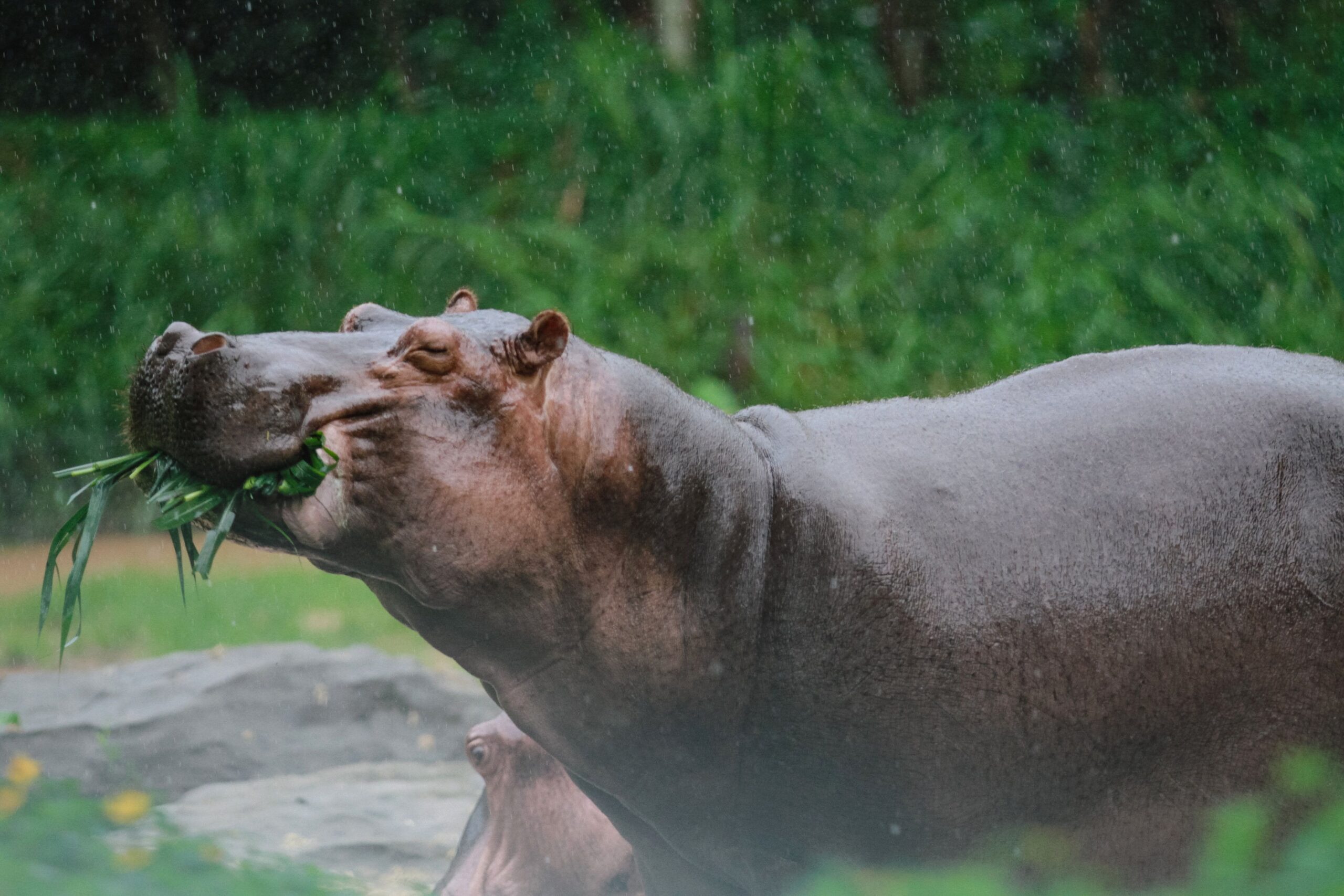
We will explain the characteristics, ecology, and habitat of hippos. Hippos are the second largest land animal after elephants. Their eyes, ears, and nostrils are located on the upper side of their faces, allowing them to breathe even when their bodies are underwater by exposing only their eyes and noses to the surface. This is a popular animal at zoos, so I would like to introduce it to you.








- What is hippo? About basic status
- What are the roots and origins of the hippopotamus?
- About 55 million years ago: Emergence of a common ancestor
- About 50 million years ago: Lineage divergence
- About 8 million years ago: Evolution into the modern hippo
- Only two species of hippo exist today
- Why do they live in the water? Hippos have almost no sweat glands and are sensitive to heat,
- About classification
- About hippo habitat
- feature is? What kind of creature is it?
- What will your personality look like?
- What is the ecology of hippos?
- Hippopotamus Vocalizations
- Seasonal Activities
- Walking Speed
- About Baby Hippos
- Are hippos an endangered species?
- Can hippos be kept?
- Zoos Housing Hippos (Japan & Worldwide)
- Introducing other animals
What is hippo? About basic status
Hippos are mammals of the order Cetacea, order Hippopotamus, family Hippopotamidae, genus Hippopotamus. Their scientific name is Hippopotamus amphibius. They are 3.5-4m long and weigh 1,500kg. Here is some basic information about them. They are known for opening their mouths wide in dry areas. Research has shown that the secretion of hippopotamus sweat glands protects the skin from ultraviolet rays, and they are sometimes used for protection in leather and wood.
| Japanese(和名) | カバ(河馬) |
| English(英名) | Reindeer/Caribou |
| scientific name(学名) | Hippopotamus amphibius |
| classification(分類) | Mammalia、 Cetartiodactyla、Hippopotamidae、Hippopotamus 哺乳綱、鯨偶蹄目、カバ科、カバ属 |
| IUCN Status(保全状況) | VULNERABLE |
| Length(体長) | 3.5 – 4m |
| Weight(体重) | 1,500kg |
What are the roots and origins of the hippopotamus?
The roots of the hippopotamus are quite surprising; their closest living relatives are whales and dolphins. While they were once thought to be closely related to pigs, DNA analysis and fossil research have led to the current understanding that they share a common ancestor with cetaceans (whales and dolphins).
About 55 million years ago: Emergence of a common ancestor
Hippos and whales evolved from a common ancestor belonging to the Artiodactyla (even-toed ungulates, a group that includes cattle and deer).
This ancestor was a small, land-dwelling mammal.
About 50 million years ago: Lineage divergence
One lineage adapted to life in the water and evolved into whales and dolphins.
The other lineage continued a lifestyle involving both land and waterside environments, eventually leading to the hippopotamus.
Consequently, hippos and whales are now classified together in a closely related group known as “Whippomorpha.”
About 15–20 million years ago: Appearance of hippo ancestors
Animals considered to be the direct ancestors of the hippopotamus appeared in Africa.
Their characteristics included:
Being slightly smaller than modern hippos
Living near water
Being herbivores
They had begun a lifestyle similar to that of modern hippos.
About 8 million years ago: Evolution into the modern hippo
They developed a body shape similar to that of the modern hippo,
along with features such as:
A large mouth
Thick skin
Adaptations for an aquatic lifestyle
Only two species of hippo exist today
There are currently only two living species in the Hippopotamidae family.
Common Hippopotamus
A large species found across various parts of Africa.
They weigh between approximately 1.5 and 3.5 tons.
Pygmy Hippopotamus
Inhabits the forests of West Africa.
A smaller species, weighing approximately 180–275 kg.
Why do they live in the water? Hippos have almost no sweat glands and are sensitive to heat,
so they cool their bodies in rivers or lakes during the day
and come ashore at night to graze on grass.
About classification
The hippopotamus is the only extant species of the Hippopotamidae family. Some scholars classify hippos and anthracnose as part of the superfamily Anthraxa. There are five subspecies of hippos: They are large on land, one of the largest animals along with rhinos and crocodiles, and can be found in rivers. They are also territorial and are often seen walking with their young.
- H. a. amphibius
- H. a. kiboko
- H. a. capensis
- H. a. tschadensis
- H. a. constrictus
H. a. amphibius
The species ranged from Gambia east to Ethiopia and south to Mozambique and as far as Egypt. Its main features are its raised back and elongated lower jaw.。
H. a. kiboko
A tribe that lives in Kenya and Somalia. It is smaller than other hippos, has a lighter color, has wider nostrils, and has slightly longer nostrils, giving it a distinct character.
H. a. capensis
A subspecies that lives in Zambia and South Africa.
H. a. tschadensis
A subspecies that lives in Chad and Niger. Its main characteristic is its wide face.
H. a. constrictus
It is distributed from the southern Democratic Republic of the Congo to Angola and Namibia. Its main characteristics are a short snout and a flatter back.
About hippo habitat
Hippos are widely distributed in Africa, south of the Sahara Desert. They are often seen at zoos, and there are many information on opening events. Once you enter the park, it will be on display until night.
Hippopotamus Habitat
Regional Distribution
Widely distributed across tropical and subtropical regions of Africa
Especially common in sub-Saharan Africa
Mainly found in large rivers and lakes, such as the Nile River Basin, Congo River, and Zambezi River
Habitat
Waterside areas such as freshwater rivers, lakes, ponds, and wetlands
Often rests in shallow water with most of its body submerged
Grasslands and marshes near water allow for feeding on land at night
Living Space
Spends the day in water (to regulate body temperature and prevent desiccation)
Forages on grasslands away from water at night (primarily herbivorous)
Prefers areas with slow-flowing currents and large bodies of water
Population Formation
Often gathers in water, forming groups of 10 to 30 individuals
Population composition varies depending on the location of the river or lake
feature is? What kind of creature is it?
Hippos have their eyes, ears, and nostrils on the top of their faces, so even when their bodies are underwater, they can breathe by only exposing their eyes and noses to the surface. The head is large, with the nose, eyes, and auricles lined up in a straight line on the side of the face. Their bodies are gray or grey-brown in color, with almost no fur, and their canine teeth continue to grow throughout their lives. Hippos often live near bodies of water such as lakes, rivers, and swamps, and spend most of the day underwater. Hippos live in groups of 10 to 20 females and their young.
- Physical Characteristics
Physique: Very large. Approximately 3.5-5m in length, approximately 1.5m at the shoulder.
Weight: Approximately 1,500-3,200kg (Males are larger)
Skin: Thick, gray to brown. A “blood sweat-like fluid” secreted from the skin protects against UV rays, dryness, and bacteria.
Head: Characterized by a large, wide mouth and fangs. The fangs are used for fighting and territorial disputes.
Eyes, ears, and nose: Located on top of the head, allowing them to observe the outside world even when nearly submerged.
Feet: Short, sturdy, with hooves at the tips of four toes.
- Ecological Characteristics
Diet: Herbivorous
Eats grass on land, primarily at night.
Consume approximately 30-50kg of grass per night.
Activity: Rests in water during the day, forages at night.
Sociality: Lives in groups. Pods typically contain 10-30 individuals, but in some waters they can number in the hundreds.
Reproduction: Females often give birth in water, and the young learn to swim underwater.
- Behavior and Characteristics
Territoriality: Males exert dominance within the pod and fight using their tusks.
Swimming: Although they can stay submerged for long periods of time, they often move by walking instead of sinking.
Defense: They are very aggressive and may attack if startled.
Lifespan: Approximately 40-50 years in the wild.
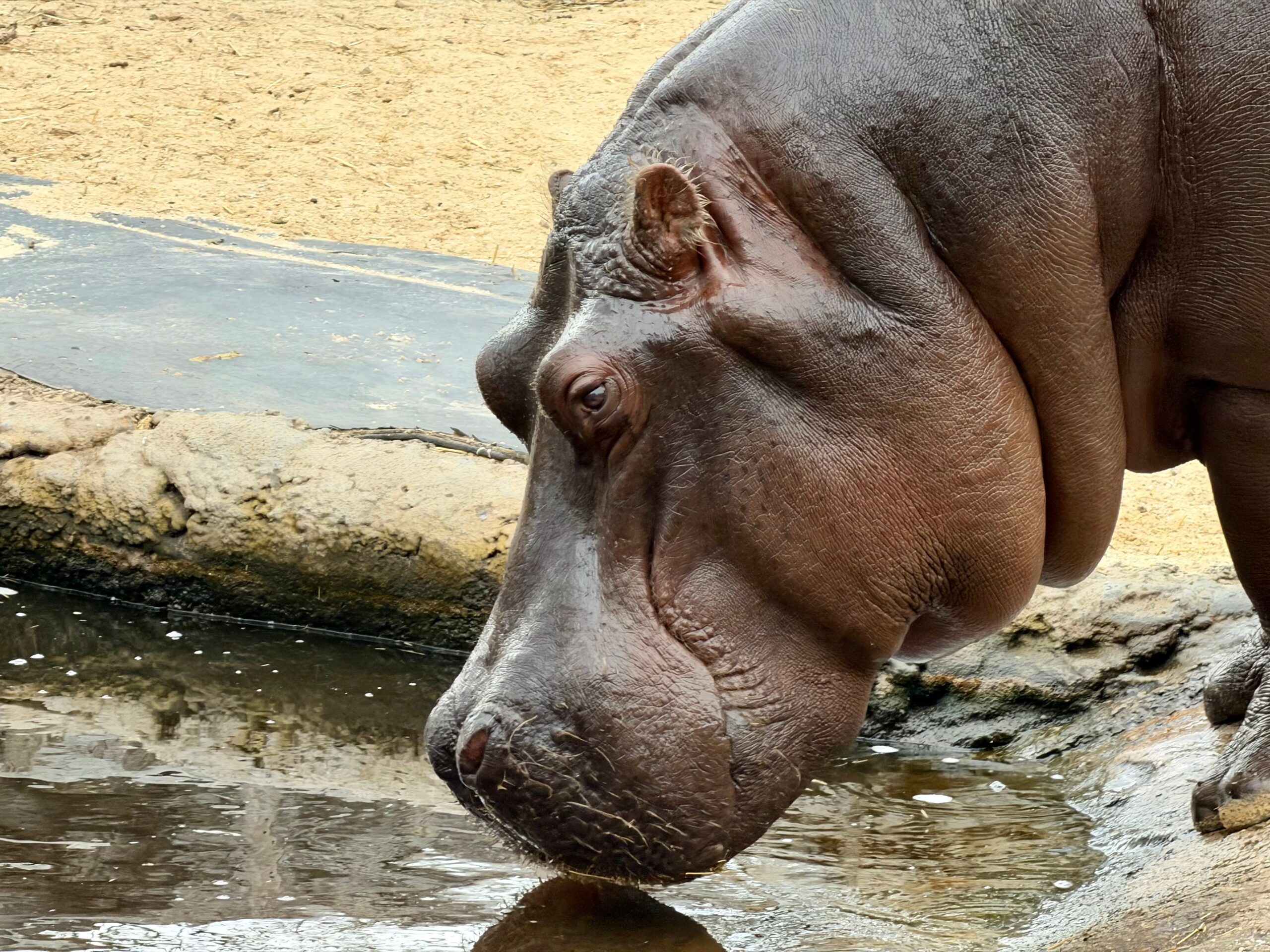
What will your personality look like?
Hippos are timid but very curious. Females are more docile and cautious than males. They also have a strong sense of territory.
Hippopotamus Personality and Behavior
Strongly territorial
Males have their own territories in different bodies of water, and if other males intrude, they will attack with their tusks.
During the breeding season, they are also seen protecting their female herd.
Hierarchy within the herd
There is a clear hierarchy within each herd (approximately 10-30 individuals), and they compete for rank using tusks and physique.
Females also occasionally engage in small-scale fights with each other.
Vigilance and Aggression
Sensitive to sudden approaches and noises, they become aggressive when startled.
They are particularly territorial in the water, threatening intruders with their tusks.
Mother Hippos’ Defense Instinct
Very aggressive in protecting their calves.
They are strict in raising their young within the herd, and will not tolerate harm to their young.
Nocturnal and relatively calm when eating.
They are relatively calm when foraging on land at night, but are extremely aggressive in the water and within their territory.
What is the ecology of hippos?
Hippos live on land by foraging on grasses, shoots, stems, and bark. They eat a lot, about 40 to 50 kg a day. Breeding is polygamous and breeds throughout the year. Most births occur between October and April. The gestation period is eight months, and a female can give birth to one calf. The lifespan is said to be 40 to 60 years.
- Habitat
Inhabits freshwater rivers, lakes, ponds, and wetlands.
They immerse themselves in shallow water during the day to protect their skin from the sun and dryness.
Prefers grasslands or marshes near water.
- Diet
Herbivory
Forages on land at night.
They can eat approximately 30-50 kg of grass in a single night.
They eat very little food in the water; they mainly use it to regulate their body temperature and rest.
- Behavior
Daytime: Resting in the water, socializing, and maintaining hierarchy within the group.
Night: Forages on land, sometimes traveling several kilometers to grasslands.
Popular: Herds of 10-30 individuals are common. Hierarchies are formed in water bodies and feeding areas.
Swimming/Diving: Although they can dive for long periods of time, they usually move by walking along the bottom.
- Reproduction
Estrous Period: Varies depending on the season, but is most common during the dry season.
Gestation Period: Approximately 8 months
Birth: Gives birth to a single calf in or near water.
Rearing: The mother hippopotamus protects her calf and teaches it how to swim and breathe underwater.
- Adaptations/Defenses
Thick skin and a “blood sweat-like fluid” protect the skin from ultraviolet light, dryness, and bacteria.
Tusks and large physique protect against predators and intruders.
Territorial disputes using tusks are common in the water.
What are the natural enemies of hippos?
Hippos have natural enemies called lions. However, in order to escape from a lion, there is a way to escape into the water, and in most cases it is possible to survive this.
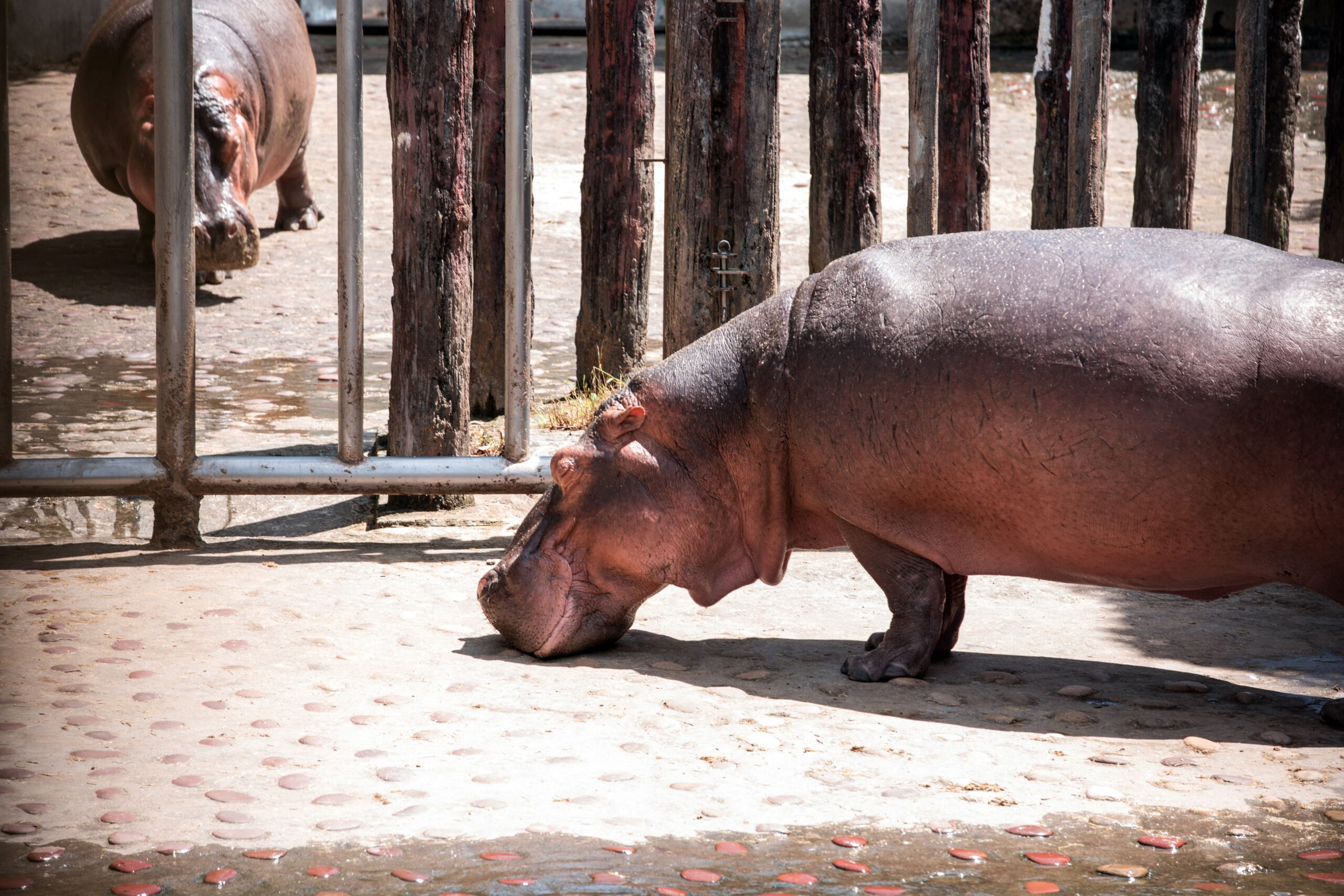
Hippopotamus Vocalizations
Hippos have incredibly powerful voices; even in a zoo setting, their calls are loud enough to carry over long distances. They are also rare among mammals for their ability to vocalize both underwater and above water.
Male Vocalizations
These are commonly heard when males are asserting territory, issuing threats, or during the breeding season.
Onomatopoeic representations include:
“Bwoooo!”
“Gaoooo!”
“Hoooo!”
“Grrrrr…”
They often vocalize with their mouths wide open, producing a volume so great that the sound can reach other hippos hundreds of meters away.
Female Vocalizations
While females vocalize less frequently than males, they communicate with their companions and offspring using short sounds such as:
“Buf”
“Hn”
“Gwo”
Baby Hippo Vocalizations
Baby hippos call out to their mothers using high-pitched sounds like:
“Kyu”
“Pii”
“Pui”
The mother recognizes these specific calls and approaches to nurse or protect the calf.
Underwater Communication
A major characteristic of hippos is their ability to vocalize underwater.
They transmit sound into the air when above the surface
They transmit low-frequency sounds and vibrations when underwater
They are known to transmit sound into both air and water simultaneously. This ability is believed to allow them to communicate efficiently with members of their herd.
Seasonal Activities
Rather than following the four seasons, hippos adjust their activity patterns according to Africa’s “wet” and “dry” seasons. They are primarily nocturnal; they rest in the water during the day and emerge onto land at night to graze.
🌧️ Wet Season
Fresh grass grows abundantly on the savanna, making it easier to find food.
They may walk several kilometers at night to forage.
As water sources become more plentiful, herds tend to disperse.
Conditions become favorable for raising calves.
☀️ Dry Season
Water levels in rivers and lakes drop, limiting available water sources.
Many hippos congregate in the same water bodies, which can lead to intense territorial disputes, especially among males.
As grass becomes scarce, they may travel longer distances in search of food.
Daily Activity Cycle
A hippo’s daily routine remains largely consistent throughout the year.
🌞 Daytime
Resting in the water (approx. 12–16 hours)
Protecting the body from intense sunlight and heat
Spending time in a herd with others
🌆 Evening to Night
Moving onto land
Grazing while traveling several kilometers
Returning to the water before dawn
Walking Speed
Although their appearance might suggest they are slow, hippos can actually run faster than humans on land.
Walking and Running Speeds
Normal walking: approx. 3–6 km/h | Moving quickly: approx. 20–30 km/h | Top speed: approx. 30 km/h (short distances)
Underwater Movement
Hippos do not actually “swim”; instead, they move by:
pushing off the riverbed
propelling themselves forward with light, bounding leaps
They move at a speed of around 8 km/h, allowing them to travel efficiently underwater.
Why can they run so fast?
Despite weighing between 1.5 and 3.5 tons, they can move surprisingly quickly over short distances thanks to:
thick, muscular legs
a low center of gravity
powerful hind legs
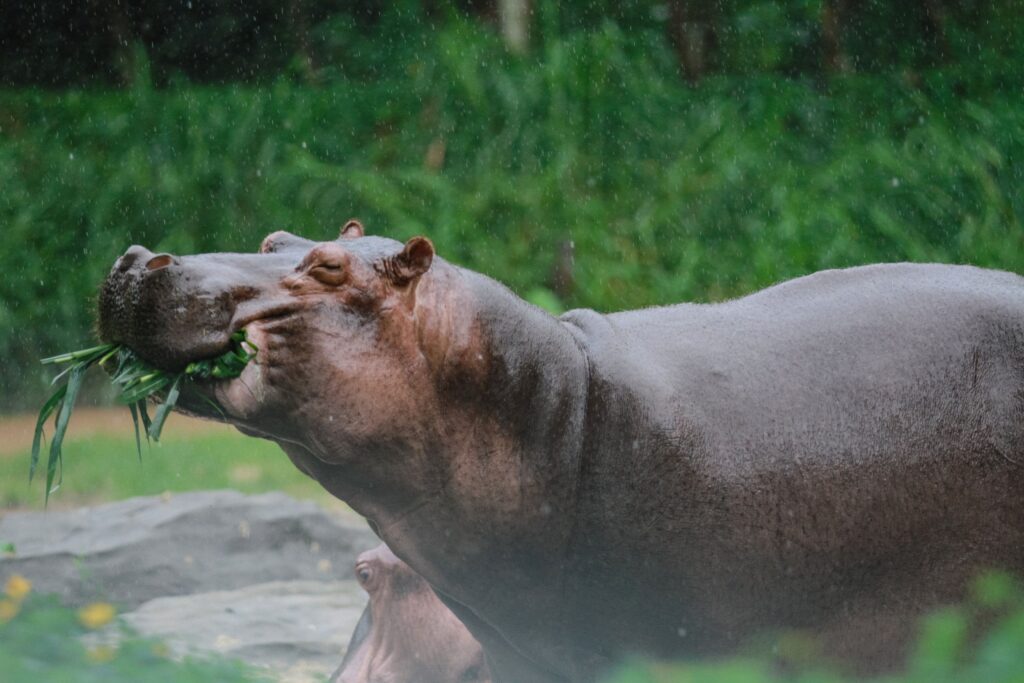
About Baby Hippos
Hippopotamus (Hippopotamus amphibius / common hippopotamus) young (calf) undergo a developmental process designed to help them survive as large, aquatic mammals. The process is summarized below.
- Birth and Appearance
Birth Weight: Approximately 25-50 kg
Body Length: Approximately 1.2 m
Fur Color: Grayish-brown, with little of the thick skin or “blood sweat” of adult animals.
Fur: Very thin and soft.
- Developmental Process
Immediately after birth: With the help of their mother, they float in the water and learn to breathe and swim.
A few days to a week after birth: They move with their mother in the water and learn timing for diving and breathing.
1-3 months after birth: While receiving nutrients from their mother’s milk, they begin to eat small amounts of grass.
6 months to a year after birth: They learn to move and feed in the water and on land within the group.
2-3 years after birth: They separate from their mother and begin to understand social relationships and hierarchy within the group.
- Behavior and Sociality
They spend time closely with their mothers and learn underwater survival skills (swimming, diving, and breathing).
From the early stages of their lives, they observe and imitate social and hierarchical behavior within the group.
They follow their mothers to feed, gradually becoming more independent.
- Physiological Characteristics
Mother’s milk is rich in nutrients and is important for growth and maintaining body temperature.
Their thin skin and soft fur make them vulnerable to cold and ultraviolet light, making aquatic life essential.
- Growth Points
Learning underwater swimming and breathing, foraging on land, and social behavior within the group during their early stages is directly linked to their survival.
A close relationship with their mother is key to their development.
Are hippos an endangered species?
Hippos are listed as an endangered species. Furthermore, it is listed in Appendix II of the Washington Convention and there are restrictions on trade. There are several reasons why this happens:
Habitat development or destruction
Habitat development and destruction is progressing, and it is becoming difficult for hippos to live in places where they could originally live. The population is decreasing and there is no prospect of recovery.
very aggressive personality
The extremely aggressive nature of hippos is a scourge. There have also been incidents where passengers have been injured by animals, or where animals have attacked the board. There have been cases of people dying as a result of this.
Can hippos be kept?
Hippos are designated as an endangered species and listed in the Washington Convention, so keeping them in captivity is difficult. Due to their aggressive nature, they are not recommended for the general public.
- Captivity
Home: Impossible
Huge body mass, weighing 1,500-3,200 kg and measuring 3.5-5 m
Highly aggressive, likely threatening humans
Zoos/Conservatories: Possible
Captivity requires provision of water (shallow ponds or rivers) and land feeding areas.
Managed for group management, breeding, and educational/research purposes.
- Difficulties of Captivity
Huge and strong
Males are particularly territorial and will attack with their fangs.
A very sturdy enclosure is required for safety.
Aquatic environment is essential.
They need to rest in water during the day, so water depth and quality control are important.
Water shortages and high temperatures can lead to health problems.
Dietary management
They eat large amounts of grass at night, so ensuring sufficient grass and feed is essential.
Social management
They primarily live in groups, so keeping them alone can be stressful.
- The Significance of Captivity
Zoos and conservation facilities keep animals that are not endangered for educational, research, and tourism purposes.
Even when kept from a young age, they are managed to mimic behavior in their natural environment.
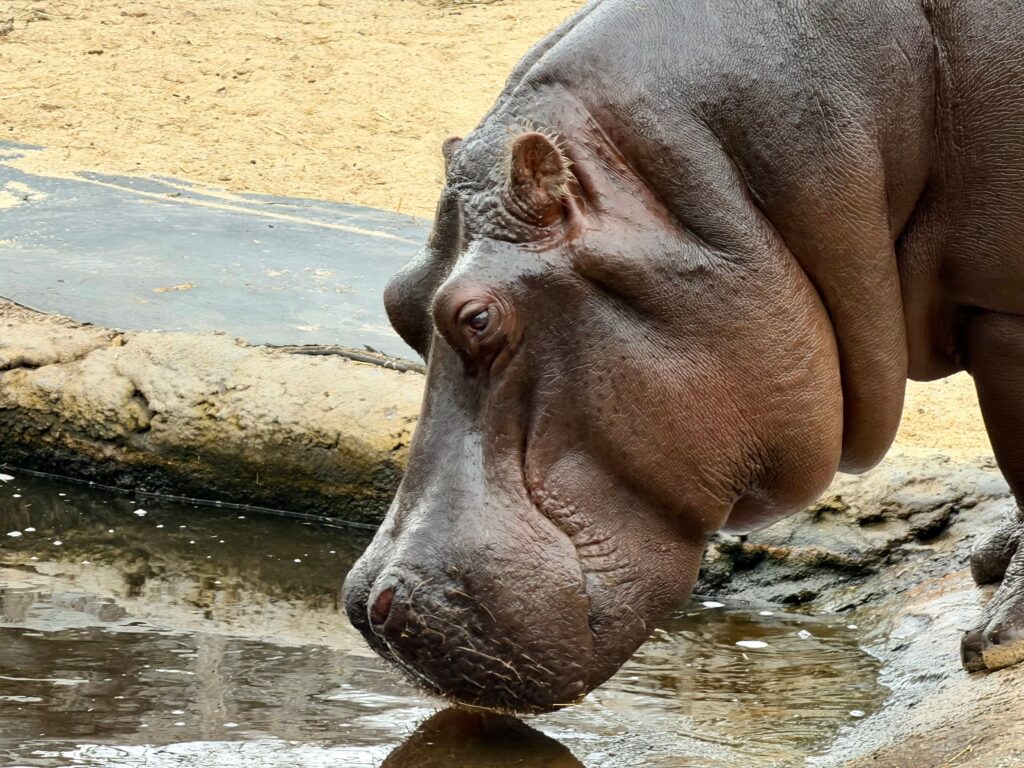
Zoos Housing Hippos (Japan & Worldwide)
Hippos are popular large animals in zoos around the world, and a relatively large number of zoos in Japan keep them as well.
Major Zoos Housing Hippos in Japan
Hippos are kept at over 20 zoos across Japan.
Notable examples include:
Ueno Zoological Gardens
Asahiyama Zoo
Higashiyama Zoo and Botanical Gardens
Tennoji Zoo
Kobe Oji Zoo
Kyoto City Zoo
Tobe Zoo
Adventure World
Ishikawa Zoo
Hirakawa Zoological Park
- Note: Housing status is subject to change due to factors such as breeding programs or facility renovations.
Famous Hippo-Housing Facilities Worldwide
Africa
National Zoological Gardens of South Africa
Nairobi Animal Orphanage
North America
San Diego Zoo
Cincinnati Zoo & Botanical Garden
Fort Worth Zoo
Europe
Zoo Berlin
Zoo Leipzig
Chester Zoo
Pairi Daiza
Introducing other animals




コメント