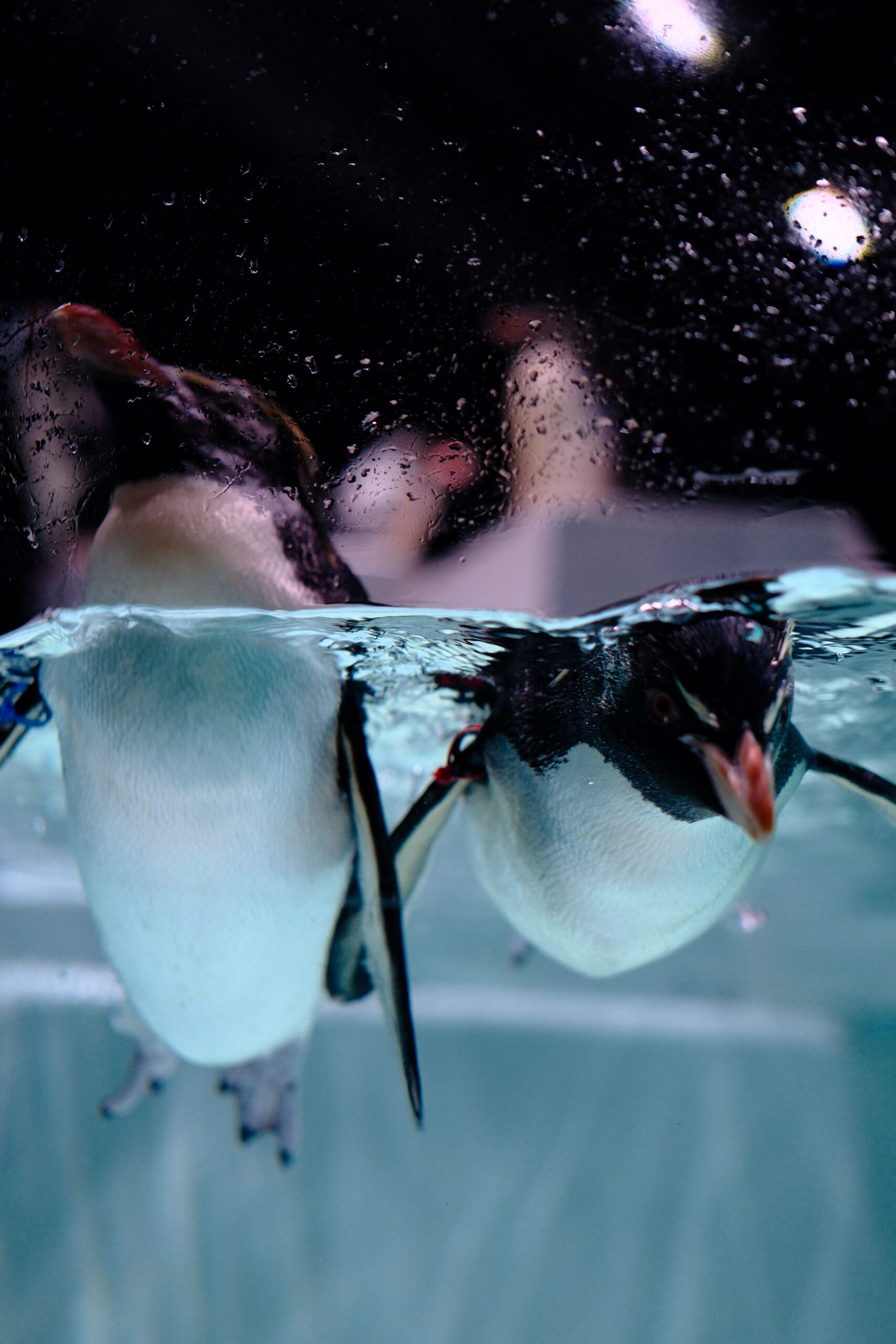
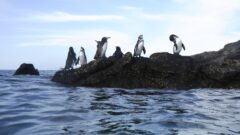
We will explain the characteristics, ecology, and habitat of the snares penguin (long-billed penguin). This penguin is endemic to the Snares Islands, a sub-Antarctic island in New Zealand, and is a type of penguin that most people don’t see. Landing on the Snares Islands is prohibited and you will be observing the birds as they emerge from the shore from your boat.




- Basic information about Snares Penguin
- What are the roots and origins of the Snares penguin?
- What will happen to the classification?
- About snares penguin habitat
- feature is? What kind of creature is it?
- What will your personality look like?
- What is the ecology of snares penguins?
- Molting in Snares Penguins
- Snares Penguin Diving
- Snares Penguin Calls
- Seasonal Activities of Snares Penguins
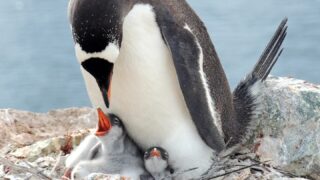
- About Snares Penguin Chicks
- Are snares penguins an endangered species?
- Is it possible to keep snares penguins?
- Zoos where they are kept (Japan and around the world)
- Fellow members of the same group
Basic information about Snares Penguin
Snares penguin is a bird belonging to the genus Macaroni penguin. The scientific name is Eudyptes robustus. This penguin is 50-60cm long and is endemic to New Zealand. It is a rare species with a very limited habitat. Another name is the long-billed penguin.
| Japanese(和名) | スネアーズペンギン、ハシブトペンギン |
| English(英名) | Snares penguin |
| scientific name(学名) | Eudyptes robustus |
| classification(分類) | Sphenisciformes, Spheniscidae, Eudyptes ペンギン目ペンギン科マカロニペンギン属 |
| IUCN Status(保全状況) | VULNERABLE |
| Height(身長) | 50-60cm |
| Weight(体重) | 2kg |
What are the roots and origins of the Snares penguin?
The Snares penguin, also known as the English name Snares penguin and scientific name Snares penguin, is an endemic species found only on the Snares Islands in the sub-Antarctic region of New Zealand.
Outline of Origin
The ancestors of Snares penguins branched off from an ancient penguin lineage widely distributed in the Southern Hemisphere, and from there:
A group that evolved as the genus Eudyptes (Crest Penguins)
Evolutionary Flow
① Antarctic-origin penguin ancestors
Millions of years ago, they were widely distributed around Antarctica
Populations were fragmented by changes in ocean currents during the glacial period
↓
② Dispersal to the area around New Zealand
Move northward due to warming and changes in ocean currents
Become isolated on islands
↓
③ Independent evolution on each island (this is important)
Populations confined to the Snares Islands evolved independently
Diverged from other islands (Macaroni Royal lineage)
↓
④ Becoming an endemic species
Isolated evolution over approximately millions of years
The current Snares penguin is established
Why can they only survive on the Snares Islands?
The surrounding sea is highly productive (abundant food).
They have few natural predators.
The limited land area creates a unique competitive structure.
They have become so specialized to that environment that they are now known as “island penguins.”
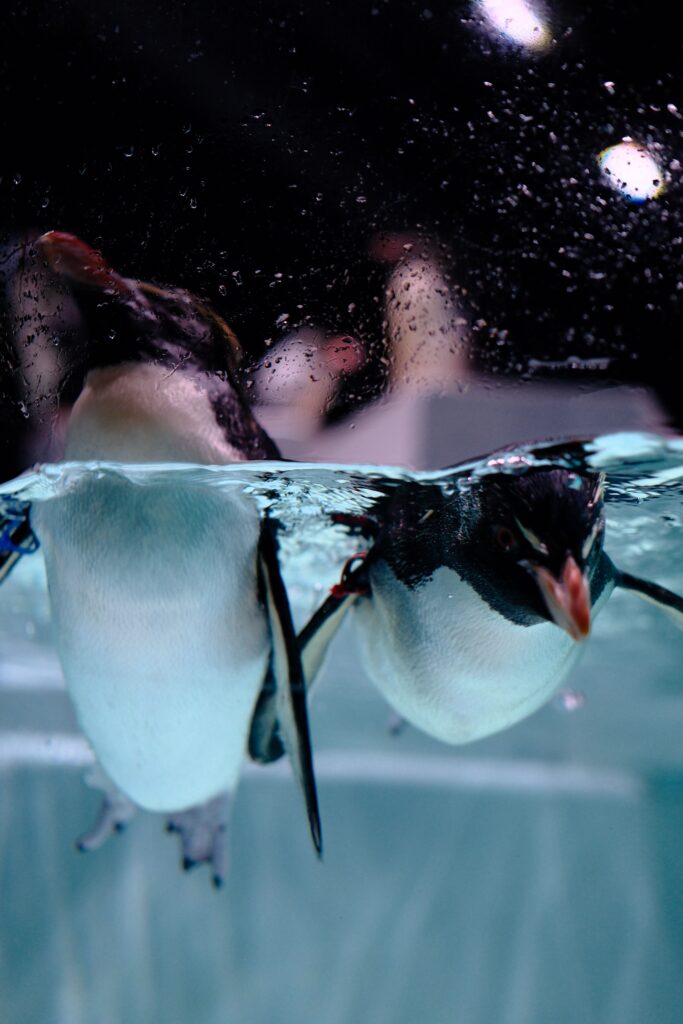
What will happen to the classification?
Snares penguins were first collected in 1874. It belongs to the genus Macaroni Penguin. It is one of the endemic species found only in New Zealand.
| 名前:Name | Gropu:属名 | 生息地: habit |
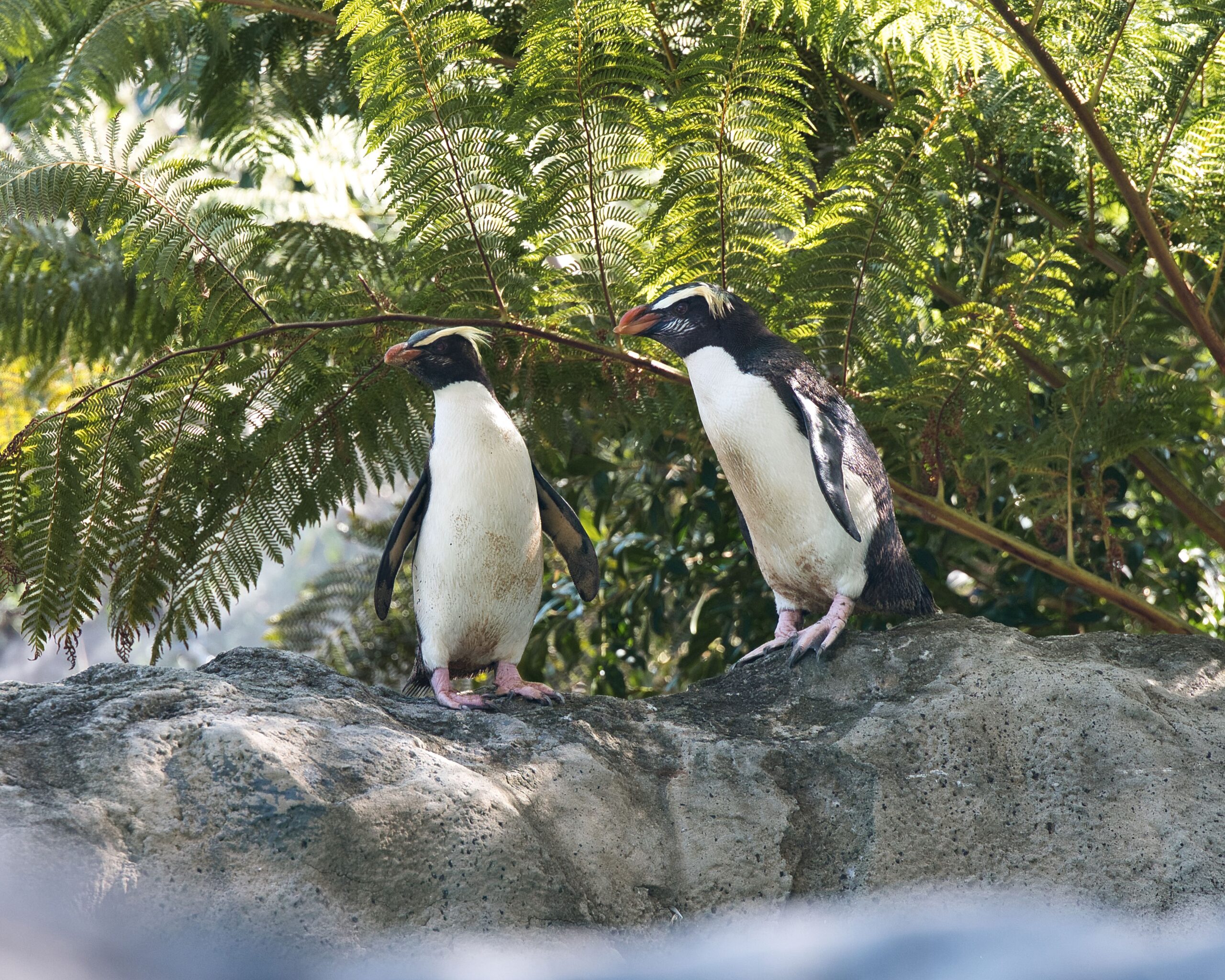
| フィヨルドランドペンギン(Fiordland penguin) | Eudyptes マカロニペンギン属 | New Zealand ニュージーランド |
| シュレーターペンギン(Erect-Crested Penguin) | Eudyptes マカロニペンギン属 | New Zealand ニュージーランド |
| スネアーズペンギン(Snares Islands Penguin) | Eudyptes マカロニペンギン属 | New Zealand ニュージーランド |
| マカロニペンギン(Macaroni Penguin) | Eudyptes マカロニペンギン属 | Antarctica 南極大陸 |
| ロイヤルペンギン(Royal Penguin) | Eudyptes マカロニペンギン属 | Antarctica 南極大陸 |
| イワトビペンギン(Rockhopper Penguin) | Eudyptes マカロニペンギン属 | South Atlantic, Indian Ocean, Falkland Islands 南大西洋、インド洋、フォークランド諸島 |
Snares Penguin Taxonomy
| 階級 | 分類 |
|---|---|
| 界 (Kingdom) | 動物界 (Animalia) |
| 門 (Phylum) | 脊索動物門 (Chordata) |
| 綱 (Class) | 鳥綱 (Aves) |
| 目 (Order) | ペンギン目 (Sphenisciformes) |
| 科 (Family) | ペンギン科 (Spheniscidae) |
| 属 (Genus) | Eudyptes |
| 種 (Species) | Eudyptes robustus |
About snares penguin habitat
New Zealand is the only habitat for snares penguins. Many live near Snares Island.
- Distribution
Endemic to the Snares Islands south of New Zealand.
Naturally not found anywhere else.
- Habitat
Breeds along the coasts of rocky and cliffy islands.
Breeding grounds are primarily isolated areas with little human impact.
They forage at sea in winter, but always return to the island during the breeding season.
- Behavior and Migration
Forages for fish and krill in the sea.
Swims around the waters surrounding the island to forage.
Breeding colonies are limited and concentrated in a very small area.
feature is? What kind of creature is it?
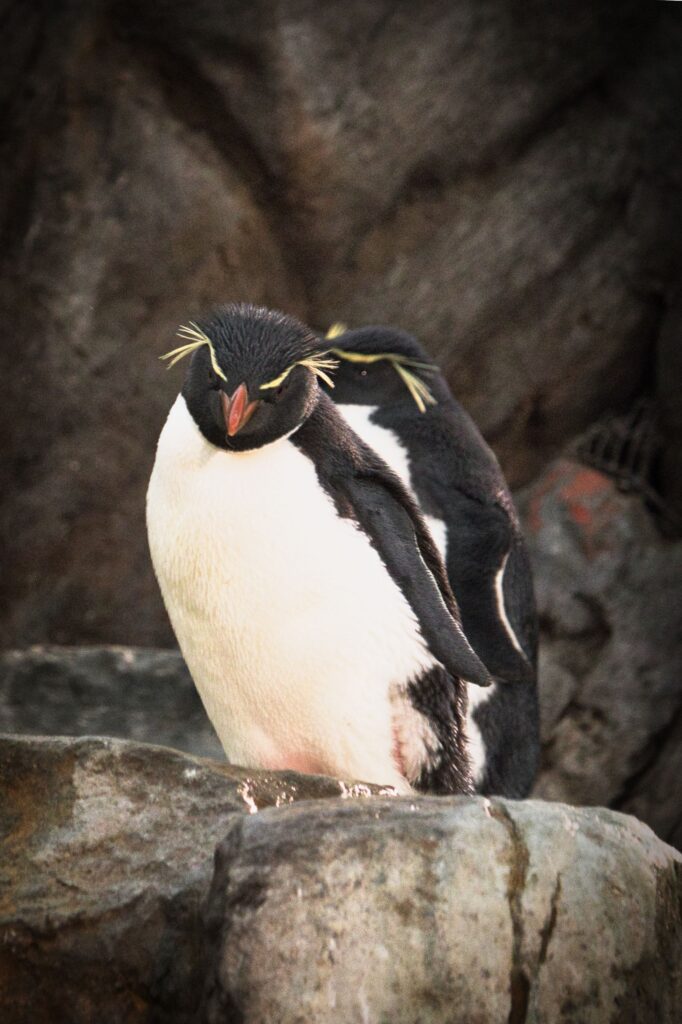
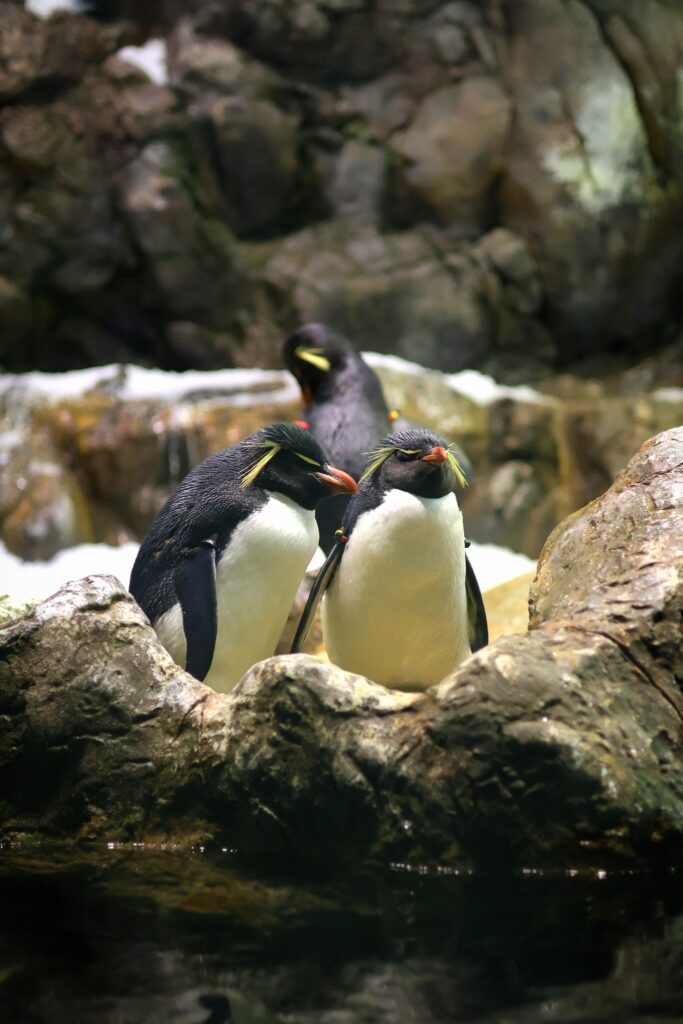
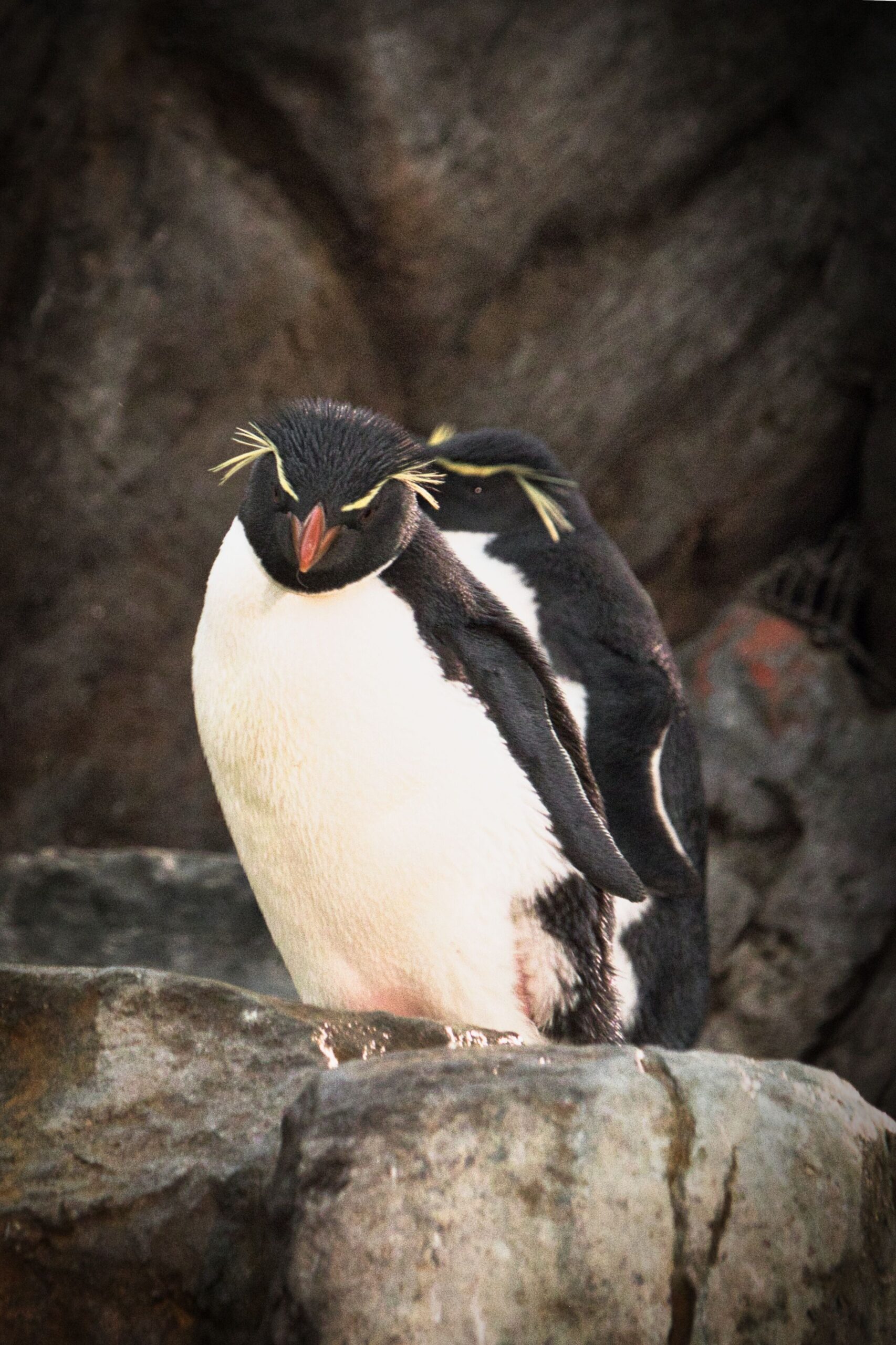
The snares penguin has black plumage on the top of its head and white plumage on the bottom. There is a thick yellow stripe from the base of the beak to the top of the eye and the back of the head. They have orange-brown beaks and pink hind legs, and are generally highly social animals that live in colonies.
- Physical Characteristics
Size: Approximately 50-60 cm in length, 2.5-4 kg in weight (medium-sized penguin)
Body Type: Stocky and streamlined for underwater swimming
Feather Color:
Back: Black
Belly: White
Head: Prominent yellow ornamental feathers (crown)
Beak: Orange-red, medium length
Legs: Short and strong, allowing for steady walking even on rocky surfaces
- Ecology and Behavior
Good Swimmer: Preys on fish and krill in the sea
Diet: Mainly small fish, krill, and crustaceans
Reproduction:
Builds large colonies on rocky or cliffy areas
Eggs are laid by pairs, with males and females taking turns incubating them
Sociality: Forms groups within colonies and cooperates in raising their young
Calls: Each individual has its own distinctive vocalizations, allowing them to recognize their mates and peers
- Personality and Characteristics
Sociable and cooperative: They live in groups and work together as a pair during breeding season.
Curious: They often show interest in humans and the movements of their surroundings.
Loyal and tenacious: They will spare no effort to protect their mates and chicks.
- Appearance
Their trademark yellow feather crest makes them look like “slightly flashy little gentlemen.”
They are agile swimmers in the ocean and have an adorable way of walking on land.
What will your personality look like?
Snares penguins are said to be the most social of the Macaroni penguin species. It is possible to form a colony and live in close cooperation with those around you.
Snares Penguin Personality (Behavioral Characteristics)
Social and cooperative
Live in large colonies during the breeding season
Work together to protect chicks, and pairs take turns incubating eggs
Bold and tenacious
Breed in the harsh environments of rocky and cliff faces
Persistently protect their chicks and mates
Curious
Knowing the movements of their surroundings, they may observe humans while foraging or on land
Show boldness when pursuing prey
Loyal
Strongly loyal to their mates and breeding grounds
Tend to return to the same breeding grounds year after year
What is the ecology of snares penguins?
Snares penguins subsist on krill, squid, etc. They breed in rocky areas, under shrubs, in wetlands, and lay two eggs. The lifespan is said to be close to 20 years.
- Habitat and Environment
Breeds on rocky outcrops and cliffs around the Snares Islands south of New Zealand.
Outside of breeding season, they forage at sea.
Prefers isolated environments with little human interference.
- Diet (Food)
Eat mainly fish, krill, and crustaceans.
Dives underwater and nimbly pursues prey.
Mainly forages at sea, rarely eating on land.
- Breeding and Rearing
Breeding season is during the Southern Hemisphere summer (November to February).
Forms large colonies on rocky or cliffy areas.
Pairs take turns incubating eggs.
Chicks grow while being fed by their parents, and once they have fully developed feathers, they become independent in the sea.
- Behavior
Highly social, living in groups.
Live in groups to protect themselves from predators.
Swims quickly in the sea and pursues prey.
On land, they wander around rocky areas, focusing on breeding and protecting their chicks.
- Adaptability
Feathers and blubber allow them to withstand the harsh cold of southern waters
Streamlined body shapes suitable for diving
Sociality allows for cooperative breeding success
What is the natural enemy of the snares penguin?
The biggest threat to snares penguins is skuas. Eggs and chicks are particularly vulnerable to being preyed upon.
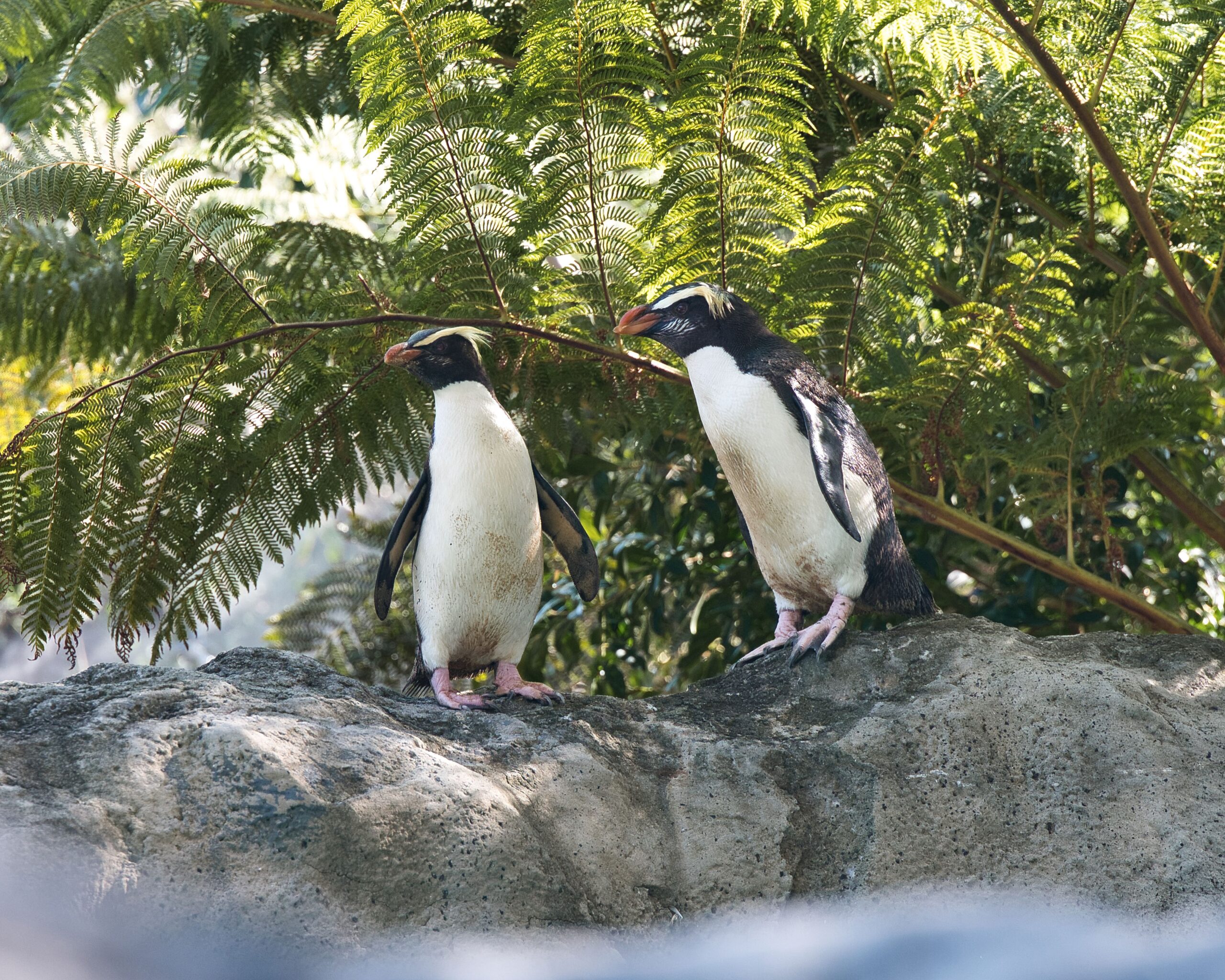
Molting in Snares Penguins
Snares penguins undergo a typical “short-term, complete molt, fasting” type of molting among crest penguins, which is quite energy-intensive.
⏱️ Timing
Mainly late summer to autumn (around February to April) after breeding season
They begin molting immediately after leaving the breeding colony.
Mechanism (Important)
Complete molt (total molt)
All feathers are replaced simultaneously
Completed in just a few weeks
A “mass replacement” type of molting among penguins
⚠️ State during molting
During this period, Snares penguins:
Cannot enter the sea (feathers are not waterproof)
Cannot forage
Spend time still on land
Consume fat to endure
In other words, “fasting + standby mode”
⏳ Duration
Approximately 2-3 weeks
A short-term, intensive molt with significant physical exhaustion
Snares Penguin Diving
Snares penguins, among crested penguins, employ a “medium-depth, short-duration, repetitive” diving style, an efficient hunting method adapted to the rich marine environment surrounding the island.
Basic Diving Data
Average Diving Depth: Around 20-40m
Maximum Diving Depth: Around 70-100m
Diving Time: Primarily 1-2 minutes
Diving Style: Frequent short dives
Foraging Methods
Main Prey:
Krill
Small Fish
Squid
Characteristics:
Quick dives in pursuit of schools
Short underwater pursuit time
Continuous behavior: Ascend → Breathe → Immediately re-dive
① “Mid-Layer Specialized”
Not a type that dives to the deep sea
Efficiently forages in the mid-layer at depths of 20-50m
② Environmental Adaptation Around the Islands
Around the Snares Islands:
Rich in nutrients
Fish schools are concentrated in relatively shallow layers
Therefore, “short-duration hunting in shallow to mid-depths” is sufficient
③ High-speed hunting
Each dive is short
However, the number of dives is very high
Energy-efficient style
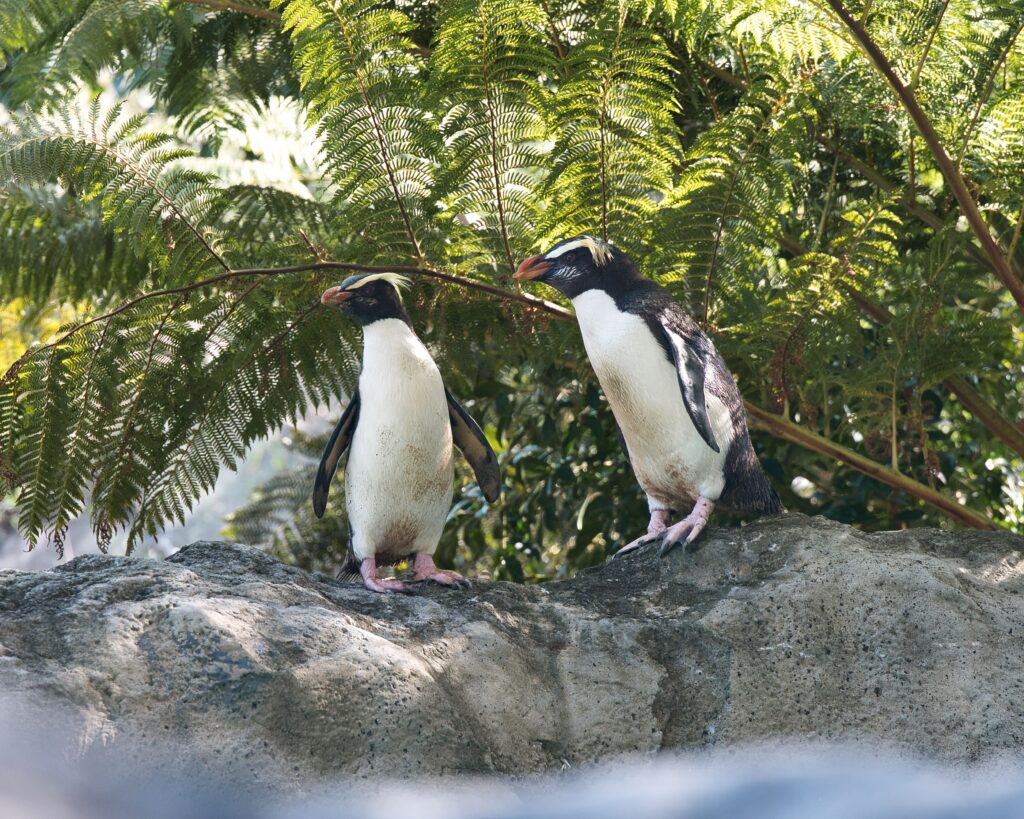
Snares Penguin Calls
Snares penguins are known for their distinctive calls, which are low, growling, and rattling, continuous calls, making them quite noisy in dense colonies on rocky areas.
① Male Display Call (Most Prominent Voice)
A low growl, “Gwooo, Gwooo.”
A rattling sound, as if the throat is vibrating, is mixed in midway.
Called continuously with the chest puffed out.
Used for territorial claims and courtship.
② Pair Calls
A somewhat short, sharp “Kuk, Kuk.”
Used for confirming the other’s location and meeting up.
Individual identification is done by the “tempo” of the voice.
③ Colony-Wide Sound
In the breeding grounds of the Snares Islands:
Thousands to tens of thousands of birds call simultaneously.
The sound echoes off the rocks, creating a “rumbling” sound.
Closer to “environmental sound” than individual voices.
An overwhelming level of noise when approached.
Seasonal Activities of Snares Penguins
Snares penguins, having adapted to the extremely limited environment of the Snares Islands, have a clearly defined seasonal cycle of “breeding, molting, and marine life.”
Spring to Summer (Breeding Season: September to February)
Main Event of the Year
Around September: Return to the Colony
Males secure territory on rocky areas
Pair formation through intense calls and displays
October to November: Egg Laying (Usually 2 eggs)
However, often only one chick survives (Insurance Egg Strategy)
Incubation for approximately 30-35 days
Chicks hatch → Parents take turns feeding
Fledges in 2-3 months
Key Points:
Extremely high-density colonies
Very intense calls and fighting
❄️ Autumn (Molting Season: February to April)
Complete Stagnation Mode
Remains on land immediately after breeding ends
Complete molting for approximately 2-3 weeks
Cannot enter the sea until feathers are replaced
Fat consumption during this period due to fasting
Key Points:
A “Endurance Period” where movement is restricted
A phase of physical endurance
Winter (Marine Life: May-August)
Recovery and Foraging Period
Leaves the colony and heads to the open ocean
Preys on krill, small fish, and squid
Sometimes moves in groups
Long-distance migration for nutritional replenishment
Points:
Almost entirely at sea
Energy recovery phase
About Snares Penguin Chicks
This article provides information about Snares Penguin (Eudyptes robustus) chicks.
- Hatching
Early hatching usually involves laying one or two eggs.
The incubation period is approximately 32-35 days.
The parents take turns incubating the eggs and protecting the chicks.
- Appearance and Physical Characteristics
Immediately after hatching, they are covered in gray to pale down.
Their feathers are not yet waterproof and they cannot swim.
They have a small, round body, and their limbs are underdeveloped.
- Growth and Development
Early Hatching (1-2 weeks after hatching): They are warmed and protected by their parents.
Middle Hatching (2-4 weeks): They are fed by their parents and gradually gain strength.
Late Hatching (4-7 weeks): Their feathers are replaced and become waterproof.
Chicks sometimes form groups, providing protection.
- Diet
The parents feed their young fish and krill by mouth.
After the eggs hatch, the parents take turns foraging for food.
- Independence
Once their feathers have grown in and become waterproof, they begin foraging at sea.
They leave the sea and become independent at about 2-3 months of age.
They live cooperatively in flocks until they reach adulthood.
Are snares penguins an endangered species?
The snares penguin’s habitat is limited to small islands, so if a threat occurs, the population can quickly become extinct. Therefore, although there is no threat, it is considered an endangered species.
Is it possible to keep snares penguins?
The areas where Snares penguins live are off-limits, and furthermore, the New Zealand government has prohibited anyone other than researchers from entering, making it extremely difficult to encounter them in the first place, making it difficult to keep them in captivity.
- Limitations as a Wild Species
Snares penguins are endemic to the Snares Islands south of New Zealand.
Because they have adapted to the harsh marine environment of the Antarctic and Sub-Antarctic, captivity in an artificial environment is extremely difficult.
Few zoos in Japan or around the world exhibit Snares penguins.
- Difficulties of Breeding
Temperature Control: A low-temperature environment is essential.
Aquarium Size: A saltwater pool large enough for them to swim in is required.
Dietary Management: A steady supply of fish and krill is required.
Stress and Health Management: Wild species are sensitive to environmental changes and susceptible to disease and stress.
Legal Restrictions: The Convention on International Trade in Endangered Species of Wild Fauna and Flora (CITES) imposes strict restrictions on the import, export, and captivity of wild individuals.
- Summary
Snares penguins cannot be kept at home or in small facilities.
They can only be kept in specially controlled environments at specialized facilities or research institutes.
There are few examples of them in captivity, and observing them in the wild is recommended from a conservation perspective.
Zoos where they are kept (Japan and around the world)
In conclusion:
Snares penguins are not a species kept in captivity in zoos or aquariums in Japan or around the world.
Fellow members of the same group
コメント