
We will explain the characteristics, ecology, and habitat of reindeer. The reindeer is the only antlered deer that can be seen in zoos around the world and lives from the arctic to the subarctic regions. It is also distributed in the boreal regions of North America, such as Alaska and Canada, and several subspecies are known.



- What is reindeer? About basic status
- What are the roots and origins of the reindeer?
- About reindeer habitat
- feature is? What kind of creature is it?
- What will your personality look like?
- What is the ecology of reindeer?
- Reindeer Vocalizations
- Seasonal Activities
- Walking Speed
- About Reindeer Calves
- Are reindeer an endangered species?
- Can reindeer be kept?
- Zoos Housing Reindeer (Japan & Worldwide)
- Introducing other animals
What is reindeer? About basic status
Reindeer is an animal of the genus Reindeer, of the mammalian class Cetacea and the deer family. Tunakkay means Ainu, and the English name is “caribou”. The scientific name is Rangifer tarandus. The body length is 120 – 230 cm, shoulder height is 90 – 150 cm, and the weight is 60 – 300 kg. It can run at 80km/h. They are adapted to live around the cold regions of the tundra. Mainly it has a strong Christmas image.
| Japanese(和名) | トナカイ |
| English(英名) | Reindeer/Caribou |
| scientific name(学名) | Rangifer tarandus |
| classification(分類) | Mammalia、 Cetartiodactyla、Cervidae、Rangifer 哺乳綱、鯨偶蹄目、シカ科、トナカイ属 |
| IUCN Status(保全状況) | VULNERABLE |
| Length(体長) | 120 – 230cm |
| Weight(体重) | 60 – 300kg |
What are the roots and origins of the reindeer?
The roots of the reindeer (scientific name: Rangifer tarandus) trace back to approximately 2 million years ago (early Pleistocene). While they are now iconic animals of the Arctic, their ancestors were members of the deer family that evolved amidst the environmental changes of the Ice Age.
Origins
Classification
Class: Mammalia
Order: Artiodactyla
Family: Cervidae (Deer family)
Genus: Rangifer
Reindeer belong to a relatively recent group within the deer family and share a common ancestor with species such as moose and roe deer. The deer family as a whole diverged from the Bovidae family (cattle, sheep, goats, etc.) about 36 million years ago.
Approx. 9 million years ago
The major groups of the modern deer family diverged, and the lineage leading to the reindeer emerged.
Approx. 2 million years ago
Fossils of the earliest Rangifer (reindeer genus) have been found in northern Eurasia and around the Bering Land Bridge. Adaptation to cold environments began around this time.
Approx. 800,000 to 100,000 years ago (Ice Age)
Amidst alternating glacial and interglacial periods, they expanded their distribution to:
North America
Europe
Siberia
It is believed that during times when the Bering Land Bridge formed a continuous land connection, they moved back and forth between Asia and North America multiple times.
Ice Age Survivors
Reindeer were part of the “Ice Age megafauna,” alongside animals like mammoths and woolly rhinoceroses.
However,
Mammoths
Sabre-toothed tigers
Woolly rhinoceroses
…went extinct, whereas reindeer survived to the present day because they were adapted to cold environments.
Relationship with Humans
As early as 20,000 to 30,000 years ago, Paleolithic humans hunted reindeer,
Meat
Fur
Bones
Antlers
…utilizing these resources in their daily lives. Domestication occurred relatively recently, with origins believed to date back approximately 1,000 to 2,000 years in Siberia and Northern Europe. Genetic studies suggest that at least two independent domestication events took place.
About classification
There is actually more than one species of reindeer. There are many subspecies. According to Wikipedia, the following variants exist:
- Rangifer tarandus tarandus
- Rangifer tarandus caribou
- Rangifer tarandus fennicus
- Rangifer tarandus granti)
- Rangifer tarandus groenlandicus
- Rangifer tarandus pearyi
- Rangifer tarandus platyrhynchus
Source : Wikipedia
Reindeer Taxonomy
Kingdom: Animalia
Phylum: Chordata
Class: Mammalia
Order: Artiodactyla
Family: Cervidae
Genus: Rangifer
Species: Rangifer tarandus
About reindeer habitat
Reindeer are found in Northern Europe, such as Norway and Finland, and in the Siberian region of Russia. They are also found in North America, such as Alaska and Canada. Even in the summer, the same species can be seen walking around in search of food. In Europe, they are often kept as livestock.
Reindeer Habitat
Regional Distribution
Northern North America (northern Canada, Alaska)
Northern Europe (Norway, Sweden, northern Finland)
Northern Russia (Siberia)
Greenland and Arctic islands
Habitat
Tundra: Cold, forest-free areas, dominated by shrubs and lichens
Around the boreal forest (taiga): Partial seasonal migration
Also adapted to snowy areas and areas around glaciers
Seasonal Migration
Forages in high latitudes in summer
May migrate to areas with little snow or along forested areas in winter
Migratory, traveling long distances in herds
feature is? What kind of creature is it?
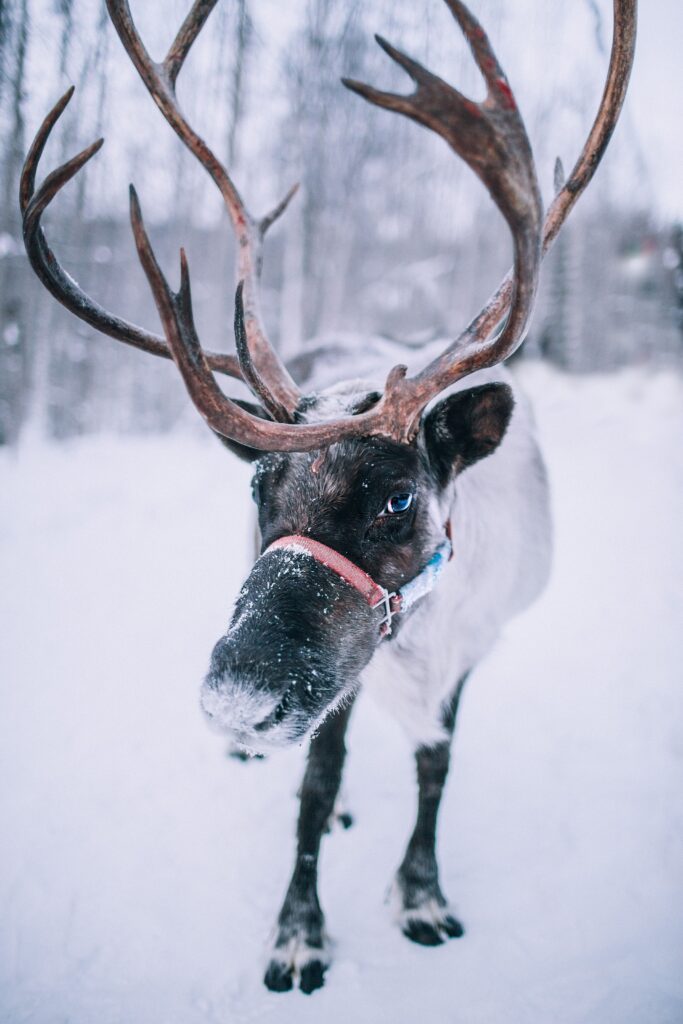
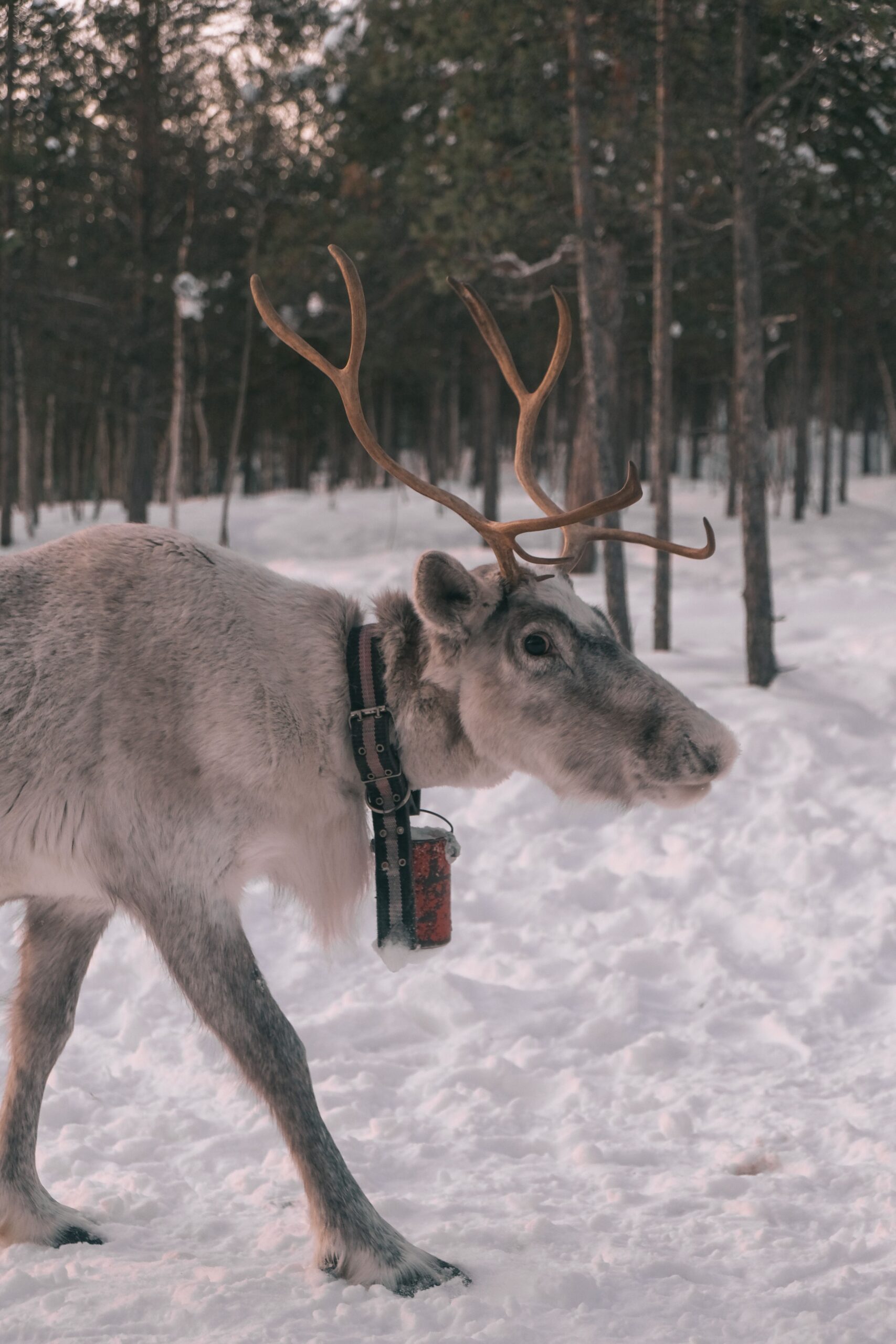
Reindeer have large hooves that are suitable for living in cold regions, making it easy to walk on snow. Reindeer can actually swim. You can cross rivers and lakes. The coat color ranges from black to white. Female horns are smaller and simpler in shape than males. The antlers grow in the spring and fall off in the fall and winter. Reindeer can run at speeds of 60 to 80 km/h, so they are sometimes used by humans for transportation.
- Physical Characteristics
Size: Medium-sized deer. Body length: Approximately 1.8-2.1m
Weight: Males 100-180kg, Females 80-120kg
Coat Color: Varies with Season
Winter: Grayish-brown to whitish coat
Summer: Light brown and thinning
Horns: Both males and females have horns (they shed and regrow during breeding and seasonal periods)
Hoofs: Broad and flat, allowing for stable walking on snow and mud
Tail: Short, adapted to maintain body temperature
- Ecological Characteristics
Diet: Herbivorous
Eats lichens (lichens), moss, grasses, leaves, and tree buds
In winter, they dig through the snow to find lichen
Activity: Live in groups and migrate long distances
Reproduction: Mating in autumn, giving birth to one or two calves in winter
- Behavioral Characteristics
Migratory Behavior: May travel hundreds of kilometers in groups
Social Behavior: They live in groups, which helps them stay alert and protect against predators.
Warmth: Their dense fur and subcutaneous fat help them withstand extreme cold.
- Additional Information
They are well adapted to the natural environments of the Arctic and cold regions.
They have a long history of coexistence with humans, and are sometimes used as livestock by the Sami and other northern peoples.
What will your personality look like?
Reindeer have a docile personality and do not bark like dogs. They are insightful and somewhat thoughtful. Reindeer are used to living in groups because they migrate in large numbers in spring and autumn in groups in the north. On average, they walk long distances, and large groups of males and females can often be seen. They are also recognized by children as animals that work together with Santa Claus.
Reindeer Personality and Behavior
Cooperative Personality
Living in herds, they cooperate with other individuals to navigate and defend themselves against predators.
Primary herd behavior and highly social.
Highly cautious.
Sensitive to predators (such as wolves and bears).
If they sense danger, they will immediately move away to avoid it.
Gentle and docile.
Being herbivorous, they are not very aggressive.
They do fight within the herd, but this is mainly limited to fighting over antlers during the breeding season.
Curious but cautious.
They are interested in new environments and food, but will quickly avoid any potential danger.
Mother Reindeer Personality
They are defensive during the nursing period and can become aggressive to protect their young.
What is the ecology of reindeer?
Reindeer eat plant-based foods, such as tree roots, bulbs, leaves, grasses, and stems. They are polygamous and the breeding season is from September to November. Males form harems to compete for females. The gestation period is 210 to 240 days, and one to two puppies are born at a time. They reach sexual maturity in about 2 years. Lifespan is 10 to 15 years.
- Diet
Main Food: Lichens (lichens), moss, grasses, leaves, and tree buds
Winter Adaptation: They dig through the snow with their hooves to find and eat lichen.
Side Food: They also eat fruits and shrub branches.
- Behavior and Sociality
Pack Life: They can form herds of tens to thousands of individuals.
Migratory: They travel long distances (hundreds of kilometers) depending on the season.
Summer: Forage in high latitudes.
Winter: Move to areas with little snow or along forested areas.
Vigilance: They are highly susceptible to predators (wolves, bears, etc.).
- Breeding
Estrus: Autumn (September-October)
Gestation Period: Approximately 7-8 months
Birthing: They give birth to one or two fawns in the spring.
Mother-Fawn Relationship: The mother deer protects her fawns while guiding them in foraging and migration.
- Adaptations and Physiology
Warming: Their dense fur and subcutaneous fat allow them to withstand extreme cold.
Hoofs: Wide and flat, they allow stable walking on snow and mud.
Horns: Both males and females have horns, which they use for winter feeding and fighting during mating season.
- Ecological Significance
Important for vegetation management and ecosystem maintenance in cold regions.
Domestication of northern peoples (such as the Sami) has also been practiced for a long time.
What are reindeer’s natural enemies?
Their natural enemies include wolves, lynx, and brown bears, but since they can run at speeds of 80 km/h, they are not easily caught.
Reindeer Vocalizations
Reindeer are surprisingly vocal animals. Like other members of the deer family, they use a variety of calls to communicate with their young and within the herd.
Here are some of their primary vocalizations:
“Grrr…”: A low, guttural sound. It is heard when signaling within the herd or when the animal is on alert.
“Bwoh” or “Oh”: Low-pitched calls made by males during the breeding season (autumn) to attract females or intimidate rivals.
“Mee” or “Pee”: High-pitched calls used by calves to call out to their mothers.
“Huff” or “Psh”: Short, snorting sounds that can indicate alertness or anxiety.
Vocalizations are not the only sounds associated with reindeer. You may also hear a “click-clack” or “ticking” sound whenever they walk. This is not a vocalization but a sound produced by tendons in their ankles sliding over the bone; it is believed to help members of the herd keep track of each other’s locations, even in snow or fog.
Seasonal Activities
Reindeer significantly alter their activities according to the season to adapt to the harsh environment of the Arctic.
Spring: Calving and Migration North
They migrate northward as the snow melts.
To protect their young from predators, they give birth in areas with few human settlements or predators.
The calves grow very rapidly, adapting quickly so they do not fall behind the herd.
Summer: Making the Most of the Short Summer
They consume large quantities of grasses, shrub leaves, berries, and mushrooms.
They build up fat reserves in preparation for winter.
To avoid insects, they may move to areas where snow still lingers, to the coast, or to higher elevations.
Autumn: Breeding Season
Males develop thicker neck fur, making their bodies appear larger.
They clash antlers to establish dominance.
The victorious male often mates with multiple females.
Winter: Adapting to the Bitter Cold
Their snow-digging behavior is sometimes described as “creating craters.”
Their primary food source is lichen, though they also eat twigs, moss, and dried vegetation.
Their fur features a hollow structure that provides excellent insulation, while their noses serve to warm the cold air they inhale.
Walking Speed
Reindeer walking speeds vary significantly depending on the situation.
Activity
Speed
Slow walk
Approx. 3–5 km/h
Normal walking/movement
Approx. 5–8 km/h
Trot
Approx. 10–20 km/h
Gallop
Approx. 40–60 km/h
Top speed
Approx. 80 km/h (short distance)
Long-distance travel
Reindeer excel more at endurance than at top speed.
They often travel 20–50 km in a single day.
Some herds travel hundreds to thousands of kilometers during seasonal migrations.
They have broad hooves that allow them to walk steadily across snow and tundra.
Comparison with other animals
Animal
Top speed
Human (sprinter)
Approx. 44 km/h
Reindeer
Approx. 80 km/h
Horse
Approx. 70–88 km/h
Deer (e.g., Red Deer)
Approx. 70 km/h
Wolf
Approx. 50–60 km/h
Reindeer can run very fast for short periods to escape predators like wolves. However, in their daily lives, they mostly move with the herd at a leisurely pace of about 5–8 km/h to conserve energy.

About Reindeer Calves
When it comes to reindeer (Rangifer tarandus / Reindeer, Caribou) calves, there is a developmental process that adapts them to cold climates.
- Birth and Appearance
Birth Weight: Approximately 4-6 kg
Body Length: Approximately 50-60 cm
Coat Color: Brown at birth, with little white like adult deer
Fur: Soft, dense, and provides protection from the cold
- Growth Process
A few hours to one day after birth: Stands up and drinks mother’s milk
One week after birth: Able to stand and walk
Two to four weeks after birth: Begins eating small amounts of grass and moss (in addition to mother’s milk)
One to two months after birth: Begins migrating with the herd and learns defensive behaviors against predators
Three to six months after birth: Rapid growth in size, adapting to winter migrations and herd life
One year after birth: Fully participates in herd activities and gains independence
- Behavior and Sociality
As young deer, they are highly dependent on their mother and herd.
They follow their mother and learn foraging and guarding behaviors.
They form social relationships with the herd and learn how to protect themselves from predators.
- Physiological Characteristics
Mother’s milk is rich in nutrients and is important for warmth and growth.
They build up fat early in preparation for winter.
They protect themselves from the cold with dense fur.
- Growth Points
Learning how to forage, move, avoid predators, and socialize in the herd during their early years is directly linked to their survival.
Play and exploration improve motor skills and survival skills.
Are reindeer an endangered species?
Reindeer are listed as an endangered species. The reasons for the decline in population are as follows. Three subspecies are already extinct, so they are in a very critical situation.
Deforestation continues in North America
Reindeer habitat is being taken away due to deforestation and environmental destruction. In North America, reindeer in the Queen Charlotte Islands and East Greenland have become extinct. Many populations are in decline and require urgent conservation action.
Also considering artificial introduction
As a result, information has confirmed that the population has declined by 40% over the past 25 years. For this reason, we are considering introducing it to areas where reindeer are not distributed. It seems that they are considering introducing it to the only island that only has animals, such as the British territory of South Georgia.
Can reindeer be kept?
Reindeer are listed as an endangered species. For this reason, they are difficult to obtain in the first place, and it is extremely difficult for the average person to raise them.
- Possibility of Keeping Reindeer
Home Use: Not Suitable
Due to their large size (males 100-180 kg, females 80-120 kg) and high exercise requirements, keeping them at home is difficult.
They are highly social in groups, and keeping them alone can be stressful.
Ranch/Farm Use: Possible
In Northern Europe, Russia, Canada, and other regions, they have been domesticated and raised for their milk, meat, horns, and tourism purposes.
Dedicated enclosures, exercise areas, and feeding areas are required.
- Difficulties of Raising Reindeer
Spacious exercise areas are required.
Due to their migratory nature, small spaces can cause stress and health problems.
Dietary Management
Lichen, moss, grass, and tree buds must be provided appropriately.
Nutrition can affect growth and antler development.
Seasonal Adaptation
Winter protection is required.
Summer molting and heat protection must also be considered.
- Purpose of Raising Reindeer
Domesticated Reindeer: Raised since ancient times by ethnic groups in Northern Europe and Siberia (such as the Sami).
Tourism, Education, and Research Purposes: Exhibits at Arctic Zoos and Ranches
In summary, reindeer are large herbivores that cannot be kept at home, but can be raised on ranches and farms with ample land and proper care.
Zoos Housing Reindeer (Japan & Worldwide)
As reindeer are adapted to cold climates, in Japan they are primarily kept in Hokkaido and the Tohoku region, while globally, they are commonly found in zoos across Scandinavia and North America.
Major Facilities in Japan Where Reindeer Can Be Seen
| Facility | Region | Characteristics |
|---|---|---|
| Horonobe Reindeer Ranch | Hokkaido | Japan’s only ranch specializing in reindeer; houses about 40–50 animals and offers feeding experiences. |
| Asahiyama Zoo | Hokkaido | A premier Hokkaido zoo; features extensive exhibits of cold-climate animals. |
| Kushiro City Zoo | Hokkaido | Popular for its exhibits of northern animal species. |
| Omoriyama Zoo | Akita | A leading facility in the Tohoku region for viewing reindeer. |
| Tama Zoological Park | Tokyo | One of the most famous reindeer exhibits in the Kanto region. |
| Hamura Zoo | Tokyo | A smaller-scale facility that keeps reindeer. |
| Suzaka City Zoo | Nagano | Exhibits reindeer as part of its cold-climate animal collection. |
| Higashiyama Zoo and Botanical Gardens | Aichi | One of Japan’s largest zoos; houses reindeer. |
| Nasu Animal Kingdom | Tochigi | A popular facility where visitors can observe the animals up close. |
Famous Reindeer-Keeping Facilities Worldwide
Ranua Wildlife Park
A zoo specializing in Arctic wildlife.
Displays reindeer in an environment close to their natural habitat.
Kolmården Zoo
One of the largest zoos in Scandinavia.
Houses many animals native to Northern Europe.
Polar Zoo
One of the northernmost zoos in the world.
Focuses on subarctic animals such as reindeer, moose, and wolves.
Alaska Zoo
Known for the conservation and exhibition of Alaskan wildlife; also keeps reindeer.
Assiniboine Park Zoo
A zoo featuring extensive exhibits on Arctic ecosystems.
Introducing other animals
コメント